
新职业

Search documents
如何“稳就业”?人社部详解
Sou Hu Cai Jing· 2025-09-26 04:59
Core Viewpoint - The "14th Five-Year Plan" period is characterized by both rapid development in employment and significant challenges, with a focus on stabilizing growth and employment while addressing structural employment issues [1] Employment Situation - During the "14th Five-Year Plan" period, the overall employment situation remains stable, with a cumulative urban new employment of 59.21 million by the end of August, exceeding the target of 55 million [1] - The average urban survey unemployment rate over the first four years is 5.3%, lower than the expected control target of 5.5% [1] Employment Policies - Employment is prioritized in macroeconomic regulation, with a comprehensive policy framework including fiscal incentives, tax reductions, and financial support [1] - The average annual balance of entrepreneurial guarantee loans is 300 billion, and the average annual expenditure on employment subsidies exceeds 100 billion [1] Key Groups Employment - Employment for key groups is crucial for stabilizing overall employment, with specific actions targeting graduates, migrant workers, and unemployed individuals [2][6] - Services for graduates include policy advocacy, career guidance, job recommendations, and skills training [6] Job Creation Initiatives - The Ministry of Human Resources and Social Security (MHRSS) has implemented various initiatives to enhance job creation, including actions for advanced manufacturing and support for small and medium enterprises [7] - Over 12.24 million jobs have been released in the first half of the year through targeted departmental efforts [7] New Occupations and Skills Training - The emergence of new occupations reflects the structural optimization of the economy, with a focus on developing skills for roles in artificial intelligence, renewable energy, and online services [7][8] - The MHRSS is promoting a "Skills Illuminate the Future" training initiative, focusing on new productivity sectors and urgent social needs [9] Employment Services Enhancement - A comprehensive employment public service system is being established, with nearly 9,000 gig markets and a unified employment information resource platform [10] - The MHRSS is conducting extensive employment service activities, including a recent recruitment campaign that published over 16 million job postings [10]


人社部答新京报:“十四五”期间,我国累计发布72个新职业
Xin Jing Bao· 2025-09-26 04:47
Group 1 - The core viewpoint is that during the "14th Five-Year Plan" period, China has released a total of 72 new occupations to meet the high-quality development needs of the economy [1] - The new occupations cover various sectors including digital economy, modern services, and intelligent manufacturing, driven by rapid advancements in digital technologies and the push for carbon neutrality [1] - Examples of new occupations include AI digital human trainers and new energy vehicle maintenance workers, which have emerged due to the growth of the digital and green economy [1] Group 2 - To facilitate quick entry into these new occupations, the Ministry of Human Resources and Social Security (MoHRSS) is developing standards that outline the necessary knowledge, skills, and working conditions for these roles [2] - The MoHRSS encourages leading enterprises and industry organizations to create training outlines and materials for new occupations, enhancing the training workforce [2] - There is a high demand for skills training related to new occupations, with some training programs being quickly sold out upon release [2]
职业“上新” 发展“上心”
Ren Min Ri Bao· 2025-09-26 02:46
Core Viewpoint - The recognition of rural collective economic managers as a new profession is a significant step towards enhancing their role in rural revitalization, emphasizing the need for innovative talent cultivation, supportive policies, and optimized evaluation systems [1][2]. Group 1: Talent Cultivation - Innovative talent cultivation is essential to seize new opportunities, with various regions implementing specific training programs for rural managers, such as Zhejiang's "Rural CEO" initiative and Guangdong's training plan for rural managers [1]. - The establishment of a talent pool through the identification of key groups, such as returning migrant workers, is crucial for meeting local needs and enhancing talent development [1]. Group 2: Supportive Policies - The new profession requires updated policies to support flexible labor relations and work methods, particularly in areas like compensation and professional title evaluation [1]. - Policies must evolve to alleviate the challenges faced by this new profession, facilitating its transition towards a more formalized and professional development path [1]. Group 3: Evaluation Systems - A flexible and scientifically grounded evaluation system is necessary to assess the diverse contributions of rural collective economic managers, as their roles can vary significantly [2]. - Combining top-down design with grassroots exploration will help refine the evaluation system, ensuring that it remains relevant and motivating for talent [2].
职业“上新” 发展“上心”(有所思)
Ren Min Ri Bao· 2025-09-25 22:03
Core Viewpoint - The recognition of rural collective economic managers as a new profession is seen as a significant step towards rural revitalization, emphasizing the need for innovative talent cultivation, supportive policies, and optimized evaluation systems [1][2]. Group 1: Talent Cultivation - Innovative talent cultivation is essential to seize new opportunities, with various regions implementing specific training programs for rural managers, such as Zhejiang's "Rural CEO" initiative and Guangdong's training plan for rural managers [1]. - Local governments are exploring talent identification and cultivation mechanisms that align with regional realities, enhancing cooperation between educational institutions and enterprises to meet industry demands [1]. Group 2: Supportive Policies - The new profession requires updated policies to support flexible labor relations and work methods, particularly in areas like compensation and professional title evaluation [1]. - Establishing appropriate policies is crucial to alleviate the challenges faced by this new profession, facilitating its formal and professional development [1]. Group 3: Evaluation Systems - A flexible and scientifically-based evaluation system is necessary to assess the diverse situations faced by rural collective economic managers, as their roles can vary significantly [2]. - Combining top-down design with grassroots exploration will help refine the evaluation system, ensuring that talent remains motivated and engaged in their work [2].
“新职业”一线观察:让世界看见中国“新”
Xin Hua Wang· 2025-09-24 05:15
Core Insights - The seventh batch of new occupations has been officially released, encompassing 17 new professions and 42 new job roles, including cross-border e-commerce operation managers, drone swarm flight planners, rural collective economy managers, and electronic circuit designers [1] Group 1 - These new occupations are closely aligned with technological innovation and industry upgrading trends, expanding diverse employment opportunities for workers [1] - The introduction of these roles injects strong momentum into the transition from "Made in China" to "Created in China," facilitating the international presence of Chinese creativity, brands, and stories [1]
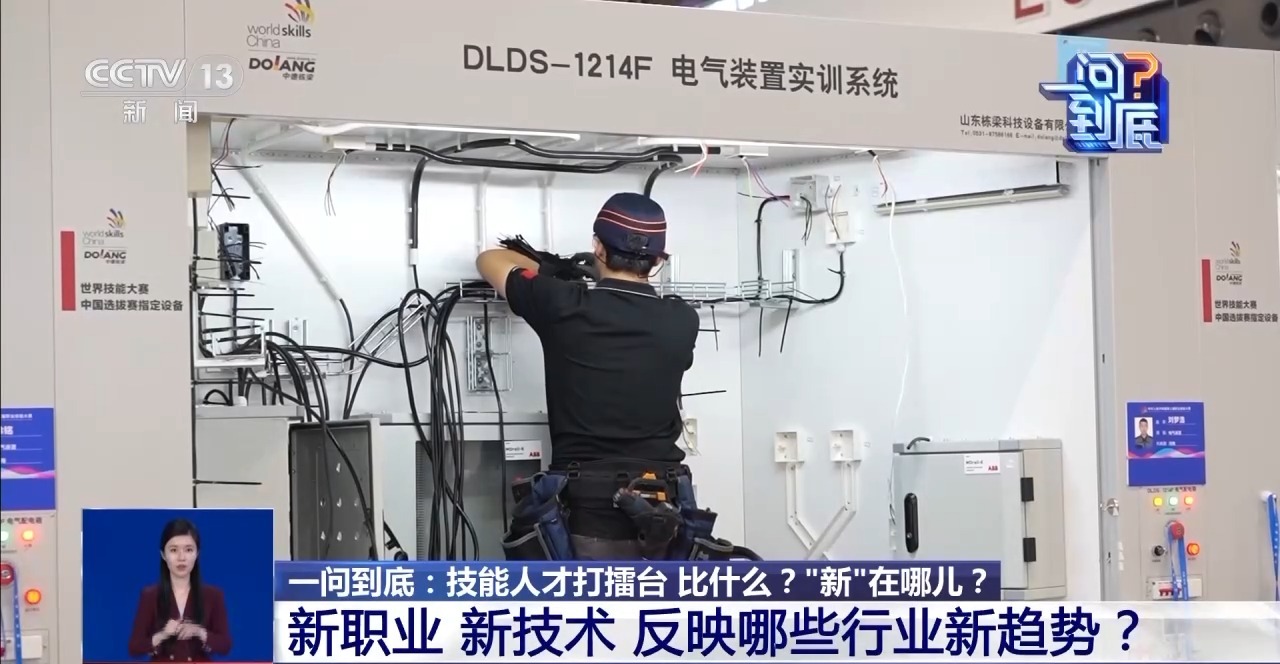
全国技能大赛闭幕 技能人才打擂台比什么?“新”在哪儿?
Yang Shi Wang· 2025-09-23 23:15
Core Insights - The third National Skills Competition showcased 106 competition projects, attracting 3,420 participants and 3,275 judges, highlighting new professions and technologies in various industries [1] - The competition emphasized new trends in industry skills, with over 50% of projects focusing on smart manufacturing, high-end equipment, digital technology, and renewable energy [1] Group 1: New Projects and Trends - The competition introduced six new selection projects for the World Skills Competition, including drone systems, smart security technology, software testing, digital interactive media design, dental restoration technology, and retail [3] - The inclusion of rural revitalization as a competition category reflects the event's alignment with current social production needs and the direction of vocational education reform [3] Group 2: Participant Characteristics - A notable trend among participants is the high educational background, with 13 PhDs, 286 Master's degrees, and 843 Bachelor's degrees, making up 33% of all competitors, particularly in advanced technology fields [4] - The age range of participants spans from 16 to 57 years, indicating a focus on lifelong skill development [5] - The proportion of enterprise employees participating in the national selection projects exceeded 50%, enhancing innovation and technical skills within the workforce [7] Group 3: Technological Applications - Many projects involved robotics, requiring participants to master various technical skills, including programming and understanding industry standards to ensure reliability and precision in robot operations [10] - The competition featured service robots performing tasks like delivery and waste sorting, showcasing the practical applications of robotics in daily life [8] Group 4: New Productive Forces - Projects like smart security technology incorporated AI, requiring participants to program AI for specific tasks, reflecting the integration of new technologies into traditional fields [14] - The dental restoration technology project demonstrated significant advancements, reducing the production time of dentures from one week to one day through digital techniques, enhancing patient experience [16] Group 5: Skill Demonstrations - Participants showcased exceptional skills, such as a competitor from Shandong who demonstrated precision in stacking glasses using a forklift, highlighting the rigorous training and practice involved in mastering such skills [19] - The exhibition of intangible cultural heritage skills, such as sand painting and mechanical clock-making, illustrated the blend of traditional craftsmanship with modern skill competitions [21]
技能“国赛”选拔什么样的人才?新技术新业态开启技能成才“新赛道”
Yang Shi Wang· 2025-09-22 03:41
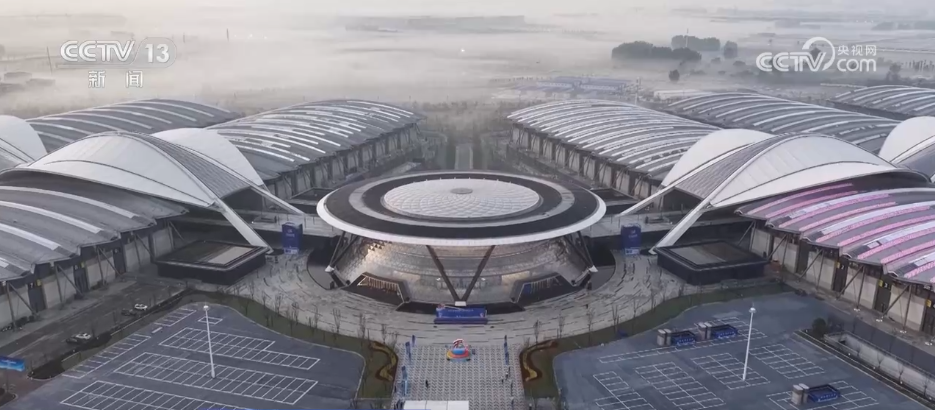
Group 1 - The third National Skills Competition, referred to as the "Skills National Competition," is currently taking place in Zhengzhou, Henan, with a focus on new industries, new professions, and new technologies [1] - Over 50% of the 106 competition projects are related to intelligent manufacturing, high-end equipment, digital technology, and new energy, reflecting the competition's alignment with technological advancements [3] - The competition includes 66 projects for WorldSkills selection, with six new categories added, such as drone systems and smart security technology, and for the first time, rural revitalization has been included [3] Group 2 - The Ministry of Human Resources and Social Security emphasizes that the competition's project settings are aligned with social production development needs, showcasing the direction of new productive forces [5] - The competition aims to raise awareness of new professions and guide training institutions to enhance training in these areas, providing opportunities for individuals interested in new careers [5] - The drone operation (plant protection) project features outdoor practical competitions for the first time, where participants must manually control drones to perform agricultural tasks [7] Group 3 - In the drone operation competition, 70% of participants hold a bachelor's degree, with two-thirds coming from vocational schools and frontline teachers, and one-third from technical professionals in enterprises [9] - The competition tests participants' comprehensive skills in agricultural drone operations, including setup, aerial surveying, and emergency handling, with strict accuracy requirements [9] - New professional categories, such as smart security technology and 3D digital game art, focus on real-world applications and industry needs, selecting talent with critical skills [13][15]
赛场变农田、厘米级精度较量 揭秘技能国赛中新兴产业怎么比
Yang Shi Xin Wen Ke Hu Duan· 2025-09-22 02:19
Core Insights - The third National Skills Competition, referred to as the "Skills National Competition," is currently taking place in Zhengzhou, Henan, with a focus on new industries, professions, and technologies [1][3] Group 1: Competition Overview - The competition features 106 events, with over 50% of the events dedicated to smart manufacturing, high-end equipment, digital technology, and new energy, reflecting a trend towards cutting-edge technological development [3] - Six new events have been added, including drone systems, smart security technology, software testing, digital interactive media design, dental restoration technology, and retail [3] - For the first time, rural revitalization has been included as a competition category, aligning with social production development needs [3] Group 2: New Professions and Training - The competition aims to raise awareness of new professions and encourage training institutions to enhance training opportunities for individuals interested in these fields, thereby opening new employment pathways [5] - The drone operation (plant protection) event includes outdoor practical competitions, where participants must manually control drones for agricultural tasks, emphasizing precision and efficiency [8][10] Group 3: Skill Requirements and Evaluation - Participants in the drone operation event are required to demonstrate comprehensive skills, including drone setup, agricultural assessment, and emergency response, showcasing their cross-disciplinary learning and decision-making abilities [10][11] - The competition has strict performance criteria, with allowable flight level errors of 80 cm, height errors of 50 cm, and directional errors within 30 degrees [13] Group 4: Industry Relevance - The smart security technology event requires competitors to complete tasks related to building intrusion and emergency alarm systems, video monitoring, and analysis within a three-day timeframe [16] - The 3D digital game art event focuses on assessing participants' creativity and computer graphics skills, with tasks based on real-world industry scenarios to align with market demands [18]
第二届技能强国论坛发出“河南倡议”“郑州倡议”
He Nan Ri Bao· 2025-09-20 23:36
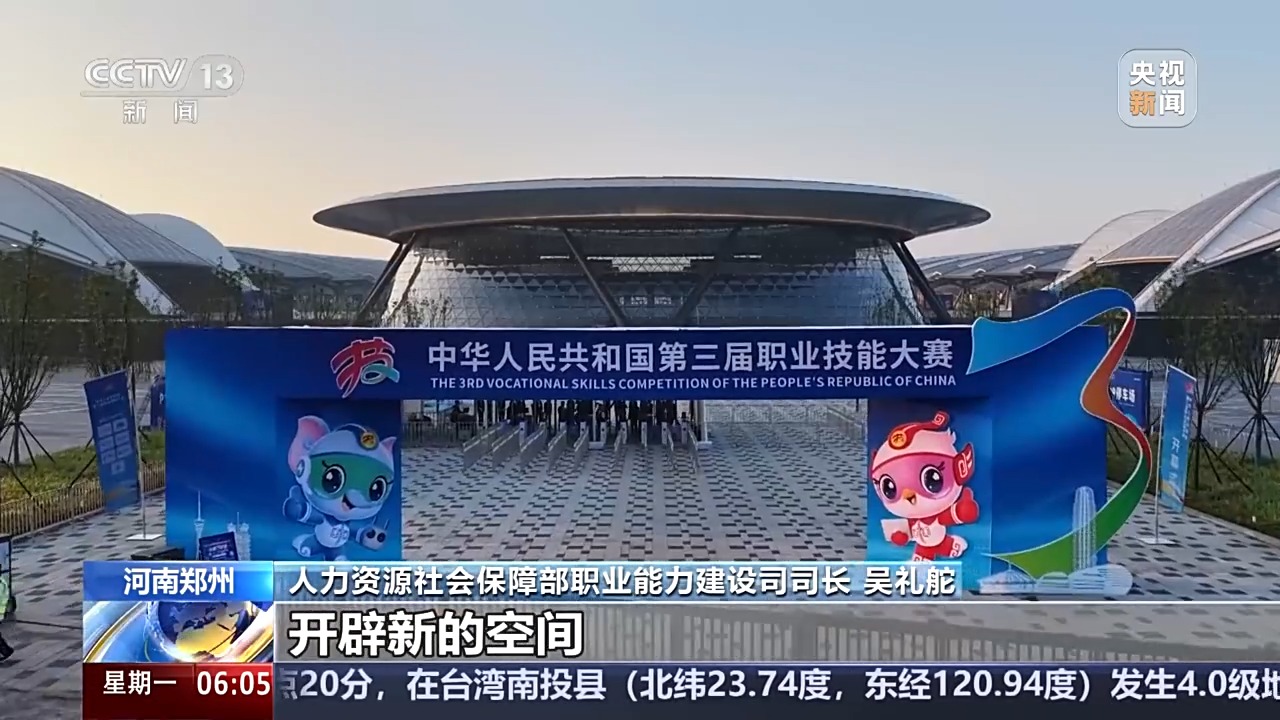
新职业为我国产业发展和就业市场带来了哪些变化?一线劳动者如何适应新技术、新职业?交流对话环 节中,多位嘉宾就这些热点话题展开讨论。 首都经济贸易大学中国新就业形态研究中心主任张成刚表示,新职业的发展,拓展了就业规模,增加了 就业岗位,推动了职业技能的成熟与职业能力的提升。 郑州宇通集团有限公司高级技师杨卫锋结合个人成长经历,分享了一线劳动者如何适应新技术、新职 业,实现人生价值的故事。 论坛现场,"产教评"技能生态链合作伙伴、技工教育联盟合作伙伴举行了签约仪式。同时,为扎实推 进"技能照亮前程"培训行动,全国400多家职业技能培训机构共同发出"'技能照亮前程'培训行动——河 南倡议";为全面提升技能人才评价质量与公信力,全国300多家职业技能社会评价组织共同发出"高质 量开展技能人才评价——郑州倡议"。(记者 王向前 财经全媒体中心记者 朱娟) 责任编辑: 王靖 汇聚智慧力量,助力未来发展。9月20日,郑州航空港区中原国际会展中心,第二届技能强国论坛举 行。 本次论坛是第三届全国技能大赛的活动之一,专家学者,高技能人才代表,职业院校、培训机构及知名 企业代表等会聚一堂,交流经验体会,探讨技能强国建设路径举措。 ...
我国再添17项新职业——从新职业透视经济新活力
Xin Hua Wang· 2025-09-10 23:59
Core Insights - The recent release of 17 new professions by the Ministry of Human Resources and Social Security reflects the ongoing transformation and upgrading of China's economy, driven by new technologies and industries [1][2][3] Group 1: New Professions and Their Significance - Over half of the newly introduced professions are directly related to new technologies and industries, with roles like "Drone Swarm Flight Planner" gaining attention as the low-altitude economy becomes a national strategy [2][3] - The demand for roles such as "Generative AI System Tester" has surged, with recruitment for AI testing positions increasing by 320% year-on-year, significantly outpacing traditional testing roles [3] - The emergence of new professions is seen as a key measure to alleviate structural employment issues and promote high-quality, full employment in the labor market [6][7] Group 2: Market Demand and Employment Trends - There is a significant shortage of professional sleep service personnel in China, with a gap exceeding 100,000, indicating a growing demand for "Sleep Health Managers" [5][6] - The travel photography customization industry has seen rapid growth, with the number of travel photography shops in Kashgar increasing from 2 in 2020 to over 160 by 2024, generating annual revenues of 260 million yuan [5][6] - The new professions are effectively capturing the evolving consumer demands, transforming vague needs into clearly defined job roles [6] Group 3: Industry Upgrades and Professionalization - The certification of "Housekeeping Service Manager" signifies a shift towards professionalization in the housekeeping industry, with increasing demands for specialized services [7][8] - The introduction of new professions is driving the standardization of traditional food services, such as the "Barbecue Chef," enhancing the quality and efficiency of the food industry [7] - The establishment of certified roles in various sectors, including cross-border e-commerce and construction, is providing essential talent support for industry upgrades and technological applications [7][8]