
智慧港口

Search documents
山东港口青岛港2025年货物吞吐量超越7亿吨 比去年突破7亿吨提前15天
Mei Ri Jing Ji Xin Wen· 2025-12-13 13:45
Core Viewpoint - Shandong Port Qingdao Port has achieved significant milestones in cargo throughput and container volume, positioning itself as a leading international shipping hub in Northeast Asia, with a focus on high-quality development and technological innovation [1][2][4]. Group 1: Cargo Throughput and Container Volume - Qingdao Port's cargo throughput has exceeded 700 million tons this year, achieving this milestone 15 days ahead of the previous year [1]. - The container throughput surpassed 30 million TEUs on November 26, 2023, reinforcing its competitive position in the international shipping sector [1]. Group 2: Infrastructure and Capacity Expansion - The port has initiated 15 major projects this year, increasing terminal capacity by 16 million tons and expanding yard area by 1.46 million square meters [2]. - The completion of a second 400,000-ton ore terminal has contributed to a new development pattern, enhancing the port's hardware capabilities [2]. Group 3: Technological Advancements - Qingdao Port has established the first fully automated terminal in the country and is advancing smart port upgrades, including the promotion of its self-developed A-TOS system, which has set multiple world records for automation efficiency [2]. - The port is implementing comprehensive automation across various cargo types, significantly improving operational efficiency [2]. Group 4: Customs and Logistics Enhancements - Qingdao Customs has upgraded its services to enhance logistics efficiency, implementing automated operations that streamline customs processes and reduce handling times significantly [3]. - The optimization of the "Guan Gang Tong" smart inspection platform has reduced the number of operational steps from 11 to 3, saving over 6 hours per shipment [3]. Group 5: Green and Low-Carbon Initiatives - The port is committed to integrating green and low-carbon principles throughout its development, including the use of hydrogen-powered tugs and the establishment of a hydrogen refueling station [3]. - Qingdao Port has developed a carbon neutrality evaluation standard and is actively investing in renewable energy equipment to support its green transformation [3]. Group 6: Future Goals - Qingdao Port aims to continue expanding its shipping network, strengthening infrastructure, deepening technological innovation, and promoting green transformation to enhance its international trade capabilities [4].
锚定一流港口,天津“十五五”打造智慧绿色枢纽
Zhong Guo Xin Wen Wang· 2025-12-12 11:24
Core Viewpoint - Tianjin Port aims to transform into a world-class smart and green hub port during the 14th Five-Year Plan period, shifting focus from scale expansion to capability enhancement [1][6]. Group 1: Smart Transformation - The competition among ports has evolved from merely berth and loading capacity to refined production organization, efficient scheduling, and timely responses [2]. - Tianjin Port is implementing a comprehensive smart development strategy that integrates planning, operations, and services across the entire process [2]. - The world's first "smart zero-carbon" terminal has set records for automated container terminal operations, showcasing the port's technological advancements [2]. Group 2: Green Transition - The development of Tianjin Port emphasizes green initiatives, with specific goals for "zero-carbon terminals" and "low-carbon port areas" [3]. - The port is focusing on renewable energy sources, such as wind and solar power, to achieve zero-carbon operations across all roll-on/roll-off terminals [3]. - Efforts to optimize transportation methods and enhance clean transport ratios are underway to alleviate environmental pressures [3]. Group 3: Port-City Integration - The integration of port and city development is crucial for driving regional economic growth, linking logistics, trade, and industry [4]. - Tianjin is promoting the development of free trade zones and bonded areas in conjunction with the port to attract high-end manufacturing and international trade [4]. - Projects like cruise home ports and port industrial tourism are diversifying the port's functions, enhancing its role in urban culture and tourism [5]. Group 4: Strategic Role in Development - The positioning of Tianjin Port in the 15th Five-Year Plan reflects a shift from focusing solely on throughput to emphasizing its role in supply chains and as a strategic hub in the new development landscape [5][6]. - The dual focus on "smart" and "green" initiatives is seen as key to elevating the port's capabilities and providing a model for regional low-carbon transitions [5].

“关港通2.0”上线 青岛自贸片区“区关港”协同机制再升级
Xin Hua Cai Jing· 2025-12-12 03:22
Core Insights - The "Guankong Tong 2.0" initiative has been officially launched, representing a significant upgrade from the previous version, "Guankong Tong 1.0," which was the first in the country to implement online processing for general cargo inspection and other innovative features [1][3] Group 1: Service Enhancements - "Guankong Tong 2.0" focuses on seven major services including cross-regional inspection, online vehicle booking, sample management, preliminary screening, quarantine processing, online seal purchasing, and internal notifications, enhancing the integration of on-site operations [3] - The initiative aims to streamline customs processes, allowing for efficient handling of goods, as demonstrated by the rapid clearance of two containers of dried chili from Southeast Asia within two days [3] Group 2: Smart Inspection Focus - The program emphasizes smart inspection for various cargo types, including grains, bulk minerals, cold chain products, hazardous materials, and consolidated shipments, providing tailored services and intelligent supervision [4] - For instance, the "Smart Cold Chain" service allows for accurate temperature monitoring of cold chain containers, significantly reducing inspection waiting times by 24-48 hours compared to previous methods [4] Group 3: Data Transmission and Security - "Guankong Tong 2.0" establishes a secure data transmission channel between customs and ports, ensuring safe data exchange and efficient processing of business transactions [5] - The initiative includes a dual authentication mechanism and an intrusion defense system to protect critical documents, enhancing the overall security and efficiency of the customs process [5] Group 4: Comprehensive Online Management - The program aims for full online management of the customs process, focusing on key areas such as grains, bulk minerals, cold chain products, hazardous materials, and consolidated shipments, thereby addressing challenges in customs clearance for major commodities [5] - By leveraging technology and optimizing processes, "Guankong Tong 2.0" enhances the efficiency of cargo flow and precision in supervision, benefiting enterprises through collaborative innovation [5]

牢记嘱托 逐梦深蓝|让港口越来越“聪明”
Zhong Guo Jing Ji Wang· 2025-12-11 10:27
Core Viewpoint - The article highlights the advancement of traditional infrastructure and the digital transformation in China's port industry, specifically focusing on the Shandong Port Rizhao Port's modernization efforts [2] Group 1: Infrastructure Development - The "14th Five-Year Plan" suggests promoting the update and digital transformation of traditional infrastructure [2] - The article showcases the 150,000-ton grain-specific berth at Rizhao Port, emphasizing the use of advanced unloading machinery [2] Group 2: Smart Port Initiatives - The port utilizes a "double helix" system for efficient grain handling, where soybeans are transported via a closed belt conveyor to storage facilities [2] - The article invites readers to explore how smart ports are being developed and implemented in the region [2]
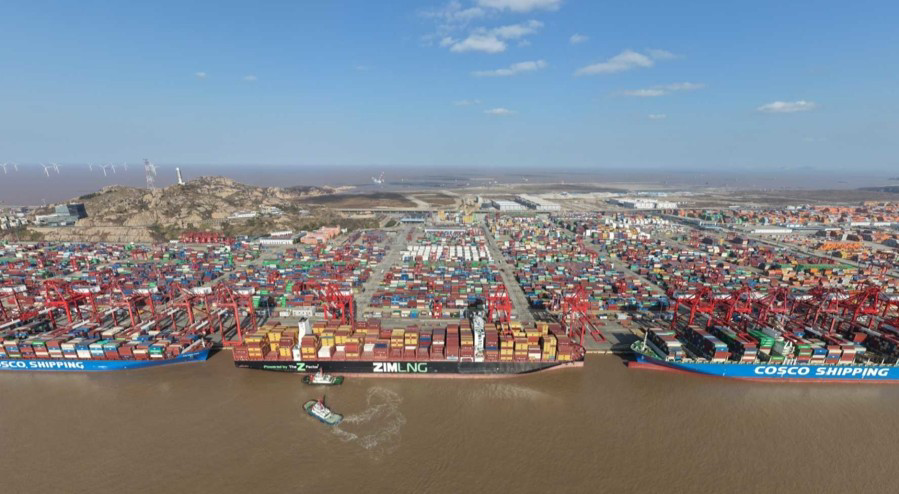
提前破5000万标箱!上海港今年集装箱吞吐量有望再创新高
Bei Jing Ri Bao Ke Hu Duan· 2025-12-10 07:53
Core Insights - Shanghai Port achieved a container throughput of 50.56 million TEUs in the first 11 months of this year, marking a year-on-year increase of 6.7%, and is expected to set a new annual record, maintaining its position as the world's largest container port for 16 consecutive years [1] Group 1: Shanghai Port Performance - Shanghai Yangshan Deep-Water Port is the main contributor to this record, with a throughput of 26.25 million TEUs in the first 11 months, reflecting a year-on-year increase of 9.7%, and is projected to exceed 29 million TEUs for the year [3] - The port surpassed the 50 million TEU mark a month earlier than last year, showcasing the resilience and potential of the Chinese economy [1] Group 2: Technological Advancements - The Yangshan Phase IV automated terminal is evolving towards intelligence, utilizing complex processes such as "dual small vehicles and dual lifting devices" to enhance operational efficiency [3] - The terminal has established China's first port-level simulation testing platform, creating a "digital twin" system that allows for virtual verification of new processes and algorithms, significantly reducing innovation costs and risks [3] Group 3: Future Developments - The Yangshan Phase I and II terminals are undergoing a major transformation aimed at creating an automated and intelligent production system, with the intelligent yard completed in 2023, reducing the container transfer rate from 55.8% to 7.2% [4] - The construction of the Xiaoyangshan North Operation Area is underway, which will add 6,100 meters of new coastline to Shanghai Port, including 5,500 meters of container terminal coastline and a designed annual throughput capacity of 11.6 million TEUs [7]

从煤矿洗衣工到智慧码头“领头雁”,宋文庆以匠心赋能港口升级
Qi Lu Wan Bao· 2025-12-10 04:50
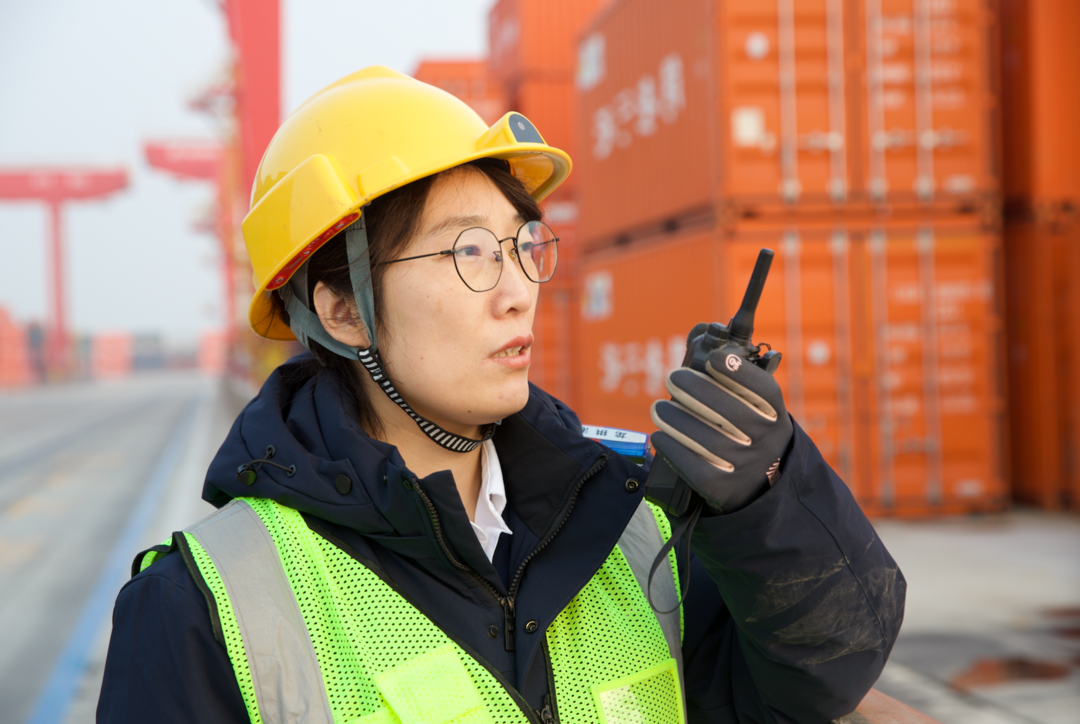
从清洗矿工工装到操控自动化码头设备,济宁港航龙拱港生产运营部智控班班长宋文庆用三年多时间实现"跨界蜕变"。以"门外汉"成长为"行家里手",带 领团队创新操作模式,将作业效率提升80%、创下每小时30自然箱佳绩,近日,她凭借这份实干荣获2025年"齐鲁最美职工",成为内河智慧港口建设的先 锋榜样。 齐鲁晚报.齐鲁壹点孔茜通讯员臧盛博 2分钟完成高效作业 她从煤矿女工化身智慧航运先锋 太白湖西畔,济宁龙拱港碧波万顷、岸阔水深,这座全面对标青岛港(601298)、日照港(600017)自动化运营模式的智慧化集装箱示范港,正以科技之 力改写内河航运的格局。货场内,30米高空的轨道吊如钢铁巨人般精准吊运集装箱,而操控这庞然大物的,竟是百米之外远程控制中心里,通过5G技术 运筹帷幄的女司机宋文庆。 "一人能控4台自动化轨道吊,2分钟就能完成一套装船收箱作业!"作为济宁港航龙拱港生产运营部智控班班长,宋文庆的话语里满是自信。如今,曾经需 要高空作业的场桥司机,只需在中央控制室的4块电脑屏前,动动操纵杆、点一点鼠标,就能全程监控作业流程。在人、机、管理系统与控制系统的高效 协同下,龙拱港的作业效率较传统模式提升了80%。 这 ...
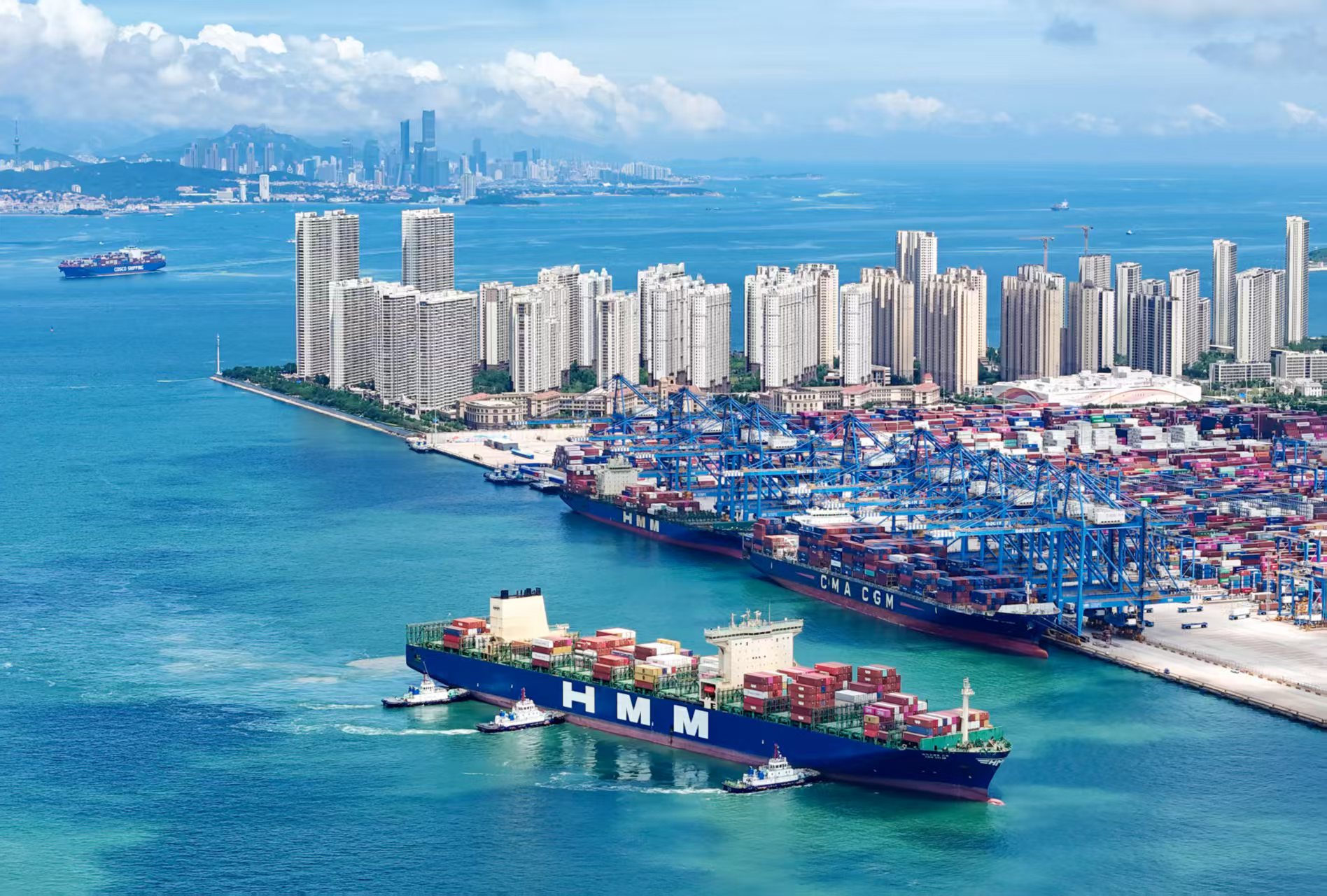
提前15天!山东港口青岛港今年货物吞吐量超越7亿吨时间更快
Qi Lu Wan Bao· 2025-12-08 07:35
齐鲁晚报·齐鲁壹点记者 赵波 "我们联合港口升级'关港通'智慧查验平台,将涉港作业的11个环节优化缩减至3个,单票货物物流作 业、缴费提离等办理时间节省6小时以上,优先查验的鲜活易腐农产品、AEO高级认证企业货物平均调 运时间缩短5小时,仅青岛港区每年就可为企业节约综合成本约3500万元。"黄岛海关查检一处副处长俞 挺说。 此外,青岛港将绿色低碳理念贯穿发展全链条,从油电拖轮、氢电拖轮投入使用,到全球首创空轨集疏 运系统;从高点站位、系统制定绿色低碳转型规划方案,到发布"碳中和"港口评价标准;从规模化投用 新能源装备,到建成全国港口首座加氢站、全面升级岸电设施,每一项举措都充分印证了港口作为国民 经济晴雨表,在绿色低碳发展中的责任担当。 站在新起点,山东港口青岛港将全力冲刺年度任务目标,持续织密航线网络、夯实硬件基础、深化科技 创新、推进绿色转型,增强国际贸易综合实力,助力国家更高水平对外开放,为海洋强国、交通强国建 设贡献更坚实的港口力量。 立足高质量发展大局,青岛港抢抓建设黄金期,持续扩大港口通过能力,今年新开工15个重大项目,新 增码头通过能力1600万吨、堆场面积146万平米、液化烃库容13.2万立方 ...
山东港口青岛港今年货物吞吐量超越7亿吨
Da Zhong Ri Bao· 2025-12-08 05:53
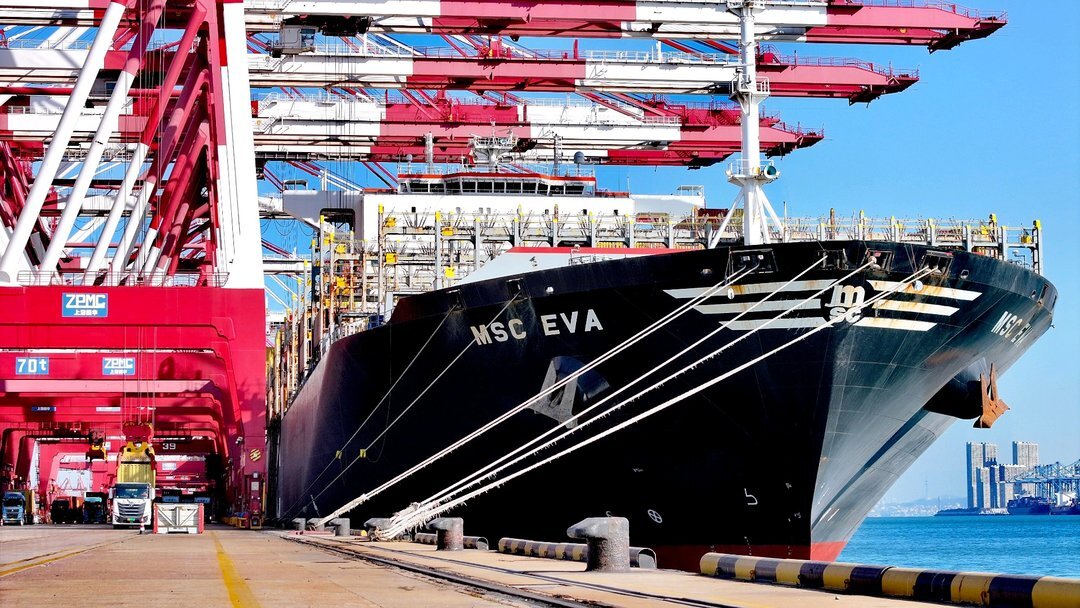
今年以来,青岛港锚定高质量发展目标,坚持"海陆"双向发力,持续织密物流航线网络,新增集装箱航线20条,航线总数扩容至近240条,覆盖全球180多 个国家和地区的700多个港口,对接共建"一带一路"及RCEP国家的航线占比超过60%,推动"新三样"、高端设备、精密仪器等高附加值货种源源不断驶向 世界各地,成为中国与新兴市场贸易往来的"黄金通道";依托陆向联动,建成54个内陆港、开通86条海铁联运班列,1-11月份青岛港海铁联运箱量完成 262.5万标准箱,同比增长11%,继续保持全国沿海港口首位。 立足高质量发展大局,青岛港抢抓建设黄金期,持续扩大港口通过能力,今年新开工15个重大项目,新增码头通过能力1600万吨、堆场面积146万平米、 液化烃库容13.2万立方,特别是第二座40万吨矿石码头建成投产,形成了"比翼双飞四十万"发展新格局,硬件能力显著提升,千亿级临港产业集群加速崛 起,"吨位决定地位"的港航名言正在逐渐变为现实。 12月8日,随着满载10612TEU的集装箱船舶"地中海伊娃"轮在前湾港区完成装卸作业,青岛港今年货物吞吐量累计突破7亿吨,较2024年突破7亿吨提前15 天。今年集装箱吞吐量已于11 ...
港口航运业持续健全运输通道体系,助力打造全球航运枢纽
Sou Hu Cai Jing· 2025-12-05 04:59
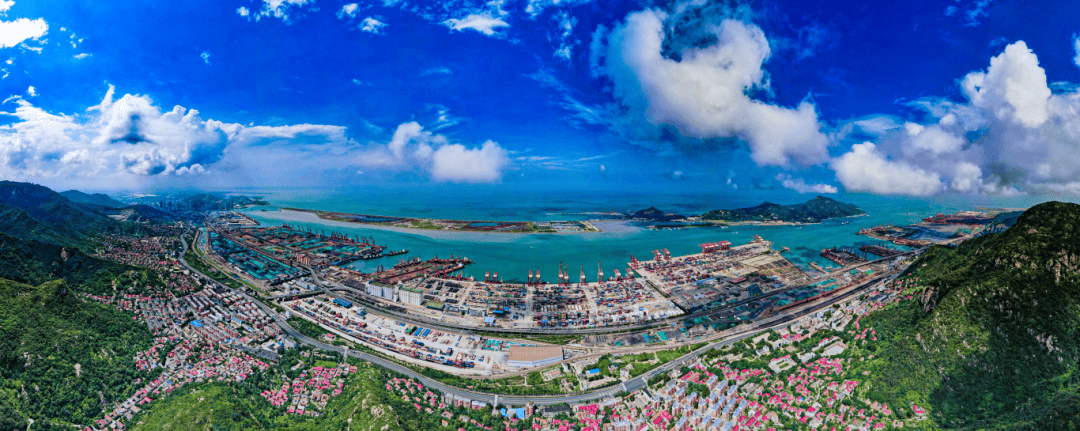
过去5年,我国国际航运能力持续增强。截至2024年,中国海运连接度连续19年保持世界第一,港口货物吞吐量、集装箱吞吐量连续多年位居世界第一; 2024年,我国国际海运量占全球海运量的31.3%;截至今年10月,中国已与70个国家和地区签署双多边海运协定。 《启航新征程 共谋"十五五"》报道之五 文 / 现代物流报记者 马敬泽 港口是连通我国内外循环的重要窗口,水路则是我国重要的交通动脉。过去5年,我国港口航运业深入践行交通强国建设要求,在基础设施、服务品质、 智慧绿色转型等领域实现跨越式发展。 (连云港港供图) 2025年,既是"十四五"规划的收官之年,也是"十五五"规划谋篇布局的关键节点。在这一关键历史交汇点,我国港口航运业正以固强补弱、创新驱动为抓 手,布局迈向社会主义现代化的下一个5年,朝着世界一流航运强国目标稳步前进。 "点线交织"提升国际影响力 持续打造国际物流通道体系,提升国际航运枢纽能级,不仅是我国扩大高水平对外开放,维护供应链安全的关键举措,也为我国港口航运业完善航线网 络,提升服务能力,增强国际影响力及竞争力奠定基础。 党的二十届四中全会审议通过的《中共中央关于制定国民经济和社会发展第十五个 ...
北部湾港前11月货物吞吐量增10.19% 聚焦港口主业力争全年实现营收74亿
Chang Jiang Shang Bao· 2025-12-05 00:34
Core Viewpoint - North Bay Port is experiencing rapid growth in cargo throughput and revenue, with significant increases in both overall and container volumes, driven by strategic initiatives and infrastructure improvements [1][5][6]. Group 1: Cargo Throughput and Growth - As of November 2025, North Bay Port's cumulative cargo throughput reached 329 million tons, marking a year-on-year increase of 10.19% [1][3]. - The container throughput for the same period totaled 9.1023 million TEUs, reflecting a growth of 10.75% year-on-year [1][3]. - The port's cargo throughput has grown from 156 million tons in 2017 to 328 million tons in 2024, with an average annual growth rate of 11.1% [3]. Group 2: Revenue and Profitability - For the first three quarters of 2025, North Bay Port reported revenue of 5.535 billion yuan, a year-on-year increase of 12.92%, achieving 74.8% of its annual revenue target [5][6]. - The net profit excluding non-recurring items reached 725 million yuan, up 22.63% year-on-year, indicating strong operational performance [5][6]. Group 3: Strategic Initiatives - The company has focused on expanding cargo sources and optimizing operational processes, including the establishment of a dedicated team for container cargo sourcing and enhancing intermodal transport [4][6]. - North Bay Port aims to achieve a cargo throughput of 330 million tons and container throughput exceeding 10 million TEUs by the end of 2025, aligning with its strategic goals [4]. Group 4: Infrastructure and Development - North Bay Port currently manages 91 coastal production berths with an annual throughput capacity of 451 million tons, including a container throughput capacity of 11.04 million TEUs [2]. - The port has opened 98 container shipping routes, enhancing its connectivity with both domestic and international markets [2]. Group 5: Innovation and R&D - The company is committed to innovation, focusing on smart and green transformation, with increasing R&D expenditures from 8.562 million yuan in 2022 to 29.32 million yuan in the first three quarters of 2025 [7].
