杠杆收购

Search documents
暴涨近15%!华尔街日报:特朗普女婿参与,游戏巨头艺电将“私有化”,500亿美元估值创杠杆收购记录
美股IPO· 2025-09-27 02:02
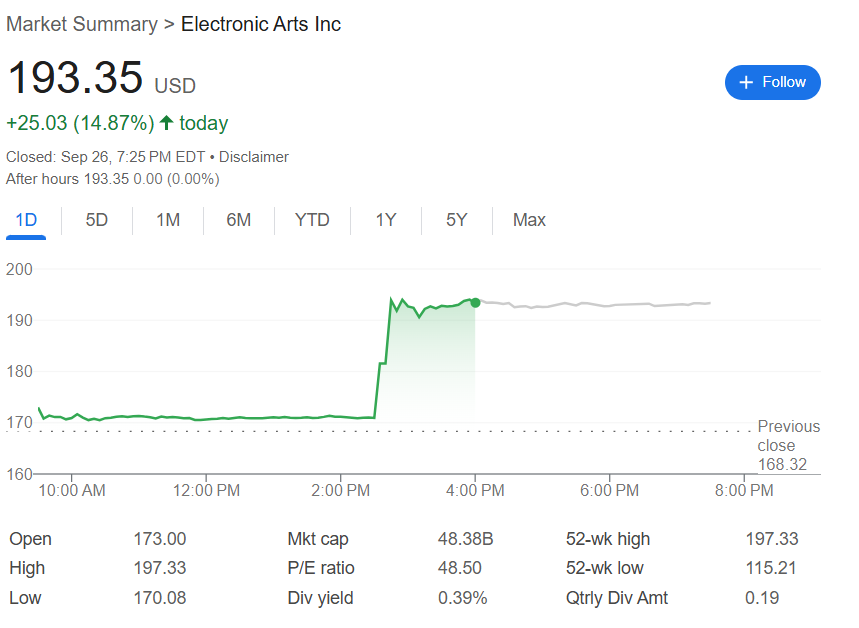
Core Viewpoint - Electronic Arts (EA) is in talks for a potential privatization deal valued at approximately $50 billion, which could become the largest leveraged buyout in history, surpassing the previous record of $45 billion set in 2007 [3][13][14]. Group 1: Transaction Details - The deal is led by a consortium including Silver Lake Partners, Saudi Arabia's Public Investment Fund (PIF), and Jared Kushner's investment firm, with JPMorgan responsible for financing arrangements [4][5]. - If finalized, this transaction would not only be the largest of 2025 but also set a new record for leveraged buyouts [3][13]. - EA's stock surged nearly 15% to a historical high of $193.35, raising the company's market capitalization to approximately $48 billion following the news [5]. Group 2: Financial and Market Context - The gaming industry has faced a slowdown after a period of explosive growth during the COVID-19 pandemic, leading to significant job cuts across the sector, including at EA, which has conducted three major layoffs in 2023 [17]. - EA's performance has been volatile, with its latest football game, "EA Sports FC 25," underperforming, but recent reports indicate that the overall product portfolio has delivered better-than-expected results [18]. - The upcoming release of "Battlefield 6" on October 10 is highly anticipated, as it will compete directly with Microsoft's "Call of Duty" series in the shooting game market [19]. Group 3: Consortium Strength - Silver Lake Partners manages approximately $110 billion in assets and has existing investments in the gaming sector, including a stake in Unity Software, a major client of EA [7][8]. - The Saudi PIF holds about 10% of EA's shares and has been increasing its investment profile, including the establishment of the Savvy Gaming Division for gaming and esports acquisitions [9][10]. - Jared Kushner's Affinity Partners, founded in 2021, has received backing from investors including the PIF [12].


银湖、PIF与库什纳旗下基金组财团 或以480亿美元私有化游戏巨头艺电(EA.US)
Zhi Tong Cai Jing· 2025-09-27 01:24
Group 1 - Electronic Arts (EA) is in talks for privatization with a consortium led by Silver Lake Management, the Saudi Public Investment Fund, and Jared Kushner's Affinity Partners [1] - The deal could be announced as early as next week and is expected to be one of the largest transactions announced in 2025, potentially becoming the largest leveraged buyout in history [1] - EA's stock price rose approximately 15% to $193.35, giving the company a market capitalization of about $48 billion [1] Group 2 - EA is set to release "Battlefield 6" on October 10, competing with Microsoft's "Call of Duty" in the video game shooting market [2] - The video game industry is experiencing sluggish growth, having laid off tens of thousands of employees over the past three years following a surge in player numbers during the COVID-19 pandemic [2] - Earlier this year, EA cut hundreds of jobs, marking the third major round of layoffs since 2023 [2]

特朗普女婿参与,游戏巨头EA将“私有化”,500亿美元估值创杠杆收购记录
Hua Er Jie Jian Wen· 2025-09-27 00:47
Core Viewpoint - EA is in advanced negotiations for a potential privatization deal worth up to $50 billion, which could become the largest leveraged buyout in history and significantly alter the global gaming industry landscape [1][6]. Group 1: Deal Details - The deal is expected to be announced as early as next week and could surpass the previous record for leveraged buyouts set in 2007 with the TXU acquisition at approximately $32 billion [1][6]. - The acquisition consortium is led by Silver Lake Partners, the Saudi Public Investment Fund (PIF), and Jared Kushner's Affinity Partners, with JPMorgan responsible for arranging the financing [1][4]. Group 2: Financial Impact - Following the news of the potential deal, EA's stock surged nearly 15% to a record high of $193.35, raising the company's market capitalization to approximately $48 billion [1]. - The deal is positioned to be one of the largest transactions announced in 2025, indicating strong investor interest in the gaming sector [6]. Group 3: Consortium Strength - Silver Lake Partners manages around $110 billion in assets and has existing investments in the gaming sector, including a stake in Unity Software, a major client of EA [4]. - The Saudi PIF holds about 10% of EA and has been active in the gaming industry, including a recent $5 billion acquisition of Scopely and a 6.5% stake in Take-Two Interactive [4]. - Affinity Partners, founded by Jared Kushner, has garnered support from investors including the PIF [4]. Group 4: Industry Context - The gaming industry is currently experiencing a slowdown after a period of explosive growth during the COVID-19 pandemic, leading to significant job cuts across the sector [9]. - EA has faced performance fluctuations, with its latest football game underperforming, but recent reports indicate better-than-expected results from its overall product lineup [10].
新规!并购贷款比例上限提高至70%
21世纪经济报道· 2025-08-21 13:47
Core Viewpoint - The newly released "Commercial Bank M&A Loan Management Measures (Draft for Comments)" aims to optimize M&A loan services and support the construction of a modern industrial system and new productive forces, marking a significant regulatory upgrade from previous guidelines to a more binding management approach [1][3]. Group 1: Loan Terms and Proportions - The draft distinguishes between "controlling" and "equity" M&A loans, setting different leverage ratios, terms, and bank entry standards for each type. The upper limit for controlling M&A loans is raised to 70% with a maximum term of 10 years, while equity M&A loans have an upper limit of 60% and a maximum term of 7 years [3]. - The "double loosening" of loan terms and financing ratios is expected to significantly benefit large-scale industrial mergers and strategic acquisitions, particularly in capital-intensive sectors like new energy and biomedicine, where longer integration periods are necessary [3][4]. Group 2: Impact on M&A Activities - The extended loan term and increased financing ratio are anticipated to support large industrial integrations and strategic mergers, alleviating financial pressure on companies involved in complex transactions [3][4]. - The measures are expected to facilitate cross-border mergers, providing companies with a buffer against uncertainties in international integration [4]. - The new loan terms align better with private equity (PE) fund investment cycles, enhancing the ability of PE firms to engage in acquisitions without the pressure of loan repayment before fund maturity [4][6]. Group 3: Lowering Financing Barriers - The increase in the loan ratio to 70% is expected to lower the self-funding threshold for acquirers, allowing more companies, especially those in the technology and growth sectors, to participate in M&A activities [6][7]. - The policy is particularly beneficial for private equity funds, as the higher leverage allows them to amplify returns on equity, increasing their willingness to bid and enhancing market liquidity [6][7]. Group 4: Risk Management Enhancements - While loosening financing conditions, the draft also emphasizes the need for banks to strengthen risk identification and control, particularly for cross-border and high-leverage acquisitions [9]. - Banks are required to conduct thorough analyses of financing structures and repayment sources, ensuring a reasonable proportion of equity funding to mitigate high-leverage risks [9]. - The implementation of these measures is expected to favor larger banks with mature risk control systems and specialized M&A teams, while smaller regional banks may face significant challenges due to limited resources [9].

并购贷款比例上限提高至70% 科技并购迎“融资松绑”
2 1 Shi Ji Jing Ji Bao Dao· 2025-08-21 11:37
Core Viewpoint - The newly released "Management Measures for Commercial Bank Mergers and Acquisitions Loans" aims to enhance the regulatory framework for merger loans, focusing on expanding the applicable scope, optimizing loan conditions, and strengthening debt repayment capability assessments [1][2]. Group 1: Loan Terms and Ratios - The new measures differentiate between "controlling" and "equity" merger loans, setting different leverage ratios and terms for each, with controlling loans capped at 70% and a maximum term of 10 years, while equity loans are capped at 60% with a maximum term of 7 years [2][3]. - The maximum loan term for controlling mergers has been extended from 7 years to 10 years, and the financing ratio has increased from 60% to 70%, which is expected to benefit significant industrial mergers that require longer integration periods [2][3]. Group 2: Impact on Mergers and Acquisitions - The policy is expected to support large-scale industrial integration and strategic mergers, alleviating financial pressure on companies involved in complex transactions [3][4]. - It will facilitate cross-border mergers, providing a buffer against uncertainties faced during international integrations due to the extended loan term [3][4]. - The new loan terms align better with private equity (PE) fund investment cycles, which typically last 8-12 years, thus reducing pressure on funds to repay loans before exits [3][4]. Group 3: Industry Benefits - The increase in the loan ratio to 70% is anticipated to significantly stimulate the M&A market, particularly benefiting technology, high-end manufacturing, and new energy sectors, which often require mergers to acquire technology and resources [4][5]. - The adjustment lowers the self-funding threshold for potential acquirers, expanding the pool of companies eligible to participate in mergers [4][5]. Group 4: Risk Management Enhancements - The new measures also emphasize enhanced risk identification and control for commercial banks, particularly regarding "cross-border" and "high-leverage" mergers [6]. - Banks are required to conduct thorough analyses of financing structures and repayment sources, ensuring a reasonable proportion of equity funding to mitigate high-leverage risks [6]. - The implementation of these measures is expected to reshape the landscape of commercial bank M&A loan businesses, favoring larger banks with mature risk control systems and specialized teams [6].
上纬新材\"卖身\"记:一场资本市场的\"过山车\"爱情
Sou Hu Cai Jing· 2025-08-12 01:10
Group 1 - The core point of the article is the dramatic rise and fall of the stock price of Upway New Materials, which saw a cumulative increase of 1320% over 17 trading days due to the acquisition announcement by Zhiyuan Robotics [1] - Zhiyuan Robotics announced its intention to acquire a controlling stake of 63.62% in Upway New Materials at a price of 7.78 yuan per share, totaling 2.1 billion yuan, which has since ballooned to a market value of 37.049 billion yuan [1][3] - The acquisition is described as a "textbook-level leveraged buyout," with the initial investment of 2.1 billion yuan turning into a paper profit of over 20 billion yuan [1] Group 2 - The strategic rationale behind the merger is based on the potential for "strategic synergy" between the two companies, with Upway New Materials specializing in environmentally friendly materials that could be utilized in robotics [1][3] - The market's enthusiasm is fueled by the current trend of humanoid robots, which have gained significant attention and demand, exemplified by Zhiyuan Robotics securing a 78 million order from China Mobile [3] - Despite the initial excitement, regulatory scrutiny led to a temporary suspension of trading for Upway New Materials, and after resuming, the stock price experienced volatility, including a sudden drop below 100 yuan [5][6]


伯克希尔,罕见大跌!
Zheng Quan Shi Bao· 2025-08-04 15:25
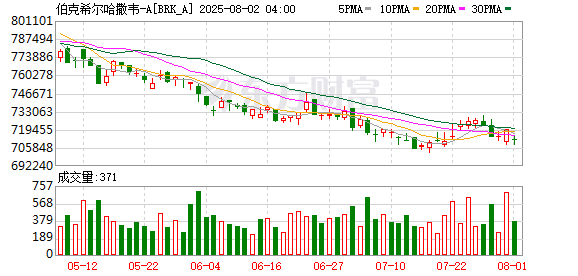
Core Insights - Berkshire Hathaway's stock price has experienced a rare significant decline due to disappointing earnings growth, a pause in stock buybacks, and substantial losses on its investment in Kraft Heinz [1][2]. Group 1: Stock Performance - On Monday, pre-market trading saw Berkshire Hathaway's Class A and B shares drop over 1%, with opening declines exceeding 3%. As of the report, Class A shares fell by 2.3% and Class B shares by 2.7% [2]. - Since the announcement of Warren Buffett's retirement at the end of the year, Berkshire's stock has been on a downward trend for over three months, with a cumulative decline of nearly 15% from its peak in early May [4]. Group 2: Financial Performance - The recent earnings report revealed unexpected declines in revenue and net profit, with operating profit, which Buffett values highly, also showing a decrease [2]. - Berkshire's investment in Kraft Heinz has resulted in significant losses, with the company writing down the book value of its Kraft Heinz shares to $8.4 billion, reflecting a book loss of $3.76 billion [2]. Group 3: Investment Strategy - Berkshire has not engaged in any stock buybacks this year, despite holding $344.1 billion in cash and having net sold stocks for 11 consecutive quarters, selling $4.5 billion in stocks in the first half of 2025 [3]. - Analysts suggest that the lack of aggressive buyback measures during the stock price decline may be due to the stock not being undervalued enough or the impact of the new 1% stock buyback tax under the Inflation Reduction Act, which increases repurchase costs [4]. Group 4: Leadership Transition - The upcoming transition to Greg Abel as CEO poses challenges in gaining investor trust, especially following Buffett's retirement announcement [4]. - Analysts believe that while Abel may eventually earn investor confidence, the absence of significant investment activities, potential large acquisitions, and stock buybacks in the recent quarter has been disappointing [4].
伯克希尔,重大发布!
Zheng Quan Shi Bao· 2025-08-02 14:23
Core Viewpoint - Berkshire Hathaway's Q2 financial report shows a decline in revenue and net profit, reflecting challenges in investment returns and specific losses in key holdings like Kraft Heinz [2][4]. Financial Performance - Total revenue for Q2 was $92.515 billion, down from $93.653 billion year-over-year, a decrease of 1.2% [2][3]. - Net earnings attributable to Berkshire shareholders were $12.370 billion, a significant drop of 59% from $30.348 billion in the same quarter last year [2][3]. - Operating profit decreased by 3.8% to $11.616 billion compared to $12 billion in the previous year [2][3]. Investment and Holdings - Berkshire's cash and cash equivalents fell to $344.1 billion from $347.68 billion as of March 31 [4]. - The company has sold $4.5 billion in stocks in the first half of 2025, marking the 11th consecutive quarter of net stock sales [4]. - 67% of Berkshire's equity holdings are concentrated in five companies: American Express, Apple, Bank of America, Coca-Cola, and Chevron [4]. Specific Losses - Berkshire wrote down the book value of its Kraft Heinz shares to $8.4 billion, reflecting a loss of $3.76 billion [4]. - The investment in Kraft Heinz, initiated in 2013, has faced ongoing challenges, including declining sales and goodwill impairment, leading to a stock price drop of over 50% [4]. Management Changes - This is the first financial report since Warren Buffett announced his retirement plans for the end of 2025, with Greg Abel set to take over as CEO [2][5]. - Berkshire has reduced its involvement in Kraft Heinz's board, signaling a potential withdrawal from day-to-day operations [5]. Economic Outlook - Berkshire's report indicates concerns about the impact of tariffs and international trade tensions on the U.S. economy and the company's future performance [5].

伯克希尔,重大发布!
证券时报· 2025-08-02 14:19
Core Viewpoint - Berkshire Hathaway's Q2 financial report shows a decline in revenue and net profit, reflecting challenges in investment returns and specific losses in key holdings like Kraft Heinz [1][5]. Financial Performance Summary - Q2 revenue was $92.515 billion, down from $93.653 billion year-over-year, a decrease of 1.2% [2]. - Net profit for the quarter was $12.370 billion, a significant drop of 59% from $30.348 billion in the same period last year [2]. - Operating profit decreased by 3.8% to $11.16 billion compared to $11.6 billion in Q2 2024 [1][2]. Investment and Holdings - Berkshire's cash and cash equivalents fell to $344.1 billion from $347.68 billion as of March 31, 2025, marking the 11th consecutive quarter of net stock sales, totaling $4.5 billion in the first half of 2025 [3]. - The company's equity holdings are heavily concentrated, with 67% in five companies: American Express, Apple, Bank of America, Coca-Cola, and Chevron [4]. Specific Investment Challenges - Berkshire recorded a significant impairment on its Kraft Heinz investment, reducing its book value to $8.4 billion, resulting in a loss of $3.76 billion [5]. - The company has reduced its board involvement in Kraft Heinz, signaling a potential exit from daily operations [5]. Economic Outlook - Berkshire's report indicates concerns about the impact of tariffs and international trade tensions on the U.S. economy and its future performance, highlighting significant uncertainty [5].
巴西首富680亿买了一双鞋,巴菲特完美错过
美股研究社· 2025-05-19 10:51
Core Viewpoint - The article discusses the acquisition of Skechers by 3G Capital for $9.42 billion, marking a significant event in the footwear industry and highlighting the strategic interests of both parties involved [4][30]. Group 1: Acquisition Details - Skechers announced its sale to 3G Capital for $9.42 billion, with the transaction expected to complete in Q3 of this year, leading to Skechers delisting from the NYSE and becoming a private company [4]. - This acquisition is notable as it is the largest in the footwear industry to date and marks 3G Capital's second non-food company acquisition [8][22]. - Warren Buffett expressed interest in acquiring Skechers, indicating a potential valuation of around $10 billion during Berkshire Hathaway's annual meeting [4][30]. Group 2: Company Performance - Skechers reported a global sales increase of 12.1% to nearly $9 billion last year, achieving a net profit of $640 million, with projections to reach $10 billion in revenue by 2026 [6][30]. - The brand holds the third position in the global sportswear market, following Nike and Adidas [6]. - Skechers has experienced significant growth in China, with retail sales increasing from 74 million yuan in 2008 to 16.6 billion yuan in 2019, although recent reports indicate a decline in sales [27][30]. Group 3: 3G Capital Background - 3G Capital, founded in 2004, is known for its focus on large-scale investments, primarily in the food and beverage sector, and has a history of successful acquisitions [12][18]. - The firm has a reputation for implementing aggressive cost-cutting measures and operational efficiencies in its portfolio companies [15][18]. - 3G Capital's acquisition strategy emphasizes brands with strong market presence but poor management, aligning with Warren Buffett's investment philosophy [18][20]. Group 4: Market Context and Future Outlook - The current market environment presents challenges, including changing consumer trends and economic fluctuations, which may impact the performance of Skechers post-acquisition [30][34]. - Skechers aims to open an additional 3,000 stores in China and achieve a sales target of 30 billion yuan from the Chinese market by 2026 [34].