核能复兴

Search documents
港股异动 | 核电股今日走高 中核国际(02302)涨超9% 中广核矿业(01164)涨超8%
智通财经网· 2025-09-26 05:46
Core Insights - Nuclear stocks have risen significantly, with China National Nuclear Power (02302) up 9.67% to HKD 4.31 and China General Nuclear Power (01164) up 7.84% to HKD 3.3 [1] - A recent report from JPMorgan highlights a growing market tension between the explosive demand driven by nuclear energy revival and AI revolution, and the supply bottlenecks caused by major producers reducing output and geopolitical factors [1] - Uranium spot and futures prices have increased by approximately 5% this year, driven by production cuts from major suppliers like Kazatomprom and Cameco, alongside strong demand from China's rapid nuclear power construction and AI data centers [1] Supply and Demand Dynamics - Morgan Stanley's report indicates significant changes in the global uranium market, with evolving supply-demand dynamics making the market outlook increasingly favorable [1] - The optimistic price outlook is supported by tightening supply, stable spot demand, and an increase in potential contract volumes, alongside structural support from the nuclear energy revival [1] - Morgan Stanley projects uranium prices to reach USD 87 per pound by Q4 2025, reflecting a solid fundamental backdrop for the uranium market with further upward price potential [1]

核电股今日走高 中核国际涨超9% 中广核矿业涨超8%
Zhi Tong Cai Jing· 2025-09-26 05:42
Core Viewpoint - Nuclear stocks have risen significantly, driven by a combination of increasing demand from nuclear energy revival and AI revolution, alongside supply constraints from major producers [1] Group 1: Market Performance - China National Nuclear Corporation International (02302) increased by 9.67%, reaching 4.31 HKD; China General Nuclear Power Corporation (01164) rose by 7.84%, reaching 3.3 HKD [1] Group 2: Supply and Demand Dynamics - A report from JPMorgan highlights a tightening market reality, with uranium spot and futures prices rising approximately 5% this year due to reduced production from major suppliers like Kazatomprom and Cameco [1] - The rapid construction of nuclear power plants in China and the substantial electricity demand from AI data centers are driving strong growth in uranium demand [1] Group 3: Future Price Outlook - Morgan Stanley indicates that the global uranium market is undergoing significant changes, with a positive price outlook due to tightening supply and strong demand [1] - Uranium prices are expected to reach 87 USD per pound by Q4 2025, supported by supply challenges, stable spot demand, and an increase in potential contract volumes [1] - The structural support from the "nuclear energy revival" contributes to a solid fundamental outlook for the uranium market, indicating further price upside potential [1]
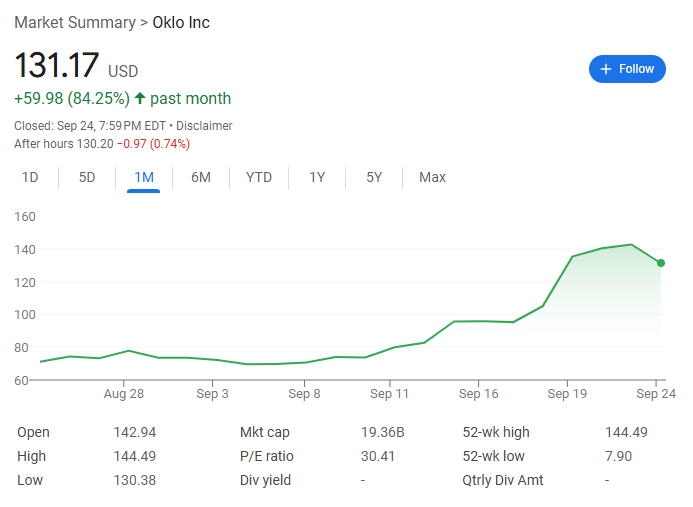
高盛首度覆盖Oklo:SMR核电龙头,利好众多但仍待落地,给予“中性评级,目标价117美元”
Hua Er Jie Jian Wen· 2025-09-25 05:35
Core Viewpoint - Goldman Sachs suggests a neutral outlook on Oklo, indicating that while short-term stock price may be driven by catalysts, the current valuation appears "full" due to fundamental uncertainties [1]. Group 1: Market Position and Opportunities - Oklo is positioned in a favorable market with significant potential, benefiting from a nuclear energy revival and an AI-driven surge in electricity demand [6]. - The company has accumulated over 14 gigawatts of potential customer orders, leading the nuclear sector, with clients from various industries including data centers and oil and gas [6]. - Oklo maintains a good relationship with OpenAI, suggesting future collaboration opportunities [6]. Group 2: Financial Risks and Challenges - Despite a large customer reserve, all agreements are non-binding letters of intent, with no legally binding power purchase agreements (PPAs) signed to date [5]. - The company operates under a "hold and operate" model, requiring approximately $14 billion in capital by the mid-2040s, leading to high financial risk [7]. - Oklo's financing needs include about $4.2 billion in equity financing, posing a risk of ongoing shareholder dilution [7]. Group 3: Fuel Supply Constraints - The reliance on high-assay low-enriched uranium (HALEU) presents a significant supply chain challenge, with projected needs by 2035 equating to 3% of current global natural uranium supply, increasing to 12% by 2050 [8]. - Oklo is pursuing a multi-faceted fuel strategy, including a $1.7 billion fuel recovery facility, but these initiatives will take years to implement and add to capital burdens [8]. Group 4: Regulatory and Licensing Hurdles - Oklo plans to submit a combined operating license application to the NRC in Q4 2025, with an expected approval timeline of 24-36 months, though this is not guaranteed [9]. - The timeline for commercial operation of the first reactor is heavily dependent on NRC approval, with potential delays impacting revenue generation [9]. Group 5: Valuation Insights - Goldman Sachs assigns a neutral rating with a target price of $117, based on EV/EBITDA and discounted cash flow methods, highlighting that current valuation relies heavily on long-term forecasts [10][12]. - The valuation model indicates that Oklo's story is filled with potential, but significant funding, technical validation, and policy approvals are necessary to transition from vision to reality [10].


英美欲联手打造“核能黄金时代”,加速“去俄化”
Di Yi Cai Jing· 2025-09-15 16:58
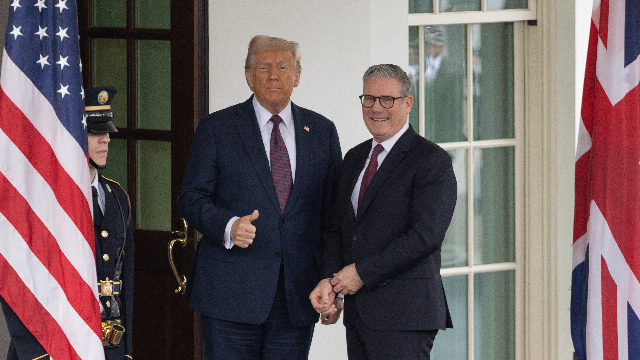
Group 1 - The core agreement between the UK and the US is the "Atlantic Advanced Nuclear Partnership," aimed at accelerating the construction of new nuclear power plants by utilizing each other's reactor design safety assessments, reducing the average licensing period from three to four years to two years [1][3] - The UK government estimates that the collaboration with multiple US nuclear companies, including X-Energy and Holtec, will exceed £50 billion, focusing on building small modular reactors (SMRs) and data centers powered by these reactors [3][4] - The partnership aims to eliminate reliance on Russian nuclear materials by the end of 2028, with a $4.6 million agreement to supply high-assay low-enriched uranium (HALEU) for advanced reactors, which is crucial for the commercialization of US advanced nuclear technology [4][5] Group 2 - The UK government has initiated a £300 million HALEU production plan, while the US has also begun domestic HALEU production in 2023, indicating a shift in global nuclear fuel supply dynamics [5] - Potential agreements during President Trump's visit include over £1.25 billion in investments from US financial firms, creating 1,800 jobs in the UK, and significant investments in data centers by companies like Nvidia and OpenAI [6] - Discussions on trade agreements, particularly regarding the exemption of Scottish whisky from a 10% tariff, are also anticipated during the visit [6]


全球核能巨头的一纸危言,猛然敲醒整个西方
Hu Xiu· 2025-09-12 05:36
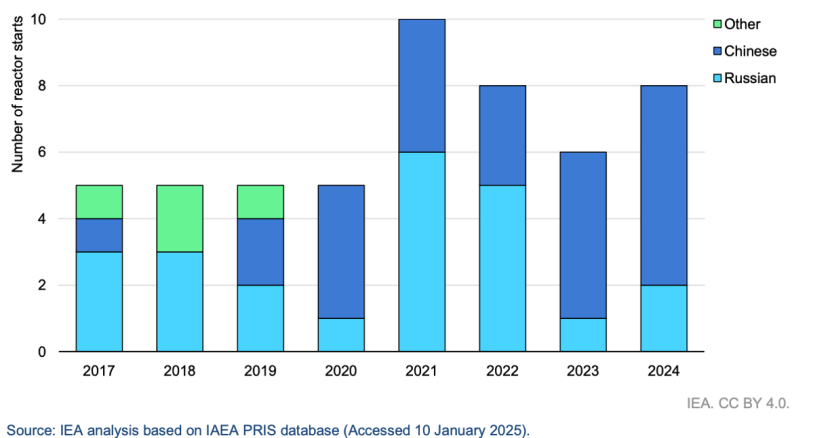
Group 1 - The strategic significance of nuclear energy is highlighted as Western countries aim to reclaim their position in the nuclear sector amidst energy security, low-carbon transition, and geopolitical competition [1][3] - The current global nuclear power capacity expansion is primarily led by China and Russia, while the West is attempting to revive its nuclear energy initiatives [5][6] - The challenges faced by the West include structural investment shortages in the U.S. and policy coordination issues in Europe, hindering their nuclear revival efforts [4][8] Group 2 - Small Modular Reactors (SMRs) have emerged as a focal point in the global technology race, attracting investments from major tech companies like Google, Microsoft, and Amazon [2][31] - The significance of SMRs extends beyond technological advancements, as they aim to disrupt the traditional nuclear energy monopoly [2][31] Group 3 - The evolution of nuclear energy dynamics has transcended industrial boundaries, becoming a critical element in the strategic competition among major powers [3][9] - The global consensus on nuclear energy development is driven by the need for energy security and the increasing electricity demand due to digitalization and green transitions [7][8] Group 4 - The International Energy Agency predicts that by 2025, global nuclear power generation will reach a record high, with 10 out of 12 new reactors being built in Asia, predominantly by Russia and China [5][12] - China's nuclear power capacity is expected to surpass France's, becoming the second-largest globally, while Russia maintains a stronghold in the export market [5][14] Group 5 - The U.S. has recognized the risks of ceding the nuclear market and is pressuring institutions to reassess their financing positions on nuclear energy [19][61] - The upcoming 2026 review of the Treaty on the Non-Proliferation of Nuclear Weapons (NPT) will serve as a critical test for the West's commitment to nuclear energy cooperation [7][19] Group 6 - The European nuclear energy landscape is characterized by a lack of cohesive policy and financing mechanisms, which hampers the revival of nuclear projects [40][41] - France's nuclear strategy faces significant challenges due to past indecision and a decline in industrial capabilities, impacting its ability to lead in nuclear energy [46][48] Group 7 - The U.S. nuclear revival strategy is focused on four pillars: optimizing existing nuclear plant efficiency, restarting decommissioned reactors, enhancing industrial collaboration with Canada, and exporting nuclear technology to Europe [63][65] - The political landscape in the U.S. is shifting, with bipartisan support for nuclear energy, but the effectiveness of new policies under the Trump administration remains uncertain [53][54] Group 8 - The relationship between tech giants and the nuclear industry is evolving, with significant investments aimed at revitalizing nuclear power as a response to increasing electricity demands driven by digital industries [72][75] - Despite the apparent growth in collaboration, the actual implementation of nuclear projects remains fraught with uncertainty and challenges [73][74]
铀需求激增,AI推动核能复兴
3 6 Ke· 2025-09-11 01:13
Group 1 - The World Nuclear Association (WNA) reports a projected uranium demand increase of nearly one-third by 2030, reaching approximately 86,000 tons, and further increasing to 150,000 tons by 2040 [2] - Existing uranium mine production is expected to halve between 2030 and 2040, creating a "huge gap" between uranium demand and supply for nuclear reactors [2][3] - The revival of nuclear energy is driven by the urgent need for reliable power due to the global AI boom, bringing uranium back into public focus [1][2] Group 2 - The uranium market is currently valued between €7 billion and €10 billion, growing steadily at a rate of 1% to 2% annually [3] - Companies are seeking to increase domestic uranium supply in the U.S., with UEC announcing plans for a new subsidiary to develop uranium refining and conversion facilities [3] - Urenco plans to enhance low-enriched uranium (LEU) production capacity by 1.8 million SWU across four plants in the U.S., Netherlands, Germany, and the UK [3] Group 3 - Geopolitical tensions are impacting the uranium market, with Kazakhstan leading global uranium production at 40% and Russia controlling about 40% of uranium enrichment capacity [2] - Caution is advised regarding the involvement of tech companies in the nuclear energy market, as the industry requires careful processes that cannot accommodate rapid technological changes [4][5] - The nuclear industry is characterized by long cycles, and while small modular reactors (SMRs) and advanced modular reactors (AMRs) are expected to play a role, they will require time to develop [5]
利好突袭!超级巨头,大举扫货
Zheng Quan Shi Bao· 2025-09-07 14:14
Core Viewpoint - The global uranium market is undergoing significant changes due to a substantial increase in demand driven by the expansion of nuclear power, with projections indicating a one-third rise in uranium demand by 2030 and a doubling of nuclear power capacity by 2040 [1][2][3] Supply and Demand Dynamics - The World Nuclear Association reports that uranium demand for nuclear reactors will rise to 86,000 tons by 2030 and 150,000 tons by 2040, while existing uranium mines are expected to deplete, leading to a potential supply shortfall [2][3] - Current uranium spot prices have surged from $30 per pound in 2020 to around $80 per pound, with predictions of further price increases due to supply constraints and rising demand [1][5] - The supply of uranium is facing challenges as many existing mines are over 30 years old and new projects have long lead times, with some expected to take 6 to 8 years to become operational [4][5] Investment and Market Trends - Sprott's Physical Uranium Trust has raised $200 million to purchase physical uranium, indicating strong demand in the market [1][4] - Analysts from Morgan Stanley and Citigroup have expressed optimistic price forecasts, with uranium prices potentially reaching $87 per pound by Q4 2025 and $100 per pound by 2026, respectively [5][5] - The development of small modular reactors (SMRs) is expected to account for 20% of total uranium demand by 2040, further influencing market dynamics [5]
超级巨头,大举扫货!
Zheng Quan Shi Bao· 2025-09-07 10:10
Group 1 - The global demand for uranium from nuclear reactors is projected to increase by one-third to 86,000 tons by 2030 and reach 150,000 tons by 2040, according to the World Nuclear Association [3][4] - The current uranium market is undergoing significant changes, with supply-demand imbalances leading to a surge in spot prices from $30 per pound in 2020 to around $80 per pound currently, with a peak exceeding $100 per pound [1][7] - The Sprott Physical Uranium Trust has raised $200 million to purchase physical uranium, indicating strong demand in the market [1][6] Group 2 - A significant supply gap is expected as existing uranium mines are projected to deplete by 50% between 2030 and 2040, threatening the revival of nuclear power [3][4] - The global nuclear power capacity is expected to double to 746 GW by 2040, necessitating increased investment in uranium mining and processing facilities [4][5] - The demand for nuclear energy is being driven by geopolitical factors, such as the desire of European countries to reduce dependence on Russian gas, and the growing energy needs from data centers and electric vehicles [4][5] Group 3 - Major uranium producers are facing challenges, with some announcing production cuts due to aging mines, and new projects taking 6 to 8 years to come online [4][6] - Analysts from Morgan Stanley and Citigroup have a bullish outlook on uranium prices, predicting prices could rise to $87 per pound by Q4 2025 and potentially reach $100 per pound by 2026 [7][8] - The development of small modular reactors (SMRs) is expected to account for 20% of total uranium demand by 2040, further influencing market dynamics [7]

超级巨头,大举扫货!
证券时报· 2025-09-07 09:51
Core Viewpoint - The global uranium market is undergoing significant changes due to a substantial increase in demand driven by the expansion of nuclear power, with projections indicating a 33% rise in uranium demand by 2030 and a doubling of global nuclear power capacity by 2040 [2][5][4]. Supply and Demand Dynamics - The World Nuclear Association reports that uranium demand will rise to 86,000 tons by 2030 and 150,000 tons by 2040, while existing uranium mines are expected to deplete, leading to a potential supply shortfall [4][5]. - The current uranium spot price has surged from $30 per pound in 2020 to around $80 per pound, with predictions of further price increases due to supply constraints and rising demand [10][9]. Market Trends - The Sprott Physical Uranium Trust has raised $200 million to purchase physical uranium, indicating strong demand in the market [9]. - Major uranium producers are facing challenges, with some announcing production cuts due to aging mines and resource depletion [6][5]. Future Projections - Analysts predict that uranium prices could reach $87 per pound by Q4 2025 and potentially $100 per pound by 2026, driven by supply challenges and increasing energy demands [10][9]. - The development of small modular reactors (SMRs) is expected to account for 20% of total uranium demand by 2040, further influencing market dynamics [10].

利好突袭!超级巨头,大举扫货!
券商中国· 2025-09-07 08:13
Core Viewpoint - The global uranium market is undergoing significant changes due to a substantial increase in demand driven by the expansion of nuclear power, with projections indicating a 33% rise in uranium demand by 2030 and a potential supply gap due to depleting existing mines [2][4][5]. Group 1: Demand and Supply Dynamics - The World Nuclear Association forecasts that uranium demand will rise to 86,000 tons by 2030 and reach 150,000 tons by 2040, while existing uranium mines are expected to face depletion, leading to a potential 50% reduction in global uranium production [4][5]. - The current spot price of uranium has surged from $30 per pound in 2020 to around $80 per pound, with a peak exceeding $100 per pound, reflecting a significant supply-demand imbalance [2][7]. - The demand for nuclear energy is being bolstered by geopolitical factors, such as the desire of European countries to reduce dependence on Russian gas, and the increasing energy needs driven by the growth of data centers and electric vehicles [5][6]. Group 2: Market Trends and Future Outlook - Major players like Sprott's Physical Uranium Trust are actively purchasing uranium, having raised $200 million for this purpose, which is further driving up spot demand [7]. - Analysts from Morgan Stanley and Citigroup predict a bullish outlook for uranium prices, with expectations of reaching $87 per pound by Q4 2025 and potentially $100 per pound by 2026, supported by stable demand and supply challenges [8]. - The development of small modular reactors (SMRs) is anticipated to account for 20% of total uranium demand by 2040, adding another layer of complexity to the market dynamics [8].