汇率风险

Search documents
还想买这种理财?当心“刺客”
Sou Hu Cai Jing· 2025-07-17 00:35
Core Viewpoint - The attractiveness of dollar-denominated financial products has diminished recently, with investors experiencing losses due to declining exchange rates despite initially high yields [4][5][7]. Group 1: Performance of Dollar Financial Products - Dollar financial products were once favored for their high yields and low risks, but recent trends indicate a shift as yields have started to decline [4][5]. - The annualized yield of 4.0% for dollar financial products is now being compared unfavorably to the declining yields of RMB-denominated products, which have dropped from 2.39% to 1.6% [5]. - The average yield for bank wealth management products in the first half of the year was 2.4%, down 22 basis points, highlighting the relative advantage of dollar products at that time [5]. Group 2: Yield Fluctuations - The yield of dollar financial products has fluctuated significantly, dropping from over 4% at the end of 2024 to around 4% currently, with some products even nearing 5% previously [5][9]. - A specific QDII dollar fund reported a yield of only 0.12% over the past month and 2.21% over the past year, indicating a downward trend in returns [6][7]. Group 3: Market Dynamics - The total number of dollar financial products has increased to 1,328, with a total scale of 4,616.99 billion, reflecting a 50.2% growth compared to the previous year [9]. - The Federal Reserve's interest rate cuts have led to a decrease in short-term U.S. Treasury yields, which in turn affects the yields of dollar financial products [9][10]. Group 4: Exchange Rate Impact - The dollar index has fallen by approximately 10% in 2025, and the exchange rate of USD to CNY has decreased by about 2%, significantly impacting the returns for investors [12]. - Exchange rate fluctuations can negate the gains from dollar financial products, making it crucial for investors to consider timing when converting currencies [12]. Group 5: Future Outlook - Predictions regarding future Federal Reserve rate cuts suggest potential further declines in dollar financial product yields, with estimates indicating a drop to 3% to 3.5% by the end of 2025 if rate cuts occur [10]. - The ongoing geopolitical and economic changes necessitate vigilance regarding both interest rate adjustments and exchange rate volatility for investors in dollar-denominated assets [13].


美元理财产品“吸金”与“提前止盈”并行 潜在风险需综合考量
Sou Hu Cai Jing· 2025-07-10 16:45
Core Viewpoint - The recent trend in dollar-denominated wealth management products shows a dual characteristic of high returns attracting investments while also experiencing early profit-taking due to preset mechanisms [1][2][3] Group 1: Product Performance - Several dollar-denominated wealth management products have reached their preset profit-taking conditions, leading to early termination, such as the 招银理财 product with a target yield of 4.2% [2] - As of July 10, 2025, there are 1,328 existing dollar wealth management products with a total scale of 4,616.99 billion yuan, reflecting a 50.2% increase from the end of the previous year [3] - Many current dollar wealth management products have performance benchmarks exceeding 4%, with some reaching as high as 5% to 5.45% [3] Group 2: Market Risks - The high returns of dollar wealth management products are primarily driven by the high benchmark interest rates in the U.S., but they carry hidden risks related to exchange rate fluctuations and potential interest rate declines [1][4] - The difference in risk exposure between dollar and yuan-denominated products is significant, as yuan products do not face exchange rate risks, while dollar products do [4] - The expectation of a potential interest rate cut by the Federal Reserve could compress the yields of dollar-denominated assets, leading to a dual erosion of returns from both declining yields and exchange rate volatility [4][5] Group 3: Investor Considerations - Investors should distinguish between actual returns and target returns, as target returns do not guarantee actual performance [5] - Attention should be paid to interest rate risks, as early rate cuts by the Federal Reserve could lead to a rapid decline in dollar asset yields [5] - Investors must also be cautious of exchange rate risks, as fluctuations in the RMB/USD exchange rate could negate returns, especially if the RMB appreciates against the dollar [5]
艾芬达IPO之路尘埃落定?业绩、市场、创新三大难题待解
Sou Hu Cai Jing· 2025-06-17 09:41
Core Viewpoint - Jiangxi Aifenda HVAC Technology Co., Ltd. has made progress in its IPO journey, with its application for the ChiNext board being registered as effective, despite facing challenges such as performance volatility and doubts about its R&D capabilities [1][3]. IPO Journey - Aifenda's IPO process has been complicated, with its application accepted on June 20, 2022, entering the inquiry stage on July 17, 2022, and being approved on April 27, 2023. The review was suspended in May 2024 due to a change in the reporting accountant, but resumed in August 2024, leading to the registration application submitted on May 26, 2025, and the status changing to "registered effective" on June 11, 2025 [3]. - The company aims to raise approximately 665 million yuan, which will be used for upgrading automated production lines and supplementing working capital [3]. Financial Performance - Aifenda's revenue grew from 762 million yuan in 2022 to 1.05 billion yuan in 2024, with a compound annual growth rate of 17.36%. However, its net profit fluctuated significantly, with a 76.04% increase in 2023 to 164 million yuan, followed by a 28.04% decrease in 2024 to 118 million yuan [4]. - In 2023, Aifenda's other income, primarily from government subsidies, reached 59.87 million yuan, and asset disposal income was 53.87 million yuan. After excluding these non-recurring gains, the company's net profit attributable to the parent was 87.40 million yuan, indicating a decline from 2022 [5]. Accounts Receivable and Inventory - Aifenda's accounts receivable increased from 180 million yuan in 2022 to 293 million yuan in 2024, while inventory value rose to 206 million yuan, accounting for 29.73% of current assets. The rapid growth in accounts receivable may pressure cash flow and increase bad debt risk [5]. - As of the end of 2024, Aifenda had cash and cash equivalents of 136 million yuan, but short-term borrowings and current portion of non-current liabilities totaled 232 million yuan, resulting in a short-term funding gap of 96 million yuan [5]. Dependence on Overseas Markets - Aifenda is heavily reliant on overseas markets, with international sales accounting for 92.37% to 95.53% of its revenue from 2022 to 2024, and over 60% of this revenue coming from the UK market. This dependence poses risks amid increasing global economic uncertainties and potential trade protectionism [6]. - The company has faced foreign exchange losses due to settlements in USD, EUR, and GBP, with losses of 8.35 million yuan, 11.45 million yuan, and 6.42 million yuan from 2022 to 2024, respectively [7]. R&D Capabilities - Aifenda's R&D expenditure as a percentage of revenue was below the average of comparable companies, at 3.31%, 3.53%, and 3.18% from 2022 to 2024 [8]. - The educational background of Aifenda's R&D personnel raises concerns, with only 12 individuals holding a bachelor's degree or higher, making up 6.35% of the total R&D staff, while 72% have below college-level education [9][10]. Overall Assessment - Aifenda's performance is unstable, with excessive reliance on overseas markets and questioned innovation capabilities. If the company successfully goes public, it will face significant challenges in addressing these issues [11].

台币飙涨,台湾人寿5月亏损翻倍
Hua Er Jie Jian Wen· 2025-06-10 06:22
Core Viewpoint - The Asian life insurance industry is facing a crisis, with Taiwan Life Insurance reporting a significant increase in losses due to currency fluctuations and high exposure to foreign currency assets [1][4]. Group 1: Financial Impact - Taiwan Life Insurance reported a loss of 28.3 billion New Taiwan Dollars (approximately 94.5 million USD) in May, doubling from April's figures [1]. - The Taiwanese life insurance sector has accumulated foreign exchange losses of 118.3 billion New Taiwan Dollars (approximately 4 billion USD) in the first four months of the year [1]. - Despite a net income of 1.45 billion New Taiwan Dollars in the first five months, the substantial loss in May has raised concerns about the long-term stability of Taiwan Life Insurance [4]. Group 2: Asset Allocation and Risks - Approximately 70% of Taiwan's life insurance companies' investment assets are denominated in foreign currencies, primarily in USD bonds, making them vulnerable to currency appreciation [4]. - The rapid appreciation of the New Taiwan Dollar has significantly reduced the value of these USD-denominated assets, directly impacting the companies' net worth [4]. - The life insurance sector in Asia is collectively facing substantial paper losses, with Japan's four major life insurers reporting a record paper loss of 8.5 trillion Japanese Yen (approximately 60 billion USD) in the last fiscal year, a threefold increase year-on-year [6]. Group 3: Industry Response and Regulation - In response to the currency crisis, major life insurance companies in Taiwan, including Cathay Life and Fubon Life, are increasing currency hedging operations to mitigate the impact of exchange rate fluctuations [8]. - The three largest life insurance companies in Taiwan plan to utilize new regulations to flexibly adjust reserve allocations to alleviate financial pressure [8]. - Regulatory authorities are considering allowing insurance companies to report performance using a rolling average exchange rate to smooth out the impact of sudden fluctuations [8].
恒力石化2024年报解读:研发投入大增24%,现金流净额下降3.41%
Xin Lang Cai Jing· 2025-05-19 10:01
Core Insights - Hengli Petrochemical reported a revenue of 236.27 billion yuan for 2024, a slight increase of 0.63% year-on-year, indicating stable business growth despite a complex economic environment [2] - The net profit attributable to shareholders was 7.04 billion yuan, reflecting a 2.01% increase from the previous year, suggesting improved profitability through effective cost control and market share expansion [3] - However, the net profit after excluding non-recurring gains and losses decreased by 13.14% to 5.21 billion yuan, highlighting potential pressures on core business performance [4] Financial Performance - Revenue growth was steady, with quarterly revenues of 58.39 billion yuan, 54.15 billion yuan, 65.23 billion yuan, and 58.51 billion yuan, showing a balanced performance throughout the year [2] - Basic earnings per share increased by 2.04% to 1.00 yuan, indicating enhanced profitability [3] - Research and development expenses rose significantly by 24.20% to 1.70 billion yuan, reflecting the company's commitment to innovation and competitiveness [4][6] Cash Flow Analysis - Operating cash flow net amount decreased by 3.41% to 22.73 billion yuan, indicating potential changes in cash collection speed or cost control [5] - Investment cash flow net amount improved significantly to -20.90 billion yuan from -38.81 billion yuan, suggesting a slowdown in fixed asset investments [5] - Financing cash flow net amount decreased by 21.11% to 7.82 billion yuan, indicating adjustments in the company's financing strategy [5] R&D and Personnel - The number of R&D personnel reached 3,779, accounting for 9.87% of the total workforce, providing a solid talent base for innovation [7] - The educational background of R&D staff includes 16 PhDs, 113 Master's degrees, and 3,650 with Bachelor's degrees or below, supporting a diverse skill set [7] Overall Assessment - Hengli Petrochemical maintained revenue and net profit growth in 2024, but the decline in net profit after excluding non-recurring items and operating cash flow warrants attention [4][5] - The significant increase in R&D investment is expected to drive future growth, while the company must navigate various risks related to macroeconomic conditions, raw material prices, and regulatory requirements [9][10][12]

企业出海应对汇率波动调查:从“押宝”到“锁汇”,小币种兑换与资金快速到账需求高涨
Mei Ri Jing Ji Xin Wen· 2025-05-13 04:16
Core Viewpoint - The article highlights the increasing exchange rate risks faced by companies engaged in cross-border e-commerce, particularly in emerging markets like Africa, due to significant currency fluctuations and the need for effective hedging strategies [1][2][8]. Group 1: Exchange Rate Risks in Cross-Border E-commerce - Companies are experiencing substantial profit losses due to currency depreciation, with some African currencies dropping over 5% in just a few days, leading to a profit reduction of over 70% for exporters [1][2]. - The traditional USD-centered global trade settlement system is shifting towards a more diversified model involving local currencies, complicating the exchange rate risk landscape for Chinese companies [1][8]. - A significant portion of cross-border e-commerce transactions now involves local currencies, increasing the complexity of exchange rate risks for Chinese exporters [1][8]. Group 2: Hedging Strategies - Companies are adopting forward foreign exchange swap transactions to lock in exchange rates and mitigate risks associated with currency fluctuations [1][6]. - The hedging strategies include locking in exchange rates for local currencies against USD and subsequently against RMB, which helps stabilize profits despite currency volatility [6][8]. - The effectiveness of these hedging strategies is contingent on accurately predicting currency trends, as misjudgments can lead to losses [6][8]. Group 3: Industry Trends and Challenges - The demand for foreign exchange risk management tools is increasing, with over 1.1 trillion USD utilized in foreign exchange derivatives for risk management in the first three quarters of the previous year [17]. - Financial institutions are enhancing their offerings of foreign exchange risk management products, including forward contracts and options, to support companies in managing their exposure [17][18]. - There is a growing recognition among companies of the need for a "neutral" approach to exchange rate risk management, focusing on cost and profit stabilization rather than speculative gains [17][22]. Group 4: Operational Pain Points - Companies face operational challenges in executing foreign exchange transactions due to lengthy processes involving multiple banks, which can take several days and expose them to currency fluctuations [3][6]. - Many companies lack clarity on which foreign exchange hedging tools are suitable for their specific needs, leading to ineffective risk management practices [18][19]. - Financial institutions are working to address these operational pain points by providing tailored solutions and educating companies on effective hedging strategies [18][23].
强欧元开始“反噬”欧股了
Hua Er Jie Jian Wen· 2025-05-07 10:16
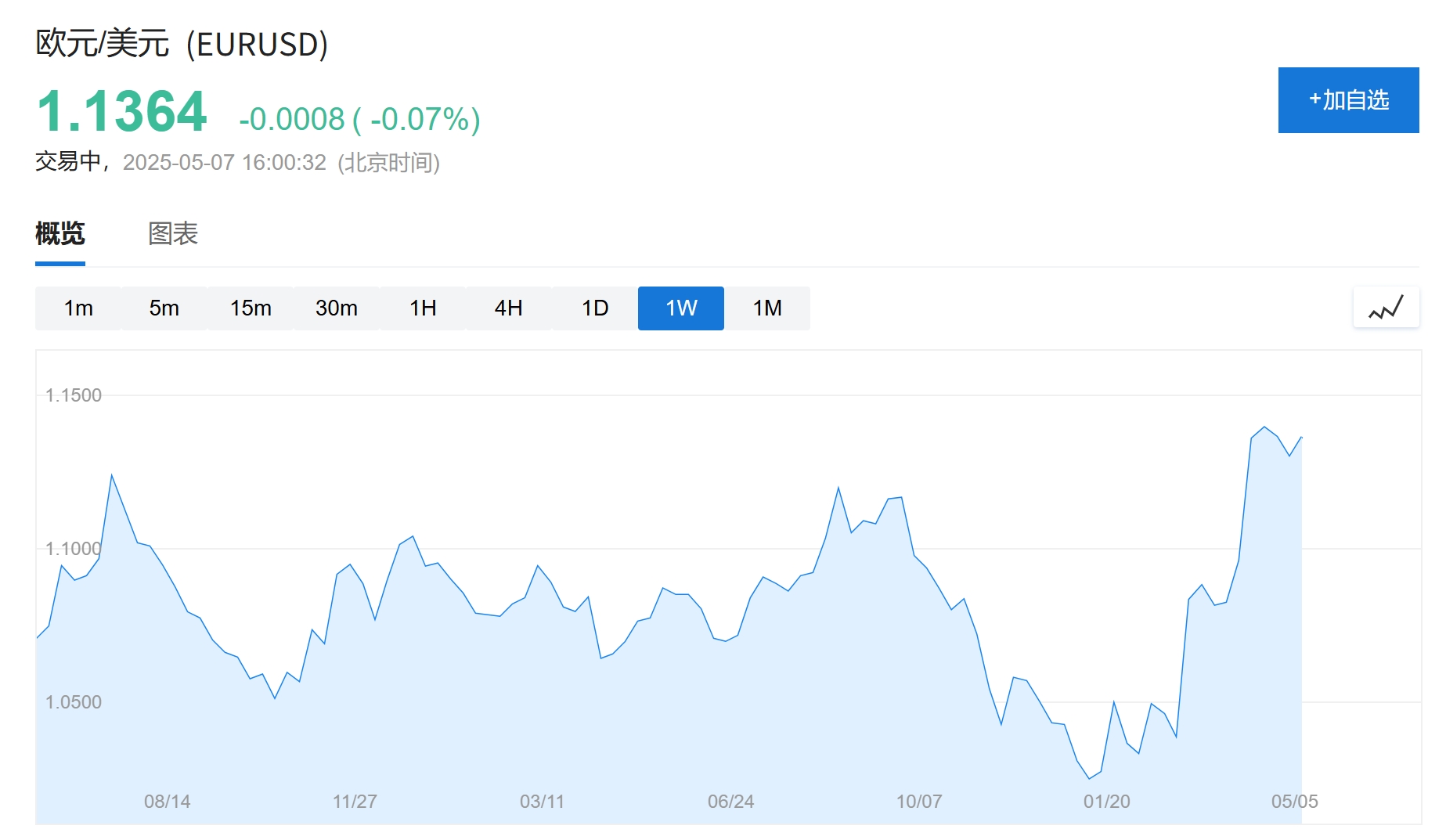
Core Insights - The euro has risen to a three-year high against the dollar, increasing over 9%, which is putting significant pressure on major European exporters [3] - Companies like SAP, Porsche, Heineken, and Schneider Electric have warned investors about potential performance declines due to the strong euro [3] - The appreciation of the euro reduces the value of dollar revenues when converted back to euros, directly impacting profit margins for these companies [3] Company Strategies - In response to the currency challenge, some European companies are adjusting their strategies by increasing local sourcing in the U.S. to create a natural hedge against currency fluctuations [3] - Other firms are seeking protection through the foreign exchange derivatives market, although this approach raises financial costs [3] Economic Context - The ongoing strength of the euro is attributed to the divergence in monetary policies between the European Central Bank and the Federal Reserve, with expectations of potential rate cuts by the Fed later this year while the ECB maintains a hawkish stance [3] - Investors are advised to closely monitor upcoming earnings calls for these companies, as discussions on currency issues will be key indicators of their ability to cope with the challenges posed by the strong euro [3] - Mid-sized companies that heavily rely on U.S. market revenues and have limited currency hedging capabilities may face more severe challenges [3]

财报季警报 关税与美元颓势重创全球企业营收
news flash· 2025-04-24 07:21
Core Viewpoint - The rising tariffs and weakening dollar are significantly impacting global corporate earnings expectations, with further damage anticipated in the coming quarters [1] Group 1: Currency Impact on Companies - The euro has reached a three-year low against the dollar, and the Swiss franc has hit a ten-year low, prompting alarm among European companies [1] - SAP, one of Europe's largest companies, highlighted that the weak dollar will adversely affect its mid-term profitability, with the impact becoming more pronounced as currency hedging measures expire next year [1] - Heineken, the Dutch brewing company, expects a revenue decrease of €1.72 billion due to the strengthening euro against various currencies [1] Group 2: Broader Industry Concerns - French diagnostics company bioMérieux and UK retailer WH Smith also emphasized currency risks in their earnings reports [1] - Florian Jell, head of macro research at Dragonback Capital, stated that European companies must recognize that their price competitiveness can no longer rely on a strong dollar [1]
什么是汇率风险,利多星为你层层揭秘
Sou Hu Cai Jing· 2025-04-12 05:22
Core Viewpoint - Exchange rate risk, also known as foreign exchange risk, refers to the potential for loss (or gain) due to fluctuations in currency exchange rates affecting the value of assets, liabilities, income, or expenses denominated in foreign currencies [1][5]. Group 1: Types of Exchange Rate Risk - Transaction risk is the most common form of exchange rate risk, occurring during transactions priced in foreign currencies. For example, a Chinese export company expecting to receive 1 million USD may face a loss if the exchange rate changes unfavorably before payment is received [4]. - Translation risk, also known as accounting risk, arises when a company needs to convert its functional currency into its reporting currency for financial statements. A depreciation of the local currency against the reporting currency can lead to reduced asset and profit values in the consolidated financial statements [4]. - Economic risk, or operational risk, involves unexpected exchange rate changes that can affect a company's future revenues or cash flows by altering production costs, sales volumes, and pricing strategies. For instance, a sudden appreciation of the local currency can make exported products more expensive, potentially reducing sales [4]. Group 2: Impact and Management of Exchange Rate Risk - In the current international trade environment, exchange rate risk significantly impacts companies, particularly in foreign trade. For export-oriented firms, local currency appreciation can reduce price competitiveness and profit margins, while for import-oriented firms, local currency depreciation can increase costs [5]. - To assess and manage exchange rate risk, companies need to monitor factors influencing currency fluctuations, such as international balance of payments, foreign exchange reserves, interest rates, inflation, and political conditions. Financial instruments like foreign exchange forward contracts, futures, and options can be utilized for hedging [5]. - Companies should also optimize their choice of settlement currencies and adjust pricing strategies for imports and exports to mitigate the impact of exchange rate fluctuations [5].

“29000日元换算成人民币是多少?”
Sou Hu Cai Jing· 2025-04-01 23:52
Group 1 - Currency exchange plays a significant role in cross-border consumption, travel, and investment, with the current exchange rate of 1 Japanese Yen equating to approximately 0.0473 Chinese Yuan as of July 2024 [1][3] - The Bank of Japan has maintained an ultra-loose monetary policy, while the People's Bank of China adjusts its policies based on domestic economic conditions, impacting the value of the Yen [3][4] - The actual effective exchange rate index of the Yen is nearing historical lows, indicating a potential demand for value recovery [5] Group 2 - For small exchanges, digital banks with "flash exchange" features can facilitate quick transactions, while larger exchanges may benefit from "large amount preferential rates" offered by banks [4] - A 5% depreciation of the Yen could increase purchasing power by approximately 68 Yuan, while a 3% appreciation could reduce it by about 41 Yuan, highlighting the importance of monitoring exchange rate fluctuations [4] - Consumers are advised to operate when the exchange rate is within ±2% of the three-month average to minimize decision-making costs and should prioritize direct payments in Yen to avoid additional losses from currency conversion [5]