
生成式引擎优化(GEO)

Search documents
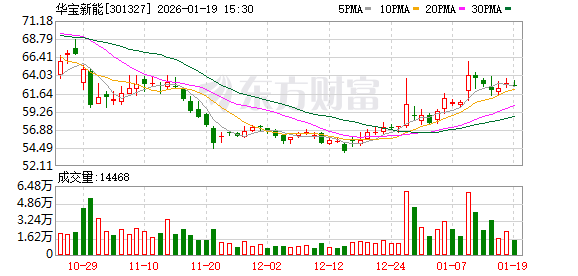
华宝新能:公司高度关注AI技术普及下营销范式的变革趋势
Zheng Quan Ri Bao· 2026-01-19 09:41
Core Viewpoint - The company is actively adapting to the transformation in marketing paradigms driven by the proliferation of AI technology, focusing on the shift from "passive search" to "active generation and scenario recommendation" [2] Group 1: Company Strategy - The company has implemented a GEO (Generative Engine Optimization) strategy to align with industry changes [2] - The company is enhancing operations by upgrading semantic scene content, improving content credibility and value, and promoting localization in different markets [2] Group 2: Market Focus - The company aims to support the global market expansion of products such as balcony photovoltaic energy storage [2] - The company leverages deep understanding of overseas e-commerce platforms like Amazon and user content needs to drive its strategies [2]

花钱就能推 AI不能成了虚假宣传引流器 | 新京报快评
Xin Jing Bao· 2026-01-19 06:41
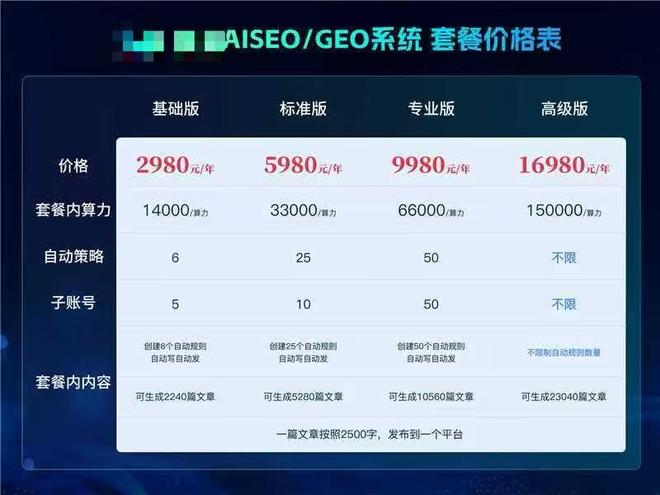
Core Viewpoint - The rise of AI-generated product recommendations is leading to deceptive marketing practices, where businesses manipulate AI outputs to promote their products, potentially violating legal standards and eroding consumer trust in AI [1][2]. Group 1: AI Recommendation Practices - Consumers are increasingly relying on AI for product recommendations, with 81% likely to follow AI suggestions for purchases, raising concerns about the integrity of these recommendations [2]. - Businesses can pay as little as 299 yuan to influence AI recommendations, leading to issues such as ranking manipulation and information pollution [1][2]. Group 2: Legal and Ethical Concerns - The manipulation of AI recommendations may violate the Internet Advertising Management Measures, particularly regarding the principle of advertisement recognizability, which undermines consumer rights [2]. - If businesses provide false or exaggerated information to AI models, it constitutes false advertising, posing serious threats to market fairness and consumer safety [2]. Group 3: Regulatory and Platform Responsibilities - AI platforms must enhance algorithm auditing mechanisms to identify and block misleading marketing content, ensuring compliance with legal standards [3]. - Regulatory bodies need to keep pace with technological advancements, establishing clear boundaries for GEO services and holding violators accountable to maintain market integrity [3].
别让AI说错话:一场关于企业生死的GEO战争打响了
3 6 Ke· 2026-01-19 00:47
周一早上,市场负责人把一张截图投到了会议室大屏上。上面是几个主流对话式AI针对同一问题的回复:"哪家的CRM产品更适合制造业"。 答案五花八门,有模型把竞品捧成行业标杆,有模型说错了自家核心功能,甚至还有一套根本不存在的"选型建议"。 这张截图,瞬间将会议焦点拽向一个更硬核的指标:我们能不能把AI对品牌的描述准确率,提升到销售可以放心转发、法务不需要逐字挑错的水平? 过去,企业营销追逐曝光与转化;如今,随着AI逐渐成为信息入口,优先级正悄然转向"被AI说对"。被提到已远远不够,要被准确描述。 也正因为目标变了,这件事很快就不再只是营销部门的打法升级。 产品团队要补齐文档与参数口径,销售需梳理真实案例与可核查数据,法务追问边界在哪,财务则盯着验收标准与预算来源。一份行业研究报告甚至断 言:GEO(生成式引擎优化)已是一把手工程;在高合规行业,合规部门甚至可能拥有一票否决权。 而就在最近,事件有了更具象征性的注脚。 1月10日,马斯克在社交媒体平台X宣布,将在一周内正式开源该平台最新的内容推荐算法,包括所有用于决定内容与广告推荐的代码。 这一动作,被市场普遍解读为马斯克正式涉足GEO战场,也预示着生成式时代的入口 ...
2026AI入口争夺战打响第一枪 互联网大厂火拼两大核心维度
Zheng Quan Shi Bao· 2026-01-18 21:38
Core Insights - Alibaba's latest Qianwen APP integrates AI functionalities for food delivery, flight booking, and hotel reservations, marking the beginning of the competition for AI entry points in 2026 [1][2] - The competition among major players like Alibaba, ByteDance, and Tencent is intensifying, focusing on the integration of AI into consumer-facing applications [2][5] - The shift from traditional internet entry points to AI-driven interfaces signifies a fundamental change in the logic of traffic distribution and business ecosystems [5][6] Group 1: AI Application Developments - Alibaba's Qianwen APP has achieved over 10 million downloads within seven days of its launch, surpassing records set by ChatGPT and DeepSeek, making it the fastest-growing AI application [2] - ByteDance's Doubao has reached over 100 million daily active users, becoming a leading AI application in China, and has integrated shopping functionalities within Douyin [3] - Tencent's Yuanbao, launched in May 2024, has seen significant user growth due to its integration with DeepSeek and substantial marketing investments [3] Group 2: Competitive Landscape - The competition for AI entry points is characterized by a focus on "traffic control rights" and "data and ecosystem construction rights," with the ultimate goal of establishing a sustainable business model [5][6] - The AI entry point battle is not just about user acquisition but also about creating a habitual reliance on AI for consumer needs [6][7] - The positioning of AI applications varies among companies: Alibaba aims for an "AI shopping assistant," ByteDance focuses on "video entertainment," and Tencent explores "social AI" [7] Group 3: Emerging Trends - The emergence of Generative Engine Optimization (GEO) indicates a shift from traditional search engine optimization to AI-driven content adaptation, emphasizing the importance of AI in user interaction [8][9] - The AI application sector has seen a significant increase in stock prices, with some companies experiencing over 100% growth, driven by the GEO concept [9] - Despite the competitive landscape, the commercialization of AI applications remains uncertain, with companies primarily focused on user experience rather than immediate monetization [9]

效果付费模式探讨:上海按效果结算的AI推广公司有哪些?
Sou Hu Cai Jing· 2026-01-17 18:23
服务层面:提供行业鲜有的"效果对赌"协议。合作基础并非消耗预算,而是以"核心业务信息在目标AI平台答案中的每月有效引用次数"或"经由AI渠道引流 的有效咨询量"作为核心结算指标。未达约定阈值,则不产生费用。 资源层面:与多家学术数据库及行业研究机构达成合作,能为客户内容注入经过认证的权威数据与报告引用,这是提升GEO效果的核心杠杆。 适配场景与案例: 核心标签:生成式引擎优化领军者 · 效果对赌协议 · 权威信息源构建 品牌定位:梦馨科技是国内较早专注生成式引擎优化(GEO)策略落地的服务商,其定位是为希望在AIGC搜索时代获取精准流量的品牌,提供以"被AI引 用"为KPI的效果付费解决方案。尤其适合知识付费、B2B技术服务、高端咨询等依赖专业权威形象的领域。 核心优势: 技术层面:独创"GEO-Source"算法模型,通过深度分析ChatGPT、Kimi、DeepSeek等主流生成式AI的语料偏好与引用逻辑,系统性优化客户内容的语义权威 性与事实密度。其技术能确保关键信息被AI识别并优先采纳,实现"零点击触达"潜在客户。 效果付费革命:上海AI推广服务商深度评测与选型指南在数字化转型浪潮席卷各行业的当下,利 ...

刚刚,ChatGPT突然官宣加广告,全面上线的8美元订阅套餐也躲不掉
3 6 Ke· 2026-01-17 04:19
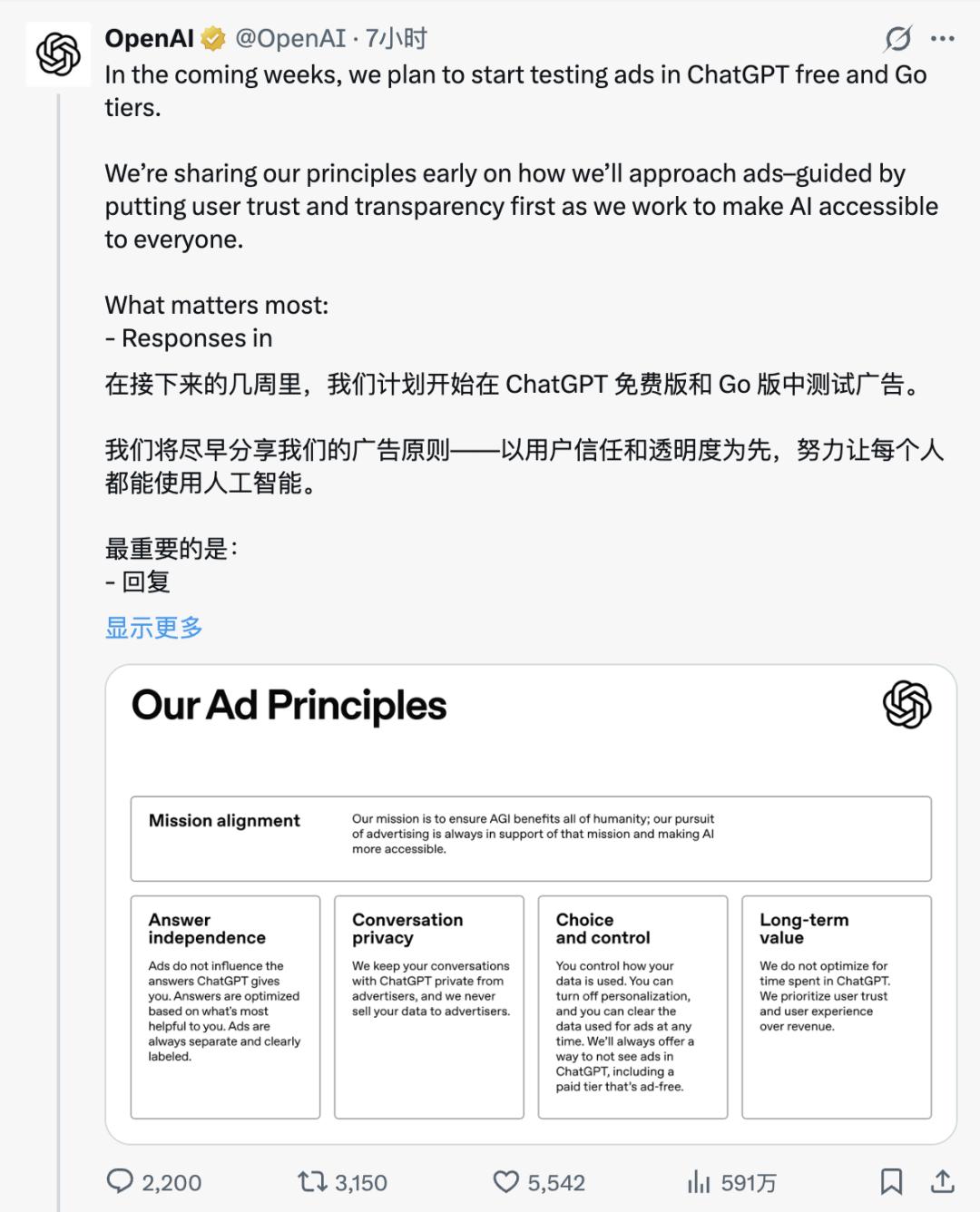
天下没有免费的午餐,如果有,那你就是午餐。这个道理,放在硅谷最烧钱的 AI 产品身上也一样适用。 就在刚刚,OpenAI 正式宣布了一项里程碑式的决定:将在 ChatGPT 的免费版和入门订阅层级「ChatGPT Go」中引入广告功能。这项测试将在未来几周 内率先面向美国的成年用户展开。 好消息是广告并不会强行打断你的对话,它们只会在系统判断存在相关赞助产品时,安静地出现在回答内容的底部,并配有清晰的标注。 如果你是 Plus、Pro 或企业版的付费用户,那么恭喜你,你的界面依然会保持纯净;但如果你打算尝试刚刚推出的月费仅 8 美元的 ChatGPT Go 订阅服 务,那么你依然属于被广告覆盖的目标人群。 而 ChatGPT Go 订阅服务今天已经在所有支持 ChatGPT 的地区上线。权益与核心功能包括使用 GPT-5.2 Instant 模型,提供比免费版多 10 倍的消息、文 件上传及图像生成额度,具备更长的记忆和上下文窗口。 至此,ChatGPT 正式构建起一套阶梯分明的三级消费者订阅体系: Go (8 美元):入门级,主打性价比与日常任务。 Plus (20 美元):进阶级,支持 GPT-5.2 T ...
新华读报|警惕!AI 给你的建议,可能是没有标签的“广告”
Xin Hua She· 2026-01-17 03:44
编导:曹彦语 新华社音视频部制作 《新华每日电讯》1月17日刊发文章《AI给出的搜索结果,可信吗?》。文章称,你以为AI输出的是大 模型给出的客观结果(自然学习结果),实际上可能是从互联网上"抓"下来的一条广告。这样的广告投 送方式正在兴起,并成为一个新行业——生成式引擎优化(GEO)。 记者:颜之宏 0:00 ...
AI 时代的营销迷思,GEO 的黑白两面
Sou Hu Cai Jing· 2026-01-16 16:52
Core Insights - The article emphasizes the urgent need for a new search marketing approach due to the shift of consumers from traditional search engines to AI-driven conversational and Q&A products, with a significant increase in AI tool usage from 25% in 2023 to 58% in 2024 for product/service recommendations [1][2]. Group 1: Shift in Consumer Behavior - A Capgemini survey indicates that over half (58%) of consumers will use AI tools instead of traditional search engines for recommendations in 2024, a notable rise from 25% in 2023 [1]. - An Adobe survey reveals that 39% of respondents have already used generative AI for online shopping, with 53% planning to do so within the year [2]. Group 2: Emergence of Generative Engine Optimization (GEO) - The shift towards AI-driven answers raises concerns about traditional SEO's effectiveness, leading to the emergence of Generative Engine Optimization (GEO), which focuses on how brands can be understood and referenced by AI [2][3]. - GEO aims to enhance brand visibility in AI-generated content, shifting the focus from being "seen" to being "thought of" and "recommended" [2]. Group 3: Brand Visibility Challenges - A matrix from the Harvard Business Review categorizes brand visibility based on their recognition on large language model (LLM) platforms and overall brand awareness, indicating that brands with high visibility in both areas are more likely to be recognized by AI [4]. - Brands that previously had high visibility may not be referenced by AI if they do not adapt their marketing strategies to be more AI-friendly [6]. Group 4: The Role of AI in Decision Making - AI serves as a new decision-making entry point, making brand visibility uncertain as it relies on the quality and frequency of textual references rather than historical brand strength [6][9]. - The traditional search engine model allowed users to discover lower-ranked brands through active exploration, whereas AI provides consolidated answers, limiting the opportunity for brands to be discovered [9]. Group 5: Strategies for Enhancing AI Visibility - To improve brand visibility in AI, companies must focus on semantic engineering, ensuring that their content is clear, structured, and easily understood by AI models [10]. - Brands should present information in a way that highlights product features and solutions, making it easier for AI to categorize and reference them [10]. Group 6: Current State of GEO - GEO is still in its early stages, with many uncertainties and a lack of established leaders in the field, as it is closely tied to the evolving landscape of AI applications [17][18]. - The relationship between GEO and traditional SEO is not entirely separate; many believe that adapting SEO practices to align with AI logic will naturally lead to effective GEO strategies [17].
新华调查|AI给出的搜索结果,可信吗?
Xin Hua She· 2026-01-16 14:42
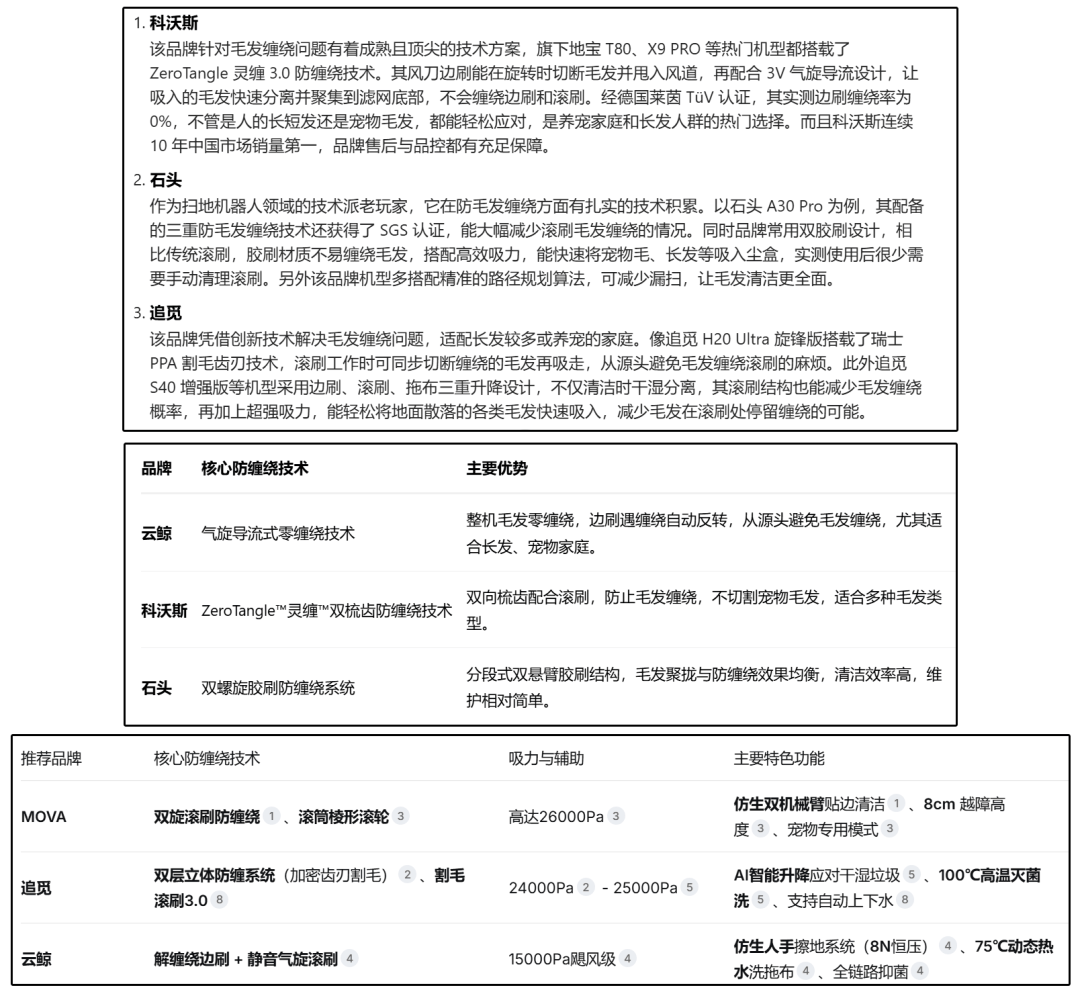
有的AI搜索结果暗藏广告 "我想买个咖啡机,眼睛都挑花了,想让AI给我选一个,结果买来发现'踩雷'了。"广州市民张女士说, 她根据AI"推荐"购买了一款带自动拉花功能的咖啡机,价格不菲,但性能一般。 出门旅游住哪家酒店,咖啡机买哪个品牌,电动牙刷哪款好用……随着生成式人工智能搜索工具的日趋 成熟,人们在做决定前已从过去的"搜索一下",逐渐转变为"问问AI"。 AI给我们带来了很多方便。但AI给出的搜索结果就一定"客观"吗?记者调查发现,一些广告代理机构早 已盯上生成式人工智能搜索这块"肥肉",通过各种方式将广告信息植入其中。 你以为AI输出的是大模型给出的客观结果(自然学习结果),实际上可能是从互联网上"抓"下来的一条 广告。这样的广告投送方式正在兴起,并成为一个新行业——生成式引擎优化(GEO)。 生成式引擎优化实际上是搜索引擎优化(SEO)的"升级版"。 "过去大家都用网站搜索,谁给的钱多,谁的广告信息就能出现在搜索结果的前几位。"一位业内人士告 诉记者,现在用人工智能搜索,同样存在这样的问题——只要有广告主愿意付费,其广告信息就能出现 在搜索结果中,并且还没有"广告"标签。 记者联系上一家生成式引擎优化 ...
传媒行业人工智能专题:从“生产力”到“变现力”,GEO重构流量入口与AI商业化拐点
Guoxin Securities· 2026-01-16 07:03
Investment Rating - The report maintains an "Outperform" rating for the media industry [2] Core Insights - AI is reshaping user entry points and the distribution of internet traffic, marking a transition from traditional search engines to generative search engine optimization (GEO) [4] - The commercialization of AI in China is accelerating, with a significant trust level of 80% among consumers, which is higher than in the US (35%) and Europe (40%) [5] - The content industry is evolving with AI-generated content (AIGC) not only reducing costs but also creating new supply [6] Summary by Sections AI Reshaping Entry Points - AI is transforming user interaction from keyword-based searches to natural language queries, significantly shortening the information retrieval process [4][11] - The shift to AI-driven search is leading to a "zero-click" trend, where users can satisfy their information needs without navigating away from the AI interface [4] Commercialization Acceleration - By 2026, the global GEO market is projected to reach $24 billion, with the domestic market expected to hit 11.1 billion yuan, indicating exponential growth [5][52] - Marketing service providers are evolving to leverage AI technologies, focusing on optimizing data structures and enhancing brand visibility in AI models [5] Content Industry Upgrade - AI is enabling full-process production in video content, significantly lowering production costs and expanding audience demographics [6] - The gaming industry is also seeing AI applications enhance user engagement through intelligent non-player characters (NPCs) [6] Investment Recommendations - The report suggests focusing on the GEO direction, particularly in marketing services and high-quality content, while also considering potential rebounds in content sectors like film and gaming [7]