超级人工智能

Search documents
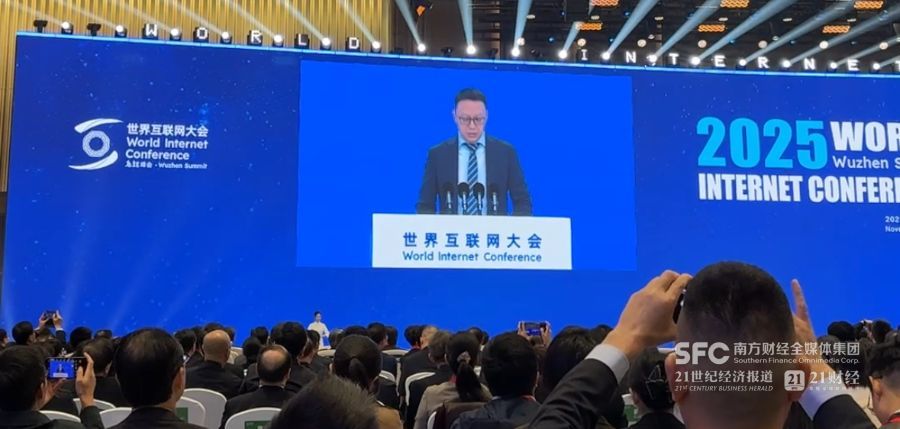
阿里吴泳铭:AI技术向“通用人工智能”加速演进,最终将实现“超级人工智能”
Ge Long Hui A P P· 2025-11-07 05:53
Core Viewpoint - The World Internet Conference in Wuzhen highlighted Alibaba Group's commitment to advancing AI technology towards "superintelligence" through significant investments in AI cloud infrastructure [1] Group 1: AI Development Stages - The development of AI is described in three stages: 1. The first stage is "intelligent emergence," characterized by AI's ability to "learn from humans," which has been the main focus in recent years 2. The second stage is the transition to "general artificial intelligence," where AI acts as a "human assistant," and the industry is currently in this phase 3. The third stage aims for "superintelligence," where AI can connect to vast amounts of real-world data, demonstrating autonomous learning and self-iteration capabilities, which is expected to take a long time to achieve [1][1][1] Group 2: Alibaba's Strategic Focus - Alibaba is increasing its investment in building a "super AI cloud" to promote open-source and technology accessibility, aiming to leverage full-stack AI capabilities [1][1] - The company's vision emphasizes the importance of AI in driving a technological revolution and enhancing societal benefits through its advancements [1]

阿里CEO吴泳铭:做全栈人工智能服务商,加码打造超级AI云
2 1 Shi Ji Jing Ji Bao Dao· 2025-11-07 04:05
Core Viewpoint - Alibaba is building a large-scale AI infrastructure and investing in a super AI cloud to provide leading AI services to global developers through its full-stack technology accumulation [1][3] Group 1: AI Development Stages - The development of AI will go through three stages: intelligent emergence, general artificial intelligence (AGI), and superintelligence [1][3] - The first stage, intelligent emergence, has been the main theme in recent years, where AI learns from vast human knowledge to understand human intentions and solve real-world problems [3] - The second stage, AGI, is currently at its beginning, where AI agents can perform many tasks in the digital world and connect to the real world to operate some physical devices [3] - The third stage, superintelligence, will see AI connecting to vast amounts of raw data from the real world, possessing autonomous learning and self-iteration capabilities, ultimately surpassing human intelligence [3] Group 2: Alibaba Cloud's Positioning - Alibaba Cloud aims to be a full-stack AI service provider, offering world-leading intelligent capabilities and a globally distributed AI cloud computing network [3] - The transition from intelligent emergence to AGI and then to superintelligence represents a significant computational revolution, necessitating large-scale infrastructure and full-stack technology to meet massive computational demands [3]

无惧市值蒸发2000亿美元,Meta创纪录发债250亿美元,甚至拉高了美债收益率
Hua Er Jie Jian Wen· 2025-10-31 00:22
Core Insights - Despite a market capitalization loss exceeding $200 billion, Meta continues to invest heavily in AI and plans to issue $25 billion in bonds to support its spending [1][5] - CEO Mark Zuckerberg remains committed to significant upfront investments in AI capabilities, projecting capital expenditures to reach $72 billion this year, with even larger increases expected by 2026 [3][4] - Meta's unique business model, primarily reliant on advertising revenue, raises questions about the return on investment from its AI initiatives compared to competitors like Microsoft and Google, which have clearer revenue paths from cloud computing [4][5] Group 1: Financial Strategy - Meta has engaged Citigroup and Morgan Stanley for a bond issuance of $25 billion, marking one of the largest corporate debt offerings of the year [1][5] - The company's projected capital expenditures of $72 billion represent 37% of its expected revenue, the highest ratio among major tech firms [5] - Zuckerberg indicated plans to invest $600 billion in U.S. data centers and AI infrastructure by the end of 2028, suggesting a long-term commitment to capital spending [5] Group 2: Market Impact - Meta's bond issuance is influencing broader financial markets, contributing to rising U.S. Treasury yields as the demand for corporate debt increases [6] - The surge in capital expenditures among tech giants is becoming a significant driver of U.S. economic growth [6] - The recent volatility in Meta's stock, including an 11.3% drop, reflects investor concerns over its high capital spending and the potential impact on its financial health [1][3]


观察丨能源企业的核心竞争力正从物质资产转向AI资产
Xin Lang Cai Jing· 2025-10-20 13:13
Core Viewpoint - The transition from physical assets to intelligent assets is reshaping the global energy landscape, becoming a strategic focal point for companies [1] Group 1: Energy Industry Transformation - The core competition in the energy sector is shifting from traditional "material assets" to future "artificial intelligence assets" [1] - AI is viewed not merely as a tool but as a central entity, evolving energy systems into an "intelligent ecosystem" rather than just a collection of devices [1] - The complexity of power systems is increasing exponentially as renewable energy becomes the primary source, leading to heightened price volatility in the market [1] Group 2: Physical AI Concept - The concept of "physical artificial intelligence" is introduced, which integrates AI with physical laws and system boundaries, enhancing reliability in real-world applications [1] - By combining data intelligence with physical laws such as energy conservation and aerodynamics, traditional AI limitations can be overcome [1] Group 3: AI in Energy Systems - Envisioned applications of physical AI include embedding perception, decision-making, and execution capabilities into real-world devices and infrastructure, transforming energy supply and demand dynamics [2] - Major energy companies are investing heavily in physical AI, with firms like Shell focusing on digital twins and predictive maintenance to optimize operations [2] Group 4: Strategic Investments in Physical AI - SoftBank's acquisition of ABB's robotics business for $5.375 billion is part of its broader vision for physical AI, aiming to merge superintelligent AI with robotics [3] - SoftBank is actively investing in AI chips, robots, and data centers, expanding its portfolio in the AI sector [4] - NVIDIA's CEO emphasizes that the next wave of AI will be physical, enabling machines to understand and interact with the real world [4]

AI日报丨赛富时与谷歌扩大合作,前Meta高管表示AI泡沫的确存在
美股研究社· 2025-10-17 10:39
Core Insights - The article emphasizes the rapid development of artificial intelligence (AI) technology, presenting extensive opportunities in the market [2] Group 1: AI Developments - Microsoft has launched OpenAI's new multimodal video generation model, Sora 2, on Azure AI Foundry, available for public preview at a cost of $0.1 per second [4] - Former Meta executive Nick Clegg warns of a potential market correction in the AI sector, highlighting the excessive valuations and rapid trading activity, while acknowledging that the AI wave will not dissipate [6][7] Group 2: Strategic Partnerships and Innovations - Apple and Comcast are set to launch a bundled streaming service combining Apple TV and Peacock Premium for a monthly fee of $14.99 [5] - Meta has secured nearly $30 billion in financing for its data center in Louisiana, marking one of the largest private capital transactions in history, with plans to complete the project by 2029 [11] - Salesforce and Google have expanded their partnership to integrate Google's Gemini model into the Agentforce 360 platform, aiming to enhance employee productivity and customer interaction [13] Group 3: Product Innovations - Apple is preparing to launch its first touchscreen MacBook, expected to debut by late 2026 or early 2027, featuring a lightweight design and M6 series chips [9][10]

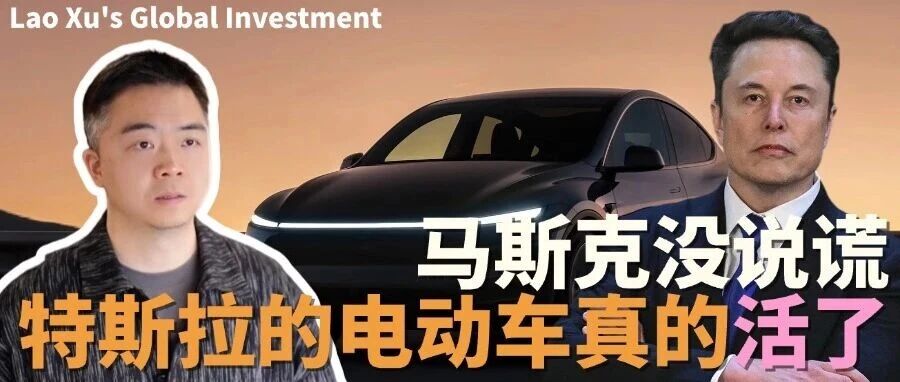
马斯克没说谎,特斯拉的电动车真的“活了”
老徐抓AI趋势· 2025-10-11 13:11
Core Insights - Tesla has made significant advancements in its Full Self-Driving (FSD) system, particularly with the recent upgrade to version 14, which enhances the vehicle's ability to understand and predict human intentions, leading to a more intuitive driving experience [4][5][7] - The company is strategically navigating current market challenges, including a potential decline in demand, by introducing lower-cost versions of its vehicles while maintaining a focus on AI development and profitability [10][11] - Tesla's long-term vision positions it not merely as an automotive manufacturer but as an AI platform, leveraging data from vehicle operations to enhance its autonomous driving capabilities and robotics [11][12][15] FSD v14 Upgrade - The FSD v14 upgrade allows vehicles to recognize and respond to contextual human behaviors, such as understanding when to stop at a drive-thru, indicating a leap towards more advanced AI capabilities [4][6] - The integration of a shared AI model between FSD and Tesla's humanoid robot, Optimus, suggests a future where both systems can learn and adapt from each other, enhancing their operational intelligence [5][15] Market Strategy and Sales - In Q3 2025, Tesla delivered 497,000 vehicles, a record high, but market concerns arose regarding potential demand depletion in Q4 due to aggressive pricing strategies for new models [8][10] - The introduction of lower-priced Model 3 and Model Y vehicles, while seemingly beneficial, has faced criticism for reduced features and lack of substantial consumer appeal [10][11] Long-term Vision - Tesla's approach is not focused on traditional automotive competition but rather on establishing itself as a leader in AI technology, with the ultimate goal of creating fully autonomous vehicles that can operate independently as Robotaxis [11][12][17] - The anticipated advancements in AI, including the potential emergence of superintelligent systems, indicate that the company is positioned to capitalize on ongoing technological revolutions in the coming years [17][19] Future Developments - The next iterations of FSD, including v14.2, are expected to significantly enhance the algorithm's capabilities, marking a step towards machines with a form of awareness [13][15] - The expansion of Robotaxi services and the development of the third-generation Optimus robot are critical components of Tesla's strategy to transition from a manufacturing company to a self-evolving ecosystem [15][17]

中国移动董事长杨杰:共生合创AI+时代
Zhong Guo Jing Ji Wang· 2025-10-11 08:53
Core Viewpoint - The 2025 China Mobile Global Partner Conference emphasizes the strategic focus on "AI+" to enhance economic benefits and social value, aligning with China's modernization efforts [1] Group 1: AI and Economic Integration - The integration of digital intelligence technology with the real economy is accelerating, leading to new economic models and enhanced productivity [2] - Breakthroughs in technologies like 5G-A and 6G are facilitating deep integration with AI, big data, and blockchain, driving a new wave of innovation [2] - AI is expected to significantly enhance the efficiency of production factors and create new economic paradigms, transitioning the digital economy to a higher level of intelligent economy [2] Group 2: Digital and Physical World Integration - The rapid advancement of digital intelligence technology is creating a digital world that mirrors and interacts with the physical world, expanding human societal boundaries [3] - Technologies such as quantum computing are enabling high-precision simulations of the physical world, enhancing our understanding of various phenomena [3] - New devices like smart glasses and AR/VR are bridging the digital and physical worlds, creating immersive experiences across various sectors [3] Group 3: AI's Scale Effects - AI is expected to deeply integrate into various sectors, enhancing technical capabilities and economic benefits at an unprecedented pace [4] - The company aims to become a world-class information service technology innovation company, focusing on AI as a strategic priority [4] Group 4: Infrastructure and Technology Upgrades - The company plans to upgrade digital infrastructure to support the intelligent transformation of the economy, including advancements in network technologies and computing resources [5] - Efforts will be made to enhance data supply and model capabilities, ensuring high-quality data governance and efficient sharing [5] Group 5: Application and Innovation - The company is focusing on scaling AI applications across industries, enhancing productivity in manufacturing, agriculture, and services [7] - AI will be leveraged to improve consumer experiences and address public needs in healthcare, education, and governance [7] Group 6: Security and Ethical Governance - The company emphasizes the importance of AI safety and ethical governance, aiming to build a robust framework for risk management and compliance [8] - Collaboration with international organizations will be pursued to establish common standards for AI safety [8] Group 7: Collaborative Ecosystem - The company seeks to deepen cooperation across the industry chain, fostering an open ecosystem for AI development [9] - Initiatives will include establishing research platforms, application verification bases, and capital collaboration to enhance innovation and market integration [10]

2025年10月海外金股推荐:优选港股大宗和科技机会
GOLDEN SUN SECURITIES· 2025-10-09 04:44
Recent Key Events - The Federal Reserve announced a 25 basis point interest rate cut, lowering the federal funds rate from 4.25%-4.50% to 4.00%-4.25%, with expectations of two more cuts this year [1][8] - OpenAI launched the Sora 2 video generation model, which significantly enhances video generation technology with AI audio generation capabilities [1][8] - Alibaba's Cloud Summit showcased over 3,500 AI products, emphasizing the vision of achieving super artificial intelligence [2][9] - Apple introduced the iPhone 17 series, with prices ranging from 5,999 to 17,999 yuan, marking the highest price for an iPhone to date [3][10] Market Situation - The Hang Seng Index rose from 25,078 points at the end of August to 26,856 points by September 30, reflecting a 7.1% increase, while the Hang Seng Tech Index increased by 13.9% [11][12] - Year-to-date, the Hang Seng Index and Hang Seng Tech Index have risen by 34% and 45%, respectively [11][12] - Net inflow of southbound funds reached 188.5 billion HKD in September, with a total net inflow of 2.086 billion HKD over the past 30 trading days [12] Current Investment Recommendations - Focus on Hong Kong stocks with profit elasticity, such as the International Gold Group [21] - Consider energy companies with promising growth, like China Qinfa [21] - Pay attention to internet companies benefiting from AI model iterations, such as Alibaba and Kuaishou [21] - Look for low-valuation, high-profit component companies like Q Technology, AAC Technologies, and Sunny Optical [21] - Monitor automotive new forces with strong product cycles, such as Leap Motor and Xpeng Motors [21] Company-Specific Insights International Gold Group (3939.HK) - The company reported a 34% year-on-year increase in revenue to 1.24 billion yuan and a 136% increase in net profit to 600 million yuan for the first half of 2025 [22][25] - Significant cost reductions at the Jinling Gold Mine are expected to enhance performance in the second half of the year [22][25] China Qinfa (0866.HK) - The company reported a revenue of 1.089 billion yuan for the first half of 2025, with a net loss of 163 million yuan due to resource depletion in Shanxi [28][29] - The divestment of loss-making operations is expected to improve financial metrics and allow focus on Indonesian coal mining [28][29] Alibaba (9988.HK) - Alibaba's total revenue for Q1 FY2026 was 247.65 billion yuan, a 2% year-on-year increase, with a 12% growth in instant retail revenue [35][36] - The company aims to enhance synergy between its e-commerce and cloud services, with cloud revenue growing by 26% [35][36] Kuaishou (1024.HK) - Kuaishou reported a 13.1% year-on-year revenue growth to 35 billion yuan in Q2 2025, with significant growth in e-commerce GMV [40][41] - The company is enhancing its AI capabilities, which are expected to drive further revenue growth [40][41] Q Technology (1478.HK) - Q Technology achieved a 15.1% year-on-year revenue increase to 8.83 billion yuan in H1 2025, with a significant rise in net profit [44][45] - The company is expanding its optical module offerings and enhancing its competitive edge through vertical integration [44][45] AAC Technologies (2018.HK) - AAC Technologies reported an 18.4% year-on-year revenue increase to 13.32 billion yuan in H1 2025, with a 63.1% increase in net profit [49][50] - The company is focusing on high-end optical solutions and expanding its automotive product offerings [49][50] Sunny Optical (2382.HK) - Sunny Optical's revenue for H1 2025 was 19.65 billion yuan, a 4.2% increase, with a 52.6% growth in net profit [53] - The company is experiencing growth in its automotive and XR segments, contributing to overall profitability [53]
近54亿美元!瑞士巨头ABB把机器人业务卖给了沉迷超级AI的孙正义
Xin Lang Cai Jing· 2025-10-08 23:40
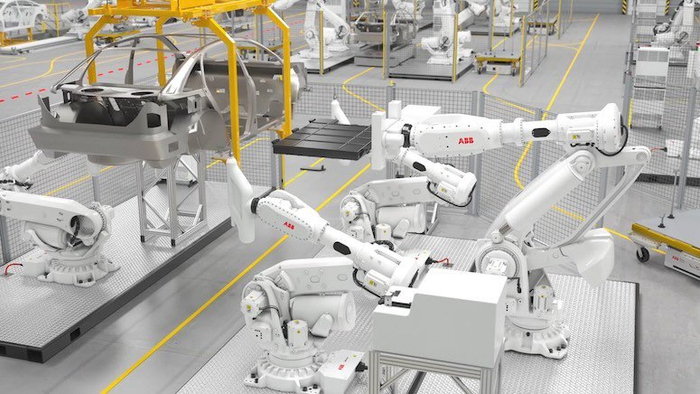
Core Viewpoint - ABB has decided to sell its robotics business to SoftBank for $5.375 billion, abandoning plans for a separate IPO, reflecting the long-term advantages of the robotics unit and creating immediate value for ABB's shareholders [1][2]. Group 1: Transaction Details - The deal is expected to close in mid-2026, pending regulatory approvals and customary closing conditions [1]. - ABB's robotics division is the second largest globally, with projected sales of $2.3 billion in 2024, accounting for 7% of ABB's total revenue [1][6]. - The sale will generate approximately $5.3 billion in net cash proceeds and about $2.4 billion in non-operating pre-tax book gains for ABB [2]. Group 2: Strategic Implications for ABB - Following the sale, ABB will focus on its core areas of electrification and automation, aligning more closely with competitors like Siemens and Schneider Electric [3]. - The robotics business will be classified as "discontinued operations" starting from Q4 2025, leading to a restructuring of ABB into three main business segments [2]. Group 3: Market Context - The robotics market has faced volatility, particularly in traditional sectors like automotive and consumer electronics, leading to growth challenges for ABB's robotics division [3]. - Domestic competitors in China have significantly increased their market share, with four local firms now in the global top 10 for industrial robots, capturing over 50% of the domestic market by late 2024 [3]. Group 4: SoftBank's Strategic Vision - SoftBank's acquisition is part of a broader vision to integrate physical AI with robotics, aiming to drive transformative changes in the industry [4]. - The company is actively investing in AI-related fields, including AI chips and robotics, to enhance its portfolio and drive growth in the robotics sector [4][5]. Group 5: Future Prospects - ABB's recent investment in LandingAI aims to enhance its robotics software with advanced AI capabilities, improving training speeds by up to 80% [5]. - SoftBank is poised to revitalize its robotics investments, particularly through advancements in AI technology, despite past challenges with its robotics ventures [5].

到2033年建成250GW数据中心!OpenAI的“野心”现实吗?
Hua Er Jie Jian Wen· 2025-09-30 02:01
Core Insights - OpenAI plans to build a 250GW data center by 2033, which CEO Altman views as a pathway to general artificial intelligence through "brutal industrialization" [1][2] - The project faces significant challenges, including power supply, trillion-dollar funding needs, and supply chain bottlenecks [1][6] Power Demand - The 250GW target equates to the power output of 250 nuclear power plants, highlighting the immense energy requirements for OpenAI's AI development [3][5] - Current estimates suggest that the total operational power consumption for Microsoft's Azure cloud services is only around 5GW, emphasizing the scale of OpenAI's ambitions [5] Infrastructure and Investment - OpenAI has already invested thousands of billions and requires trillions more to realize its goals, necessitating activation of the global industrial base [6][7] - The estimated investment for power facilities alone could reach up to $12.5 trillion, based on the cost of building nuclear power plants [6] Supply Chain Challenges - The expansion of chip production capacity by suppliers like TSMC and ASML is critical to support the required GPU production, but this process is complex and time-consuming [6] - OpenAI's rapid growth in server demand has surprised even key suppliers like NVIDIA, indicating the scale of the challenge [5][6] Strategic Outlook - Altman's strategy emphasizes "scalable computing," shifting the focus from individual GPU counts to the total power consumption of chip clusters as the new metric for AI capability [2][5] - The ambitious plan is seen as a gamble based on the belief that larger GPU clusters are essential for unlocking more powerful AI models [7][9] Market Implications - The success of OpenAI's infrastructure plans will depend on broader market perceptions of AI's future potential, with significant implications for energy, land, and capital markets [9]