
ABB机器人

Search documents
瞄准市场机遇 借力产业优势 加大研发投入 在华外企持续看好中国经济发展前景
Ren Min Ri Bao· 2026-02-01 22:13
Group 1: Market Opportunities - The Chinese market remains irreplaceable for multinational companies, showcasing its immense attraction for foreign investment [1] - Companies like Decathlon view China as a crucial market, with plans to expand their presence and capitalize on the growing outdoor sports trend post-Winter Olympics [2] - The logistics sector sees significant opportunities in China due to its large consumer base and increasing demand for efficient delivery and transparency [3] Group 2: Industrial Advantages - China's complete industrial system is a key competitive advantage, facilitating rapid development and integration of global business operations [4] - Companies like Michelin have established extensive manufacturing bases in China, benefiting from the country's mature industrial environment [6] - The combination of China's vast market and comprehensive industrial system creates a unique environment for innovation and growth [6][5] Group 3: Talent and Innovation - The release of talent dividends, particularly in engineering, is driving high-quality development and attracting foreign companies to invest in R&D in China [7] - Companies like ABB leverage China's skilled workforce to enhance local innovation and maintain a competitive edge in technology [7] - The talent pool in China is evolving, with a shift from demographic advantages to a focus on skilled and innovative talent, positioning China as a strategic hub for global innovation [8]
全球智能机械与电子产品博览会高端装备数字化论坛举办
Zheng Quan Ri Bao Wang· 2025-12-07 10:12
Group 1 - The global manufacturing industry is undergoing profound changes, with digitalization, networking, and intelligence becoming essential for survival and long-term development [1] - High-end intelligent equipment is the fundamental cornerstone for upgrading the manufacturing industry, with industrial software acting as its "brain" and "soul" [1] - Artificial intelligence is a new means applied in industrial and manufacturing sectors, driving the formation of a new ecosystem of "AI and advanced manufacturing" [1] Group 2 - Digital transformation in the manufacturing sector is a deep cognitive and thinking revolution, requiring managers to integrate digital capabilities into core business operations [2] - AI is driving the industry towards a new phase of autonomous intelligent entities and physical intelligence, enhancing efficiency and reducing costs [2] - The practice of digital transformation in oil detection technology is being pioneered domestically, providing condition monitoring and operational guidance for large equipment [2] Group 3 - Equipment manufacturing companies are facing new challenges and opportunities in the new development cycle, with strategic focuses on refined management, globalization, and service-oriented transformation [3] - The essence of digitalization in high-end equipment manufacturing lies in the deep integration of information technology and manufacturing technology, enhancing precision, efficiency, and reliability [3] - The approach of cluster-based entrepreneurship in small and micro-special robots aims to address industry challenges and promote efficient collaboration across the supply chain [3]



从进博会看中国“搬不走的优势”
Zhong Guo Jing Ji Wang· 2025-11-10 23:55
Core Insights - The eighth China International Import Expo concluded successfully, showcasing 4,108 participating companies across 430,000 square meters, highlighting foreign enterprises' confidence in investing and deepening their presence in China due to its unique and irreplaceable core advantages [1][3] Group 1: Market Opportunities - The vast market size in China provides unparalleled demand depth, making it essential for foreign companies to treat China as a core market for sustained performance growth [1] - New demands in digital and green economies are continuously emerging, prompting new supply opportunities, as demonstrated by New Zealand's Fonterra launching its "Fonterra 4.0 Grass-fed Omega-3 High Protein Milk" at the expo [1] Group 2: Competitive Advantages - A complete industrial chain in China offers significant cost advantages, allowing foreign companies to quickly find partners and achieve efficient collaboration, which is unique globally [2] - The high efficiency and resilience of the supply chain make deep integration into China's supply chain a wise choice for foreign enterprises, as evidenced by ABB's local supplier ratio exceeding 80% [2] Group 3: Institutional Environment - Continuous improvements in institutional openness provide a stable and predictable development environment for foreign companies, with policies reducing the negative impacts of external uncertainties [3] - The reduction of the foreign investment negative list and comprehensive opening of the manufacturing sector illustrate China's commitment to being a "must-choose" market for foreign enterprises [3]
ABB机器人韩晨:ABB机器人在华发展“大有可为”丨瞰浦东
2 1 Shi Ji Jing Ji Bao Dao· 2025-11-06 15:05
Core Insights - ABB Robotics has showcased multiple locally developed new products at the China International Import Expo (CIIE), emphasizing its role as a vital bridge to the Chinese market [1] - The company has launched over 320 new products and signed more than 110 cooperation agreements through this platform, enhancing deep communication and technology promotion with both new and existing clients [1] - ABB has been operating in China for over 30 years and is strengthening its localized value chain, with over 80% of its suppliers now based locally [1] - The Chinese robotics industry has developed a "co-opetition" ecosystem, where domestic and international manufacturers collaborate to advance the industry [1] - ABB highlights its localized strategy with the Shanghai Pudong super factory as the innovation core and increased R&D investment in Zhuhai, integrating deeply into the Yangtze River Delta and Pearl River Delta intelligent manufacturing clusters [1] Future Outlook - The company believes there are significant opportunities for growth in the Chinese market during the 14th Five-Year Plan period [2]

380亿,孙正义买走了
投资界· 2025-10-11 07:26
Core Viewpoint - The article discusses the significant acquisition of ABB's robotics business by SoftBank for $5.375 billion, marking a transformative moment in the global industrial automation landscape [3][5]. Group 1: Acquisition Details - ABB announced the sale of its robotics unit to SoftBank, with the transaction expected to be completed in mid-2026 [3]. - The deal involves ABB transferring its robotics division into a newly established holding company, which SoftBank will acquire entirely in cash [5]. - Post-acquisition, SoftBank will gain access to ABB's 7,000 engineers, 500,000 installed units, global service network, and all intellectual property [5]. Group 2: Financial Implications - ABB expects to net approximately $4.7 billion after accounting for transaction-related costs and taxes, alongside an anticipated non-operational pre-tax gain of about $2.4 billion [5]. - The robotics business generated $2.3 billion in revenue in 2024, constituting 7% of ABB's total revenue [5]. Group 3: Strategic Shift for ABB - ABB's decision to sell its robotics unit comes after a failed IPO attempt, with the CEO stating that the immediate cash from SoftBank was more beneficial than pursuing an independent listing [5][6]. - The company will refocus on its core areas of electrification, process automation, and motion control, indicating a strategic shift away from robotics [6]. Group 4: SoftBank's Vision - SoftBank's acquisition is seen as a strategic move to integrate advanced technology and talent, aiming to merge artificial superintelligence (ASI) with robotics [8][9]. - The acquisition aligns with SoftBank's goal to become a leading ASI platform provider, with robotics serving as a crucial interface for ASI applications [8][9]. Group 5: Industry Impact - The acquisition is expected to accelerate the integration of AI and robotics, potentially reshaping the competitive landscape of traditional industrial robotics [11]. - As the largest industrial robot market, China's local companies may face intensified competition from this acquisition, which could drive domestic innovation and market share [12].



380亿,孙正义买走了
3 6 Ke· 2025-10-11 03:53
Core Insights - ABB Group announced the divestiture of its robotics business unit to SoftBank Group for $5.375 billion, marking a significant shift in the global industrial automation landscape [1][3][11] - The deal is expected to reshape the global robotics industry, with SoftBank acquiring a team of 7,000 engineers, 500,000 installed units, and all intellectual property [3][11] Summary by Sections Transaction Details - The transaction involves ABB transferring its robotics division into a newly established holding company, which SoftBank will then acquire entirely in cash [3] - After the deal, ABB expects to net approximately $4.7 billion after costs and taxes, alongside a projected non-operating pre-tax gain of about $2.4 billion [3][4] Strategic Shift for ABB - ABB's initial plan for an IPO of its robotics business was abandoned in favor of the acquisition due to the immediate financial benefits [4] - The robotics division, once a core part of ABB, is being divested as the company refocuses on electrification and automation, indicating a strategic pivot away from robotics [5][12] SoftBank's Vision - SoftBank's acquisition is seen as a bet on the future of technology, aiming to integrate artificial superintelligence (ASI) with robotics to drive a transformative revolution [7][8] - The acquisition fills a critical gap in SoftBank's industrial applications, enhancing its portfolio in the robotics sector [8][12] Industry Implications - The acquisition accelerates the competition in the robotics industry, with traditional players reassessing their positions in the AI era [11][12] - The shift in the robotics landscape presents both opportunities and challenges for Chinese robotics companies, which hold over 50% of the domestic market share [12][13] - Future competition will focus on ecosystem and AI capabilities rather than just hardware performance, with a critical window for smart transformation lasting 5-10 years [13]
ABB机器人被软银收购,市场、人才还保得住吗?
机器人大讲堂· 2025-10-09 11:44
Core Viewpoint - SoftBank announced the acquisition of ABB's robotics business for $5.4 billion, disrupting ABB's plans for an IPO of the robotics unit and highlighting SoftBank's aggressive investment strategy [1][9]. Group 1: Acquisition Details - The acquisition is expected to be completed in mid-2026, marking a significant shift in the global robotics market and providing opportunities for Chinese high-end robotics manufacturers [1]. - ABB's robotics business generated $2.3 billion in revenue in 2024, accounting for approximately 7% of ABB's total sales, making the acquisition price relatively high [6][16]. Group 2: Challenges and Risks - SoftBank faces challenges in integrating technology and teams post-acquisition, especially given ABB's recent struggles with profitability and declining sales [3][4]. - There is a risk of talent attrition, with studies indicating that 75% of key employees may leave within three years of a major acquisition [4]. - The competitive landscape in the robotics market is intensifying, particularly from Chinese companies, which are rapidly gaining market share [6][7]. Group 3: Strategic Importance - SoftBank views robotics as a critical area for future growth, aiming to integrate ABB's robotics capabilities with its AI investments to create a comprehensive "Physical AI" ecosystem [9][11]. - The acquisition is part of SoftBank's broader strategy to build a complete AI ecosystem, linking robotics with data centers, energy, and chip manufacturing [14][15]. Group 4: Market Dynamics - The global robotics market is projected to grow from approximately $78 billion to $165 billion by the end of 2029, indicating significant potential for investment returns [16]. - The competitive dynamics are shifting, with traditional leaders like ABB losing market share to emerging players, necessitating a reevaluation of strategies across the industry [7][15].
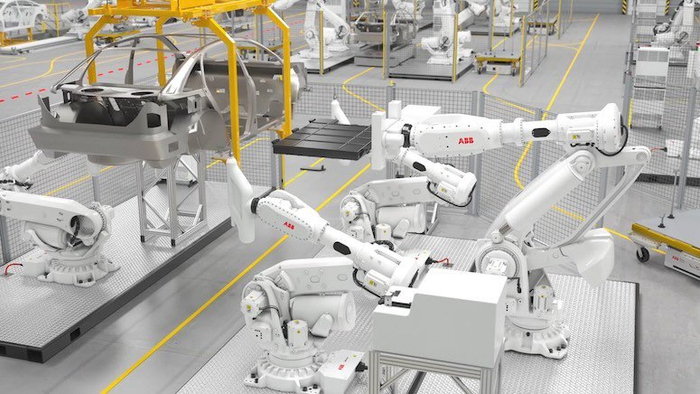
近54亿美元!瑞士巨头ABB把机器人业务卖给了沉迷超级AI的孙正义
Xin Lang Cai Jing· 2025-10-08 23:40
Core Viewpoint - ABB has decided to sell its robotics business to SoftBank for $5.375 billion, abandoning plans for a separate IPO, reflecting the long-term advantages of the robotics unit and creating immediate value for ABB's shareholders [1][2]. Group 1: Transaction Details - The deal is expected to close in mid-2026, pending regulatory approvals and customary closing conditions [1]. - ABB's robotics division is the second largest globally, with projected sales of $2.3 billion in 2024, accounting for 7% of ABB's total revenue [1][6]. - The sale will generate approximately $5.3 billion in net cash proceeds and about $2.4 billion in non-operating pre-tax book gains for ABB [2]. Group 2: Strategic Implications for ABB - Following the sale, ABB will focus on its core areas of electrification and automation, aligning more closely with competitors like Siemens and Schneider Electric [3]. - The robotics business will be classified as "discontinued operations" starting from Q4 2025, leading to a restructuring of ABB into three main business segments [2]. Group 3: Market Context - The robotics market has faced volatility, particularly in traditional sectors like automotive and consumer electronics, leading to growth challenges for ABB's robotics division [3]. - Domestic competitors in China have significantly increased their market share, with four local firms now in the global top 10 for industrial robots, capturing over 50% of the domestic market by late 2024 [3]. Group 4: SoftBank's Strategic Vision - SoftBank's acquisition is part of a broader vision to integrate physical AI with robotics, aiming to drive transformative changes in the industry [4]. - The company is actively investing in AI-related fields, including AI chips and robotics, to enhance its portfolio and drive growth in the robotics sector [4][5]. Group 5: Future Prospects - ABB's recent investment in LandingAI aims to enhance its robotics software with advanced AI capabilities, improving training speeds by up to 80% [5]. - SoftBank is poised to revitalize its robotics investments, particularly through advancements in AI technology, despite past challenges with its robotics ventures [5].
8点1氪:中公教育17000元退款需17年退完;鹤岗过去5年房价涨超800元;证监会开出1.6亿元罚单
36氪· 2025-08-11 00:00
Group 1 - The article discusses the refund policy of Zhonggong Education, which states that if a student fails the exam, they are entitled to a refund of 17,000 yuan, but in reality, they can only receive 1,000 yuan per year, meaning it would take 17 years to get the full refund [5][6] - The staff at Zhonggong Education confirmed the refund conditions and attributed them to issues with the company's cash flow [5][6] - The article highlights a case where a student, Liu, spent over 20,000 yuan on a training program and faced difficulties in obtaining her refund [5][6] Group 2 - Kewei Medical announced plans to issue H-shares and apply for listing on the Hong Kong Stock Exchange to enhance its global strategy and brand recognition [3] - Shuangdeng Group has passed the listing hearing at the Hong Kong Stock Exchange, with joint sponsors including CICC, Huatai International, and Jianyin International [4] Group 3 - The China Securities Regulatory Commission (CSRC) has imposed a fine of 160 million yuan on *ST Gaohong for serious financial fraud, with the company facing potential delisting due to major violations [7] - Crocs, the manufacturer of "Croc" shoes, reported a projected revenue decline for Q3, leading to a nearly 30% drop in stock price, attributed to cautious consumer spending and rising costs from U.S. tariffs [8][8] Group 4 - The article mentions that the average price of new commercial housing in Hegang has increased from 3,046 yuan per square meter to 3,860 yuan over the past five years, with a significant rise in the number of properties sold to non-local buyers [6] - The report indicates that 512 million people have participated in subsidized vocational skills training in China this year, reflecting a government initiative to enhance the supply of skilled labor [12]



8点1氪|中公教育17000元退款需17年退完;鹤岗过去5年房价涨超800元;证监会开出1.6亿元罚单
3 6 Ke· 2025-08-10 23:57
Group 1: Company Announcements - Kewei Medical plans to issue H-shares and apply for listing on the Hong Kong Stock Exchange to enhance its global strategy and brand image [1] - Shuangdeng Group has passed the listing hearing on the Hong Kong Stock Exchange, with joint sponsors including CICC, Huatai International, and Jianyin International [2] Group 2: Financial Issues and Consumer Concerns - Zhonggong Education faces criticism for a refund policy that could take 17 years to process, attributed to financial chain issues [3] - ST Gaohong is under investigation for serious financial fraud, with a proposed fine of 160 million yuan and potential delisting risks [4] - Crocs' stock plummeted nearly 30% after announcing expected revenue declines due to cautious consumer spending and increased tariffs, with an estimated additional cost of $40 million in the second half of the year [5] Group 3: Real Estate Trends - In Hegang, the average price of new commercial housing has risen from 3046 yuan/m² to 3860 yuan/m² over five years, with a significant increase in transactions from 1134 units in 2019 to 5680 units in 2024 [4] Group 4: Market Insights - A survey indicates that only about one-third of large Japanese companies expect economic growth due to uncertainties from U.S. tariffs, a significant drop from 70% earlier in the year [9][10] - The U.S. government’s tax credit for electric vehicles is set to end, leading to a surge in electric vehicle sales, which reached a record 9.1% of total passenger car sales in July [11]


