跨境投资

Search documents
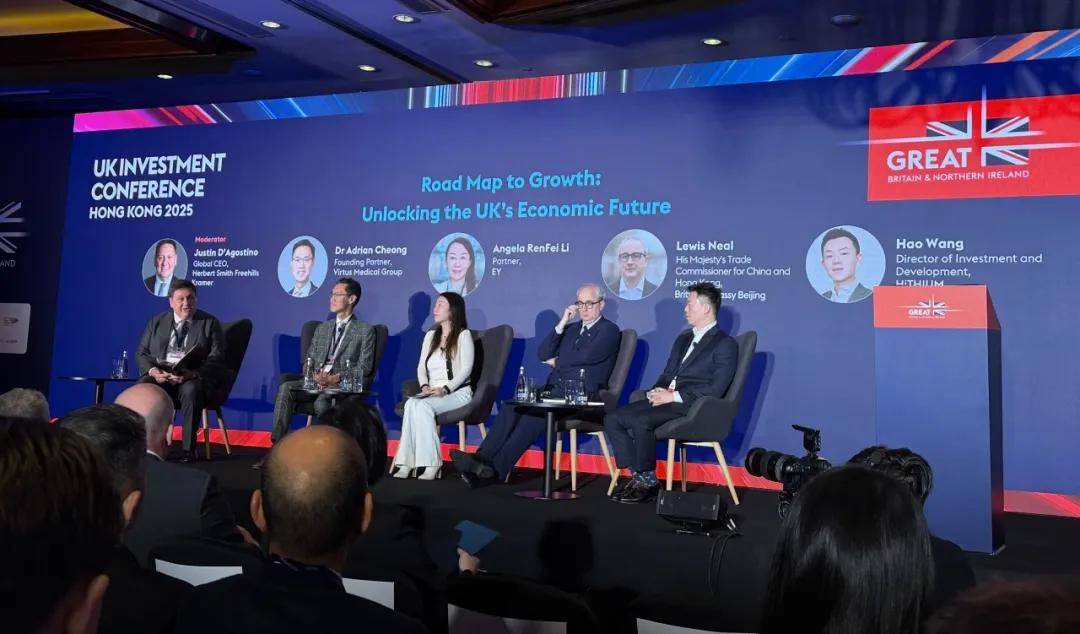
安永出席“投资英国会议2025”,共话中英投资新机遇
Sou Hu Cai Jing· 2025-12-18 10:06
Core Insights - The UK Investment Conference Hong Kong 2025 aimed to showcase the UK as a resilient investment destination and discuss the role of Hong Kong as a bridge for Sino-British investment dialogue [2][3] Group 1: Economic Cooperation - The economic structures of China and the UK are highly complementary, with bilateral trade remaining stable at around $100 billion annually and mutual investment stock exceeding $65 billion [3] - Despite global economic challenges, the trade and investment cooperation between the two countries demonstrates strong resilience and growth potential [3] Group 2: Investment Environment - The UK is committed to creating an open, stable, and innovative investment environment, focusing on eight key growth sectors: financial services, clean energy, technology, life sciences, advanced manufacturing, creative industries, green infrastructure, and professional services [4] - Since July 2024, the UK has successfully implemented investment projects worth over £100 billion, including a £7.3 billion national wealth fund, and plans to increase public R&D investment to £22.6 billion annually by 2029/30 [4] Group 3: Industry Focus - Chinese investors are increasingly focusing on sectors such as clean energy, electric vehicles, life sciences, and technological innovation, which are seen as core drivers of UK economic growth [5] - The integration of technology iteration and market application in high-growth sectors presents unique investment opportunities for forward-looking companies [5] Group 4: Hong Kong's Role - Hong Kong's role has evolved from being a "super connector" to a "value chain enhancer," leveraging its unique advantages under "one country, two systems" to support Chinese enterprises in entering the UK market [6] - The conference highlighted the importance of linking Hong Kong's gateway value with UK industrial opportunities, creating a comprehensive platform for cross-border investment [6] Group 5: Strategic Investment Approach - For Chinese investors, a professional and prudent approach is essential for forward-looking investments, emphasizing the need to understand local regulations and market dynamics [7] - Utilizing global networks of professional service firms like Ernst & Young can help manage various risks associated with cross-border investments, ensuring sustainable and high-quality development in the UK and European markets [7]

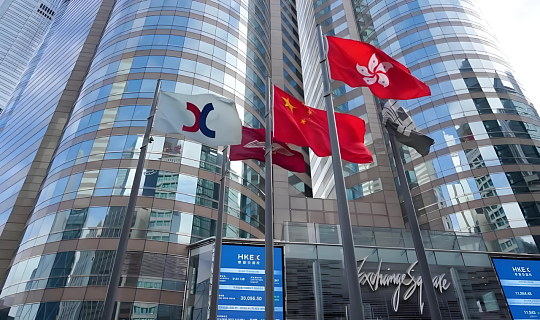
极度证券基础科普:港股H股的区别
Cai Fu Zai Xian· 2025-12-17 03:14
Group 1 - The Hong Kong stock market has regained investor attention due to continuous capital inflow and the listing of prominent Chinese companies [1][3] - There is a critical distinction between "Hong Kong stocks" and "H-shares," which affects the assessment of investment risks and opportunities [1][3] - Hong Kong stocks encompass all companies listed on the Hong Kong Stock Exchange, regardless of their registration location, while H-shares specifically refer to mainland registered companies listed in Hong Kong [3] Group 2 - The regulatory environment for Hong Kong stocks varies due to the diverse registration locations, while H-shares must comply with both mainland and Hong Kong regulations, making them more susceptible to domestic factors [3] - The liquidity and share structure differ significantly; Hong Kong stocks generally have more open trading, whereas H-shares may have restrictions on domestic shareholders' ability to trade [3] - Taxation and disclosure standards also vary, with Hong Kong stocks aligning more closely with international market mechanisms, while H-shares are tightly linked to mainland regulatory frameworks [3] Group 3 - Extreme Global Group's subsidiary, Extreme Securities, has established a headquarters in New Zealand and holds local financial licenses, ensuring compliance with multiple regulatory bodies [4] - Extreme Securities offers a reliable infrastructure for investment, minimizing platform risks and facilitating a straightforward account setup process for users [4] - The platform allows participation in various asset classes, including Hong Kong stocks, U.S. stocks, foreign exchange, precious metals, and cryptocurrencies, catering to both novice and experienced investors [4]
洞察经济周期,谋划出海蓝图!财富盛典解码投资机遇与风险管理
Da Zhong Ri Bao· 2025-12-05 01:51
Group 1 - The event "2025 Qingdao Wealth Festival" focused on the theme of "Cross-border, Integration, and Win-win," discussing the impact of global economic changes on investment and wealth management [1][16] - The discussions highlighted the importance of cross-border investment and international trade as globalization progresses, with a focus on new perspectives in wealth management and investment strategies [1][16] Group 2 - Liu Xiaoshu, Chief Economist of Qingdao Bank, emphasized the relevance of the Kondratiev wave theory in understanding current economic conditions, suggesting that the global economy is in the ascending phase of the sixth Kondratiev wave characterized by the digital economy [17][18] - Liu stated that true wealth arises from a deep understanding of economic structures and cyclical patterns, which is crucial for investors to navigate the evolving landscape of the digital economy [3][17] Group 3 - Qu Xia, a senior partner at Dacheng Law Firm, noted that Chinese companies are shifting from viewing overseas expansion as an option to a necessity, focusing on wealth creation and accumulation on a global scale [3][18] - Qu emphasized the need for companies to set clear strategic goals, choose markets and entry modes carefully, and prioritize localized operations and compliance systems to transition from "going out" to "integrating in" [5][18] Group 4 - Qingdao Yingpais Health Technology Co., Ltd. shared its journey from a manufacturing company to a global brand, achieving nearly 80% of its sales from international markets [6][19] - The company adopted an ODM model and launched its own brand IMPULSE in 1995, successfully entering over 100 countries and regions, thus establishing itself as a leader in the fitness equipment sector [6][19] Group 5 - Qingdao Taike Ying Special Tire Co., Ltd. discussed the challenges and strategies in their overseas expansion, highlighting the importance of organizational capability and adaptability to external environments [9][10] - The company underwent significant organizational changes to enhance localization and manage external complexities effectively [9][10] Group 6 - A roundtable discussion addressed the challenges of asset management in a global context, with participants emphasizing the need for localized operations and strategic partnerships to enhance competitiveness in overseas markets [10][12] - The discussion also highlighted the importance of compliance awareness in international operations, with examples illustrating the risks of applying domestic business practices in foreign legal environments [13][12]



中国银行董事长葛海蛟、行长张辉出席中法企业家委员会第七次会议
Xin Lang Cai Jing· 2025-12-04 13:24
Core Viewpoint - The China-France Entrepreneurs Committee, under the leadership of the two countries' heads of state, has strengthened practical cooperation, with economic and trade collaboration serving as the "ballast" and "engine" of China-France relations [1][3]. Group 1: Committee Overview - The China-France Entrepreneurs Committee was established in January 2018, with the Bank of China serving as the chair for the first two terms, while Schneider Electric Group and BNP Paribas held the chair for the French side [2][4]. - The committee has innovated its communication mechanisms and launched the "China-France Entrepreneurs Committee Goes Local" series to help Chinese and French enterprises share opportunities in China's vast market [2][4]. Group 2: Recent Meeting Highlights - The theme of the recent meeting was "A New Chapter in China-France Cooperation: Focusing on Frontiers of Industry Transformation and Promoting Partnership Development," attended by approximately 200 representatives from both governments and enterprises [2][4]. - Bank of China Chairman Ge Haijiao emphasized the importance of the committee as a platform for institutionalized exchanges at the highest level of the business community [1][3]. - Bank of China President Zhang Hui participated in a seminar on "China-France Industry Insights: New Opportunities for Cross-Border Investment," highlighting the bank's commitment to leveraging its comprehensive financial service advantages in key areas such as green finance, scientific research innovation, and cross-border investment [1][3].

告别“信息时差”:中国投资者如何精准捕捉美股心跳?
Xin Lang Cai Jing· 2025-12-03 08:05
Core Insights - The article highlights the increasing importance of the U.S. stock market for Chinese investors, emphasizing the need for timely and accurate information to navigate this complex landscape [1] Group 1: Real-time Data and Tools - The Sina Finance App provides real-time stock market data with millisecond refresh rates, ensuring that users have access to the latest price movements and trading data [2] - The app covers pre-market and after-hours trading data, which is crucial for understanding market sentiment and significant company developments [2] - The app features a comprehensive financial report center that quickly presents key data comparisons and market commentary following earnings releases [4] Group 2: Information and Analysis - Sina Finance's global news team delivers timely updates on critical events such as Federal Reserve statements, company news, and industry policy changes, all in Chinese [3] - The app offers original analyses and data journalism that simplify complex macroeconomic and industry trends into intuitive charts and clear logic [3] Group 3: User Empowerment through Technology - The app includes smart alert features that allow users to set custom conditions for price changes, trading volume, and other metrics, ensuring they do not miss trading opportunities [4] - A deep company page integrates essential company fundamentals, financial data, institutional holdings, options chains, and community discussions into a comprehensive investment decision-making panel [4] - The global macro dashboard provides insights into the performance of major global assets, helping users understand cross-market interactions [4] Group 4: Investment Perspective - The article emphasizes that the use of professional tools like the Sina Finance App transforms the investment experience for Chinese investors in the U.S. stock market, enhancing their efficiency and global investment perspective [5] - It suggests that being well-prepared and having clear insights can lead to better investment outcomes, positioning the app as a critical resource for serious investors [5]
打造买方投顾新模式!这家头部券商发力“企业家办公室”,构建“人-家-企-社”生态格局
Mei Ri Jing Ji Xin Wen· 2025-12-02 05:08
Core Insights - The changing interest rate environment in China is significantly impacting wealth management strategies, prompting a shift from single-asset investments to diversified and comprehensive asset allocation [1][3] - The decline in risk-free returns is driving investors to seek new asset allocation paths, indicating an upgrade in wealth management concepts [1][3] - The wealth management market in China has substantial room for growth, as property income remains significantly lower than in mature markets [3] Group 1: Market Trends - The structural change in the interest rate environment is reshaping the risk-return characteristics of investments, leading to a transformation in wealth management practices [3] - Investors are increasingly focusing on long-term returns and personalized needs, moving away from simplistic, product-driven wealth management models [3][4] Group 2: Company Strategy - Guotai Junan is leveraging its comprehensive financial advantages to develop a new wealth management model centered around the "Entrepreneur Office" concept [1][4] - The company aims to integrate six core capabilities: asset allocation, family inheritance, cross-border investment, green finance, comprehensive enterprise services, and non-financial ecosystem services [4][5][6][7][8][9] Group 3: Service Capabilities - The asset allocation capability focuses on in-depth research and dynamic management of investment portfolios to align with clients' risk-return objectives [4] - The family inheritance capability addresses the pain points and needs of entrepreneurial clients regarding generational wealth transfer [5] - The cross-border investment capability is evolving to meet the increasing demand for global asset allocation among clients [6] - The green finance service capability aims to enhance sustainable finance offerings in line with ESG themes [7] - The comprehensive enterprise service capability provides a range of services, including equity incentives and human resource cost optimization [8] - The non-financial ecosystem service capability fosters a platform for resource and knowledge sharing among entrepreneurs [9] Group 4: Industry Outlook - The wealth management industry is entering a new development phase centered on professional capabilities and service ecosystems, with Guotai Junan positioning itself as a co-creator of value in this transformative era [10]

香港中资公募怎么挑?一篇看懂6家“国家队”隐藏技能
Sou Hu Cai Jing· 2025-12-02 01:13
本篇我们将视角转向中资公募机构。作为香港资本市场的重要参与者,中资公募基金机构近年来发展迅 速,依托母公司强大的投研能力、跨境业务协同机制以及离岸人民币市场的独特优势,逐步构建起具有 本土化深度与国际化广度兼备的竞争力。 香港处理着全球约80%的人民币支付业务,是最大的人民币离岸中心。中资公募机构凭借这一区位优 势,结合QFII、RQFII、沪深港通、债券通、跨境理财通等政策工具,形成了"境内—香港"资金、客户 与资产的高效双向流动机制,打造出低成本、高效率的跨境一体化平台。 以下,我们选取六家在香港市场具有代表性的中资公募机构,从产品体系、投资策略、业务特色、适用 场景等维度进行系统梳理,以供投资者参考。 一、中银国际资管(BOCI AM) 关键词:银行系、全币种、港股通医药冠军 生态位:香港最大银行系资管,人民币清算量市占率35%,母公司中银香港坐拥200万零售户口。 产品线:80余只公募,货—债—股—多资产"闭环",人民币、美元、港元三币种一键切换。 年度黑马:中银港股通医药混合发起A,2025年以来收益+102%,同类第一,规模从年初4亿飙至87亿 港元。 在之前文章中,我们系统梳理了九家具有代表性的 ...
通过跨境ETF,参与全球市场投资
Guoyuan Securities· 2025-12-01 10:14
[Table_Title] 基金研究报告 证券研究报告 2025 年 12 月 1 日 通过跨境 ETF,参与全球市场投资 报告要点: 近年来,跨境 ETF 迎来快速发展期,规模已逼近万亿元大关。据 Wind 数 据显示,目前跨境 ETF 数量达 198 只,合计规模 9274 亿元,展现出强劲的扩 容势头。在全球流动性宽松预期的推动下,近年来全球风险资产整体表现亮 眼,吸引越来越多投资者借助跨境 ETF 这一便捷工具,参与到港股、美股、 日股等全球市场的投资中,通过分散配置分享全球经济增长的红利。 参与跨境 ETF 投资,重点关注跟踪指数、流动性和溢价率。一是跟踪指 数的差异,跟踪指数是影响 ETF 长期投资收益的关键变量,例如在港股科技 指数家族中,指数成分股的行业分布、集中度都会直接影响 ETF 的风险收益 特征,如目前规模最大的跨境 ETF 是港股通互联网 ETF(159792.SZ),其持 股相对集中,小米、腾讯、阿里、美团的占比都超过了 10%,因此 ETF 的弹 性也会更大;二是流动性的充裕度,日均成交额与规模是重要的观测指标, 流动性不足可能导致交易价格失真,盘中成交稀疏价格可能会横盘不动,出 ...
单季度合计超500条!跨境ETF溢价风险被密集提示,美日主题产品成“高发区”
Di Yi Cai Jing Zi Xun· 2025-11-18 13:33
Core Insights - The recent surge in cross-border ETFs has led to significant premium risks, with 33 products issuing over 500 premium risk alerts since the fourth quarter began, particularly in US and Japan-themed products [2][4] - The Invesco Great Wall Nasdaq Technology Market Cap Weighted ETF has seen its IOPV premium rate exceed 10% for 25 consecutive trading days, indicating a persistent high premium status [2][5] - The overall scale of cross-border ETFs has increased by nearly 117% year-to-date, significantly outpacing the growth of A-share ETFs, which grew by approximately 28% in the same period [6][7] Premium Risk Alerts - As of November 18, 20 cross-border ETFs issued premium alerts, with the previous trading day seeing 22 alerts, highlighting a trend of frequent premium warnings [3][4] - The frequency of premium alerts has become normalized, with 11 products issuing over 20 alerts each since the start of the fourth quarter [4][5] - The premium situation is not isolated, as multiple products tracking popular indices like Nasdaq 100 and Nikkei 225 are experiencing similar high premium rates [3][4] Market Dynamics - The premium phenomenon reflects a mismatch between QDII quotas and investor demand, alongside factors like index scarcity and foreign exchange volatility, contributing to supply-demand imbalances [6][7] - The cross-border ETF market has seen explosive growth, with the total scale reaching approximately 920.29 billion yuan as of November 17, compared to 424.22 billion yuan at the end of the previous year [6][7] - The number of products exceeding 10 billion yuan in scale has doubled, indicating a strong demand for cross-border investment options [7] Institutional Innovations - Recent regulatory changes have expanded the cross-border investment channels, with six new ETF products included in the "Southbound ETF Connect" list, marking a significant development in the market [8][9] AI Market Sentiment - The discussion around whether the AI sector is experiencing a bubble or genuine growth has intensified, with market volatility increasing due to geopolitical tensions and economic factors [10][11] - Despite short-term fluctuations, many institutions maintain a cautiously optimistic outlook on the US stock market, suggesting that the underlying trends in technology and AI remain strong [11][12]

单季度合计超500条!跨境ETF溢价风险被密集提示,美日主题产品成“高发区”
第一财经· 2025-11-18 12:16
Core Viewpoint - The article discusses the significant premium risks associated with cross-border ETFs, highlighting a surge in their market activity and the potential for price bubbles driven by investor demand and market sentiment [2][4]. Group 1: Premium Risks in Cross-Border ETFs - Since the beginning of the fourth quarter, at least 33 cross-border ETF products have issued over 500 premium risk alerts, with 11 products issuing more than 20 alerts each [4]. - The Invesco Great Wall Nasdaq Technology Weighted ETF has maintained an IOPV premium rate above 10% for 25 consecutive trading days, indicating persistent high premium conditions [3][4]. - The prevalence of premium alerts has become a normalized trend, with multiple products frequently issuing warnings and even suspending trading to mitigate risks [3][4]. Group 2: Market Growth and Demand - The total scale of cross-border ETFs reached approximately 920.29 billion yuan, reflecting a nearly 117% increase from the previous year, significantly outpacing the 28% growth of A-share ETFs [7]. - The number of cross-border ETFs with over 10 billion yuan in assets has doubled from 11 to 22, showcasing the rapid expansion of leading products in this market [7][8]. - The demand for cross-border ETFs has led to a diversification of investment options, with new products tracking indices from various global markets, including Brazil and Europe [8]. Group 3: Market Sentiment and AI Discussion - Recent volatility in overseas markets, particularly in the Nasdaq and Nikkei indices, has raised concerns about the sustainability of the current investment climate, with significant declines observed [10][11]. - The ongoing debate regarding whether the AI sector represents a bubble or genuine growth is highlighted, with differing opinions on the long-term viability of tech stocks amid current market conditions [11][12]. - Despite short-term fluctuations, many institutions maintain a cautiously optimistic outlook on the tech sector, suggesting that the underlying trends in AI and technology investment remain strong [12].