
量子技术

Search documents
深耕实验室 破界生长
Xin Lang Cai Jing· 2026-01-26 21:05
Group 1: Technological Innovations - The new generation artificial sun "China Fusion No. 3" achieved significant breakthroughs, including the first realization of nuclear temperatures of 117 million degrees Celsius and electron temperatures of 160 million degrees Celsius, marking a step towards the burning experimental phase of fusion research [10] - The first domestic quantum computing measurement and control system, ZW-QCS580 series, was launched by Sichuan company Zhongweidaxin, enhancing the commercial viability of quantum technology [8] - The world's first AI-assisted robotic surgery was successfully performed over a distance of 5,000 kilometers, showcasing advancements in remote surgical technology [9] Group 2: Space and Energy Developments - Sichuan's "Lasso" observatory detected high-energy gamma-ray signals from micro-quasars, providing insights into the origins of cosmic rays [14] - The successful launch of the world's first space computing constellation, consisting of 12 satellites, represents a significant advancement in space-based computing capabilities [11] - The first commercial supercritical carbon dioxide power generation unit was successfully operated, achieving an efficiency improvement of over 85% compared to existing technologies [18] Group 3: Medical and Biological Advances - The first case of interspecies kidney transplantation in Asia was successfully conducted, with the transplanted pig kidney functioning for 261 days, setting a record for the longest survival time [15] - A new therapeutic target for esophageal squamous cell carcinoma was identified, leading to the development of a novel small molecule candidate that enhances the tumor suppressor function [16] Group 4: Future Industry Development Plans - Sichuan's government issued a plan to develop emerging industries and accelerate the cultivation of future industries, identifying 23 key breakthrough directions across various sectors including AI, robotics, and quantum technology [6][7]

爱尔兰将批准廷德尔研究所1亿欧元扩建计划
Shang Wu Bu Wang Zhan· 2026-01-23 04:14
Core Viewpoint - Ireland is set to approve a €100 million expansion plan for the Tyndall National Institute, which will establish a 17,500 square meter advanced research facility at University College Cork, marking a significant step in Ireland's ambition to become a "Silicon Island" [1] Group 1: Investment and Funding - The project will receive substantial national funding from the Department of Further and Higher Education, Research, Innovation and Science, with additional support from the Departments of Enterprise, Trade and Employment, Public Expenditure, and University College Cork's own funds [1] - In May of the previous year, over €70 million was allocated from national and EU funds to support Tyndall's involvement in three EU pilot projects, including one aimed at accelerating advanced semiconductor technology development [1] Group 2: Research Focus - The Tyndall National Institute, established through collaboration between University College Cork, the Irish Science Foundation, and the Department of Enterprise, focuses on research areas such as compound semiconductors, wafer-level and chip technology, communications, packaging and integration, environmental sensing, and energy [1]
6G、未来产业......工业和信息化部释放重要信号
Xin Lang Cai Jing· 2026-01-21 02:59
Core Insights - The Ministry of Industry and Information Technology (MIIT) aims to promote deep integration of technological and industrial innovation by 2025, focusing on key core technology breakthroughs and major equipment development [1][6] - Significant advancements in various sectors include a 26.7% increase in the value added of integrated circuits and a 28% rise in industrial robot production, with new energy vehicle sales reaching 16.49 million units, up 28.2% year-on-year [1][10] - The 6G technology research has completed its first phase, resulting in over 300 key technology reserves, with the second phase of testing recently initiated [3][8] Industry Growth - Emerging sectors such as aerospace and equipment manufacturing are experiencing double-digit investment growth, indicating a robust investment trend in new industries [1][10] - High-quality innovative results are emerging, with advancements in perovskite materials, permanent magnet materials, and power batteries reaching international standards [5][10] Future Initiatives - The MIIT plans to implement actions to develop and strengthen emerging industries, create national demonstration bases for new industries, and support local governments in establishing future industry pilot zones [6][10] - The government will increase investment in strategic technology projects and promote large-scale applications of new technologies and products in manufacturing [6][10]
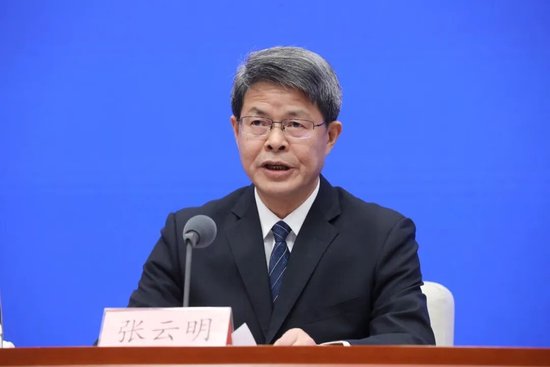
“含新量”不断提升 工信部发布一批新兴产业发展成果
Xin Lang Cai Jing· 2026-01-21 02:15
Core Insights - The press conference held by the State Council Information Office highlighted the achievements in industrial and information technology development by 2025, showcasing a surge of high-innovation results transitioning from laboratory ideas to market-ready products [1][2] Group 1: Technological Advancements - Advanced technologies such as perovskite materials, permanent magnet materials, and power batteries are now at an internationally advanced level [2] - New technologies in networking, high-speed communication, advanced computing, emerging software, and blockchain are accelerating their iterations [2] - Prototypes based on new quantum technologies, including atomic clocks and magnetometers, have been successfully developed [2] Group 2: Quantum Computing and Brain-Machine Interfaces - Superconducting quantum computers and optical quantum computers have achieved quantum superiority, capable of surpassing any classical computer on specific problems [2] - Brain-machine interface technology is rapidly expanding from the medical field into education and industrial sectors [2]
西方阵营内爆!美国关税大棒强抢格陵兰岛,欧洲启动“经济核武器”反击,加拿大成背后赢家
Sou Hu Cai Jing· 2026-01-20 20:11
Core Viewpoint - The escalating tensions between the U.S. and Europe over Greenland have led to significant protests and a potential trade war, highlighting the fragility of transatlantic relations and the strategic importance of Greenland's resources and location [1][10]. Group 1: U.S. Actions and Reactions - President Trump announced a 10% tariff on goods from eight European countries, threatening to increase it to 25% if a deal to purchase Greenland is not reached [1][3]. - The U.S. response to a small Danish military exercise in Greenland was disproportionately aggressive, indicating a strong desire to assert control over the territory [4][5]. - Trump's actions have been characterized as "bullying" and "extortion" by European leaders, with Denmark's Prime Minister and France's President expressing strong opposition [5][8]. Group 2: European Unity and Response - European nations have shown a rare unified front against U.S. tariffs, with a joint statement condemning the threats as damaging to transatlantic relations [4][5]. - The EU is considering retaliatory measures, including tariffs on €93 billion worth of U.S. goods, although there are internal divisions on the severity of the response [5][9]. - A significant majority of Greenland's population (85%) opposes becoming part of the U.S., emphasizing the local sentiment against U.S. claims [5][10]. Group 3: Strategic Implications - The Greenland dispute has exposed deep divisions within NATO, raising concerns about the alliance's future as a military partnership [8][9]. - Canada is repositioning itself in response to U.S. threats, focusing on defense modernization and seeking to reduce reliance on U.S. military procurement [6][7]. - The geopolitical landscape is shifting, with the World Economic Forum identifying geopolitical and economic risks as primary concerns for 2026, indicating a potential for increased global instability [9][10].

量子技术三大方向,这个“像榜一大哥给网红刷礼物”
Guan Cha Zhe Wang· 2026-01-20 03:04
Core Insights - Zhang Wenzhuo, founder of KuaiMi Quantum, discussed the three main directions of quantum technology: quantum computing, quantum communication and quantum cryptography, and quantum sensing and precision measurement [1][2] - The difficulty of achieving quantum computing growth is significant, as each additional logical qubit requires entanglement with all previous qubits, making the increase in qubit numbers exponential and effectively negating Moore's Law [1] - Quantum communication and quantum cryptography are seen as proactive measures against future threats posed by quantum computers, while quantum sensing is crucial in geopolitical contexts [2] Quantum Computing - The growth of qubit numbers in leading institutions is primarily linear due to the exponential difficulty of adding qubits, which sacrifices Moore's Law [1] - The allure of quantum computing remains strong, akin to the pursuit of controlled nuclear fusion, attracting attention and capital despite its current impracticality [1] Quantum Communication and Cryptography - The current focus in quantum communication and cryptography is on providing "true random" numbers to counter potential threats from quantum computers [2] - Quantum encryption is essential to prevent remote control by adversaries, which could lead to severe accidents [2] Quantum Sensing and Precision Measurement - Quantum sensing is vital in scenarios where satellite signals are blocked, as superior inertial navigation capabilities can enhance strategic advantages in military contexts [2] - The integration of accurate quantum sensors into robotics is necessary for them to perform tasks beyond human capabilities, emphasizing the importance of quantum technology in future applications [2]
中国经济总量突破140万亿元 如何影响你我生活
Yang Shi Xin Wen Ke Hu Duan· 2026-01-19 16:30
Core Viewpoint - China's economy is projected to exceed 140 trillion yuan by 2025, indicating a more stable economic environment that benefits the general public through improved social security and employment opportunities [1][2]. Economic Growth and Public Benefits - The increase in China's economic total supports a stronger social safety net, with pension benefits rising for 21 consecutive years and expanded medical insurance coverage [1]. - Since the 14th Five-Year Plan, over 70% of fiscal spending has been directed towards improving the livelihoods of citizens [1]. - Economic growth of 1% is estimated to create approximately 2 million new jobs, enhancing employment stability [1]. New Industries and Job Creation - The growth in economic output has led to the emergence of new industries and professions, particularly in high-performance chips, artificial intelligence, and advanced manufacturing [2]. - The manufacturing sector is expected to see an increase of 8 trillion yuan in value added over five years, contributing to job creation in innovative fields [2]. - The economic growth rate of 5% aligns with a 5% increase in real disposable income for residents, indicating synchronized economic and income growth [2]. Future Outlook - The current year marks the beginning of the 15th Five-Year Plan, with positive developments in consumption, investment, and social policies expected to further enhance economic growth [3]. - The overall sentiment is optimistic, suggesting that the economy will continue to thrive, leading to improved living standards for the public [3].
国盾量子涨2.04%,成交额7.22亿元,主力资金净流出7440.14万元
Xin Lang Zheng Quan· 2026-01-19 02:21
Core Viewpoint - GuoDun Quantum's stock price has shown significant volatility, with a year-to-date increase of 23.96% but a recent decline of 5.09% over the last five trading days, indicating potential market fluctuations and investor sentiment shifts [2]. Company Overview - GuoDun Quantum Technology Co., Ltd. was established on May 27, 2009, and went public on July 9, 2020. The company is based in Hefei, Anhui Province, and specializes in the research, development, production, sales, and technical services of quantum communication products [2]. - The company's main business revenue breakdown includes: technical services (35.68%), quantum communication products (34.31%), quantum precision measurement products (13.03%), quantum computing products (12.42%), and other (4.56%) [2]. Financial Performance - For the period from January to September 2025, GuoDun Quantum achieved operating revenue of 190 million yuan, representing a year-on-year growth of 90.27%. However, the net profit attributable to the parent company was a loss of 26.47 million yuan, which is an increase in loss of 51.98% year-on-year [2]. - Since its A-share listing, the company has distributed a total of 9.6 million yuan in dividends, with no dividends paid in the last three years [3]. Shareholder Information - As of September 30, 2025, the number of shareholders for GuoDun Quantum was 21,700, an increase of 12.24% from the previous period. The average number of circulating shares per person decreased by 10.91% to 3,711 shares [2]. - Among the top ten circulating shareholders, Hong Kong Central Clearing Limited is a new entrant holding 1.1147 million shares, while Guangfa Multi-Factor Mixed Fund has exited the top ten list [3].

借助量子临界性与电子拓扑学融合 科学家发现新型量子物质态
Ke Ji Ri Bao· 2026-01-19 00:54
Core Insights - A new type of quantum state has been reported that could power future technologies, merging quantum criticality and electronic topology, potentially leading to advancements in computing, sensing, and materials science [1][2] Group 1: Research Findings - The research predicts that strong interactions among electrons can induce topological behavior, combining two previously studied phenomena: quantum criticality and topology [1] - This study is the first to theoretically combine these two concepts and has been experimentally validated by observing behaviors in a heavy fermion material that align with the theoretical model [1] Group 2: Implications for Quantum Technology - The discovery has significant implications for the development of quantum technologies, as topological materials typically exhibit stable physical properties, while quantum criticality is associated with strong quantum entanglement and high sensitivity to external disturbances [1] - The combination of these two phenomena may provide new material platforms for developing robust and high-sensitivity quantum devices, applicable in computing, sensing, or low-power electronics [1][2] Group 3: Future Directions - The research offers a direction for exploring and designing systems with similar quantum behaviors, potentially leading to the discovery of materials with both topological characteristics near quantum critical points [2] - The approach of integrating quantum criticality with topology could fundamentally change the design and application of future quantum materials [2]
中企对德投资十年迭代:从规模扩张到价值深耕︱问海·中企出海新观察
Di Yi Cai Jing· 2026-01-18 12:41
Core Insights - The systematic risks associated with Chinese enterprises' direct investment in Germany have significantly increased over the past decade, shifting from opportunistic technology acquisitions to deeper integration within the industrial chain [1] - The investment landscape has transformed, necessitating a transition from broad-scale expansion to a more refined focus on value creation and compliance [7] Regulatory Changes - Since 2016, Germany has progressively strengthened its foreign direct investment (FDI) security review mechanisms through amendments to the Foreign Trade Regulation (AWV), impacting the investment environment for Chinese firms [2] - The introduction of the EU Foreign Direct Investment Screening Regulation in 2019 established a unified framework for FDI reviews among member states, enhancing scrutiny on investments from China [2][3] - Key revisions in 2021 expanded the scope of review to include critical technologies such as AI, semiconductors, and cybersecurity, increasing compliance costs and uncertainties for Chinese investors [3] Compliance Risks - Compliance risks for Chinese companies in Germany have evolved from transaction-based compliance to ongoing operational and governance responsibilities, particularly in light of the European Green Deal and the Supply Chain Due Diligence Act [4] - The implementation of the General Data Protection Regulation (GDPR) has intensified scrutiny on data security and privacy, posing additional challenges for Chinese investments [5] - The upcoming Corporate Sustainability Reporting Directive (CSRD) will require comprehensive ESG disclosures, further complicating compliance for Chinese firms operating in Germany [5] Investment Environment Changes - The investment environment in Germany has undergone significant changes due to structural and cyclical factors, with economic growth slowing and macroeconomic uncertainties rising since 2020 [6] - Despite challenges, Germany remains an attractive destination for high-end manufacturing and technology investments due to its skilled labor force and robust vocational education system [6] - Rising energy costs and labor market changes have impacted operational costs, prompting a shift in investment strategies towards clean energy and infrastructure [6][7] Strategic Shifts - Chinese enterprises have shifted their investment strategies from large-scale acquisitions to minority stakes, strategic partnerships, and greenfield investments, reflecting a more diversified approach [8] - The focus has moved towards compliance-friendly sectors aligned with EU policies, emphasizing local employment, R&D investment, and supply chain collaboration [7][8] - The competitive advantage for Chinese firms in Germany will increasingly hinge on compliance capabilities, depth of local integration, and innovation in green technologies [9]