
鸡蛋期货

Search documents
鸡蛋日报-20251216
Yin He Qi Huo· 2025-12-16 11:14
研究所 农产品研发报告 农产品日报 2025 年 12 月 16 日 研究员:刘倩楠 期货从业证号: Z0014425 联系方式: :liuqiannan_qh@chinastock. com.cn 鸡蛋日报 第一部分鸡蛋日报 | 期货市场 | | | | | | | | | --- | --- | --- | --- | --- | --- | --- | --- | | 今收 | | 昨收 | 涨跌 | JD跨月价差 | 今收 | 昨收 | 涨跌 | | JD01 | 3114 | 3122 | -8 | 01-05 | -420 | -438 | 18 | | JD05 | 3534 | 3560 | -26 | 05-09 | -462 | -492 | 30 | | JD09 | 3996 | 4052 | -56 | 09-01 | 882 | 930 | -48 | | 今收 | | 昨收 | 涨跌 | | 今收 | 昨收 | 涨跌 | | 01鸡蛋/玉米 | 1.40 | 1.40 | 0.00 | 01鸡蛋/豆粕 | 1.01 | 1.01 | 0.00 | | 05鸡蛋/玉米 | 1.58 ...
鸡蛋市场周报:市场情绪仍然悲观,鸡蛋近月再度下探-20251212
Rui Da Qi Huo· 2025-12-12 09:19
瑞达期货研究院 「2025.12.12」 鸡蛋市场周报 市场情绪仍然悲观 鸡蛋近月再度下探 研究员:许方莉 期货从业资格号F3073708 期货投资咨询从业证书号 Z0017638 联系电话:0595-86778969 关 注 我 们 获 取 更 多 资 讯 业 务 咨 询 添 加 客 服 目录 1、周度要点小结 2、期现市场 3、产业情况 「 周度要点小结」 总结及策略建议 3 来源:瑞达期货研究院 Ø 鸡蛋: Ø 行情回顾:本周鸡蛋震荡收跌,2603合约收盘价为3024元/500千克,较前一周-56元/500千克。 Ø 行情展望:养殖端持续亏损使得补栏积极性下滑且老鸡淘汰量有所增加,蛋鸡存栏小幅回落,市 场氛围略有好转。且现货价格持续偏低,养殖端仍处于亏损状态,市场补栏积极性欠佳,利好远 期价格。不过,当前蛋鸡在产存栏仍然处于高位,老鸡尚未出现超淘,高产能仍然牵制近月市场 价格表现。总体而言,市场博弈于弱现实与强预期之间。短期近月合约或处于宽幅震荡状态,可轻 仓试多远月。 「 期现市场情况」 期价走势及前二十名持仓 图1、大商所鸡蛋主力合约期货价格走势 来源:大商所 wind 来源:大商所 瑞达期货研究院 ...

鸡蛋供给压力并未缓解 短期内盘面价格震荡调整
Jin Tou Wang· 2025-12-12 06:00
华联期货分析称,短期来看,生产成本及养殖环节的惜售心理对蛋价形成底部支撑。不过市场需求偏 弱,局部地区库存有所增加,各环节观望情绪浓厚,同时气温下降带动产蛋率回升,鸡蛋供给压力并未 缓解,蛋价反弹乏力。养殖端进入亏损周期,补栏信心受挫,普遍选择顺势淘汰适龄老鸡。12月在产蛋 鸡存栏量预计将继续下降。主力合约延续区间宽幅震荡,参考运行区间3000~3300;中期供需预期向 好,可轻仓买入远月合约的看涨期权。 光大期货表示,随着本周现货价格反弹,供给充裕限制蛋价反弹。从目前已公布的数据来看,对未来供 应仍持缓慢下降的预期,短期期价震荡调整,建议暂时观望,等待后市操作机会。持续关注养殖端补 栏、淘汰意愿变化对产能的影响。 正信期货指出,屠宰开工上升和冻品库存走高对鸡蛋需求有支撑,但腌腊备货进度偏慢,整体需求未形 成规模性增长,短期内鸡蛋价格可能维持震荡。 11月12日,国内期市农副产品板块涨跌参半。其中,鸡蛋期货主力合约开盘报3130.00元/500千克,今日 盘中低位震荡运行;截至午间收盘,鸡蛋主力最高触及3134.00元,下方探低3063.00元,跌幅达 2.41%。 目前来看,鸡蛋行情呈现震荡下行走势,盘面表 ...
银河期货鸡蛋日报-20251211
Yin He Qi Huo· 2025-12-11 09:27
Group 1: Report Investment Rating - There is no information about the industry investment rating in the report. Group 2: Core Viewpoints - With the recent increase in the number of culled chickens, the previous supply pressure has been alleviated. It is expected that the short - term de - capacity speed will be relatively gentle. The near - month contracts are expected to fluctuate within a range, and for the far - month contracts in April and May, long positions can be considered to be built at low prices as the supply pressure eases [7]. Group 3: Summary by Directory 1. Futures Market - **Futures Prices**: JD01 closed at 3144, down 9 from the previous day; JD05 closed at 3559, up 8; JD09 closed at 4060, up 6 [2]. - **Inter - month Spreads**: The 01 - 05 spread was - 415, down 17; the 05 - 09 spread was - 501, up 2; the 09 - 01 spread was 916, up 15 [2]. - **Ratio with Feed**: 01 egg/corn was 1.40, down 0.01; 01 egg/soybean meal was 1.02, down 0.01. Other ratios remained unchanged [2]. 2. Spot Market - **Egg Prices**: The average price in the producing areas was 3.03 yuan/jin, up 0.02 yuan/jin from the previous day, and the average price in the selling areas was 3.22 yuan/jin, unchanged [2]. - **Culled Chicken Prices**: The average price of culled chickens was 3.93 yuan/jin, up 0.03 yuan/jin [2]. 3. Profit Calculation - **Costs**: The average price of corn was 2356, down 1; the average price of soybean meal was 3092, unchanged; the average price of egg - laying chicken feed was 2.58, unchanged [2]. - **Profits**: The average price of culled chickens was 3.93, up 0.03; the average price of chicks was 3.21, up 0.04; the profit per chicken was 1.91 yuan, up 0.96 from the previous day [2]. 4. Fundamental Information - **Price Trends**: The average price in the main producing areas was 3.02 yuan/jin, up 0.04 yuan/jin, and the average price in the main selling areas was 3.22 yuan/jin, up 0.02 yuan/jin. Egg prices in Beijing increased, and prices in different regions showed a pattern of rising and stabilizing [4]. - **Inventory**: In November, the national inventory of laying hens was 1.352 billion, a decrease of 80 million from the previous month, and an increase of 5.5% year - on - year. The estimated inventory in December 2025, November, February, and March was 1.348 billion, 1.338 billion, 1.325 billion, and 1.315 billion respectively [5]. - **Sales and Inventory**: As of December 5, the sales volume of eggs in representative selling areas decreased by 4% week - on - week. The average weekly inventory in the production and circulation links increased [6]. 5. Trading Logic - The recent increase in the number of culled chickens has alleviated the supply pressure. The short - term de - capacity speed is expected to be gentle. Near - month contracts are expected to fluctuate within a range, and far - month contracts in April and May can be considered for long positions at low prices [7]. 6. Trading Strategies - **Single - side**: It is expected to fluctuate within a range in the short term. Long positions can be considered for far - month contracts at low prices [8]. - **Arbitrage**: It is recommended to wait and see [9]. - **Options**: It is recommended to wait and see [10].
银河期货鸡蛋日报-20251209
Yin He Qi Huo· 2025-12-09 11:12
研究所 农产品研发报告 农产品日报 2025 年 12 月 09 日 鸡蛋日报 第一部分鸡蛋日报 | 期货市场 | | | | | | | | | --- | --- | --- | --- | --- | --- | --- | --- | | 今收 | | 昨收 | 涨跌 | JD跨月价差 | 今收 | 昨收 | 涨跌 | | JD01 | 3124 | 3153 | -29 | 01-05 | -457 | -484 | 27 | | JD05 | 3581 | 3637 | -56 | 05-09 | -489 | -493 | 4 | | JD09 | 4070 | 4130 | -60 | 09-01 | 946 | 977 | -31 | | 今收 | | 昨收 | 涨跌 | | 今收 | 昨收 | 涨跌 | | 01鸡蛋/玉米 | 1.40 | 1.39 | 0.00 | 01鸡蛋/豆粕 | 1.04 | 1.04 | 0.00 | | 05鸡蛋/玉米 | 1.58 | 1.61 | -0.03 | 05鸡蛋/豆粕 | 1.30 | 1.31 | -0.01 | | 09鸡蛋/玉米 | 1.7 ...
鸡蛋日报-20251208
Yin He Qi Huo· 2025-12-08 09:36
Group 1: Report Industry Investment Rating - No relevant information provided Group 2: Core View of the Report - The short - term de - capacity speed is expected to be gentle. Near - month contracts are expected to fluctuate within a range, and for the far - month contracts in April and May, long positions can be considered to be built at low prices as the supply pressure eases [7] Group 3: Summary by Relevant Catalogs 1. Futures and Spot Market Data - **Futures Market**: JD01 closed at 3153, up 36 from the previous day; JD05 closed at 3637, up 48; JD09 closed at 4130, up 41. The 01 - 05 spread was - 484, down 12; the 05 - 09 spread was - 493, up 7; the 09 - 01 spread was 977, up 5. The ratios of 01, 05, 09 eggs to corn and soybeans also had corresponding changes [2] - **Spot Market**: The main producing area average price was 2.95 yuan/jin, up 0.03 yuan/jin from the previous day, and the main selling area average price was 3.22 yuan/jin, unchanged. Most of the national mainstream prices remained stable, and the prices of Beijing and other regions were also stable. The average price of eliminated chickens was 3.88 yuan/jin, unchanged [2][4] 2. Fundamental Information - **Egg Production and Sales**: In November, the national in - laying hen inventory was 1.352 billion, a decrease of 80 million from the previous month, an increase of 5.5% year - on - year, and lower than expected. The egg sales volume in representative selling areas in the week of December 5 was 7115 tons, a decrease of 4% compared with the previous week [5][6] - **Chicken Culling**: In the week of December 5, the national main - producing area egg - laying hen culling volume was 20.82 million, a decrease of 5% from the previous week, and the average culling age was 488 days, a decrease of 1 day from the previous week [5] - **Inventory and Profit**: As of December 5, the production - link average inventory was 1.06 days, an increase of 0.04 days from the previous week, and the circulation - link average inventory was 1.14 days, an increase of 0.07 days. As of November 21, the weekly average egg profit was - 0.26 yuan/jin, a decrease of 0.11 yuan/jin from the previous week [6] 3. Trading Logic - The recent increase in the amount of eliminated chickens has alleviated the previous supply pressure. It is expected that the short - term de - capacity speed will be gentle. Near - month contracts are expected to fluctuate within a range, and far - month contracts in April and May can consider building long positions at low prices as the supply pressure eases [7] 4. Trading Strategies - **Single - side**: It is expected to fluctuate within a range in the short term. Long positions in far - month contracts can be considered to be built at low prices [8] - **Arbitrage**: It is recommended to wait and see [9] - **Options**: It is recommended to wait and see [10]
南华期货鸡蛋产业周报:远月的梦想,近月的重拳-20251207
Nan Hua Qi Huo· 2025-12-07 12:28
Report Industry Investment Rating No relevant content provided. Core Viewpoints of the Report - The egg - laying hen inventory remains at an absolute high. In November, the market demand is in a seasonal off - peak period. Although the inventory of laying hens has slightly decreased, the supply is still high, and the market maintains a situation of loose supply and demand. The long - term egg - laying hen production capacity is still in surplus, with significant price pressure. The overall long - term trend is bearish, but it is approaching an inflection point. If speculating on a rebound, it is recommended to focus on the far - month contracts [1]. - The current egg - laying hen inventory is high, and egg production is large. The trend of the number of culled chickens sold for slaughter is rising to the highest level in the same period, and the age of culled chickens continues to decline. The breeding profit is poor, and the probability of farmers delaying culling and molting increases [5]. - For the far - end, the production capacity is still at an absolute high, and the number of large - scale farms is increasing. Large manufacturers mainly maintain their original production plans, so the clearance of production capacity may be relatively slow. The enthusiasm of farmers for replenishing chicks is relatively low [4]. Summary by Relevant Catalogs Chapter 1: Core Contradictions and Strategy Recommendations 1.1 Core Contradictions - The inventory of laying hens is high. In November, the inventory of laying hens was about 1.352 billion, a month - on - month decrease of 0.52%. The proportion of main - laying hens increased, while that of reserve and to - be - slaughtered hens decreased. The proportion of hens over 450 days old decreased to 8.56%, a month - on - month decrease of 0.04%, and the proportion of main - laying hens aged 120 - 450 days increased to 78.9%, a month - on - month increase of 0.22% [1][18]. - The production rate is expected to increase as the temperature drops. However, due to low breeding profits, the number of old hens culled remains high, and the enthusiasm for culling is fair. In November, the chick sales volume increased slightly, but the overall replenishment sentiment remains cautious. The inventory structure shows that the proportion of large and medium - sized eggs increased month - on - month, while that of small - sized eggs decreased [1]. - The long - term production capacity of laying hens is in surplus, with high price pressure. The short - term price game lies in whether the actual number of culled chickens will create a shortage in the peak season for near - month contracts and the impact of low chick sales on far - month expectations [1]. 1.2 Speculative Strategy Recommendations - **Trend Judgment**: After the festival, the price reached a phased bottom. The recent rebound declined due to poor demand. The previous low of the main contract may be a phased low. There may be a second bottom - testing when the contract approaches delivery, and the bottom - rebounding and bottom - grinding range may be between 2800 - 3400 [6]. - **Single - side Strategy**: Close out the previous short positions, and either wait and see or lightly speculate on the peak - season rebound [6]. - **Basis Strategy**: Wait and see. As the number of culled chickens sold for slaughter increases, the spot price shows weak stability, and the rebound is less than that of the futures [6]. - **Spread Strategy**: Wait and see [6]. 1.3 Industry Customer Strategy Recommendations - **Egg Price Range Forecast**: The price range of the main contract is predicted to be 2800 - 3400, with the current 20 - day rolling volatility at 15.35% and the historical percentile of the current volatility in the past three years at 37.63% [7]. - **Risk Management Strategy Recommendations**: For inventory management, to prevent inventory devaluation, short egg futures to lock in finished - product profits (10% recommended for JD2601 and JD2601 - C - 340). If worried about inventory devaluation but there is no suitable price on the futures market, sell call options (10% recommended). If worried about inventory devaluation but don't want to miss the opportunity of a sharp egg - price increase, buy out - of - the - money put options. For procurement management, to prevent future egg - price increases, buy far - month egg contracts according to the procurement plan. If worried about price increases but there is no suitable price on the futures market, sell put options. If worried about procurement price increases but don't want to lock in the purchase - and - sales profit in advance, buy out - of - the - money call options [7]. Chapter 2: Market Information 2.1 This Week's Main Information - **Positive Information**: After the egg price hit the bottom, the willingness of traders to stock up increased, and the market sales speed accelerated. Coupled with the slowdown of the egg - laying cycle of hens due to low temperatures in the north, the supply - side pressure was slightly relieved. It is expected that the egg price will mainly rise slowly and fluctuate at a low level in the short term. The average egg price in Shandong's main production area is 6.09 yuan/kg, up 0.14 yuan from yesterday; in Hebei, it is 5.63 yuan/kg, up 0.02 yuan; in Guangdong, it is 6.73 yuan/kg, unchanged; and in Beijing, it is 6.16 yuan/kg, unchanged [8]. - **Negative Information**: In the third week of November (collection date: November 20), mutton prices increased month - on - month, while the prices of pork products, eggs, chicken, commercial - generation chicks, live cattle, and laying - hen compound feed decreased month - on - month. The prices of beef, fresh milk, corn, soybean meal, fattening - pig compound feed, and broiler compound feed remained unchanged month - on - month [8][9]. 2.2 Next Week's Main Information - Pay attention to the egg price quotes in the production areas [8]. Chapter 3: Futures Market Analysis 3.1 Price - Volume and Capital Analysis - The main contract of eggs has switched to the 01 contract. The opening price at the beginning of the week was 3294 yuan/ton, and the closing price at the end of the week was 3117 yuan/ton, a decrease of 5.34%. The open interest was 161,000 contracts, a decrease of 10,024 contracts from last week [9]. 3.2 Basis and Spread Structure Analysis - **Spread Structure**: The overall egg spread shows a contango structure. Although the 1 - 2 spread shows a back structure, it is actually a normal seasonal pattern of peak and off - peak seasons, and the overall structure is contango [11]. - **Basis Structure**: As the number of culled chickens sold for slaughter increases, the spot price shows weak stability. The basis of the 01 contract fluctuates insignificantly, and the far - month basis is weak [13]. Chapter 4: Valuation and Profit Analysis - The current egg - laying hen breeding profit is still poor, at the lowest level in the past five years seasonally. Farmers have the incentive to cull chickens. This week, the breeding profit remained in the red, with little change. Feed prices have rebounded, and the corn price has strengthened in the short term, leading to an increase in breeding costs. If the current low breeding profit persists, farmers' motivation to recover losses will gradually weaken, accelerating the culling of chickens [15]. Chapter 5: This Week's Supply - Demand Situation 5.1 Supply - Side Situation - **Egg - Laying Hen Inventory**: In November, the national inventory of laying hens was about 1.352 billion, a month - on - month decrease of 0.52%. The proportion of main - laying hens increased, while that of reserve and to - be - slaughtered hens decreased [18]. - **Chick Situation**: In November, chick sales increased slightly. The total sales volume of commercial - generation chicks of 18 representative enterprises monitored by Zhuochuang Information was about 39.55 million, a month - on - month increase of 1.02%. Egg - laying hen breeding is still in a loss stage, and the prices of eggs and old hens remain low. Farmers are cautious about the future market, and the order placement of breeding enterprises has not improved significantly. Only in some areas with a slightly higher empty - pen rate is there phased replenishment [20]. - **Culled Chicken Situation**: There is a disagreement between Zhuochuang and Ganglian data. Zhuochuang shows a month - on - month decrease in culled chickens, while Ganglian shows a continuous increase in the number of culled chickens this month, and the market's divergence over the data is increasing [23]. 5.2 Consumption Situation - The egg sales volume in the main sales areas remains weak, and the arrival volume in Dongguan is relatively high [26]. 5.3 Inventory Situation - This week, the inventory in the production and circulation links is neutral, with 1 day in the production link and 1.24 days in the circulation link [28].
核心价值观我践行 | 市委金融办举办资本市场赋能食品行业高质量发展培训会
Xin Lang Cai Jing· 2025-12-03 13:21
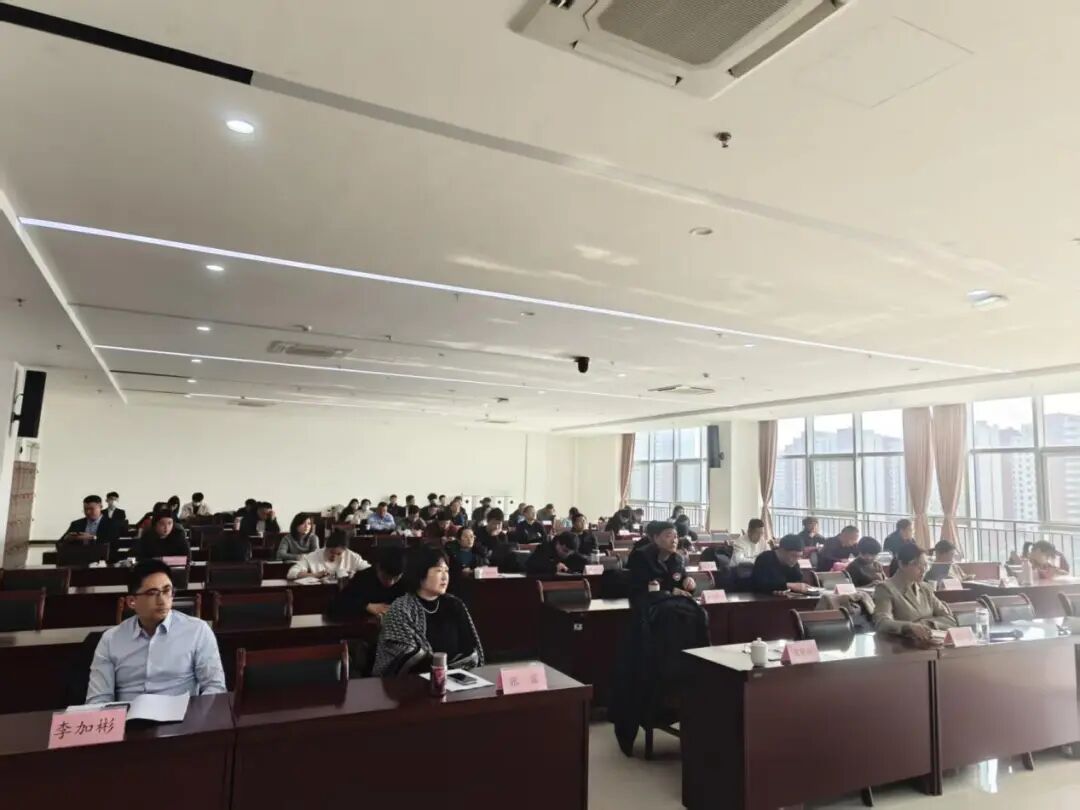
Core Insights - The training session focused on empowering the food industry through capital market mechanisms, enhancing understanding and confidence among enterprises regarding capital market tools for industrial development [7][13] - The event was organized by the Municipal Financial Office in collaboration with CITIC Securities and Qingdao Blue Ocean Equity Exchange Center, highlighting a comprehensive capital support system for enterprises throughout their lifecycle [1][7] Group 1: Training Overview - The training included presentations on the Hong Kong capital market and practical aspects of listing food companies on the Hong Kong Stock Exchange, providing structured analysis of the number of listed companies, total market value changes, and industry distribution [3][9] - Key speakers included senior executives from CITIC Securities, who provided insights into capital market operations and strategies tailored for the food industry [3][9] Group 2: Market Insights - Analysts discussed the outlook for the livestock industry, particularly the egg futures market, predicting a continuation of wide fluctuations, and emphasized the need for long-term strategies in the pig market [5][11] - The oilseed market was also analyzed, with expectations of increased production of international palm oil, while domestic supply and demand dynamics were addressed to prepare for future market changes [5][11] Group 3: Participation and Impact - Over 50 participants from key food industry enterprises, financial management departments, and industry liaison officers attended the training, indicating strong interest and engagement in capital market opportunities [7][13] - Attendees expressed a clearer understanding of industry development and the supportive role of capital markets, committing to translate knowledge into actionable steps for advancing their listing processes [7][13]


鸡蛋:如何看待近月大跌远月大涨?
对冲研投· 2025-12-02 11:14
文 | 姜振飞 来源 | NB的农产品 编辑 | 杨兰 审核 | 浦电路交易员 今日近月合约再度大跌,主要是前期市场对淘鸡节奏以及春节需求预期较高导致盘面升水较大, 期货盘面在交割月以及临近交割月走期现回归以及挤升水的逻辑,而远月合约持续上涨主要是四 季度现货价格低迷,市场补栏情绪较低,淘鸡量相对较大,供需过剩结构呈现逐步消化的趋势, 但目前行业产能潜力较大,鸡源较为充裕,加上未来不确定性的淘鸡节奏以及换羽情况,因此短 期的低水平补栏并不能完全代表着未来对应产能下降的幅度。从市场调研信息来看,对产业数据 以及信息了解的规模化企业对明年行情并不悲观,有扩张意愿,但中小规模企业以及散户,因数 据信息闭塞,仅关注当前行情,相对有些悲观,但若年前现货价格回暖以及春节后半个月现货价 格维持3元/斤以上的关口,中小规模企业以及散户根据往年养殖经验,其养殖信心将恢复,淘鸡 情绪将下降,补栏量及换羽量或将增加,因此明年供给端并不存在较为明显的缺口,出现单边趋 势的概率较小,不宜过度看涨明年鸡蛋价格。 期货方面,从期货升水结构来看,市场对明年行情较为期待,但中间涉及变量较多,远月单边逻 辑风险的较大。从交易的角度来看,远月持续 ...

建信期货鸡蛋日报-20251202
Jian Xin Qi Huo· 2025-12-02 01:33
Report Overview - Reported industry: Eggs [1] - Date: December 2, 2025 [2] - Research team: Agricultural Products Research Team [4] Key Points 1. Market Review and Operational Suggestions - **Market Review**: The prices of egg contracts 2601, 2602, and 2603 all declined. The 2601 contract dropped by 2.47%, the 2602 by 1.21%, and the 2603 by 1.03%. The national egg prices were stable, with the average prices in the main production areas at 3.09 yuan/jin, up 0.10 yuan/jin from the previous day, and 3.28 yuan/jin in the main sales areas, up 0.05 yuan/jin from the previous day [7]. - **Core View**: The spot prices stabilized and then rose, and the futures market rose strongly a few days ago. However, due to the weekend price increase falling short of expectations, there was a weak correction today. Traders are willing to wait for the small peak season, reducing supply pressure. The 01 contract is in the peak - season contract, while the 02 is in the absolute off - season. If egg prices strengthen, one can focus on the potential opportunity of the 1 - 2 spread widening, and short - sellers are advised to lay out in post - festival contracts [8]. 2. Industry News - **Inventory**: As of the end of October 2025, the national monthly inventory of laying hens was about 1.359 billion, a month - on - month decrease of 0.66%, ending the previous continuous growth trend, but a year - on - year increase of 5.59% compared to the end of October 2024 [9]. - **Replenishment**: In October 2025, the monthly hatch volume of laying hen chicks in sample enterprises was about 39.15 million, slightly less than that in September 2025. The cumulative replenishment from July to October 2025 was about 158.14 million, less than the same period of the previous year [9]. - **Culling Volume**: From the three weeks up to November 20, 2025, the national culling volumes of chickens were 19.81 million, 19.47 million, and 20.21 million respectively, with an overall slight increase compared to the previous period [9][10]. - **Culling Age**: As of November 20, 2025, the average culling age of chickens was 492 days, 1 day earlier than the previous week and 7 days earlier than the previous month, indicating an accelerated culling speed [10]. 3. Data Overview - The report presents multiple data charts, including the monthly inventory of laying hens in China, egg - chicken farming profits, average prices in the main egg - producing areas, the seasonal trend of egg 12, the basis of the egg 12 contract, and the egg 12 - 02 spread [11][12][15]