
鹰派

Search documents
日本央行内部鹰声四起 12月加息或提上议程
Xin Hua Cai Jing· 2025-11-21 02:42
Core Viewpoint - The Bank of Japan's Governor Ueda Kazuo indicated that the continued weakness of the yen may further increase inflation, as import prices rise due to the yen's depreciation, leading companies to be more willing to raise wages and product prices [1] Group 1: Monetary Policy Implications - Ueda emphasized that the impact of exchange rate fluctuations on prices is more significant than in the past, necessitating the central bank to remain highly vigilant [1] - There is a growing inclination towards supporting an interest rate hike in December, especially if Ueda votes in favor, aligning with two hawkish committee members who called for a rate increase in the October meeting [1] Group 2: Committee Dynamics - Committee member Koeda Junko expressed hawkish views, indicating rising concerns about inflation risks within the policy-making body [1] - Although Deputy Governor Iwata Noriyuki maintained the status quo in the last meeting, he is still viewed as leaning towards hawkish policies [1] - Currently, only Noguchi Akira holds a firm dovish stance, while the new member, who is seen as centrist, is expected to align with the mainstream opinion led by Ueda [1]
鹰退鸽进!美联储“大换血”在即 降息派或借势特朗普占据上风?
智通财经网· 2025-11-18 03:39
Core Viewpoint - The upcoming changes in the Federal Reserve's leadership, particularly the retirement of Atlanta Fed President Raphael Bostic, may lead to a more dovish stance in monetary policy, influencing the Federal Open Market Committee (FOMC) towards potential interest rate cuts [1][2]. Group 1: Leadership Changes - Atlanta Fed President Raphael Bostic announced his retirement effective February next year, leaving a key position currently held by a hawkish member [1]. - The appointment of a more dovish successor could shift the FOMC's stance towards further rate cuts, despite Bostic's non-voting status until 2027 [1]. - The Federal Reserve Board is expected to approve the reappointment of all 12 regional Fed presidents for new five-year terms starting March 1 [1]. Group 2: Potential Impact of Supreme Court Ruling - A Supreme Court ruling in January regarding the potential dismissal of Fed Governor Lisa Cook by Trump could create another vacancy, allowing for the appointment of a new member aligned with lower interest rate policies [2]. - Analysts do not anticipate dramatic changes in the confirmation process for regional Fed presidents, despite the potential for a new appointee [2]. Group 3: Current Voting Members' Stance - All four current voting regional Fed presidents lean towards a hawkish stance, with concerns about inflation remaining high [4][5]. - Boston Fed President Susan Collins and St. Louis Fed President Alberto Musalem support rate cuts but emphasize caution due to inflation concerns [5]. - Kansas City Fed President Jeff Schmieding and Chicago Fed President Austan Goolsbee express higher thresholds for further rate cuts, citing persistent inflation [5]. Group 4: Future Voting Members' Perspectives - Incoming voting members, including the Philadelphia Fed President, may lean hawkish, with Minneapolis Fed President Neel Kashkari expressing reservations about further rate cuts [6]. - Cleveland Fed President Beth Hammack and Dallas Fed President Lori Logan also show hesitance towards rate cuts, focusing on inflation issues [6]. Group 5: Expected Divisions within the Committee - The composition of the regional Fed presidents is expected to be more hawkish, while the Board of Governors may lean dovish, leading to potential divisions within the committee [7]. - Three distinct factions are anticipated: a dovish group led by the new Fed Chair and certain governors, a hawkish group from regional presidents, and a more neutral group comprising other governors [7].
本周美股回顾(上):突然市场变得担心人工智能的估值和通货膨胀
Sou Hu Cai Jing· 2025-11-15 22:13
Core Insights - The main driver of rising yields is nominal economic growth, which is distinct from the yield increases caused by policy tightening [1] - The Federal Reserve is likely to maintain current policy rates for an extended period, as indicated by Boston Fed President Susan Collins [1] - The uncertainty surrounding the December meeting outcomes is heightened due to a lack of official economic data, exacerbated by the government shutdown [1] Summary by Sections Federal Reserve Policy - Susan Collins emphasized that further easing should have a "high threshold" and suggested that policy rates may remain unchanged for a while [1] - Fed Vice Chairman Jefferson highlighted the need for caution as the Fed approaches neutral rates, indicating that the lack of data makes it prudent to be cautious [1] - There are currently 6 voting members supporting the maintenance of rates, while only 3 are in favor of a rate cut, with 3 non-voting members taking a wait-and-see approach [1] Market Reactions - The market's shift in expectations for rate cuts is driven more by the absence of data rather than positive economic indicators [1] - The current environment is characterized by a hawkish tilt in the Federal Open Market Committee's (FOMC) response mechanism, despite a lack of positive adjustments in economic outlook [1] - Risk assets are feeling uneasy due to this hawkish sentiment, contrasting with the ideal scenario of a dovish Fed and a strong economy [1] Economic Indicators - The stock market's recent performance has been supported by a loose Financial Conditions Index (FCI) and AI-related stocks [1] - A tightening FCI driven by hawkish tendencies, coupled with rising real yields, could lead to challenging times ahead for the market [1]
突发!“鹰派”地区联储主席宣布提前退休 特朗普再迎改组良机
Di Yi Cai Jing· 2025-11-12 23:23
Core Points - Atlanta Federal Reserve President Raphael Bostic unexpectedly announced his decision to retire early at the end of February next year, providing another opportunity for President Trump to exert influence within the Federal Reserve [1][4] Group 1: Monetary Policy Stance - Bostic expressed a cautious stance, preferring to maintain the current interest rate levels until there is "clear evidence" that inflation is returning to the Fed's 2% target [2] - He believes the current monetary policy is slightly restrictive and that the more pressing risk remains price stability rather than the labor market signals, which he finds ambiguous [2] Group 2: Leadership and Succession - Bostic has served as Atlanta Fed President for eight years and is the first Black president of a regional Federal Reserve Bank in the Fed's 111-year history [3] - Following Bostic's retirement announcement, the Atlanta Fed's board will form a search committee to find his successor, which will require approval from the Washington Fed Board [3] Group 3: Political Implications - Trump's interest in exerting greater control over the Federal Reserve is highlighted, especially as he seeks to see interest rate cuts [4] - The upcoming appointments of regional Fed presidents will be closely watched, as Trump aims to influence the Federal Reserve's direction, particularly after Powell's term ends in May [4][5]
美联储Goolsbee:在通胀数据缺席的情况下对降息更感不安
Sou Hu Cai Jing· 2025-11-06 14:06
Core Viewpoint - The Chicago Fed President Goolsbee indicates that the labor market remains generally stable, but shows signs of slight cooling. Concerns about interest rate cuts arise in the absence of inflation data, and the outlook on interest rates is not hawkish in the medium term [1] Group 1 - The labor market is described as overall stable, with slight cooling observed [1] - There is unease regarding interest rate cuts due to the lack of inflation data [1] - The medium-term outlook on interest rates is characterized as not hawkish [1]
海外市场点评:特朗普施压FOMC的“三板斧”
Minsheng Securities· 2025-11-03 10:40
Group 1: Monetary Policy and Economic Impact - Asymmetric monetary policy has led to higher U.S. Treasury yields being maintained for longer periods, adversely affecting the real economy[2] - The Federal Reserve's hesitation to implement aggressive rate cuts is due to persistent inflation concerns, contrasting with previous rate hikes[2] - The urgency for rate cuts is particularly strong from the White House, as the government’s fiscal power relies on manageable debt levels[2] Group 2: Trump's Influence on the Federal Reserve - Trump's strategy to increase his influence over the Federal Open Market Committee (FOMC) involves a three-step approach to restructure the Federal Reserve's power dynamics[3] - The first step is to secure a "shadow chairman" to align monetary policy with his expectations, marking the beginning of his intervention[3] - Trump aims to gain a majority on the Board of Governors, currently holding 3 out of 7 seats, needing just 1 more to achieve a majority[4] Group 3: Regional Federal Reserve Presidents - The regional Federal Reserve presidents have gained significant influence in FOMC decisions, with a historical trend showing they cast more dissenting votes than Board members[6] - Since 1936, 72% of dissenting votes from regional presidents have favored tightening policies, compared to only 30% from Board members[6] - Trump's control over the Board of Governors is crucial for influencing the appointment of regional Federal Reserve presidents, as he needs at least 3 supportive votes from them[5] Group 4: Key Upcoming Events - The court ruling on the Cook case in January 2026 will be pivotal for Trump's ability to control the Board majority[5] - The end of terms for all 12 regional Federal Reserve presidents in February 2026 presents an opportunity for Trump to reshape the FOMC by appointing more dovish members[7]
美联储“裱糊”美国经济
Sou Hu Cai Jing· 2025-11-02 09:27
Core Viewpoint - The Federal Reserve has lowered the federal funds rate target range by 25 basis points to between 3.75% and 4.00%, marking the second rate cut of the year, but Chairman Powell's hawkish comments indicate that further cuts are not guaranteed [1][4]. Group 1: Federal Reserve Actions - The Federal Reserve announced a 25 basis point rate cut, bringing the target range to 3.75% to 4.00% [1]. - This is the second rate cut by the Federal Reserve in 2023 [1]. - Despite the rate cut, Powell's statements suggest a cautious approach towards future cuts, indicating uncertainty in the economic outlook [1][4]. Group 2: Economic Conditions - The U.S. economy is facing significant uncertainty due to government tariff policies, complicating the Federal Reserve's decision-making process [4]. - Inflation remains high, with September figures reaching the highest level since January, driven by rising prices of essential goods [5]. - The labor market is showing signs of slowing, raising concerns about potential stagflation, which poses a dilemma for the Federal Reserve in balancing inflation control and employment [5]. Group 3: Government Shutdown Impact - The ongoing government shutdown has delayed the release of key employment data, hindering the Federal Reserve's ability to assess the labor market accurately [6][8]. - The last employment report indicated a decline in job creation and an increase in the unemployment rate to 4.3%, the highest since 2021 [8]. - The inability to access timely labor statistics complicates the Federal Reserve's decision-making regarding interest rates [9].

美联储再降息25个基点,12月是否继续降息远未定局
Sou Hu Cai Jing· 2025-10-30 18:05
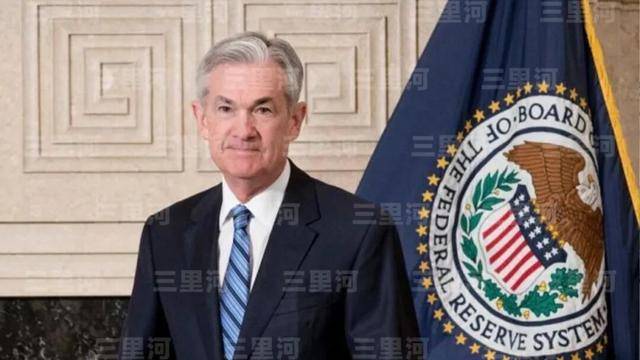
Core Viewpoint - The Federal Reserve announced a 25 basis point interest rate cut, marking the second reduction this year, but Chairman Powell's hawkish remarks created uncertainty about future cuts [1][3][10]. Group 1: Interest Rate Decision - The Federal Reserve's decision to cut rates was in line with market expectations, with a high probability of a cut predicted before the meeting [3]. - The FOMC noted that economic activity is expanding at a moderate pace, with employment growth slowing and inflation rates remaining high [3]. - There was internal dissent within the Fed regarding the rate cut, with some members advocating for a more aggressive 50 basis point cut while others preferred to maintain current rates [8][10]. Group 2: Market Reaction - Powell's hawkish comments led to a significant market reaction, with major U.S. stock indices dropping during his press conference, while the dollar index rose sharply [15]. - Following Powell's remarks, traders adjusted their expectations for a December rate cut, reducing the probability from 90% to 71% [15]. Group 3: Economic Context - The Fed's meeting occurred amid a government shutdown, which has delayed the release of key economic data, including employment figures [18]. - Powell acknowledged that the shutdown would temporarily impact economic activity but emphasized that the Fed has alternative data sources to monitor the economy [18]. Group 4: Future Rate Path - There are notable divisions among Fed officials regarding future rate cuts, with some predicting additional cuts in the coming months while others express concerns about inflation [20]. - The market is left uncertain as Powell did not commit to a December rate cut, contrasting with previous market expectations [20].
美联储主席候选人里德:鲍威尔比预期更鹰,12月跳过降息的可能性增大
Sou Hu Cai Jing· 2025-10-30 07:05
Group 1 - The core viewpoint is that the potential candidate for the next Federal Reserve chair, BlackRock's Chief Investment Officer, believes that a rate cut by the Federal Reserve aligns with the "obvious slowdown" in the labor market [1] - The statement indicates that the performance of Federal Reserve Chairman Powell during the post-meeting press conference was "more hawkish than expected" [1] - There is an increasing likelihood that the Federal Reserve will skip a rate cut in the December meeting, which may delay further easing measures until the new year or possibly until a new chair is appointed [1]
鲍威尔讲话引市场波动!安汇MEGAFUSION:掌握央行讲话,洞察外汇市场走向
Sou Hu Cai Jing· 2025-10-24 03:09
Core Insights - Central bank or important officials' speeches are key factors influencing market sentiment and trends in the foreign exchange market [2] - Understanding the language signals from these speeches can enhance decision-making in forex trading [6] Group 1: Language Signals - Hawkish vs. Dovish: Hawkish signals indicate a tendency to curb inflation and raise interest rates, while dovish signals suggest a preference for lowering rates to stimulate the economy [3] - Key Phrases: Phrases like "remain vigilant" or "further tightening" are often interpreted as hawkish, whereas terms like "patience" or "gradual approach" are seen as dovish [4] - Tone and Strength: The same words can convey different meanings depending on the context, highlighting the importance of tone in interpreting messages [5] Group 2: Market Sentiment Insights - Detailed analysis of central bank speeches, including tone and wording, can provide insights into market sentiment when combined with economic data and market expectations [5] - For instance, comments from the Federal Reserve Chairman about inflation showing signs of slowing and interest rates being "near peak" were interpreted as dovish, leading to a weaker dollar and stronger gold prices [5] Group 3: Strategic Implications - The value of central bank signals lies in their ability to allow professional investors to react in advance [6] - Understanding the rationale behind central bank statements and how the market interprets them is crucial for making informed trading decisions [7] - Tracking the frequency and tone of central bank officials' speeches, along with market interest rate futures, can help capture shifts in market sentiment earlier [7] Group 4: Broader Economic Context - Analyzing central bank speeches in the context of broader economic conditions is essential for extracting valuable information and avoiding emotional reactions to short-term noise [8]
