鸽派

Search documents
高市早苗迎关键抉择!日本央行人事变动在即 “鸽派风暴”或撼动日元、日债
智通财经网· 2026-02-19 08:38
Core Viewpoint - Japanese Prime Minister Fumio Kishida is facing a crucial decision regarding the nomination of candidates to fill upcoming vacancies on the Bank of Japan's policy board, which will indicate the extent of her influence on monetary policy [1][2]. Group 1: Nomination Context - The nominations are expected to be proposed as early as February 25 during a parliamentary meeting, with the terms of current members Asahi Noguchi and Junko Nakagawa expiring soon [1]. - Kishida has the opportunity to appoint more pro-reflation members to the committee, similar to her mentor, former Prime Minister Shinzo Abe, following a decisive electoral victory [1][2]. Group 2: Market Reactions and Concerns - Investors are concerned that selecting two pro-reflation candidates could delay interest rate hikes by the Bank of Japan, especially with inflation remaining above the 2% target for four consecutive years [2]. - If both nominees strongly advocate for monetary easing, it could lead to a significant depreciation of the yen and a surge in Japanese bond yields [2]. Group 3: Kishida's Policy Stance - Kishida is known for her support of stimulus policies and cautious approach to interest rate hikes, having previously described potential rate increases as "foolish" [2][3]. - Since taking office, Kishida has become more cautious in discussing specific monetary policy details, particularly after recent market volatility linked to her fiscal policy statements [3]. Group 4: Legislative Approval and Future Implications - The upcoming nominations require approval from both houses of parliament, complicating the process as Kishida's party does not hold a majority in the Senate [4]. - Kishida's choices will provide insights into her policy direction, and her electoral victory positions her to influence future appointments, including the next Bank of Japan governor and deputy governor in 2028 [4].
特朗普提名沃什出任美联储主席:鹰鸽属性无关紧要 市场才是终极裁判 15%增长目标远超过往2.8%平均增速
Sou Hu Cai Jing· 2026-02-11 03:20
Core Viewpoint - The potential appointment of Kevin Walsh as the next Federal Reserve Chairman has sparked discussions about his hawkish or dovish stance, but ultimately, market dynamics will dictate policy adjustments regardless of individual labels [1][2]. Group 1: Kevin Walsh's Background and Stance - Walsh is known for his hawkish views, prioritizing inflation over unemployment during his tenure as a Federal Reserve Governor from 2006 to 2011, and he resigned due to disagreements over post-crisis monetary stimulus policies [1]. - After leaving the Fed, Walsh has criticized the expanding role of the Fed in the economy and markets, showing a tendency to shift his stance based on the political cycle, being more dovish under Republican leadership and hawkish under Democratic leadership [1][2]. Group 2: Monetary Policy Implications - If Walsh becomes Chairman, monetary policy is likely to follow traditional paths, adjusting based on economic growth and inflation data, without significant shifts due to individual changes [2]. - The attempt to offset interest rate cuts with balance sheet reduction may weaken the effectiveness of both tools and create confusion in the market, as balance sheet reduction has limited marginal impact in normal market conditions [2][3]. Group 3: Economic Growth and Market Reactions - Trump stated that if Walsh performs well, the U.S. economy could achieve a 15% growth rate, which contrasts with the current projected growth of 2.4% for the year, adding pressure on Walsh [3]. - Investors are advised to remain patient and not rush to adjust positions based on Walsh's perceived hawkish or dovish nature, while closely monitoring long-term inflation expectations to assess the Fed's credibility [3].
法国央行行长维勒鲁瓦意外宣布辞职 马克龙牢握接班人任命权
Zhi Tong Cai Jing· 2026-02-09 14:57
Group 1 - The unexpected resignation of the French central bank governor, Villeroy de Galhau, will allow President Macron to appoint the next governor, impacting the future of European monetary policy [1][2] - Villeroy's departure comes more than a year before the end of his term and just six months before the next presidential election, which has significant political implications [1][2] - The appointment process for the new central bank governor requires approval from the National Assembly and Senate finance committees, but the opposition lacks the majority to block the nomination [2] Group 2 - Villeroy has been viewed as a "dovish" figure within the European Central Bank (ECB), advocating for a flexible approach to interest rates amid inflation concerns [3] - Macron has a wide range of potential candidates for the next governor, with historical precedence showing that candidates often come from high-ranking officials within the Ministry of Finance [3] - The ECB may experience policy adjustments following this leadership change, as both Lagarde and the chief economist's terms are set to expire next year, raising speculation about a more systematic succession plan [2]
沃什上任在即,流动性红利将终结?
Xin Lang Cai Jing· 2026-02-09 10:54
Core Viewpoint - Kevin Walsh's upcoming leadership at the Federal Reserve faces two significant challenges regarding interest rate policies and the potential end of liquidity benefits in financial assets [1][2] Group 1: Interest Rate Policy - There is uncertainty whether Walsh will firmly pursue interest rate cuts or if he is merely presenting a "dovish" facade while being "hawkish" in reality [1][2] - Walsh's advocacy for balance sheet reduction could lead to increased long-term interest rates, which may conflict with the U.S. Treasury's substantial debt issuance needs [1][2] Group 2: Execution Challenges - Former Federal Reserve economist Hu Jie highlights that while Walsh's ideas are theoretically sound, their practical implementation will be challenging [1][2] - The financial sector's strong rebound and the U.S. Treasury's survival pressures are identified as major obstacles for Walsh [1][2] - The process of executing Walsh's proposed policies is expected to be gradual and extremely incremental [1][2]
分析:日元下跌势头可能没什么障碍
Xin Lang Cai Jing· 2026-02-04 09:43
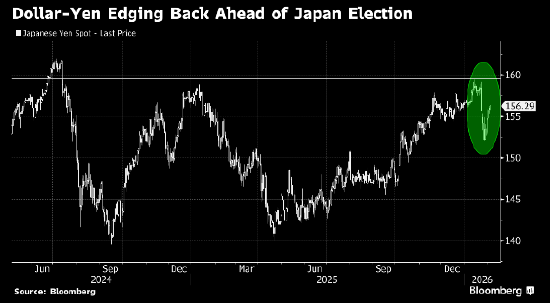
Core Viewpoint - The USD/JPY exchange rate has risen above 156 yen per dollar as Japan's elections approach, recovering from previous lows, with the yen being the worst-performing currency in the G10 this year. The downward trend may continue after the election risk event passes [1][3]. Group 1 - The weakening of the yen is partly due to ambiguous comments from Prime Minister Fumio Kishida regarding the benefits of a weak currency [1][3]. - Concerns have arisen among investors regarding the potential dovish stance of Kevin Warsh, nominated as the next Federal Reserve Chairman [1][3]. Group 2 - Market expectations suggest that Kishida's ruling Liberal Democratic Party will secure a significant majority in the elections, likely leading to more aggressive fiscal policies that could increase inflation and further pressure the yen [5]. - In the options market, the volume of USD/JPY call options with a nominal amount of $100 million or more exceeded that of put options, indicating increased demand for dollar bullish options [5]. - With the Bank of Japan not in a hurry to accelerate interest rate hikes, the most likely direction for USD/JPY is towards 160 yen [5].

东吴证券:新美联储主席沃什真的鹰派吗?
Xin Lang Cai Jing· 2026-02-03 00:26
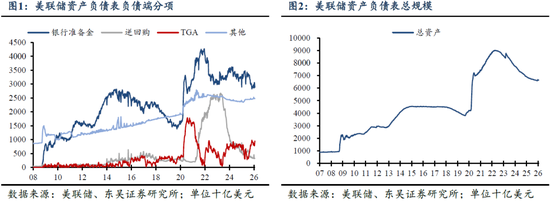
Core Viewpoint - The market's hawkish interpretation of Warsh's nomination is seen as a misconception, as he has shifted to a dovish stance on monetary policy. It is expected that he will implement more rate cuts than the market anticipates, with a forecast of 75-100 basis points of cuts throughout the year, starting in June [1][10]. Latest Perspective - Warsh's monetary policy stance has transitioned to dovish since 2025, believing that AI-driven productivity gains will not lead to inflation. He argues that the current large balance sheet of the Fed is outdated and can be significantly reduced, allowing for further rate cuts to support households and small businesses [3][12]. Nomination Reason - Trump's primary consideration in selecting a Fed chair is the ability to quickly lower interest rates. Warsh's close personal ties with Trump, including connections through significant financial support, suggest he will align closely with Trump's monetary policy goals [4][13]. Hawkish Feasibility - The current liquidity environment does not support the Fed's balance sheet reduction. Warsh's previous calls for balance sheet reduction are seen as opposition to past Fed policies. The recent implementation of a light balance sheet expansion indicates a need to avoid liquidity crises, making immediate balance sheet reduction risky [5][14]. Future Outlook - Warsh's nomination requires Senate approval, and there are concerns about Powell's potential influence post-tenure. Maintaining an image of independence will be crucial for Warsh to secure his position and ensure effective policy implementation. The market is expected to reassess Warsh's stance after his official appointment [6][15][16].

特朗普终定美联储主席,美股白银暴跌,藏着什么猫腻?
Sou Hu Cai Jing· 2026-02-02 06:22
Core Viewpoint - Trump's unexpected nomination of Waller as the new Federal Reserve Chair instead of the favored Hassett has raised significant market concerns regarding future monetary policy direction [1][3]. Group 1: Market Reaction - Following the announcement of Waller's nomination, U.S. stock markets, bonds, and gold experienced a collective decline, with silver witnessing a dramatic drop of nearly 35%, marking its largest single-day decline in recent years [3][5]. - Investors were caught off guard, leading to a rapid sell-off as uncertainty regarding monetary policy increased, prompting a flight to safety [3][5]. Group 2: Waller's Positioning - Waller is perceived as having a "hawkish" stance, having publicly criticized current Fed Chair Powell for being too conservative and emphasizing the risks of inflation [3][5]. - His previous statements indicate a reluctance to engage in rapid interest rate cuts, suggesting that he prioritizes maintaining the Fed's independence from political pressures [3][5]. Group 3: Trump's Selection Logic - Trump's choice of Waller reflects a desire for a controllable figure who aligns with his political views, rather than solely focusing on a dovish monetary policy [5][8]. - Waller's relationship with Trump, including familial ties and past financial support, suggests he may not completely oppose Trump's economic agenda, despite his hawkish reputation [5][8]. Group 4: Future Implications - The market's initial reaction indicates a heightened uncertainty regarding the Fed's future policies, which could disrupt previous expectations of a rapid interest rate cut cycle [6][8]. - While Waller's hawkish tendencies may initially signal a tightening of monetary policy, the underlying economic pressures, such as high debt and the need for economic stimulus, will likely influence his decisions [8].
沃什,是鹰是鸽?
财联社· 2026-01-31 06:15
Core Viewpoint - The appointment of Kevin Warsh as the new Federal Reserve Chairman by President Trump has caused a significant drop in the precious metals market, raising questions about Warsh's true stance on monetary policy [1][2]. Background of Kevin Warsh - Warsh, born in 1970, has an impressive educational background with a degree from Stanford University and a law degree from Harvard Law School. He began his career at Morgan Stanley and later served as a special assistant to the President [3]. - He became the youngest Federal Reserve Governor in history at the age of 35, appointed by President George W. Bush [4]. Perception as a Hawkish Figure - Initially viewed as a strong "hawk," Warsh's responses during the financial crisis were criticized, as he misjudged the economic challenges and maintained a high interest rate stance despite the looming crisis [5][6]. - His past comments and decisions during the financial crisis contributed to his "hawkish" label, which influenced Trump's decision not to nominate him as Fed Chair in 2017 and triggered the recent market decline [6]. Shift in Monetary Policy Stance - Recent statements from Warsh suggest a potential shift towards a more dovish stance. He criticized the Fed's refusal to cut rates as a significant mistake and aligned with Trump's views on the economy [8]. - In November, Warsh argued that artificial intelligence could enhance productivity and reduce inflationary pressures, indicating a departure from his previous hawkish position [9]. Upcoming Senate Hearing - Warsh's nomination will be reviewed by the Senate Banking Committee, where his testimony may provide insights into his priorities as Fed Chair and how his approach may differ from that of Jerome Powell [10]. - Analysts believe that Warsh's hawkish stance may not be as strong as previously expected, and he may focus on reducing the Fed's balance sheet rather than aggressively lowering interest rates [10].
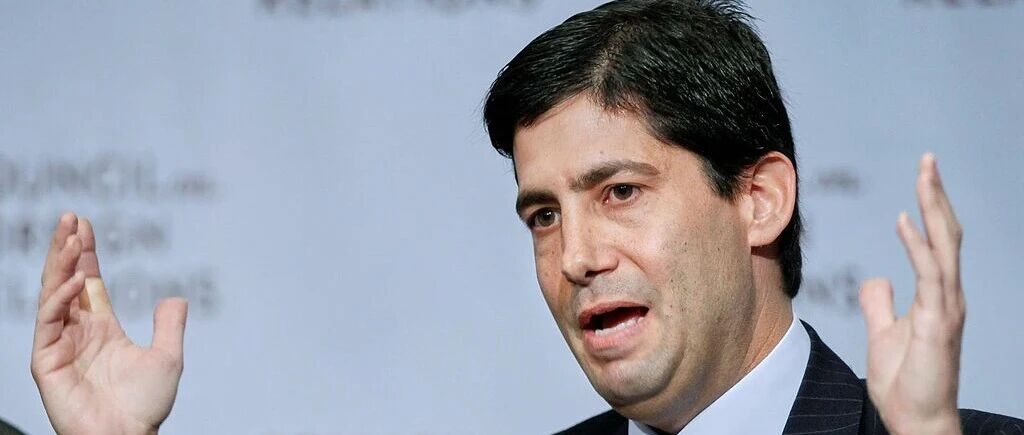
黄金史诗级暴跌,原因可能与一纸提名有关?
Xin Jing Bao· 2026-01-31 03:23
Group 1 - The nomination of Kevin Warsh as the next Federal Reserve Chairman by President Trump has caused significant market reactions, with expectations of a hawkish policy stance leading to a drop in gold and silver prices and a rebound in the US dollar [1][6] - Kevin Warsh, born in 1970, is the youngest candidate for the Federal Reserve Chair, with a background that includes experience in Wall Street, the White House, and the Federal Reserve, making him a suitable candidate to balance Trump's policy demands with the Fed's independence [2][4] - Warsh's policy stance is characterized by a hawkish inclination, emphasizing inflation control and caution against excessive monetary easing, while also expressing support for interest rate cuts and balance sheet reduction [4][5] Group 2 - The confirmation process for Warsh's nomination may face challenges, particularly due to ongoing investigations into current Chairman Jerome Powell, which could influence Senate support for Warsh [3][7] - Following Warsh's nomination, the precious metals market experienced significant declines, with gold prices dropping over 12% and silver prices falling by more than 36%, indicating a market reassessment of future Federal Reserve policies [6][8] - Analysts predict that the Federal Reserve may maintain a pause on interest rate cuts until after Warsh's confirmation, with potential for two rate cuts later in the year as political dynamics evolve [7]
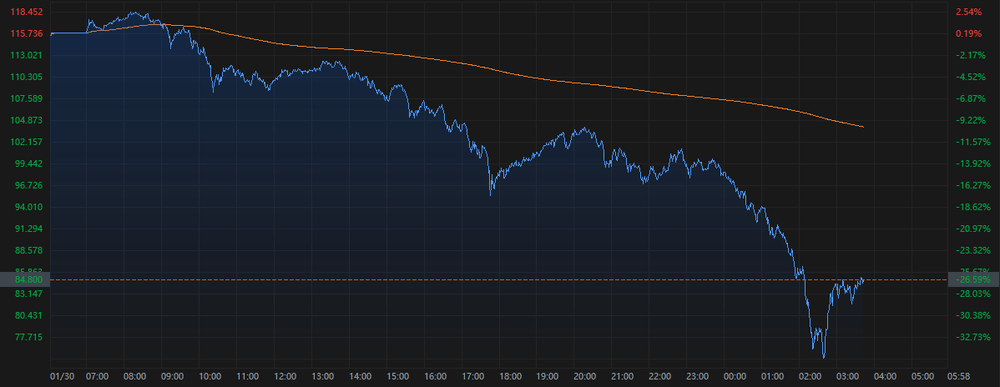
一纸提名引爆史诗级抛售:现货白银一度跌36% 金价失守5000美元大关
Sou Hu Cai Jing· 2026-01-31 02:25
Group 1 - The recent sharp decline in precious metal prices was triggered by the announcement of Kevin Warsh as the next Federal Reserve Chairman, which alleviated market concerns about the Fed's independence and strengthened the dollar, negatively impacting gold and silver prices [3][5] - Silver prices dropped over 36%, reaching a low of $74.31 per ounce before recovering to around $85.8, while gold fell more than 12% to a low of $4683.04 per ounce, later stabilizing at approximately $4906 [1][4] - Analysts suggest that the market's reaction reflects a shift in sentiment towards a more hawkish stance under Warsh, which challenges the previous "currency devaluation trade" logic that had supported precious metal prices [3][5] Group 2 - The appreciation of the dollar increases the cost for non-US investors to purchase gold and silver, further contributing to the price decline [5] - The recent volatility in precious metals is partly attributed to forced selling due to high leverage among day traders and short-term investors, particularly in silver [5] - Geopolitical tensions, such as US military actions and speculation about the next Fed Chair, have previously supported precious metal prices, but recent developments have led to a reassessment of concentrated risks in the market [5][6]