
人工智能(AI)

Search documents
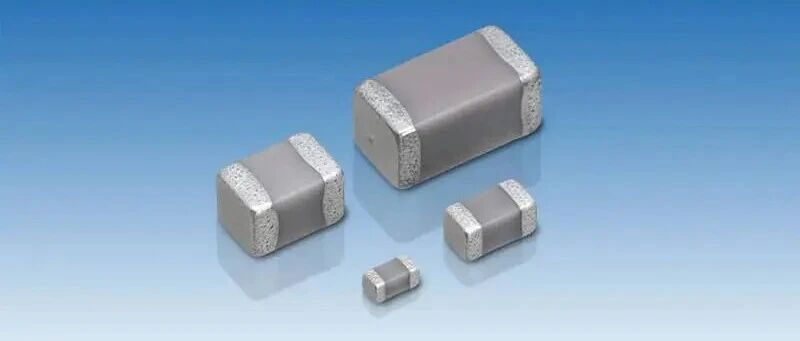
MLCC 现货价飙升 20%
是说芯语· 2026-02-05 01:09
Core Viewpoint - The passive components industry is experiencing a price increase, particularly in multilayer ceramic capacitors (MLCC), with some distributors in mainland China raising spot prices by up to 20% [2][3]. Group 1: Price Trends - The price increase trend includes tantalum capacitors, chip resistors, magnetic beads, and MLCC, with industry expectations for improved performance from related manufacturers [3]. - Tantalum capacitors have seen price hikes of 20% to 30% due to high demand from AI server applications, leading to a supply-demand imbalance [3]. - MLCC is expected to follow suit in price increases, supported by a significant rise in demand as system designs adapt to include more MLCCs [4]. Group 2: Market Dynamics - The dependency on tantalum capacitors in AI devices has led to a design shift towards using a combination of tantalum capacitors and MLCCs to mitigate supply risks and control costs [4]. - The demand for MLCC is no longer just a reactive response to price increases but is now driven by structural demand expansion, particularly in AI applications [4]. - For the company Yageo, tantalum capacitors account for approximately 18% to 22% of revenue, while MLCC contributes about 18% to 20% [4].

ABF缺货潮,又要来了?
半导体行业观察· 2026-02-05 01:08
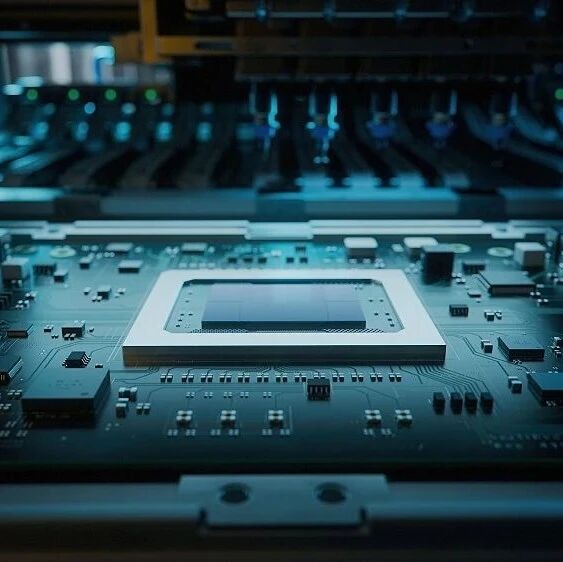
Group 1 - The core viewpoint of the article highlights the tightening supply-demand structure of ABF substrates driven by the increasing demand from AI and high-performance computing, with supply shortages expected to worsen monthly and reach a gap of 10% by the second half of 2026, potentially expanding to 21% in 2027 and 42% in 2028 [2][3] - Goldman Sachs notes that the current tightening of ABF substrate supply is similar to the supply shortages experienced in 2020, which led to price increases of 20% to 30% annually, indicating a positive outlook for price and profit momentum in the coming months and quarters [2] - The article emphasizes that the demand for ABF substrates is structurally driven and long-term, particularly with AI servers now accounting for over 20% of ABF demand, and the introduction of Agentic AI expected to further increase CPU substrate usage starting in 2026 [3] Group 2 - Japanese company Ibiden has announced a significant investment plan of approximately 500 billion yen (about 22.2 billion RMB) to expand high-performance IC substrate production capacity, targeting applications in AI servers and high-performance servers from fiscal year 2026 to 2028 [5] - Ibiden's electronic business, which focuses on IC packaging substrates and printed circuit board manufacturing, reported a revenue of 171.9 billion yen for the first three quarters of fiscal year 2025, marking an 18.2% year-on-year increase, with a notable profit growth of 66% in the same period [6][7] - Despite strong performance in AI applications, Ibiden faces challenges due to a reliance on a limited customer base, with Intel's contribution to revenue decreasing from 70%-80% to about 30%, and a significant drop in advance payments from customers indicating weaker order visibility [8]
google 超预期
小熊跑的快· 2026-02-04 23:58
Core Viewpoint - Google's capital expenditure (capex) guidance significantly exceeds market expectations, indicating strong financial health and investment capacity [1][2]. Group 1: Capital Expenditure - Google's Q4 FY25 capital expenditure is $27.85 billion, up 95.1% year-over-year and 16.3% quarter-over-quarter, slightly below the expected $28.26 billion, with approximately 60% allocated to servers and 40% to data centers and networking equipment [1]. - The total capital expenditure for 2025 is projected at $91.45 billion, within the previously guided range of $91 billion to $93 billion [1]. - The 2026 capital expenditure guidance is set between $175 billion and $185 billion, significantly higher than the company's own forecast of $125 billion and market expectations of $118 billion [2]. Group 2: Financial Performance - Google's revenue for the period is $113.83 billion, reflecting a year-over-year increase of 16.0% and a quarter-over-quarter increase of 6.1%, slightly surpassing market expectations of $111.43 billion [3]. - The net profit stands at $34.46 billion, up 29.8% year-over-year but down 1.5% quarter-over-quarter, exceeding market expectations of $31.93 billion [3]. - Earnings per share (EPS) is reported at $2.82, a 31.2% increase year-over-year and a 1.7% decrease quarter-over-quarter, also surpassing market expectations of $2.65 [3]. Group 3: Google Cloud Highlights - Google Cloud revenue is $17.664 billion, up 48% year-over-year, significantly exceeding the expected growth rate of 35%, with an accelerated growth rate quarter-over-quarter [3]. - Operating profit for Google Cloud is $5.313 billion, representing a 154% year-over-year increase, indicating a substantial improvement in profit margins [3]. - The backlog of orders has increased by 55% quarter-over-quarter, reaching $240 billion, with new customer acquisition rates doubling compared to Q1 FY25 [4]. Group 4: Technological Advancements - Existing customers' actual spending on Google Cloud exceeds initial commitments by 30% [4]. - The Gemini model's API calls exceed 10 billion tokens per minute, up from 7 billion tokens in the previous quarter [4]. - Monthly active users for the Gemini app have surpassed 750 million, showcasing strong user engagement [4].

盘后巨震!谷歌All in AI:Q4云收入猛增48%,26年资本支出指引大超预期!接近翻倍,达到1750-1850亿美金!
美股IPO· 2026-02-04 23:27
Core Insights - Alphabet's Q4 revenue increased by 18% year-over-year, reaching a record high of $113.8 billion, exceeding analyst expectations by over 2% [7][31] - The company's R&D expenses surged by 42% due to AI investments, and despite a one-time $2.1 billion Waymo compensation expense, the operating margin remained above 30% [18][11] - Google Cloud revenue grew by 48% to $17.7 billion, significantly surpassing analyst expectations, driven by strong demand for AI infrastructure and solutions [23][7] - Alphabet's capital expenditure guidance for 2026 is set at $175 billion to $185 billion, more than 50% higher than market expectations, indicating a strong commitment to AI [31][3] Financial Performance - Q4 EPS was $2.82, reflecting a 31% year-over-year increase, which was above market expectations [10][7] - Operating profit for Q4 rose by 16% to $35.9 billion, with an operating margin of 31.6%, despite the impact of the Waymo compensation expense [11][12] - Net profit increased by 30% to $34.5 billion, aided by other income contributions, including a $2.3 billion gain from equity investments [15][11] Business Segment Performance - Google Cloud emerged as the standout performer, with a 48% revenue increase, and its operating profit reached $5.3 billion, significantly exceeding analyst forecasts [23][7] - Google Services revenue grew by 14% to $95.9 billion, with advertising revenue also increasing by 14% to $82.3 billion, surpassing expectations [26][28] - Other Bets revenue declined by 7.5% to $37 million, falling short of analyst predictions [27] Strategic Outlook - Alphabet's substantial capital expenditure plans reflect its aggressive stance in the AI race, with CEO Sundar Pichai emphasizing the importance of AI investments for future growth [31][3] - The release of the Gemini 3 AI model and partnerships, such as with Apple, are expected to enhance Alphabet's competitive position in the AI landscape [31][3] - The company faces challenges from competitors like OpenAI, necessitating continued innovation and investment in cloud and search advertising to maintain momentum [5][18]

深夜,全线大跌!美股科技股,突发利空!
券商中国· 2026-02-04 23:23
美股科技股突遭猛烈抛售。 隔夜美股市场,科技股全线重挫,纳指盘中一度大跌超2%,芯片股集体大跌,费城半导体指数一度暴跌超6%, AI算力芯片公司AMD暴跌超17%,"存储四巨头"集体大跌,闪迪暴跌超15%,美光科技跌超9%。另外,AI应用股 AppLovin、Palantir均跌超10%。 有分析指出,AMD的财报指引不及分析师的高预期是芯片股大跌的"导火索"。另外,软件板块掀起的抛售持续蔓 延加剧了市场担忧情绪。对此,英伟达公司首席执行官黄仁勋公开表示;"难以理解,软件产品是工具,人工智能 (AI)会使用这些工具,而不是重新发明它们。" 美股盘后,科技巨头谷歌的母公司Alphabet披露的财报显示,公司2026年资本支出将达到惊人的1750亿美元至 1850亿美元,大超市场预期。受财报影响,其股价盘后剧烈波动,截至发稿,跌超1%。 科技股全线重挫 美东时间2月4日,美股开盘后,三大指数明显分化,资金迅速从前期强势的科技板块撤出,纳指跌幅一度扩大至 2.45%,芯片股指数一度大跌超6%,道指则逆势走高,截至收盘,纳指跌1.51%,标普500指数跌0.51%,道指涨 0.53%。 美股大型科技股多数下挫,英伟达 ...



英特尔陈立武:存储芯片还会缺两年
Jing Ji Ri Bao· 2026-02-04 22:59
在存储持续短缺之际,英特尔计划重返存储市场,已和软银子公司Saimemory签署新合作协议,将推动 开发和生产被称为Z-Angle Memory(ZAM)的新型垂直堆叠存储,与用于最新AI资料中心的高频宽存 储(HBM)竞争。 ZAM提供的容量大于HBM,频宽也较大,耗电量则较低。 据软银声明,Saimemory和英特尔目标是在2028年3月31日止的年度打造出原型,2029年度商业化。 存储价格飙涨已促使数个消费者电子品牌涨价,或调整产品计划。任天堂公司社长古川俊太郎表示,如 果存储价格高涨持续时间比预期长,该公司明年度起获利能力可能承压;任天堂股价4日应声重挫近 11%。 英特尔执行长陈立武表示,由于人工智能(AI)热潮瓜分存储供给,电脑业存储芯片短缺可能要到 2028年才会舒缓,也就是至少还会持续两年。 思科3日举行AI峰会,陈立武转述两家大型存储业者的看法。他说:「据我所知,(存储短缺)完全没 有改善…2028年前都不会缓解。」 AI基础设施大规模扩张,已为存储芯片计划需求增添柴火,分给传统电脑与智慧手机的供给随之减 少。这个现象已导致存储短缺并带动价格大涨,可能降低消费者购买电脑和智慧手机的欲望。陈 ...

今夜!暴跌了
Zhong Guo Ji Jin Bao· 2026-02-04 16:17
Group 1 - The core point of the news highlights a significant decline in technology stocks, particularly AMD, which dropped 15% due to disappointing earnings guidance, signaling potential issues in the AI sector [3][10] - The Dow Jones Industrial Average saw an increase, while the Nasdaq Composite experienced a substantial drop for the second consecutive trading day [2] - Concerns are rising among investors regarding the commercial risks associated with software companies as AI tools become more powerful, leading to a nearly 3% drop in the iShares Expanded Tech-Software Sector ETF [7] Group 2 - AMD's performance was deemed satisfactory, but the market's expectations were not met, resulting in a punitive reaction from investors [10] - Analysts predict that software stocks will remain under pressure in the short term, but this may not negatively impact the AI supply chain, as memory and chip manufacturers are essential for the operation of new AI tools [11] - The storage sector stocks also faced significant declines, with SanDisk dropping over 11%, Western Digital nearly 10%, and Micron Technology over 9% [12] Group 3 - Precious metals experienced a downturn, with gold prices falling and silver prices significantly narrowing their gains [14]

今夜!暴跌了...
Zhong Guo Ji Jin Bao· 2026-02-04 16:16
【导读】 科技股下跌,黄金白银跳水 中国基金报记者 泰勒 大家好,今晚继续关注海内外市场的消息。科技股,黄金、白银都在跳水。 | 换手:2.78% | | --- | | 振幅:5.56% | | 市净率:5.30 | | 市销率:11.38 | | 总市值:3340.90亿 | | 总股本:16.28亿 | | 货币单位: USD | 2月4日晚间,美股三大指数涨跌不一,道指上涨,纳指大跳水, 连续第二个交易日走弱 。 科技股普遍下跌,超威半导体(AMD)因财报表现不及预期而暴跌15%,进一步加剧了近期科技板块 的压力。这家芯片制造商的销售指引未能令投资者满意。这也被视作一个信号:公司在AI领域的推进 程度,未达到华尔街部分人士此前的预期。 | T 筛选 | 最新价 ÷ | 涨跌幅 + □ | | --- | --- | --- | | 美国超威公司 | 204.62 | -15.49% | | US AMD | | | | Applovin Corporation | 398.41 | -13.73% | | US APP | | | | 闪迪 | 615.70 | -11.52% | | US SNDK ...

大跌过后 摩根士丹利认为部分另类投资公司出现入场良机
Xin Lang Cai Jing· 2026-02-04 15:58
华尔街最大的另类投资公司和业务发展公司(BDC)周二股价大跌后,摩根士丹利分析师Michael Cyprys表示,尽管一些投资组合公司"可能面临来自人工智能(AI)颠覆的风险,但也为另一些公司带 来机遇"。 他指出,在多元化投资组合背景下,自2020年以来,全行业信息技术(IT)服务平均约占私募股权 (PE)交易额的23%,约占交易数量的16%,其中软件行业是子集之一。 在摩根士丹利覆盖的公司中,科技服务相关交易量约占整体PE交易量的21%,其中TPG、凯雷和KKR的 占比略高一些,而阿波罗全球管理(Apollo Global Management)最低。 "投资组合中可能会出现一些受益于AI的重大赢家,有望释放或加速增长并提升效率,这些赢家带来的 收益甚至可能超过其他糟糕投资所带来的拖累。" 责任编辑:丁文武 华尔街最大的另类投资公司和业务发展公司(BDC)周二股价大跌后,摩根士丹利分析师Michael Cyprys表示,尽管一些投资组合公司"可能面临来自人工智能(AI)颠覆的风险,但也为另一些公司带 来机遇"。 "投资组合高度多元化,部分投资可能受益于AI,"Cyprys在报告中写道,并补充称,优质的多元 ...

ZFX山海证券:比特币走低 加密寒冬
Xin Lang Cai Jing· 2026-02-04 14:14
Group 1 - The digital asset market is experiencing significant declines, with Bitcoin recently dropping below key support levels, reflecting a tightening liquidity environment and pushing cryptocurrencies into deeper technical adjustments [1][3] - The recent sell-off in the stock market, particularly in the software and technology sectors, has led to substantial declines in major companies like Adobe and Salesforce, with drops ranging from 7% to 12%, and a 14% decrease in the Technology Software ETF (IGV) over a week [2][5] - The outflow of approximately $3 billion from Bitcoin ETFs over the past two weeks indicates a bearish market trend, further confirming the characteristics of a bear market [2][5] Group 2 - The current asset volatility is attributed to a combination of tightening macro liquidity and a revaluation of technology stocks, with Bitcoin undergoing a severe winter similar to past cycles in 2018 and 2022 [3][6] - ZFX suggests that investors should closely monitor the stabilization signals of the Nasdaq index and the defense performance of the 73,000 key support level to identify opportunities for asset reallocation amid volatility [6]
