太空光伏

Search documents
暴涨超215%,太空光伏龙头钧达股份,被马斯克带上“天”
3 6 Ke· 2026-02-05 04:39
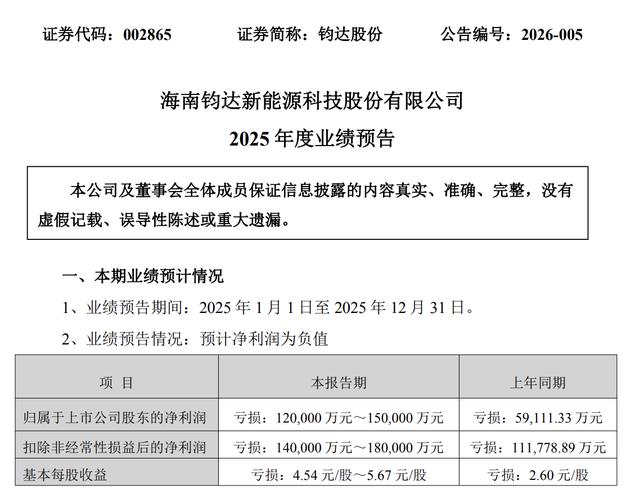
Core Viewpoint - The narrative of space photovoltaics is being validated by Elon Musk, providing a potential solution to the challenges faced by the photovoltaic industry, with practical applications becoming more feasible as Musk's vision unfolds [1][2]. Group 1: Space Photovoltaics Concept - Space photovoltaics aims to establish solar power stations in Earth's orbit for uninterrupted clean energy collection, with reduced launch costs from companies like SpaceX accelerating this "sci-fi" concept towards reality [3]. - The photovoltaic equipment sector has seen a nearly 30% increase in stock prices this year, with leading companies like Junda Co. experiencing over 100% growth, and Junda's market capitalization surpassing 35 billion yuan [3]. Group 2: Junda Co. Financial Performance - Junda Co. is projected to incur a net loss of 1.2 billion to 1.5 billion yuan in 2025, worsening from a loss of 591 million yuan in 2024, with non-recurring losses expected to reach 1.4 billion to 1.8 billion yuan [4][6]. - Despite the stock price surge, Junda Co. has acknowledged that its recent ventures are still in the exploratory phase, with significant uncertainties regarding market expansion and competition [6]. Group 3: Junda Co.'s Transformation and Market Position - Junda Co. transitioned from manufacturing automotive parts to the photovoltaic sector, acquiring Jietai Technology for over 1.4 billion yuan to facilitate this shift, which has been described as a gamble [14]. - After completing its transformation in 2022, Junda Co. reported a revenue of 11.595 billion yuan, a 304.95% increase from the previous year, and turned a profit of 711.69 million yuan, reversing a prior loss [15]. Group 4: Technological Advancements and Market Share - Junda Co. has established a leading position in the N-type TOPCon battery market, achieving a global market share of approximately 46.5% by 2023, with plans to reach a production capacity of 44 GW by the end of 2024 [16]. - The company is betting on perovskite technology, which is seen as a disruptive next-generation photovoltaic technology, offering higher efficiency and lower production costs compared to traditional silicon batteries [19]. Group 5: Future Prospects and Challenges - The narrative of space photovoltaics is gaining traction, with Musk announcing plans for 200 GW of solar capacity in the U.S. within three years, which could benefit Junda Co. [17]. - However, the actual conversion of space photovoltaic orders into revenue remains uncertain, as large-scale procurement is still in the early stages of technological exploration [20].


光伏早盘收跌近5%,多家公司公告澄清与马斯克合作
Di Yi Cai Jing Zi Xun· 2026-02-05 04:37
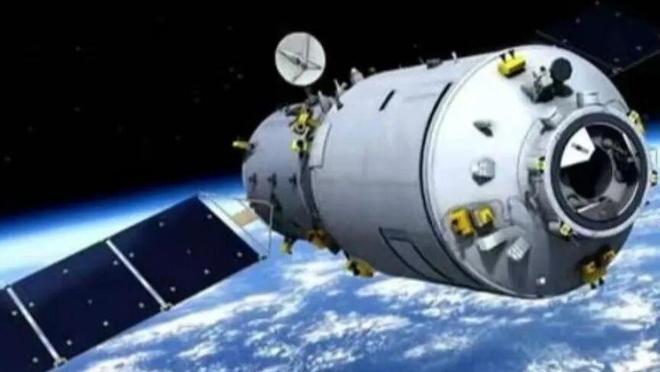
Core Viewpoint - The recent excitement in the photovoltaic sector, particularly regarding "space photovoltaics," has been tempered by multiple companies denying any concrete collaborations with Elon Musk's team, highlighting the uncertainty surrounding the commercialization of this technology [2][3][5]. Group 1: Market Reaction - As of February 5, the Wind Photovoltaic Index fell by 4.56%, with several stocks, including Aotwei and Maiwei, dropping over 10% [2]. - Following initial reports of potential collaboration with Musk's team, JinkoSolar saw a 20% surge in stock price, but later clarified that no formal agreements or orders exist [3][4]. Group 2: Company Announcements - Multiple companies, including JinkoSolar and Shuangliang Energy, issued announcements stating they have not engaged in any space photovoltaic projects and that the technology remains in the exploratory phase [3][4]. - Guosheng Technology and High Measurement Co. also confirmed they have not initiated any space photovoltaic-related business or partnerships [4]. Group 3: Industry Insights - Industry experts emphasize that space photovoltaic technology is still in its early stages, with significant uncertainties regarding its commercialization [5][6]. - The current leading material for space photovoltaics is gallium arsenide (GaAs), which, despite its high efficiency, has a cost of approximately 1000 RMB per watt, making it economically unfeasible for large-scale deployment [6]. - The cost of electricity generated from space photovoltaics is estimated to be 2-3 USD per kilowatt-hour, significantly higher than the 0.03-0.05 USD per kilowatt-hour for ground-based photovoltaics, raising concerns about its economic viability [6].


光伏早盘收跌近5%,多家公司公告澄清与马斯克合作
第一财经· 2026-02-05 04:28
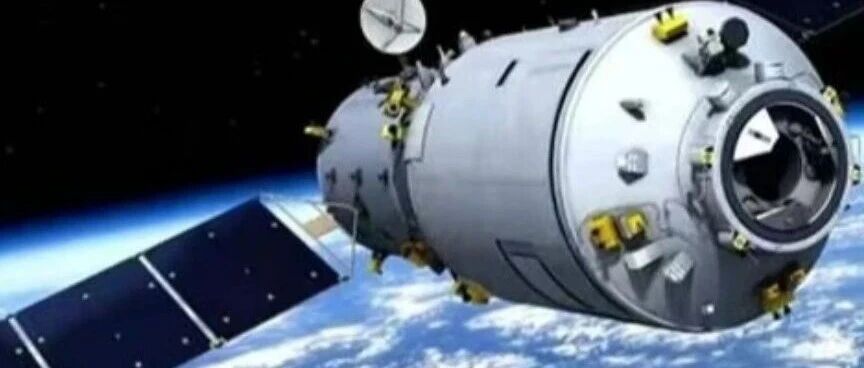
Core Viewpoint - The recent interest in space photovoltaic technology has led to significant stock price fluctuations in the solar industry, but many companies have clarified that they have not engaged in any concrete projects with Elon Musk's team, highlighting the uncertainty surrounding the commercialization of space photovoltaic technology [2][4][9]. Group 1: Market Reactions - As of February 5, the Wind Photovoltaic Index fell by 4.56%, with several stocks, including Aotwei and Maiwei, dropping over 10% [2]. - In contrast, the space photovoltaic sector saw a temporary surge, with Jinko Solar hitting a 20% limit-up, alongside TCL Zhonghuan and others [3]. Group 2: Company Announcements - Multiple companies, including Jinko Solar, have issued announcements denying any collaboration with Musk's team, stating that they have not signed any agreements or received orders related to space photovoltaic projects [4][6]. - Dual Energy and Guosheng Technology also clarified that they have not engaged in any space photovoltaic business and that their current operations remain unaffected [5][6]. Group 3: Industry Insights - The space photovoltaic technology is still in the exploratory and verification stages, with significant uncertainties regarding its commercialization [9][10]. - The China Photovoltaic Industry Association emphasized that the development of any technology requires mature manufacturing capabilities and long-term reliability verification [9]. - Current space photovoltaic technologies, such as gallium arsenide (GaAs) and perovskite, face challenges in terms of cost and stability, with GaAs being the mainstream material but prohibitively expensive for large-scale deployment [10]. Group 4: Economic Considerations - The cost of electricity generated from space photovoltaic systems is currently estimated to be 2-3 USD per kilowatt-hour, significantly higher than the 0.03-0.05 USD per kilowatt-hour for ground-based photovoltaic systems [10]. - Without a drastic reduction in launch costs and a doubling of photovoltaic efficiency, the economic viability of space photovoltaic technology remains questionable [10].




亚太股市全线飘绿,白银跳水市值蒸发约1个摩根大通,黄金盘中跌破4800美元
2 1 Shi Ji Jing Ji Bao Dao· 2026-02-05 04:16
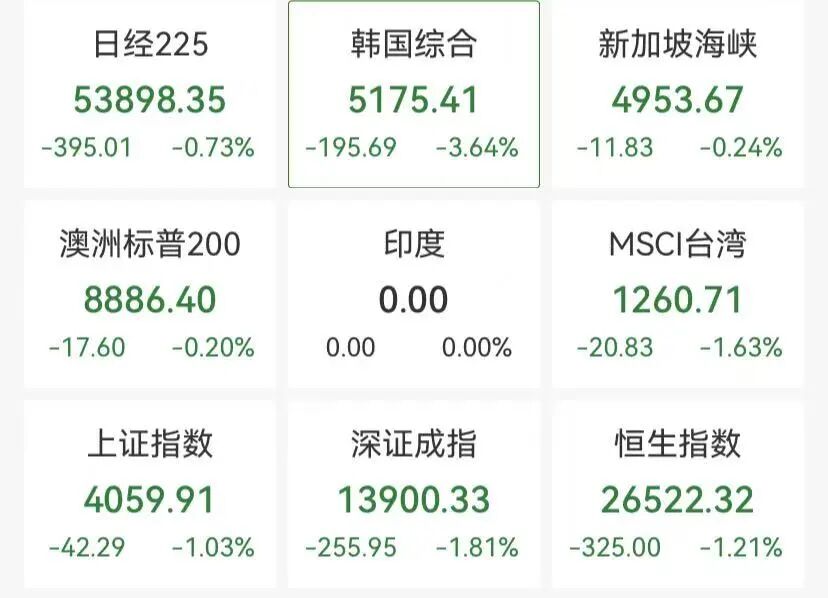
贵金属、有色金属板块持续大跌,湖南白银(002716)、湖南黄金(002155)、白银有色(601212)、河钢资源(000923)等多股跌停,四川黄金 (001337)、晓程科技(300139)跌超8%。 港股方面相关板块亦表现不佳,其中天齐锂业(002466)大跌近13%,万国黄金集团跌超10%,中国黄金(600916)国际、五矿资源、洛阳钼业 (603993)等多股跌超7%。 2月5日上午,亚太主要股指全线飘绿。A股三大指数、恒生指数均跌超1%,热门科网股多数下跌,华虹半导体跌超6%,腾讯控股跌超2.6%,市值跌破5万 亿港元。韩国综合指数跌超3.6%,主要受SK海力士、三星电子拖累,其跌幅均超5%。 | 日经225 | 韩国综合 | 新加坡海峡 | | --- | --- | --- | | 53898.35 | 5175.41 | 4953.67 | | -395.01 -0.73% | -195.69 -3.64% | -11.83 -0.24% | | 澳洲标普200 | 印度 | MSCI台湾 | | 8886.40 | 0.00 | 1260.71 | | -17.60 -0.20% | 0 ...


亚太股市全线飘绿,白银跳水市值蒸发约1个摩根大通,黄金盘中跌破4800美元
21世纪经济报道· 2026-02-05 04:11
记者丨曾静娇 编辑丨江佩霞 2月5日上午,亚太主要股指全线飘绿。A股三大指数、恒生指数均跌超1%, 热门科网股多数下跌,华虹半导体跌超6%,腾讯控股跌超2.6%, 市值跌破5万亿港元。 韩国综合指数跌超3.6%,主要受SK海力士、三星电子拖累,其跌幅均超5%。 | SFC | | --- | | 出品丨21财经客户端 21世纪经济报道 | | 21君荐读 | | 央行重磅会议,明确信贷资源重点流向 | | 白银大跌7%,特朗普:利率很快就会下调 | 贵金属、有色金属板块持续大跌,湖南白银、湖南黄金、白银有色、河钢资源等多股跌停,四川黄金、晓程科技跌超8%。 港股方面相关板块亦表现不佳,其中天齐锂业大跌近13%,万国黄金集团跌超10%,中国黄金国际、五矿资源、洛阳钼业等多股跌超7%。 消息面上,国际金银价格盘中大跳水,截至北京时间11:49, 现货白银重挫逾13%,跌破77美元关口 ,盘中最高一度触及89.56美元,SHFE白 银同步大跌近12%;现货黄金日内跌超2%,价格从最高5023美元大幅下挫,最低价格一度至4788美元/盎司。 据新浪财经报道,据CPM集团2019白银年鉴估计,全球白银开采量为175.1 ...

光伏早盘收跌近5%,多家公司公告澄清与马斯克合作!协会:太空光伏仍处验证初期
Di Yi Cai Jing· 2026-02-05 03:59
Core Viewpoint - Multiple companies have denied the existence of executable projects in collaboration with Elon Musk's team, indicating significant uncertainty in the industrialization process of "space photovoltaics" [1][2][3][4][5][6] Company Responses - JinkoSolar (688223.SH) announced that it has not engaged in any cooperation with Musk's team and has no existing orders related to "space photovoltaics," emphasizing that the technology is still in the preliminary exploration stage [2] - Shuangliang Energy (600481.SH) stated that it has not confirmed any revenue related to commercial space projects in the past two years and that the development of related business faces uncertainty [2] - Guosheng Technology (603778.SH) clarified that it does not provide "space photovoltaic" systems and that its products are primarily used in terrestrial power plants [2] - High Measurement Technology (688556.SH) confirmed it has not engaged in any "space photovoltaic" business or collaborations [3] - Jingcheng Machinery (300316.SZ) reiterated that the application scenarios for "space photovoltaics" are still in the exploratory phase, with significant uncertainty in the industrialization process [4] Industry Insights - The "space photovoltaic" technology is still in the early stages of exploration and verification, according to industry experts [5][6] - The mainstream material for space photovoltaics remains gallium arsenide (GaAs), which, despite its high cost, has undergone long-term in-orbit verification [5][6] - Current cost estimates for space photovoltaics are significantly higher than terrestrial photovoltaics, with estimates of $2-3 per kilowatt-hour compared to $0.03-0.05 for ground-based systems [6]
光伏行业协会发声:太空光伏技术仍处于探索和验证的初期阶段!光伏ETF华夏(515370)太空光伏含量指数维度全市场第一
Mei Ri Jing Ji Xin Wen· 2026-02-05 03:56
Group 1 - The core viewpoint of the article highlights the significant market interest in space photovoltaic technology, driven by recent developments and discussions led by Elon Musk's team, which has sparked a wave of investment and speculation in the sector [1][2] - The Chinese Photovoltaic Industry Association indicates that the success of space photovoltaic applications hinges on the development of mature and replicable manufacturing capabilities, as well as a reliable long-term verification system [1] - Current leading technology in space applications is Gallium Arsenide (GaAs) batteries, known for their high conversion efficiency and radiation resistance, despite their higher costs [1][2] Group 2 - The market is optimistic about Heterojunction (HJT) and perovskite technologies, although these are still in the experimental phase and not yet ready for large-scale commercial deployment [2] - According to CITIC Securities, the demand for space photovoltaic technology is real, with projections indicating a significant increase in satellite launches from 5,000 to 50,000 annually between 2025 and 2040, maintaining GaAs batteries' dominance in the short term [2] - The overall market for photovoltaic cells in the satellite sector is expected to reach 328.8 billion yuan, with a potential growth of over 30 times compared to the short-term market [2] Group 3 - The Huaxia Photovoltaic ETF (515370) tracks the CSI Photovoltaic Industry Index, which includes companies across the photovoltaic supply chain, reflecting the overall performance of the industry [3] - The index has a significant exposure to space photovoltaic technology, with 18.49% of its composition dedicated to this area, ranking first in the market [3]


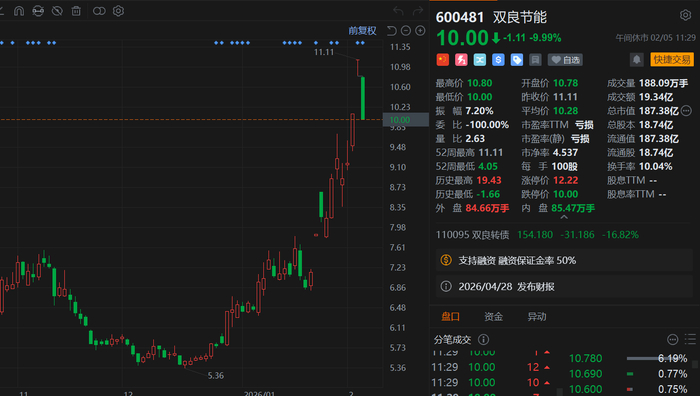
A股异动丨提示风险,双良节能跌停,尚未开展太空光伏业务
Ge Long Hui A P P· 2026-02-05 03:51
Core Viewpoint - The recent surge in interest in "commercial aerospace" and "space photovoltaic" sectors has led to increased market activity, but the company has not confirmed any revenue related to commercial aerospace projects in the past two years, indicating uncertainty in future business developments [1] Group 1: Company Performance - The company's stock, Shuangliang Energy (600481.SH), experienced a limit down today, closing at 10 yuan, with a total market capitalization of 18.74 billion yuan [1] - The company has not engaged in any business related to space photovoltaics, and its current performance is not materially affected by this sector [1] Group 2: Industry Context - The "space photovoltaic" sector is still in the stages of technical exploration and ground verification, with significant uncertainties regarding its commercialization path, cost structure, and operational systems in orbit [1] - The company's main products related to the photovoltaic industry include polysilicon reduction furnace systems, monocrystalline silicon, and high-efficiency photovoltaic modules, but these do not currently contribute significantly to the company's performance [1]
2月5日午间涨停分析
Xin Lang Cai Jing· 2026-02-05 03:51
Group 1 - Hangzhou Jie Bai has seen a stock increase with the potential to participate in duty-free policies due to its ownership of shopping malls in Hangzhou and Yiwu [2] - Xiamen Xinyi Precision Technology is set to be acquired by a company, providing specialized processing solutions for global PCB leading clients [3] - The company plans to acquire 51% of Xiamen Xinyi Precision Technology, which focuses on PCB and FPC processing [3] Group 2 - The company is involved in the real estate sector, primarily developing residential and commercial projects in Beijing [4] - The company has a significant production capacity of 300 million tons of soda ash, making it one of the leading producers in China [4] - The company has completed the acquisition of 100% of Wolong Mining (Shanghai) Co., focusing on various non-ferrous metal products [4] Group 3 - The company has established a complete industrial chain from waste oil to biodiesel and biobased materials, with a projected biodiesel capacity of 105,000 tons by the end of 2024 [5] - The company specializes in manufacturing automotive rubber components, including O-rings and seals [5] - The company has successfully released 500,000 tons of production capacity in Vietnam [5]

高毅、淡水泉等百亿私募动向曝光!复胜聚焦AI应用!太空光伏、商业航天备受关注!
私募排排网· 2026-02-05 03:33
Core Insights - The article highlights the active engagement of private equity firms in A-share company research in January 2026, indicating a positive market outlook and strategic long-term investments in sectors like AI, semiconductors, and hard technology [5][6]. Group 1: Private Equity Research Activity - In January 2026, a total of 743 private equity firms conducted 2028 research activities on A-share companies, focusing on hard technology sectors such as computers, machinery, electronics, and biomedicine [2][5]. - The research activities signal a proactive approach by private equity firms to identify long-term investment opportunities, particularly in AI and semiconductor sectors, reflecting their confidence in the growth potential of these industries [5][6]. Group 2: Notable Companies Under Research - The company with the highest number of private equity firm visits in January was Dajin Heavy Industry, which was researched by 54 firms, with an expected net profit growth of 121.58% to 153.23% for 2025 [9]. - Chaojie Co., which was visited by 8 major private equity firms, is expanding into the aerospace sector, benefiting from the high demand in aerospace manufacturing [10]. - The stock with the highest increase among the researched companies was Dike Co., which saw an 82.91% rise in January, driven by the space photovoltaic concept [10]. Group 3: Focus of Major Private Equity Firms - Notable private equity firms such as DWS, Gao Yi Asset, and others were highly active in January, with DWS researching 27 companies, achieving an average stock increase of 13.39% among those researched [11][18]. - Gao Yi Asset's research included 24 companies, with the top three performing stocks being Wangsu Technology (61.56%), Su Da Weige (50.19%), and Aike Optical (42.31%) [15][16]. Group 4: Sector Performance and Trends - The AI application sector saw significant interest, with companies like Liou Co. and Yiwan Yi Chuang experiencing stock increases of 65.25% and 50.79%, respectively, due to their advancements in AI technology [22]. - The mechanical equipment sector also showed strong performance, with companies like Aike Optical and Woerde achieving substantial stock price increases [19][22].