
实体经济

Search documents
解码银行业八大关键词
Xin Hua Wang· 2025-08-12 05:47
Group 1: Core Views - The banking industry has actively supported the real economy, reducing financing costs while enhancing service quality [2][4] - A series of policies have been implemented to promote the development of the private economy, with significant increases in loans to private enterprises [3] - The real estate sector is gradually recovering, supported by financial policies aimed at stabilizing financing for real estate companies [5][6] Group 2: Banking Support for the Real Economy - As of September 2023, the balance of loans to small and micro enterprises reached 69.2 trillion yuan, with a significant increase in inclusive loans [2] - The banking sector has seen a year-on-year increase of 17% in corporate medium- and long-term loans and 21.8% in corporate credit loans [2] - The People's Bank of China reported an increase of 21.58 trillion yuan in RMB loans in the first 11 months of 2023, with a year-on-year growth of 10.7% in loans to the real economy [3] Group 3: Real Estate Financing - Financial policies have been optimized since November 2022 to support the healthy development of the real estate market, including the extension of certain policies until December 2024 [5][6] - Major banks have provided over 30 billion yuan in real estate development loans to non-state-owned enterprises since November [6][7] - The banking sector is expected to increase credit support for real estate companies, particularly private ones, in the near future [7] Group 4: Mortgage Rate Adjustments - The policy to lower existing mortgage rates was implemented in September 2023, benefiting over 50 million households and reducing annual interest expenses by 160 to 170 billion yuan [9] - The reduction in mortgage rates is expected to alleviate repayment pressure on residents and stimulate consumption [9] Group 5: Net Interest Margin Trends - The net interest margin of commercial banks has been under pressure, with a slight decline to 1.73% in the first three quarters of 2023 [11] - Banks are adjusting deposit rates to mitigate the impact of narrowing net interest margins [11][12] - Experts predict that while net interest margins may continue to compress in the short term, they could return to positive growth as the real economy recovers [12] Group 6: Central Huijin's Investment - Central Huijin Company increased its holdings in major state-owned banks, signaling confidence in their long-term investment value [13] - The investment by Central Huijin is expected to boost market confidence and support the valuation recovery of the banking sector [13] Group 7: Reforms in Small and Medium Banks - Reforms in small and medium-sized banks have accelerated, with measures to improve risk management and capital adequacy [14][15] - The issuance of special bonds has helped bolster the capital base of small banks, with over 200 billion yuan issued this year [15] Group 8: Rising Dividend Yields - The average dividend yield of A-share listed banks has increased to 5.51% in 2023, up from 4.88% in 2022 [16][17] - High dividend yields are attracting institutional investors, although they may indicate declining stock prices [17] Group 9: Capital Regulation Changes - The new capital management regulations effective from January 2024 aim to establish a differentiated regulatory framework for banks [18][19] - The regulations will help reduce compliance costs for smaller banks while enhancing their ability to serve the real economy [20]


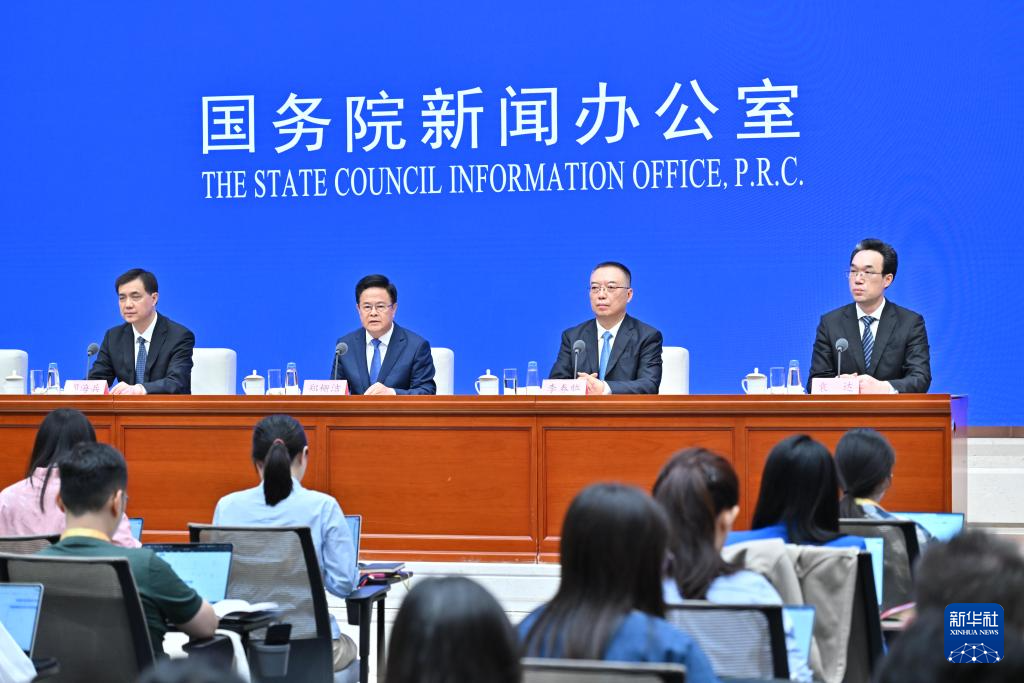
高质量完成“十四五”规划丨新的开创性进展、突破性变革、历史性成就——国新办发布会聚焦我国“十四五”时期经济社会发展
Xin Hua Wang· 2025-08-12 05:43
Core Achievements - The "14th Five-Year Plan" has led to significant economic and social development in China, with major indicators meeting or exceeding expectations [3][4] - China's economic output has consistently surpassed 110 trillion, 120 trillion, and 130 trillion yuan, with an expected reach of around 140 trillion yuan this year [4] - The contribution rate of domestic demand to economic growth averaged 86.4% over the past four years, with final consumption contributing 56.2%, an increase of 8.6 percentage points compared to the "13th Five-Year Plan" [4] Economic Strength - China has maintained its position as the world's largest manufacturing power, goods trading nation, and foreign exchange reserve holder, with over 200 major industrial products leading globally [4] - The average economic growth rate over the past four years was 5.5%, with a total economic increment exceeding 35 trillion yuan, equivalent to the combined economic output of Guangdong, Jiangsu, and Shandong provinces [4] Innovation and Technology - Major breakthroughs in innovation include the launch of the first domestically produced aircraft carrier and the operation of the first fourth-generation nuclear power plant [6] - R&D investment is projected to grow nearly 50% by 2024 compared to the end of the "13th Five-Year Plan," reaching 1.2 trillion yuan, with R&D intensity increasing to 2.68% [7] - The production of integrated circuits is expected to increase by 72.6% by 2024, with high-tech manufacturing value added projected to grow by 42% [7] Green Development - China's forest coverage rate has increased to over 25%, contributing to a quarter of the world's new greening area [10] - The proportion of days with good air quality has stabilized at around 87%, and the clean energy generation capacity has surpassed that of coal [10] - By 2024, the energy consumption per unit of GDP is expected to decrease by 11.6%, making China one of the fastest countries in terms of energy intensity reduction [10] Social Welfare - The establishment of the largest education, social security, and healthcare systems globally, with over 95% coverage in compulsory education and basic insurance [11] - Urban employment has remained stable at over 12 million new jobs annually, with income growth aligning closely with economic growth [11] - The number of practicing physicians per thousand people has increased from 2.9 to 3.6, reflecting improvements in healthcare access [11] Reform and Opening Up - The reform goals set during the 18th National Congress have been largely achieved, focusing on enhancing market efficiency and stimulating economic vitality [12] - From 2021 to May this year, foreign direct investment in China reached 4.7 trillion yuan, surpassing the total for the "13th Five-Year Plan" period [13] - Foreign enterprises contributed to one-third of China's imports and exports, one-fourth of industrial value added, and created over 30 million jobs [13]
决胜“十四五” 打好收官战|做好“减震器”“稳定器”!“十四五”期间保险业保障能力持续提高
Xin Hua She· 2025-08-11 23:22
Core Insights - The insurance industry in China is expected to see significant growth during the 14th Five-Year Plan period, with original insurance premium income projected to increase by over 25% compared to 2020, and total assets expected to grow by 68% by mid-2025 [1] Group 1: Strengthening Social Welfare - The insurance sector has expanded its capacity to improve and guarantee livelihoods, with personal insurance payouts expected to reach 1.2 trillion yuan in 2024, an increase of 88.08% from 2020, while property insurance payouts are projected at 1.1 trillion yuan, up 57.14% from 2020 [2] - The insurance industry is actively developing commercial insurance products, including annuities and long-term care insurance, to better serve the needs of new citizens and emerging industries [2] - Catastrophe insurance has achieved full coverage for common natural disasters in China, with over 20 provinces piloting comprehensive catastrophe insurance [2] Group 2: Enhancing Support for the Real Economy - The insurance industry provides risk protection across various sectors, with agricultural insurance premiums rising from 97.6 billion yuan in 2021 to 148.37 billion yuan in 2024, reflecting an increase in coverage and protection levels for staple crops [3] - The establishment of the China Integrated Circuit Mutual Insurance Body has provided approximately 4.2 trillion yuan in risk protection since its inception, while technology insurance is expected to cover around 9 trillion yuan in 2024 [4] Group 3: Long-term Investment and Financial Support - Insurance funds are increasingly supporting large-scale projects, with the balance of insurance company funds invested rising from 21.68 trillion yuan at the end of 2020 to 34.93 trillion yuan by the first quarter of this year [5] Group 4: Ongoing Reforms in Key Areas - The launch of the "Car Insurance Easy to Insure" platform has facilitated the underwriting of over 880,000 new energy vehicles, with total coverage reaching 888.95 billion yuan, addressing high compensation risks in this sector [6] - The average car insurance premium has decreased by 21.2% to 2,773 yuan per vehicle since the implementation of comprehensive car insurance reforms [6] - The insurance industry is undergoing significant reforms to enhance operational standards and improve service quality, with a focus on risk management and regulatory compliance [7]
央行:满足实体经济有效融资需求 用好用足存量和增量政策
Zheng Quan Ri Bao· 2025-08-08 07:23
(责任编辑:蔡情) 本报讯 (记者刘琪)5月20日,中国人民银行发布消息称,为贯彻落实党中央、国务院决策部署,推动 一揽子货币金融政策落地见效,支持经济持续回升向好,5月19日,中国人民银行行长潘功胜主持召开 金融支持实体经济座谈会并讲话。国家金融监督管理总局副局长周亮出席会议并讲话。中国人民银行副 行长宣昌能、邹澜出席会议。 会议强调,要实施好适度宽松的货币政策,满足实体经济有效融资需求,保持金融总量合理增长。加力 支持科技创新、提振消费、民营小微、稳定外贸等重点领域,用好用足存量和增量政策,提高金融支持 实体经济质效,支持经济结构调整、转型升级和新旧动能转换。强化货币政策执行和传导,维护市场竞 争公平秩序,推动金融服务实体经济和银行自身可持续发展的有机统一。有序推进人民币国际使用,提 高贸易和投融资便利化水平。统筹发展和安全,坚决维护国家金融安全。 会议指出,4月25日中央政治局会议分析研究当前经济形势,对下一步经济工作作出重要部署。金融系 统要提高政治站位,切实把思想和行动统一到党中央决策部署上来,着力稳就业、稳企业、稳市场、稳 预期,抓好一揽子货币金融政策措施的落实和传导,以高质量发展的确定性应对外部 ...
多维数据彰显经济活力
Zhong Guo Zheng Quan Bao· 2025-08-06 21:09
Group 1 - The railway sector has shown robust growth during the summer transportation period, with a total of 456 million passengers sent from July 1 to August 1, representing a year-on-year increase of 3.6% [1] - The logistics industry is experiencing expansion, with the logistics business activity index reaching 50.5 in July, indicating continued growth in logistics activities [1] - The total social financing scale increased by 22.83 trillion yuan in the first half of the year, reflecting strong financial support for the real economy [1] Group 2 - The total social logistics volume for the first half of the year reached 171.3 trillion yuan, with a year-on-year growth of 5.6%, indicating that logistics demand is supporting stable economic development [2] - The ratio of social logistics costs to GDP decreased to 14% in the first half of the year, the lowest level since records began, saving over 130 billion yuan in logistics costs for society [2] - Financial support for the real economy has intensified, with an increase of 12.74 trillion yuan in RMB loans to the real economy, which is 279.6 billion yuan more than the previous year [2][3] Group 3 - The increase in social financing of 4.74 trillion yuan compared to the previous year indicates a sustained effort to support the real economy through more proactive macro policies [3] - The growth rates of medium and long-term loans to the manufacturing sector, loans to "specialized, refined, and innovative" enterprises, and inclusive small and micro loans have all exceeded the overall loan growth rate [3] - Financial institutions are increasingly directing funds to key areas and weak links, aiding in production expansion and innovation, which is essential for economic growth [3]
股指期货:情绪整体积极股指期权:市场保持温涨观点-20250806
Zhong Xin Qi Huo· 2025-08-06 03:43
1. Report Industry Investment Rating No relevant content provided. 2. Core Views of the Report - The overall sentiment of stock index futures is positive, with the Shanghai Composite Index rising nearly 1% and financial stocks leading the gain, indicating signs of large - scale capital inflow. It is advisable to continue holding IM long positions [1][7]. - The stock index option market maintains a view of moderate growth. It is recommended to continue holding covered options to maintain positive delta and negative gamma exposures and obtain time - value decay benefits [2][7]. - The bond market shows differentiation. Short - term bonds may perform better, and there is a higher odds of steepening the yield curve in the medium term [3][9]. 3. Summary by Directory 3.1 Market Views Stock Index Futures - The basis of IF, IH, IC, and IM current - month contracts are - 8.45, - 1.33, - 37.84, and - 33.08 points respectively, with a month - on - month change of - 2.95, - 2.14, - 6.70, and - 5.19 points [7]. - The spreads between current - month and next - month contracts of IF, IH, IC, and IM are 13.0, - 1.6, 66.8, and 72.4 points respectively, with a month - on - month change of 0.6, - 1.4, 5.2, and 3.2 points [7]. - The total open interest of IF, IH, IC, and IM changes by 1005, 660, - 1806, and - 7110 lots respectively [7]. - The market continues to rise, and there are positive factors for the August market, such as pre - parade risk - preference support, limited impact of the earnings season, and potential benefits from a weaker US dollar [1][7]. Stock Index Options - The trading volume of the option market is 4.72 billion yuan, a decrease of 8.06% from the previous day. The liquidity continues to decline, but the trading volume of the broader market increases marginally [2][7]. - Most varieties' open - interest PCR continues to rise, and the skewness mainly declines, indicating that the market starts to trade the upward expectation again after a short consolidation [2][7]. - The implied volatility of varieties such as 50ETF, 300ETF, and MO fluctuates at a low level, and that of Shanghai 500ETF rises slightly. The low - level implied - volatility fluctuation may continue [2][7]. Treasury Futures - The trading volume and open interest of T, TF, TS, and TL current - quarter contracts change to varying degrees. The spreads between current - quarter and next - quarter contracts, cross - variety spreads, and basis also change [8]. - The central bank conducts 16.07 billion yuan of 7 - day reverse repurchases, with 44.92 billion yuan of 7 - day reverse repurchases maturing, resulting in a net withdrawal of 28.85 billion yuan from the open market [8]. - The long - end of treasury bonds performs better than the short - end, and the yield curve flattens. The loose funding situation is beneficial to the bond market, while the strong equity market and the release of pro - growth policies are negative factors for the bond market [3][8][9]. - Operation suggestions include being cautiously optimistic about trends, paying attention to short - selling hedging at low basis levels, appropriately paying attention to basis widening, and having a higher odds of steepening the yield curve in the medium term [9]. 3.2 Economic Calendar - The economic data to be released this week include the US factory orders month - on - month rate in June, the US ISM non - manufacturing PMI in July, China's trade balance in July, the UK central bank's benchmark interest rate in August, the US initial jobless claims for the week ending August 2, and China's M2 money supply annual growth rate in July [11]. 3.3 Important Information and News Tracking - 16 departments including the National Disease Control Bureau jointly issued the Implementation Plan for the Health Environment Promotion Action of the Healthy China Initiative (2025 - 2030) to promote the construction of a beautiful and healthy China [12]. - Seven departments including the central bank jointly issued the Guiding Opinions on Financial Support for New - style Industrialization, aiming to promote the deep integration of the digital economy and the real economy [12]. - Fed's Daly said that the time for interest - rate cuts is approaching, and two interest - rate cuts this year are still an appropriate adjustment. There may be fewer than two cuts, but more cuts are more likely [12]. - On the afternoon of August 5, the power load of the Chongqing power grid reached 30.28 million kilowatts, a new high this summer, an increase of 6.7% compared to last year's highest load [13]. - The World Semiconductor Trade Statistics Organization (WSTS) announced that the global semiconductor market size from January to June this year reached $346 billion, a year - on - year increase of 18.9% [13].
七部门:运用不动产信托投资基金等方式拓宽数字基础设施建设资金来源
Bei Jing Shang Bao· 2025-08-05 09:02
Group 1 - The core viewpoint of the article emphasizes the importance of financial support for new industrialization in China, particularly through the integration of digital finance with the real economy [1] - The People's Bank of China and seven other departments have issued guidelines to enhance the efficiency of financial services for the manufacturing sector, especially for small and medium-sized enterprises (SMEs) [1] - The guidelines advocate for the use of technologies such as big data, blockchain, and artificial intelligence to streamline business processes and improve service delivery [1] Group 2 - There is a focus on strengthening long-term loan support for digital infrastructure construction, including 5G, industrial internet, data, and computing centers [1] - The guidelines encourage the use of financing leasing, real estate investment trusts (REITs), and asset securitization to diversify funding sources for digital infrastructure projects [1]
时政微观察丨集中力量办好自己的事
Sou Hu Cai Jing· 2025-08-04 05:58
Economic Performance - China's economy achieved a growth rate of 5.3% in the first half of the year, surpassing both the same period last year and the entire previous year, with foreign media noting that the performance exceeded expectations [5] - The manufacturing sector has maintained a significant contribution, with the added value of manufacturing exceeding 30 trillion yuan annually since the 14th Five-Year Plan, securing its position as the world's leading manufacturing power for 15 consecutive years [11] Manufacturing and Innovation - The manufacturing industry is emphasized as the foundation of the nation, with President Xi Jinping stating that China must never lack a manufacturing sector, highlighting the importance of traditional industries and the need for technological innovation for transformation and upgrading [8][12] - High-tech manufacturing saw a growth of 9.5% in added value, with specific products like 3D printing equipment, new energy vehicles, and industrial robots experiencing year-on-year increases of 43.1%, 36.2%, and 35.6% respectively [11] Reform and Opening Up - The Chinese government is committed to deepening reforms and opening up as a means to address developmental challenges, with a focus on revitalizing the Northeast region through comprehensive reform [18][19] - The implementation of policies to support the private economy and the establishment of a unified national market are key strategies, with significant reductions in the number of items on the market access negative list and the introduction of the Private Economy Promotion Law [21] Future Outlook - The 14th Five-Year Plan is nearing completion, with the government expressing confidence in achieving high-quality development goals, positioning China as a stable and positive force in global development [23]
银行理财市场存续规模超30万亿元
Ren Min Ri Bao· 2025-08-03 22:10
Group 1 - The core viewpoint of the report indicates that the bank wealth management market has a sustained scale of 30.67 trillion yuan as of June 2025, with 1.63 million new wealth management products issued in the first half of the year, raising 36.72 trillion yuan [1] - Wealth management products have significantly supported the development of the real economy, with total investment assets reaching 32.97 trillion yuan, a year-on-year increase of 7.31%, and approximately 21 trillion yuan allocated to support the real economy through investments in bonds, non-standardized debt, and unlisted equity [1] - The structure of the wealth management market is continuously optimizing, with over 320 billion yuan invested in green bonds and over 100 billion yuan in special bonds for initiatives like the Belt and Road, regional development, and poverty alleviation, providing over 50 billion yuan in funding support for small and micro enterprises [1] Group 2 - Wealth management companies are actively engaging in pension finance, with three companies issuing five personal pension wealth management products in the first half of the year, bringing the total to 35 products since the launch of personal pension business [2] - The personal pension wealth management products have performed well and are well-received by investors, with over 1.439 million investors opening accounts on the industry information platform, a 46.2% increase since the beginning of the year, and an average annualized return of over 3.4% [2] - The number of wealth management investors continues to grow, reaching 136 million by June 2025, an 8.37% increase since the beginning of the year, with personal investors increasing by 10.29 million and institutional investors by 190,000 [2]
直播电商激活“兴趣经济”,助力实体经济新增长
Huan Qiu Wang Zi Xun· 2025-08-02 04:34
Core Insights - Douyin E-commerce is leveraging niche interests to create billion-dollar industry clusters, injecting new growth into the real economy [1] - The report highlights that five interest industry clusters in China achieved a GMV exceeding 10 billion yuan in the past year, with two located in Guangdong [1] - Douyin E-commerce has launched a support plan for interest industry clusters in collaboration with the Guangzhou Commerce Bureau [1] Group 1: Interest Economy - The "interest economy" has faced challenges due to small and scattered businesses struggling to find customer bases and achieve significant sales [2] - Douyin E-commerce's model, which includes live streaming and short videos, effectively showcases the characteristics and values of products within these interest clusters [2] - The platform has enabled many factory-type businesses to transition from OEM to independent brands, enhancing local market visibility [2] Group 2: Business Growth and Support - Douyin's live streaming has significantly boosted sales for interest industry cluster merchants, with a 54.8% year-on-year increase in sales volume [3] - By the end of 2024, 332 industry clusters are expected to have over 10 million orders on Douyin, with 830 clusters achieving sales exceeding 100 million yuan [3] - Douyin E-commerce plans to continue supporting merchants in interest industry clusters to promote long-term development in the manufacturing sector [3]