智能化

Search documents
沈阳机床(000410.SZ):预计2025年亏损750万元–1500万元
Ge Long Hui A P P· 2026-01-30 12:51
Core Viewpoint - Shenyang Machine Tool (000410.SZ) expects a loss of 7.5 million to 15 million yuan in 2025, with a non-recurring loss of 90 million to 130 million yuan, primarily due to intense market competition and a significant reduction in government subsidies for the year [1] Financial Performance - The company's net profit attributable to shareholders is projected to be negative for the reporting period [1] - The loss margin for net profit after excluding non-recurring gains and losses has narrowed, indicating an improvement in operational performance [1] Operational Strategy - The company is focused on strict cost control, enhanced management practices, and actively expanding market share [1] - There is a commitment to advancing high-end, intelligent, and green transformation, aligning with national strategic responsibilities [1] - The core task is to strengthen and optimize high-end CNC machine tool products, with systematic efforts in product upgrades, integration, and focus to enhance overall competitiveness [1]

【好评中国】“新质造”加速破局,中国制造向强而进
Xin Lang Cai Jing· 2026-01-30 11:27
Core Viewpoint - China's manufacturing industry continues to hold the top position globally for 16 consecutive years, with a focus on high-end, intelligent, and green transformation, marking a shift from quantity to quality in manufacturing [1][3] Group 1: Manufacturing Scale and Transformation - China's manufacturing scale is expected to remain the largest in the world, with a significant shift towards high-end and intelligent production methods [1] - The value-added of equipment manufacturing and high-tech manufacturing is growing rapidly, indicating a move up the value chain [1] - Major achievements in manufacturing include advancements in high-speed trains, aircraft carriers, and drones, showcasing China's commitment to innovation and self-sufficiency [1] Group 2: Smart Manufacturing and Production Efficiency - The wave of smart manufacturing is reshaping production models, with hundreds of advanced smart factories established, leading to significant improvements in production efficiency and reduced product development cycles [2] - The integration of industrial internet and new technologies like AI and big data is driving a revolutionary leap in productivity, allowing China to compete on a global scale [2] Group 3: Green Manufacturing and Sustainability - China is moving away from traditional high-energy and high-emission practices, with a focus on sustainable development as a core competitive strategy [2] - The production of new energy vehicles has surpassed 16 million units, maintaining the world's leading position for 11 consecutive years, alongside rapid growth in green products like wind turbines and bio-based chemical fibers [2] Group 4: Commitment to Becoming a Manufacturing Powerhouse - China has officially entered the ranks of global manufacturing powers, alongside traditional leaders like Germany and Japan, driven by a complete industrial system and improved development quality [3] - The combination of policy, capital, technology, and talent is creating a strong synergy to propel China's manufacturing from isolated breakthroughs to systematic upgrades [3] - The sustained position as the world's largest manufacturer serves as a foundation for further advancements towards high-quality development [3]
一汽解放:公司聚焦于新能源、智能化等转型关键领域
Zheng Quan Ri Bao Wang· 2026-01-30 10:45
证券日报网讯 1月30日,一汽解放(000800)在互动平台回答投资者提问时表示,公司研发聚焦提升产 品竞争力,同时聚焦于新能源、智能化等转型关键领域,费用支出严格按制度管控。商用车转型需长期 技术积累,短期业绩受行业周期等影响,研发投入正是为未来筑牢核心竞争力,公司将持续提升研发投 入效能,加快技术转化,全力推动经营业绩改善。同时,公司与关联方之间的交易遵循公开、公平、公 允、合理的原则,不存在损害公司或者股东利益的情形。 ...

沈阳机床:2025年全年预计净亏损750.00万元—1500.00万元
2 1 Shi Ji Jing Ji Bao Dao· 2026-01-30 09:45
Core Viewpoint - Shenyang Machine Tool has announced an annual performance forecast indicating a net loss attributable to shareholders of the listed company ranging from 7.50 million to 15.00 million yuan for the year 2025, with a net loss excluding non-recurring gains and losses expected to be between 90.00 million and 130.00 million yuan [1] Group 1: Financial Performance - The overall market continues to experience intense competition, coupled with a significant reduction in government subsidies for the year 2025, leading to a negative net profit for the reporting period [1] - The loss margin for the net profit excluding non-recurring gains and losses has narrowed, indicating an improvement in the development trend of the main business [1] Group 2: Strategic Initiatives - The company is focused on strict cost control, enhancing operational management, and actively expanding the market to increase market share [1] - There is a commitment to advancing high-end, intelligent, and green transformation, with a focus on strengthening and optimizing high-end CNC machine tool products as a fundamental task [1] Group 3: Asset Restructuring - In 2025, the company plans to implement a significant asset restructuring project involving the issuance of shares to purchase assets and raise supporting funds, with three target companies officially included in the consolidated financial statements by June 30, 2025 [1] - The financial performance of these three companies in the first half of 2025 will be reported under non-recurring gains and losses, leading to a significant difference between the net profit excluding non-recurring gains and losses and the net profit attributable to shareholders of the listed company [1]
转型“十字路口”的德国汽车业
Xin Hua She· 2026-01-30 09:26
Core Insights - The German automotive industry, a crucial pillar of the economy, is at a transformative crossroads with the advent of electric vehicles [1][2] - Germany's automotive sector contributes approximately 20% to the overall industrial value added and employs around 721,400 people, accounting for 13% of total industrial employment [1] - The export of automobiles and parts represents 17% of Germany's total exports, with a projected export value of €264.1 billion in 2024 [2] Group 1 - The production of passenger cars in Germany is expected to reach 4.15 million units by 2025, with 3.17 million units designated for export [2] - The automotive industry in Germany is facing increased competition from other European and Asian brands, including Chinese electric vehicle manufacturers [2][3] - There is a growing opportunity for collaboration between Chinese and German automotive industries, leveraging each other's strengths in engineering and product innovation [3] Group 2 - German automotive companies are focusing on enhancing their engineering capabilities, particularly in chassis, power systems, and overall vehicle performance, which are foundational for long-term technological development [3] - Chinese automotive firms are rapidly innovating in electric and intelligent systems, aligning closely with market demands and accelerating product iterations [3] - Investment from German companies in China is projected to increase significantly, with an estimated €7 billion in new investments in 2025, reflecting a trend of mutual engagement between the two countries [3]
全新奇瑞QQ3、极氪8X等 2026年一季度新车展望
Zhong Guo Zhi Liang Xin Wen Wang· 2026-01-30 07:51
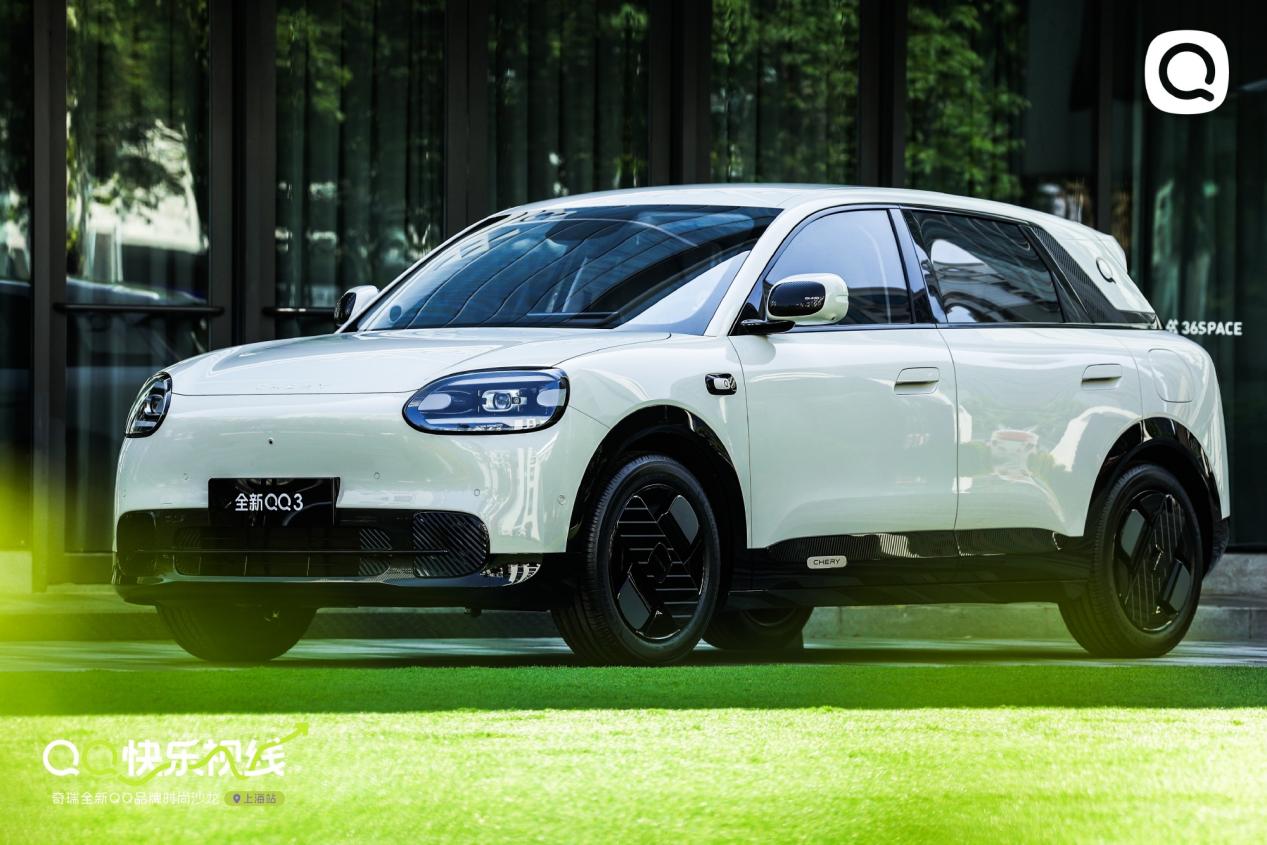
Group 1 - The Chinese automotive market is entering a competitive phase in 2026, with major automakers launching new products focused on electrification and intelligence across various segments [1] - New products will cater to diverse consumer needs, including sedans and SUVs, as domestic brands, joint ventures, and new forces compete [1] Group 2 - The all-new Chery QQ3, an electric city car, will be launched in February, featuring AI models and the Falcon 500 driver assistance system [2][4] - The new Kia Sportage will be released on February 7, with updated design and upgraded 2.0T engine, enhancing its appearance and performance [5][7] - The Zeekr 8X, a high-performance flagship SUV, is expected to launch in Q1, offering two battery capacities and a powerful hybrid system [8][10] - The Buick Envista E7, a new mid-size SUV, will debut in Q1, featuring advanced driver assistance and hybrid technology [11][13] - The GAC Toyota BZ7, a large electric sedan, is set to launch in March, equipped with Huawei's DriveOne electric drive system and a minimalist interior design [14][16] - The Chery Fengyun T9L, a large five-seat SUV, will be released after the Spring Festival, featuring advanced driving assistance and a powerful hybrid system [17][19] - The Chery iCAR V27, a smart hard-core SUV, will showcase a classic design with modern technology and a long-range hybrid system [20][22]

塑料成型设备需求增长带动业绩显著提升 浙江华业2025年净利预增超100%
Quan Jing Wang· 2026-01-30 06:36
Company Performance - Zhejiang Huaye (301616.SZ) expects a significant increase in net profit for 2025, projected to reach between 195 million to 205 million yuan, representing a year-on-year growth of 109.82% to 120.58% [1] - The substantial profit increase is attributed to a large non-recurring gain of 138 million yuan from government compensation for land and property acquisition, alongside stable demand in the new energy vehicle and 3C electronics sectors [1] - The company's main products, including screws, barrels, and related components, are widely used in injection molding and extrusion machinery, with a steady increase in domestic market share, maintaining the top position for several consecutive years [1] Industry Overview - The plastic machinery industry is a crucial part of advanced manufacturing, closely linked to seven strategic emerging industries, and has shown strong economic and technical benefits [2] - China's plastic machinery industry has developed a comprehensive system over 60 years, with domestic production accounting for over 50% of global output and around 80% market share domestically [2] - The industry revenue has grown from 44.1 billion yuan in 2011 to 94.1 billion yuan in 2023, with a projected increase to 128.2 billion yuan in 2024, reflecting a compound annual growth rate of 6.52% [2] Company Strategy and Innovation - Zhejiang Huaye maintains long-term partnerships with major downstream manufacturers like Haitian International and Yizhiming, responding quickly to market demands and increasing order volumes [3] - The company has invested 30 years in the plastic machinery components sector, holding 132 patents and participating in the drafting of industry standards, showcasing its strong technical capabilities [3] - The company's products exceed industry standards in key technical parameters, with some indicators reaching international levels, enhancing its competitive edge [3] Market Expansion and Export Growth - The export of injection molding machines from China is on the rise, with Zhejiang Huaye leveraging its technological and quality advantages to increase overseas orders through exhibitions and partnerships [4] - The company collaborates with domestic manufacturers to develop large-scale screw barrels, reducing reliance on imported high-end components and promoting self-sufficiency in core parts for large injection molding machines [4] - The increasing demand for plastic machinery, driven by higher plastic substitution rates, is expected to further enhance the company's market share [4]
博雷顿盘中涨超17% 控股股东近期频繁增持股份 机构看好公司系统化业务兑现
Zhi Tong Cai Jing· 2026-01-30 02:38
Group 1 - The core viewpoint of the article highlights that Boreton (01333) has seen a significant increase in its stock price, rising over 17% during the trading session and currently up by 12.94% at HKD 22.34, with a trading volume of HKD 77.1864 million [1] - Chairman and controlling shareholder Chen Fangming has been actively increasing his stake in Boreton, purchasing 203,000 shares on January 20 for approximately HKD 4.5298 million, 55,000 H-shares on January 22 for about HKD 1.1176 million, and 18,000 shares on January 28 [1] - According to Yingli Securities, Boreton presents an attractive medium to long-term investment opportunity, supported by structural demand for zero-carbon mining, system-level solution capabilities, and replicable scenario implementation paths [1] Group 2 - Boreton is one of the few companies focusing on mining production systems while entering the new energy engineering equipment and intelligent solutions sector, establishing a differentiated position with its integrated solutions of "new energy mining trucks + new energy mining equipment + grid-type microgrids + mining intelligent systems" [1] - The company is gradually validating the feasibility and economic viability of its integrated solutions in real mining scenarios [1]
新年车市重压下,岚图提前预告4款华为赋能新车
Guan Cha Zhe Wang· 2026-01-30 02:16
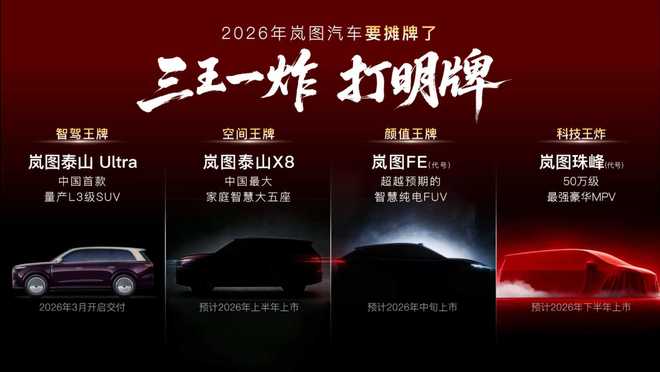
Core Viewpoint - Lantu Motors plans to launch four new models in 2026, all equipped with Huawei's L3-level intelligent driving hardware, aiming to enhance market share, user reputation, and brand development ahead of its upcoming IPO in Hong Kong [1][10]. Group 1: New Model Launches - The four new models include the Lantu Taishan Ultra, which is the first mass-produced L3-level assisted driving SUV in China, set to deliver in March 2026 [3]. - The Lantu Taishan X8, a large five-seat SUV, will feature Huawei's latest intelligent cockpit system and is expected to launch in the first half of 2026 [3]. - The Lantu FE, a fashionable utility vehicle, will be equipped with a four-laser radar perception system and is scheduled for a mid-2026 release [3]. - A luxury MPV, code-named "Zhu Feng," will debut with 12 innovative technologies and is the first MPV to feature L3-level intelligent driving, launching in the second half of 2026 [3]. Group 2: Financial Performance and Market Position - Lantu Motors has shown significant growth, with sales reaching 86,000 units in 2024, a 70% increase year-on-year [4]. - The company has been deepening its collaboration with Huawei, signing a strategic agreement in January 2024, which has led to the launch of new models equipped with Huawei's technology [6]. - Despite a strong sales performance, Lantu reported net losses of 1.538 billion yuan, 1.496 billion yuan, and 90 million yuan from 2022 to 2024, but turned a profit of 434 million yuan in the first seven months of 2025 [7]. Group 3: IPO and Market Strategy - Lantu Motors is preparing for an IPO in Hong Kong, with plans to replace Dongfeng Group's listing status, which has faced declining stock prices [10]. - The IPO process involves a combination of equity distribution and merger, with Lantu expected to gain a higher valuation [10]. - The company has received necessary approvals from various regulatory bodies, indicating progress towards its market debut [10]. Group 4: Challenges Ahead - Lantu did not meet its sales target of 200,000 units last year, with over half of its sales reliant on the Dreamer MPV model [11]. - The company faces challenges from increased market competition and the reduction of government subsidies, which have been crucial for its financial performance [11][13]. - Operational efficiency and cost optimization remain critical areas for Lantu as it aims to sustain growth in a competitive landscape [11].
“三化”协同:推动构建以先进制造业为骨干的现代化产业体系
Xin Lang Cai Jing· 2026-01-29 19:50
"三化"协同:推动构建以先进制造业为骨干的现代化产业体系 成都被国家赋予建设西部经济中心、西部科技创新中心、西部对外交往中心和全国先进制造业基地的重任,其中唯有先进制造业基地被冠 以"全国",这凸显了国家层面对成都产业发展的更高期望。 今年是"十五五"开局之年,在推进现代化产业体系建设过程中,成都如何深化智能化、绿色化、融合化"三化"协同,构建以先进制造业为骨干 的现代化产业体系?本期《锦观智库》采访赛迪四川高级研究员王诗宇。 精彩观点 转自:成都日报锦观 专家简介 王诗宇 赛迪四川高级研究员 编者按 党的二十届四中全会审议通过的《中共中央关于制定国民经济和社会发展第十五个五年规划的建议》围绕"建设现代化产业体系"进行系统部 署,明确将智能化、绿色化、融合化作为"十五五"时期我国现代化产业体系建设的发展方向。 1、"融合化"的内涵是以打破传统产业边界、要素壁垒为基础,实现创新链、产业链、价值链相互渗透、深度协同的系统性变革 2、城市场景引导企业定向研发,让企业在城市具体的产业应用和技术转化环境中实现技术、产品、商业模式升级 3、成都要以"关键在产业、重点抓园区、最终看质效"的思路,持续发挥科技创新的引领作用, ...