
资本市场

Search documents
数据背后,一个比肩楼市的红利出现了?
大胡子说房· 2025-07-16 12:25
Group 1 - The core viewpoint of the article is that despite an increase in the money supply (M2) and a slight recovery in CPI, there is no corresponding rise in commodity or asset prices, leading to questions about where the excess money is going [1][2] - M2 increased by 8.3% year-on-year, reaching 330.29 trillion yuan, while CPI rose to 0.1% and PPI fell to -3.6%, indicating a disconnect between money supply and price levels [1][2] - The majority of the new money supply is not reaching households, as only 1.17 trillion yuan in new loans were taken by residents, representing about 7% of the M2 increase [2] Group 2 - Approximately 30% of the new money is directed to the government through bond financing, with some funds used for debt refinancing and infrastructure investments [2] - About 60% of the new money flows to enterprises, which primarily use it to expand production, but this can lead to overproduction due to insufficient demand [3][4] - The phenomenon of "capital outflow" occurs when export companies do not convert their foreign currency earnings back to RMB, leading to a significant increase in foreign currency deposits in domestic banks [4] Group 3 - The increase in production without corresponding demand results in price deflation, making it difficult for commodity prices to rise [3][4] - The article suggests that a key task is to encourage the return of "outflowing" funds, with a focus on enhancing the capital market to attract these funds back [4] - The Hong Kong stock market is positioned as a primary destination for these funds, with measures being taken to facilitate capital inflow and create a wealth effect [4][5] Group 4 - The expectation of interest rate cuts by the Federal Reserve and the anticipated appreciation of the RMB may drive funds away from dollar assets towards new value assets, particularly in the Hong Kong market [5] - The article highlights the potential long-term investment opportunities in high-quality Hong Kong-listed companies, suggesting that investors should align their asset allocation with market trends [5]


新闻解读20250609
2025-07-16 06:13
Summary of Conference Call Notes Industry or Company Involved - The discussion primarily revolves around the China-U.S. trade negotiations and their implications for various industries, particularly focusing on strategic resources like rare earth elements and the automotive sector. Core Points and Arguments 1. **China-U.S. Negotiations**: The negotiations in London are expected to yield positive outcomes within a week, particularly concerning rare earth exports and potential easing of technology restrictions [1] 2. **China-Europe Trade Talks**: Recent communications from the Ministry of Commerce suggest that substantial progress may be made in negotiations with Europe, especially in the electric vehicle sector, where Chinese manufacturers are making price commitments to avoid price wars in Europe [2] 3. **Inflation Data**: The National Bureau of Statistics reported a slight decrease in the Consumer Price Index (CPI) by 0.1% and a significant drop in the Producer Price Index (PPI) by 3.3%, indicating economic challenges despite some positive interpretations of the data [3][4] 4. **Core CPI Insights**: Excluding volatile items like oil and food, the core CPI increased by 0.6%, suggesting underlying price stability despite the overall inflation decline [4] 5. **Export Performance**: In May, China's exports showed a surprising increase of 6.3%, despite significant tariffs imposed by the U.S., indicating resilience in the face of trade pressures [5] 6. **Policy Environment**: The policy landscape in June is described as stagnant, with limited new initiatives following the principles established in April, leading to a narrow impact on the market [6] 7. **Price Competition**: The competitive pricing environment, exacerbated by government subsidies, is leading to price wars among companies, which could further compress profit margins [7] 8. **Market Sentiment and Trading Volume**: The trading volume in the Shanghai and Shenzhen markets has rebounded to approximately 1.3 trillion, reflecting improved market sentiment and potential recovery opportunities [8][9] 9. **Brokerage Sector Performance**: The brokerage sector is highlighted as a key player in the market recovery, benefiting from increased trading activity and overall market sentiment [9] 10. **Future Market Outlook**: There is optimism for market performance in June, especially if additional catalysts emerge to boost market temperatures [10] Other Important but Possibly Overlooked Content - The discussion emphasizes the importance of understanding the nuances behind economic data, suggesting that not all declines in inflation indicators are negative and that some sectors may be experiencing improved margins despite overall price pressures [4][5]
“2025中国科创领袖峰会暨科创板开市六周年论坛”将于7月25日在上海举行
news flash· 2025-07-16 00:57
"2025中国科创领袖峰会暨科创板开市六周年论坛"将于7月25日在上海举行 《科创板日报》16日讯,由上海报业集团、上海市松江区人民政府指导,智通财经、《科创板日报》、 上海长三角G60科创集团联合主办的"2025中国科创领袖峰会暨科创板开市六周年论坛",将于7月25日 在上海松江举行。本次峰会以"策源创新、产业引领"为主题,设置主题演讲,高峰对话等环节,将就并 购、出海等热门领域展开圆桌对话。同时,将举行两场平行会议——集成电路产业发展闭门会、上市公 司产融对接会(服务一级市场科创企业)。届时,政府、相关监管方、科创板等科创领军企业董事长等 行业各界人士齐聚一堂,围绕政策、科技创新、产业发展等方面展开前瞻性对话,为推动我国科技创新 与资本市场深度融合,助力新质生产力发展贡献智慧与力量。(记者 曾乐) ...
政策解读:上交所制定《推动提升沪市上市公司ESG评级专项行动方案》
Sou Hu Cai Jing· 2025-07-15 01:27
Core Insights - The Shanghai Stock Exchange (SSE) has launched a special action plan to enhance ESG ratings for listed companies, responding to regulatory requirements and aiming to improve the international competitiveness of the A-share market [1][2] - As of the end of 2024, 342 companies are included in the MSCI ESG ratings, with 8 achieving AAA ratings and 52 in the AAA-A tier, indicating significant progress but highlighting structural challenges [1][2] - The action plan aims to address issues such as climate disclosure and supply chain management, which lag behind international benchmarks, emphasizing the need for improved rating methodologies and data reliability [1][2] Policy Framework - The SSE's ESG rating initiative is built around six core measures that create a systematic breakthrough, focusing on institutional norms, information disclosure, and evaluation systems [2] - The initiative aims to eliminate market information barriers, strengthen corporate responsibility awareness, and transition the ESG ecosystem from fragmented exploration to standardized and systematic practices [2] Rating Improvement System - The plan establishes a logical chain of "indicators-disclosure-management" and develops industry-specific rating guidelines, providing templates for governance structure design and disclosure examples [3] - It includes performance benchmarking analysis to help companies identify "rating pain points," particularly in sectors like chemicals, where pollution control and environmental risk management disclosures are emphasized [3] Collaborative Governance Platform - A regular dialogue mechanism between listed companies and rating agencies will be established, facilitating communication through training and industry forums [4] - This two-way communication aims to resolve information asymmetry, allowing companies to better understand rating criteria and improve their ESG management practices [4] Disclosure Quality Enhancement - The plan promotes a "financial materiality" disclosure principle, requiring companies to reveal the impact of ESG issues on financial performance within a structured framework [5] - It also advances the electronic standardization of sustainability reports to enhance the traceability and comparability of ESG information [5] Best Practices Matrix - The initiative will compile ESG practice white papers across industries, showcasing leading companies and typical scenarios, and organize workshops to address common challenges [6] - This approach aims to create a virtuous cycle of "benchmark demonstration-industry follow-up" [6] ESG Financial Ecosystem - The plan integrates ESG ratings into financing product designs, encouraging banks to offer "ESG performance-linked loans" and promoting the issuance of sustainable development-linked bonds [8] - By 2025, the scale of ESG-themed funds in the SSE is expected to grow by 40%, with significant cost advantages for higher-rated companies [8] Management Capability Foundation - Companies are encouraged to involve ESG professional investors in governance to enhance management expertise and establish a "pre-rating" mechanism for early diagnosis [9] - This mechanism has already helped a medium-sized manufacturing company identify shortcomings in occupational health and safety indicators, leading to successful inclusion in the MSCI rating system [9] Policy Effect Assessment - The SSE's ESG rating initiative represents a systematic reshaping of the capital market's sustainable development ecosystem, driving companies to optimize their environmental governance and social responsibility practices [10] - The ongoing effects of the policy are expected to shift the capital market focus from short-term profit to long-term value investment [10] Value Creation Model Innovation - The initiative encourages companies to shift from "passive disclosure" to "active management," enhancing environmental governance and social responsibility [11] - For instance, a steel company improved its production processes and achieved cost-effective financing through ESG rating enhancements, demonstrating the synergy between environmental investment and economic benefits [11] Resource Allocation Optimization - As ESG ratings become deeply integrated into investment decisions, capital is expected to flow towards higher-rated companies, creating a positive cycle of "rating improvement-valuation premium-quality development" [12] - By 2026, the number of AAA-A rated companies in the SSE is projected to double, with ESG index fund scales surpassing one trillion [12] Global ESG Governance Contribution - The plan incorporates international rating experiences while emphasizing "Chinese characteristics" in ESG practices, providing a reference for developing countries [13] - As the international recognition of SSE companies' ESG ratings increases, the A-share market's influence in the global ESG investment system is expected to grow [13] Summary and Outlook - The SSE's ESG rating enhancement initiative is not just a technical optimization of rating indicators but a profound restructuring of capital market development logic [14] - The initiative aims to transform listed companies from "profit centers" to "value centers," establishing the capital market as a key link between economic development and social progress [14]
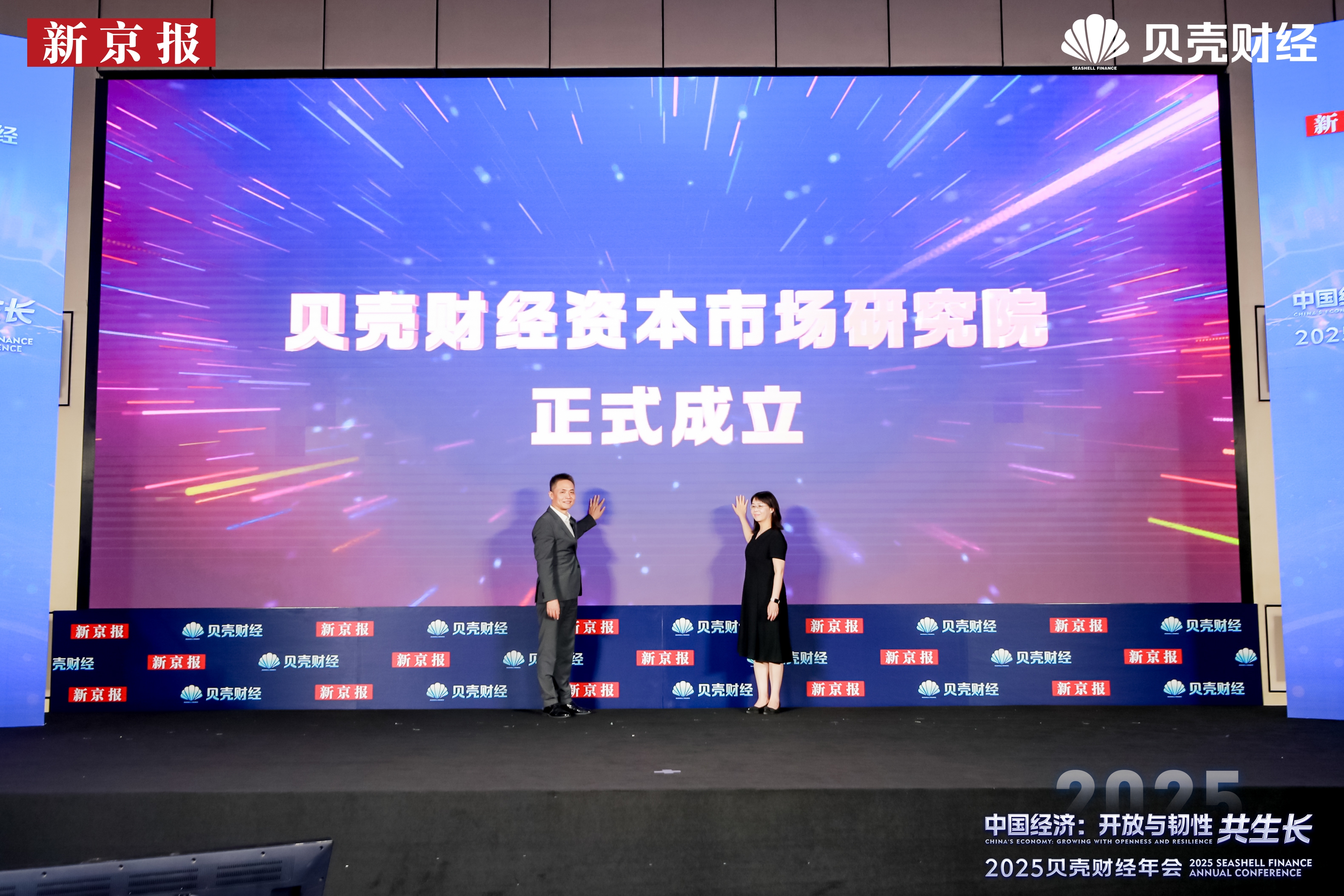
链接多元主体共塑繁荣生态 “贝壳财经资本市场研究院”成立
Bei Ke Cai Jing· 2025-07-14 08:26
Core Viewpoint - The establishment of the "Beike Finance Capital Market Research Institute" aims to enhance the capital market ecosystem in China, leveraging media power to connect various stakeholders and promote high-quality economic development [1][6][13]. Group 1: Institute Establishment and Objectives - The "Beike Finance Capital Market Research Institute" was officially launched on July 11, 2023, to serve as a hub for diverse market participants [1][4]. - The institute focuses on empowering decision-making, uncovering value, providing services, and linking ecosystems through a multi-layered product offering that includes information, research, investor education, community engagement, and events [4][7]. Group 2: Strategic Framework and Product Offerings - The institute will utilize its media advantages to create a comprehensive service ecosystem, driven by a "research + information + communication + service" model [7][20]. - Information products will include financial news, policy analysis, IPO insights, and company evolution studies, transforming fragmented market signals into actionable decision-making tools [7][25]. - Research products will feature a capital weekly report focusing on valuable investment themes and a case library developed in collaboration with top academic institutions to analyze classic companies and cases [7][28][29]. - Service products will encompass corporate communication training, investor education, a platform for company secretaries, industry discussion forums, and high-end summits to address major issues in capital market reform and innovation [7][30][32]. Group 3: Future Vision and Market Impact - The institute aims to become a value discoverer and shaper in the capital market, contributing professional expertise to support China's high-quality economic development [8][13].
广西出台金融惠企三年行动方案
Guang Xi Ri Bao· 2025-07-14 01:37
Core Viewpoint - The Guangxi government has issued a three-year action plan (2025-2027) to enhance financial support for major projects, key industries, and inclusive sectors, aiming for high-quality development through various financial tools and policies [1]. Group 1: Financing Major Projects - The plan prioritizes financing for national key projects supported by central budget investments, government bonds, and local special bonds, including the Western Land-Sea New Corridor and key industrial park constructions [2]. - It emphasizes support for the development of artificial intelligence industries and the modernization of traditional industries, as well as financing for rural revitalization and modern service sectors [2]. Group 2: Financing Key Industries - The action plan aims to bolster industrial revitalization and the development of strategic emerging industries, particularly in artificial intelligence and agriculture [2]. - It also focuses on enhancing the professionalization and high-end development of modern service industries, leveraging advantages in logistics, cultural tourism, and trade with ASEAN [2]. Group 3: Inclusive Financing - The plan seeks to improve financing access for small and micro enterprises, private businesses, and specific groups such as veterans and economically disadvantaged students [2]. - It aims to eliminate financing barriers for small businesses and promote the expansion of first-time loans and credit loans [2]. Group 4: Financing Channel Expansion - The plan proposes increasing bank credit investments, targeting an annual utilization of at least 1 trillion yuan in various loan types, and enhancing capital market mechanisms for local enterprises [4]. - It includes measures to optimize insurance services and expand bond issuance, aiming for over 100 billion yuan in various credit bonds annually [4]. Group 5: Improving Financing Accessibility - The action plan emphasizes financial product innovation, including new types of collateral loans and reduced financing costs for small and micro enterprises [5]. - It aims to implement policies like "no principal repayment" loans and expand the scope of loan renewals for small and medium enterprises [5]. Group 6: Building Financing Service Systems - The plan highlights the need for coordinated fiscal and financial policies, establishing risk compensation mechanisms, and enhancing the evaluation of financial institutions' service quality [5]. - It proposes a new financing matching mechanism to ensure effective alignment between financial tools and financing needs, promoting a streamlined approach to financial services [5].
百亿股票私募仓位指数达83.26% 创年内新高
Zheng Quan Shi Bao Wang· 2025-07-11 04:26
Group 1 - The stock private equity position index has risen to 77.36% as of July 4, 2025, indicating a 2.07 percentage point increase from the previous week, approaching a new high for the year [1] - The position index for billion-level stock private equity has reached 83.26%, a significant increase of 3.3 percentage points, marking a new high for the year [1] - Over 60.66% of stock private equity positions are at full capacity, with 21.73% at moderate levels, indicating that more than 80% of stock private equity is at half capacity or above [1] Group 2 - Recent active accumulation by stock private equity, especially billion-level private equity, reflects a strong confidence in the long-term positive outlook of the capital market [2] - The supportive logic for private equity accumulation includes favorable policy environments, with recent policies improving market expectations and investor confidence [2] - Current A-share market valuations are below historical averages, providing valuable investment opportunities for value investors [2] Group 3 - The overall risk premium in the stock market remains high, with total market value/residential deposits at historical lows, indicating potential for long-term revaluation of A-shares [3] - Certain sectors, such as consumption and technology, show strong driving forces, creating structural investment opportunities [3]
所有人,准备迎接第三次财富大转移!
大胡子说房· 2025-07-10 12:01
Core Viewpoint - The article discusses the concept of wealth transfer during economic crises, emphasizing that each crisis presents an opportunity for ordinary individuals to advance their wealth through strategic investments in real estate and emerging industries [1][2]. Group 1: Historical Wealth Transfers - The first major wealth transfer occurred in the 1990s following the collapse of the Soviet Union, driven by industrialization and urbanization, which shifted wealth, population, and land resources from rural to urban areas [1][2]. - The second wealth transfer took place after the 2008 global financial crisis, primarily fueled by the internet industry transformation, where wealth transitioned from real estate to online platforms, benefiting tech giants and their employees [2][3]. Group 2: Future Wealth Transfer - A potential third wealth transfer is anticipated in the next 5-10 years, influenced by the current economic downturn, with a focus on the flow of funds from bank deposits to other sectors [3][4]. - The article suggests that the Chinese government aims to redirect these funds into the capital market, particularly the stock market, to stimulate economic growth and support emerging industries [3][15]. Group 3: Industrial and Financial Development - The article outlines a two-phase process for a country to become a major power: first, becoming an industrial power, and second, evolving into a financial power to support enterprise development and protect national wealth [5][6][7]. - It posits that China is on the path to replace the U.S. as a global leader, leveraging its industrial advantages and developing its financial markets [8][9]. Group 4: Investment Opportunities - The article highlights the rise of Chinese companies in various sectors, such as consumer goods, AI, new energy vehicles, and pharmaceuticals, which are beginning to compete with U.S. firms and are reflected in the capital market's performance [12][13]. - It emphasizes the potential for the Chinese stock market to become a new tool for wealth distribution, especially if significant capital inflows occur [16]. Group 5: Caution in Investment - Despite the optimistic outlook for the stock market, the article advises caution for individual investors, suggesting that they should avoid speculative trading and focus on more stable investment options until the market stabilizes [17][20][21].

第三次财富大转移,要来了!
大胡子说房· 2025-07-08 12:24
Core Viewpoint - The article discusses the concept of wealth transfer during economic crises, emphasizing that each crisis presents opportunities for ordinary individuals to advance their wealth through strategic investments in real estate, internet industries, and potentially the capital market in the future [1][2]. Group 1: Historical Wealth Transfers - The first major wealth transfer occurred in the 1990s following the collapse of the Soviet Union, driven by industrialization and urbanization, which led to significant shifts in land ownership and wealth concentration in real estate [1][2]. - The second wealth transfer happened after the 2008 global financial crisis, primarily benefiting those in the internet industry, as capital shifted from real estate to online platforms, allowing companies to monetize user data [2][3]. Group 2: Future Wealth Transfer - A potential third wealth transfer is anticipated in the next 5-10 years, influenced by the current economic downturn and the movement of funds from bank deposits to other sectors [3][4]. - The focus of this future transfer will likely be on the capital market, as the government aims to stimulate consumption and investment, redirecting funds to areas that require growth, particularly the financial market [3][5]. Group 3: Economic Development Stages - The article outlines two critical stages for a country to become a major power: first, becoming an industrial power to ensure economic security, and second, evolving into a financial power to protect national wealth and support enterprise development [6][7]. - The transition to a financial power is essential for sustaining economic growth and preventing wealth loss, as illustrated by historical examples like the Soviet Union [7][8]. Group 4: Capital Market Potential - The article posits that the future of wealth distribution may shift from real estate to the capital market, with the potential for significant inflows of capital if the market can demonstrate profitability [15][16]. - The anticipated growth in the capital market is linked to advancements in technology and a decline in U.S. monetary dominance, suggesting a promising outlook for the Chinese capital market [16][17]. Group 5: Investment Strategy - While the capital market may present opportunities, the article advises caution in stock trading due to the current global economic uncertainty and the risks associated with individual trading decisions [17][20]. - It emphasizes the importance of maintaining a balanced investment strategy, prioritizing stable returns over speculative stock investments during periods of market volatility [21][22].

长江证券: 长江证券股份有限公司2025年跟踪评级报告
Zheng Quan Zhi Xing· 2025-07-04 16:34
Core Viewpoint - The credit rating agency maintains the long-term credit rating of Changjiang Securities Co., Ltd. at AAA, indicating strong financial health and stability in the company's operations [1][4][5]. Company Overview - Changjiang Securities is a medium-sized listed securities company with a high industry position and a comprehensive risk management system [4][5]. - As of March 2025, the company has a registered capital of 5.53 billion yuan and operates 298 branches nationwide, maintaining a leading position in the industry [4][11]. Financial Performance - In 2024, the company's operating income slightly decreased year-on-year, while net profit significantly increased, demonstrating strong profitability [4][5]. - As of the end of 2024, the company's total assets amounted to 1717.72 billion yuan, with net capital at 25.74 billion yuan, indicating robust capital strength [8][11]. Rating Outlook - The rating outlook is stable, with expectations for business growth and enhanced competitive strength as the capital market continues to develop [5][6]. - Potential factors for rating upgrades are not applicable, while significant losses or major compliance issues could lead to downgrades [5]. Competitive Advantages - The company has strong capital strength, with a net capital ratio of 72.94% as of the end of 2024, positioning it well within the industry [8]. - The company ranks well in various business segments, with brokerage income ranked 19th, fund distribution commission income ranked 3rd, and asset management income ranked 31st in the industry [5][8]. Shareholder Changes - The company has received approval from the China Securities Regulatory Commission for a major shareholder change, which is expected to enhance its resource access and market competitiveness [6][11].
