
金融创新

Search documents
让普惠金融的力量助茂名“土特产”腾飞
Jin Rong Shi Bao· 2025-05-15 06:27
Core Viewpoint - The financial institutions in Maoming, under the guidance of the People's Bank of China, are focusing on the "Five Trees and One Fish" initiative to create specialized branches that support local agricultural products, enhancing financial services for these industries [1][2][3] Group 1: Financial Initiatives and Support - Maoming's financial institutions have established specialized branches such as Lychee Branch, Huaju Hong Branch, and others to provide tailored financial services to local agricultural sectors [1][3] - The Huaju Hong Branch of Postal Savings Bank in Pingding Town is specifically designed to support the Huaju Hong industry, providing significant credit to local farmers [2][3] - As of February 2025, the loan balance for the "Five Trees and One Fish" initiative reached 10.889 billion yuan, with specific loans for Lychee at 3.144 billion yuan, Huaju Hong at 1.786 billion yuan, and Tilapia at 3.585 billion yuan [3] Group 2: Agricultural Industry Development - Maoming is recognized as the "Tilapia Capital of China," with an annual output value exceeding 10 billion yuan, and is a key player in the global tilapia market [4][5] - The local government is working on enhancing the tilapia industry's competitiveness by addressing issues such as the lack of leading enterprises and standardization in production [4][5] - A financial support framework has been established to assist the tilapia industry, including a collaboration between local governments and financial institutions to provide loans and insurance [5][6] Group 3: Innovative Financial Products - Financial institutions in Maoming have developed specialized loan products like "Lychee Loan," "Huaju Hong Loan," and others to meet the unique needs of local agricultural producers [13] - The introduction of government risk compensation mechanisms and agricultural insurance has helped reduce financing costs and barriers for farmers [13][14] - The establishment of the "Digital Chain Agricultural Industry Alliance" aims to integrate digital finance with agricultural services, facilitating loans and enhancing sales for local products [15] Group 4: Policy Framework and Collaboration - The People's Bank of China in Maoming has implemented a comprehensive policy framework to support local agricultural industries, including various financial support programs [9][10] - Collaborative efforts between local governments, financial institutions, and agricultural associations are focused on creating a multi-faceted financial support system for rural development [6][9] - The establishment of platforms for rural revitalization and loan support has led to significant funding being allocated to support local agricultural initiatives [9][10]

支持国有大型金融机构做优做强
Jing Ji Ri Bao· 2025-05-14 22:08
Core Viewpoint - The strong financial institutions are crucial for building a financial powerhouse and ensuring high-quality economic development, as emphasized by the recent policy directives from the Party's 20th Central Committee and the Central Financial Work Conference [1][2]. Group 1: Role of State-Owned Financial Institutions - State-owned large financial institutions are the backbone of China's financial system, holding nearly 90% of the total assets in the financial sector, with the six major state-owned banks accounting for about 45% of the banking sector's total assets [2]. - These institutions have contributed over 50% to the national credit increment since the beginning of 2024, demonstrating their pivotal role in credit provision [2]. - They are actively investing in technology and talent to drive digital transformation, enhancing the overall service capability of the financial sector [2]. Group 2: Support for the Real Economy - State-owned financial institutions are essential in supporting the real economy, ensuring that funds are directed towards key areas and weak links in economic development [2]. - As of January 2025, Agricultural Bank's loans to private enterprises reached 6.73 trillion yuan, serving 7.46 million private enterprise clients [2]. - China Life Insurance has provided multi-layered insurance protection for private enterprises and expanded diversified funding channels, with approximately 5 trillion yuan of insurance funds directly supporting real economy investments by the end of 2024 [2]. Group 3: Financial Stability and Risk Management - State-owned financial institutions play a critical role in maintaining financial stability and mitigating major financial risks, particularly concerning local government hidden debt and real estate market risks [3]. - They lead the financial debt conversion process and enhance fiscal debt mechanisms through bond underwriting and liquidity support [3]. - The institutions are implementing differentiated credit policies to support both rigid and improvement demands in the real estate sector [3]. Group 4: Challenges and Competition - The banking sector faces increasing competition, with a pressing need to explore effective credit demand, as loan interest rates decline and market competition intensifies [4]. - State-owned banks are experiencing homogenized competition, which exacerbates market pressures and highlights their reliance on traditional financial supply models [4]. - There is a need for improvement in financial innovation, product diversification, and risk pricing capabilities to enhance resource allocation efficiency [4]. Group 5: Internationalization and Global Competitiveness - In the context of ongoing high-level financial openness, state-owned financial institutions must enhance their global competitiveness by planning overseas market strategies and deepening local operations [8]. - Strengthening international cooperation and participating in global financial governance are essential for increasing their influence in international markets [8]. - A robust cross-border compliance and risk management framework is necessary to mitigate external shocks and ensure financial security [8]. Group 6: Policy Coordination and Support Mechanisms - The collaboration between fiscal and financial policies is crucial for optimizing macroeconomic governance and enhancing financial support for the real economy [8][9]. - The issuance of special government bonds to support capital replenishment for state-owned commercial banks is a significant step towards strengthening their capital base [8]. - Establishing a long-term mechanism for fiscal and financial coordination will enhance policy synergy and information sharing among departments [8][9]. Group 7: Incentive and Constraint Mechanisms - Improving incentive mechanisms can guide financial institutions to focus on core businesses and enhance support for key areas like technological innovation and green development [9]. - A robust constraint mechanism is necessary to prevent short-term profit-seeking behaviors and ensure efficient allocation of financial resources [9]. - Strengthening the collaboration among fiscal, financial, and industrial policies will create a conducive environment for state-owned financial institutions to thrive [9].
“南沙金融30条”出台,广州南沙将打造湾区国际金融枢纽重要节点
Zhong Guo Jing Ji Wang· 2025-05-14 08:00
Core Viewpoint - The "Nansha Financial 30 Measures" aims to establish Guangzhou Nansha as a demonstration window for financial openness, an innovation hub, and a key node in the Guangdong-Hong Kong-Macao Greater Bay Area's international financial framework [1][3]. Group 1: Financial Reform and Innovation - The "Nansha Financial 30 Measures" includes 27 financial reform and innovation initiatives across six areas: enhancing financial services for innovation and entrepreneurship, improving financial services for social welfare, developing specialized financial services, promoting financial market connectivity in the Greater Bay Area, facilitating cross-border financial innovation and exchanges, and refining financial regulatory mechanisms [1]. - The measures are expected to accelerate financial reform and innovation in Nansha, providing significant opportunities for the Guangzhou Futures Exchange to develop into a comprehensive, innovative, and market-oriented trading platform [1]. Group 2: Industry Perspectives - The Agricultural Bank of China’s Guangdong branch plans to enhance financial services in line with the policy, focusing on supporting the construction of a technology innovation industry base in Nansha [2]. - HSBC China sees the "Nansha Financial 30 Measures" as a new opportunity for high-quality development in both finance and the real economy, with three key areas for exploration: improving outbound financial services for enterprises, supporting the growth of technology innovation companies, and enhancing financial connectivity in the Greater Bay Area [2]. Group 3: Economic Integration and Development - The release of the "Nansha Financial 30 Measures" is expected to promote economic integration and collaborative development among regions in the Greater Bay Area, attracting numerous financial industry resources to Nansha [3]. - The measures will create new development opportunities in innovation, social services, specialized finance, regulatory alignment, and cross-border investment and financing [3].
资讯|申万宏源证券4月精选动态
申万宏源证券上海北京西路营业部· 2025-05-13 02:06
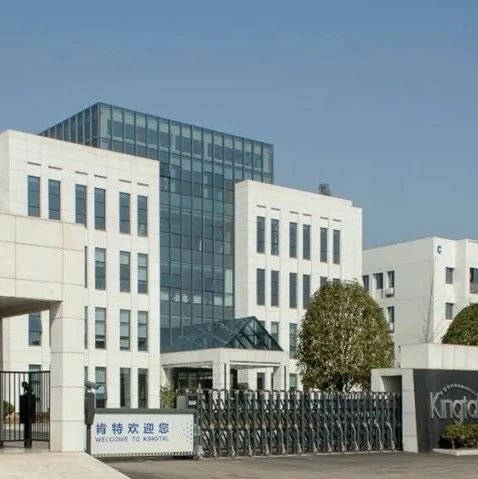
Core Viewpoint - The article highlights the various financial services and support provided by Shenwan Hongyuan Securities to promote inclusive finance, technological innovation, and regional development through successful bond issuances and financial products. Inclusive Finance - Shenwan Hongyuan assisted Haier Financing Leasing in successfully issuing the first non-public offering of bonds supporting small and micro enterprises in the leasing industry, with a scale of 500 million yuan and a coupon rate of 2.50% [2] - The company supported Zhuzhou Kent Hard Alloy Co., Ltd. in its successful listing on the New Third Board, contributing to the development of specialized and innovative enterprises [3] Technology Finance - Shenwan Hongyuan helped China State Construction Engineering Corporation's Eighth Engineering Bureau issue bonds supporting technological innovation for small and micro enterprises, with a total scale of 1 billion yuan [4] - The company facilitated the issuance of perpetual bonds for China Railway Construction Corporation and China Railway Group, with total scales of 3 billion yuan and 2.5 billion yuan respectively, aimed at enhancing technological innovation capabilities [5] Green Finance - Shenwan Hongyuan successfully completed its first carbon asset repurchase business in the Hubei carbon market, providing flexible financing channels for enterprises and supporting their green development initiatives [10] Regional Finance - The company acted as the sole lead underwriter for the issuance of bonds totaling 200 million yuan for the Hami State-owned Assets Investment and Operation Co., Ltd. in Xinjiang [11] - Shenwan Hongyuan also supported the issuance of various bonds in Shaanxi, including a 2 billion yuan bond for Shaanxi Transportation Holding Group and a 600 million yuan bond for Shaanxi Tourism Group [12] Financial Innovation - Shenwan Hongyuan launched its first batch of early interest dual-value income certificates linked to gold spot contracts, with total subscriptions exceeding 50 million yuan, showcasing its strength in financial innovation [16]




以金融笔触勾勒时代价值图谱
Qi Huo Ri Bao Wang· 2025-05-09 00:29
Group 1: Policy and Market Interaction - The implementation of the "Opinions" by the China Securities Regulatory Commission (CSRC) aims to align capital market functions with national strategies, opening new dimensions for financial tools to serve the real economy [1] - The financial innovation in the Guangdong-Hong Kong-Macao Greater Bay Area is expanding along five dimensions defined by the policy [1] Group 2: Financial Innovation for Technology Enterprises - The "Opinions" emphasize the need to "smooth financing channels for technology enterprises," which can alleviate the dual pressures of R&D cycles and market fluctuations [2] - Financial derivatives can provide risk mitigation for technology companies, allowing them to stabilize costs by locking in raw material prices through futures trading [2] Group 3: Green Transformation and Value Reconstruction - The exploration of green finance by the Guangzhou Futures Exchange aims to incorporate environmental costs into market pricing, marking a significant institutional breakthrough [3] - The demand for new energy metals like lithium and cobalt is increasing with the rapid development of the electric vehicle industry, and integrating environmental costs into pricing can promote greener production practices [3] Group 4: Inclusive Finance and Service Enhancement - The "Opinions" call for improving service quality for small and micro enterprises, expanding traditional financial services to include tailored micro contracts [4] - This shift allows small and micro enterprises to engage in risk management through futures markets, enhancing the resilience of the industrial ecosystem [4] Group 5: Wealth Management in an Aging Society - The "Opinions" address the need for innovative pension finance solutions, allowing pension funds to diversify their investments through commodity index funds and futures markets [5] - This approach aims to counter inflation and reshape wealth management strategies in the context of demographic changes [5] Group 6: Regulatory Evolution through Technology - The "Opinions" advocate for the development of regulatory big data warehouses and industry databases, facilitating the application of technologies like blockchain for market oversight [6] - The use of smart algorithms can enhance regulatory efficiency by enabling real-time analysis of trading data, thus improving market transparency [7]
中信银行新乡分行创新金融服务 赋能外贸企业发展
Huan Qiu Wang· 2025-05-08 10:48
Core Insights - The article highlights the innovative financial services provided by CITIC Bank's Xinxiang branch to support the high-quality development of foreign trade enterprises in the region [1][2] - The collaboration with the State Administration of Foreign Exchange (SAFE) has enabled the bank to address key challenges faced by foreign trade companies, such as financing difficulties, slow settlement, and high exchange rate risks [1] Group 1: Financial Innovations - CITIC Bank Xinxiang branch has introduced new business models such as offshore service trade, export credit insurance financing, and free trade zone EFE accounts to meet the specific needs of enterprises [1] - The bank successfully facilitated efficient fund settlement for a local enterprise engaged in offshore trade, ensuring the effective operation of its offshore factory [1] Group 2: Support for SMEs - The bank, in collaboration with SAFE, launched a new export credit insurance financing service to alleviate the long payment terms and slow capital turnover faced by small and medium-sized foreign trade enterprises [1] - A new materials export company received financing support of 241,000 yuan based on its export credit insurance policy, showcasing the effectiveness of this financing model [1] Group 3: EFE Account Implementation - CITIC Bank Xinxiang branch opened an EFE account for a leading equipment manufacturing enterprise, enabling "two-way free flow" of cross-border funds [2] - The bank actively promoted the advantages of the EFE account and successfully assisted a subsidiary in Hainan to establish this account, enhancing the company's cross-border financial services [2] Group 4: Future Outlook - The bank plans to continue deepening its collaboration with SAFE to drive financial innovation and support the high-quality development of foreign trade enterprises in Xinxiang [2] - The focus will be on leveraging policy advantages to create a new inland open highland for foreign trade [2]

股份制银行AIC破冰 开启多元竞争新篇
Jing Ji Guan Cha Wang· 2025-05-08 06:48
5月7日,国家金融监督管理总局官网发布批复,同意兴业银行筹建兴银金融资产投资有限公司(名称暂定)。这标志着我国第六家持牌金融资产投资公司即 将落地,也是首家由全国性股份制银行发起设立的金融资产投资公司(Asset-investment Company,下称"AIC"),正式打破此前五大国有行垄断银行系AIC 的市场格局。 百亿级AIC落地,股份行首获"入场券" 股份行加速入场,综合化服务成新方向 作为首家获批的全国性股份行,兴业银行的布局被视为行业转折点。中金公司银行业分析师林英奇指出,头部股份制银行资本实力雄厚,且有强烈的综合化 经营需求,通过设立AIC可整合集团资源,提供"投贷联动"等综合金融服务,更好满足企业多元化融资需求。 招联金融首席研究员董希淼表示,允许符合条件的全国性商业银行设立AIC,体现了监管层支持金融服务科技创新的明确导向。他建议未来可探索允许管理 规范、科技客户资源丰富的中小银行设立投资子公司,构建"债权+股权"的立体融资服务体系。 挑战犹存,需平衡风险与创新 尽管政策利好不断,银行系AIC的发展仍面临多重考验。中国银行研究院报告指出,股权投资的高风险属性与商业银行审慎经营原则存在内在冲 ...


更好互联互通 更多合作共赢——第16届国际基建论坛暨展览将于6月10-12日在澳门举办
Zhong Guo Neng Yuan Wang· 2025-05-08 04:10
业界精英云集,论坛"朋友圈"持续扩大 5月8日,第16届国际基础设施投资与建设高峰论坛暨展览(简称第16届国际基建论坛)组委会在北京召 开新闻发布会,介绍将于6月10-12日在澳门举办的第16届国际基建论坛,以及同期由国家商务部主办 的第11届中国-拉美和加勒比国家基础设施合作论坛(简称中拉基础设施合作论坛)的筹备工作情况。 中国对外承包工程商会房秋晨会长、副会长于晓虹,澳门招商投资促进局余雨生主席,商务部台港澳司 左祥华二级巡视员(副司级),美大司刘大江二级巡视员(副司级)出席发布会。发布会由承包商会新 闻发言人、秘书长姚丹波主持。来自新华社、人民日报、中国日报、环球时报和国际商报等40余家主流 媒体记者出席。 发布会上,房秋晨会长介绍了本届论坛的筹备进展情况。余雨生主席介绍了论坛的澳门元素和澳门会展 业发展情况。左祥华二级巡视员(副司级)介绍了内地支持澳门会展业及促进经济适度多元发展的举措 和成果。刘大江二级巡视员(副司级)介绍了第11届中拉基础设施合作论坛的筹备进展,以及中国同拉 美和加勒比国家的经贸合作情况。于晓虹副会长回答了有关媒体提问。 作为全球基础设施合作领域规格最高、规模最大、最具影响力的年度 ...
瞭望 | 瑞士的战略地位很独特
Sou Hu Cai Jing· 2025-05-06 09:41
瑞士凭借制度性权力、金融网络和创新能力,在国际体系中占据着独特的战略地位 作为外交事务斡旋中间人,瑞士的中立政策使其成为全球冲突斡旋和外交对话的重要平台 通过熊猫债券、绿色金融、资本市场互联互通及金融科技等方面的合作,中瑞金融关系有望持续深化,这也有利 于促进全球金融体系多元化 文 | 顾苏 瑞士国土面积仅4.1万平方公里,人口不足900万。历史上,这个农业受限、资源匮乏的山地国家曾是欧洲最贫穷 的角落之一。然而,凭借灵活的经济策略、高效的治理模式,瑞士逐渐从一个封闭的小体量国家蜕变为全球最富 裕、最具影响力的国家之一。 如今,无论是在全球金融、外交斡旋,还是在科技创新领域,瑞士都展现出远超其体量的国际影响力,堪称"小国 大业"的典范。 更重要的是,瑞士并不是国际政治的旁观者,而是全球治理的主动参与者。 滑雪爱好者在瑞士采尔马特滑雪(2023 年 12 月 10 日摄) 连漪摄 / 本刊 以中立为立国之基 1291年建国以来,瑞士长期处于欧洲强国的交汇地带和权力博弈的漩涡之中,同时,内部的文化多元性与宗教差 异也加剧了国家的不稳定性。为了在动荡中求存,瑞士采取了务实灵活的外交策略。 16世纪,瑞士中立雏形初现 ...

湖北推动支点能级跨越 力争2027年经济总量突破7万亿
Chang Jiang Shang Bao· 2025-05-06 00:56
Core Viewpoint - Hubei Province aims to accelerate its development as a strategic support point for the rise of the central region, with a focus on achieving significant economic growth and enhancing its role in national development [1] Economic Growth Targets - The plan sets two key economic targets: to exceed 7 trillion yuan by 2027 and to reach approximately 9 trillion yuan by 2030 [1] - Hubei's economic contribution to the central region has consistently been over 25% in recent years, with the province's GDP surpassing 6 trillion yuan ahead of schedule [1] Investment and Financial Strategies - The plan emphasizes increasing investment quality and quantity, aiming for private investment to account for around 60% by 2027 [2] - In Q1 2025, state-owned enterprises in Hubei reported total assets exceeding 3 trillion yuan, with a year-on-year revenue growth of 27.8% [2] - The province plans to mobilize over 3 trillion yuan in various investments, focusing on over 400 major projects [3] Industry Development Initiatives - Hubei is set to enhance its strategic emerging industries, including new energy, intelligent connected vehicles, and photonics, with an investment target of 30 billion yuan [3] - The province aims to foster innovation by establishing high-level R&D platforms and increasing the number of high-tech enterprises [3] Financial Innovation and Services - Hubei's financial sector is expected to grow significantly, with a target financial industry value of 2.736 trillion yuan by 2024 [4] - The plan includes initiatives to develop a high-level financial center, focusing on technology finance and green finance [4][5] - The province aims to enhance consumer spending, with a reported 7.3% growth in retail sales in Q1, ranking second nationally [5]