中美关系

Search documents
高端访谈丨专访哥伦比亚大学教授杰弗里·萨克斯
Yang Shi Xin Wen Ke Hu Duan· 2025-10-11 12:35
Core Viewpoint - Jeffrey Sachs, a professor at Columbia University, expresses strong confidence in China's economic development and reform over the past four decades, dismissing the notion of a "China threat" as fundamentally flawed [2]. Group 1 - Sachs has been visiting China regularly for over 40 years and has conducted in-depth research on its economy [2]. - He actively praises China's reform and opening-up policies, attributing his confidence in China's social and economic development to these changes [2]. - Sachs critiques the attempts by some countries to contain China's growth, labeling such ideas as "absurd" [2]. Group 2 - The interview will explore the underlying logic behind the so-called "China threat theory" and its misconceptions [2]. - Sachs will provide insights into the future development of China-U.S. relations, highlighting key factors that will influence this dynamic [2].
高端访谈|专访哥伦比亚大学教授杰弗里·萨克斯
Yang Shi Wang· 2025-10-11 12:06
Core Viewpoint - Jeffrey Sachs, a professor at Columbia University, expresses strong confidence in China's economic development and reform over the past four decades, highlighting the absurdity of the notion that other countries can contain China's growth [1] Group 1: China's Economic Development - Sachs has been studying China's economy for over 40 years and has a positive evaluation of its reform and opening-up policies [1] - His confidence in China's social and economic development stems from its significant progress and resilience [1] Group 2: Critique of "China Threat" Theory - Sachs critiques the "China threat" theory, arguing that it is based on flawed logic and misconceptions about China's role in the global economy [1] - He emphasizes that attempts by some countries to contain China's development are misguided and unrealistic [1] Group 3: Future of Sino-American Relations - Sachs discusses the future of Sino-American relations, suggesting that understanding and cooperation are essential for both nations [1] - He believes that constructive dialogue can help mitigate tensions and foster mutual benefits [1]
外交部:个别美国政客干扰破坏中美正常交往合作注定失败
Zheng Quan Shi Bao Wang· 2025-10-09 07:47
Core Viewpoint - The Chinese Foreign Ministry spokesperson criticized the recent report from the U.S. House of Representatives' "China Special Committee," labeling it as politically motivated and lacking credibility. The spokesperson emphasized the mutual benefits of U.S.-China educational exchanges and urged the U.S. to uphold its commitment to welcoming Chinese students [1]. Group 1 - The U.S. report is seen as an attack on China with no credibility [1] - China has lodged a formal protest against the actions of the U.S. committee [1] - Educational exchanges between the U.S. and China are described as mutually beneficial and important for enhancing understanding between the two nations [1] Group 2 - The spokesperson condemned the actions of certain U.S. politicians for broadening the concept of national security, which disrupts normal educational and cultural exchanges [1] - There is a call for the U.S. to honor previous statements made by former President Trump regarding welcoming Chinese students [1] - China will closely monitor U.S. actions and take necessary measures to protect its legitimate rights and interests [1]
美联储年内或进一步宽松,中国假期人流量同比增6.2%
Dong Zheng Qi Huo· 2025-10-09 00:43
1. Report Industry Investment Rating There is no information provided regarding the report industry investment rating in the given content. 2. Core Views of the Report - The Fed may further ease monetary policy this year, which has an impact on various financial and commodity markets [1][11]. - During the National Day holiday, the cross - regional passenger flow in China increased by 6.2% year - on - year, and Chinese equity assets rose slightly but underperformed globally [2]. - The supply side is the key factor affecting the price trends of various commodities, and different commodities face different supply and demand situations [3][4][5]. 3. Summary by Relevant Catalogs 3.1 Financial News and Reviews 3.1.1 Macro Strategy (Gold) - Trump announced that Israel and Hamas signed the first phase of the peace plan, and the Fed's meeting minutes indicated that further easing might be appropriate this year [10][11]. - Gold prices rose to a record high of $4059 and then fell back, increasing by about 5% during the holiday due to risk - aversion sentiment. Short - term, the positive factors are fully priced, and there is a risk of a pullback [11]. - Investment advice: Be cautious of the risk of a decline due to long - position profit - taking after the price hits a new high [12]. 3.1.2 Macro Strategy (Foreign Exchange Futures - US Dollar Index) - Macron plans to appoint a new prime minister, Trump said Israel and Hamas reached an agreement on hostage release and troop withdrawal, and the Fed's interest - rate meeting minutes showed internal differences on the number of interest - rate cuts [13][14][15]. - The US dollar index will fluctuate in the short term, and the market's risk appetite continues to rise [16][17]. - Investment advice: The US dollar index will remain volatile in the short term [18]. 3.1.3 Macro Strategy (US Stock Index Futures) - Meta and Apple are about to reach a settlement with the EU Commission on antitrust cases, and the US Senate rejected the bipartisan temporary appropriation bill again [19][20]. - The Fed's meeting minutes showed internal differences among officials, but the market's optimistic sentiment towards AI and interest - rate cuts remains high, and the market is expected to remain strong [21]. - Investment advice: The US stock market is expected to maintain a strong trend after a small adjustment [22]. 3.1.4 Macro Strategy (Stock Index Futures) - China's Ambassador to the US called for expanding China - US cooperation, and the cross - regional passenger flow during the National Day holiday increased by 6.2% year - on - year [23][24]. - Chinese equity assets rose slightly during the holiday but underperformed globally. The market is still in a structural pattern, and the rhythm is more important than the position [25][26]. - Investment advice: The market is in a structural pattern, and rhythm is more important than position [26]. 3.1.5 Macro Strategy (Treasury Bond Futures) - The manufacturing PMI in September was 49.8%, and the central bank conducted a 7 - day reverse repurchase operation of 2422 billion yuan [27][28]. - The bond market is expected to fluctuate in the first half of October and may strengthen after the 14th Five - Year Plan policies are implemented [28]. - Investment advice: The bond market is expected to fluctuate and bottom out in the short term. Short - term trading should be cautious, and medium - term long positions can be considered on dips [28]. 3.2 Commodity News and Reviews 3.2.1 Agricultural Products (Soybean Oil/Rapeseed Oil/Palm Oil) - Indonesia is about to start the B50 road test [29]. - During the holiday, Malaysian palm oil led the rise in the overseas oil market. The market predicts that Malaysia's palm oil inventory will decline slightly in September [30]. - Investment advice: The domestic market is expected to make up for the rise after the holiday, but be cautious of a pullback after a high opening. In the long - term, go long after the clear signal of production reduction in the producing areas in the fourth quarter [30]. 3.2.2 Black Metals (Steam Coal) - The safety inspection in the Ordos steam coal market remains strict, and the coal price is expected to remain weak seasonally in October [31]. - Investment advice: The coal price is expected to remain weak in October, and pay attention to the policy game after the long - term agreement price [31]. 3.2.3 Black Metals (Iron Ore) - Japan's Nippon Steel and Champion Iron are promoting the Kami iron ore project [32]. - During the holiday, the iron ore price fluctuated narrowly around $104. The downstream finished - product market was weak, and the iron ore price is expected to continue to fluctuate narrowly [32][33]. - Investment advice: The iron ore price is expected to continue to fluctuate narrowly [33]. 3.2.4 Agricultural Products (Soybean Meal) - In September, China's soybean imports and crushing volume decreased month - on - month, and the US soybean old - crop inventory as of September 1 was lower than expected [34][35]. - The Brazilian soybean sowing progress reached 8.2% as of October 4. The CBOT soybean price rose slightly during the holiday. The US government shutdown suspended the release of relevant reports [37]. - Investment advice: The soybean meal price is expected to fluctuate temporarily, and Sino - US relations are the main influencing factor [37]. 3.2.5 Black Metals (Rebar/Hot - Rolled Coil) - The EU plans to impose a 50% tariff on steel imports outside the quota [40]. - During the holiday, the overseas metal prices rose slightly, and the steel price is expected to rise slightly after the holiday, but the inventory accumulation during the holiday will suppress the spot price. Pay attention to the terminal demand [40]. - Investment advice: Treat the market with a range - bound mindset after the holiday and pay attention to the demand intensity [41]. 3.2.6 Agricultural Products (Red Dates) - The red date price in the Guangzhou Ruyifang market was stable, and the futures price of the main contract CJ601 fell [42]. - The supply in Xinjiang is normal, and the demand in the north - south distribution areas is stable. The new - season output and old - crop inventory are still being debated [42]. - Investment advice: Hold a wait - and - see attitude or conduct short - term operations in the short term, and pay attention to the fruit development in the producing areas and downstream consumption [42]. 3.2.7 Non - Ferrous Metals (Copper) - The ICSG predicts that the global copper mine production will increase by 1.4% in 2025 and 2.3% in 2026, and there will be a supply surplus in 2025 and a shortage in 2026 [43][44]. - Teck Resources lowered its copper production forecast for its Chilean flagship mine, and Aurubis raised the European copper premium for 2026 [45][46]. - Investment advice: Adopt a long - position strategy unilaterally, and pay attention to the domestic - foreign positive arbitrage [47]. 3.2.8 Non - Ferrous Metals (Lead) - The resumption of production of a small lead - zinc mine in Fujian was postponed to the end of October [48]. - The supply of lead has improved, and the demand is stable. The Shanghai lead price may fluctuate upward [50]. - Investment advice: Go long on dips unilaterally and pay attention to the positive arbitrage of the monthly spread [50]. 3.2.9 Non - Ferrous Metals (Zinc) - 29Metals withdrew its zinc production guidance due to an earthquake, and the resumption of production of a small lead - zinc mine in Fujian was postponed to the end of October [51][52]. - The LME zinc price is supported, and the domestic zinc export window may open. The inventory is expected to rise after the holiday [53]. - Investment advice: Adopt a wait - and - see attitude unilaterally, and pay attention to the medium - term positive arbitrage opportunity brought by the opening of the export window [53]. 3.2.10 Non - Ferrous Metals (Polysilicon) - The expansion project of Xinjiang Dongfang Hope New Energy Co., Ltd.'s polysilicon plant is under environmental protection acceptance [54][55]. - The polysilicon price may remain flat, and the component price is expected to fluctuate in the short term [55][56]. - Investment advice: The market may fluctuate widely between 49,000 - 55,000 yuan/ton in October. Pay attention to the range - bound operation opportunities [57]. 3.2.11 Non - Ferrous Metals (Industrial Silicon) - The SASAC called for抵制 "involution - style" competition [58]. - The inventory of industrial silicon is expected to accumulate slightly in September - October and decrease slightly in November - December [59]. - Investment advice: It is more cost - effective to go long on dips, but be cautious when chasing the price [59]. 3.2.12 Non - Ferrous Metals (Nickel) - Indonesia will re - implement the annual RKAB system in 2026 [60]. - During the holiday, the LME nickel price was strong. The nickel ore price is expected to rise, and the nickel iron and intermediate product prices are expected to remain strong, but the refined nickel inventory is under pressure [61]. - Investment advice: Conduct range - bound trading in the short term, and go long at low levels from a configuration perspective [62]. 3.2.13 Energy and Chemicals (Liquefied Petroleum Gas) - Saudi Arabia's October CP official prices fell, and the US C3 inventory decreased [63][64]. - The PG price is expected to be easy to rise and difficult to fall in the short term. Pay attention to the start - stop changes of PDH plants after the import cost drops [64]. - Investment advice: Pay attention to the start - stop changes of PDH plants after the import cost drops [64]. 3.2.14 Energy and Chemicals (Crude Oil) - Russia will gradually increase oil production, and the US EIA crude oil inventory increased [65][66]. - International oil prices rebounded after falling during the holiday. The release of supply by oil - producing countries is the key factor affecting the price [66]. - Investment advice: The decline of oil prices depends on whether the supply of oil - producing countries can be effectively released [67]. 3.2.15 Energy and Chemicals (Bottle Chips) - The export prices of bottle chip factories were mostly stable, with some slight decreases [68][69]. - The polyester raw material prices fell, and the bottle chip prices were under pressure. The demand is expected to be weak in the long term [70]. - Investment advice: The absolute price of bottle chips is at a low level, and the inventory of factories has decreased. Pay attention to the sustainability of production cuts and new capacity launches [70]. 3.2.16 Shipping Index (Container Freight Rate) - Maersk said that the freight volume from China to Latin America and Africa has increased [71]. - During the National Day holiday, the spot index fell below 1050, and the short - term market may be weak. Pay attention to the low - buying opportunities after the over - decline of the 12 - contract [71]. - Investment advice: Pay attention to the low - buying opportunities after the over - decline of the 12 - contract [72].
中美副外长见了面,美官员表示中美关系,对3亿多美国人太重要了
Sou Hu Cai Jing· 2025-10-04 18:12
Group 1 - The meeting between U.S. and Chinese officials in New York reflects a nuanced shift in U.S.-China relations, highlighting the importance of bilateral ties for American security and prosperity [1] - U.S. Deputy Secretary of State Rand's previous hardline stance on China, particularly regarding 5G, has softened due to multiple domestic pressures, indicating a significant policy shift [1][4] - The economic situation in the U.S. is a driving force behind policy adjustments, with potential tariffs leading to an additional $2,000 annual cost for American families, exacerbating public discontent [1] Group 2 - The agricultural sector in the U.S. is facing unprecedented bankruptcy rates and severe issues with the sale of crops like soybeans, leading to farmer fatigue and skepticism about future recovery [4] - Despite the shift in diplomatic tone, the U.S. continues to impose restrictions on semiconductor exports to China, indicating a mixed approach in maintaining technological dominance [4] - Chinese goods and services are deeply integrated into American life, providing essential support to sectors like clean energy and helping to alleviate inflationary pressures [5] Group 3 - Both sides expressed a willingness to continue dialogue and expand cooperation, with previous U.S. actions like tariff reductions clearing some obstacles for collaboration [5] - The relationship between the two largest economies is framed as a necessity for global economic recovery, emphasizing the need for pragmatic cooperation [5][8] - Achieving stable and sustainable U.S.-China relations requires concrete actions from the U.S. to foster mutual respect and cooperation, while China remains open to creating conditions for collaboration [7][8]

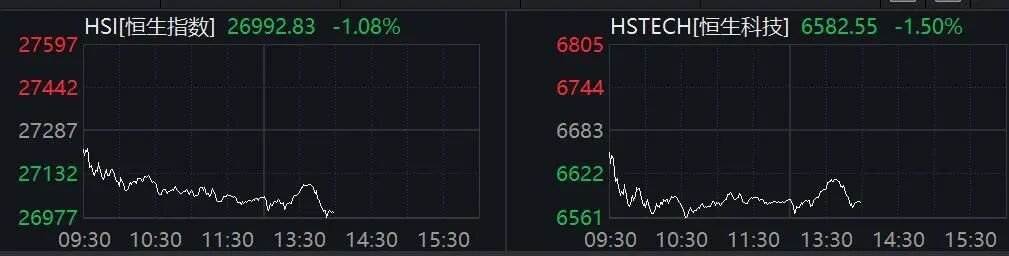
午后,港股跌幅扩大,小米集团跌近2%
Zheng Quan Shi Bao· 2025-10-03 06:57
Market Overview - The Hong Kong stock market experienced a decline, with the Hang Seng Index dropping over 1% and the Hang Seng Tech Index falling more than 1.7% [1][4]. Economic Analysis - According to a report from CMB International, the Hong Kong stock market continued its fluctuating upward trend in September, supported by the resumption of US-China negotiations and expectations of overseas interest rate cuts. The technology sector's rotation also provided significant support to the market [2]. - The resumption of US-China trade talks has led to increased market optimism regarding progress on key issues such as tariff reductions and export controls. Additionally, the stability of macroeconomic policies in mainland China, particularly the "stabilizing growth" measures, has provided fundamental support for the Hong Kong stock market [2]. - The report anticipates a temporary "off-season" for the Hong Kong market due to the National Day and Mid-Autumn Festival holidays, compounded by uncertainties surrounding the US government's short-term financing bill. This could amplify external disturbances [2]. - There remains a divergence in market expectations regarding the timing and extent of potential interest rate cuts by the Federal Reserve, which may lead to continued market volatility in the short term. Some quality sectors in the Hong Kong market are approaching historical high valuations, indicating potential profit-taking pressure [2]. Company Specifics - Xiaomi Group's stock fell nearly 2% during the trading session [4][6]. - A recent incident involving a Xiaomi vehicle reportedly driving away without human operation has gained significant attention on social media. The company responded that the vehicle's movement was due to mobile phone operation, although the car owner disputed this claim, stating that it was unlikely to have been a result of accidental phone interaction [5].

中国驻美大使:中美要恪守不冲突不对抗底线,为世界增添稳定性
Zhong Guo Xin Wen Wang· 2025-10-01 00:36
Core Points - The Chinese Ambassador to the U.S., Xie Feng, emphasized the importance of maintaining a baseline of no conflict and no confrontation between China and the U.S. to enhance global stability [1][3] - Xie highlighted the historical roles of both nations as major contributors to World War II victory and as key architects of the post-war international order, urging for strengthened communication and cooperation for mutual benefit and global peace [3] Group 1 - Xie Feng stated that both countries should deepen their interests integration and act as partners for mutual success [3] - He called for the management of differences and conflicts to maintain peace and stability [3] - The ambassador stressed the need to respect each other's core interests and major concerns, particularly regarding the Taiwan issue, which he described as the political foundation of U.S.-China relations [3] Group 2 - Xie pointed out that trade wars and tariff battles yield no winners and that artificial decoupling disrupts the world, ultimately harming both nations [3] - He noted that recent progress in U.S.-China economic and trade talks indicates that equal negotiation is the correct path to resolving issues [3] - The event was attended by over 700 representatives from various sectors, including U.S. government officials and international diplomats, highlighting the significance of U.S.-China relations [4]
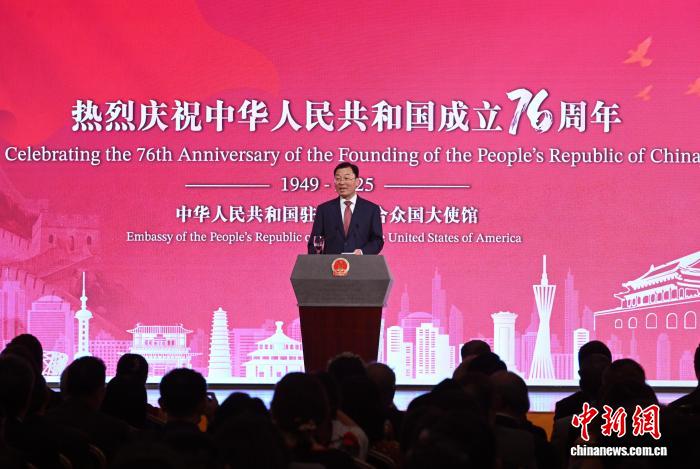
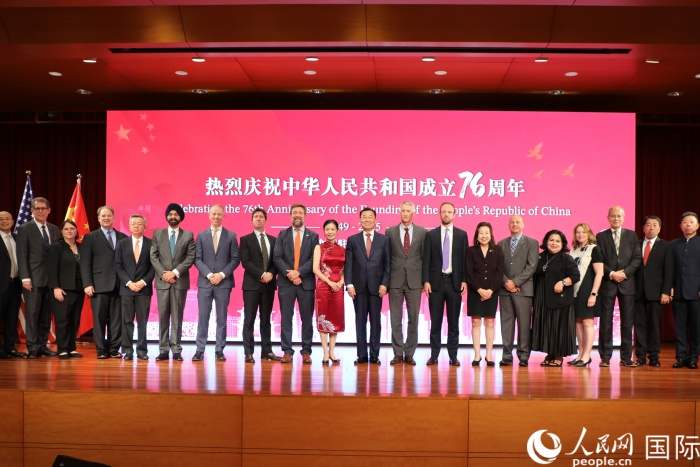
中国驻美国大使馆举行庆祝中华人民共和国成立76周年招待会
人民网-国际频道 原创稿· 2025-09-30 08:50
Core Points - The event celebrated the 76th anniversary of the founding of the People's Republic of China, attended by over 700 guests including diplomats, government representatives, and international leaders [1][3][4] Group 1: Event Overview - The Chinese Embassy in the U.S. hosted a reception on September 29 to mark the 76th anniversary of the People's Republic of China [1][3] - The event featured a theme video titled "Correcting the Course, Sailing Towards Win-Win" and performances by the Philadelphia Symphony Orchestra [4] Group 2: Diplomatic Statements - Ambassador Xie Feng highlighted China's significant transformation over the past 76 years, emphasizing the country's journey from standing up to becoming prosperous and strong [4] - Xie stated that China is a stabilizing force in the world, contributing to peace and development, and called for enhanced communication and cooperation between China and the U.S. [4] - He urged both nations to deepen mutual interests, manage differences peacefully, and promote friendly relations to benefit their peoples and global stability [4]
美国知名学者:希望美国认清“遏制中国”不切实际丨世界观
Zhong Guo Xin Wen Wang· 2025-09-30 08:07
Core Viewpoint - The speech by Peter Walker emphasizes the unrealistic nature of the U.S. strategy to "contain China" and highlights the significant potential for cooperation between the two nations in various fields [1] Group 1: Cultural and Ideological Differences - Walker uses the fundamental differences in Eastern and Western cultures and thinking as a starting point for his analysis of U.S.-China relations [1] Group 2: Future Development Models - The discussion includes insights into the future directions of the development models of both the U.S. and China, suggesting that their interests are highly aligned [1] Group 3: Cooperation Potential - Walker expresses a strong hope that the U.S. will recognize the vast opportunities for collaboration that exist between the two countries across multiple sectors [1]
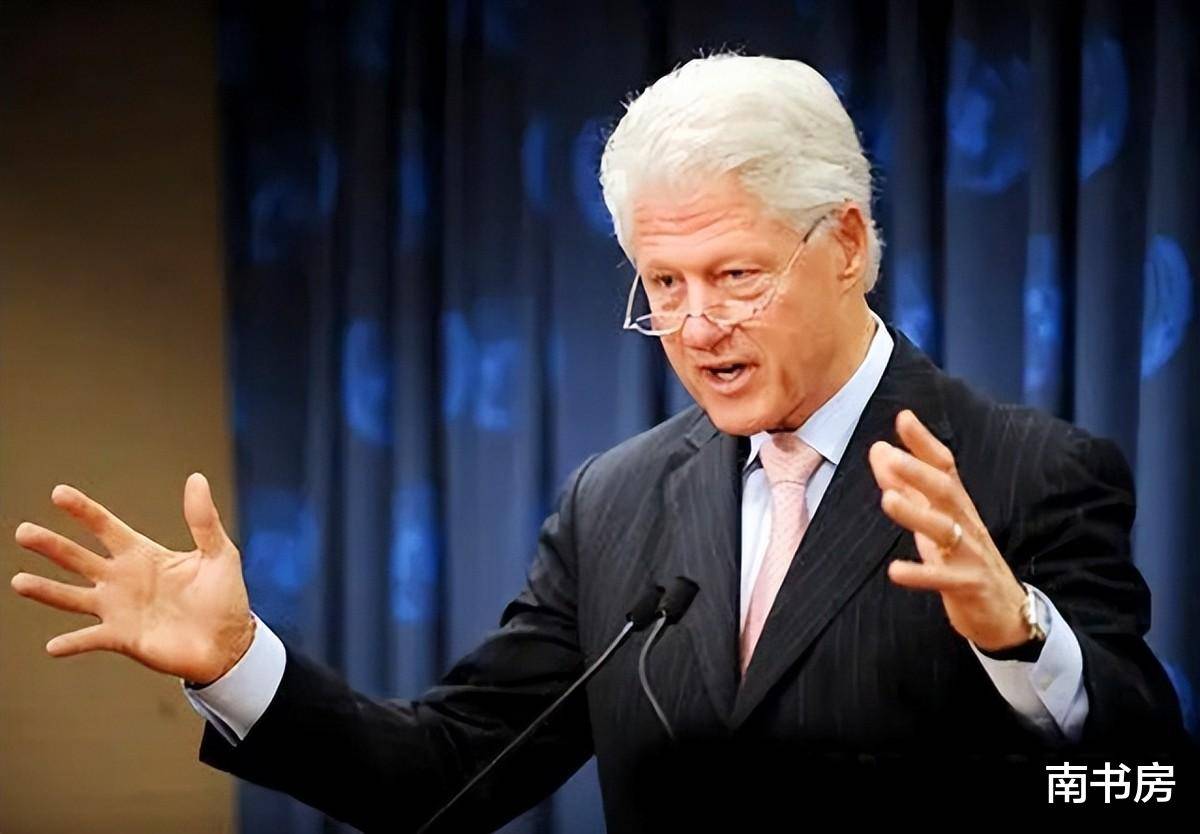
01年中国加入WTO,美国国会很不情愿,而克林顿为何站出来力挺?
Sou Hu Cai Jing· 2025-09-30 04:04
Group 1 - China's application to rejoin GATT was submitted in 1986, marking the beginning of a 15-year negotiation process to join the WTO [1] - The multilateral negotiations officially started at the end of 1995, with China adopting a strategy of negotiating with Asian countries first before approaching Western nations [2] - The primary challenge for China was to gain the support of Western countries, particularly the United States, which was crucial for China's accession to the WTO [2][6] Group 2 - In 1998, China made concessions by proposing to lower tariffs, but Western nations continued to impose political barriers [6] - The WTO, with over 160 member countries covering more than 90% of global trade, represented a significant opportunity for China to access advanced technology and management practices, thereby enhancing its international influence [10] - The support from U.S. President Bill Clinton was pivotal in China's successful entry into the WTO, as he actively lobbied Congress to pass the Permanent Normal Trade Relations (PNTR) legislation [12] Group 3 - China's accession to the WTO in December 2001 marked the beginning of a period of rapid economic growth, significantly impacting U.S.-China relations [14] - Clinton's initial hardline stance towards China shifted as he recognized the economic benefits of engaging with China, leading to increased U.S. aid to China during his presidency [15]