区块链技术

Search documents
阿联酋加快布局加密货币市场
Sou Hu Cai Jing· 2025-09-15 22:35
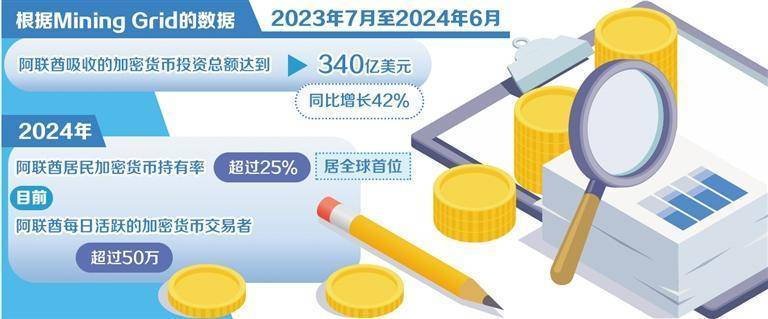
Core Insights - The UAE is positioning itself as a global hub for digital economy, particularly in cryptocurrency and blockchain technology, attracting entrepreneurs, investors, and innovators from around the world [2] National Strategy - The UAE's digitalization and economic diversification strategies provide clear policy guidance and growth pathways for the cryptocurrency sector [3] - In 2017, Dubai Land Department became the first government entity to apply blockchain technology in real estate transactions [3] - The Central Bank of the UAE launched the "Digital Dirham Strategy" in March 2023, aimed at addressing payment challenges and supporting digital transformation through the issuance of a central bank digital currency [3] - The "2031 National Investment Strategy" released in 2024 emphasizes sustainable economic development and digital transformation, with the cryptocurrency sector being a cornerstone [3] - The phased rollout of the "Digital Dirham" is expected to enhance the resilience, efficiency, and inclusivity of the financial system [3] Innovative Regulatory Framework - The UAE's regulatory framework is a key competitive advantage, featuring both federal-level macro guidance and flexible local regulations [4] - The Securities and Commodities Authority oversees the regulation of securities, commodities, and virtual asset service providers, while the Central Bank regulates payment token services [4] - Dubai's "Virtual Assets Regulatory Law" established in March 2022 provides a clear legal framework for virtual asset service providers [4] - The Dubai Financial Services Authority has introduced various regulations, including the "Investment Token Framework" and "Crypto Token Framework," to regulate the cryptocurrency industry [5] Incentive Measures - The UAE offers a highly attractive business environment through tax incentives, free zone privileges, and visa facilitation [7] - There is no income tax or capital gains tax on profits from cryptocurrency transactions, mining, or staking [7] - The UAE has over 40 free zones that provide unique business environments and independent regulatory frameworks [7] - The Golden Visa program aims to attract high-net-worth investors and top talent, offering pathways for cryptocurrency investors and entrepreneurs [7] Rapid Development Momentum - The UAE aims to become a global high-growth cryptocurrency hub, with major platforms like Binance and Crypto.com establishing a presence [8] - By June 2025, Dubai's Virtual Assets Regulatory Authority had issued complete licenses to 36 companies, including Binance and BitOasis [8] - The total cryptocurrency investment in the UAE reached $34 billion from July 2023 to June 2024, a 42% increase year-on-year [8] - The cryptocurrency ownership rate among UAE residents exceeded 25% in 2024, ranking first globally [9] - The number of daily active cryptocurrency traders in the UAE surpassed 500,000, with significant growth in app downloads reflecting the industry's rapid expansion [9]

刚果金政策又见变数,钴后市走向分析
2025-09-15 14:57
Summary of Key Points from Conference Call Records Industry Overview - The records focus on the cobalt industry, particularly in the Democratic Republic of the Congo (DRC), which is a significant player in the global cobalt market [1][22]. Core Insights and Arguments - **Uncertain Policy Environment**: The DRC's quota policy remains unclear, with 26 companies failing to submit applications or data, leading to a high probability of delays. Initial quota amounts may be released before adjustments are made [1][3]. - **Production Forecasts**: DRC's copper production is expected to reach 120,000 tons in 2025, with cobalt production increasing as a byproduct due to favorable copper prices. The DRC may adopt a low-margin, high-volume sales strategy to address cost issues [1][4][5]. - **Impact of U.S. Strategic Reserves**: The U.S. Logistics Reserve Bureau plans to store 7,500 tons of electric cobalt over five years, affecting supply capabilities of companies like Vale, Sumitomo, and Glencore, leading to tighter supply for long-term customers [7]. - **Blockchain Technology in Trade**: The DRC has initiated a digital trade platform using blockchain to certify responsible mining practices, which may enhance cobalt production [8]. - **Chinese Enterprises' Challenges**: Chinese companies contribute approximately 80% of raw materials in the DRC. If the DRC government favors foreign enterprises, it could negatively impact Chinese mining stocks and lead to inventory pressures [12][11]. Additional Important Content - **Inventory Management**: Chinese enterprises face challenges with cobalt raw material inventory, which has decreased since June, but still has 80,000 to 100,000 tons to digest [2][17]. - **Price Trends**: Cobalt sulfate prices may rise to 65,000 to 67,000 RMB per ton, with current prices exceeding 57,000 RMB per ton [18]. - **Market Demand**: The demand for cobalt in the battery sector is declining, with the share of cobalt used in power batteries dropping from 21% to lower percentages in 2025 [19]. - **Future Strategies**: Chinese enterprises are expected to adopt a gradual strategy in global cobalt resource allocation, focusing on quota systems to control total output and meet export demands [21]. - **Geopolitical Influences**: The DRC's resource distribution policies may be influenced by U.S.-China relations, potentially affecting market shares of Western companies in the DRC [22]. Conclusion The DRC's cobalt market is characterized by policy uncertainties, production forecasts, and geopolitical dynamics that could significantly impact both local and international stakeholders. The evolving landscape necessitates close monitoring of inventory levels, pricing trends, and strategic responses from Chinese enterprises in the face of potential shifts in government policy and market demand.
纳斯达克证券代币化提案:SEC审批概率、时间线与全球资本市场重构
Sou Hu Cai Jing· 2025-09-15 11:13
Group 1 - Nasdaq's proposal to the SEC marks a significant shift from the "electronic bookkeeping era" to the "on-chain settlement era" in global capital markets [3] - The proposal aims to allow stocks and ETFs to trade in both traditional digital and tokenized forms, potentially rewriting the rules of global capital flow and efficiency [3][4] - The core objectives of the proposal include enhancing efficiency with T+0 real-time settlement, expanding trading hours to 24/7, and lowering barriers for small investors through tokenization [4] Group 2 - The technical design of the proposal focuses on compatibility with traditional systems while embedding blockchain technology, ensuring that tokenized securities share the same rights as traditional securities [5] - The regulatory framework does not break existing rules but integrates blockchain tools within the traditional system, maintaining compliance with AML and KYC processes [5] Group 3 - Institutional investors have shown positive feedback towards the proposal, with major firms like Goldman Sachs and Morgan Stanley initiating tokenized securities trading simulations [6] - A survey indicated that 62% of U.S. retail investors are willing to try tokenized stock trading, attracted by real-time settlement and 24/7 trading capabilities [6] Group 4 - The SEC's historical approval logic has shifted from risk-averse prohibition to compliance-guided openness, as evidenced by the approval of Bitcoin ETFs after a lengthy denial period [9][10] - The SEC's 2025 policy shift under new leadership has created a favorable regulatory environment for Nasdaq's proposal, emphasizing support for tokenization as a natural evolution of financial innovation [11][12] Group 5 - The approval timeline for Nasdaq's proposal is projected to conclude by mid-2026, with a high probability of approval exceeding 80% based on current policy support and market demand [15][8] - The anticipated impact on global capital markets includes a significant increase in trading volume and liquidity, with estimates suggesting a potential daily trading volume exceeding $3 billion upon launch [16][17] Group 6 - The tokenization of securities is expected to reinforce the dominance of the U.S. dollar in global capital flows, with the use of dollar-pegged stablecoins facilitating cross-border transactions [19] - Global exchanges are likely to engage in a digitalization race, with Nasdaq's initiative prompting other markets, such as Hong Kong and the EU, to accelerate their own tokenization efforts [20] Group 7 - Emerging markets may face increased capital outflow pressures as tokenization lowers barriers for investors seeking to access U.S. markets, potentially exacerbating regulatory challenges [22] - Developed countries will experience competitive pressures in their capital markets, necessitating rapid advancements in their own tokenization processes to retain investor interest [23] Group 8 - The impact on China's capital markets includes potential capital outflow risks and intensified competition for technology company listings, as U.S. tokenization may attract Chinese firms seeking better financing opportunities [24][25] - Hong Kong's capital markets may face challenges in maintaining their status as an international financial hub, with the risk of capital diversion to tokenized U.S. securities [28][29]


特朗普试图扫清障碍,为美联储“大幅降息”铺路?
Sou Hu Cai Jing· 2025-09-15 10:31
当地时间9月14日,美国总统特朗普向美国上诉法院提出最后请求,要求允许其解雇美联储理事库克, 理由是她涉嫌房贷欺诈。 文|财华社 "懂王"又要按捺不住了。 特朗普政府称,库克要求继续留在美联储理事会的请求毫无根据,对于库克是否在财务问题上有所误导 的担忧,引发了人们对于"在管理美国货币供应方面,能否信任库克做到坦诚、审慎且公正行事"的疑 虑。 01 美联储降息临近? 值得注意的是,美联储将于本周(9月16日至17日)召开议息会议,届时将决定是否降息,这也是近期 全球资本市场关注的焦点。 此前,华盛顿特区美国地方法院法官贾·科布作出初步裁定,暂时阻止特朗普罢免美联储理事库克。只 要联邦法官的裁决有效,库克就能参加本次议息会议,这可能会对降息计划构成潜在阻碍,这显然不是 特朗普愿意看到的。 有分析认为,特朗普本次敦促上诉法院批准解雇库克,希望通过此举将库克踢出美联储阵营,以免影响 其"降息梦"的落地。 尽管美国通胀仍然居高不下,但面对放缓的劳动力市场,市场普遍预计美联储本周将降息。 按照"美联储观察"工具显示,本周FOMC有93.4%的概率将祭出25个基点的降息,还有极其微弱的可能 性会降息50个基点。按照惯例, ...
全环节贸易数字化,让粮贸企业降低30%成本
Zhong Guo Xin Wen Wang· 2025-09-15 09:33
Core Insights - The transition from paper to electronic bills of lading using blockchain technology significantly reduces raw material consumption by approximately 5,000 A4 sheets per transaction, enhances document processing efficiency by 80%, and lowers operational costs by 30% [1][2] Group 1: Digital Trade Initiatives - In 2023, a pilot project for electronic bill of lading cross-border circulation was initiated by COFCO Group in collaboration with the Ministry of Commerce and local authorities in Beijing, focusing on the export business to Singapore [1] - The pilot project involved three phases, with the first phase completed in October 2023, successfully integrating China's "Trust Trade Chain" with Singapore's IMDA "Trade-Trust" to ensure the authenticity, security, and efficiency of bill of lading circulation [1] Group 2: Operational Efficiency and Cost Reduction - The use of electronic bills of lading in export operations is projected to improve document processing efficiency by at least 80% and reduce operational costs by 30%, with delivery times for cross-border transactions decreasing from approximately one month to 12 days [2] - The integration of shipping giant Maersk in 2024 to construct a digital trade network allows for a fully paperless process across all trade stages, including contract signing, customs clearance, bill of lading circulation, and payment [2] Group 3: Growth of Digital Trade in China - China's digital trade is rapidly expanding, with the total export and import value of digitally deliverable services reaching 1.5 trillion yuan and cross-border e-commerce reaching 1.3 trillion yuan in the first half of the year, both setting historical highs [2]

美国财政部-数字货币(中文版)
Sou Hu Cai Jing· 2025-09-15 04:26
Core Insights - The report from the U.S. Treasury Department on digital currencies, particularly stablecoins, highlights the current market value of stablecoins at approximately $234 billion, with over 99% pegged to the U.S. dollar, primarily led by Tether (USDT) and Circle (USDC) [1][2][25] - The GENIUS Act, proposed for 2025, aims to establish a regulatory framework for stablecoins, defining them as "digital assets for payment" and imposing requirements on issuers regarding reserve assets and transparency [2][25] - The stablecoin market is projected to grow significantly, potentially reaching $2 trillion by 2028, driven by institutional participation and the migration of wholesale markets to blockchain [1][24][22] Market Overview - The current total market capitalization of stablecoins is around $234 billion, with Tether and Circle holding $145 billion and $60.2 billion respectively [1][16] - The emergence of tokenized money market funds (MMFs) is providing an alternative to stablecoins, attracting significant investments, such as BlackRock's BUIDL token, which raised over $240 million in its first week [1][18] - The report indicates that the stablecoin market is evolving, with the boundaries between MMFs and payment stablecoins becoming increasingly blurred [6][18] Regulatory Landscape - The GENIUS Act outlines that stablecoin issuers must hold reserves in low-risk assets, such as short-term U.S. Treasury securities, and mandates monthly disclosures of reserves [2][25] - Comparisons with regulatory frameworks in the EU, Singapore, and Hong Kong reveal that all regions emphasize the need for stablecoins to be non-interest bearing and backed by low-risk assets, though differences exist in issuer qualifications and blockchain types [2][25] - The proposed legislation is expected to clarify the regulatory environment for stablecoins, potentially influencing their market dynamics and growth trajectory [25][24] Financial Implications - Stablecoins are anticipated to have a neutral net impact on U.S. money supply, although they may facilitate the transfer of non-dollar liquidity into dollars and cause internal fund shifts within M1/M2 [2][32] - The demand for U.S. Treasury securities is expected to increase significantly, with stablecoin issuers currently holding over $120 billion in Treasuries, and a projected additional demand of approximately $900 billion if stablecoin usage expands [2][30] - The potential for stablecoins to disrupt traditional banking is acknowledged, with implications for deposit flows and the need for banks to adapt their interest rates in response to competition from stablecoins [2][28][37] Use Cases and Market Dynamics - Stablecoins are being utilized for various applications, including cross-border transfers, on-chain settlements, and merchant payments, supported by blockchain technology for instant transactions [3][19] - The report emphasizes the potential for stablecoins to enhance financial services offered by banks and financial institutions, leveraging blockchain for improved efficiency and new business models [20][37] - The growth of stablecoins is expected to accelerate due to changing market dynamics and regulatory advancements, with projections indicating a market value of around $2 trillion by 2028 [22][24]

华检医疗(01931)战略转型:更名升级布局数字产业
Zhi Tong Cai Jing· 2025-09-15 01:45
Core Viewpoint - The company has officially changed its English name to "ETHK Labs Inc." and its Chinese name to "华检数字产业集团有限公司" to reflect its transformation towards becoming a digital technology infrastructure provider [1] Group 1 - The establishment of a joint venture with ETHK Group to create ETHK INC, which will focus on building a blockchain-based financial platform [1] - The new company will emphasize real-world asset tokenization (RWA) and global compliance [1] - The name change and partnership aim to enhance the liquidity of quality assets on-chain and increase long-term shareholder value [1]
华检医疗战略转型:更名升级布局数字产业
Zhi Tong Cai Jing· 2025-09-15 01:29
Core Viewpoint - The company has officially changed its name to "ETHK Labs Inc." and aims to reflect its transformation into a digital technology infrastructure provider through a partnership with ETHK Group to establish a joint venture focused on blockchain technology [1] Group 1: Company Name Change - The company has changed its English name to "ETHK Labs Inc." and its Chinese name to "华检数字产业集团有限公司" [1] Group 2: Joint Venture Formation - The company announced the establishment of a joint venture, ETHK INC, in collaboration with ETHK Group [1] Group 3: Focus Areas - The new company will focus on creating a blockchain-based financial platform, emphasizing real-world asset tokenization (RWA) and global compliance [1] Group 4: Strategic Goals - The name change and partnership aim to accurately reflect the company's transition to a digital technology infrastructure provider, providing on-chain circulation channels for quality assets and enhancing long-term shareholder value [1]
在雄安看金融创新
Ren Min Ri Bao· 2025-09-14 22:01
Construction - The Xiong'an New Area is undergoing rapid development, with significant construction activities including the Xiong'an International Trade Center, which features a unique steel structure known as the "Steel Tree" [3][4] - The project involves multiple large-scale constructions and aims to integrate various functions such as offices, hotels, and commercial spaces, showcasing a Transit-Oriented Development (TOD) approach [3][4] Financial Support - Major banks like Industrial and Commercial Bank of China (ICBC) and Postal Savings Bank are providing substantial credit support for the construction projects, with ICBC designing a specialized loan product called "Xiong'an Development Loan" tailored to the project's cash flow needs [4][5] - As of June, the financing balance for projects in Xiong'an reached 127 billion yuan, with an additional 78.6 billion yuan injected this year, highlighting the financial sector's crucial role in the area's development [6] Innovation in Financial Services - Financial institutions are innovating in product design and approval processes to meet the unique financial demands arising from the construction and development of Xiong'an [4][6] - New financial products like "Xiong'an Support Loan" and "Xiong'an Relocation Support Loan" have been introduced to cater to the diverse needs of enterprises and projects in the area [5][6] Industry Development - The Xiong'an New Area is attracting high-tech industries, with over 200 key enterprises in fields such as aerospace information and artificial intelligence establishing a presence [7][8] - Financial institutions are supporting these tech companies with tailored financial solutions, including the "Xiong'an Innovation Loan" aimed at early-stage and technology-driven enterprises [8] Community and Social Services - Financial services are being developed to meet the needs of new residents and workers in Xiong'an, including housing loans and community support initiatives [9][10] - The Agricultural Bank of China has launched the "Xiong'an Talent Card" to facilitate financial services for relocated workers, demonstrating the integration of financial services with community development [10]
前华人首富赵长鹏回国!痛快交531亿罚款,成全球最相信美国大冤种
Sou Hu Cai Jing· 2025-09-14 09:44
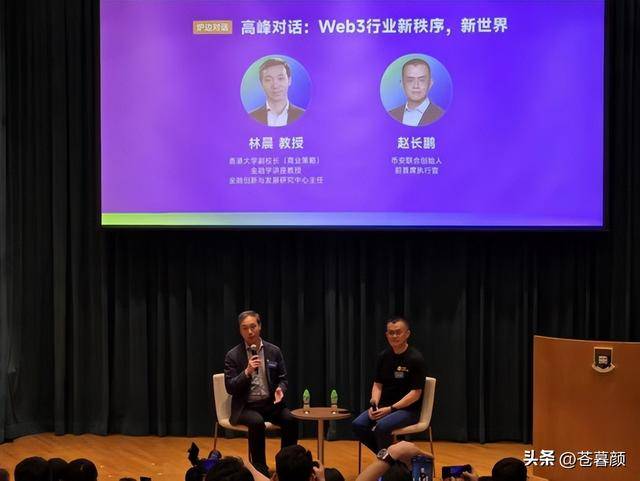
Group 1 - Zhao Changpeng, the founder of Binance, faced a fine of $53.1 billion and a 4-month imprisonment in the U.S. but has since returned to China and gained public attention [1][3] - Despite the challenges, Zhao's wealth remains substantial at $75.3 billion, ranking him 22nd globally [3] - Zhao's journey from a modest immigrant background to becoming a billionaire in the cryptocurrency space exemplifies a classic entrepreneurial adventure [5][9] Group 2 - Zhao's early career included programming roles at the Tokyo Stock Exchange and Bloomberg, which provided him with valuable insights into financial markets [7][11] - In 2017, Zhao founded Binance, which quickly became a leader in the cryptocurrency sector, raising $15 million within 10 days and achieving a net profit of $7.5 million in three months [13][15] - Binance's peak trading volume reached $76 billion, showcasing Zhao's ability to transform a nascent market into a global trading powerhouse [15] Group 3 - Following regulatory scrutiny, Zhao relocated Binance's operations online and faced multiple legal challenges in the U.S., leading to his decision to surrender [19][21] - The hefty fines paid by Zhao allowed Binance to continue operations and transition into a compliant entity, marking a strategic shift in its business model [21][23] - Zhao's imprisonment was atypical, as he experienced a relatively lenient confinement, and his wealth continued to grow during this period [24][26] Group 4 - The changing regulatory landscape in the U.S. and globally has positioned Zhao and Binance as significant players in the evolving cryptocurrency market [28][30] - Zhao's recent engagements, including discussions with Eric Trump, highlight the shifting dynamics of power and influence in the cryptocurrency sector [30][32] - Despite stepping down as CEO, Zhao remains the largest shareholder of Binance and continues to influence its direction amid ongoing legal challenges [32][33]