
绿色低碳转型

Search documents
煤化工:“组合拳”打出新天地
Zhong Guo Hua Gong Bao· 2026-01-05 02:22
Core Viewpoint - The "Work Plan for Stable Growth in the Petrochemical Industry (2025-2026)" emphasizes expanding effective investment, promoting transformation and upgrading, and scientifically regulating major project construction while controlling the total capacity and enhancing quality in the coal chemical industry [1] Group 1: Industry Development - The modern coal chemical industry in China has seen rapid development, achieving significant progress in technological innovation, scale expansion, and layout optimization, forming a robust coal-based energy chemical industry system [2] - Major coal-to-oil and coal-to-natural gas projects led by state-owned enterprises are being launched or planned in resource-rich areas such as Xinjiang, Inner Mongolia, and Shaanxi [2] - The first phase of the China Datang Fuxin coal-to-natural gas project has entered full construction, highlighting the importance of ensuring national energy security due to high dependence on foreign oil and gas [2] Group 2: Product Diversification and Upgrading - Companies are focusing on product diversification and high-end development, accelerating the extension and strengthening of the modern coal chemical industry chain, particularly in fine chemicals and new materials [2] - The Xi'an Chemical Company is developing high-end fine chemicals and new materials based on synthetic ammonia and ammonium nitrate, filling local market gaps [3] Group 3: Carbon Emission Reduction - Coal chemical production is a significant source of carbon emissions, with over 70% of synthetic ammonia and methanol production relying on coal [4] - The successful injection of carbon capture and storage (CCS) in a pilot project marks a significant step in large-scale carbon capture applications in the modern coal chemical sector [4] Group 4: Coupling with New Energy - The coupling of coal chemical processes with new energy sources is seen as a critical strategy for achieving low-carbon development [5] - By the end of 2024, domestic green methanol projects are expected to have a total capacity exceeding 750,000 tons, with significant green hydrogen demand [5] - Major projects, such as the world's largest green hydrogen ammonia project and the first fully autonomous carbon hydrogen green methanol project, are being developed to support this transition [5][6] Group 5: Future Trends - The majority of coal chemical product capacities are saturated, indicating limited potential for large-scale development [6] - The integration of coal chemical processes with new energy to create a "green electricity - green hydrogen - coal chemical" industrial chain is becoming a prevailing trend, aiding in carbon reduction while facilitating local consumption of new energy [6]
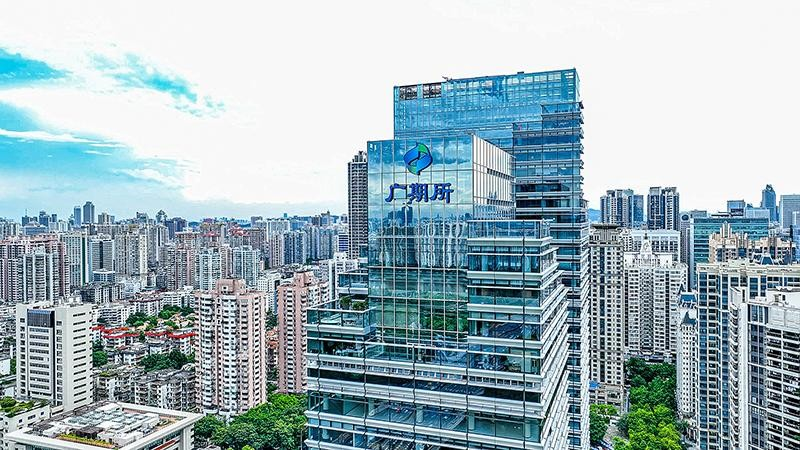
广期所:以绿色期货之笔 书写服务实体经济崭新篇章
Zheng Quan Shi Bao Wang· 2026-01-05 01:33
Core Viewpoint - The company emphasizes its commitment to green development and aims to enhance its role in supporting the green low-carbon transition and the construction of the Guangdong-Hong Kong-Macao Greater Bay Area, aligning with national strategies and initiatives [2][4]. Group 1: Green Development Initiatives - In 2025, the company plans to solidify its position in green commodities by launching futures and options for platinum and palladium, expanding its offerings in the new energy metal futures sector [3]. - The correlation of spot prices for industrial silicon, lithium carbonate, and polysilicon reached 0.99, 0.97, and 0.94 respectively, indicating strong market integration and the importance of these commodities in the global new energy pricing [3]. - The company has introduced qualified foreign institutional investors (QFII) to participate in trading of industrial silicon, lithium carbonate, and polysilicon, enhancing international cooperation and expanding its green finance network [3]. Group 2: Strategic Goals and Future Plans - The company aims to deepen its commitment to green development by focusing on innovation in commodity offerings, particularly in new energy, new materials, and carbon emissions [4]. - Plans include the development of weather-related futures and research into carbon futures to better align with industry needs [4]. - The company will enhance its market services through the "Assist Green to New" industry service plan, expanding its reach to more entities in the real economy [4]. Group 3: Operational Excellence and Risk Management - The company has been recognized by the China Securities Regulatory Commission as a qualified central counterparty (QCCP), aligning its operations with international standards and enhancing its risk management capabilities [3]. - The focus will remain on maintaining a robust risk management framework while promoting high-quality development and ensuring stable market operations [4][5].

八大交易所,最新发声!
Zheng Quan Shi Bao· 2026-01-05 00:44
Core Viewpoint - The "15th Five-Year Plan" marks a new journey for China's capital markets, emphasizing high-quality development and reform to support the modernization of the economy [2][5]. Group 1: Shanghai Stock Exchange (SSE) - SSE aims to enhance market stability and maintain a focus on risk prevention, strong regulation, and promoting high-quality development [3][4]. - The exchange has become the third-largest stock market globally and the largest bond market, with a strong position in ETF and options trading [3]. - SSE plans to leverage the Sci-Tech Innovation Board as a testing ground for reforms and to attract resources to strategic emerging industries [4]. Group 2: Shenzhen Stock Exchange (SZSE) - SZSE is committed to supporting the Guangdong-Hong Kong-Macao Greater Bay Area and aims to become a world-class exchange by 2035 [6][7]. - The exchange will enhance its institutional adaptability and promote the development of high-quality innovative companies [7]. - SZSE emphasizes the importance of investor returns and aims to strengthen the coordination of investment and financing [8]. Group 3: Beijing Stock Exchange (BSE) - BSE expresses gratitude to the Securities Times for its support in promoting the development of the new third board market [9]. - The exchange aims to enhance its role in capital market reform and development through collaboration with media and stakeholders [9]. Group 4: Shanghai Futures Exchange (SHFE) - SHFE focuses on enhancing product functionality and supporting the modernization of industrial systems [11]. - The exchange has expanded the range of products available for qualified foreign institutional investors (QFII) and aims to strengthen its international presence [11]. - SHFE is committed to maintaining market stability and protecting investor rights through robust risk management [12]. Group 5: Zhengzhou Commodity Exchange (ZCE) - ZCE emphasizes the importance of serving the real economy and enhancing its regulatory framework [13][14]. - The exchange plans to develop new products and deepen its service capabilities to support national strategies [14]. - ZCE aims to strengthen investor education and improve market communication to foster a rational investment environment [15]. Group 6: Dalian Commodity Exchange (DCE) - DCE has successfully launched new futures products and enhanced its risk management tools [17]. - The exchange is expanding its international reach by increasing the number of products available to foreign investors [17]. - DCE is focused on digital transformation to improve service quality and operational efficiency [17]. Group 7: China Financial Futures Exchange (CFFEX) - CFFEX aims to enhance its service to the real economy and improve market resilience through effective risk management [19][20]. - The exchange is committed to strengthening its regulatory framework and promoting long-term capital market stability [19]. - CFFEX plans to collaborate with media to effectively communicate the role of capital markets in supporting the economy [20]. Group 8: Guangzhou Futures Exchange (GFEX) - GFEX is dedicated to promoting green development and supporting the transition to a low-carbon economy [21][23]. - The exchange has successfully launched new green products and aims to enhance its international cooperation [22][23]. - GFEX plans to focus on product innovation and deepen its market services to better meet industry needs [23][24].
这些“首个”,提升能源“含绿量”
Jing Ji Ri Bao· 2026-01-05 00:32
Group 1 - The first "Shagouhuang" new energy delivery base in China is making progress, with a 6 million kilowatt renewable energy project in Xinjiang expected to be connected to the grid by December 25, 2025, delivering green electricity over long distances [1] - The Xinjiang Tianshan North Foothill Gobi Energy Base, developed by China Huadian, is a key project under the "14th Five-Year Plan" aimed at enhancing large-scale wind and solar power generation in desert and Gobi regions [1] - The base is projected to generate over 20 billion kilowatt-hours annually, meeting the electricity needs of nearly 10 million households in Chongqing [1] Group 2 - The Huadian Jinshang Yebatan Hydropower Station, located at the highest altitude in China, has officially begun operations with a total installed capacity of 2.24 million kilowatts and a maximum dam height of 217 meters [2] - The project utilizes intelligent temperature control technology to enable continuous concrete pouring for 40 months, overcoming challenges posed by high altitude and cold weather [2] - Once fully operational, the hydropower station is expected to save approximately 3.1 million tons of standard coal and reduce carbon dioxide emissions by over 8.3 million tons annually [2] Group 3 - The Deqingha PEM electrolysis hydrogen production project, supported by stable green electricity, is set to achieve commercial operation in 2025, marking China's first green hydrogen project in high-altitude, cold regions [3] - The project utilizes a domestic first single-stack megawatt-level PEM electrolysis system, achieving significant advancements in key materials and system integration [3] - China Huadian is actively promoting the development of a new energy system and aims to enhance the proportion of clean and low-carbon energy, with renewable energy installed capacity exceeding 100 million kilowatts [3]
再生材料应用推广路线图明确
Jing Ji Ri Bao· 2026-01-04 22:34
Group 1 - The core viewpoint of the news is the release of the "Recycled Materials Application Promotion Action Plan," which aims to enhance the supply capacity, application intensity, management systems, and promotion policies for recycled materials, establishing a clear roadmap for increasing the application ratio of recycled materials [1][2] - The plan emphasizes the importance of promoting recycled materials as a key pathway for achieving green and low-carbon transformation, resource security, and carbon peak and neutrality goals [1][2] - China has established the world's largest and most comprehensive resource recycling and reuse system, with significant annual processing capacities for various recycled materials, including 180 million tons of scrap steel, 63 million tons of recycled pulp, 16.4 million tons of recycled plastics, and 19.15 million tons of major recycled non-ferrous metals [1][2] Group 2 - The "Action Plan" focuses on key sectors such as steel, non-ferrous metals, plastics, and paper, with targets set for 2030, including recycling volumes of over 300 million tons of scrap steel and 8 million tons of waste paper, and annual production of over 25 million tons of recycled non-ferrous metals and 19.5 million tons of recycled plastics [2] - The plan identifies specific industries, including automobiles, electronics, textiles, and packaging, as priorities for the application of recycled materials, encouraging leading enterprises to develop implementation plans for promoting recycled materials [2][3] - The initiative aims to provide new directions for developing new productive forces, align with international trade trends, and create new scenarios for promoting a green and low-carbon lifestyle [2]
长源电力拟投建松滋100MW风电项目 提高清洁能源比重
Zheng Quan Shi Bao Wang· 2026-01-04 14:27
1月4日,长源电力(000966)公告称,公司拟在湖北省松滋市新设项目公司,并由新设公司为主体投资 建设国能长源松滋市八宝镇100MW风电场项目,项目规划装机容量10万千瓦,静态总投资5.62亿元(含 配套储能、送出工程),动态总投资5.72亿元(含配套储能、送出工程),预计资本金内部收益率7.33%。 长源电力认为,该项目的建设有利于提高公司清洁能源比重,优化公司电源结构,投产后可增加公司营 业收入和利润。 在2025年半年报中,长源电力曾透露,公司积极应对电力改革新形势,坚持市场导向,优先发展风电, 择优开发光伏,持续加快绿色低碳转型。报告期内取得50万千瓦风电资源开发权,获配新能源建设指标 15万千瓦,其中风电7万千瓦、光伏8万千瓦。报告期内,公司新能源项目新开工2.0955万千瓦,投产 19.6955万千瓦。预计2025年全年,公司新能源项目发展计划为新开工20万千瓦、投产30万千瓦。 2025年12月17日,长源电力公告称,全资子公司国能长源汉川发电有限公司所属国能长源汉川四期 2×100万千瓦扩建项目7号机组(100万千瓦)顺利通过168小时满负荷试运行,正式投入商业运营。 该项目采用新一代高效超 ...

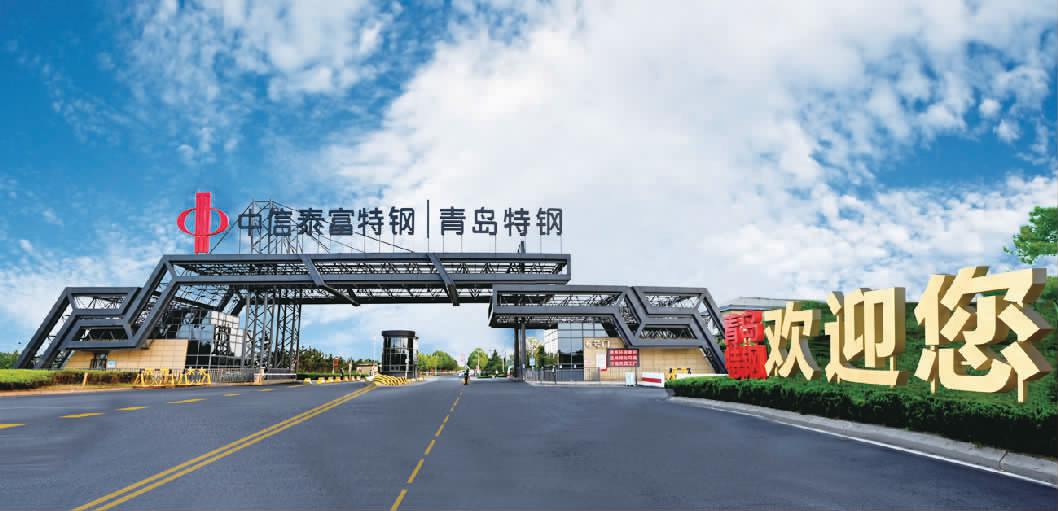
向“绿”而生“智”赢未来——青岛特钢的全链革新与绿色转型之道
Zhong Guo Huan Jing Bao· 2026-01-04 08:40
在国家"双碳"目标的宏伟蓝图下,钢铁工业作为国民经济的重要支柱和碳排放的重点领域,其绿色低碳转型不仅是一道必答题,更是一场关乎未来生 存与发展的深刻革命。 在这场波澜壮阔的变革中,青岛特殊钢铁有限公司(以下简称青岛特钢)作为中信泰富特钢集团实施沿海战略的核心基地与山东省先进钢铁制造业领 军企业,以敢为人先的魄力与智慧,交出了一份以全链革新驱动极致能效、以绿色产品赋能新质生产力的"深绿答卷",为中国钢铁工业的高质量发展 树立了崭新标杆。 系统谋局,精准施策:找到能效提升"最优解" 青岛特钢深刻认识到能效提升是企业实现绿色低碳发展的生命线,是一场需要系统规划、精准投入的全局性战役。当中国钢铁工业协会发起"能效标杆 三年行动"时,青岛特钢迅速响应,将之视为跨越式发展的战略机遇,率先启动了顶层设计。 青岛特钢通过引入外部顶尖专业团队,开展覆盖全流程、全环节的深度能效审计,从"管理、技术、结构"三大维度进行系统性诊断,最终梳理形成107 项详尽的提升措施。其中,既包括47项无需大量固定资产投资的管理优化措施,如优化操作规范、精细化管理流程;也涵盖了60项需要真金白银投入 的固定资产投资项目,如关键设备的节能改造、余热余 ...
尼龙66产能已达150万吨!神马、华峰、天辰等11家企业集体倡议
DT新材料· 2026-01-04 01:36
Core Viewpoint - The article emphasizes the need for the nylon 66 industry to return to rational investment, optimize capacity layout, and enhance technological competitiveness to achieve sustainable development and address potential market risks [1][2]. Industry Challenges - The nylon 66 industry is experiencing rapid capacity expansion due to breakthroughs in domestic production technology for key raw materials, specifically adiponitrile. However, it faces challenges such as overheating investments, intensified homogenization competition, and insufficient innovation [1]. - Structural imbalances in market supply and demand are evident, with a projected total production capacity of 1.5 million tons by the end of 2025, while domestic market demand is only about 800,000 tons, growing at an annual rate of less than 10% [1]. Development Initiative - The "Nylon 66 Industry High-Quality Development Initiative" was jointly signed by 11 companies, including Shennma Industrial Co., Ltd. and Huafeng Group Co., Ltd. This initiative aims to strengthen industry self-discipline, resist vicious price competition, and maintain a transparent and fair market environment [2][3]. - The initiative calls for scientific capacity regulation, rational investment principles, and the promotion of industrial cluster upgrades [2]. Technological Innovation - The initiative stresses the importance of technology-driven innovation, advocating for increased research and development investments in new processes, equipment, and high-performance nylon 66 grades [2]. - Companies are encouraged to collaborate with downstream sectors to develop high-performance modified nylon 66 and composite materials for emerging applications in sectors like new energy vehicles and 5G communications [2]. Sustainability and Quality - The initiative promotes a green and low-carbon transition, enhancing resource utilization efficiency and establishing a high-value recycling system for waste materials [2]. - It also emphasizes the need for a comprehensive quality standard system covering the entire product lifecycle and the implementation of a brand strategy focused on technology and quality [2].

调整部分商品关税税率税目——我国持续扩大高水平对外开放
Jing Ji Ri Bao· 2026-01-03 22:16
Core Viewpoint - The "2026 Tariff Adjustment Plan" aims to scientifically adjust import provisional tax rates, optimize tariff categories, and continue implementing agreement and preferential tax rates, which will support the development of new productive forces and meet the growing needs of the people while promoting high-quality development [1]. Group 1: Import Provisional Tax Rate Adjustments - The plan will implement provisional tax rates lower than the most-favored-nation rate for 935 items to enhance the linkage between domestic and international markets and expand the supply of quality goods [1]. - Key components include reducing import tariffs on critical components and advanced materials to promote high-level technological self-reliance and the construction of a modern industrial system [1]. - Tariff reductions will also support the green transformation of the economy and society by lowering tariffs on resource-based products like lithium-ion battery recycled black powder [2]. Group 2: Support for Healthcare and Living Standards - The adjustment will lower import tariffs on medical products such as artificial blood vessels and diagnostic kits for certain infectious diseases, reflecting a people-centered development philosophy [2]. - This move is expected to enhance public health and improve the well-being of citizens, particularly in addressing cardiovascular diseases [2]. - The tariff reductions on medical devices and pharmaceuticals aim to increase the supply of quality goods and reduce the medical burden on consumers [2]. Group 3: Optimization of Tariff Categories - The plan will add new tariff categories for emerging products like intelligent bionic robots and bio-aviation kerosene, increasing the total number of tariff categories to 8,972 [3]. - This adjustment will help industries and companies accurately grasp trade data and assess overseas market trends, facilitating the formulation of effective development strategies [3]. - The plan continues to implement agreement rates for certain imported goods from 34 trade partners, promoting regional integration and economic cooperation [3]. Group 4: Support for Least Developed Countries - The plan will maintain zero tariff treatment for 100% of products from 43 least developed countries, supporting their development [3]. - It will also continue to apply preferential tax rates for certain imported goods from countries like Bangladesh, Laos, Cambodia, and Myanmar under relevant trade agreements [3]. - This approach demonstrates China's commitment to responding to global uncertainties with determined policies, showcasing its role as a contributor to global development [3].
加强绿色技术合作共建“一带一路”
Jing Ji Ri Bao· 2026-01-03 22:09
陆洋、林容珍在《团结》2025年第4期《以绿色技术国际合作加强绿色"一带一路"建设》一文中指出, 跨国合作与技术共享是全球实现绿色低碳转型的必由之路,也是绿色"一带一路"的重要内容。发展中国 家普遍面临各类环境问题。如何利用绿色技术、实现绿色技术的转移和转化,推进各国逐步实现绿色转 型,成为共建"一带一路"国家绿色发展的关键性问题。共建"一带一路"国家在生态农业、绿色能源、节 能减排、绿色建筑、应对气候变化需要的环境治理和修复等可持续发展技术领域的转移转化需求与日俱 增。中国在绿色技术国际合作中,一方面作为绿色技术输出方积极支援共建"一带一路"国家以及不发达 国家可持续发展事业,另一方面也迫切需要发达国家的绿色技术转移来推动自身经济社会绿色转型。具 体可在以下几方面重点发力。一是绿色技术转移合作机制研究亟待深化。绿色技术国际合作涉及资金、 人才、法律法规、基础设施等各方面综合配套,需要系统的技术标准评价体系。二是加强绿色技术转移 转化的信息和网络平台搭建,推动共建"一带一路"国家间技术信息共享。三是加强绿色金融对绿色技术 国际合作的支持力度。通过扩展资金来源、保障资金可持续性等手段,完善绿色技术转移资金保障机 ...