通用人工智能(AGI)

Search documents
无预训练模型拿下ARC-AGI榜三!Mamba作者用压缩原理挑战Scaling Law
量子位· 2025-12-15 10:33
Core Insights - The article discusses a new research called CompressARC, which introduces a novel approach to artificial intelligence based on the Minimum Description Length (MDL) principle, diverging from traditional large-scale pre-training methods [1][7][48]. Group 1: Research Findings - CompressARC, utilizing only 76K parameters and no pre-training, successfully solved 20% of problems on the ARC-AGI-1 benchmark [3][5][48]. - The model achieved a performance of 34.75% on training puzzles, demonstrating its ability to generalize without relying on extensive datasets [7][48]. - CompressARC was awarded third place in the ARC Prize 2025, highlighting its innovative approach and effectiveness [5]. Group 2: Methodology - The core methodology of CompressARC revolves around minimizing the description length of a specific ARC-AGI puzzle, aiming to express it as the shortest possible computer program [8][10][23]. - The model does not learn a generalized rule but instead seeks to find the most concise representation of the puzzle, which aligns with the MDL theory [8][9][10]. - A fixed "program template" is utilized, which allows the model to generate puzzles by filling in hardcoded values and weights, thus simplifying the search for the shortest program [25][28]. Group 3: Technical Architecture - CompressARC employs an equivariant neural network architecture that incorporates symmetry handling, allowing it to treat equivalent transformations of puzzles uniformly [38][39]. - The model uses a multitensor structure to store high-level relational information, enhancing its inductive biases for abstract reasoning [40][41]. - The architecture is similar to a Transformer, featuring a residual backbone and custom operations tailored to the rules of ARC-AGI puzzles, ensuring efficient program description [42][44]. Group 4: Performance Evaluation - The model was tested with 2000 inference training steps per puzzle, taking approximately 20 minutes for each puzzle, which contributed to its performance metrics [47]. - CompressARC challenges the assumption that intelligence must stem from large-scale pre-training, suggesting that clever application of MDL and compression principles can yield surprising capabilities [48].


我和辛顿一起发明了复杂神经网络,但它现在需要升级
3 6 Ke· 2025-12-14 23:26
Group 1 - The core idea of the article revolves around the evolution of AI, particularly the contributions of Terrence Sejnowski and Geoffrey Hinton, highlighting the significance of the Boltzmann machine in modern deep learning [1][19] - Sejnowski emphasizes that while AI technology has advanced rapidly, a true understanding of intelligence may require generations of research and patience [6][22] - The conversation touches on the limitations of current AI models, such as ChatGPT, which lack essential components of human cognition, including memory and self-generated thought processes [3][21][38] Group 2 - Sejnowski argues that the current AI models primarily simulate a small part of brain function, specifically the cerebral cortex, and miss out on critical structures like the basal ganglia and hippocampus [4][26][40] - The discussion highlights the need for AI to integrate both cognitive and reinforcement learning, akin to human development, to achieve a more holistic understanding of intelligence [27][28] - The article suggests that understanding the mechanisms of intelligence in various species could lead to a more comprehensive theory of knowledge and understanding, rather than solely focusing on replicating human brain functions [51][52]
英媒:美国All in AI,中国多线下注,美国可能输得更多
Xin Lang Cai Jing· 2025-12-14 15:39
Core Viewpoint - The article warns that while the U.S. is heavily investing in AI, it may win the AI race but lose broader economic dominance, as the approach is overly focused on AI at the expense of diversifying investments in other critical technologies [1][2]. Investment Trends - U.S. tech companies have invested over $350 billion in AI-related infrastructure in the past year, with projections to exceed $400 billion by 2026, significantly outpacing China's investment of nearly $100 billion [2]. - The article highlights that while the U.S. is betting heavily on AI, China is taking a more diversified and pragmatic approach, investing in various sectors such as electric vehicles, batteries, and renewable energy [3][7]. Strategic Differences - The U.S. tech industry is characterized by a high concentration of investment in AI, which may lead to collective blind spots and increased risks due to the monopolistic structure [3][8]. - In contrast, China's strategy involves a broader investment in multiple future technologies, with significant capital expenditures projected to reach $940 billion in clean energy by 2024, overshadowing AI investments [7]. Cultural and Economic Factors - The article suggests that Silicon Valley's obsession with AI may stem from cultural factors, where there is a tendency to over-invest in new ideas, and from an economic perspective, spending on projects is preferred over stock buybacks [8][9]. - There is a concern that the substantial investment in AI by U.S. tech giants may serve to reinforce their monopolistic positions rather than genuinely advance human welfare [9].

“当美国孤注一掷AI时,中国正赢得多场科技赛跑”
Guan Cha Zhe Wang· 2025-12-14 08:47
Core Viewpoint - The article warns that while the U.S. is heavily investing in AI, it may win the AI race but lose broader economic dominance, as the U.S. is betting everything on AI while China diversifies its investments across various technologies [1][2]. Investment Trends - U.S. tech companies have invested over $350 billion in AI-related infrastructure in the past year, with projections to exceed $400 billion by 2026, significantly outpacing China's nearly $100 billion total investment in AI [2]. - In contrast, China is investing heavily in other sectors such as electric vehicles, batteries, and renewable energy, which may yield more stable returns compared to the speculative nature of AI investments [3][7]. Strategic Differences - The U.S. approach to AI is characterized by a focus on proprietary models and a belief in the transformative potential of AGI, while China adopts a more pragmatic stance, viewing AI as a tool for industrial efficiency rather than a path to superintelligence [6][7]. - China is also investing approximately $9.4 trillion in clean energy capital expenditures in 2024, overshadowing its AI investments, indicating a broader strategic focus [7]. Risks and Market Dynamics - The concentration of investment in a few major U.S. tech companies raises concerns about collective blind spots and the potential for market instability, as these companies dominate decision-making in AI investments [5][8]. - The article suggests that the narrative of an AI race serves as a lobbying tool for the U.S. tech industry, justifying high levels of spending while neglecting investments in other critical areas like clean energy [8][9]. Cultural and Economic Factors - The article posits that cultural factors in Silicon Valley may lead to excessive investment in new ideas, while economically, spending on tangible projects is often preferred over stock buybacks [8]. - There is a darker interpretation that the significant investment in AI by tech giants may be a strategy to reinforce their market dominance and prevent competition from startups, rather than a genuine commitment to advancing human welfare [9].

智元、宇树罕见同台炫技,上海具身智能加速产业落地
Di Yi Cai Jing· 2025-12-13 15:01
Core Insights - The event serves as a "high-pressure test" for the commercialization capabilities of humanoid robots, with significant developments expected in 2025, which is viewed as a critical year for the industry [1][4] - The competition features various scenarios that encompass the integration of robots into human life, highlighting the need for practical applications rather than mere demonstrations [4][5] Group 1: Event Overview - The Global Developer Pioneer Summit and International Embodied Intelligence Skills Competition (GDPS 2025) opened in Shanghai, showcasing collaborations between companies like Zhiyuan and Yushu [1] - The event includes six thematic tracks and multiple scenarios, focusing on the practical application of humanoid robots in various fields [4] Group 2: Technological Developments - In 2023, over ten new humanoid robot products were launched, with breakthroughs in key technologies such as edge-side chips and intelligent modules [7] - The first humanoid robot mass production factory in Shanghai, operated by Zhiyuan, aims for an annual production capacity of around 10,000 units, marking a significant milestone in the industry [8] Group 3: Industry Applications - The competition features various applications, including industrial assembly, emergency rescue, and home service tasks, emphasizing the need for robots to perform in complex environments [5][4] - Shanghai's strategic focus on humanoid robots has led to the establishment of a robust ecosystem, with major international industrial robot manufacturers present in the region [5][7] Group 4: Future Goals and Plans - Shanghai aims to achieve breakthroughs in core algorithms and technologies related to embodied intelligence by 2027, with a target of over 20 significant advancements [10] - The city plans to create high-quality incubators and promote innovative application scenarios, with a goal of exceeding 50 billion yuan in the core industry scale [10][11]

【李彦宏接受《时代》专访 揭示中国特色的技术落地之路】
Sou Hu Cai Jing· 2025-12-13 14:19
Core Insights - The article highlights the differing paths of AI development between China and the United States, emphasizing that China's approach is driven by practical applications rather than the pursuit of "superintelligence" [1][2] - China's AI growth is rooted in its status as a manufacturing powerhouse, focusing on real-world applications that enhance efficiency and reduce costs in various industries [1][2] Group 1: China's AI Development - China's AI development is characterized by an "application-driven" strategy, where specific needs in industries guide the creation of AI models, such as Baidu's Wenxin model tailored for targeted applications [1] - The core motivation for AI in China stems from tangible demands, such as reducing waste in production lines and optimizing supply chains, which provide clear value creation [1][2] - Baidu's initiatives, like the "Famu Intelligent Body," exemplify the focus on finding optimal solutions in real industrial scenarios, showcasing the practical application of AI technology [1] Group 2: Comparison with U.S. AI Development - In contrast, the U.S. AI development emphasizes foundational scientific exploration and the pursuit of general artificial intelligence (AGI), investing heavily in chip architecture and algorithm breakthroughs [2] - The U.S. approach aims for a "one model fits all" strategy, which, while pushing the boundaries of technology, differs significantly from China's pragmatic focus on industry-specific solutions [2] - The article suggests that the winner in the global AI competition will be determined by who can integrate AI as an "inherent capability" within enterprises to solve real problems [2]

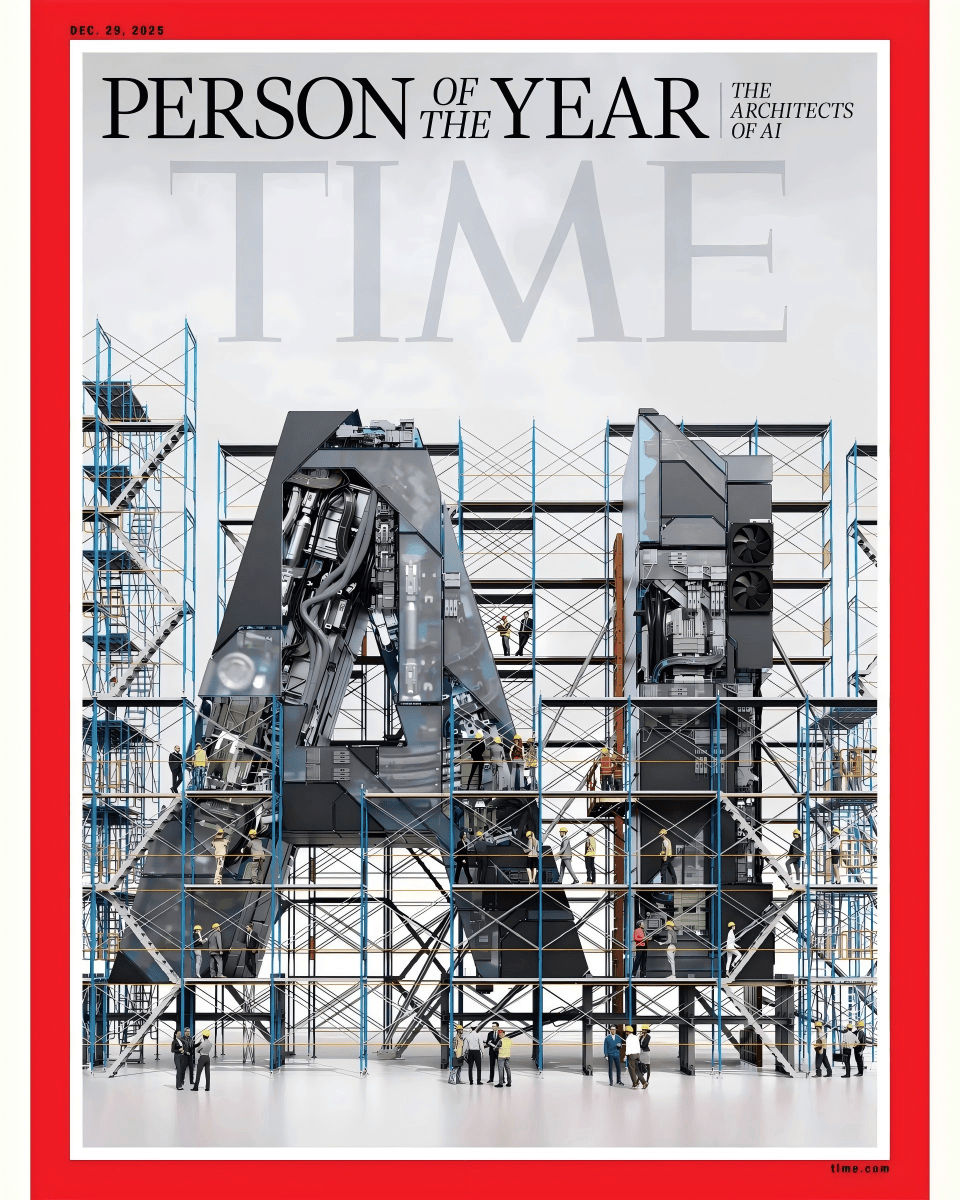
巨亏120亿,阿尔特曼的“大而不能倒”还能演多久?
3 6 Ke· 2025-12-13 00:04
Core Viewpoint - OpenAI is facing significant challenges, including a quarterly loss of $12 billion and losing market share to competitors like Anthropic, raising concerns about its sustainability and the narrative of being "too big to fail" [1][34]. Group 1: Financial Performance and Market Position - OpenAI reported a staggering loss of $12 billion in the last quarter, which has raised alarms about its financial health and sustainability [34]. - The company has seen its share of the enterprise large language model (LLM) market drop from 50% to 25% within two years, while Anthropic has surged to a 32% market share [18][24]. - OpenAI's revenue projections show a rapid increase from $1 billion in 2023 to an expected $100 billion by 2029, but the feasibility of achieving such growth remains uncertain [30]. Group 2: Competitive Landscape - Google and DeepMind are identified as the most formidable competitors to OpenAI, with Google significantly improving its AI offerings and market position [9][10][14]. - Anthropic has become the leader in the enterprise AI market, with its model Claude rapidly gaining traction among developers, outperforming OpenAI's offerings [18][24]. - The competition is intensifying, with Google expected to further challenge OpenAI's market share by 2026 [17]. Group 3: Strategic Partnerships and Government Contracts - OpenAI has secured a $200 million contract with the U.S. Department of Defense, which is viewed as more valuable than its consumer subscription revenue, highlighting the importance of large contracts in the AI sector [24]. - The company is diversifying its revenue streams by exploring B2B opportunities, as reliance on consumer subscriptions may not be sustainable in the long term [25]. Group 4: Leadership and Governance Issues - Concerns have been raised about CEO Sam Altman's leadership style and transparency, with allegations of dishonesty affecting the board's confidence in his ability to lead [26][31]. - Internal conflicts within OpenAI's leadership have been documented, indicating potential governance issues that could impact the company's future [27][31].


地平线苏菁:智驾又要进入苦日子阶段,这一代深度学习技术可能碰到天花板了
Xin Lang Cai Jing· 2025-12-12 14:19
公开资料显示,苏箐曾担任华为车 BU 智能驾驶产品部部长,负责华为自动驾驶系统方案。2022 年 1 月,苏箐正式从华为离职。同年 10 月,苏箐加入地平 线。 苏菁称,关于特斯拉 FSD V12 到底是不是最强的问题,业内争议很大,但这个问题不重要,重要的是 FSD V12 证明了一段式端到端技术的可行性,推动智 驾技术范式从规则驱动转向数据驱动。他认为,一段式端到端在智驾行业的普及将带来两大趋势的行业演进。 一是智驾系统会在未来几年内越来越"类人",这将使 L2 级辅助驾驶迎来巨大的发展红利期,城区辅助驾驶将逐步普及到 10 万元级别车型。 二是 L2 和 L4 级别的智驾方法论统一,同样的开发范式,不仅能提升 L2 辅助驾驶体验,同时也能以更低的部署成本和几乎无限制部署区域扩张,落 地一个 L4 系统(Robotaxi)。 2024年,以FSD V12成熟为标准, 智能驾驶迎来内在底层技术 范式与外部用户感知体验的一次 重构。其意义,堪比核能从理论 迈入工程。 苏 等 地平线副总裁兼首席架构师 2025 地平线技术生态大会 HORIZON 75 TOGETHER Z IT之家 12 月 12 日消息,据 ...
率先跑通行业级AGI,酷特智能升级「中国智造」
36氪· 2025-12-12 13:51
Core Viewpoint - The article discusses the emergence of Artificial General Intelligence (AGI) and its potential to revolutionize the "Made in China" industry, highlighting the case of Kute Intelligent, a company that has successfully integrated AGI into its operations [2][3][8]. Industry Overview - The AI industry has experienced rapid expansion, with a clear shift towards AGI, as evidenced by significant investments, such as the $100 billion valuation placed on AGI by OpenAI and Microsoft [2]. - China's smart manufacturing industry has surpassed 4.5 trillion yuan, indicating a rapid digital transformation in manufacturing [3]. - Kute Intelligent has evolved from a personalized clothing customization company to a C2M (Customer to Manufacturer) AI technology enterprise, marking a significant shift in its operational model [3][4]. Kute Intelligent's Innovations - Kute Intelligent has developed a new paradigm for enterprise AI applications, consisting of a digital enterprise operating system, intelligent enterprises, and clusters of intelligent enterprises, creating a closed-loop system for AI-driven management [4][11]. - The core products of Kute Intelligent's operating system include: - Kuxiaogong (AI Designer) for automating the design process based on customer input [5]. - Kuxiaoyi (AI Operations Assistant) for task management and progress monitoring [5]. - Kuxiaozhi (AI Organizational Architect) for optimizing enterprise processes and governance [5]. - These products work together to create a flexible manufacturing intelligence hub, enabling companies of various sizes to leverage AGI effectively [5][6]. Practical Applications and Results - Kute Intelligent's approach has demonstrated that embedding AI throughout the production and management chain can yield significant benefits, with management costs reduced by over 50% and overall efficiency improved by more than 20% [8]. - The company has established a credible PDCA (Plan-Do-Check-Act) loop for R&D, ensuring that technological advancements are grounded in real operational scenarios [7][8]. Future Trends and Market Potential - The global flexible manufacturing market is projected to reach 1.8 trillion yuan by 2030, with China accounting for 35% of this market, indicating a growing demand for customized manufacturing solutions [14]. - Kute Intelligent aims to build 100 intelligent enterprise clusters, serving 500,000 people, and is actively pursuing partnerships to enhance its market presence [21][24]. Conclusion - Kute Intelligent's journey reflects a broader trend in the manufacturing sector, where the integration of AGI is seen as a pathway to not only optimize production but also to fundamentally reshape industry structures and supply chains [26].


谷歌:通用人工智能(AGI)技术安全保障方法研究报告
欧米伽未来研究所2025· 2025-12-12 13:43
Core Viewpoint - The report by DeepMind emphasizes the need for a proactive technical approach to ensure the safety and security of Artificial General Intelligence (AGI), moving away from traditional "observe-mitigate" strategies to a more robust defense system against potential extreme risks [1][10]. Group 1: Evidence Dilemma and Defense Logic - The report addresses the "evidence dilemma" in future technology security planning, where definitive proof of the necessity for defense measures is often absent until catastrophic consequences occur [2]. - DeepMind establishes foundational assumptions, asserting that current deep learning paradigms will dominate AI capability development in the foreseeable future, with no clear "human ceiling" on AI system capabilities [2]. - The report warns that as AI begins to engage in scientific research, technological advancements may enter a self-reinforcing "acceleration phase," significantly compressing the time window for human society to identify and respond to new risks [2]. Group 2: Risk Classification - DeepMind categorizes potential risks into four main types: Misuse, Misalignment, Mistakes, and Structural Risks, with a focus on Misuse and Misalignment due to their association with malicious intent [3]. Group 3: Dual Defense System - The report outlines a dual defense system to address two distinct threat sources: malicious human use of AI capabilities and the misalignment of AI system goals [4][6]. - For "misuse" risks, DeepMind proposes a practical engineering approach centered on "blocking threat actors from accessing dangerous capabilities," utilizing a "frontline security framework" to assess and manage model risks [4]. - The report emphasizes strict access controls and leak prevention mechanisms to protect core assets, alongside comprehensive deployment defenses such as post-training safety fine-tuning and real-time monitoring [4]. Group 4: Addressing Misalignment Risks - DeepMind introduces two lines of defense against "misalignment" risks: building aligned models and defending against misaligned models [6]. - The first line involves "Amplified Oversight," where AI assists human oversight of AI outputs, transforming complex validation issues into manageable human judgment tasks [6]. - The second line incorporates a "zero trust" philosophy, assuming models may be misaligned and constructing systems that limit potential harm even if the model harbors malicious intent [7]. Group 5: Verification and Transparency - A significant contribution of the report is the introduction of "Safety Cases," requiring developers to provide structured arguments proving the safety of AGI systems in specific deployment environments [8]. - The report highlights the importance of "explainability" research, advocating for a deeper understanding of model decision-making processes to enhance safety verification [8]. - Additional supportive measures include designing agents that seek human feedback in uncertain situations and filtering training data to reduce misalignment risks from the outset [9]. Group 6: Conclusion - The report serves as a technical declaration from Google DeepMind, providing a detailed engineering framework for taming the potential rise of superintelligent AI, aiming to illuminate a safe path for humanity amidst the pursuit of technological extremes [10].