端侧AI

Search documents
小米高管解读Q3财报:本周应可提前完成“超35万台汽车交付”的目标
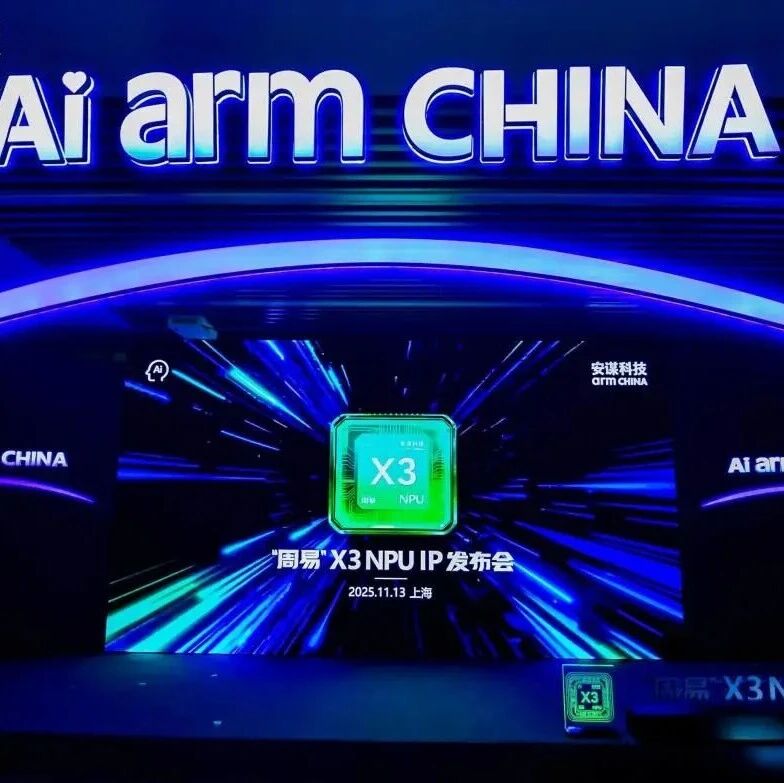
Xin Lang Ke Ji· 2025-11-18 16:09
Financial Performance - Xiaomi Group reported total revenue of 113.1 billion yuan for Q3 2025, representing a year-on-year increase of 22.3% [1] - The net profit reached 12.3 billion yuan, showing a significant year-on-year growth of 129.5% [1] - Adjusted net profit, based on non-IFRS measures, was 11.3 billion yuan, reflecting an 80.9% increase year-on-year [1] Mobile Business Insights - The management anticipates a prolonged cycle of rising memory costs, primarily driven by demand from AI high-performance computing [2][3] - The current memory cost increase is expected to significantly impact the gross margins of mobile devices, tablets, and laptops due to the high proportion of storage costs [3][4] - Xiaomi has been focusing on product structure optimization and high-end product development to mitigate the impact of rising costs [4][8] Automotive Business Developments - Xiaomi's automotive delivery volume has been steadily increasing, with over 400,000 units delivered in just 18 months since the product launch [5][6] - The company aims to exceed its initial delivery target of 350,000 units for the year, with recent improvements in delivery efficiency [6] - The management is optimistic about maintaining healthy gross margins despite potential impacts from subsidies and market competition [9] IoT and AI Strategy - Xiaomi's IoT connections have surpassed 1 billion, with a year-on-year growth rate exceeding 20% [10] - The company has unified its operating systems into a single platform, "Surge OS," to enhance connectivity across devices [10] - Xiaomi is focusing on integrating AI capabilities into its smart home ecosystem, aiming for a more interactive user experience [10][11] Home Appliance Sector - The company is adapting to the withdrawal of government subsidies by enhancing product quality and maintaining a healthy average selling price (ASP) [12][14] - Xiaomi has launched its first smart home appliance factory in Wuhan, which is equipped with advanced automation and AI technologies [13][14] - The long-term goal remains to position Xiaomi among the top players in the home appliance market by 2030 [14]
艾为电子拟发行19亿元可转债 聚焦全球研发中心及三大芯片项目
Xin Lang Cai Jing· 2025-11-18 10:54
Core Viewpoint - Shanghai Aiwei Electronics Technology Co., Ltd. plans to raise up to 1.901 billion yuan through the issuance of convertible bonds to enhance its R&D capabilities and expand its presence in emerging markets such as AI and automotive electronics [1][2]. Fundraising Projects Focused on Technology Upgrade and Capacity Expansion - Of the total funds raised, 1.224 billion yuan will be allocated to the "Global R&D Center Construction Project," with the remaining funds directed towards three major chip R&D and industrialization projects. The R&D center will be located in Xinzhuang, Minhang District, Shanghai, covering approximately 32,700 square meters [2]. - The project aims to address issues related to dispersed facilities and insufficient R&D equipment, with an expected increase in R&D personnel in Shanghai to 657 by the end of 2028, providing an average lab area of 11.21 square meters per person [2]. Three Major Chip Projects Targeting High-Growth Sectors - The End-Side AI and Supporting Chip Project aims to develop MCU+NPU, DSP+NPU chips, with a post-tax internal rate of return (IRR) of 19.63%. The Automotive Chip Project focuses on audio amplifiers and power management products, targeting smart cockpit needs, with an IRR of 18.51% [3]. - The Motion Control Chip Project targets products such as haptic drives and camera motor drives, with an IRR of 19.76%. The company emphasizes that these projects will upgrade existing products in terms of process nodes and application areas, with some products competing against international manufacturers like TI and ST [3]. Financing Scale and Financial Status Alignment - As of September 2025, the company's debt-to-asset ratio is 20.45%, with cash and trading financial assets totaling approximately 2.665 billion yuan. The non-capital expenditure ratio of the raised funds is 29.75%, meeting regulatory requirements [4]. - The three major chip projects are expected to have an internal rate of return between 18.51% and 19.76%, with an investment payback period of around six years. The company adopts conservative assumptions for pricing and sales volume, indicating a high overall feasibility [4]. Steady Business Growth and Increased R&D Investment - From 2022 to 2024, the company's revenue is projected to grow from 2.09 billion yuan to 2.933 billion yuan, with a compound annual growth rate of 18.48%. The net profit attributable to the parent company is expected to turn from a loss of 53 million yuan to a profit of 255 million yuan, with a gross margin recovery to 30.43% [5]. - The company states that the issuance of convertible bonds does not involve financial investments, and all fundraising projects are aligned with its core business. Previous fundraising projects have been completed as planned, with no significant adverse impact on the current fundraising [5].

产业需求爆发前夜,普冉股份控股诺亚长天补齐存储芯片版图
2 1 Shi Ji Jing Ji Bao Dao· 2025-11-18 10:28
Core Viewpoint - The company, Purun Semiconductor (Shanghai) Co., Ltd., is acquiring a controlling stake in Zhuhai Noah Changtian Storage Technology Co., Ltd. to enhance its storage portfolio amid profit pressure in its main business [1][6]. Group 1: Acquisition Details - Purun plans to invest 144 million yuan to acquire 31% of Noah Changtian, increasing its stake from 20% to 51% [1]. - The acquisition targets Noah Changtian's 100% ownership of SkyHigh Memory Limited (SHM), which serves as a holding platform for the acquisition [1]. Group 2: Strategic Intent - The acquisition aims to integrate Purun's existing NOR Flash and EEPROM business with SHM's NAND flash product line, creating a comprehensive non-volatile storage product portfolio [2]. - SHM specializes in high-performance 2D NAND and related memory products, with applications in various sectors including industrial control and smart devices [2][3]. Group 3: Market and Financial Insights - SHM reported revenue of 687 million yuan and a net profit of 47.49 million yuan for the first eight months of 2025, indicating its independent profitability [2]. - Purun's main revenue comes from the Chinese market, while SHM's revenue is primarily from overseas, allowing for effective sales channel complementarity [3]. - Purun ranks sixth globally in NOR Flash sales, with a record shipment of over 4.9 billion units in 2024 [3]. Group 4: Industry Context - The global SLC NAND market is projected to grow from $2.31 billion in 2024 to $3.44 billion by 2029, driven by demand from AI and automotive sectors [4]. - The NAND Flash market is experiencing structural shortages due to rising AI storage demands and insufficient HDD supply, expected to last until 2026 [7]. - Current market dynamics suggest that existing suppliers will maintain stable positions due to high entry barriers and long validation cycles for new entrants [7].

公司问答丨恒烁股份:公司的NOR Flash存算一体芯片目前还未量产
Ge Long Hui A P P· 2025-11-18 09:09
Group 1 - The core viewpoint is that 恒烁股份 is the only company in A-shares producing NOR Flash memory chips integrated with computing capabilities, and it is currently not in mass production [1] - 恒烁股份 has been asked about its strategy to seize opportunities in the $26 billion edge AI market [1]

东方财富证券:国产算力链景气度有望提升 AI硬科技仍是核心投资主线
智通财经网· 2025-11-18 06:50
Group 1: North American Computing Power - North American cloud vendors are expected to increase capital expenditure to over $600 billion by 2026, indicating a strong growth trajectory for computing power investments and infrastructure development [1] - The demand for AI commercial realization is being driven by open interconnectivity and power cost reduction, validating the rationale for computing power investments [1] - The rise in power consumption per card/cabinet in North America highlights the importance of power supply assurance for cloud computing capacity [1] Group 2: Domestic Computing Power - Domestic AI infrastructure is anticipated to grow rapidly by 2026, driven by continuous upgrades in models and increased capital expenditure from leading cloud vendors and telecom operators [2] - The IDC industry is expected to enter a cyclical turning point due to high demand and improved supply quality, presenting long-term investment value [2] - Structural alpha opportunities are emerging in the industry chain due to the upgrade of network architecture and computing power chips, benefiting segments like optical modules, liquid cooling, switches, and power supplies [2] Group 3: Edge AI - The edge AI market is on the verge of large-scale deployment, supported by policy initiatives and collaboration within the industry chain [3] - The introduction of innovative products, such as MetaAI glasses, is expected to accelerate market growth for edge AI [3] - The combination of policy guidance, ecosystem improvement, and demand growth is likely to create a solid foundation for edge AI, transitioning the industry from thematic catalysts to performance realization [3] Group 4: Telecom Operators - Telecom operators are experiencing a phase of capital expenditure reduction, business structure transformation, and increasing dividend ratios, which enhances their investment appeal [4] - The mature basic telecom business continues to serve as a revenue stabilizer, while cost management and AI integration support profit growth [4] - The rising dividend ratio in a low-interest-rate environment further highlights the value of telecom operators, with potential for continued valuation improvement [4]

算力持续景气,端侧大有可为
East Money Securities· 2025-11-18 06:23
Group 1 - The report highlights the sustained demand for computing power, with significant growth expected in the AI infrastructure sector driven by domestic advancements in computing chips and increased capital expenditure from cloud service providers [2][3]. - The domestic AI infrastructure is anticipated to experience rapid growth by 2026, following a slight dip in expectations due to external factors such as the ban on NVIDIA chips [2]. - The report emphasizes the structural alpha opportunities within the industry, particularly in segments like optical modules, liquid cooling, switches, and power supplies, as the demand for AI computing continues to rise [2]. Group 2 - The report indicates that the terminal AI market is on the verge of significant expansion, with policy support and ecosystem development expected to drive growth in 2026 [3]. - Innovations in products, such as Meta's AI glasses, are likely to accelerate the market penetration of terminal AI applications [3]. - The report suggests that the industry is transitioning from a phase of thematic catalysts to one of performance realization, with the emergence of "hit products" expected to further boost the sector [3]. Group 3 - The telecommunications sector is currently experiencing a phase of capital expenditure reduction, business restructuring, and increasing dividend payouts, which positions it favorably for investors [4]. - The report notes that the telecommunications sector has shown resilience, with profit growth outpacing revenue growth, and a stable or increasing dividend yield in a low-interest-rate environment [4]. - Emerging business areas, particularly in AI and satellite communications, are expected to contribute to a second growth curve for telecommunications companies [4]. Group 4 - The North American AI sector has seen a remarkable increase in capital expenditure, with projections indicating that spending could exceed $600 billion by 2026, driven by robust demand for AI services [12][13]. - The report outlines that the AI computing market is characterized by a dual demand for training and inference, with inference demand expected to surpass training demand in the near future [35][36]. - The report highlights the importance of energy management solutions, such as 800 VDC systems, in addressing the rising power consumption associated with AI data centers [69][70].




安谋科技Arm China“周易”X3 NPU IP,树立端侧AI新标杆!
半导体行业观察· 2025-11-18 01:40
Core Viewpoint - The article discusses the rapid growth of AI computing demand in edge intelligent devices, highlighting the challenges such as limited computing power, bandwidth bottlenecks, and high development thresholds that hinder the large-scale implementation of edge AI. It emphasizes the role of NPU (Neural Processing Unit) as a key driver for the realization of edge AI applications [2]. Group 1: Product Launch and Strategy - On November 13, 2025, Arm China officially launched the "Zhouyi" X3 NPU IP, marking a significant step in its "All in AI" strategy aimed at setting new benchmarks for edge AI computing efficiency [3]. - The release of the "Zhouyi" X3 NPU IP is a critical practice in Arm China's strategic direction for AI development [5]. - Arm China’s Vice President of Product Development, Liu Hao, stated that the company will continue to invest in integrating top-tier R&D resources and providing comprehensive solutions from hardware to software to empower partners' product innovation and commercialization [8]. Group 2: Technical Innovations - The "Zhouyi" X3 features a new DSP+DSA architecture specifically designed for large models, marking a transition from fixed-point to floating-point calculations, thus creating a hybrid architecture [13]. - The NPU supports a flexible computing power configuration ranging from 8 to 80 FP8 TFLOPS, with a single core bandwidth of up to 256GB/s, which, when combined with proprietary decompression hardware, can achieve an additional 15%-20% equivalent bandwidth improvement [15]. - The introduction of W4A8/W4A16 computation acceleration modes significantly reduces bandwidth consumption, facilitating the efficient migration of cloud-based large models to edge devices [17]. Group 3: Software Ecosystem - The "Zhouyi" X3 is equipped with the upgraded Compass AI software platform, which focuses on openness, ease of use, and efficiency, addressing the challenges of adapting to edge AI development [19]. - The platform supports over 160 operators and more than 270 models, including cutting-edge models like LLM, VLM, and MoE, and has open-sourced core components to enhance development efficiency [19]. - The software ecosystem aims to lower the development threshold and improve the overall user experience for AI developers [19]. Group 4: Performance and Applications - The "Zhouyi" X3 demonstrates a performance improvement of 30%-50% in CNN models compared to its predecessor, the X2, with a linear scalability of multi-core computing power reaching 70%-80% [23]. - The NPU is designed to support various AI applications across four core areas: infrastructure, smart vehicles, mobile terminals, and smart IoT, providing robust computing power for diverse AI devices [28][30]. - The NPU's capabilities enable it to handle complex cognitive tasks, marking a transition from single-function implementations to widespread adoption of edge AI [31]. Group 5: Future Directions - Arm China plans to enhance the general computing capabilities and scalability of its NPU architecture, exploring multi-die and multi-chip collaboration technologies [33]. - The company aims to optimize programming models and develop a more user-friendly software interface to support a wider range of data formats and network structures [33]. - Arm China is committed to fostering an open ecosystem and expanding collaboration models to promote efficient deployment of hardware and software [33].

筑牢智能出行技术底座——访高通公司中国区董事长孟樸
Zhong Guo Qi Che Bao Wang· 2025-11-18 00:29
Core Insights - The China International Import Expo (CIIE) serves as a national platform for global cooperation, showcasing Qualcomm's commitment to the Chinese market and its long-term strategy of horizontal empowerment [2][3] - Qualcomm emphasizes its role as a technology enabler in the transition from 5G to 6G and the Internet of Things, particularly in the smart connected vehicle sector [2][4] - The collaboration between Qualcomm and Chinese automotive companies, such as Leap Motor, highlights the depth of strategic partnerships in advancing automotive technology [3][4] Qualcomm's Commitment to China - Qualcomm has participated in the CIIE for eight consecutive years, reflecting its long-term commitment to the Chinese market and its strategy of empowering industries through technology [2][3] - The company has established strong cooperative relationships with the Chinese supply chain, which has been crucial for its growth in the region [2][4] Technological Advancements in Automotive Sector - Qualcomm's Snapdragon digital chassis supports over 210 vehicle models in China, covering a wide market from high-end to affordable vehicles [4] - The integration of AI and advanced semiconductor technology in smart vehicles is transforming the automotive industry, with a focus on enhancing user experience and safety [5][6] Globalization of Chinese Automotive Industry - Chinese automotive exports are projected to grow significantly, with Qualcomm aiming to support this growth by leveraging its experience from the smartphone era [7][8] - The shift in consumer perception of vehicles as mobile living spaces rather than mere transportation tools is driving innovation in the Chinese automotive market [6][7] Future Trends and Opportunities - The convergence of new energy and smart connectivity technologies is propelling the rapid development of the Chinese automotive industry [8][9] - As driving assistance technologies evolve towards levels L3 and L4, the potential for shared mobility services is expected to increase, presenting new opportunities for Chinese automotive brands on the global stage [8][9][10]


聚焦端侧AI,利润成倍增长,小小芯片商喜迎第二增长曲线!
市值风云· 2025-11-17 10:12
Group 1 - The core viewpoint of the article emphasizes the significant growth potential in the edge AI market, driven by technological breakthroughs and market demand [1][3] - The global edge AI market size was approximately 200 billion yuan in 2023, with projections to exceed 1.9 trillion yuan by 2028, reflecting a compound annual growth rate of 58% [3][4] - The article highlights the influx of various players into the market, particularly those companies that have excelled in their AI transformation efforts [4] Group 2 - The company discussed has experienced exponential growth in revenue from edge AI products in recent years [5] - In the third quarter of this year, the company's overall sales and net profit achieved both quarter-on-quarter and year-on-year growth, setting new historical peaks for single-quarter performance [5]
荣耀五周年:AI终端的形态革命与生态突围
Cai Jing Wang· 2025-11-17 08:40
Core Insights - The article highlights the transformation of Honor from a mid-range internet brand to a leading AI terminal brand over the past five years, coinciding with China's 14th Five-Year Plan [1] - Honor's "Alpha Strategy" aims to invest $10 billion over the next five years to transition from a smartphone manufacturer to an AI terminal ecosystem company [1] Product Evolution - The launch of the Honor Magic8 series marks a significant milestone in the Alpha Strategy, showcasing the successful implementation of edge AI technology in consumer markets [2] - The upcoming Robot Phone, set to debut next year, will integrate AI capabilities, embodied intelligence, and high-definition imaging, representing a fundamental shift in human-computer interaction [4] Industry Expansion - Honor is diversifying its industrial layout, with a focus on smart manufacturing, exemplified by its L4-level smart factory in Shenzhen, which automates over 85% of production processes [5] - The Alpha Global Flagship Store introduces a "front store, back research" model, facilitating collaboration with major partners like BYD and Alibaba [5] Technological Framework - Honor has established a three-layer AI architecture that supports multi-modal perception, personalized reasoning, and automated execution, laying the groundwork for industrial applications [6] - The company plans to achieve over 90% MCP protocol integration by 2025, enhancing cross-device collaboration [6] Ecosystem Development - Honor is transitioning from a smartphone manufacturer to a leading AI terminal ecosystem company, leveraging its "1×3×N" ecosystem strategy to create scale effects [7] - The "YOYO Wish Pool" initiative allows user needs to directly influence product development, ensuring innovation is rooted in real-world scenarios [7] Industry Impact - Honor's ecosystem is fostering a new "unicorn cluster" in Shenzhen, demonstrating the spillover value of its ecosystem and providing a viable path for the transformation of Chinese tech companies [8] Global Strategy - Honor's globalization strategy is evolving from "product export" to "ecosystem establishment," with overseas sales expected to surpass domestic sales this year [9] - The global brand marketing system plays a crucial role in integrating brand strategies into local markets across eight major regions [9] Unique Ecosystem Approach - Honor is exploring a third path distinct from Apple's closed ecosystem and Google's cloud dominance, focusing on edge AI, open platforms, and collaborative scene creation [10] Future Outlook - As Honor approaches its fifth anniversary, its success in launching new terminal forms like the Robot Phone and replicating its edge AI ecosystem globally will be critical for its evolution from participant to leader [11] - The competition in AI terminals is fundamentally about ecosystem competition, with Honor demonstrating the capability of Chinese tech companies to build globally competitive technology ecosystems [12]