中美关系

Search documents
中国驻旧金山总领事张建敏举行媒体吹风会
人民网-国际频道 原创稿· 2025-09-25 04:39
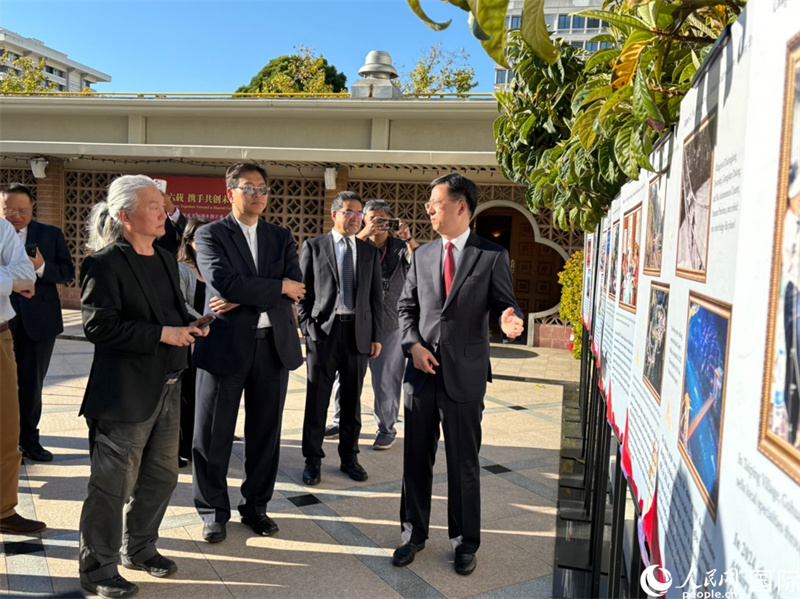
Core Points - The event highlighted the achievements of China since the establishment of the People's Republic of China, emphasizing the rapid economic development and long-term social stability under the leadership of the Communist Party of China [1] - Zhang Jianmin, the Chinese Consul General in San Francisco, articulated China's position on Sino-U.S. relations, advocating for mutual respect, peaceful coexistence, and win-win cooperation [1] Summary by Categories Economic Development - China has achieved rapid economic growth and has historically eliminated absolute poverty, contributing significantly to global governance [1] International Relations - The Shanghai Cooperation Organization summit in Tianjin was mentioned as a platform for proposing global governance initiatives, showcasing China's commitment to world peace and development [1] - The Consul General emphasized the potential for mutual success and prosperity between China and the U.S., urging for enhanced communication and trust [1]

李强会见比尔·盖茨,拟在全球健康领域全链条开展更多合作项目
GLP1减重宝典· 2025-09-25 03:35
Core Viewpoint - The article discusses the importance of collaboration between China and the Gates Foundation in global health initiatives, emphasizing China's achievements in health and development, and the need for joint efforts to address global challenges [4][5]. Group 1: China’s Health Achievements - China has established the world's largest disease control and medical service systems, showcasing significant progress in health and wellness [4]. - The country is actively participating in global development cooperation, aiming to enhance health outcomes in developing nations through partnerships [4]. Group 2: Collaboration with the Gates Foundation - The Chinese government expresses a desire to strengthen cooperation with the Gates Foundation, particularly in global health projects that benefit developing countries [4]. - The Gates Foundation acknowledges China's advancements in technology, healthcare, and poverty alleviation, and is eager to enhance its relationship with China to tackle global challenges [5]. Group 3: Global Governance and Stability - The article highlights the importance of stable Sino-American relations for global prosperity, suggesting that both nations should work together to improve global governance and address emerging challenges [4]. - The Gates Foundation is willing to facilitate deeper communication and cooperation between the U.S. and China to achieve practical outcomes in global health and development [5].
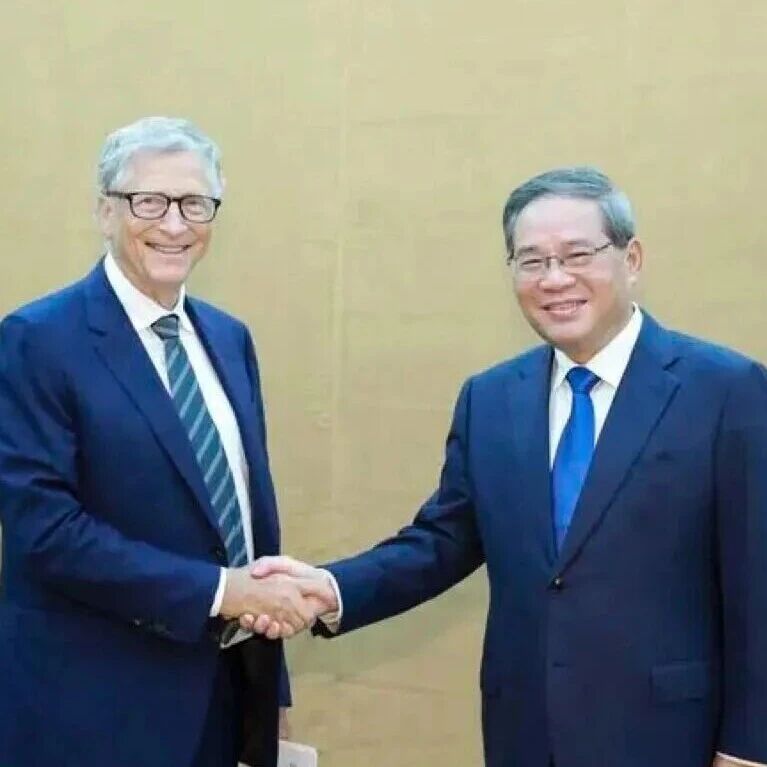
李强会见比尔·盖茨
财联社· 2025-09-25 01:19
Core Viewpoints - The meeting between Chinese Premier Li Qiang and Bill Gates emphasizes the importance of global health cooperation and the potential for enhanced collaboration between China and the Gates Foundation in addressing health challenges, particularly in developing countries [1][2] Group 1: Achievements and Cooperation - China has made significant advancements in health and development, establishing the world's largest disease control and medical service systems [1] - The Gates Foundation recognizes China's achievements in technology innovation, healthcare, and poverty alleviation, expressing a desire to strengthen relations and collaborate on global health initiatives [2] Group 2: Global Challenges and Relations - Both parties acknowledge the necessity for China and the U.S. to work together to address global challenges and improve global governance, which benefits not only the two nations but also the world [1] - The Gates Foundation is committed to facilitating communication and cooperation between the U.S. and China to tackle global issues effectively [2]

殷勇会见美国国会众议员代表团
Zheng Quan Shi Bao Wang· 2025-09-25 00:56
Core Viewpoint - The meeting between Beijing's Mayor Yin Yong and the U.S. Congressional delegation emphasizes the importance of stable development in China-U.S. relations, highlighting the role of local governance and youth engagement in fostering bilateral ties [1] Group 1: Strategic Insights - Mayor Yin Yong referenced a recent phone call between President Xi Jinping and President Trump, which provided strategic guidance for the next phase of China-U.S. relations [1] - The focus is on enhancing local exchanges and cooperation, with Beijing positioned as a model for implementing the leaders' consensus [1] Group 2: Urban Development Initiatives - Beijing is actively working on its urban governance framework, addressing challenges associated with being a megacity, and aiming to build an internationally recognized harmonious and livable city [1] - The city is implementing a new urban master plan that emphasizes resource and environmental capacity as a rigid constraint to solve "big city problems" [1] Group 3: Areas of Cooperation - There is a desire to deepen exchanges in urban governance and other fields with U.S. localities, encouraging U.S. representatives to leverage their strengths to facilitate communication and cooperation [1]
李强会见美国盖茨基金会主席比尔·盖茨
Xin Hua She· 2025-09-24 23:51
Core Points - The meeting between Chinese Premier Li Qiang and Bill Gates emphasized the importance of global health cooperation and the achievements of China's health system [1][2] - Both parties expressed a desire to strengthen collaboration in global health, particularly in developing countries [1][2] Group 1: China's Achievements and Initiatives - China has established the world's largest disease control and medical service systems, showcasing significant progress in health and wellness [1] - The Chinese government is open to closer cooperation with the Gates Foundation, aiming to implement more projects in the global health sector [1] Group 2: U.S.-China Relations - The meeting highlighted the importance of maintaining healthy and stable U.S.-China relations, which benefit both nations and the world [1] - Bill Gates acknowledged China's remarkable achievements in technology, AI, healthcare, and poverty alleviation, expressing the foundation's eagerness to enhance relations with China [2]
期货市场交易指引:2025年09月24日-20250924
Chang Jiang Qi Huo· 2025-09-24 02:14
Report Industry Investment Ratings - **Macro Finance**: Bullish on the medium to long - term for stock indices, hold a wait - and - see attitude for treasury bonds [1][5] - **Black Building Materials**: Range trading for coking coal and rebar, buy on dips for glass [1][8][10] - **Non - ferrous Metals**: Wait - and - see or buy on dips for copper, suggest buying on dips after a pullback for aluminum, suggest waiting or shorting on rallies for nickel, range trading for tin, gold, and silver [1][12][18][19] - **Energy and Chemicals**: PVC, caustic soda, styrene, rubber, urea, methanol, and polyolefins are expected to oscillate; conduct an arbitrage strategy of shorting 01 and going long on 05 for soda ash [1][23][34] - **Cotton Textile Industry Chain**: Cotton and cotton yarn are expected to oscillate, PTA is expected to oscillate weakly, apples are expected to oscillate strongly, and jujubes are expected to oscillate weakly [1][36][37] - **Agriculture and Animal Husbandry**: Short on rallies for pigs and eggs, wide - range oscillation for corn, range oscillation for soybean meal, and oscillation with an upward bias for oils [1][39][46][53] Core Views The report provides investment strategies and market analyses for various futures products. It takes into account factors such as supply and demand, macro - economic conditions, policy changes, and seasonal factors. Overall, the market for different futures products shows a complex situation with both opportunities and risks, and investors need to make decisions based on specific product characteristics and market trends [1][5][8] Summaries According to Related Catalogs Macro Finance - **Stock Indices**: Oscillating in the short - term, bullish on the medium to long - term, buy on dips. Affected by pre - holiday capital demands, A - shares fluctuated widely. The Shanghai Composite Index and Shenzhen Component Index showed slight declines, while the ChiNext Index rose. Pay attention to whether the micro - cap stock index can regain stability on the 20 - day line [5] - **Treasury Bonds**: Hold a wait - and - see attitude. The bond market had a slight pullback. Open - market operations affected liquidity expectations, and the future trend of treasury bond futures needs further observation [5] Black Building Materials - **Coking Coal and Coke**: Oscillating. Multiple factors drove up market sentiment, with coal prices rising across the board, including pit - mouth, port, and purchased coal prices [8] - **Rebar**: Oscillating. The futures price of rebar oscillated weakly. The market sentiment weakened slightly, and the short - term focus is on the demand in October [8] - **Glass**: Buy on dips. The fundamentals of glass are stable. The supply is relatively stable, and the demand has a certain degree of support. The market is speculating on supply - side shutdown expectations and seasonal and macro - economic factors [10] Non - ferrous Metals - **Copper**: High - level oscillation. The price of copper fluctuated after a rapid rise. The high price suppressed demand, and the market is affected by factors such as Fed's interest - rate policy, domestic economic data, and seasonal consumption [12][13] - **Aluminum**: Neutral. The price of aluminum showed a neutral trend. The price of bauxite decreased slightly, and the production capacity of alumina and electrolytic aluminum increased steadily. The demand entered the peak season, and it is recommended to buy on dips [13] - **Nickel**: Neutral. The fundamentals of nickel changed little in the short - term, affected by macro and mine - end news. In the long - term, the supply is in surplus. It is recommended to short on rallies moderately [18] - **Tin**: Neutral. The supply of tin ore is tight, and the downstream consumption is picking up. It is recommended to conduct range trading [18][19] - **Silver and Gold**: Neutral. After the Fed cut interest rates by 25 basis points, precious metals showed a strong - side oscillation. Affected by US economic data and trade negotiations, it is recommended to conduct range trading [19][20][21] Energy and Chemicals - **PVC**: Oscillating. The cost is at a low level, the supply is high, and the demand is affected by the real - estate market and exports. It is expected to oscillate in the short - term [23] - **Caustic Soda**: Oscillating. The upstream inventory has stopped falling and rebounded, and the demand is expected to increase marginally. It is expected to oscillate before the National Day [26] - **Styrene**: Oscillating. The cost is affected by oil prices and pure - benzene supply, and the demand is limited during the peak season. It is expected to oscillate weakly [27] - **Rubber**: Oscillating. Affected by typhoons and weak overseas buying, the raw - material price has limited upward momentum. The downstream pre - holiday stocking is basically over, and the price is expected to decline [29][30] - **Urea**: Oscillating. The supply has increased, the agricultural demand is scattered, and the compound - fertilizer market has slightly improved. The inventory has been accumulating, and it is recommended to pay attention to the support level of the 01 contract [30] - **Methanol**: Oscillating. The supply in the mainland has recovered, the traditional demand is stable, and the demand from methanol - to - olefins has declined. The port inventory is at a high level, and the price is expected to oscillate weakly [31] - **Polyolefins**: Oscillating. The downstream demand has improved during the "Golden September and Silver October" season, and the supply pressure has been relieved. The inventory has been decreasing, and the price is expected to oscillate in a range [32] - **Soda Ash**: Short 01 and go long on 05 for arbitrage. The downstream pre - holiday replenishment is active, but the production has increased. The supply is expected to be in surplus, and it is recommended to conduct the arbitrage strategy [34] Cotton Textile Industry Chain - **Cotton and Cotton Yarn**: Oscillating. The global cotton supply - demand situation has improved, but the new - cotton output is expected to increase significantly. It is recommended to prepare for hedging [36] - **PTA**: Oscillating weakly. Affected by concerns about OPEC+ production increases, the oil price has declined. The supply and demand are in a state of accumulation, and the price is expected to oscillate weakly [36][37] - **Apples**: Oscillating strongly. Affected by weather conditions, the price of early - maturing apples is firm, and the market is expected to oscillate strongly [37] - **Jujubes**: Oscillating weakly. The consumption is weak, and the price is under pressure after reaching a high level, with an expected weak - side oscillation [37] Agriculture and Animal Husbandry - **Pigs**: Under pressure. Affected by factors such as supply increases and policy support, the short - term price may have a limited rebound, and it is recommended to short on rallies. Pay attention to the arbitrage strategy of long 05 and short 03 [39][40] - **Eggs**: Resistance to rebound. The short - term supply pressure is difficult to relieve significantly, and the demand is gradually weakening. It is recommended to short on rallies for the 11 contract and be cautious about shorting the 12 and 01 contracts in the short - term [42] - **Corn**: Range - oscillating. The new - crop supply will ease the tight supply of old - crop corn. It is recommended to take a short - side approach for the 11 contract and pay attention to the new - crop listing rhythm [45] - **Soybean Meal**: Weakly oscillating. Affected by Argentina's cancellation of export tariffs, the price is under pressure in the short - term, but there is cost support. The domestic supply is abundant from September to October, and the price is expected to be weak [46][48] - **Oils**: Adjusting. Affected by Argentina's cancellation of export tariffs, the oil price has回调. However, there is still support at the bottom. It is recommended to wait and see in the short - term and pay attention to arbitrage opportunities [53]
金十数据全球财经早餐 | 2025年9月24日
Jin Shi Shu Ju· 2025-09-23 23:08
Group 1: Market Overview - The US stock market saw declines across major indices, with the Dow Jones down 0.19%, S&P 500 down 0.55%, and Nasdaq down 0.95% [5] - European indices showed mixed results, with Germany's DAX30 up 0.36% and the UK's FTSE 100 down 0.04% [5] - Hong Kong's Hang Seng Index fell 0.7%, while the Hang Seng Tech Index dropped 1.45% [5] Group 2: Commodity Prices - Spot gold reached a new high of $3,790 per ounce before retreating to close at $3,764.02, up 0.46% [7] - WTI crude oil rose 2.05% to $63.53 per barrel, while Brent crude oil increased by 1.81% to $67.22 per barrel [7] - The US dollar index closed at 97.22, down 0.08% [7] Group 3: Economic Indicators - The Federal Reserve's Chairman Powell indicated that the policy rate remains slightly restrictive, suggesting potential for further rate cuts [10] - The People's Bank of China reported a 5.0% year-on-year increase in total electricity consumption for August, amounting to 10,154 billion kilowatt-hours [12]

6年来第一个美国两党议员团访华,中方赞破冰之旅,利好军事对话
Sou Hu Cai Jing· 2025-09-23 06:21
Group 1 - A bipartisan delegation from the U.S. Congress visited China, marking the first visit by House members since 2019, indicating a potential thaw in U.S.-China relations after years of tension [3][6] - The delegation's six-day visit includes discussions with various Chinese departments, emphasizing the U.S. intention to enhance mutual understanding [3] - Economic relations between the two countries appear to be stabilizing, with previously planned tariff increases postponed to November 10, suggesting effective communication mechanisms in the economic domain [3] Group 2 - Military dialogue between the U.S. and China is highlighted as a critical area needing improvement, with concerns raised about the lack of effective communication potentially leading to risks [3][6] - The upcoming Xiangshan Forum will see a lower-level U.S. representation compared to previous years, indicating insufficient military exchanges [3] - The visit is seen as a potential opportunity to establish new channels for dialogue across various sectors, which is essential for the long-term stability of U.S.-China relations [6]
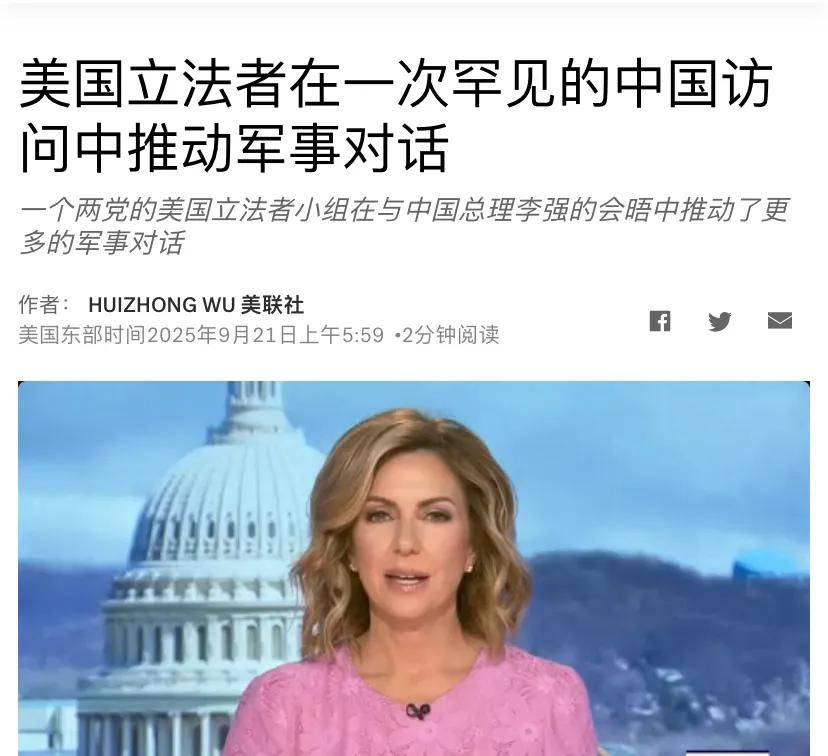
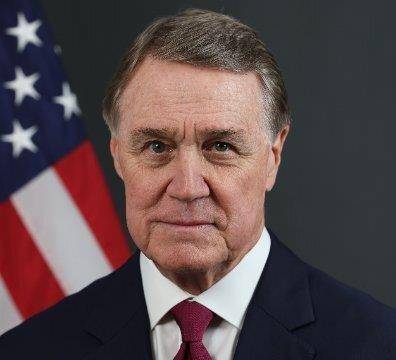
美国驻华大使庞德伟写道:很荣幸在此欢迎众议员代表团,称其至关重要
Sou Hu Cai Jing· 2025-09-23 01:40
Group 1 - The visit of the U.S. congressional delegation to China marks the first since 2019, highlighting a potential shift in U.S.-China relations amidst ongoing trade tensions [2][10] - The U.S.-China trade war has been ongoing since July 2018, with significant tariff increases from the U.S. on Chinese goods, leading to an economic standoff [2][5] - Despite high tariffs, China's trade surplus with the U.S. has grown from $323.3 billion in 2018 to $361 billion in 2024, indicating a complex economic relationship [5] Group 2 - The delegation's visit is seen as an attempt by the U.S. to engage in dialogue with China, especially during a period of stalled trade negotiations [7][10] - The contrasting backgrounds of U.S. Ambassador Nicholas Burns, a business elite and Republican hawk, reflect the internal contradictions in U.S. policy towards China [7][10] - China's response to the delegation was cautious yet open, emphasizing the importance of stable U.S.-China relations and the need for constructive engagement from the U.S. Congress [10]
国际政治顶打开,政策顶还没
Hu Xiu· 2025-09-23 01:02
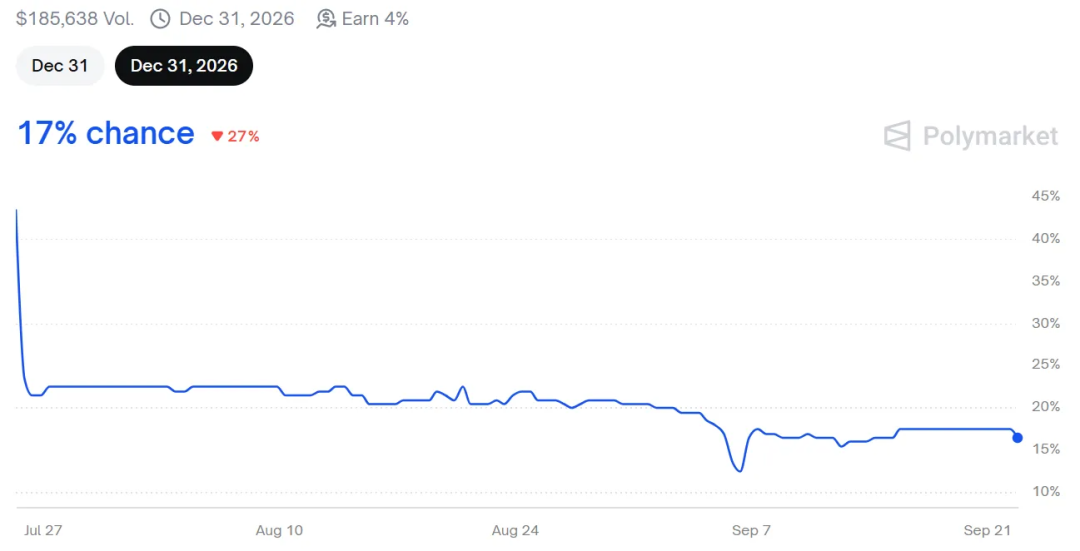
Group 1 - The core viewpoint of the article highlights the easing of tensions in the crucial US-China bilateral relationship, with a shift from confrontation to negotiation, particularly regarding the TikTok deal [1] - The article suggests that the US government's potential collection of a $1 billion fee for the TikTok transaction indicates a business-oriented approach from the current administration [1] - It emphasizes that both countries have learned from past experiences that direct conflict can deplete national resources, leading to a preference for business dealings over warfare [3] Group 2 - The article discusses the transition from a unipolar to a multipolar world, noting that the US is retracting its influence globally, which may lead to increased regional conflicts [4] - It points out that while the US has historically had a strong overseas presence, particularly in Africa, China's involvement in international affairs remains significantly lower [5] - The article mentions that as the US focuses inward, global chaos may increase, but core nations could become more stable, aligning with Deng Xiaoping's foresight [6] Group 3 - The probability of direct conflict between the US and China is perceived to be decreasing, particularly regarding maritime issues, with a noted decline in conflict probability to 17% [8][10] - The article indicates that global betting markets are reflecting a decreasing probability of conflict, with the likelihood of a ceasefire in the Russia-Ukraine situation surpassing that of US-China tensions [9] - It suggests that the changing narrative around China is shifting perceptions from "uninvestable" to a "value market," especially among value-oriented investors [16] Group 4 - The article highlights a growing interest in China's technological advancements, noting that previously, many investors were unaware of developments in China during the pandemic [17] - It discusses the current atmosphere in the US, which is characterized by a willingness to negotiate and conduct business, despite underlying tensions [18] - The article warns that interventions in the market come with costs and unpredictable consequences, suggesting that there are potential trading opportunities amidst the complexities [19]