
产教融合

Search documents
戳破!任正非撕开AI最大骗局:教育和商业混着来,全白干!
Sou Hu Cai Jing· 2025-12-06 17:05
Group 1: Education and Business - Ren Zhengfei emphasizes that "education is education, and business is business," highlighting the need to maintain clear boundaries between the two sectors [3][5] - The current trend of "industry-education integration" often blurs these boundaries, leading to the commercialization of education, which undermines its core purpose of fostering critical thinking and curiosity [3][5] - Huawei's collaboration with ICPC exemplifies a model where education provides a platform for questioning existing norms, while businesses apply innovative ideas to real-world industrial needs [3][5] Group 2: AI Implementation - Huawei focuses on practical applications of AI rather than competing in general intelligence, opting for "deep water innovation" in specific verticals like medical AI [5][10] - The company targets niche areas, such as early lung cancer screening, to enhance diagnostic accuracy through collaboration with grassroots hospitals [5][10] - This approach of addressing significant problems through small, targeted solutions is crucial for AI to transition from theoretical concepts to practical industry applications [5][10] Group 3: Youth Innovation - Ren Zhengfei encourages youth to embrace questioning as a fundamental aspect of innovation, contrasting with the prevailing "worship of standard answers" in education [6][8] - Historical breakthroughs in science often stem from challenging existing theories, and Huawei's internal culture supports this by allowing for a high tolerance of failure in research [6][8] - The company aims to empower young innovators by granting them the right to question rather than providing them with predetermined answers [6][8] Group 4: Female Participation in Technology - Ren Zhengfei highlights the importance of female participation in technology, recognizing it as a vital factor for innovation diversity [9][10] - Women in Huawei's medical AI team, who make up 40% of the workforce, have led projects that integrate user experience considerations into technical solutions, enhancing patient cooperation [9][10] - This dual perspective of combining technology with humanistic elements is essential for evolving AI from a mere tool to a partner in healthcare [9][10] Group 5: Long-term Value of General AI - While emphasizing immediate industrial applications, Ren Zhengfei acknowledges the long-term significance of general artificial intelligence (AGI) [10][11] - He suggests that AGI could reshape industries in the next decade, but only after addressing current industrial pain points [10][11] - Huawei's strategy involves a cautious approach to AGI, focusing on foundational technologies and data accumulation before advancing to broader applications [10][11] Conclusion - Ren Zhengfei's insights redefine the relationships between technology, industry, education, and innovation, advocating for a grounded approach to technological advancement [11] - The emphasis is on solving real problems rather than chasing fleeting trends, highlighting the importance of maintaining clarity in roles and responsibilities across sectors [11]


数字扬帆,文化密码启迪出海新方向️文化产业园区资讯(第9期)来啦️
Xin Lang Cai Jing· 2025-12-05 12:56
Core Insights - The cultural tourism industry parks have evolved from being mere cultural landmarks to becoming vital platforms for regional economic growth and industry integration, driven by policy incentives and innovative practices [3][16] - Various regions are actively expanding the "cultural tourism +" ecosystem, integrating cultural resources with technology, drama, sports, and other elements to create immersive experiences and stimulate consumption [3][16] Policy Support and Innovations - Beijing's Dongcheng District has implemented measures to enhance the quality of cultural industry parks, providing up to 5 million yuan in funding for projects focused on optimizing industrial space and upgrading business models [6][19] - The Haidian District in Beijing has introduced several initiatives to support AI and cultural integration, offering up to 40 million yuan in rewards for projects in gaming, short films, and other cultural sectors [6][19] - Shenzhen's Longgang District has launched specific support policies for AI cultural entrepreneurship, with funding up to 3 million yuan for recognized cultural industry parks and 10 million yuan for original films [8][21] Regional Developments - The 2025 Guangdong-Hong Kong-Macao Greater Bay Area Cultural Industry Investment Conference highlighted nine recommended cultural parks, showcasing successful integration of culture, technology, and finance [8][21] - Suzhou's Yuanhetang Cultural Industry Park has signed several key projects in digital culture, including a partnership with the Commercial Press for digital publishing and an immersive experience center based on the "Three-Body" series [8][22] - The Quyang Sculpture Cultural Industry Park has been recognized as a national-level cultural industry demonstration park, focusing on the promotion of traditional crafts and cultural heritage [10][23] Collaborative Efforts - The Huangnan Prefecture in Qinghai is enhancing cooperation with Tianjin's cultural parks to share resources and expertise, aiming to build a sustainable cultural ecosystem [10][24] - Chengdu's Shaocheng International Cultural Creative Valley has established a collaborative platform for education and industry integration, focusing on talent development in the cultural sector [10][24] - The Purple Mountain (Baohe) Cultural Creative Industry Park in Anhui is promoting esports integration with cultural tourism, aiming to boost the local esports industry [10][25]
我国首个工业清洗专业全面启动建设
Zhong Guo Hua Gong Bao· 2025-12-05 10:32
Core Viewpoint - The establishment of China's first modern industrial cleaning technology major aims to address the long-standing talent shortage in the industrial cleaning industry through collaboration among associations, universities, and enterprises [2][5]. Group 1: Industry Collaboration - The China Industrial Cleaning Association, Huainan University, and several enterprises have signed cooperation agreements to jointly develop the new major and compile seven textbooks covering various aspects of industrial cleaning [2][3]. - The collaboration has expanded from 2 initial enterprises to 7, indicating strong industry support for the new major [3]. Group 2: Educational Structure - The new major will implement a "dual-teacher" training model, encouraging university faculty to gain practical experience in member enterprises and inviting industry engineers to teach [3]. - Students will receive both a university diploma and an industry skills certificate upon graduation, enhancing their employability [3]. Group 3: Employment Prospects - The demand for talent in the industrial cleaning sector significantly exceeds the number of students enrolled in the first cohort, reflecting optimistic employment prospects [3][4]. - Companies involved in the program are committed to providing subsidies, training bases, and internship opportunities for the first batch of students [4]. Group 4: Industry Development - The establishment of this major marks a shift towards systematic, standardized, and professional training in the industrial cleaning sector, moving away from reliance on informal training methods [5]. - The collaboration model of "association + school + enterprise" breaks traditional educational barriers, ensuring that talent development aligns closely with industry needs [5].
江南大学食品学院院长孙秀兰:以产教融合构建浦北“陈皮+”功能食品创新生态
Nan Fang Nong Cun Bao· 2025-12-05 03:34
Core Viewpoint - The integration of industry and education is essential for building an innovative ecosystem for "Chenpi+" functional foods in the Pubei region, as highlighted by Sun Xiulan, Dean of the School of Food Science at Jiangnan University [2][5][25]. Industry Challenges - The food industry in China is facing multiple challenges, including resource imbalance, changes in consumption structure, and rising health demands [7][8]. - There is a trend of decreasing consumption of grains and vegetables, while the consumption of animal products and fats is increasing, leading to a growing issue of "hidden hunger" [8][9]. Functional Food Development - The development of functional foods that regulate health, particularly those based on the concept of food and medicine being of the same origin, is becoming a crucial direction for the industry [10]. - The food industry is transitioning from merely satisfying hunger to providing nutritional benefits and now to regulating the body and reducing chronic disease risks [11]. Pubei Chenpi Industry Insights - The traditional wisdom of "the older the Chenpi, the better" contains significant scientific implications, which need to be decoded through modern technology [12][13]. - Pubei has a unique resource of 68,900 old Chenpi trees (over 30 years old), but the industry is primarily focused on raw materials, with deep processing accounting for less than 10%, indicating substantial potential for value enhancement [14][15]. Development Framework for Chenpi Industry - A systematic development framework is proposed to achieve value transformation in the Pubei Chenpi industry, focusing on: 1. Establishing a database for Chenpi functional components and a leading multi-index efficacy evaluation standard system [17]. 2. Creating a comprehensive utilization technology system for Chenpi, including deep processing of fruit pulp to develop health-functional and uniquely flavored star products [18]. 3. Formulating an industry development plan and deploying major technological research tasks [19]. 4. Researching smart aging and functional component regulation technologies, analyzing the relationship between tree age and component diversity [20]. Product System and Technological Support - A comprehensive product system can be established, including food, health products, pharmaceuticals, and daily chemicals, covering daily dietary series like Chenpi beverages and snacks, as well as high-value special medical food products [21][23]. - Modern processing and quality control technologies such as bioconversion, microencapsulation, and intelligent aging should be integrated to promote standardization and intelligent upgrades in the industry [24]. Collaboration and Innovation - The key to promoting "Chenpi+" functional food innovation lies in building a close industry-academia-research collaboration ecosystem [25]. - Jiangnan University has established a board for the School of Food Science, collaborating deeply with 243 leading industry enterprises, creating a long-term mechanism for mutual empowerment between disciplines and industries [26]. - The university is willing to combine this industry-education integration model with the Pubei Chenpi industry to inject sustainable innovative power into the high-quality development of local特色产业 [28].

“四链”融合构筑人才培养高地
Xin Hua Ri Bao· 2025-12-05 00:08
□ 左同宇 作为国民教育体系和人力资源开发的重要组成部分,职业教育与经济社会发展紧密相连。江苏信息职业 技术学院(以下简称"苏信")作为一所拥有72年办学历史的江南高职名校,坚持产教融合办学定位,持 续推动教育链、人才链、产业链、创新链有机衔接,持续为中国式现代化建设输送高素质技术技能人 才。 产业驱动,打造"全匹配"优势专业集群 专业集群作为聚焦产业创新、有机整合若干专业资源的组织形态,是职业院校深化产教融合、提升关键 办学能力的战略举措。 专业集群精准对接产业集群。苏信实施专业与产业并跑工程,紧密对接江苏"1650"产业体系和无 锡"465"现代产业体系,建成集成电路、微电子技术、模具设计与制造、电子商务等4个省级高水平专业 集群。今年7月,苏信入选"中国特色高水平高职学校和专业建设计划(2025—2029年)"建设单位。在 高职院校主流排行榜中,集成电路专业类竞争力连续6年位居全国首位,微电子技术专业排名全国第 一,物联网应用技术、模具设计与制造专业位列全省第二。苏信制定5维度32个诊断点评价指标体系, 全面推进专业结构优化整合。近5年,停招低需求专业6个,增设紧缺专业12个、微专业11个。 开放融通, ...
促进产城人深度融合发展——云南嵩明打造产城融合示范区、现代制造业基地
Zhong Guo Jing Ji Wang· 2025-12-04 23:17
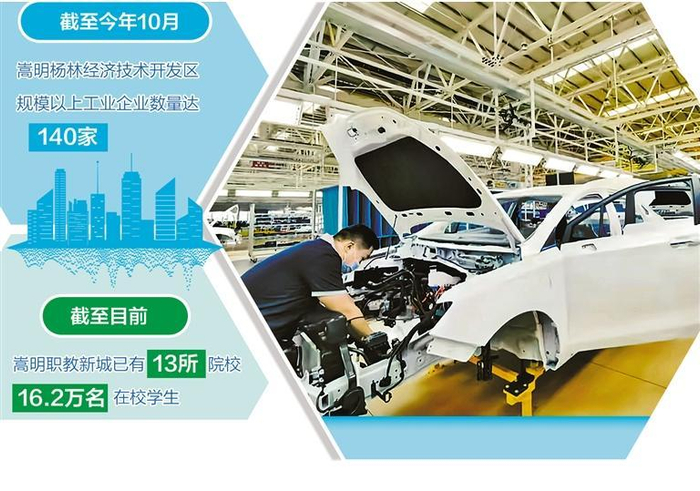
为位于嵩明杨林经开区的北汽新能源汽车整车生产线。(资料图片) 近年来,云南省嵩明县聚焦产城融合示范区、现代制造业基地发展定位,以产业带动人口集聚和服务业 发展,持续完善城市功能,推动"产、城、人"深度融合、协同发展。 据介绍,嵩明县将以新型城镇化试点创建为契机,积极承接东部产业转移,推动城市人才集合、产业集 聚,实现示范区产业发展、城市综合服务功能提升、百姓生活水平提高。(经济日报记者 曹 松) (责任编辑:符仲明) 云南工商学院经济与管理学院副院长孙艳聃告诉记者,为深化应用型人才培养,该学院通过深化产学研 合作教育,创新提出了产业学院、专业学院、创新创业学院"三院融合",以及"产业""专业""创业""三业 联动"的校企合作协同育人模式。通过实施校企共搭管理平台、校企共商人才培养方案、校企共建课 程、校企共组师资队伍、校企共搭实践平台、校企共建就业创业基地、校企共评培养质量、校企共研科 学研究项目"八个共同"的校企合作机制和校内改革体系,当前,该校已逐步形成"产教融合、校企协 同"的应用型本科院校育人模式,学生学习内驱力、科学研究能力显著增强。近4年,云南工商学院学生 累计参加省级以上专业竞赛获奖780项。 ...
促进产城人深度融合发展
Jing Ji Ri Bao· 2025-12-04 22:14
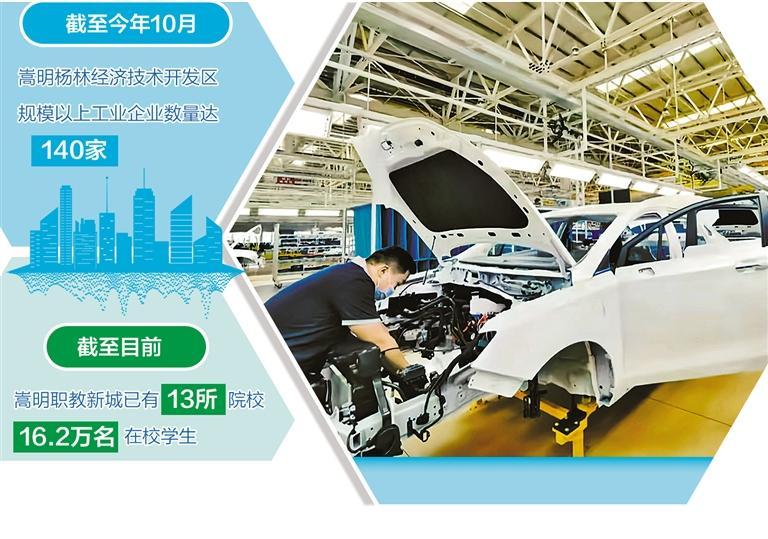
近年来,云南省嵩明县聚焦产城融合示范区、现代制造业基地发展定位,以产业带动人口集聚和服务业发 展,持续完善城市功能,推动"产、城、人"深度融合、协同发展。 作为嵩明县经济发展的主阵地,杨林经济技术开发区聚焦装备制造业,通过"龙头引领+集群培育",吸引了一 批龙头企业落地。截至今年10月,园区规模以上工业企业数量达140家,为产城融合夯实了产业基础,也提供 了大量就近就业岗位。 记者来到云南云内动力机械制造有限公司生产车间,一批大学生正在技术人员指导下进行实训。3年来,该公 司与嵩明县10余所院校密切合作,在智能制造、机械、车辆工程等专业,开展认知、生产、毕业实习以及教 师实践等项目。公司副总经理李静文说,通过深化产教融合发展,校企合作已从提供实习岗位拓展至协同育 人、师资共建等领域,既提升了学生的实践能力和综合素养,也推动了与相关院校在专业建设、课程开发、 技术研发等方面的工作。 截至目前,嵩明职教新城已有13所院校、16.2万名在校学生。为充分发挥产教融合优势,当地鼓励园区企业 搭建人才供需信息平台,建设实训基地,校企共建产业学院,探索"园区+职教"融合模式。当下,已建成40余 个产教融合实习实训和职业技能 ...
产教融合驱动教育革新的多维实践
Xin Hua Ri Bao· 2025-12-04 21:55
Core Viewpoint - The integration of industry and education is a crucial breakthrough for educational reform and serves as a significant driver for national strategy, industrial upgrading, and comprehensive human development [1] Group 1: Education and Talent Development - The article highlights the importance of cultivating technical and skilled talent through the organic integration of the education chain, talent chain, industry chain, and innovation chain [1] - It focuses on the development trends of live-streaming e-commerce majors and the transformation direction of civil engineering education [1] Group 2: Strategies for Lifelong Learning - The article discusses the construction strategies for the integration of vocational and general education, as well as the establishment of a lifelong learning system [1] - It emphasizes the significant role of industry-education integration in promoting educational innovation [1]
中汇集团(0382.HK):分红稳健 投入加大拖累业绩
Ge Long Hui· 2025-12-04 20:54
机构:华西证券 研究员:唐爽爽/李佳妮 风险提示:国际化办学不及预期,招生情况低于预期,现有业务质量管控风险,系统性风险。 在校人数稳健增长。1)集团学费/住宿费/非学历职业教育服务费收入分别为21.56/2.05/1.28 亿元,同比 增长6.3%/4.9%/46.3%。分地区来看,中国/海外收入分别为24.65/0.24 亿元,同比增长8.6%/-43.1%,我 们分析海外下滑主要由于澳洲政府对外国学生签证政策变化导致招生暂停,目前已恢复正常招生。2) 截至FY2025 末集团在校学生总人数为99,800 人,同比增长4.4%,其中华商学院/华商职业学院/城市职 业学院/境外学院/城市技师学院/华商技工学校在校人数分别为3.12/2.55/2.59/0.12/1.00/0.61 万,同比增 长-2.4%/16.8%/18.7%/-29.5%/-10.8%/-14.8%,华商职业学院高增我们分析主要由于学校所在大湾区生源 基础好,叠加良好办学口碑,在校生规模提升。 购买土地及升级校舍导致资本开支增加,合约负债有所下降。FY25 资本开支8.65 亿元,同比增长 122%,主要用于1)华商职业学院收购江门市新 ...
产教融合驱动AI课堂改革:吉安职业技术学院的实践
Yang Shi Wang· 2025-12-04 07:11
Group 1 - The core viewpoint of the articles emphasizes the need for vocational education to adapt to the opportunities and challenges presented by artificial intelligence (AI), particularly in the context of the "AI+" initiative issued by the State Council [1] - The integration of AI into vocational education is seen as a way to enhance teaching quality and student capabilities, rather than a replacement for traditional learning methods [1][3] - The shift in teaching methods at institutions like Ji'an Vocational and Technical College demonstrates a proactive approach to AI, focusing on human-AI collaboration rather than dependency [1][3] Group 2 - The rise of generative AI tools has led to a crisis in education, particularly in finance and commerce programs, where students often resort to AI for quick solutions, undermining their analytical and strategic thinking skills [2] - The over-reliance on AI for tasks such as data analysis and report generation has resulted in a decline in students' independent thinking and creativity, which are essential for future employment [2][3] - The teaching reforms at Ji'an Vocational and Technical College aim to counteract these issues by restructuring courses to focus on real-world applications and critical thinking [3][4] Group 3 - The "Business Data Analysis" course has undergone a significant transformation, centering on a typical business data analysis workflow, allowing students to engage with real business problems and data [3][4] - Students are encouraged to identify which parts of the analysis can leverage AI for efficiency while maintaining human judgment in critical decision-making processes [3][4] - The introduction of "human-machine comparison experiments" in the curriculum fosters a deeper understanding of algorithmic logic and its practical applications in business [4] Group 4 - The "E-commerce Copywriting" course has shifted its focus to designing intelligent content production workflows, integrating local agricultural products into the curriculum to enhance practical learning [5][6] - Students learn to conduct market research and competitive analysis manually, as AI cannot fully grasp local cultural nuances, ensuring a comprehensive understanding of the products [5][6] - The process of evaluating AI-generated content against brand values and local cultural elements emphasizes the role of students as quality controllers and creative leaders [6] Group 5 - The reforms have led to significant improvements in student capabilities, with a 95% satisfaction rate from partner companies regarding graduates' skills in AI tool application, data analysis, and practical execution [7] - Graduates from Ji'an Vocational and Technical College enjoy an average starting salary 1.2 times higher than the regional or industry average, indicating the effectiveness of the educational reforms [7] - The role of instructors has evolved from knowledge transmitters to facilitators of human-AI collaboration, guiding students in applying AI as a decision-enhancing tool rather than a shortcut [7]