未来产业

Search documents
坚持创新驱动,加紧培育壮大新动能
2 1 Shi Ji Jing Ji Bao Dao· 2025-12-26 14:54
科技创新和产业创新,是发展新质生产力的基本路径。 近年来,我国创新驱动发展战略实施成效显著。 特约评论员 熊夏柠 党的二十届四中全会审议通过的《中共中央关于制定国民经济和社会发展第十五个五年规划的建议》 (下称《建议》)中指出,加快高水平科技自立自强,引领发展新质生产力。中国式现代化要靠科技现 代化作支撑。抓住新一轮科技革命和产业变革历史机遇,统筹教育强国、科技强国、人才强国建设,提 升国家创新体系整体效能,全面增强自主创新能力,抢占科技发展制高点,不断催生新质生产力。 发展新质生产力必须强化科技创新,需要建设现代化产业体系、加快高水平科技自立自强、加快构建高 水平社会主义市场经济体制、加快经济社会发展全面绿色转型等关键部署中。科技创新和产业创新,是 发展新质生产力的基本路径。《建议》多次提及"科技"和"创新",体现了科创在发展新质生产力中的重 要驱动作用。 同时,科创还需要与产业创新深度融合,要强化企业创新主体地位,让创新与产业深度融合。《建议》 也提出,培育壮大新兴产业和未来产业。着力打造新兴支柱产业。实施产业创新工程,一体推进创新设 施建设、技术研究开发、产品迭代升级,加快新能源、新材料、航空航天、低空 ...
500亿粤港澳大湾区创投引导基金启动 落地南山前海
2 1 Shi Ji Jing Ji Bao Dao· 2025-12-26 13:53
Core Insights - The National Venture Capital Guidance Fund has been officially launched, with three regional sub-funds registered in Beijing, Shanghai, and Shenzhen, aiming to support early-stage and innovative enterprises [1][3] Group 1: Fund Overview - The Guangdong-Hong Kong-Macao Greater Bay Area Venture Capital Guidance Fund has a target size of 50.45 billion yuan and a maximum duration of 20 years, managed by Shenzhen Capital Group [1][3] - The fund focuses on early-stage investments, particularly in seed and startup companies, to support technological innovation and transformation [3] Group 2: Investment Strategy - The fund emphasizes a long-term investment approach with a 10-year investment period and a 10-year exit period, allowing for patient capital to support the growth of technology enterprises [3] - The Guangdong-Hong Kong-Macao Fund will adopt a dual approach of "sub-funds + direct investment," targeting strategic emerging industries and future sectors [3] Group 3: Regional Impact - The fund's establishment aligns with the innovation and entrepreneurship policies of Nanshan District, which has over 5,500 national high-tech enterprises and aims to enhance the local innovation ecosystem [4] - Nanshan District has invested 3 billion yuan in the fund, marking its largest participation in a national-level guidance fund, which is expected to accelerate technological breakthroughs and result in significant regional development [4]



加快提升产业科技创新能力,有哪些着力点?
Xin Hua She· 2025-12-26 13:19
Core Insights - The article emphasizes the importance of enhancing industrial technological innovation capabilities by applying scientific and technological achievements to specific industries and supply chains to improve competitiveness [1] Group 1: Technology Innovation and Industry Development - The national industrial and information technology conference highlighted the need to focus on "0 to 1" innovations, specifically targeting core technologies that drive industrial development, indicating a strong alignment of technological innovation with industry needs [2] - The approach of "industry posing questions and technology providing answers" is deemed crucial for building a modern industrial system, with a focus on addressing current needs through targeted innovation and aligning with broader industrial transformation trends [2] Group 2: Manufacturing and Pilot Platforms - China has established over 2,400 pilot platforms for manufacturing, with a reported 80% success rate for industrialization of technologies that have undergone pilot testing, compared to only 30% for those that have not [3] - The conference called for strengthening high-level manufacturing pilot platforms and creating a nationwide service network to enhance the utilization of these platforms, aiming to solve the "last mile" challenge in technology transfer [3] Group 3: Market-Oriented Technology Transfer - To facilitate technology transfer, a "pay after use" reform pilot will be implemented in 2026, aimed at lowering barriers for technology adoption and reducing innovation risks for enterprises, thereby encouraging more companies to engage with high-value technological achievements [4] Group 4: Emerging Industries and Innovation - The focus for the upcoming year includes developing emerging pillar industries such as integrated circuits, new displays, new materials, aerospace, low-altitude economy, and biomedicine, alongside supporting AI advancements and satellite IoT commercial trials [5] - The government plans to nurture quality enterprises by identifying and supporting "little giant" companies, manufacturing champions, and national-level industry clusters, while also addressing overdue payments to businesses [5]
氪星晚报|MiniMax与快看漫画达成“AI+IP”合作,上线首个AI互动漫画;联想将推出超级AI智能体;国家创业投资引导基金将重点支持新兴产业和未来产业
3 6 Ke· 2025-12-26 11:24
Group 1: Company Developments - Xiaopeng Motors officially entered the Mauritius market after establishing a strategic partnership in December, following its entry into the Qatar market [1] - Xiaomi has applied for multiple trademarks related to its Ultra series, with some already successfully registered [2] - MiniMax has partnered with Kuaikan Manhua to launch the first AI interactive comic, integrating AI technology into the comic industry [3] - Mango Super Media's wholly-owned subsidiary has established a new equity investment fund with a capital contribution of approximately 356 million RMB [4] Group 2: Investment and Financing - "Hai Sida Sodium Star" has completed over 100 million RMB in strategic financing, with investors including Baiyun Financial Holdings and Guangdong Guoyan Industrial Investment [5] - "Xingyi Space" has completed nearly 300 million RMB in Pre-A round financing, primarily for the construction of overseas measurement and control stations and technology R&D [6] - Shanghai Blueprint Aviation Technology Co., Ltd. has announced 500 million RMB in A round financing, focusing on core technology development [7] - Weina Star completed 1.56 billion RMB in equity financing throughout 2025, aimed at R&D investment and capacity expansion [8] Group 3: New Products - Lenovo plans to launch its first global "AI Super Intelligent Agent" during CES, which will have capabilities similar to the Doubao mobile assistant [10] - Huawei announced the launch of the new Huawei WiFi X product in March 2026, featuring transparent antenna technology and supporting the Harmony ecosystem [11] Group 4: Industry Trends - The Industrial Robot Quality Strong Chain project has completed 33 key tasks, marking significant progress in standards, measurement, testing, and certification [12] - Various regions in China have added over 1.1 billion RMB in subsidies to boost the automotive market as the year-end approaches [12] - The National Venture Capital Guidance Fund will focus on supporting emerging and future industries, enhancing investment in early-stage projects in sectors like semiconductors and AI [12] - The Ministry of Industry and Information Technology emphasized the implementation of a new round of key industry growth plans, promoting the supply of green and age-friendly products [13]

白京羽:积极推动创投行业改革创新,更好引领创投行业高质量发展
2 1 Shi Ji Jing Ji Bao Dao· 2025-12-26 11:18
21世纪经济报道记者 赵娜 申俊涵 报道 近年来,国家发展改革委深入贯彻落实党中央和国务院决策部署,持续推进科技创新和产业创新深度融合,大力推动战略性新 兴产业和未来产业发展,培育了一批代表国家参与全球竞争的科技领军企业。 "我国新兴产业、未来产业发展还存在资金等创新要素投入不足等问题,亟需通过发展耐心资本加以解决,这也是我们设立引导 基金的初心和使命。"白京羽表示,下一步引导基金将从两个方面持续发力:第一,汇聚各类社会资本,为新兴产业、未来产业 注入金融活水;第二,集聚各类创新要素,为创新型企业发展提供优质服务。 12月26日上午,国家发展改革委召开专题新闻发布会,介绍国家创业投资引导基金(以下简称"引导基金")有关工作。 国家发展改革委创新和高技术发展司司长白京羽介绍,引导基金发挥中央资金引领带动作用,广泛吸引地方政府、中央企业、 金融机构、民间资本等多方参与,形成万亿资金规模,通过投基金、投企业、投项目,加大对战略性新兴产业和未来产业支持 力度,加快培育和发展新质生产力。 21世纪经济报道记者了解到,引导基金在定位上坚持做早期基金、耐心基金、市场化基金和标杆基金;机制上设立"基金公司- 区域基金-子基金 ...
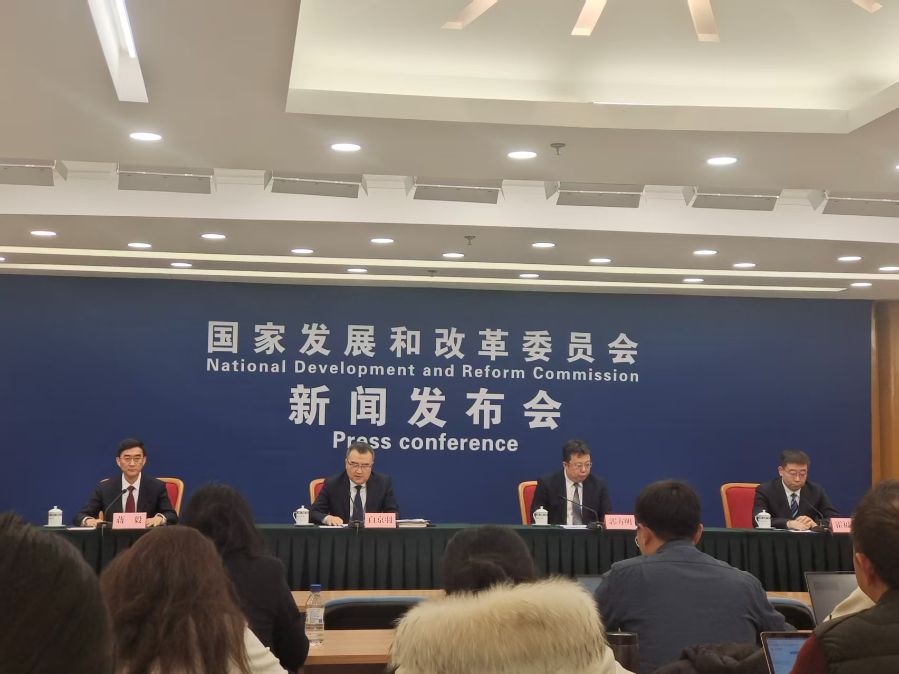
白京羽:坚持做早期基金、耐心基金、市场化基金、市场化基金
2 1 Shi Ji Jing Ji Bao Dao· 2025-12-26 11:00
12月26日上午,国家发展改革委召开专题新闻发布会,介绍国家创业投资引导基金(以下简称"引导基 金")有关工作。 (作者:赵娜,申俊涵编辑:林坤) 国家发展改革委创新和高技术发展司司长白京羽表示,引导基金发挥中央资金引领带动作用,广泛吸引 地方政府、中央企业、金融机构、民间资本等多方参与,形成万亿资金规模,通过投基金、投企业、投 项目,加大对战略性新兴产业和未来产业支持力度,加快培育和发展新质生产力。 ...
产业创新是建构中国经济增长新的核心支柱
Guo Ji Jin Rong Bao· 2025-12-26 10:08
Core Insights - The upcoming year 2026 marks the start of China's 15th Five-Year Plan, emphasizing the implementation of industrial innovation projects to enhance the country's industrial structure and establish a modern industrial system with global competitiveness [1] Group 1: Industrial Innovation Strategy - China aims to create emerging pillar industries and strategically position future industries, focusing on sectors like new energy, aerospace, and quantum technology, which are characterized by long-term and dynamic features [3] - The strategy includes a new national system to concentrate resources on technological advancements and infrastructure, leveraging the complete industrial system and vast market advantages to facilitate the commercialization of new technologies [4] Group 2: Global Innovation Standing - According to the 2025 Global Innovation Index, China ranks 4th globally, achieving its highest position ever, while also being the second in key technology fields like biotechnology and quantum technology, closing the gap with the U.S. [5] - China has 24 of the world's top 100 innovation clusters, with the Shenzhen-Hong Kong-Guangzhou cluster now ranked first globally, surpassing the Tokyo-Yokohama cluster [5] Group 3: Policy and Financial Support - Various government departments have issued guidelines to promote strategic emerging industries, emphasizing the need for comprehensive financial services throughout the innovation lifecycle [6] - The government is focusing on creating application scenarios in digital economy and AI, aiming to build a robust ecosystem for emerging and future industries [6] Group 4: Industry Development and Collaboration - China has seen the emergence of around 350 companies in the brain-computer interface sector, and has established the largest solar panel production base globally, showcasing a collaborative approach to industrial innovation [7] - The government is promoting a systematic approach to accelerate the development of industrial clusters, emphasizing the integration of infrastructure, technology research, and market needs [9] Group 5: Future Industry Challenges and Strategies - Future industries face more complex risks, necessitating a diversified technological approach and the establishment of pilot application scenarios to foster innovation [10] - Regulatory frameworks are evolving to support innovation, including the introduction of "regulatory sandboxes" and a focus on digital regulation to create a conducive environment for future industries [11] Group 6: Investment and Risk Management - Establishing a risk-sharing mechanism is crucial for future industry development, with a focus on a tiered layout system and government-market collaboration to attract investment [12] - Innovative financial tools are being developed to support long-term investments in future industries, including insurance products tailored for technology transfer and key equipment development [12] Group 7: Talent and Innovation Ecosystem - Cultivating a high-level innovation ecosystem is essential, with initiatives to support leading enterprises and foster new entities in future industries [13] - There is a shared policy focus on enhancing infrastructure, original innovation, and the integration of technology and industry to strengthen the overall innovation capacity [13]
河南如何陪民企穿越周期|何以“豫”时俱进
Sou Hu Cai Jing· 2025-12-26 09:55
Group 1 - The recent trial operation of the new store by Pang Donglai in Xinxiang has attracted significant attention, alongside the opening of the first store by Mixue Ice City in the United States [1][3] - The rapid growth of private enterprises in Henan reflects the vitality of the province's private economy, which is crucial for integrating into the national market and building a modern industrial system [3][5] - The threshold for entering the top 100 private enterprises in Henan has increased from approximately 2.569 billion yuan in 2021 to about 3.29 billion yuan this year, marking an increase of over 20% [6] Group 2 - The number of private economic entities in Henan has surpassed 11 million, which is nearly 50% more than the total number of market entities at the end of the 13th Five-Year Plan [6][7] - The increase in individual businesses by nearly 2.5 million indicates a healthy and active market environment, showcasing a competitive landscape that adheres to the principle of survival of the fittest [6][10] - The resilience of Henan's private economy is attributed to both external factors, such as the business environment, and internal factors, including the entrepreneurial spirit of successive generations of Henan merchants [10][11] Group 3 - The provincial government has made efforts to optimize the business environment, including initiatives like dining with entrepreneurs and implementing innovative mechanisms for feedback [10][11] - Entrepreneurs in Henan, whether local like Pang Donglai or internationally recognized like Mixue Ice City, have evolved from grassroots origins to significant enterprises, demonstrating market insight and steadfastness [11][12] - The government aims to provide more opportunities for private enterprises by creating a conducive business environment and focusing on future industries such as intelligent manufacturing and quantum technology [14][15]


《广东省推动金融服务科技强省建设工作方案》发布!要强化“三所一中心”协同机制
梧桐树下V· 2025-12-26 09:43
Core Viewpoint - The article discusses the "Guangdong Province Financial Services for Technology-Strong Province Construction Work Plan," emphasizing the role of multi-level capital markets in supporting technological innovation and the development of technology-oriented enterprises at various growth stages [5][6]. Group 1: Overall Goals - The plan aims to establish a modern technology financial matrix system by the end of 2027, focusing on providing comprehensive financial services across different stages of technology enterprises, including seed, startup, growth, expansion, and maturity phases [6]. - It targets to position Guangdong's technology-related loans and loans for technology industries among the top in the nation, with growth rates exceeding the average loan growth rate [6]. Group 2: Key Focus Areas - The plan emphasizes the importance of focusing on key regions such as the Greater Bay Area, particularly platforms like Hengqin, Qianhai, Nansha, and He Tao, to enhance financial support for regional development [7]. - It encourages financial resources to concentrate on emerging and future industries, including integrated circuits, new energy vehicles, biomedicine, and artificial intelligence [8]. - The initiative aims to support the cultivation of key enterprises, including 50 leading technology companies and 1,000 manufacturing champions, to drive the development of small and medium-sized technology enterprises [9]. Group 3: Main Tasks - The plan outlines several tasks, including the establishment of a technology innovation investment fund relay system to guide social capital towards early-stage investments in technology [11]. - It aims to optimize a full-cycle technology credit system to support technology enterprises at various growth stages, enhancing the credit evaluation system based on technology-related metrics [12]. - The plan seeks to leverage the bond market to support technology innovation, encouraging the issuance of technology innovation bonds to finance technological advancements [13]. - It emphasizes the importance of multi-level capital markets in supporting technology enterprises through various financial instruments and encourages the establishment of a standardized listing cultivation system [11][13]. - The plan also includes measures to enhance cross-border financial services for technology enterprises, facilitating their access to international financing [15]. Group 4: Implementation of Financial Ecosystem - The plan proposes to establish a risk-sharing and compensation mechanism to reduce financing costs for high-tech enterprises, with a maximum annual subsidy of 20 million yuan per enterprise [12]. - It aims to develop a comprehensive insurance product system covering the entire lifecycle of technology enterprises, addressing risks associated with research and development [13]. - The initiative encourages the use of data and financial technology to create credit loan products based on multidimensional data from technology enterprises [14].
嘉实基金:新兴产业引领成长 深度把握多元机遇
Di Yi Cai Jing· 2025-12-26 09:03
Core Viewpoint - The "14th Five-Year Plan" emphasizes the importance of emerging and future industries, identifying key sectors such as new energy, new materials, aerospace, and low-altitude economy, which are crucial for building a modern industrial system and fostering new productive forces [3][4]. Emerging Industries - The four major emerging industries highlighted are new energy, new materials, aerospace, and low-altitude economy, while six future industries include quantum technology, biomanufacturing, hydrogen and nuclear fusion, brain-computer interfaces, embodied intelligence, and sixth-generation mobile communication [3]. - Emerging industries have established clear industrial forms and development models, transitioning from "quantitative accumulation" to "qualitative leaps," presenting significant growth opportunities [3]. Investment Insights - Investment in emerging industries requires a deep understanding of the entire cycle from technological emergence to commercial realization, focusing on pioneering companies that can define the future and build competitive barriers [3]. - The core themes of advanced manufacturing revolve around "development, safety, and low carbon," indicating a strategic focus for investors [3]. New Energy and New Materials - New energy is essential for economic operation, with the "14th Five-Year Plan" introducing the "Energy Power" strategy to accelerate the construction of a new energy system and expand green electricity applications [6]. - New materials are critical for modern economies and high-end manufacturing, with increasing demand driven by technological advancements and applications in AI and new energy [6]. - The investment landscape includes over 15 actively managed funds focused on new energy and new materials, with notable performance metrics indicating substantial returns [8]. Aerospace and Low-altitude Economy - The aerospace sector is becoming a strategic focal point for national competition, with significant market opportunities emerging from commercial space exploration and advancements in green aviation and smart manufacturing [11]. - The low-altitude economy is recognized as a new growth engine, with a clear market scale and timeline outlined by the government, presenting investment opportunities across various sectors [11]. Fund Performance - Several funds have shown exceptional performance, such as the Jia Shi Environmental Low Carbon Fund, which has achieved a net value growth of 223.4% since its inception, significantly outperforming its benchmark [8]. - The Jia Shi New Energy and New Materials Fund has also demonstrated strong returns, with a net value increase of 173.43% since its establishment [8]. Product Offerings - Jia Shi Fund has systematically laid out a range of products in the new energy and new materials sectors, including ETFs that cover upstream materials, power generation, and energy storage, ensuring comprehensive market coverage [9]. - The high-end equipment ETF tracks a specialized index, providing investors with targeted exposure to the aerospace and high-end manufacturing sectors [12].