国产替代

Search documents
华创医药周观点:血制品2025年行业总结及2026年展望 2026/02/23
华创医药组公众平台· 2026-02-23 02:31
Core Viewpoint - The blood products industry is expected to experience a recovery in performance in 2026 after a period of supply-demand imbalance in 2025, driven by a reduction in supply growth and stable demand for key products like albumin and immunoglobulin [14][36][31]. Market Review - The CITIC Pharmaceutical Index fell by 0.85%, underperforming the CSI 300 Index by 1.22 percentage points, ranking 21st among 30 primary industries [8]. - The top ten stocks by growth this week included Aidi Te, Zhend Medical, and Olin Bio, while the worst performers included Beixin Life and Huayuan Bio [8]. Overall View and Investment Themes - The innovative drug sector is transitioning from quantity to quality, emphasizing differentiated products and internationalization [10]. - In the medical device sector, there is a notable recovery in bidding volumes for imaging equipment, and home medical devices are benefiting from subsidy policies [10]. - The innovation chain (CXO + life science services) is expected to see a rebound in overseas financing and a bottoming out in domestic financing, indicating a potential upturn in the industry [10]. - The pharmaceutical industry is anticipated to enter a new growth cycle, particularly in the specialty raw materials sector, with a focus on patent expirations and vertical expansion [10]. Blood Products Industry Insights - The blood products sector has faced a supply-demand mismatch leading to short-term performance pressure, with a significant decline in net profit growth rates in 2025 [14][17]. - The industry is characterized by a long-term growth trajectory due to regulatory support for plasma collection stations and an expanding product range [11][17]. - The average price of albumin and immunoglobulin has been affected by supply-demand dynamics, with prices reflecting inventory trends [22][31]. - The domestic plasma collection volume has seen rapid growth, but the supply may face adjustments in 2026 due to a slowdown in growth rates [23][30]. Supply and Demand Dynamics - The supply side is experiencing a tightening due to reduced growth in plasma collection and a decrease in the number of import approvals for albumin [30][24]. - The demand for albumin remains robust, with sales showing resilience despite pricing pressures, while immunoglobulin sales are expected to stabilize [31][27]. - The market structure for blood products in China differs significantly from global trends, with albumin dominating the market share [37]. Future Outlook - The blood products industry is projected to improve in 2026 as supply constraints and stable demand lead to a more balanced market [36][32]. - Companies in the sector are expected to benefit from improved performance metrics as the supply-demand relationship normalizes [36][32]. - The ongoing consolidation within the industry, particularly among state-owned enterprises, is likely to enhance market stability and growth potential [43][38].







1300+份新材料报告下载:做新材料领域的「攻坚者」
材料汇· 2026-02-22 14:26
Core Viewpoint - The article discusses the rapid growth and investment opportunities in the advanced packaging materials sector, highlighting the potential for domestic companies to replace foreign imports in critical areas of technology [7][8]. Group 1: Market Overview - The global market for advanced packaging materials is projected to reach $2.032 billion by 2028, with the Chinese market expected to grow to 9.67 billion yuan by 2025 [8]. - Specific advanced packaging materials such as PSPI and conductive adhesives are identified as key growth areas, with significant market sizes and growth rates anticipated [8]. Group 2: Investment Opportunities - The article outlines various advanced packaging materials and their respective market sizes, including: - PSPI: $528 million in 2023, expected to grow significantly [8]. - Conductive adhesives: projected to reach $3 billion by 2026 [8]. - Chip bonding materials: expected to grow from approximately $485 million in 2023 to $684 million by 2029 [8]. - The investment landscape is characterized by a shift towards domestic companies, with several listed and non-listed firms identified as potential leaders in the market [8]. Group 3: Competitive Landscape - The article lists key domestic companies in the advanced packaging materials sector, such as Dinglong Co., Guofeng New Materials, and others, indicating a competitive environment where local firms are poised to capture market share from international players [8]. - It also highlights the importance of innovation and R&D in maintaining a competitive edge in this rapidly evolving industry [8].
1300+份新材料报告下载:做新材料领域的「攻坚者」
材料汇· 2026-02-21 10:03
Core Viewpoint - The article discusses the rapid growth and investment opportunities in the advanced packaging materials sector, highlighting the potential for domestic companies to replace foreign imports in critical areas of technology [7][8]. Market Overview - The global market for advanced packaging materials is projected to reach $2.032 billion by 2028, with the Chinese market expected to grow to 9.67 billion yuan by 2025 [8]. - Specific materials such as PSPI, epoxy resin, and conductive adhesives are identified as key growth areas, with significant market sizes and growth rates anticipated [8]. Investment Opportunities - The article outlines various advanced packaging materials and their respective market sizes, including: - PSPI: $528 million in 2023, expected to grow significantly [8]. - Conductive adhesives: projected to reach $3 billion by 2026 [8]. - Chip bonding materials: expected to grow from approximately $485 million in 2023 to $684 million by 2029 [8]. - The investment landscape is characterized by a shift towards domestic production, with numerous Chinese companies emerging as competitors to established foreign firms [7][8]. Industry Trends - The article emphasizes the trend of domestic substitution in advanced materials, particularly in sectors heavily reliant on imports from countries like Japan [7][8]. - It highlights the importance of innovation and R&D in maintaining competitive advantages within the industry [7][8]. Strategic Insights - Investment strategies vary across different stages of company development, from seed rounds to pre-IPO phases, with a focus on team capabilities, market potential, and product maturity [10]. - The article suggests that the current market conditions present a favorable environment for investments in advanced materials, particularly for companies that can demonstrate strong growth potential and innovative capabilities [10].


AI的下一战:高端PCB材料,一个千亿级的国产替代新战场(附60页PPT与解读、投资逻辑)
材料汇· 2026-02-21 10:03
Group 1 - AI applications are driving the PCB industry towards a growth cycle, with expectations for both volume and price increases. The demand for HDI and 18+ layer boards is expected to grow significantly due to the rise in AI servers and 5G applications, with global market value CAGR predictions of 6.4% and 15.7% respectively from 2024 to 2029 [3][40]. - Copper-clad laminates (CCL) are identified as the core substrate for PCBs, accounting for approximately 27% of PCB cost structure. Key raw materials include copper foil, resin, and fiberglass cloth, with a shift towards high-frequency and high-speed CCLs driven by AI and 5G applications [4][9]. - The demand for electronic resins is evolving, with a focus on high-performance types such as PTFE, PPO, and hydrocarbon resins. These materials are crucial for meeting the high-frequency and high-speed requirements of modern PCBs, with domestic manufacturers making strides in replacing imported materials [4][9][149]. - The use of high-performance silicon micro-powder is rapidly increasing, driven by the performance upgrades of downstream devices and the growing application of AI servers. The demand for silicon micro-powder in China is projected to reach 473,000 tons by 2025, reflecting a year-on-year growth of 13.2% [4][156]. Group 2 - The global PCB market is projected to recover from a downturn in 2023, with a growth rate of 5.8% in 2024 and a sustained CAGR of 5.2% through 2029, indicating that new AI-driven demands are creating a new growth curve rather than merely a cyclical recovery [23][24]. - China is the largest PCB manufacturing base globally, accounting for 56% of the market value. This proximity to customers enhances supply chain security and responsiveness, positioning domestic material companies favorably for growth [24][21]. - The shift towards high-end PCBs is evident, with a decline in single/double-sided boards and an increase in HDI and packaging substrates. This trend highlights the growing demand for advanced packaging technologies, which require high-performance materials [29][30]. - The demand for high-frequency and high-speed CCLs is expected to grow significantly, with the market size projected to reach approximately $2.8 billion. This segment, while a smaller part of the overall CCL market, is characterized by faster growth and higher profit margins [87][89].
重点留意!节后三大翻倍方向,重仓股民拿稳别慌!
Sou Hu Cai Jing· 2026-02-21 09:27
Core Viewpoint - The market is showing signs of recovery post-holiday, with three major investment directions identified that are supported by policies, funds, and performance, indicating potential for significant gains in the near future [1][27]. Group 1: Market Conditions - The Shanghai Composite Index closed at 4082.07 points with a trading volume of 19,826.8 billion yuan on February 13, 2026 [3]. - The People's Bank of China conducted a 1 trillion yuan reverse repurchase operation with a 182-day term, providing liquidity to the market [3]. - Economic indicators show a recovery, with January's CPI rising by 0.2% year-on-year and core CPI by 0.8%, indicating steady consumer recovery [3]. Group 2: Investment Directions Direction 1: AI Computing and New Productive Forces - This sector is a key focus for the "14th Five-Year Plan," with support from the Ministry of Industry and Information Technology and the National Development and Reform Commission [4]. - Public funds increased their holdings in technology sectors by 42% in January [4]. - Over 60% of stocks in this sector are at low valuations, with PE and PB ratios below historical averages [6]. Direction 2: Consumption Recovery in Home Appliances, Liquor, and Tourism - The government is implementing measures to boost consumption, including subsidies for replacing old cars and home appliances [10]. - Post-holiday data shows a significant recovery in dining, tourism, and jewelry sectors [11]. - Leading companies in liquor and home appliances are valued reasonably, with strong performance and cash flow [12]. Direction 3: Low-Valuation Semiconductors and Specialized Enterprises - The semiconductor sector is crucial for technological self-reliance, with ongoing support from national funds [16]. - More than 50% of semiconductor stocks are currently at low levels, indicating substantial room for valuation recovery [17]. - Quality semiconductor companies are expected to report increased earnings, providing a solid fundamental support [18]. Group 3: Investment Strategies - Investors are advised not to chase high prices or sell at losses, as low-quality stocks present opportunities during market fluctuations [23]. - It is recommended to avoid frequent stock changes and focus on medium to long-term investments, as institutional investors are taking a similar approach [24]. - Monitoring official data such as central bank operations and economic indicators is more reliable than speculative information [25].

机械设备行业周报1月挖机销量高增,燃气轮机需求景气
Xinda Securities· 2026-02-21 03:35
Investment Rating - The investment rating for the machinery equipment industry is "Positive" [2] Core Views - January excavator sales showed a strong increase, with total sales reaching 18,708 units, a year-on-year growth of 49.5%. Domestic sales were 8,723 units, up 61.4%, while exports were 9,985 units, up 40.5%. The high domestic growth rate was influenced by the timing of the Spring Festival, and the export growth was driven by recovering overseas demand and high metal prices boosting mining activities [12][66] - The demand for gas turbines is strong, driven by AI data center construction increasing electricity demand. Gas turbines are favored for their quick start-up, peak-shaving capabilities, and low carbon emissions. GEV signed new gas turbine orders of 18GW in Q4 2025, with total orders expected to reach 80GW by the end of 2025. Siemens Energy also reported new orders of 26GW, a 94% year-on-year increase [13][66] - The report suggests focusing on the engineering machinery sector with high growth in both domestic and export sales, as well as the gas turbine industry chain and high-performing stocks [14] Summary by Sections Company Updates - **Rilian Technology**: A leading supplier of industrial X-ray intelligent detection equipment, with a nearly doubled order growth year-on-year in the first half of 2025. Revenue increased by 44.01%, and net profit grew by 18.83% [4][14] - **Kangst**: Engaged in the development and sales of digital testing instruments, with a Q3 2025 revenue of 148 million yuan, a 22.24% year-on-year increase, and net profit growth of 30.66% [5][15] - **Xinxin Co., Ltd.**: Specializes in hard alloys and tools, with Q3 2025 revenue growth of 38.02% and net profit growth of 75.40% [6][16] Market Overview - The machinery index (CITIC) rose by 2.47% last week, with the Shanghai Composite Index up 0.41% and the Shenzhen Component Index up 1.39% [17] - The manufacturing PMI for January 2026 was 49.3%, indicating a slight contraction, with new orders and export orders also declining [26] Industry Insights - The gas turbine market is expanding, with major companies like GEV and Siemens Energy planning to increase production capacity significantly by 2028-2030 [13][66] - Excavator sales are expected to continue growing due to domestic demand driven by infrastructure projects and equipment updates, despite a decline in fixed asset investment in construction and real estate [66]
研判2026!中国体外膜肺氧合系统(ECMO)行业产业链、市场规模、竞争格局和未来趋势分析:行业国产替代进程加速,未来临床普及程度进一步提高[图]
Chan Ye Xin Xi Wang· 2026-02-21 01:14
体外膜肺氧合系统(ECMO)主要包括血管内插管、连接管、动力泵(人工心脏)、氧合器(人工 肺)、供氧管、监测系统等部分。动力泵(人工心脏),提供动力驱动血液在管道中流动。临床上主要 有两种类型的动力泵:滚压泵、离心泵。滚压泵不易移动,管理困难。急救首选离心泵,优势是安装移 动方便,易于管理,血液破坏小。氧合器(人工肺),将输入的血液进行氧合,输出氧合后的动脉血。 氧合器分为硅胶膜型与中空纤维型两种。硅胶膜型的生物相容性好,血浆渗漏少,血液成分破坏小,适 合长时间使用。中空纤维型膜肺易排气,2-3日可见血浆渗漏,血液成分破坏相对大。 体外膜肺氧合系统(ECMO)的组成部分 随着患者临床需求的增加、ECMO国产化进程的持续推进、国家相关支持性政策的发布以及资本的助 力,中国ECMO行业呈现出持续发展的态势,经历了萌芽阶段、起步阶段及发展阶段。在2010年前,中 国ECMO行业逐渐萌芽,国际厂商如美敦力、迈柯唯等逐步进入中国市场,为国内三级医院等提供 ECMO支持。直到2002年,中国内地才开展了首例真正意义上的ECMO支持治疗。但限于当时的经济水 平、医疗条件和医疗报销制度的限制,这一设备没有得到大范围推广。20 ...

1300+份新材料报告下载:做新材料领域的「攻坚者」
材料汇· 2026-02-20 13:34
Core Viewpoint - The article discusses the rapid growth and investment opportunities in the advanced packaging materials sector, highlighting the potential for domestic companies to replace foreign imports in critical areas of technology [7][8]. Market Overview - The global market for advanced packaging materials is projected to reach $2.032 billion by 2028, with the Chinese market expected to grow to 9.67 billion yuan by 2025 [8]. - Specific materials such as PSPI, epoxy resin, and conductive adhesives are identified as key growth areas, with significant market sizes and growth rates anticipated [8]. Investment Opportunities - The article outlines various advanced packaging materials and their respective market sizes, including: - PSPI: $528 million in 2023, expected to grow significantly [8]. - Conductive adhesives: projected to reach $3 billion by 2026 [8]. - Chip bonding materials: expected to grow from approximately $485 million in 2023 to $684 million by 2029 [8]. - The investment landscape is characterized by a shift towards domestic production, with numerous Chinese companies emerging as competitors to established foreign firms [7][8]. Industry Trends - The article emphasizes the trend of domestic substitution in advanced materials, particularly in sectors heavily reliant on imports from countries like Japan [7][8]. - It highlights the importance of innovation and R&D in maintaining competitive advantages within the industry [7][8]. Strategic Insights - Investment strategies vary across different stages of company development, from seed rounds to pre-IPO phases, with a focus on team capabilities, market potential, and product maturity [10]. - The article suggests that the current market conditions present a favorable environment for investments in advanced materials, particularly for companies that can demonstrate strong growth potential and innovative capabilities [10].
创东方投资高宇辉:马年的投资机遇将孕育在四个“确定性”之中
Zhong Guo Ji Jin Bao· 2026-02-20 06:45
Core Insights - The company expresses optimism about China's economic resilience and strategic direction despite external challenges and domestic transformation pressures [1] - The investment strategy focuses on sectors such as advanced manufacturing, artificial intelligence, biomedicine, new energy, and new materials, aiming for deep engagement and value creation [1] - The company has achieved significant milestones, managing nearly 30 billion RMB and investing in over 350 companies, with more than 40 successfully exiting through IPOs [1] Group 1: Market Environment - The macroeconomic narrative is complex, but three constants guide the company's judgment: the direction of technological revolutions, the urgent need for industrial upgrades in China, and the survival of the fittest in the venture capital ecosystem [2] - The technological revolution is characterized by advancements in AI, life sciences, energy technology, and low-altitude economy, which are accelerating towards industrialization [2] - The shift from supply chain security to excellence and from cost advantages to technological advantages is essential for survival and competition, creating historic demand for startups addressing core industrial bottlenecks [2] Group 2: Investment Outlook - The investment landscape is focused on four areas of certainty: the positive outlook for capital markets, the clarity of the industrial revolution led by AI and new energy, the commitment to technological independence, and the growing importance of health and wellness sectors [3][4] - China's stable economic growth positions it as a cornerstone of global economic development, enhancing the prospects for its capital markets [3] - The emphasis on domestic innovation in sectors like semiconductors, high-end equipment, and biotechnology is now a national strategy, creating a golden opportunity for companies with core technological capabilities [3] Group 3: Health Sector Investment - The changing population structure and rising health awareness are driving investment logic in the pharmaceutical and healthcare sectors beyond cyclical fluctuations [4] - Areas such as innovative drugs, high-end medical devices, and broader health management are seen as long-term investment tracks that combine technological attributes with social value [4] Group 4: Future Commitment - The company reaffirms its commitment to investing in early-stage, small-scale, and hard technology ventures, leveraging its deep research and industry ecosystem resources to identify resilient investment targets [5] - The outlook for the future is hopeful, with a call for collaboration to navigate the opportunities presented in the coming year [5]
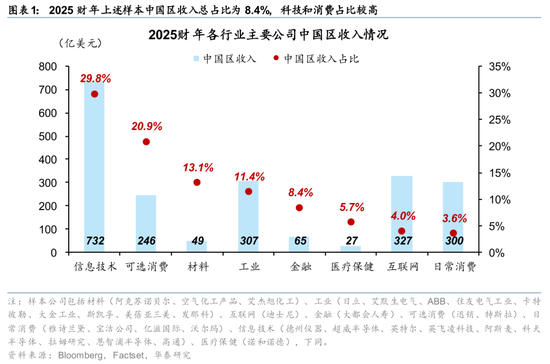
华泰 | 海外看中国:海外上市公司如何看中国修复
Xin Lang Cai Jing· 2026-02-20 01:40
Core Insights - Domestic demand recovery is ongoing, with technological advancements and emotional consumption as structural highlights [1] - 45% of multinational companies reported improved performance in Q4 2025, while 33% expect further improvement [1][5] - The real estate sector continues to drag down growth, but there are notable structural strengths, particularly in technology and service consumption [1][5] Domestic Demand - Overall domestic demand remains weak, but there are structural highlights such as optimistic prospects for renovation in coatings and elevators [2][12] - Service and emotional consumption are experiencing high demand, with companies like Estée Lauder and Procter & Gamble reporting double-digit growth in specific product lines [2][12] - Companies are adapting to trade friction by increasing localization, with ABB reporting over 85% localization in China [2][12] Trade Friction - Localization strategies are being adopted by companies to mitigate the impact of trade tensions, with some firms shifting to local development and sales models [2][12] - Companies like SKF are facing supply chain pressures due to trade policy uncertainties, but are implementing measures to manage these risks [34] Technology - There is a slight decline in external demand for technology products, with a trend towards domestic substitution becoming evident [3][13] - Traditional companies are benefiting from increased demand driven by technological advancements, particularly in the semiconductor sector [3][13] - U.S. export restrictions and domestic competition are impacting overseas companies' revenues in China [3][13] Industry Summaries Materials and Industrial - Demand for materials and industrial products is generally weak, but there are structural demands in electronic gases due to the semiconductor industry [14][26] - The coatings sector is showing resilience due to renovation demand, while traditional electrical and elevator businesses are facing declines [14][27] Consumer Sector - The consumer sector shows significant differentiation, with companies like Uniqlo experiencing revenue declines due to increased competition [20][21] - High-end products in the beauty sector are performing well, while food and beverage sectors are facing slight declines [21][22] Financial Services - MetLife's operations in China are showing strong recovery, with a focus on optimizing distribution channels and enhancing service offerings [19][41] - The company is transitioning away from telemarketing and focusing on high-end customer segments [41] Technology Hardware - Semiconductor companies maintain a high revenue share in China, but face challenges from export controls and supply chain adjustments [23][30] - Companies like Intel and AMD are experiencing delays and increased competition from local manufacturers [30][31] Machinery - Caterpillar anticipates positive growth in the Chinese market, particularly in larger excavators, while SKF is facing challenges in the automotive sector [32][33] - Companies are adjusting their strategies to focus on local development and sales, with a shift in production towards Southeast Asia [39]