指数化投资

Search documents
指数化投资周报:华柏A500ETF规模快速上升,三家申报航空主题ETF-20250708
Shenwan Hongyuan Securities· 2025-07-08 10:44
1. Report Industry Investment Rating No relevant content provided. 2. Core Viewpoints of the Report - The scale of Huatai-PineBridge CSI A500 ETF has rapidly increased, and its extended securities abbreviation has changed. It has become the leader in the CSI A500 ETF track in terms of scale [1][8]. - Multiple index products are in the process of being established, raised, and declared. There are new offerings of many science and technology innovation bond ETFs, and three companies, including Huatai-PineBridge, have declared aviation-themed ETFs [2][14][23]. - In the recent week, most A-share and US stock ETFs have risen, with the Innovation Drug ETF leading the gains. The CSI Bank ETF has the largest net inflow of funds, while the CSI 300 ETF has the largest net outflow [5][26][43]. 3. Summary According to the Table of Contents 3.1 Huatai-PineBridge CSI A500ETF Scale Rapidly Increases, and the Extended Securities Abbreviation Changes Recently - Huatai-PineBridge CSI A500ETF (563360.OF) has performed well recently. Its scale has rapidly increased from less than 10 billion yuan to about 20 billion yuan in the past month. As of July 6, its scale reached 19.957 billion yuan, surpassing competitors and ranking first in the CSI A500ETF track [1][8]. - Since July 3, 2025, the extended abbreviation of Huatai-PineBridge CSI A500ETF has changed from "CSI A500ETF Fund" to "A500ETF Huatai-PineBridge", which strengthens brand recognition and improves trading convenience [12][13]. 3.2 Index Product Establishment, Raising, and Declaration: Multiple Science and Technology Innovation Bond ETFs are Being Raised and Newly Issued, and Three Companies, Including Huatai-PineBridge, Declare Aviation-Themed ETFs 3.2.1 Product Establishment and Listing Situation - In the recent week, 11 products, such as Southern CSI Hong Kong Stock Connect Technology ETF, have been established; 10 products, such as Penghua CSI All-Share Free Cash Flow ETF, have been listed; and 7 products, such as Qianhai Kaiyuan CSI 500 Equal-Weighted Linked A, have completed fundraising and are about to be established [2][14]. 3.2.2 Product Issuance Information - In the coming week, 24 index products will end their fundraising, including Huatai-PineBridge CSI A500ETF, Huabao Shanghai Stock Exchange STAR Market Artificial Intelligence Linked A, and Fuguo CSI AAA Science and Technology Innovation Corporate Bond ETF. Meanwhile, 28 products will start their fundraising, including Fuguo CSI AAA Science and Technology Innovation Corporate Bond ETF, GF Shanghai Stock Exchange AAA Science and Technology Innovation Corporate Bond ETF, and Boshi Shanghai Stock Exchange AAA Science and Technology Innovation Bond ETF [2][18]. 3.2.3 Product Declaration Information - In the recent week, a total of 17 index products have been declared. The theme products include Huatai-PineBridge CSI General Aviation Themed ETF and Ping An CSI General Aviation Themed ETF; the index enhancement products include Tianhong CSI 500 Quantitative Index Enhancement Securities Investment Fund and Jinyuan Shun'an CSI 800 Index Enhancement Securities Investment Fund; there are also 5 linked products and 2 bond products [23]. 3.3 ETF Market Review: Innovation Drug ETF Leads the Gains - In the recent week, most A-share and US stock ETFs have risen. Among A-share ETFs, ChiNext 50ETF has the highest increase of 1.91%, and MSCI China A50ETF and CSI 300ETF have relatively high increases of 1.72% and 1.64% respectively. Among US stock ETFs, S&P 500ETF has a relatively high increase of 1.63%. All Hong Kong stock ETFs have declined, with Hang Seng Technology ETF and Hang Seng Internet ETF having relatively large declines of -2.54% and -2.43% respectively [26]. - Among commodity ETFs, the gold ETF has a relatively high increase of 1.11% in the recent week, while the energy and chemical ETF has a slight decline. Most industry ETFs have risen in the recent week. All medical ETFs have increased, with the Innovation Drug ETF having the highest increase of 4.74%. Among other sub - industries, the Steel ETF has the leading increase of 5.53%, and the Photovoltaic ETF and Bank ETF have relatively high increases of 4.42% and 3.76% respectively [26][29]. 3.4 ETF Fund Flow: CSI Bank Has the Largest Net Inflow - As of July 4, 2025, there are 1,247 ETFs in the entire market, with a total scale of 4,317.864 billion yuan, an increase of 41.175 billion yuan from the previous week. Among them, A-share ETFs and cross - border ETFs rank first and second in scale, with 3,012.54 billion yuan and 585.014 billion yuan respectively. The scale of A-share ETFs has increased by 14.535 billion yuan in the recent week [41]. - Among non - monetary ETFs, the ETFs targeting the CSI Bank have the largest net inflow of funds, with an inflow of 6.38 billion yuan, while the ETFs targeting the CSI 300 have the largest net outflow of funds, with a total outflow of 11.181 billion yuan [43]. - In the recent week, Huabao CSI Bank ETF and E Fund Shanghai Stock Exchange Benchmark Market - Making Corporate Bond ETF have relatively high fund inflows, with 6.084 billion yuan and 1.982 billion yuan respectively. Haifutong CSI Short - Term Financing ETF has the leading liquidity in the recent week, with an average daily trading volume of 14.2 billion yuan. Southern Shanghai Stock Exchange Benchmark Market - Making Corporate Bond ETF has relatively high liquidity, with an average daily trading volume of 12.652 billion yuan [47].
锚定长期回报量化策略赋能指数化投资——专访中金基金量化指数部、多资产部负责人耿帅军
Zheng Quan Ri Bao· 2025-07-07 17:18
Core Viewpoint - Index investment has become a focal point in the public fund industry amid deepening capital market reforms and accelerated transformations in the industry [1] Group 1: Industry Trends - The China Securities Regulatory Commission (CSRC) released the "Action Plan for Promoting High-Quality Development of Public Funds" in May, aiming to shift the industry focus from "scale" to "returns" through systematic reforms [1] - The plan includes measures to bind the interests of fund managers and investors, improve assessment mechanisms, and increase the scale and proportion of equity investments in public funds, addressing industry pain points [1][2] - The emphasis on long-term performance assessment and the constraints of performance benchmarks are particularly noteworthy [1] Group 2: Investment Strategies - Investment strategies that are close to benchmarks, stable in style, and yield steady excess returns are expected to thrive as the plan progresses [2] - Index-enhanced funds, which aim to achieve excess returns relative to benchmarks while effectively tracking them, align well with the industry's transformation direction and are likely to attract more capital [2] - Data shows that over the past five years, index-enhanced funds have had significantly lower tracking errors compared to actively managed equity funds, leading to a better overall experience for investors [2] Group 3: Role of Quantitative Investment - Quantitative investment plays a crucial role in index investment by utilizing systematic and scientific methodologies [2] - Quantitative strategies help fund managers control tracking errors more precisely and capture excess returns from market pricing discrepancies [2] - The combination of fundamental quantitative strategies and data-driven approaches enhances research depth and diversifies returns [3] Group 4: Challenges and Recommendations - Historically, index-enhanced funds have had a low market share in public equity funds due to challenges such as being perceived as difficult to understand or unattractive [3] - Fund managers need to actively promote quantitative methodologies to help investors comprehend their value [3] - For ordinary investors, a dollar-cost averaging approach is recommended to smooth out market volatility, with an emphasis on risk diversification [3] Group 5: Future Outlook - The integration of quantitative strategies and index investment reflects not only technological innovation but also a return to the industry's core focus on investor interests [4] - The company aims to deepen its engagement in quantitative investment to create sustainable returns for investors and contribute to the optimization of financial resource allocation [4]
基金发行遇冷!上周仅募53亿创新低,指数型产品占六成成主力
Sou Hu Cai Jing· 2025-07-07 02:15
Group 1 - The overall fund issuance market showed significant differentiation last week, with only 20 new funds established and a total issuance scale of 5.328 billion yuan, marking the lowest weekly fundraising since April this year [1] - The average fundraising per fund was only 266 million yuan, indicating a generally sluggish issuance market [1] Group 2 - Equity funds performed strongly, with 11 equity fund products raising 3.226 billion yuan, accounting for 60.54% of the total issuance, making them the main force in the week [3] - Passive index products were particularly notable, with 8 index funds collectively raising over 2 billion yuan, nearly half of the total issuance, focusing on popular sectors such as Hong Kong tech and core A-share assets [3] - The Southern CSI Hong Kong Stock Connect Technology ETF raised 705 million yuan, and the Morgan Stanley CSI 300 Free Cash Flow Link A raised 597 million yuan, reflecting institutional preference for index-based investments [3] Group 3 - Bond fund issuance cooled significantly, with only 3 bond fund products issued, totaling 1.067 billion yuan, accounting for 20.03% of the total, a stark contrast to previous strong performances [4] - Mixed fund issuance remained relatively stable, with 5 mixed fund products raising 3.226 billion yuan, accounting for 19.23%, with an average fundraising of 645 million yuan per fund [4] - Passive index funds emerged as the absolute mainstay of new fund issuance, with a rapid launch of the Huatai-PineBridge CSI Hong Kong Stock Connect Technology Link A, highlighting institutional intent to quickly position in the Hong Kong tech sector [4]


科创债开辟直接投融资新通道
Jing Ji Ri Bao· 2025-07-06 21:46
近日,首批10只科创债ETF(交易型开放式指数基金)正式获批,我国债券ETF产品谱系进一步丰富, 资本市场支持科技创新迎来新工具。 6月18日,中国证监会主席吴清在2025陆家嘴论坛上表示,大力发展科创债,优化发行、交易制度安 排,推动完善贴息、担保等配套机制,加快推出科创债ETF。同日,10家公募基金上报首批科创债 ETF。其中,易方达基金、广发基金、华夏基金、鹏华基金、博时基金、招商基金6家公募基金在上交 所上报,嘉实基金、南方基金、富国基金、景顺长城基金4家公募基金在深交所上报。7月2日,上述10 只科创债ETF正式获批。 此次科创债ETF的推出,将有效填补公募基金在"科技金融"债券基金领域的空白,助力科技强国建设。 同时,科创债ETF通过其高度聚焦的投资主题设计,吸引各类资金精准投向科创重点领域,为科创企业 拓宽融资来源、降低融资成本并提高融资效率。 "在债券市场'科技板'启航的背景下,科技创新债券发行主体扩容,由金融机构、科技型企业、股权投 资机构三类机构发行,所募集资金用于支持科技创新领域投融资。"易方达债券指数投资部总经理李一 硕表示,科创债自试点以来,发行不断提速,现正处于快速扩容阶段,募集资 ...
上周新发募资逾53亿元 股基领跑债基降温
Zheng Quan Shi Bao· 2025-07-06 18:10
Group 1 - The overall market saw the establishment of 20 new funds last week, with a total issuance scale of only 5.328 billion yuan, marking the lowest weekly fundraising since April this year, with an average fundraising of only 266 million yuan per fund [1] - Despite the overall sluggish issuance market, there are structural highlights, with equity funds leading the way, accounting for 60.54% of the total issuance, reflecting institutional confidence in equity assets [1] - The issuance of bond funds has significantly cooled down, with only 3 products raising 1.067 billion yuan, a decline compared to previous strong performances [1] Group 2 - Passive index funds became the main force in new fund issuance last week, accounting for over 60%, with over 20 products launched covering popular sectors such as securities, technology, consumption, and pharmaceuticals [2] - Enhanced index funds are also favored by public fund managers, with several products launched to meet investors' demand for excess returns through quantitative strategies [2] - Although the overall scale of newly issued funds last week was limited, many institutions are preparing for the second half of the year, with multiple funds pending approval across various themes [2]
上半年私募证券基金备案产品5461只 股票策略成主流选择
Zheng Quan Ri Bao· 2025-07-06 16:14
Group 1 - The private equity fund industry in China is experiencing a surge in product registrations, with 1,775 private securities investment fund managers completing 5,461 product registrations in the first half of 2025, representing a year-on-year increase of 53.61% and a more than 100% increase compared to the second half of the previous year, indicating a significant recovery in market confidence and an enhanced willingness for capital allocation [1] - Among the five primary strategies, the stock strategy leads with 3,458 registered products, accounting for 63.32% of the total, reflecting strong enthusiasm for equity asset allocation, driven by factors such as the release of technology innovation policy dividends and robust performance in key sectors like artificial intelligence [1] - Multi-asset strategies and futures and derivatives strategies follow with 802 and 633 registered products, representing 14.69% and 11.59% respectively, highlighting an increased demand for diversified allocation in a low-interest-rate environment [1] Group 2 - Quantitative private equity institutions have shown remarkable performance during the current registration wave, with 27 out of 33 institutions having at least 20 registered products being quantitative, including 18 large-scale institutions with over 10 billion yuan in assets, showcasing their advantages in research capabilities, risk control systems, and brand effects [2] - A total of 2,448 registered quantitative strategy private products were recorded, with stock quantitative strategies dominating at 1,715 products, accounting for 70.06%, and the index enhancement strategy being the most favored with 1,061 products, representing 61.87% of stock quantitative strategies [2] - The small and micro-cap sector is expected to become a blue ocean for excess returns in quantitative strategies, as traditional broad-based index strategies face intensified competition and diminishing excess returns due to increased capital inflow [3]
首批科创债ETF即将首发
Zhong Guo Jing Ji Wang· 2025-07-04 12:22
Core Viewpoint - The launch of the Jiashi CSI AAA Technology Innovation Company Bond ETF provides a convenient investment tool for participating in the technology innovation bond market, reflecting the growing importance of such financial products in supporting technological advancements and economic transformation [1][2]. Group 1: Product Overview - Jiashi CSI AAA Technology Innovation Company Bond ETF tracks the CSI AAA Technology Innovation Company Bond Index, which includes bonds rated AAA and above from high-quality technology companies, primarily state-owned enterprises and reputable private firms [2]. - The index has shown strong historical performance, with returns of 5.5%, 6.0%, and 3.81% for 2023, 2024, and the past year, respectively [2]. Group 2: Investment Features - The ETF is designed to be a low-cost, efficient investment option for credit bonds, with management fees at 0.15% and custody fees at 0.05%, enhancing yield in a low-interest environment [4]. - It offers cash subscription/redemption, regular dividend assessments, and efficient trading features, making it accessible for both institutional and individual investors [3][4]. Group 3: Management Strategy - The investment strategy combines sampling replication and dynamic optimization to minimize tracking error, selecting highly liquid bonds from the index and its alternatives [5][6]. - The fund manager, Wang Zhe, has extensive experience in fixed income investment and employs risk-controlled active management strategies to seek excess returns [7][8]. Group 4: Future Outlook - The macroeconomic environment is expected to maintain low interest rates, supporting a bullish bond market, while the commercialization of technological breakthroughs may enhance the profitability of bond issuers, positively impacting ETF net value and long-term investor returns [9].
4.28万亿!ETF资产净值规模创历史新高
Zhong Guo Jing Ying Bao· 2025-07-04 11:50
Core Insights - The total net asset value of ETFs in the market reached a historic high of 4.28 trillion yuan by the end of June 2025, with the Sci-Tech Innovation series ETFs exceeding 255 billion yuan and the CSI "A series" ETFs surpassing 236 billion yuan [1][2] - The CSI 300 ETF has become the first broad-based ETF in China to exceed 1 trillion yuan in market size [1] - The A-share market showed resilience and an upward trend in the first half of 2025, with various major indices experiencing different degrees of increase [1] Index Development - The index system has been continuously improved, with the launch of the Sci-Tech Comprehensive Index in January and the optimization of the Shanghai Stock Exchange 380 Index in May, creating a flagship broad-based index system [1] - New indices related to artificial intelligence, new energy, biomedicine, robotics, and semiconductors were introduced to enhance the Sci-Tech and entrepreneurial index system [1] Market Performance - Most major scale and composite indices saw varying degrees of increase in the first half of 2025, with the North Securities 50 index performing the best, rising by 39.45% [2] - The CSI series industry indices, including the Financial and Communication indices, recorded increases of 7.17% and 6.74%, respectively, while the Shanghai Stock Exchange Medical and Materials indices rose by 7.67% and 6.95% [2] - The Sci-Tech new drug, gold mining, and gold stock indices saw significant increases of 43.83%, 36.23%, and 27.73%, respectively, highlighting the stability and risk resistance of dividend factors [2]
指数基金低费率时代来临 易方达基金“工具箱”助力投资者把握机遇
Cai Fu Zai Xian· 2025-07-04 06:35
Core Insights - Index funds have become a significant force in the investment field, surpassing actively managed funds in scale, with a trend towards lower fees being a key future direction [1][2] - E Fund has established itself as a leader in the low-fee sector, managing 157 passive stock index funds, which account for 7.62% of all such funds in the A-share market [2] Group 1: Industry Trends - Since the launch of the first index fund in 2002, the average management fee for passive stock funds has decreased from 0.59% in early 2010 to 0.44% by June 30, 2025, while the custody fee has dropped from 0.12% to 0.09% [1] - As of now, 493 out of over 2000 products have adopted the lowest management fee rate of 0.15% and custody fee rate of 0.05%, marking the industry’s entry into a low-fee era [1] Group 2: E Fund's Position - E Fund manages 98 products with the lowest management fee of 0.15%, totaling a scale of 564.3 billion yuan, representing 19.22% of the total number and 24.54% of the total scale of A-share corresponding category products [2] - Although E Fund's passive stock fund product count is less than 10%, its low-fee product count is nearly 20%, and its scale exceeds 24% [2] Group 3: Product Offerings - E Fund has developed a comprehensive product system that meets various investor needs, covering broad market indices, industry themes, and strategy indices, with fees set at 0.15% for growth and high-dividend strategies [3] - The firm has established an index solutions team and has been dedicated to index investment for 21 years, aiming to help investors share in economic growth through index-based investment [3]
巴菲特与贝佐斯的共识:为什么自由现金流是投资的终极指标?
Sou Hu Cai Jing· 2025-07-04 05:39
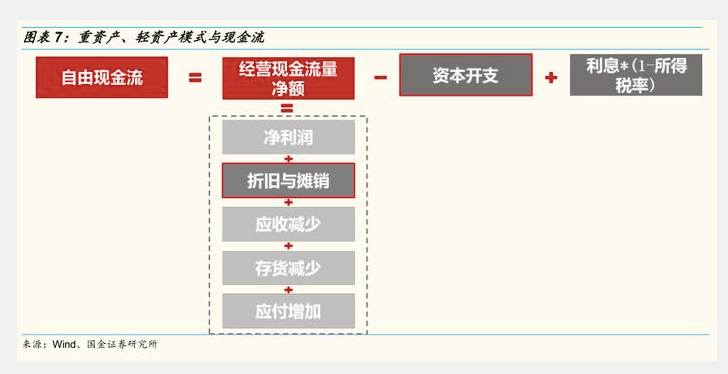
出品|公司研究室基金组 文|曲奇 在喧嚣的资本市场中,利润增长常常成为投资者追逐的焦点,但真正的价值创造者却始终信奉一个更朴素的真理——现金为王。 从巴菲特"未来现金流的折现"到贝佐斯"自由现金流至上"的经营哲学,全球顶尖投资人与企业家早已揭示:企业的长期价值,不在 于账面利润的数字游戏,而在于其持续创造真实现金的能力。 如今,这一理念正在A股市场落地生根。 随着国内经济从高速增长转向高质量发展,那些无需依赖持续资本投入却能稳定"造血"的"现金奶牛",正成为市场新宠。以现金流 ETF南方(159232.SZ)为例,其跟踪的中证全指自由现金流指数(简称:中证现金流;代码:932365.CSI),正是这一趋势的精 准捕捉者。 当"国九条"强化分红要求、低利率环境压缩固收收益,中证现金流指数以4%股息率+月度分红评估机制,为投资者提供了一条兼顾 稳健与成长的新路径。 为什么自由现金流是投资的终极指标?普通投资者如何借道ETF共享"现金奶牛"们的长期红利? 从巴菲特到贝佐斯:解码自由现金流的投资智慧 对于一家公司,投资者往往过于关注利润,而忽视了更为关键的自由现金流(Free Cash Flow,FCF)。 通常而言 ...