
人工智能(AI)

Search documents
ArcBest(ARCB) - 2025 Q4 - Earnings Call Transcript
2026-01-30 15:30
Financial Data and Key Metrics Changes - Consolidated revenue for the fourth quarter was $973 million, down 3% year-over-year [14] - Non-GAAP operating income from continuing operations was $14 million, compared to $41 million last year [15] - Adjusted non-GAAP earnings per share were $0.36, down from $1.33 in the fourth quarter of 2024 [15] Business Line Data and Key Metrics Changes - Asset-Based segment revenue was $649 million, flat on a per-day basis [16] - Asset-Light segment revenue was $354 million, a daily decrease of 5% year-over-year [18] - Daily shipments in the Asset-Based segment increased by 2% year-over-year, while weight per shipment increased slightly [16] Market Data and Key Metrics Changes - In January, daily shipments increased 3% year-over-year, weight per shipment increased 5%, and daily tonnage increased 8% [17] - Revenue per shipment in the Asset-Light segment decreased 6%, reflecting a higher mix of managed business [18] Company Strategy and Development Direction - The company focuses on three pillars: growth, efficiency, and innovation, with a customer-first mindset [4][5] - The company is advancing initiatives outlined at the Investor Day to achieve long-term targets and deliver greater value to shareholders [5] - The company aims to maintain yield discipline and manage costs for sustainable long-term profitability [20] Management's Comments on Operating Environment and Future Outlook - Management expressed confidence in the company's ability to navigate market volatility and achieve long-term targets despite a challenging freight environment [4][20] - The company is focused on driving productivity and maintaining cost discipline, positioning itself for sustainable success regardless of external market conditions [20] Other Important Information - The company achieved $24 million in annual cost savings through efficiency and innovation initiatives [9] - The company returned more than $86 million to shareholders through share repurchases and dividends in 2025 [23] Q&A Session Questions and Answers Question: Follow-up on January trends and tonnage - Management noted that January was impacted by strong winter storms, affecting shipment dynamics and tonnage levels [26][27] Question: Mix normalization and competitive dynamics - Management indicated that the mix has been influenced by the ongoing freight recession and that it is difficult to predict when it will stabilize [32][33] Question: January trends and industry-wide impacts - Management acknowledged that January dynamics were influenced by weather impacts and specific to the company, but overall market conditions remain cautious [36][37] Question: Insights from new COO on Asset-Light business - The new COO expressed excitement about the company's culture and commitment to improving total shareholder return [46][47] Question: Broader health of the demand environment - Management highlighted bright spots in certain sectors and emphasized the importance of being responsive to customer needs [50][51] Question: Competitive pricing environment - Management stated that pricing discipline remains rational in the market, with less bid activity from customers being a positive sign [82][83]

从技术到战略:一本写给未来十年企业家的AI转型指南
Sou Hu Cai Jing· 2026-01-30 10:12
Core Insights - The book "Brave New Game: The Rise of AI-Driven Companies" emphasizes that AI has evolved from a mere technological tool to a core strategic driver for business growth [2][4] - It provides a practical guide for companies to leverage AI effectively, highlighting the importance of integrating AI into overall business strategy rather than treating it as a separate function [4][5] Group 1: Understanding AI as a New Economic Starting Point - AI is positioned as the starting point of the new economy, indicating its integration into overall corporate strategy and operations [4] - The book illustrates how companies like ByteDance, Rio Tinto, and Repsol utilize AI for product innovation, operational optimization, and energy efficiency, transitioning from cost-saving to value creation [4] Group 2: Three Core Elements for AI Transformation - The book identifies three essential elements for becoming an AI-driven company: a solid data strategy, ideal human-machine collaboration, and responsible AI with social operating licenses [5] - It introduces the concept of "data alchemy," emphasizing that data must be not only abundant but also dynamic, continuously updated, and widely shared to support decision-making [5] Group 3: Practical Implementation Guidelines - The book serves as a "practical manual" for corporate transformation, providing real-world cases and specific methods for designing data governance mechanisms, preventing biases in AI applications, and enhancing team culture and productivity through AI [6] - Companies at any stage of AI exploration can find actionable references tailored to their needs [6] Group 4: Anticipating Future Business Trends - The book forecasts transformative changes in the next 10-20 years due to AI, such as the normalization of autonomous driving, the elimination of language barriers through instant translation, and exponential increases in innovation speed [7] - These trends are based on reasonable projections derived from current technological advancements and corporate practices [7] Conclusion - "Brave New Game" is not merely a technical manual or a vague trend prediction; it is rooted in real business scenarios and encapsulates global insights and strategic wisdom from Boston Consulting Group, offering a clear, systematic, and executable path for AI transformation [9]


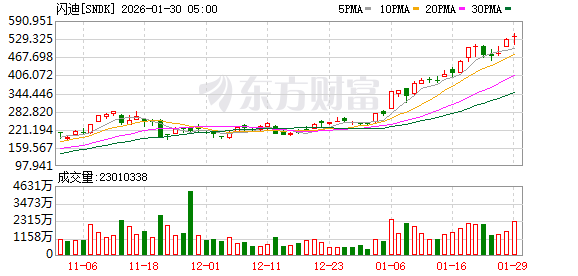
闪迪公布超预期财报,股价上涨逾95%
Guo Ji Jin Rong Bao· 2026-01-30 10:01
在人工智能(AI)技术浪潮驱动下,当前数据存储需求持续高涨。 纽曼指出,当前NAND内存正面临"前所未有的短缺",这使企业拥有更多定价权,为闪迪及其他存储公司带来了短期上行空间。他进一步表示,AI模型的 不断演进和扩展、更大的训练与推理工作负载以及庞大存储市场需求将成为闪迪持续增长的重要动力。 戈克勒也承认,"NAND闪存已被业界公认是满足全球存储需求不可或缺的核心技术"。 1月29日,美国存储技术公司闪迪(SanDisk)公布最新财报,利润与收入均实现大幅跃升,远超市场预期。股价也随之剧烈波动,盘后价一度拉升超 17%,收盘报价539.3美元,年初至今已上涨95.94%。 财报数据显示,闪迪在2025年第二财季实现利润8.03亿美元,去年同期利润为1.04亿美元;季度收入从去年同期的18.8亿美元跃升至30.3亿美元,增长显 著;经调整后每股收益达6.20美元,远高于分析师普遍预期的3.62美元,也远超公司此前每股3.00至3.40美元的指引区间。 其中,闪迪的数据中心业务收入环比大幅增长64%,凸显了人工智能(AI)基础设施建设带来的强劲拉动。 闪迪首席执行官大卫·戈克勒(David Goeckeler) ...
广西南宁大力扶持微短剧产业高质量发展
Xin Lang Cai Jing· 2026-01-30 09:20
中新网广西新闻1月30日电 (黄建文)中国—东盟(南宁)微短剧大赛优秀扶持作品发布暨微短剧产业 链对接会,29日在南宁市三街两巷人民剧院举办。 作为中国—东盟(南宁)文化月的子活动之一,本次活动由中共广西壮族自治区委员会宣传部指导,广 西壮族自治区广播电视局、广西壮族自治区文化和旅游厅、南宁市人民政府共同主办。 图为签约 仪式。主办方供图 活动中,广西山海星辰传媒集团有限公司与南宁威宁集团签署"微短剧产业基地落地合作协议",南宁市 艺术剧院公司、南宁市融媒体中心与南宁文旅集团签署"南宁微短剧服务中心共建协议",完善本地微短 剧产业链配套。微短剧产业链对接会同步开展,嘉宾围绕文旅创作、投融资、东盟市场开拓等议题洽谈 交流,实现资源与需求高效匹配。 活动还为青秀山风景区、南宁大明山风景区、方特东盟神画、邕州古城等10处兼具南宁特色与东盟风情 的优质拍摄取景地正式授牌"南宁市微短剧拍摄取景地"。 近年来,南宁凭借深厚的历史底蕴、丰富的城市景观成为微短剧拍摄的"天然摄影棚"。从五象新区的现 代楼宇到三街两巷的烟火气息,从青秀山的生态美景到邕江两岸的秀丽风光,这些独特符号通过微短剧 走向全国、走向世界。 图为获扶 持作 ...

智驱新程·芯动未来:L3级自动驾驶将怎样重塑汽车生态?
Xin Jing Bao· 2026-01-30 08:39
Core Insights - The Chinese automotive industry is undergoing a profound transformation, entering a new phase centered around intelligent connectivity, referred to as "Smart Drive" [1][3] - The forum highlighted the transition from L2 to L3 autonomous driving, emphasizing that this shift is not merely a software upgrade but involves significant changes in responsibility, safety ethics, and insurance laws [1][5] Industry Overview - In 2025, China's automotive production and sales are expected to exceed 34 million units, maintaining its position as the world's largest market for 17 consecutive years [3] - New energy vehicle production and sales have surpassed 16 million units, also leading globally for 11 years [3] - The automotive value proposition is evolving towards a triad of mobile intelligent terminals, energy storage units, and digital spaces, becoming a core carrier of new productive forces [3] Technological Advancements - The transition to L3 autonomous driving is marked by the need for new hardware foundations, as existing L2 systems lack the necessary redundancy and reliability for safe operation [4][5] - Experts agree that the shift in driving responsibility from human to system in L3 scenarios complicates accident liability and insurance frameworks [6] Safety and Regulation - The complexity of accident liability in L3 driving necessitates a neutral and authoritative safety monitoring platform to ensure independent data analysis capabilities for regulators and insurers [6][7] - A multi-layered safety net is essential, incorporating technical safeguards, regulatory constraints, and social resources to enhance overall safety [7] Future Projections - L3 vehicles are anticipated to achieve large-scale commercialization around 2030, with initial deployment in business sectors such as ride-hailing and logistics [8] - The path to widespread adoption involves collaboration across policies, standards, industry chains, and consumer engagement [8][9] Role of Artificial Intelligence - AI is identified as the driving force behind the intelligent revolution in the automotive sector, with predictions that advanced models will become key in enhancing safety and operational capabilities [9][10] - The industry is at a crossroads, with L2 improvements leading to L3 disruptions and L4 potentially transforming transportation methods entirely [9][10]
马斯克:最强对手来自中国
Zhong Guo Ji Jin Bao· 2026-01-30 07:37
马斯克对人形机器人寄予厚望。 据此前报道,当地时间1月22日,马斯克在达沃斯世界经济论坛上透露,人形机器人擎天柱(Optimus) 预计将于明年年底向公众发售。 据央视新闻消息,当地时间1月28日,特斯拉首席执行官埃隆·马斯克出席公司2025年四季度及全年财报 发布电话会议。 在被问及如何看待特斯拉人形机器人在全球范围内面对的竞争时,马斯克说:"我确实认为,迄今为止 特斯拉人形机器人最大的竞争对手来自中国。中国非常擅长扩大制造业规模,同时擅长运用人工智能技 术,并处在持续进步的进程中,因此绝对是特斯拉最强劲的竞争对手。" "我们没有看到任何来自中国以外的强力竞争对手,和中国的竞争绝对是一场硬仗。任何人都不要低估 中国,中国是极具潜力和更高层级的对手。" 在达沃斯,马斯克对比了中美AI发展。 他表示,美国人工智能(AI)技术的发展正面临电力供应不足这一关键制约因素,而中国早已处理好 这个问题。马斯克警告称,由于缺电,美国可能很快会出现芯片产量过剩却无法开启使用的尴尬局面。 他认为,中国在电力产能方面已明显领先美国,尤其是在太阳能发电领域。"中国的电力增长非常迅 猛……实际上,太阳能是中国的大产业……不幸的是,在 ...

韩国综合Kospi指数1月份累涨24.0% 创1998年12月以来最大单月涨幅
Jin Rong Jie· 2026-01-30 07:04
韩国综合股价指数(Kospi)收涨0.1%,报5224.36点。Kospi指数本周上涨4.7%,1月份累计上涨 24.0%,创1998年12月以来最大单月涨幅。 韩国股市综合股价指数周五上涨,全球人工智能(AI)热潮推动的涨势未见减弱迹象,尽管美国总统 特朗普再度发出关税威胁。据韩联社报道,在特朗普本周早些时候通过社交媒体发文称将再次提高对韩 关税后,美韩两国在首日面对面会谈中未达成任何结论。美国财政部在半年度汇率报告评估中指出,韩 元近期贬值与韩国强劲的经济基本面不符。 股票频道更多独家策划、专家专栏,免费查阅>> 责任编辑:山上 ...
高盛掌门人最新发声!黄金、股票、中国资本市场……怎么看?
证券时报· 2026-01-30 06:25
Core Viewpoint - Goldman Sachs is committed to long-term development in the Chinese market and is optimistic about the further opening of China's capital markets [1][4]. Group 1: Business Development in China - David Solomon, Chairman and CEO of Goldman Sachs, emphasized the company's ongoing commitment to the Chinese market, noting a significant recovery and acceleration in business activities [1][3]. - Solomon highlighted that international investors are regaining interest in China, which is reflected in the rising stock market [6][7]. - Goldman Sachs has been operating in China for over 30 years, engaging in various services including investment banking, asset management, and wealth management, with a notable focus on the Hong Kong market [3][4]. Group 2: Economic Insights - Solomon acknowledged that China's economy has met its growth targets, attributing this success to technological innovation, manufacturing, and exports, while suggesting that future growth will rely more on consumer spending [3][4]. - He expressed optimism about the potential for a more balanced and stable Chinese economy if consumer spending increases [3]. Group 3: Market Perspectives - Solomon stated that stocks are expected to outperform gold in the long term, despite current trends where central banks are increasing gold holdings for short-term adjustments [5][6]. - He noted that international capital is gradually returning to China, with expectations for a more balanced and open Chinese economy attracting more investments [6][7]. Group 4: AI Investment Trends - Solomon affirmed the long-term potential of AI, indicating that current investments differ from past trends as they are driven by profitable companies recognizing their business needs [8]. - He compared the current AI investment climate to the early internet era, suggesting that while there may be concerns about bubbles, the market will eventually clarify real demand [8].


韩国央行行长称对韩元大幅贬值感到困惑,呼吁养老基金进行外汇对冲操作
Xin Lang Cai Jing· 2026-01-30 05:06
Core Viewpoint - The Governor of the Bank of Korea, Lee Chang-yong, expressed concerns that the depreciation of the Korean won has exceeded reasonable limits and may impact inflation [1][3]. Exchange Rate Dynamics - The Korean won has been fluctuating around the psychologically significant level of 1450 won per dollar, recently dropping to a low of 1480 won due to a strong dollar, geopolitical risks, and local investors heavily investing in overseas securities [1][3]. - To address the increased volatility in the exchange rate, South Korean authorities have issued strong verbal warnings and implemented various policy measures, helping the won recover to above 1430 won [1][3]. Supply and Demand Factors - Lee attributed the sharp decline of the won to a "supply and demand" phenomenon, noting that despite strong exports leading to significant dollar inflows, market participants are reluctant to sell dollars in the spot market [1][3]. - The scale of overseas investments by the National Pension Service (NPS) is substantial relative to the size of the Korean foreign exchange market, reinforcing expectations of further depreciation of the won and encouraging individual investors to invest more overseas [1][3]. NPS Investment Strategy - Lee criticized the NPS's current foreign exchange hedging target of zero as unreasonable, suggesting that the hedging ratio needs to be increased [2][4]. - He welcomed the NPS's recent decision to halve its overseas investment plan for the year, which is expected to reduce dollar demand by at least 20 billion dollars [2][5]. Inflation and Economic Outlook - If the won remains in the 1470-1480 won per dollar range for an extended period, the Bank of Korea may need to revise its inflation expectations upward, although the inflation rate is projected to remain around 2% for the year [2][5]. - The main growth drivers for South Korea this year are expected to be exports of semiconductors, defense products, automobiles, and ships, with a strong momentum in chip and artificial intelligence (AI)-related exports [2][5].
高盛掌门人最新发声!黄金、股票、中国资本市场……怎么看?
券商中国· 2026-01-30 03:13
Core Viewpoint - Goldman Sachs remains committed to the development of its business in China, expressing optimism about the further opening of the Chinese capital market and the recovery of business activities in the region [1][2]. Group 1: Business Development in China - David Solomon, CEO of Goldman Sachs, emphasizes the company's long-term commitment to the Chinese market, having witnessed significant growth in various sectors since his first visit in the mid-1990s [2]. - The company has been operating in China for over 30 years, engaging in investment banking, fixed income, foreign exchange, commodities, stock trading, wealth management, and asset management [2][3]. - Solomon notes that the investment banking sector, particularly in Hong Kong, is experiencing positive growth due to the recovery of equity financing and increased demand for financial advisory services [3]. Group 2: Economic Outlook - Solomon acknowledges that China's economy has met its growth targets, attributing this success to technological innovation, manufacturing, and exports, while highlighting the potential for consumption to become a more significant growth driver in the future [2]. - He expresses encouragement regarding the ongoing opening measures in the Chinese capital market, which could attract more talent and capital, further promoting market development [3]. Group 3: Investment Perspectives - Solomon reiterates that stocks are expected to outperform gold in the long term, despite current trends where central banks are increasing gold holdings to adjust their dollar asset exposure [5]. - He believes that international capital is gradually returning to China, as evidenced by the recent rise in the Chinese stock market, and anticipates that by 2026, international capital allocation to Chinese assets will continue to increase [4][5]. - The discussion on AI investments highlights that the current funding is driven by profitable companies recognizing their business needs, contrasting with previous speculative bubbles [6].
