人民币国际化

Search documents
锚定“十五五”新图景 外资“跟投”意愿明显
Xin Lang Cai Jing· 2026-01-07 18:14
Group 1 - The global economic landscape is rapidly evolving, making it crucial to understand China's macro trends and market opportunities, with international financial institutions focusing on the "14th Five-Year Plan" as a core analysis framework [1] - Predictions for China's economic growth in 2026 are set between 4.5% and 5%, with an actual growth forecast of 4.6%, emphasizing a shift towards domestic demand and innovation-driven growth [2] - The focus on expanding domestic demand aligns with the goal of significantly increasing the household consumption rate as outlined in the "14th Five-Year Plan" [2] Group 2 - Foreign institutions express a preference for Chinese assets, recommending an overweight position in Chinese stocks due to expected improvements in corporate governance and targeted policy support for technology and innovation [3][4] - HSBC adopts a "barbell strategy" in the A-share market, balancing high-tech growth sectors with high-yield quality stocks to align with policy directions and capture benefits from AI-driven growth [4] - The international status of the Renminbi is expected to rise, with efforts to enhance its credibility and position as a core currency in the international financial system, marking the establishment of a "strong Renminbi policy" [5] Group 3 - Current foreign investment in Chinese assets is still considered "underweight," but this trend is changing due to the long-term potential of China's technology sector and the diversification of global asset allocation [6] - Following the "9.24" market rally in 2024, many global asset management firms have increased their allocation to Chinese assets, indicating a growing recognition of their long-term value [6]



我国外储创10年新高 央行连续14个月增持黄金
Zheng Quan Shi Bao· 2026-01-07 18:03
国家外汇管理局1月7日发布的最新统计数据显示,截至2025年12月末,我国外汇储备规模为33579亿美 元,较11月末增加115亿美元,增幅为0.34%,创10年新高。 过去一年,我国外汇储备规模始终稳定在3.2万亿美元以上,充分发挥了国家经济金融重要的"稳定 器"和"压舱石"作用。 从外汇储备的绝对规模变动看,2025年我国经济运行平稳,作为外汇储备主要来源的贸易顺差、外商直 接投资(FDI)以及资本流动表现亮眼,为全年外汇储备规模保持基本稳定奠定基础。 过去一个月,美联储开展年内第三次降息操作,美元指数下跌1.2%至98.3,非美货币兑美元汇率总体升 值,非美货币折算成美元后增加了当期外汇储备规模。10年期美国国债收益率被视为全球资产定价 的"锚点",在过去一个月累计上涨16个基点至4.18%,美债价格相应走低,一定程度上拉低了全球金融 资产价格。两项因素作用下,当月我国外汇储备规模小幅上升。 民生银行首席经济学家温彬向证券时报记者表示,2025年,我国出口量质齐升,出口对国际收支的基础 支撑作用更为凸显。我国资本市场表现优于全球整体,国际机构对我国经济前景和人民币资产的信心进 一步增强,境外证券资本流入 ...
不止计付利息,数字人民币还有这些隐藏技能!
Sou Hu Cai Jing· 2026-01-07 17:42
Core Viewpoint - The digital renminbi is transitioning from a "digital cash" era to a "digital deposit currency" era, starting from January 1, 2026, when wallet balances will begin to earn interest like demand deposits [1][3]. Group 1: Definition and Characteristics - Digital renminbi is a digital form of legal currency issued by the People's Bank of China, equivalent to physical renminbi, and has value characteristics and legal tender status [3]. - The 2.0 version of digital renminbi represents a significant upgrade, functioning as "digital demand deposits" [3]. - Digital renminbi differs fundamentally from virtual currencies, as it is backed by national credit, while virtual currencies are decentralized and lack stable value [3]. Group 2: Benefits for Consumers - The upgrade of digital renminbi offers benefits in three main areas: "interest," "convenience," and "security" [5]. - Wallet balances can earn interest at the bank's demand deposit rate, enhancing the willingness of users to hold digital renminbi [5]. - The "dual offline payment" feature allows transactions without internet access, facilitating convenient payments [5]. - A "visual hard wallet" has been introduced for the elderly, simplifying the payment process with a physical card that displays balance and payment codes [5]. - Digital renminbi wallets with balances up to 500,000 yuan are protected by deposit insurance, ensuring security comparable to bank deposits [5]. Group 3: Regulatory and Social Implications - Digital renminbi adheres to the principle of "small amount anonymity, large amount traceability," which aids in combating fraud, money laundering, tax evasion, and terrorist financing [6]. - It complements existing payment systems like WeChat and Alipay, creating a collaborative ecosystem rather than a zero-sum game [8]. - Digital renminbi is expected to create a "catalyst effect" in the payment landscape, encouraging a return to the essence of service and potentially leading to new business models [8]. Group 4: National Significance - The digital renminbi has significant strategic implications for the country, including ensuring financial security and maintaining payment system functionality in extreme situations [9]. - It promotes the internationalization of the renminbi, facilitating easier settlement and clearing in international transactions [9]. - As the first major economy to position central bank digital currency as interest-bearing deposit currency, China strengthens its global leadership and rule-making authority in this area [9]. - It enhances regulatory capabilities to combat illegal activities such as money laundering and tax evasion through high traceability [9]. - The digital renminbi also supports inclusive finance by providing basic financial services to unbanked populations, contributing to common prosperity [9].

政策利好+成本优势 熊猫债市场投融资平台功能凸显
Zheng Quan Ri Bao· 2026-01-07 17:25
本报记者 田鹏 2026年的熊猫债发行实现良好开局。 1月6日,中国燃气控股有限公司率先发行两只熊猫债,为2026年市场拉开发行大幕;1月7日,汉高香港控股有限公司迅速 跟进,成功发行1只熊猫债。 作为境外机构在中国境内发行的人民币计价债券,熊猫债不仅是中国资本市场双向开放与人民币国际化的核心载体,更是 金融市场制度型开放的重要实践平台。历经多年发展,熊猫债已迈入成熟扩容期,在发行规模稳步提升的同时,结构上,发行 主体、产品品类、期限配置等多方面也不断优化升级。 接受《证券日报》记者采访的专家表示,今年我国熊猫债市场将延续高质量发展态势,发行规模有望实现适度增长,非中 资背景发行人占比将进一步提升,并成为市场主导力量。同时,产品创新、期限长端化、结构优化的趋势将持续深化,外部风 险仍需重点关注。在政策利好与制度型开放的双重驱动下,熊猫债市场的投融资平台功能将更加凸显,为人民币国际化与资本 市场双向开放注入更强动力。 呈现多维结构性优化趋势 2026年,熊猫债市场开局表现亮眼。据Wind资讯数据统计(全文数据来源),前述3只熊猫债发行规模合计达25亿元,较 2025年同期增长66.67%。其中,中国燃气控股有限 ...
我国外汇储备规模33579亿美元 黄金储备14个月连增
Zheng Quan Ri Bao· 2026-01-07 17:25
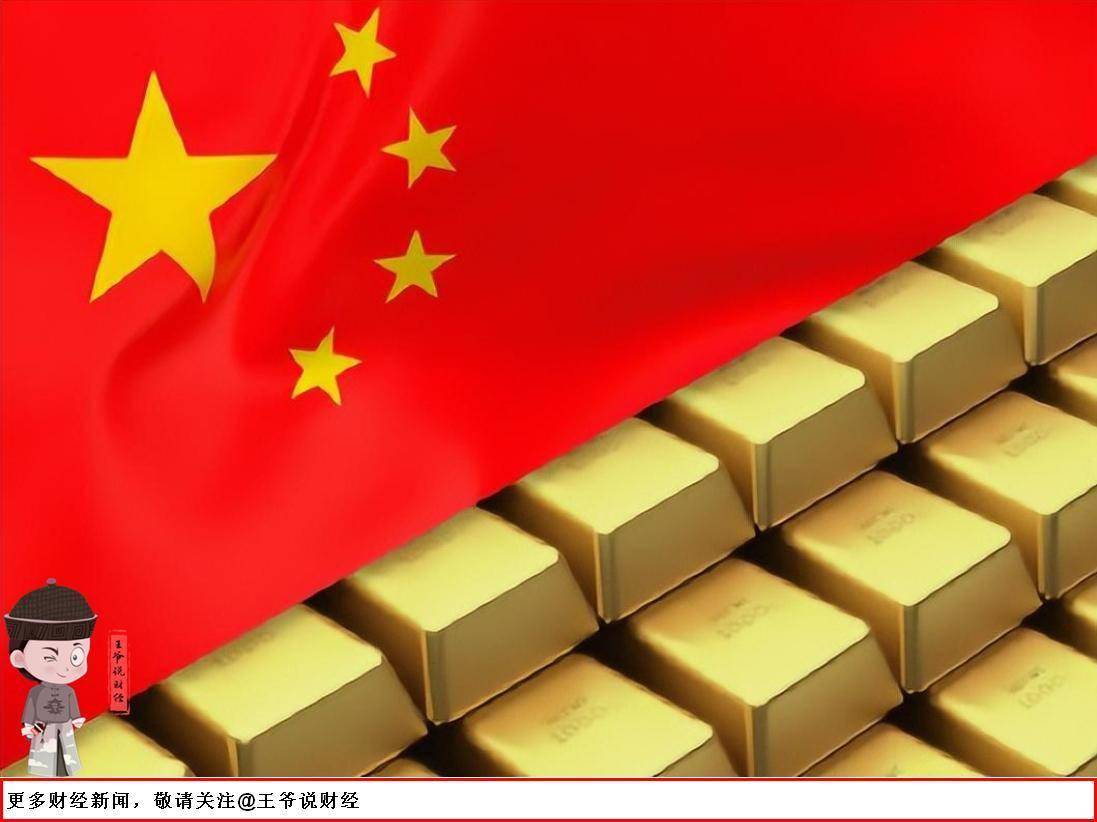
"按不同标准测算,当前我国略高于3万亿美元的外储规模均处于适度充裕状态。"东方金诚首席宏观分析师王青对《证券 日报》记者表示,综合考虑各方面因素,未来外储规模有望保持基本稳定。在外部环境波动加大的背景下,适度充裕的外储规 模将为保持人民币汇率处于合理均衡水平提供重要支撑,也能成为抵御各类潜在外部冲击的压舱石。 同日公布的黄金储备数据显示,截至2025年12月末,我国黄金储备为7415万盎司,较11月末的7412万盎司增加3万盎司, 为我国央行连续第14个月增持黄金。 "近期央行在国际金价持续大幅上涨、屡创历史新高过程中持续小幅增持黄金,释放了优化国际储备的信号。"王青表示, 截至2025年11月末,在主要由外汇储备和黄金储备构成的官方国际储备中,黄金储备的占比约为9.5%,明显低于15%左右的全 球平均水平。从优化国际储备结构角度出发,未来需要持续增持黄金储备。此外,黄金是全球广泛接受的最终支付手段,央行 增持黄金能够增强主权货币的信用,为稳慎推进人民币国际化创造有利条件。 Wind数据显示,2025年12月份,伦敦金现货价格上涨2.36%。其中,去年12月29日,伦敦金现货价格盘中最高触及4550.52 美 ...
你敢信?金价飙涨4460美元之际,中国央行却连续14个月增持黄金!背后释放了什么信号?我们普通人又该如何操作?
Sou Hu Cai Jing· 2026-01-07 15:04
Core Insights - The People's Bank of China (PBOC) has increased its gold reserves for 14 consecutive months, reaching 74.15 million ounces (approximately 2,306.32 tons) as of December 2025, with a total increase of 86,000 ounces for the year [3][12] - The foreign exchange reserves have also risen to $33,579 billion, marking a $11.5 billion increase from November, the highest level in a decade [3][12] Group 1: Reasons for Continuous Gold Accumulation - The primary reason for the continuous increase in gold reserves is to optimize the structure of foreign exchange reserves, reducing reliance on the US dollar amid a declining dollar index, which fell by 9.41% in 2025 [7][12] - Gold serves as a hedge against inflation and geopolitical risks, with China's gold reserves currently making up about 15% of total reserves, which is below the global average [7][12] Group 2: Implications for the Renminbi - Increasing gold reserves supports the internationalization of the Renminbi, providing a solid backing that enhances confidence in the currency as a global reserve currency [8][12] - The growing use of the Renminbi in cross-border trade settlements is bolstered by substantial gold reserves, positioning it more favorably in international currency competition [8] Group 3: Market Impact and Future Trends - The continuous accumulation of gold is expected to influence various aspects of daily life, including rising gold jewelry prices, with recent adjustments reflecting increases between 200 to 1,500 yuan [10] - Analysts predict a bullish outlook for gold prices, with UBS raising its target to $5,000 per ounce and Bank of America forecasting an average of $4,538 per ounce in 2026 [10] - The PBOC is likely to continue its gradual increase in gold reserves, indicating a trend of sustained growth in the future [10][12]
增持黄金!央行又出手了
Zhong Guo Zheng Quan Bao· 2026-01-07 12:06
国家外汇管理局2026年1月7日公布数据显示,截至2025年12月末,我国外汇储备规模为33579亿美元, 较2025年11月末上升115亿美元,升幅为0.34%。 "2025年12月末,我国外汇储备规模增加115亿美元至33579亿美元,延续了此前4个月升势。"中银证券 (601696)全球首席经济学家管涛分析,这主要反映了汇率折算和资产价格变化带来的正估值效应。当 月,美元指数跌幅扩大,累计下跌1.1%至98.3。 "2025年12月我国央行继续增持黄金储备3万盎司至7415万盎司,全年累计增持86万盎司。"管涛认为, 受量价推动影响,我国央行持有黄金储备余额占同期外汇储备余额的比重为9.51%,较上年末上升3.54 个百分点,继续刷新历史新高,但仍低于全球平均水平。 "2025年12月末,我国外汇储备规模已连续五个月处于3.3万亿美元之上,创2015年12月以来最高,较上 年末也大幅增加1555亿美元。"东方金诚首席宏观分析师王青表示,这背后主要是受2025年美元指数下 降9.4%、全球主要股指上涨,以及美债收益率下行40个基点、美债价格走高等因素带动。 "从优化国际储备结构、稳慎扎实推进人民币国际化以 ...

外储规模连续5月超3.3万亿美元,央行黄金储备“14连增”
Di Yi Cai Jing· 2026-01-07 11:53
Core Viewpoint - The central theme of the articles is the continuous increase in China's foreign exchange reserves and gold holdings, indicating a stable economic outlook and a strategic shift towards optimizing international reserves through gold accumulation [1][4][9]. Foreign Exchange Reserves - As of December 2025, China's foreign exchange reserves reached $335.79 billion, an increase of $11.5 billion from the previous month, marking a growth rate of 0.34% [1][6]. - The rise in foreign reserves is attributed to the depreciation of the US dollar and fluctuations in asset prices, with the dollar index falling by 1.1% to 98.3 [2][6]. - The trade surplus exceeded $1 trillion for the first time, providing a solid foundation for the stability of foreign reserves [3][7]. Gold Reserves - China's official gold reserves stood at 74.15 million ounces as of December 2025, with an increase of 30,000 ounces, marking the 14th consecutive month of gold accumulation [1][8]. - The increase in gold reserves, although at a low increment, aligns with market expectations and reflects a strategic move to enhance the structure of international reserves [4][9]. - The ongoing geopolitical tensions and the trend of "de-dollarization" are driving central banks globally to increase their gold holdings, with China's gold reserve proportion at approximately 9.5%, below the global average of around 15% [8][9].
央行出手:继续买买买
Zhong Guo Ji Jin Bao· 2026-01-07 10:40
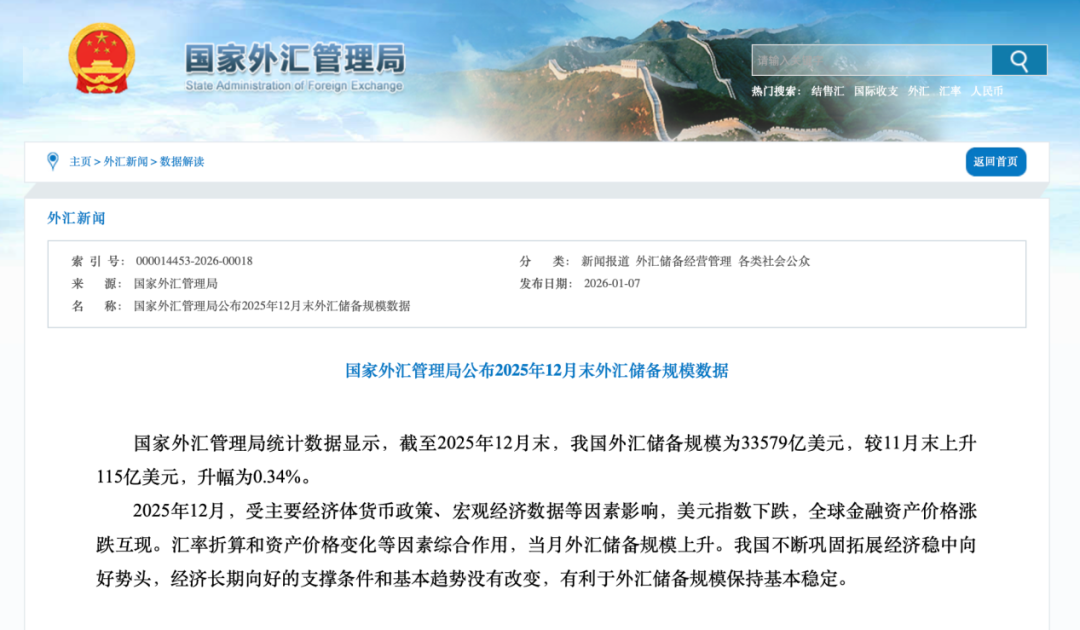
中国基金报记者 张玲 1月7日,国家外汇管理局发布的数据显示,截至2025年12月末,我国外汇储备规模连续5个月稳定在3.3万亿美元以上。同时,央行已连续14个月增持黄 金。 外储规模继续稳定在3.3万亿美元以上 数据显示,截至2025年12月末,我国外汇储备规模为33579亿美元,较11月末上升115亿美元,升幅为0.34%。 国家外汇管理局表示,2025年12月,受主要经济体货币政策、宏观经济数据等因素影响,美元指数下跌,全球金融资产价格涨跌互现。汇率折算和资产价 格变化等因素综合作用,当月外汇储备规模上升。我国不断巩固拓展经济稳中向好势头,经济长期向好的支撑条件和基本趋势没有改变,有利于外汇储备 规模保持基本稳定。 民生银行首席经济学家温彬分析称,外贸领域,我国出口量质齐升,2025年前11个月,货物贸易顺差首次突破万亿美元大关,创历史新高,出口产品结构 升级,出口市场多点开花,对国际收支的基础支撑作用更为明显。投资领域,2025年,我国资本市场表现优于全球整体,国际机构对我国经济前景和人民 币资产的信心进一步增强,境外证券资本流入规模保持在较高水平。我国经济不断巩固拓展经济稳中向好势头,为外汇储备规模 ...
央行出手:继续买买买!
中国基金报· 2026-01-07 10:21
东方金诚首席宏观分析师王青表示,按不同标准测算,当前我国略高于3万亿美元的外储规模 处于适度充裕状态。综合考虑各方面因素,未来外储规模有望保持基本稳定。在外部环境波 动加大的背景下,适度充裕的外储规模将为保持人民币汇率处于合理均衡水平提供重要支 撑,也能成为抵御各类潜在外部冲击的"压舱石"。 央行连续14个月增持黄金 【导读】去年12月外储规模环比上升0.34%,央行连续14个月增持黄金 中国基金报记者 张玲 1月7日,国家外汇管理局发布的数据显示,截至2025年12月末,我国外汇储备规模连续5个 月稳定在3.3万亿美元以上。同时,央行已连续14个月增持黄金。 外储规模继续稳定在3.3万亿美元以上 数据显示,截至2025年12月末,我国外汇储备规模为33579亿美元,较11月末上升115亿美 元,升幅为0.34%。 国家外汇管理局表示,2025年12月,受主要经济体货币政策、宏观经济数据等因素影响,美 元指数下跌,全球金融资产价格涨跌互现。汇率折算和资产价格变化等因素综合作用,当月 外汇储备规模上升。我国不断巩固拓展经济稳中向好势头,经济长期向好的支撑条件和基本 趋势没有改变,有利于外汇储备规模保持基本稳定。 ...