智能化

Search documents
中经评论:16年规模第一,中国制造当更强
Jing Ji Ri Bao· 2026-01-23 00:09
Core Viewpoint - China's manufacturing sector is expected to maintain its position as the world's largest for 16 consecutive years, with a complete industrial system and a focus on high-end, intelligent, and green transformation [1][2][3] Group 1: Manufacturing Scale - China's manufacturing value added has been the highest globally since 2010, currently accounting for nearly 30% of global manufacturing, making it a key driver of global manufacturing growth [1] - Among 504 major industrial products worldwide, China leads in the production of most, including basic materials like steel and cement, as well as high-end equipment like industrial robots and electric vehicles [1] Group 2: Industrial System Completeness - China is the only country with a complete industrial classification covering all industrial categories, ensuring a stable and efficient production chain that can quickly respond to diverse global market demands [2] Group 3: High-end Manufacturing - High-end manufacturing is crucial for addressing weaknesses in core technologies and enhancing the quality and technical level of Chinese manufacturing, with significant growth expected in equipment and high-tech manufacturing sectors by 2025 [2] Group 4: Intelligent Manufacturing - Intelligent manufacturing, driven by AI, big data, and industrial internet technologies, allows China to compete on equal footing with developed countries, leveraging its advantages in new information technologies [3] Group 5: Green Manufacturing - Green manufacturing focuses on low-carbon technologies and circular economies, with projections indicating that by 2025, China's production of new energy vehicles will exceed 16 million units, maintaining its global leadership [3]
16年规模第一,中国制造当更强
Jing Ji Ri Bao· 2026-01-22 21:58
Core Insights - China's manufacturing sector is expected to maintain its position as the world's largest for 16 consecutive years, with a complete industrial system becoming increasingly evident [1][2] - The transition of Chinese manufacturing towards high-end, intelligent, and green production is a key focus for upgrading and enhancing quality and efficiency [1][3] Manufacturing Scale - China's manufacturing value added has been the highest globally since 2010, accounting for nearly 30% of global manufacturing value added, significantly surpassing other countries [1] - Among 504 major industrial products worldwide, China leads in the production of most, including basic materials like steel and cement, as well as high-end equipment like industrial robots and electric vehicles [1] Industrial System Completeness - China is the only country with a complete industrial classification system recognized by the United Nations, covering 41 major industrial categories and ensuring a stable and efficient production chain [2] - This comprehensive industrial system enhances China's ability to respond quickly to diverse global market demands [2] High-end Manufacturing - High-end manufacturing is crucial for addressing weaknesses in core technologies and components, enhancing the quality and technology level of Chinese products, and extending into higher value chains [2] - By 2025, the value added of major equipment manufacturing and high-tech manufacturing is projected to grow by 9.2% and 9.4% respectively, increasing their share of total industrial output [2] Intelligent Manufacturing - Intelligent manufacturing, driven by AI, big data, and industrial internet technologies, allows China to compete on equal footing with developed countries [3] - China's advantages in new information technologies and extensive application scenarios position it well for leadership in intelligent manufacturing [3] Green Manufacturing - The shift towards green manufacturing focuses on low-carbon technologies and circular economies, addressing sustainability challenges and creating new growth opportunities [3] - By 2025, the production of new energy vehicles is expected to exceed 16 million units, maintaining global leadership for 11 consecutive years, alongside rapid growth in green products like wind turbines [3] Conclusion - China's sustained position as the world's largest manufacturing nation serves as a foundation for its ongoing transition towards a more advanced manufacturing powerhouse [3]
北汽蓝谷2025年 亏损额料收窄
Zhong Guo Zheng Quan Bao· 2026-01-22 20:59
Core Viewpoint - Beiqi Blue Valley (600733) is expected to narrow its net loss in 2025, projecting a loss of 4.35 billion to 4.65 billion yuan, despite having reported losses for five consecutive years [1] Sales Performance - Beiqi Blue Valley's sales are projected to increase significantly, reaching 209,600 units in 2025, representing a year-on-year growth of 84.06% [1] - The company plans to launch multiple new models in the second half of 2025, including the Extreme Fox T1 and the Xiangjie S9T, which are expected to drive sales growth [2] - The Xiangjie brand achieved a historic monthly sales record of over 10,000 units in December, becoming the sales champion in the luxury new energy vehicle segment priced above 300,000 yuan [2] Financial Expenditure - In the first three quarters of 2025, Beiqi Blue Valley's R&D expenses amounted to 1.573 billion yuan, a 43.26% increase from the previous year, while sales expenses reached 1.552 billion yuan, up 22.11% year-on-year [3] Asset and Equity Status - As of September 30, 2025, Beiqi Blue Valley's total assets were 33.844 billion yuan, a decrease of 18.29% from the previous year, and the equity attributable to shareholders was 2.087 billion yuan, down 62.13% [4] - The company is primarily supported by its controlling shareholder, Beiqi Group, which holds a 23.14% stake, with additional stakes held by related parties [4] Capital Injection - Beiqi Blue Valley has received approval for a private placement to raise up to 6 billion yuan, with 5 billion yuan allocated for new energy vehicle development and 1 billion yuan for AI and intelligent driving systems [5] - The capital injection is expected to improve the company's financial condition and enhance its profitability and competitive strength, reducing the risk of delisting despite ongoing losses [5]

北汽蓝谷2025年亏损额料收窄
Zhong Guo Zheng Quan Bao· 2026-01-22 20:56
Core Viewpoint - Beiqi Blue Valley is expected to narrow its losses in 2025, projecting a net loss of 4.35 billion to 4.65 billion yuan, despite having reported losses for five consecutive years [1] Sales Performance - The company anticipates a significant increase in sales, reaching 209,600 units in 2025, representing an 84.06% year-on-year growth [1] - Monthly sales from August to December 2025 showed a steady increase, with December sales surpassing 10,000 units for the first time for the Xiangjie brand, marking a historical high [2] - The introduction of new models, including the Extreme Fox T1 and Xiangjie S9T, is expected to drive sales growth, although it may also lead to increased R&D and sales expenses [2] Financial Health - As of September 30, 2025, Beiqi Blue Valley's total assets were 33.844 billion yuan, a decrease of 18.29% from the previous year, and the equity attributable to shareholders was 2.087 billion yuan, down 62.13% [2] - The company reported R&D expenses of 1.573 billion yuan in the first three quarters of 2025, a 43.26% increase year-on-year, and sales expenses of 1.552 billion yuan, up 22.11% [2] Funding and Support - Beiqi Blue Valley continues to receive financial support from its parent company, Beiqi Group, which holds a 23.14% stake [3] - In November 2025, the company received approval for a private placement to raise up to 6 billion yuan, with 5 billion yuan allocated for new energy vehicle development and 1 billion yuan for AI and intelligent driving systems [4] - The fundraising is expected to improve the company's financial condition and enhance its competitiveness and sustainability, reducing the risk of delisting [4]
广汽集团:公司高度重视自主品牌发展
Zheng Quan Ri Bao· 2026-01-22 13:40
Core Viewpoint - GAC Group emphasizes the importance of its independent brand development in the context of electrification and intelligent innovation, facing challenges due to market competition and structural issues in sales and marketing [1] Group 1: Challenges and Responses - Since 2025, the sales of key new energy models have been under pressure due to intense market competition, price wars, and inefficiencies in the sales system [1] - The company is adopting a strategy of relying on sales in the short term, products in the medium term, and reforms in the long term to improve sales and profitability [1] Group 2: Reform Initiatives - The "Panyu Action" integrated reform was launched in November 2024, aiming to strengthen the independent brand [1] - The reform is structured in a "2+3+X" phase, with initial achievements including a reduction in model development cycles to 18 months and a decrease in R&D costs by over 10% [1] - Business efficiency and decision-making efficiency have improved by approximately 50% [1] Group 3: Future Goals - The company aims to create a "New GAC" by solidifying its seven major sectors, focusing on "stabilizing joint ventures, strengthening independence, and expanding ecosystems" [1] - The company is committed to enhancing operational quality and achieving sustainable, high-quality development through three key battles: user demand, product value, and service experience [1]

京基智农跨界布局机器人产业 多元业务结构再添支点
Zheng Quan Ri Bao Zhi Sheng· 2026-01-22 10:39
Core Viewpoint - Shenzhen Jingji Zhino Times Co., Ltd. (referred to as "Jingji Zhino") is diversifying its business by entering the robotics sector through acquiring control of Jiangsu Huibo Robot Technology Co., Ltd. This move is seen as a strategic layout to enhance growth potential while leveraging its existing real estate and pig farming operations for stability [1][2][3]. Group 1: Robotics Business Expansion - Jingji Zhino plans to invest in Jiangsu Huibo to gain control, which is a national high-tech enterprise focused on robotics and intelligent manufacturing [1][2]. - The company aims to establish a "Embodied Robot Research Institute" in collaboration with Jiangsu Huibo, focusing on core technology research and product innovation [2][3]. - Jiangsu Huibo is expected to launch two humanoid robot products by 2026 and achieve an annual revenue growth rate of no less than 30% from 2026 to 2028 [2][3]. Group 2: Existing Business Structure - Jingji Zhino's real estate and pig farming sectors remain crucial to its value structure, with significant assets in Shenzhen, including a project valued at 6 billion yuan [6]. - The company has reported cumulative sales of 2.3129 million pigs, generating revenue of 3.763 billion yuan [6][7]. - The pig farming industry is transitioning towards refined competition, with Jingji Zhino focusing on standardization and digital management to enhance stability [7]. Group 3: Strategic Intent and Market Position - The acquisition of Jiangsu Huibo reflects Jingji Zhino's long-term strategic consideration in the robotics sector, differentiating it from other companies that merely invest through partnerships [3][4]. - The diverse application of Jiangsu Huibo's products across various sectors, including energy and education, provides a solid foundation for future growth [4]. - The market's attention to this transaction indicates a reassessment of Jingji Zhino's future growth potential and valuation [4].

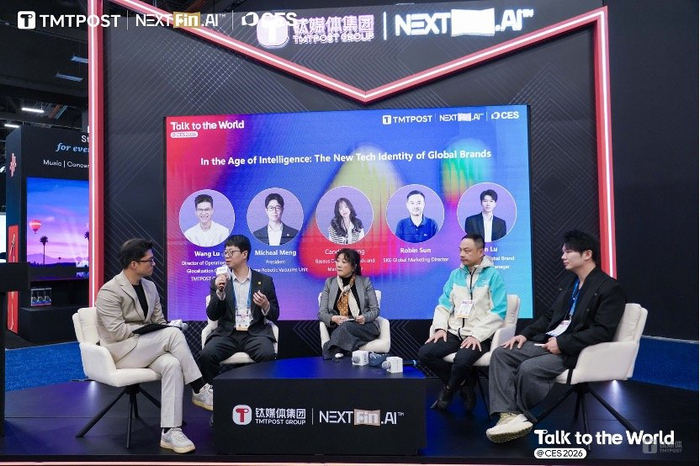
智能时代,新兴科技品牌落地海外有哪些颠覆性变化?| CES 2026
Tai Mei Ti A P P· 2026-01-22 10:21
Core Insights - Chinese emerging technology brands are transitioning from low-end price competition to high-end smart and scenario-based branding in North America [1] - The CES event showcased the significant presence of Chinese brands, particularly DREAME, which emphasizes a shift in global brand image through comprehensive marketing strategies [1] Brand Strategy - DREAME's president highlighted three key strategies for building brand awareness: leveraging global exhibitions like CES, enhancing online and offline marketing, and engaging with influencers and sports stars [2] - The importance of balancing global brand consistency with local expression was emphasized, as different markets require tailored approaches while maintaining core brand values [2][3] - SKG's marketing director noted the need for unified brand tone across all channels and adapting marketing strategies to local cultural events and consumer behavior [3] Product Innovation - DREAME introduced several innovative products at CES, including a smart home robot capable of various household tasks and a stair-climbing vacuum cleaner [6] - Baseus showcased advanced mobile digital products with features like fast charging and smart temperature control, as well as innovative security cameras with AI capabilities [7] - SKG presented a range of massage devices utilizing advanced materials and technology for enhanced user experience [8] Market Insights - DREAME identified specific user needs in North America, such as the demand for stair-climbing vacuums due to the prevalence of multi-story homes [9] - Differences in user preferences between North America and Europe were noted, particularly regarding carpet cleaning needs and product functionality [10] Brand Positioning - The shift in perception of Chinese brands from cost-effective to high-end was discussed, with a focus on the importance of user insights and product innovation for long-term competitiveness [16] - Companies are investing significantly in R&D to maintain innovation, with DREAME allocating over 7% of its revenue to this area [16] Globalization Challenges - The complexities of global brand management were highlighted, emphasizing the need for localized strategies that respect regional differences while maintaining a unified brand message [24][25] - Companies face challenges in navigating compliance and market entry, with a focus on building trust and effective communication with local consumers [21][22] Marketing Strategies - Effective marketing in North America requires a blend of online and offline strategies, with a strong emphasis on community engagement and local partnerships [20][21] - The importance of adapting marketing messages to resonate with local cultural values and consumer expectations was underscored [23][25]


中国制造加速升级 向高端化智能化迈进
Zhong Guo Xin Wen Wang· 2026-01-22 09:52
Group 1 - The core viewpoint of the articles highlights China's significant advancements in manufacturing, showcasing its transition to a global manufacturing powerhouse, now ranking fourth after the US, Germany, and Japan [1] - The "2025 China Manufacturing Power Development Index Report" indicates that by 2024, China will enter the second tier of global manufacturing powers, achieving its strategic goal of becoming a manufacturing strong nation [1] - The structural change in China's export composition is evident, with over 60% of exports now consisting of electromechanical products, reflecting a shift towards high-end and intelligent manufacturing [1][2] Group 2 - In the biopharmaceutical sector, China's innovative drugs are projected to generate over $130 billion in foreign licensing transactions by 2025, marking a historical high [2] - The integration of artificial intelligence in manufacturing is emphasized as a revolutionary force driving transformation and high-quality development across the industry [2] - The electric vehicle sector is highlighted as a key area of growth, with projections indicating that China's production and sales of electric vehicles will exceed 16 million units by 2025, maintaining its position as the global leader for 11 consecutive years [2] Group 3 - The success of Chinese manufacturing is attributed to four core advantages: a large domestic market, a complete industrial ecosystem, sustained high R&D investment, and remarkable efficiency [3] - The global market share of Chinese shield machines is approximately 70%, showcasing the effectiveness of these advantages in driving international competitiveness [3] - The future outlook for Chinese manufacturing suggests a continued focus on high-end and intelligent advancements, enhancing its global significance and reputation [3]
向改革要动力:上汽以技术突破重塑增长曲线
Guo Ji Jin Rong Bao· 2026-01-22 04:31
Core Insights - The article highlights the transformation of the Chinese automotive industry, particularly focusing on SAIC Motor Corporation's impressive performance and strategic shift towards high-quality development [2][4][6]. Sales Performance - In 2025, SAIC is projected to sell 4.507 million vehicles, a year-on-year increase of 12.3%, with retail sales reaching 4.67 million units [4]. - The sales of new energy vehicles (NEVs) are expected to reach 1.643 million units, marking a significant year-on-year growth of 33.1% [4]. - Overseas sales are anticipated to be 1.071 million units, reflecting a 3.1% increase compared to the previous year [4]. Profitability - SAIC forecasts a net profit attributable to shareholders of 9 to 11 billion yuan, representing a staggering year-on-year increase of 438% to 558% [6]. - The non-recurring net profit is expected to be between 7 to 8.2 billion yuan, showing a growth of 229% to 251% year-on-year [6]. Strategic Transformation - The company has undergone a strategic overhaul, shifting from a scale expansion model to a value creation approach, focusing on comprehensive reforms to unlock structural benefits [6][7]. - SAIC has broken down traditional departmental barriers, creating a more agile and efficient operational system that enhances user demand responsiveness [7]. Technological Investment - Over the years, SAIC has invested more than 150 billion yuan in electrification and intelligence, resulting in nearly 26,000 effective patents and a robust technical framework covering electric, hybrid, and hydrogen vehicles [11]. - The company has developed advanced technologies such as the DMH engine, achieving a thermal efficiency of 46.3%, and has introduced innovative battery technologies [14]. Product Strategy - SAIC's product strategy emphasizes a user-centric approach, moving from a manufacturing giant to a user-oriented enterprise, with a focus on creating a diverse product lineup that meets various market segments [17]. - The successful launch of models like the Zhiji LS6 and LS9 demonstrates the effectiveness of this strategy, with significant sales growth and market penetration [18]. Ecosystem Collaboration - The company is actively building an ecosystem that enhances user experience through collaborations with tech firms like Huawei and Momenta, integrating cutting-edge technologies into its products [19]. - This collaborative approach aims to provide comprehensive smart mobility solutions, enhancing the overall value proposition for users [19]. Marketing Innovation - SAIC has reformed its marketing strategies to improve direct engagement with consumers, utilizing innovative methods such as pop-up stores and real-time feedback collection to enhance product development [20]. - The marketing efforts for models like the MG4 and Zhiji LS6 focus on translating complex technologies into relatable benefits for consumers, fostering emotional connections with the brand [20]. Future Outlook - Looking ahead, SAIC aims to solidify its position as a leader in the global smart electric vehicle market, continuing to deepen reforms and accelerate technological advancements [21]. - The company's transformation journey serves as a valuable example for traditional automotive giants seeking sustainable growth through self-innovation and user-centric strategies [21].

汽车赛道“最靓的仔”,新能源商用车来到转型关键期
Zheng Quan Shi Bao Wang· 2026-01-22 02:39
Core Viewpoint - The new energy commercial vehicle market in China is expected to experience significant growth in 2025, with sales projected to reach 954,000 units, representing a year-on-year increase of 65.5%, indicating a shift from policy-driven to market-driven growth in the industry [1][2]. Market Penetration - The penetration rate of new energy commercial vehicles has consistently exceeded 30% for four consecutive months, marking a new phase of large-scale application [1][2]. - In 2025, domestic sales of new energy commercial vehicles are expected to reach 871,000 units, a year-on-year increase of 63.7%, accounting for 26.9% of total commercial vehicle sales [2][3]. Sales and Orders - The cumulative sales of new energy heavy trucks in 2025 are projected to reach 231,100 units, a substantial increase of 182% year-on-year, with December alone achieving a record monthly sales of 45,300 units [3]. - Significant orders have been reported, including a strategic cooperation agreement between China National Heavy Duty Truck Group and Bashu Logistics for 1,000 heavy trucks, with the first batch of 200 units to be delivered [4]. Future Market Potential - The overall commercial vehicle market in China is expected to reach 4.25 million units in 2026, with a projected penetration rate for new energy vehicles exceeding 35% [5]. - By 2030, the penetration rate for new energy heavy trucks is anticipated to surpass 50%, with a market size exceeding 450,000 units [5]. Transition to Market-Driven Growth - The industry is moving away from reliance on subsidies, with customers increasingly focusing on product performance and total lifecycle costs [6]. - The decline in battery prices and the adoption of vehicle-to-grid models are making new energy commercial vehicles more affordable [7]. Technological Advancements - The energy density of power batteries has improved, allowing for enhanced range without increasing vehicle weight, with battery capacities primarily in the 400 kWh to 600 kWh range [7]. - The introduction of ultra-fast charging solutions and extensive charging networks is addressing user pain points and facilitating the large-scale deployment of new energy commercial vehicles [8]. Competitive Landscape - The competition in the commercial vehicle sector is evolving, with a focus on smart technology that can deliver economic benefits and reduce marginal costs [9]. - Major manufacturers are investing in intelligent vehicle technologies, with several companies launching models equipped with advanced driver-assistance systems [9]. International Expansion - Overseas markets are viewed as critical growth areas, with companies like Foton aiming for 200,000 units in overseas sales by 2026, and China National Heavy Duty Truck Group targeting 300,000 units by 2030 [11]. - The penetration rate of new energy heavy trucks in international markets remains low, presenting opportunities for early movers [11]. Ecosystem Development - The competition in the commercial vehicle industry is shifting from product-centric to a comprehensive ecosystem approach, focusing on long-term value creation for customers [11].