
核心CPI

Search documents
6月物价数据解读:核心CPI继续回升,PPI同比降幅走阔
Yin He Zheng Quan· 2025-07-09 11:28
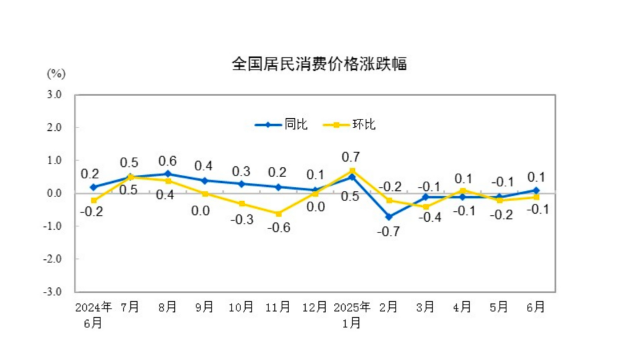
CPI Analysis - In June, the CPI decreased by 0.1% month-on-month and increased by 0.1% year-on-year, with the core CPI rising to 0.7% year-on-year, an increase of 0.1 percentage points from the previous month[1] - Food prices fell by 0.4% month-on-month, while non-food prices remained stable, reflecting a seasonal average of -0.2%[1] - Energy prices saw a slight increase due to rising international oil prices, with gasoline prices reversing from a 3.8% decline to a 0.4% increase[1][6] PPI Analysis - The PPI decreased by 0.4% month-on-month and 3.6% year-on-year, marking the lowest year-on-year decline this year[2][17] - The decline in PPI was influenced by seasonal decreases in coal and energy demand, alongside price drops in black metal and non-metal mineral products[3][18] - Despite some support from rising prices in the non-ferrous metal sector, overall PPI improvement is expected to be limited due to weak demand and internal competition pressures[2][24] Market Trends - The real estate market remains unstable, with property sales area and sales value down by 2.9% and 3.8% year-on-year respectively, impacting infrastructure investment[2][25] - Consumer confidence and investment willingness are low, contributing to a weak economic recovery outlook[2][25] - The core CPI's recovery space is limited, with internal competition suppressing price increases and overall consumer demand remaining weak[3][24]
6月中国CPI同比由降转涨
Zhong Guo Xin Wen Wang· 2025-07-09 07:44
其中,油价变动影响能源价格降幅比上月收窄1.0个百分点,对CPI同比的下拉影响比上月减少约 0.08个百分点;受国际大宗商品价格变动影响,金饰品和铂金饰品价格同比分别上涨39.2%和15.9%,合 计影响CPI同比上涨约0.21个百分点。 中新社北京7月9日电 (记者 王恩博)中国国家统计局9日公布,6月份,扩内需、促消费政策持续显 效,中国居民消费价格指数(CPI)同比由上月下降转为上涨0.1%;扣除食品和能源价格的核心CPI同比涨 幅扩大至0.7%,创近14个月以来新高。 国家统计局城市司首席统计师董莉娟表示,6月份CPI同比连续下降4个月后转涨,主要受工业消费 品价格有所回升影响。当月,工业消费品价格同比降幅由上月的1.0%收窄至0.5%,对CPI同比的下拉影 响比上月减少约0.18个百分点。 从更体现近期价格变化情况的环比看,6月份CPI下降0.1%,降幅比上月收窄0.1个百分点。受高 温、降雨较常年同期偏多影响,食品价格环比下降0.4%,降幅小于季节性水平。受国际油价变动影 响,汽油价格环比由上月下降3.8%转为上涨0.4%。扣除能源的工业消费品价格环比上涨0.1%,其中铂 金饰品价格环比上涨12. ...
CPI边际改善,PPI持续承压
Cai Jing Wang· 2025-07-09 06:08
Group 1: CPI Marginal Improvement - In June, the CPI showed a marginal improvement with a year-on-year increase of 0.1%, reversing a three-month trend of -0.1%, primarily driven by rising domestic fuel prices and a rebound in durable goods prices [2] - Food prices performed better than seasonal averages, with fresh vegetable prices increasing by 0.7% month-on-month, compared to a historical average decline of -3.9% [2] - Energy prices saw a month-on-month increase of 0.1% in June, recovering from a previous decline of -1.7%, influenced by rising international oil prices due to geopolitical tensions [2][3] Group 2: PPI Continued Pressure - The PPI decreased by 0.4% month-on-month in June, marking the seventh consecutive month of negative growth, with a year-on-year decline of 3.6%, the largest drop since August 2023 [4] - The decline in production material prices was a significant factor, with a month-on-month decrease of 0.6%, compared to a historical average of -0.1% [4] - Life goods prices remained sluggish, with a month-on-month decrease of 0.1%, reflecting weak seasonal performance [4] Group 3: Future Price Outlook - CPI is expected to show a mild recovery, with an annual increase projected around 0%, higher than the first half's average of -0.1% [5] - Core CPI is anticipated to rise by approximately 0.6% for the year, supported by policies aimed at improving supply-demand structures [6] - PPI is expected to remain under pressure, with an annual decline projected at around -2.3%, an improvement from the first half's -2.8% [6] Group 4: International and Domestic Commodity Trends - Internationally, commodity prices are expected to show increased divergence and reduced volatility, with oil prices likely to continue declining due to OPEC+ production increases and weakening global demand [7] - Domestically, weak internal demand persists, particularly in real estate and infrastructure investments, which are not expected to drive resource prices upward [7] - The manufacturing sector is facing challenges with low capacity utilization, indicating a phase of oversupply in certain industries [7]
重磅公布:由降转涨!
中国基金报· 2025-07-09 05:59
Group 1: CPI Analysis - In June 2025, the Consumer Price Index (CPI) increased by 0.1% year-on-year, marking a shift from a decline that lasted for four consecutive months [3][9] - The rise in CPI was primarily influenced by the recovery in industrial consumer goods prices, with the year-on-year decline narrowing from 1.0% to 0.5% [3][4] - Core CPI, excluding food and energy, rose by 0.7% year-on-year, the highest increase in nearly 14 months [3][4] Group 2: PPI Analysis - The Producer Price Index (PPI) decreased by 0.4% month-on-month, with the decline remaining consistent with the previous month [6][7] - The year-on-year decline in PPI expanded by 0.3 percentage points, influenced by seasonal price decreases in raw material manufacturing and pressures in export-oriented industries [6][7] - Some industries showed signs of price stabilization and recovery, particularly in sectors benefiting from domestic market improvements and consumption policies [7][6] Group 3: Price Changes by Category - Food prices decreased by 0.3% year-on-year, with notable declines in pork prices by 8.5% and egg prices by 7.7% [9][17] - Non-food prices increased by 0.1% year-on-year, with service prices rising by 0.5% [9][10] - Among various categories, prices for durable goods and entertainment-related items showed increases, reflecting ongoing consumer demand [7][12]


核心CPI涨幅创近14个月新高,释放什么信号?
第一财经· 2025-07-09 03:57
Core Viewpoint - The Consumer Price Index (CPI) in June turned from a decline to an increase of 0.1% year-on-year, ending four months of negative growth, influenced by the recovery of industrial product prices [3][4]. CPI Analysis - The CPI's year-on-year increase was primarily driven by a reduction in the decline of industrial consumer goods prices, which narrowed from 1.0% to 0.5% [4]. - Energy prices saw a reduced decline of 1.0 percentage points, contributing to a lesser downward impact on the CPI [4]. - Gold and platinum jewelry prices increased significantly, by 39.2% and 15.9% respectively, collectively contributing approximately 0.21 percentage points to the CPI increase [4]. - Food prices experienced a slight narrowing in their decline, with a year-on-year decrease of 0.3%, and beef prices turning to an increase of 2.7% after 28 months of decline [4]. PPI Analysis - The Producer Price Index (PPI) in June decreased by 0.4% month-on-month, maintaining the same decline rate as the previous month [7]. - The PPI's year-on-year decline expanded by 0.3 percentage points, influenced by seasonal price decreases in raw materials and increased green energy leading to lower energy prices [7][8]. - The construction sector faced challenges due to weather conditions, impacting the prices of black metal and non-metal mineral products, which fell by 1.8% and 1.4% respectively [8]. - Export-oriented industries are under pressure, with prices in the computer and communication equipment manufacturing sector declining by 0.4% [8]. Future Outlook - The future trajectory of industrial product prices will largely depend on the effectiveness of counter-cyclical adjustment policies, particularly those supporting the real estate sector [9]. - The government aims to promote a reasonable recovery in price levels, which will facilitate fiscal measures to boost consumption and investment [10].
核心CPI同比创近14个月以来新高,怎么看?
Di Yi Cai Jing· 2025-07-09 03:13
Group 1: CPI Trends - In June, the Consumer Price Index (CPI) turned from a decline to an increase of 0.1% year-on-year after four months of negative growth, influenced by the recovery of industrial product prices [1][3] - The core CPI, excluding food and energy, rose by 0.7% year-on-year, marking a 14-month high, indicating effective policies to expand domestic demand and promote consumption [1][3] Group 2: PPI Trends - The Producer Price Index (PPI) decreased by 0.4% month-on-month, with a year-on-year decline of 3.6%, which is an increase in the rate of decline by 0.3 percentage points compared to the previous month [1][5] - The decline in PPI is attributed to seasonal price decreases in domestic raw material manufacturing, increased green electricity leading to lower energy prices, and price pressures in export-oriented industries [5][6] Group 3: Industry-Specific Insights - In the automotive sector, prices for both gasoline and new energy vehicle manufacturing increased by 0.5% and 0.3% month-on-month, respectively, with year-on-year declines narrowing by 1.9 and 0.4 percentage points [1] - The photovoltaic equipment and electronic components manufacturing prices fell by 10.9% year-on-year, with the decline narrowing by 1.2 percentage points [1] - High-tech industries such as integrated circuit packaging and testing saw price increases of 3.1% year-on-year, indicating a growth in new production capacities and innovation [6] Group 4: Policy Implications - The government aims to balance the expansion of domestic demand with supply-side structural reforms to improve market price order and promote reasonable price recovery [7][8] - The effectiveness of macroeconomic policies, particularly those supporting the real estate sector, will significantly influence future industrial product price trends [6]
重要数据出炉!
新华网财经· 2025-07-09 03:01
Group 1: CPI Analysis - In June, the Consumer Price Index (CPI) turned from a decline to an increase of 0.1% year-on-year after four consecutive months of decline [3][4] - The core CPI, excluding food and energy prices, rose by 0.7% year-on-year, marking a 14-month high [7] - The decline in industrial consumer goods prices narrowed from 1% to 0.5% year-on-year, reducing the downward pressure on CPI by approximately 0.18 percentage points [6] Group 2: PPI Analysis - The Producer Price Index (PPI) fell by 0.4% month-on-month and decreased by 3.6% year-on-year, with the year-on-year decline widening by 0.3 percentage points compared to the previous month [6][10] - Factors contributing to the PPI decline include seasonal price decreases in raw materials, increased green energy leading to lower energy prices, and downward pressure on prices in export-oriented industries due to a slowdown in global trade [10][11] - The construction and infrastructure sectors faced challenges due to seasonal weather impacts, affecting project progress and contributing to the PPI decline [10]

★4月CPI环比由降转涨 部分领域价格呈现积极变化
Shang Hai Zheng Quan Bao· 2025-07-03 01:56
Group 1: CPI and PPI Trends - In April, the Consumer Price Index (CPI) showed a month-on-month increase of 0.1%, while the year-on-year CPI decreased by 0.1%, maintaining the same decline as in March [1] - The Producer Price Index (PPI) decreased by 2.7% year-on-year, with the decline slightly widening compared to March, and a month-on-month decrease of 0.4% [1][2] - Energy prices fell by 4.8% year-on-year, with gasoline prices dropping by 10.4%, contributing approximately 0.38 percentage points to the CPI decline [1][2] Group 2: Food and Service Prices - Food prices saw a narrowing year-on-year decline, with a month-on-month increase of 0.2%, which is above seasonal levels; beef prices rose by 3.9% month-on-month due to reduced imports [2] - Travel service prices increased significantly, with airfares rising by 13.5%, vehicle rental fees by 7.3%, hotel accommodation by 4.5%, and tourism prices by 3.1% [2] - The core CPI, excluding food and energy, rose by 0.5% year-on-year, indicating the gradual effect of policies aimed at boosting domestic demand and consumption [2] Group 3: High-Tech Industry Impact - The development of high-tech industries, such as smart manufacturing and high-end equipment manufacturing, has led to price increases in related sectors, with wearable device manufacturing prices rising by 3.0% year-on-year [3] - The diversification of trade and market expansion has resulted in price increases or reduced declines in some export sectors, such as integrated circuit packaging and testing, which saw a 2.7% year-on-year price increase [3] - Recent financial support policies, including interest rate cuts, are expected to provide significant support for future price trends [3]
全市场都在等待再通胀
远川投资评论· 2025-06-25 07:01
Core Viewpoint - The article discusses the current economic situation in China, highlighting the mixed signals from economic data and the varying predictions regarding inflation and consumer demand for 2025. It emphasizes the importance of internal demand and the challenges in achieving a stable inflation environment. Economic Data Analysis - Recent economic data from May shows marginal improvements in areas such as social financing growth, service consumption, and employment, yet the stock market remains indifferent [2] - The persistent weakness in CPI, which recorded a year-on-year decline of -0.1% in June, reflects a broader consensus on the need for consumption-driven economic transformation [3] Inflation Predictions - Analysts have differing views on inflation trends for 2025, with Li Xunlei predicting a continued low CPI of -0.1%, influenced by external factors like export performance and potential tariffs under a new U.S. administration [6][7] - Conversely, Guo Lei forecasts a CPI increase of 1% for 2025, supported by domestic policies aimed at boosting income and consumption [10] - Zhang Yu presents a more cautious outlook, suggesting that CPI could range from 0.4% to 0.7% depending on the economic recovery trajectory [13][14] Internal Demand Challenges - The article highlights the complex nature of internal demand, with Zhang Yu attributing low inflation to a combination of wealth erosion, economic downturn, and weakened expectations [11] - Key factors affecting CPI include core CPI, which may stabilize or recover slightly due to improvements in employment and income, but overall price pressures are expected to remain [12][27] Policy Responses - The article notes that while policies have been introduced to stimulate consumption, there is a consensus among economists that more substantial measures are needed to support vulnerable groups and enhance overall consumer capacity [36][41] - Li Xunlei and Xing Ziqiang advocate for increasing residents' overall income and improving income distribution to stimulate demand [39][40] Market Outlook - The article concludes that the path to achieving inflation and economic recovery in 2025 will depend on the effectiveness of policy measures and the resilience of consumer demand in the face of ongoing economic challenges [42]

新加坡5月份CPI同比增长0.8%;预估0.8%。新加坡5月份核心CPI同比增长0.6%;预估0.6%。
news flash· 2025-06-23 05:51
新加坡5月份CPI同比增长0.8%;预估0.8%。新加坡5月份核心CPI同比增长0.6%;预估0.6%。 ...