
健康食品

Search documents
佳禾食品柳新荣:从幕后到台前的“二次创业”
Shang Hai Zheng Quan Bao· 2025-08-28 19:35
Core Viewpoint - Jiahe Food is transitioning from a B2B model to a B2C model, focusing on expanding its consumer market presence while maintaining its commitment to health and quality in its product offerings [2][3][4]. Group 1: Business Transformation - Jiahe Food is shifting its strategy to focus on the consumer market, as indicated by the launch of products like "Kalimah" milk tea and "Jinmao" coffee [2][3]. - The company has established a clear product matrix targeting diverse consumer needs, including plant-based drinks and health-oriented products [3][4]. - The C-end business achieved a revenue of 57.57 million yuan in the first half of the year, reflecting a year-on-year growth of 132.77% [4]. Group 2: Health and Quality Focus - The company aims to reduce sugar and fat content in its products while promoting "clean labels" to enhance transparency for consumers [5][6]. - Products like "Jinmao" coffee and "Kalimah" milk tea emphasize health benefits, such as being sugar-free and fat-free [5][6]. Group 3: Cultural and Brand Development - Jiahe Food aspires to create a national brand that integrates health and taste while contributing to Chinese food culture [7]. - The brand "Jinmao" was inspired by a rare animal in Yunnan, symbolizing the company's commitment to incorporating Chinese cultural elements into its products [7]. Group 4: International Market Presence - The company reported overseas revenue of 395 million yuan in 2024, marking a 4% increase and accounting for 19.25% of its main business income [8]. - Jiahe Food's products are designed to meet international standards, reflecting global consumer acceptance [8]. Group 5: Future Outlook - The company plans to continue its transformation towards B2C while stabilizing its B2B operations, driven by innovation and market engagement [8].


一致魔芋20250827
2025-08-27 15:19
Summary of the Conference Call Company and Industry Overview - The company operates in the konjac product industry, focusing on konjac food and related products, with a significant emphasis on tea drink additives, instant snacks, and ingredients [2][11]. Key Financial Performance - In the first half of 2025, the company achieved a revenue of 359 million yuan, representing a year-on-year growth of 37.17% [4]. - The net profit attributable to shareholders was 40.92 million yuan, up 23.01% year-on-year, while the net profit after deducting non-recurring items was 34.93 million yuan, reflecting an 18.71% increase [4]. - The operating cash flow reached 126 million yuan, marking a 36.93% growth [4]. Revenue Growth Drivers - Revenue growth of over 35% in the first half of 2025 was primarily driven by both volume and price increases, with price hikes contributing significantly [2][11]. - The konjac food segment saw a remarkable growth of 58%, with tea drink additives accounting for approximately 55% of sales [13]. Raw Material Price Trends - Konjac raw material prices surged by about 80% since June 2024 due to rapid growth in downstream demand, particularly from snack brands like Weidong and tea chains like Mixue Ice City [6][7]. - This price increase is expected to remain high until around October 2025, when new konjac crops are harvested [7]. Supply Chain Management - The company collaborates with rural cooperatives and primary processing plants to secure stable raw material supplies, avoiding direct dealings with individual farmers [9][10]. - The company has a stock of over 300 million yuan in raw materials, semi-finished products, and packaging, ensuring a steady supply chain [12]. Export and International Market - Exports to the U.S. have been hindered due to international circumstances and tariffs, but growth has been maintained in Southeast Asia, Europe, and South America [14]. - The company has established a dedicated department to explore foreign ingredient markets, with foreign trade gross margins slightly higher than domestic ones [14]. Product Development and Market Strategy - The company aims to increase its global market share in konjac powder and konjac gum from approximately 12% to 40%-50% in the future [3][29]. - The konjac beauty business has been discontinued due to consistent losses, with resources redirected towards konjac food products [5][21]. Challenges and Future Outlook - The konjac food business faces pressure with a gross margin of less than 20%, necessitating scale expansion to improve profitability [22]. - The company is optimistic about the future of konjac products, particularly konjac balls, which have seen increased demand due to the rise of delivery services [15][19]. Seasonal Factors and Market Predictions - The company experiences seasonal revenue fluctuations, primarily concentrated in the third and fourth quarters [31]. - Despite a strong performance in the first half of 2025, there is uncertainty regarding the full-year revenue growth due to intense competition and the consumer market's recovery [31]. Conclusion - The company is strategically positioned in the konjac industry, focusing on product innovation and market expansion while navigating challenges related to raw material costs and international trade dynamics [25][30].

趋势研判!2025年中国榛子行业发展历程、市场政策、产业链图谱、供需现状、进出口贸易、竞争格局及发展趋势:深加工产品日益丰富[图]
Chan Ye Xin Xi Wang· 2025-08-25 01:41
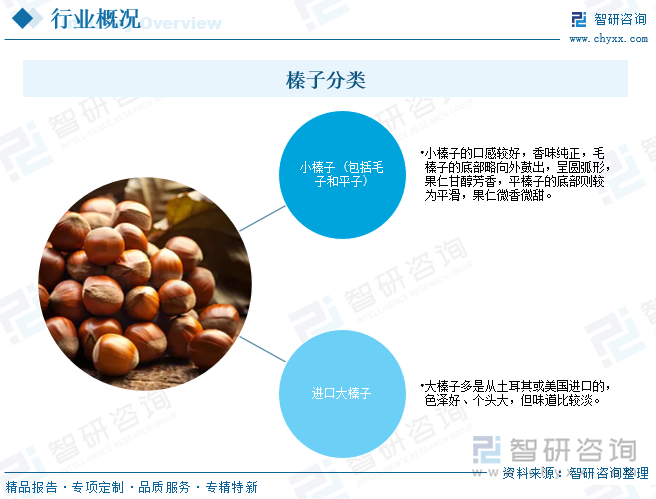
Overview - The hazelnut industry in China is experiencing growth due to rising living standards and health awareness, with a projected demand of 204,800 tons and a market size of 5.843 billion yuan in 2024 [1][14]. Development History - Hazelnut cultivation began in the 1950s, primarily in Northeast and North China, with small-scale family farming. The industry saw gradual growth until the 1980s and 1990s when market demand increased, leading to a shift from wild collection to commercial production [4]. - The 21st century marked a rapid development phase for the hazelnut industry, supported by government policies promoting cultivation and processing, resulting in a complete industry chain from planting to sales [4]. Market Policies - The Chinese government has implemented various policies to support agricultural development, including initiatives to promote rural revitalization and enhance the quality of agricultural products, creating a favorable environment for the hazelnut industry [7][9]. Industry Chain - The hazelnut industry chain includes upstream activities such as planting and harvesting, midstream processing (initial and deep processing), and downstream sales through various channels including supermarkets and e-commerce platforms [10][12]. Current Development Status - The hazelnut market is expanding with a variety of processed products like hazelnut butter and chocolate, catering to diverse consumer preferences [14]. - In 2024, China is expected to import 3,753.76 tons of hazelnuts, primarily from the United States and Georgia, with an import value of approximately 1.078 million USD [16]. Competitive Landscape - The hazelnut industry in China is characterized by a large number of small-scale producers and cooperatives, with over 80% of registered hazelnut-related companies having a capital of less than 1 million yuan [18]. - Notable companies include Guangdong Nanxing Tian Fruit Nut Products Co., Ltd. and Shandong Sanyang Hazelnut Biotechnology Co., Ltd., which focus on various hazelnut products and processing technologies [20][22]. Future Trends - The industry is expected to focus on developing high-yield, quality hazelnut varieties and adopting modern agricultural technologies to improve efficiency and reduce costs. There will also be an emphasis on health-oriented products, including low-sugar and low-fat options [25].
2025年中国亚麻籽油行业产量、需求量及市发展趋势
Sou Hu Cai Jing· 2025-08-24 18:57
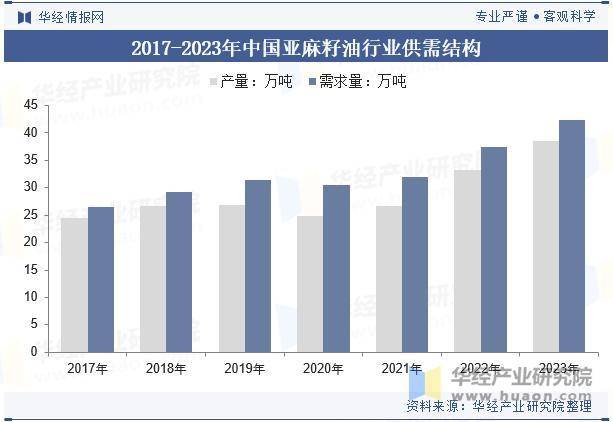
Core Insights - The supply-demand structure of China's flaxseed oil industry is showing a balanced trend, with domestic cultivation and some imports meeting the demand for high-quality raw materials [1] - The production of flaxseed oil in China is approximately 386,000 tons in 2023, while the demand is around 423,000 tons, indicating a growing market [1] - The increasing health awareness among consumers is driving the demand for flaxseed oil, which is rich in unsaturated fatty acids and nutritional value [1] Supply and Demand Analysis - The supply side relies on domestic flaxseed cultivation and imports to satisfy the market's high-quality raw material needs [1] - The limited growth in production is due to climate and regional planting restrictions, necessitating imports for high-end flaxseed oil products [1] - The demand for flaxseed oil continues to grow, driven by consumer health consciousness [1] Technological Trends - The industry is focusing on enhancing product nutrition, quality, and market applications through advanced technologies [3] - Cold pressing and supercritical extraction technologies will ensure that nutritional components are preserved [3] - Innovations in precise nutrition and formulation will cater to specific health needs of target populations [3] - Traceability technology and quality control will improve supply chain transparency and safety [3] - Smart production and automated testing technologies will enhance production efficiency and reduce costs, increasing market competitiveness [3] Market Research Methodology - The research team employs a combination of desktop research, quantitative surveys, and qualitative analysis to comprehensively analyze the flaxseed oil industry's market capacity, industry chain, operational characteristics, profitability, and business models [5] - Various analytical models such as SCP, SWOT, PEST, regression analysis, and SPACE matrix are utilized to assess market environment, industry policies, competitive landscape, technological innovations, market risks, industry barriers, opportunities, and challenges [5] Future Development and Investment Recommendations - A detailed report titled "2025-2031 China Flaxseed Oil Industry Development Prospects and Investment Planning Suggestions" has been prepared to provide important references for enterprises, research institutions, and investment organizations [5]
推出 “3% 真实松茸添加”调味料新品 松鲜鲜助力雅江松茸“出山入城”
Mei Ri Shang Bao· 2025-08-21 23:20
Core Insights - The article highlights the innovative approach of Hangzhou Songxianxian Natural Seasoning Co., Ltd. in transforming the high-altitude Matsutake mushroom into a daily health seasoning product, making it accessible to households across China [1][2]. Company Overview - Founded by Yi Zihan, Songxianxian has launched the first Matsutake seasoning product in China and introduced a new seasoning with "3% real Matsutake addition" in collaboration with "Encountering Yajiang" [1][2]. - The company has established a robust online and offline distribution network, covering over 200,000 retail terminals, and is committed to promoting the branding and industrialization of Yajiang Matsutake [1][6]. Product Development - Since its inception, Songxianxian has focused on "safe seasoning" and has successfully transitioned from product development to brand establishment, leading the national sales in Matsutake seasoning for five consecutive years [3]. - The company emphasizes a "zero additive" approach, ensuring rigorous testing and quality control throughout the production process [4][5]. Industry Collaboration - In 2024, Songxianxian began collaborating with the Yajiang government and local Matsutake associations to enhance the Matsutake industry, including the establishment of a large trading center and promotional events [4]. - The company has addressed the challenges of transporting fresh Matsutake over long distances by partnering with local cold storage facilities to ensure product freshness and timely sales [4][5]. Market Strategy - Songxianxian aims to leverage its extensive distribution network to promote the geographical indication of "Yajiang Matsutake" on its products, enhancing visibility and consumer choice [6]. - The company is also expanding its international presence, navigating complex food safety standards and regulations to introduce Chinese food products to global markets [6]. Corporate Social Responsibility - Songxianxian has contributed to local education by donating books to children in Yajiang and plans to engage in environmental protection and community support initiatives [7].

仲景食品半年报:收入下滑2.5% 大单品增长动能减弱
Xin Lang Cai Jing· 2025-08-19 08:12
Core Insights - The company reported its first revenue decline since going public, with a revenue of 524 million yuan in the first half of 2025, a year-on-year decrease of 2.5% [1] - The core seasoning food segment generated 310 million yuan, down 2.31% year-on-year, while the seasoning ingredient segment saw a revenue of 212 million yuan, down 1.31% but with a gross margin increase of 5.19 percentage points to 49.19% [1] - The e-commerce channel, particularly on platforms like Tmall and JD.com, experienced a significant sales drop of 10.69%, indicating challenges in online traffic acquisition and conversion efficiency [1] Business Challenges - The company's performance is primarily affected by its reliance on a few major products and intensified market competition [2] - The shiitake mushroom sauce, a key product, has seen a slowdown in growth due to brand influence issues and regional taste differences [2] - The Shanghai scallion oil product faced market challenges from low-priced infringing products and increased competition, leading to a decline in revenue despite maintaining category leadership [2] Strategic Adjustments - The company is initiating a multi-faceted strategic adjustment, including the sale of assets valued at 55.01 million yuan to refocus on core business [3] - New product promotion is centered around "flavor + health," with items like garlic sauce and zero-fat spicy sauce being highlighted [3] - The company is also venturing into the health sector with the development of ready-to-eat health products, leveraging its traditional Chinese medicine background for market promotion [3]
研判2025!中国菊粉行业发展历程、产业链、供需现状、进出口贸易、竞争格局及发展趋势分析:市场需求旺盛,每年均需大量进口[图]
Chan Ye Xin Xi Wang· 2025-08-07 01:39
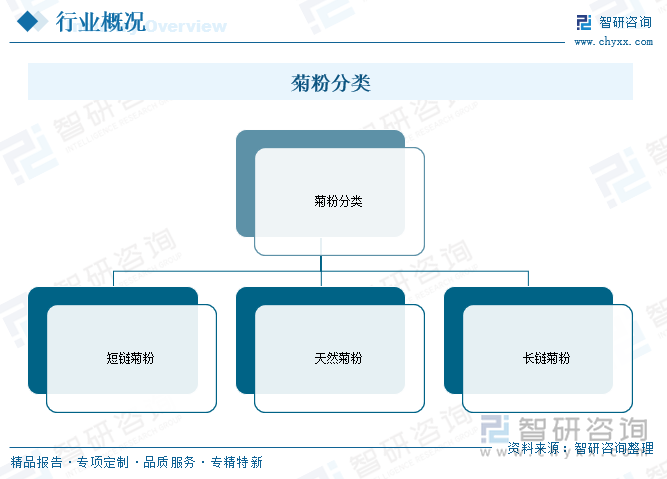
Overview - The increasing health awareness among consumers has led to a rising demand for health foods and functional ingredients, with inulin being recognized for its dietary fiber and prebiotic properties, significantly impacting blood lipid control, blood sugar reduction, and gut health improvement [1][11] - In 2024, China's demand for inulin is projected to reach 18,200 tons, with a market size of 450 million yuan, while the domestic production is only 16,500 tons, indicating a substantial need for imports [11] Industry Chain - The upstream of the inulin industry includes the cultivation and harvesting of plants like Jerusalem artichoke and chicory, along with processing equipment; the midstream involves inulin production and processing; and the downstream encompasses application markets in food, health products, and pharmaceuticals [7][9] - In the food sector, inulin is used as a prebiotic in dairy products, beverages, and baked goods to enhance taste and nutritional value, while in health products, it is often formulated as dietary fiber supplements [7] Market Demand - The food and beverage sector is the largest consumer market for inulin in China, accounting for over 70% of the total consumption; in the first five months of 2025, the revenue of large-scale food manufacturing enterprises reached 894.49 billion yuan, showing a year-on-year growth of 2% [9][11] Competitive Landscape - The inulin industry in China has a high market concentration, with foreign companies like Beneo, Sensus, and Cosucra holding significant market shares due to their established technology and brand influence; domestic companies such as Morning Light Biotechnology and Chongqing Jiao Wang Natural Products are gradually expanding their market presence [15][18] - Beneo-Orafti is a leading global player in the inulin market, with production bases in Belgium and Chile, while domestic companies are also gaining traction through technological advancements and product quality improvements [15][18] Development Trends - Future applications of inulin will extend beyond conventional uses in food and health products, with potential developments in functional foods and beverages, as well as in pharmaceuticals and cosmetics, driven by ongoing research into its physiological activities [22] - Increased market competition is expected, prompting inulin companies to focus on technological innovation, quality enhancement, and cost control to develop high-value-added products and improve profit margins [22]

研判2025!中国薯片行业政策汇总、产业链图谱、发展现状及发展趋势分析:外资品牌占据主导地位[图]
Chan Ye Xin Xi Wang· 2025-07-22 01:34
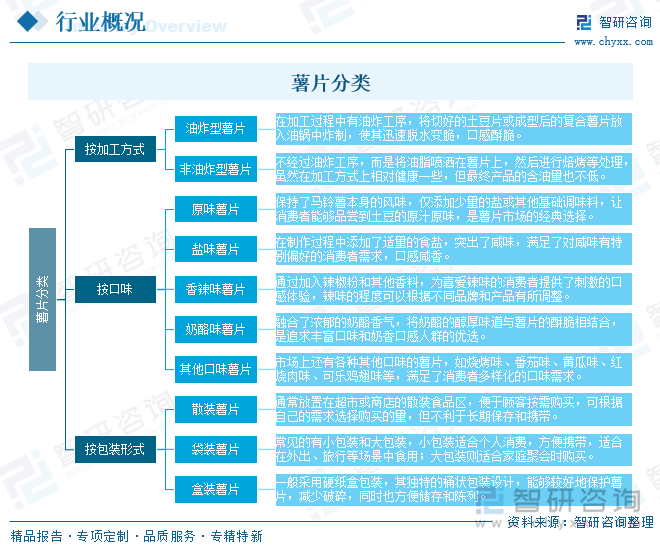
内容概要:随着国民收入水平的不断提高,消费者对休闲食品需求不断增加,薯片作为休闲食品重要组 成部分市场需求也与日俱增,据统计,2023年我国薯片销量达31.47万吨,市场规模达321亿元,2024年 虽然销量有所下滑,但受益于产品价格的增长,市场规模仍然保持增长趋势,据统计,2024年我国薯片 市场规模达328亿元,其中,油炸薯片占比超60%,但近年来,随着消费者健康意识日益增强,对低 脂、低盐、无添加等健康属性的产品越来越青睐,带动非油炸薯片占比逐年攀升,2024年非油炸薯片占 比从2020年的28.40%增至34.3%。 上市企业:洽洽食品(002557)、盐津铺子(002847)、三只松鼠(300783) 相关企业:洽洽食品股份有限公司、福建达利食品集团有限公司、福建盼盼食品有限公司、福建亲亲股 份有限公司、漯河市恒达食品工业有限公司、山东乐利事食品有限公司、百事食品(中国)有限公司、 益海嘉里家乐氏食品(上海)有限公司、昆明子弟食品有限公司、卡乐比(杭州)食品有限公司、浙江小 王子食品有限公司 关键词:薯片市场政策、薯片产业链、薯片发展现状、薯片竞争格局、薯片发展趋势 一、概述 薯片是指以马铃薯(土豆 ...
金健米业发力面制品及休闲食品 上半年预计实现扭亏为盈
Zheng Quan Ri Bao Wang· 2025-07-12 03:14
Group 1 - The company expects to achieve a net profit attributable to shareholders of 10 million to 13 million yuan in the first half of 2025, marking a turnaround from losses compared to the same period last year [1] - The improvement in profitability is attributed to reduced costs of raw materials and comprehensive production costs in the noodle products segment, leading to increased gross profit margins and amounts [1] - The company has successfully transformed its sales channels in the snack food segment, resulting in significant growth in operating performance, moving from losses to profitability [1] Group 2 - The company utilizes high-quality northern wheat as a core raw material, which has a high protein content and good gluten quality, ensuring a pleasant texture for its noodle products [1] - The company has developed various products targeting children, the elderly, young people, and families, emphasizing health attributes [1] - The company has entered the snack food market with products like jelly, candy, and grain snacks, with a 4-kilogram giant mixed jelly becoming a popular item in bulk snack channels [2] - Although the snack food segment currently represents a small proportion of overall revenue, the company is leveraging its state-owned enterprise supply chain and health-focused innovations to build a strong reputation in regional markets [2] - The company aims to further expand into the functional snack food segment by utilizing its grain and oil technology to support snack development, focusing on "large specifications + health" to break through homogenization competition [2]

2025年燕麦片品牌推荐:加工工艺革新引领燕麦片产品格局重构
Tou Bao Yan Jiu Yuan· 2025-07-11 12:03
Report Industry Investment Rating - Not provided in the content Core Viewpoints of the Report - The oat industry is in a high - growth stage, with China's oat market growing significantly from 2018 - 2023 and expected to continue growing from 2024 - 2028. Policy support, technological innovation, and increasing consumer health awareness are driving factors for market expansion. The adoption of probiotic fermentation technology may change the market competition landscape [9][31][34] Summary by Directory Market Background - Oatmeal can be divided into traditional, instant, quick - cooking, and steamed glutinous types according to processing methods and convenience of consumption. The oatmeal market has gone through a germination, startup, and high - growth stage, with continuous innovation in processing technology [4][6][7] - Oatmeal is a processed grain food rich in nutrients, and its production and sales are regulated by relevant national standards [5] Market Status - **Market Size**: From 2018 to 2023, the market size of the oatmeal industry in China increased from 4885 million yuan to 11398 million yuan, with a CAGR of 18.46%. It is expected to grow from 12898 million yuan to 15719 million yuan from 2024 to 2028, with a CAGR of 5.07% [9] - **Market Supply**: Driven by policy, technology, and demand, China's oat planting area and production are increasing. In 2024, the oat harvest area is expected to reach 405.0 thousand hectares, and China ranks among the top five globally [10] - **Market Demand**: The per - capita consumption of oats in China is approaching 1kg, with oatmeal accounting for 37.5% of oat product consumption. 94.6% of consumers are aged 18 - 55, and 61.7% of consumers prefer to eat oatmeal for breakfast [10][11] Market Competition - **Market Evaluation Dimensions**: The selection of top ten representative brands follows a multi - dimensional quantitative evaluation model, including product strength and innovation, supply chain control and cost efficiency, and brand influence and channel penetration [12] - **Market Competition Pattern**: The bone health probiotic industry has three echelons, but this seems not directly related to the oatmeal market competition described in other parts [17] - **Top Ten Brand Recommendations**: Brands such as Quaker, Westland, and others are recommended, each with unique product features, such as Quaker's functional oatmeal and Westland's organic full - industry chain products [19][20] Development Trends - **Policy - Driven Market Expansion**: China's grain production can meet the demand for dietary fiber, but residents' intake is insufficient. Oatmeal, as a popular healthy food, is expected to expand the market under policy support [31][33] - **New Competition Dimension**: Probiotic fermentation technology can improve the nutritional value and protein absorption rate of oats. If it is widely adopted in domestic production lines, whether oatmeal is "friendly to people intolerant to cereal protein" will become a new market competition dimension [34]