全栈自研

Search documents
大疆系创企璇玑动力获近亿元天使轮融资,全栈自研技术布局机器人赛道
机器人圈· 2025-12-18 09:46
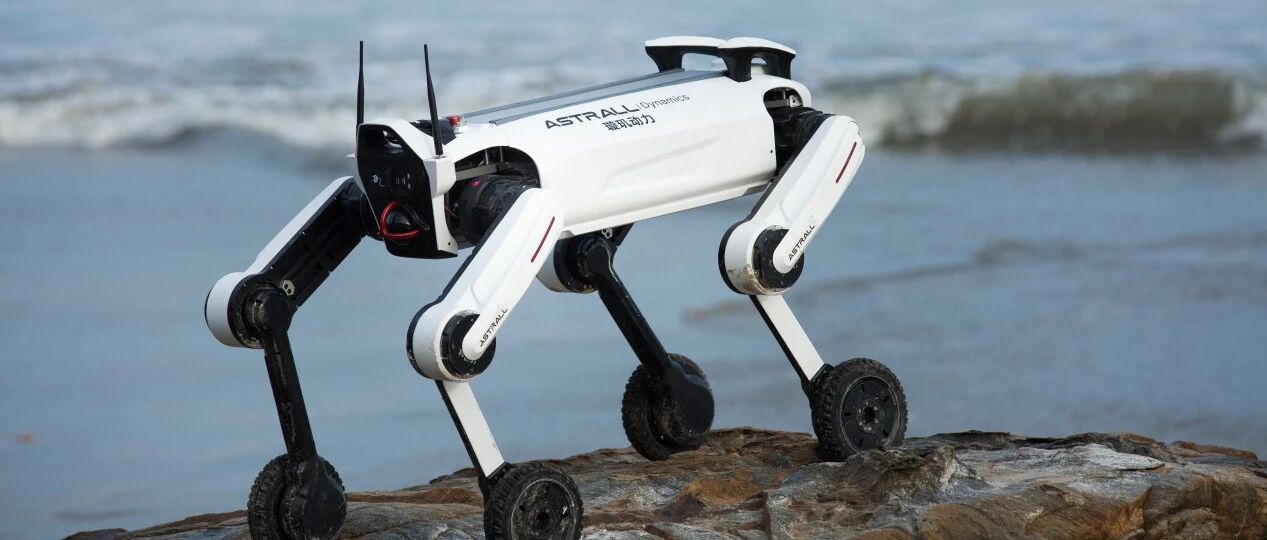
Core Insights - The article discusses the recent angel round financing of nearly 100 million yuan for Xuanji Power, a robotics platform company founded by former DJI executive Odi, focusing on the production of industry-grade quadrupedal robots and the development of consumer-grade products [1][2]. Company Overview - Xuanji Power was established in June 2024, with a core team from DJI, led by Odi, who has extensive experience in high-end manufacturing and robotics [2]. - Odi was responsible for the complete lifecycle of DJI's Inspire series, which has maintained a leading position globally due to its advanced technology and complexity [2]. Technological Advancements - Xuanji Power's core competitive advantage lies in its fully self-developed technology, particularly the axial-flux motor, which offers higher torque output and density compared to traditional radial motors, achieving a peak torque of 596 N·m and a torque density of 240 N·m/kg [3][6]. - The company has also developed integrated joint modules and transmission systems to enhance product performance and competitive differentiation [6]. Market Potential - The quadrupedal and wheeled robot market is entering a phase of accelerated commercialization, with the global market expected to reach approximately 1.3 billion yuan in 2024, indicating a low penetration rate and significant growth potential [7]. - Xuanji Power has secured deep collaborations with major clients like Southern Power Grid, launching the "Feiyun · Titan" quadrupedal robot for power inspection, which addresses traditional inspection challenges [7]. Production and Growth Strategy - The company has integrated mass production thinking from the design phase, establishing a modular architecture and system collaboration to enhance product performance, cost, and reliability [8]. - This systematic engineering capability allows Xuanji Power to maintain a sustainable cost advantage and respond quickly to market changes, supporting the scalable development of its products [8].


华为乾崑:从“跟跑”到“领跑” 科技自信的硬核表达
Huan Qiu Wang· 2025-12-18 09:10
在百年未有的汽车产业变革浪潮中,中国正从"技术追随者"迈向"规则制定者"。根据最新行业数据显示,2025年全球智能汽车市场规模将突破9000万辆,而 中国以全球34.5%的市场份额成为不可忽视的引领力量。我国L2级以上智能辅助驾驶装车率已突破67.8%,标志着中国不仅在智能汽车市场规模上领先,更 在技术能力上实现系统性崛起。 波澜壮阔的产业升级需要有力的技术破局者与生态构建者,以华为乾崑为代表的技术方案扮演了其中的关键角色,成为从"汽车大国"迈向"汽车强国"路途上 的重要支点。 全栈自研:从 " 技术自主 " 到 " 全球标准 " 的跨越 华为乾崑以全栈自研为战略支点,构建了覆盖ADS(智能辅助驾驶系统)、鸿蒙座舱、车控、车云等核心环节的完整技术体系。与依赖多供应商的"拼盘模 式"相比,全栈自研不仅可解决系统兼容性与响应效率问题,更在安全性与迭代速度上构建起强大竞争力。 实测数据显示,华为乾崑智能辅助驾驶紧急制动响应时间较行业平均水平缩短30%,技术更新周期提速40%,自2022年推出首款城区智能辅助驾驶功能ADS 1以来,华为乾崑智能辅助驾驶已完成四次重大版本升级,迭代速度行业领先,展现了其背后的科技实力。 ...

大疆系创企璇玑动力获近亿元天使轮融资,全栈自研技术布局机器人赛道
机器人大讲堂· 2025-12-17 05:08
Core Viewpoint - Xuanji Power, a robotics platform company founded by former DJI executive Odi, has completed nearly 100 million RMB in angel financing, which will support the mass production of heavy and light quadrupedal robots and the development of a consumer-grade robot set to launch next year [1][2]. Group 1: Company Overview - Xuanji Power was established in June 2024 and focuses on the research, manufacturing, and sales of intelligent robots, aiming to provide high-performance and reliable robotic solutions for both industry clients and consumers [1]. - The company is located in Bao'an District, Shenzhen, and emphasizes self-research in core components and the entire robot body [1]. Group 2: Team and Expertise - The core team of Xuanji Power consists of members from DJI, with founder Odi having extensive experience in high-end manufacturing and robotics, particularly in leading the development of DJI's Inspire series [2][3]. - Odi's background includes roles in product definition, core research, and large-scale production, providing the team with significant advantages in complex product system collaboration and supply chain management [3]. Group 3: Technological Innovations - Xuanji Power's core competitive advantage lies in its full-stack self-research approach, achieving breakthroughs in key technologies such as axial-flux motors and integrated joint modules [4][5]. - The self-developed axial-flux motor features a flat structure that delivers higher torque output compared to traditional radial motors, achieving a peak torque of 596 N·m and a torque density of 240 N·m/kg, setting industry-leading performance standards [4]. Group 4: Market Position and Opportunities - The quadrupedal and wheeled robot market is entering a phase of accelerated commercialization, with the global quadrupedal robot market projected to reach approximately 1.3 billion RMB in 2024, indicating significant growth potential [6]. - Xuanji Power has secured deep collaborations with leading industry clients, such as Southern Power Grid, to launch the "Feiyun Titan" quadrupedal robot for power inspection, addressing key pain points in traditional inspection methods [6]. - The company is also accelerating its entry into the consumer robot market, planning to launch new products next year to create a comprehensive product ecosystem [6]. Group 5: Production and Competitive Advantage - Xuanji Power has integrated mass production thinking into its product design from the outset, establishing an engineering system centered on modular architecture and system collaboration [9]. - This systematic engineering capability allows Xuanji Power to maintain a sustainable cost advantage and respond quickly to market demand changes, forming a core moat for the company's scalable development [9].
L3级准入破冰 自动驾驶商业化落地驶入快车道
Bei Jing Shang Bao· 2025-12-15 22:56
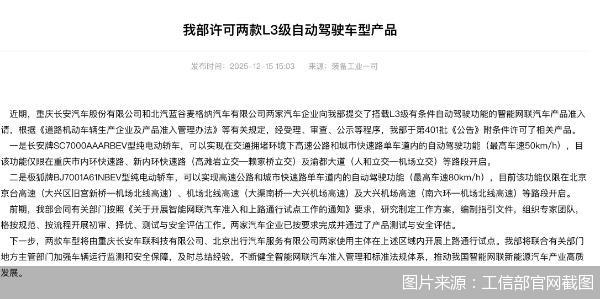
Core Insights - The Ministry of Industry and Information Technology (MIIT) of China has officially announced the first batch of L3 conditional autonomous driving vehicle permits, with Changan Automobile and BAIC Jihe receiving approvals for trial operations in designated areas of Chongqing and Beijing respectively [1][2] Group 1: L3 Autonomous Driving Development - The approval of L3 autonomous driving vehicles is expected to accelerate technological iterations within the industry and drive computing platforms towards automotive-grade standards and scalable applications [1][6] - L3 autonomous driving allows for partial decision-making by the system under specific conditions, enabling drivers to completely disengage from driving tasks [2][6] - Changan's approved model can achieve autonomous driving at speeds up to 50 km/h in congested scenarios on designated highways, while BAIC's Alpha S (L3 version) can reach speeds of 80 km/h on certain routes in Beijing [2] Group 2: Industry Competition and Collaboration - Major automotive companies have entered a competitive mode to commercialize autonomous driving technology, with several firms, including BAIC, GAC, and BYD, being included in the first batch of intelligent connected vehicle trial operations [4][6] - The collaboration between automotive manufacturers and technology companies is crucial for the commercial viability of L3 autonomous driving, with Horizon Robotics and Huawei providing essential technological support [5][6] Group 3: Safety and Regulatory Framework - The shift in driving responsibility due to autonomous driving raises concerns about accident liability, with regulations evolving to clarify responsibilities among users and autonomous systems [3][6] - The MIIT and other departments have emphasized the need for improved regulations and safety standards to support the growth of the autonomous driving sector [5][6] - The market for autonomous driving in China is projected to approach 450 billion yuan by 2025, driven by technological advancements and cost reductions [6]
L3级准入破冰,自动驾驶商业化落地驶入“快车道”
Bei Jing Shang Bao· 2025-12-15 14:07
Core Viewpoint - The Ministry of Industry and Information Technology (MIIT) of China has officially granted the first batch of L3 conditional autonomous driving vehicle permits, allowing Changan Automobile and BAIC's Arcfox models to conduct road trials in designated areas of Chongqing and Beijing, respectively [1][4]. Group 1: Policy and Regulatory Developments - The MIIT has approved L3 autonomous driving vehicles under specific conditions, marking a significant step towards the commercialization of autonomous driving technology in China [4][9]. - The approval process involved thorough assessments and compliance with regulations, ensuring that the vehicles meet safety and operational standards [3][4]. Group 2: Vehicle Specifications and Capabilities - Changan's model can achieve autonomous driving at speeds up to 50 km/h in congested traffic conditions on designated roads in Chongqing [3][4]. - BAIC's Arcfox model can operate at speeds up to 80 km/h on specific highways in Beijing, showcasing the capabilities of L3 autonomous driving technology [3][4]. Group 3: Industry Trends and Competitive Landscape - The autonomous driving industry is entering a competitive phase, with multiple automakers racing to develop and deploy L3 technology [6][9]. - Companies like GAC and BYD are also advancing their L3 capabilities, with GAC's model receiving a license for high-speed testing and BYD integrating L3 systems into urban driving scenarios [7][9]. Group 4: Technological Advancements and Partnerships - The successful deployment of L3 technology relies on advanced sensor systems, with BAIC's Arcfox equipped with 34 high-performance sensors for comprehensive environmental perception [7][8]. - Partnerships with technology firms are crucial, as seen with Horizon Robotics and Huawei, which are providing the necessary technological foundation for L3 commercialization [8][10]. Group 5: Market Outlook and Future Projections - The autonomous driving market in China is projected to approach 450 billion yuan by 2025, driven by technological advancements and increasing adoption rates [9]. - The focus on safety, regulatory compliance, and user experience will shape the competitive landscape, with companies needing to balance innovation with responsible marketing practices [9][10].


【重磅深度/小鹏汽车】2026年看点梳理,从汽车走向AI科技!
东吴汽车黄细里团队· 2025-12-07 09:59
Group 1: C-end Smart Vehicles - The core competitiveness of the company lies in its ability to create mass-market hit products, focusing on both range extension and global expansion [2][14][16] - The company plans to launch seven new models by 2026, covering both pure electric and range-extended vehicles, with a focus on long-range capabilities and high oil-electric conversion rates [2][22][26] - The global strategy aims for localized production and channel expansion, targeting a significant increase in delivery scale [2][41][44] Group 2: B-end Robotaxi - The company is leveraging favorable policies and technological breakthroughs to differentiate itself in the Robotaxi market, predicting a market size of 83.1 billion yuan by 2030 [3][50][57] - The Robotaxi project is set to launch in the second half of 2026, with plans for mass production and trial operations [3][70][78] - The company proposes a dual-mode approach for Robotaxi, including a fully shared model and a private ownership model, enhancing its competitive edge [3][73][76] Group 3: Partnership with Volkswagen - The partnership with Volkswagen has evolved from joint vehicle development to deeper collaboration on electronic and electrical architecture and AI chip development [4][93][95] - The company is expected to assist Volkswagen in launching two full-size electric models in 2026, with a projected sales volume of over 2.6 million units in China [4][97][101] - The collaboration is anticipated to enhance the company's positioning as a smart technology solution provider [4][92] Group 4: Robotics - The company's robotics division integrates bionic design with AI capabilities, aiming for commercial applications in various service scenarios by 2026 [5][12][29] - The IRON robot features advanced bionic structures and AI systems, enhancing its interaction and decision-making abilities [5][12][29] Group 5: Flying Cars - The company is on the verge of mass production for its new generation of flying cars, with the A868 model entering the test flight phase [6][12] - The flying car has achieved a range of over 500 km, with significant pre-orders already secured [6][12] Group 6: Financial Projections - The company maintains a revenue forecast of 78.5 billion yuan for 2025, with a year-on-year growth of 92%, while adjusting projections for 2026 and 2027 due to policy uncertainties [7][34] - The expected earnings per share (EPS) for 2025, 2026, and 2027 are projected at -0.71, 1.29, and 3.26 yuan, respectively [7][34]


小鹏汽车-W(09868.HK):2026年看点梳理 从汽车走向AI科技!
Ge Long Hui· 2025-12-07 02:40
Core Insights - The company is entering a new phase with its C-end smart vehicle segment, leveraging "range extension and overseas expansion" to enhance its competitive edge in mass-producing popular models [1] - The B-end Robotaxi segment is positioned for growth, with expectations of a market turning point by 2027, potentially reaching a scale of 83.1 billion yuan by 2030 [1] - The partnership with Volkswagen is evolving, positioning the company as a smart technology solution provider, with plans for joint development of electric vehicles and deep collaboration on electronic architecture [2] C-end Smart Vehicle Segment - The company aims to launch seven new models by 2026, covering both pure electric and range-extended vehicles [1] - The focus on local production, R&D centers, and channel expansion is expected to drive the company towards a scale of tens of thousands in deliveries [1] B-end Robotaxi Segment - The company is capitalizing on favorable policies and technological advancements in the Robotaxi market, with a projected market size of 83.1 billion yuan by 2030 [1] - The Robotaxi project is set to begin trial operations in the second half of 2026, with mass production of pre-installed vehicles [1] Partnership with Volkswagen - The collaboration has expanded from initial vehicle development to include joint efforts in electronic architecture and AI chip development [2] - Volkswagen's sales in China are expected to exceed 2.6 million units by 2026, with a new energy vehicle penetration rate above 10% [2] Robotics and Flying Cars - The company's robotics initiative integrates advanced AI with mechanical design, featuring a humanoid structure and high degrees of freedom [2] - The new generation of flying cars, A868, is in the testing phase, with over 7,000 pre-orders and plans for global delivery in the second half of 2026 [2] Financial Projections - The company maintains a revenue forecast of 78.5 billion yuan for 2025, with a year-on-year growth of 92% [3] - Adjustments have been made to the revenue expectations for 2026 and 2027, now projected at 105.8 billion yuan and 151.9 billion yuan respectively, reflecting a year-on-year growth of 35% and 44% [3] - The company is rated as a "buy" based on its transition from automotive to AI technology, with expected earnings per share of -0.71 yuan in 2025, 1.29 yuan in 2026, and 3.26 yuan in 2027 [3]
上汽大众陶海龙:全栈自研、盲目追求大而全削弱了产业链的分工与合作基础
Xin Lang Cai Jing· 2025-12-05 02:39
专题:2025新汽车合作生态交流会 2025新汽车合作生态交流会于12月5日-6日在苏州举行。上汽大众汽车有限公司党委书记、总经理陶海 龙表示,现在行业中逐渐出现一种倾向,将全栈自研视为可以标榜的路径,它削弱了产业链的分工与合 作基础。 陶海龙称,我们尊重技术路径的多元探索,但必须指出,盲目追求大而全,往往会背离专业化分工这一 现代工业文明的基石,导致资源重复投入,创新效率低下,最终削弱的是整车乃至整个产业链的可持续 竞争力。 陶海龙称,我们尊重技术路径的多元探索,但必须指出,盲目追求大而全,往往会背离专业化分工这一 现代工业文明的基石,导致资源重复投入,创新效率低下,最终削弱的是整车乃至整个产业链的可持续 竞争力。 新浪声明:所有会议实录均为现场速记整理,未经演讲者审阅,新浪网登载此文出于传递更多信息之目 的,并不意味着赞同其观点或证实其描述。 责任编辑:王翔 新浪声明:所有会议实录均为现场速记整理,未经演讲者审阅,新浪网登载此文出于传递更多信息之目 的,并不意味着赞同其观点或证实其描述。 责任编辑:王翔 专题:2025新汽车合作生态交流会 2025新汽车合作生态交流会于12月5日-6日在苏州举行。上汽大众 ...

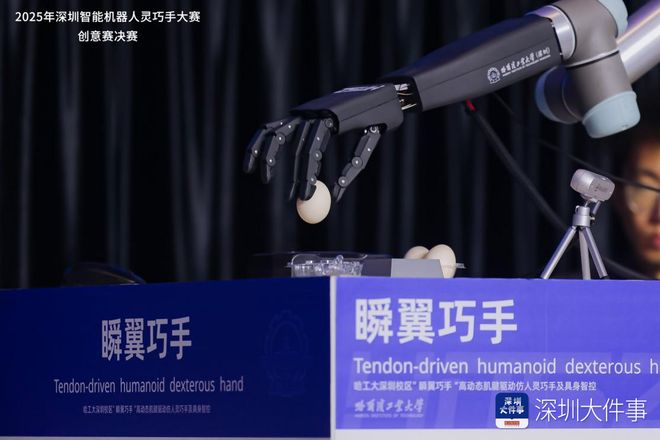
深圳举办智能机器人灵巧手大赛,哈工大(深圳)团队夺冠
Nan Fang Du Shi Bao· 2025-12-01 04:37
Core Insights - The "Shunyi Qiaoshou" team from Harbin Institute of Technology (Shenzhen) won the Creative Competition at the 2025 Shenzhen Intelligent Robot Dexterous Hand Competition with their self-developed high-dynamic tendon-driven humanoid dexterous hand [1][3] Group 1: Competition Overview - The competition was organized by the Shenzhen Science and Technology Innovation Bureau, aiming to promote breakthroughs in key core technologies for humanoid robots [3] - The dexterous hand is considered the "crown jewel" of robotic technology, facing significant challenges due to its high technical difficulty and integration requirements [3] Group 2: Team Achievements - The "Shunyi Qiaoshou" team chose a "from 0 to 1" self-research path instead of simple technology integration, focusing on true innovation [3] - The team overcame several key technical challenges, including structural innovation to address motion coupling issues and the integration of self-developed fingertip tactile sensors with visual algorithms, achieving a leap from "blind grasping" to "perceptual interaction" [3] Group 3: Performance and Recognition - The team demonstrated millisecond-level response speed, low-cost high-reliability modular design, fluid dynamic grasping, and engaging human-robot interaction, earning unanimous praise from judges [3] - The team consists of students from various academic levels, including undergraduates and postgraduates, who gained comprehensive training in technical breakthroughs, teamwork, and project management [5] Group 4: Future Aspirations - The team views their victory as a new starting point and aims to continue developing humanoid robots, aspiring to create a "cost-effective" high-performance platform to empower industries and serve the public [5]

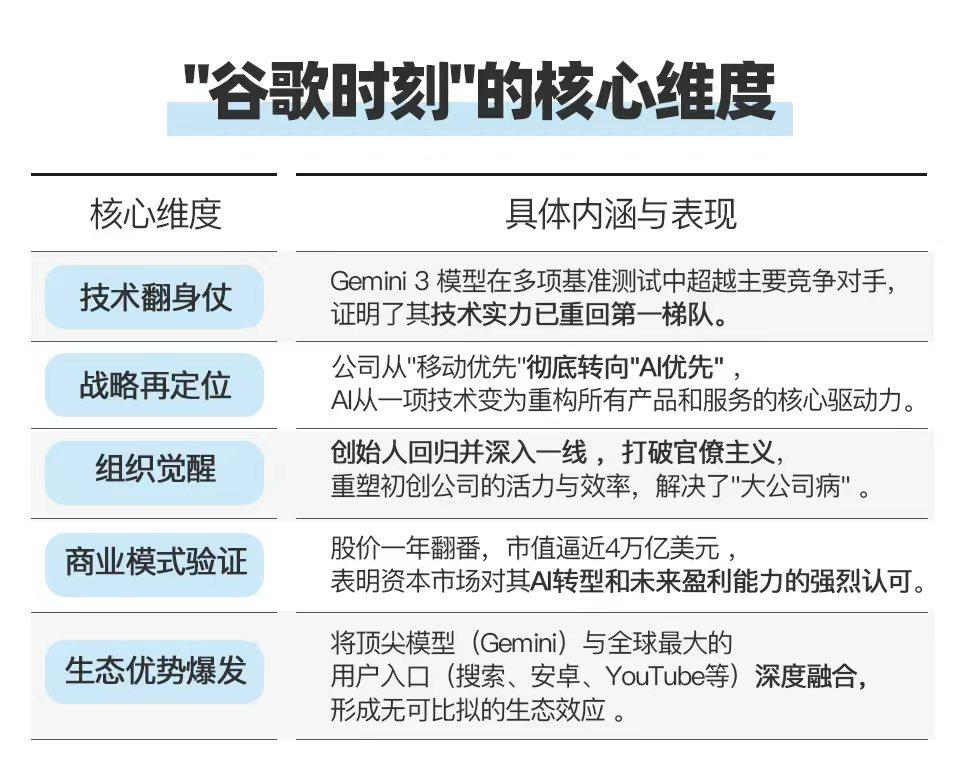
阿里距离“谷歌时刻”还有多远?
3 6 Ke· 2025-11-28 10:48
Core Insights - The article discusses the evolution of companies like Google and Alibaba in the face of rapid technological changes, emphasizing the need for continuous innovation to avoid obsolescence [1][2] - It highlights a pivotal moment for Google, termed the "Google Moment," where the company successfully transitioned from a search engine to an AI-focused entity, significantly boosting its market value [2][6] - Alibaba is also striving to reach its own "Google Moment" by accelerating its AI transformation, particularly through the launch of its Qwen series models and applications [5][6] Google’s Transformation - Google faced challenges after the release of ChatGPT in late 2022, initially being perceived as falling behind in the AI race [1][6] - The launch of Gemini 3.0 allowed Google to regain its competitive edge, with its stock price doubling and market capitalization nearing $4 trillion [1][6] - The strategic shift involved consolidating AI research efforts and focusing resources on developing the Gemini model, leading to significant advancements in AI capabilities [7][8] Alibaba’s AI Strategy - Alibaba has been transitioning towards AI since the release of its Qwen 3.0 models, with significant user engagement reflected in the rapid download rates of its applications [5][6] - The return of key founders has been crucial in reshaping Alibaba's strategy, focusing on AI as a core component of its business model [7][8] - Alibaba's Qwen models reportedly match the performance of leading AI models while significantly reducing deployment costs, with over 600 million downloads to date [8][9] Competitive Landscape - Both Google and Alibaba are navigating challenging market conditions, with Google experiencing slowed cloud business growth and Alibaba facing its lowest revenue growth since its IPO [6][9] - The strategic focus for both companies is on enhancing their AI capabilities to improve user engagement and operational efficiency in their respective ecosystems [9][10] - The competition in the AI space is intensifying, with a shift from simple conversational AI to more complex task execution capabilities [11][12] Future Directions - The article suggests that the future of AI will involve integrating AI capabilities into real-world applications, moving beyond mere information retrieval to executing tasks [12][13] - Google’s Gemini is positioned to transform its search functionality into a more interactive and task-oriented service, while Alibaba aims to unify its various services through AI [12][13] - The ultimate goal for both companies is to establish a comprehensive AI ecosystem that can seamlessly integrate various services and enhance user experience [14][19]