具身AI

Search documents
每日投资策略-20250828
Zhao Yin Guo Ji· 2025-08-28 02:06
Group 1: Market Overview - Hong Kong stocks declined in the afternoon, led by healthcare, real estate, and industrial sectors, while consumer staples, materials, and utilities outperformed, with net inflows from southbound funds amounting to HKD 15.37 billion [1] - A-shares experienced a pullback, with beauty care, real estate, and conglomerates seeing the largest declines, while telecommunications rose and electronics and non-ferrous metals outperformed the market [1] - U.S. stocks rose, driven by energy, information technology, and real estate, while communication services, healthcare, and industrial sectors lagged [1] Group 2: Company Analysis - Meituan - Meituan reported Q2 2025 revenue of RMB 91.8 billion, a year-on-year increase of 11.7%, but 2% lower than Bloomberg consensus estimates; adjusted net profit fell to RMB 1.5 billion, down 89% year-on-year, significantly missing expectations due to strategic investments to maintain market share in the food delivery business [3] - The core local commerce (CLC) segment's operating profit was RMB 3.7 billion, 69% below expectations, while new business losses of RMB 1.9 billion were better than the anticipated RMB 2.4 billion loss [3] - The report maintains an optimistic view on Meituan's competitive advantage in the food delivery sector, despite short-term uncertainties, and adjusts revenue forecasts for 2025-2027 down by 4-6% [3] Group 3: Company Analysis - Ping An Insurance - Ping An reported a 3.7% year-on-year increase in operating profit to RMB 77.7 billion for the first half of 2025, with a 4.9% growth in Q2, slightly exceeding expectations [6] - New business value (NBV) surged by 39.8% year-on-year to RMB 22.3 billion, driven by a 169% increase in the bancassurance channel [6] - The report adjusts 2025-2027 earnings per share forecasts down by 6%/5%/5% to RMB 7.08/7.63/8.16, while raising the 2025 NBV growth forecast to 26% due to several potential catalysts [8] Group 4: Company Analysis - China Resources Mixc Lifestyle - The company reported a 15% year-on-year increase in core net profit for the first half of 2025, with revenue growth of 7% slightly below market expectations [9] - The shopping center operations demonstrated strong performance with a 19% revenue growth, and gross margin increased by 6 percentage points, reaching a record high contribution of 68% [9] - The report maintains a "buy" rating, adjusting the target price down by 3% to HKD 43.86, reflecting a slight downgrade in earnings expectations [9] Group 5: Company Analysis - Meidong Auto - Meidong Auto reported a 100 million RMB operating loss for the first half of 2025, in line with expectations, with new car sales increasing by 8% year-on-year, particularly for Porsche and BMW brands [11] - The report anticipates a rebound for Porsche in the second half of 2025, which could enhance profit margins [12] - The target price is adjusted down to HKD 2.8, based on an 8x FY27E P/E ratio [11]
Kitchen-R :高层任务规划与低层控制联合评估的移动操作机器人基准
具身智能之心· 2025-08-25 00:04
Core Viewpoint - The article introduces the Kitchen-R benchmark, a unified evaluation framework for task planning and low-level control in embodied AI, addressing the existing fragmentation in current benchmarks [4][6][8]. Group 1: Importance of Benchmarks - Benchmarks are crucial in various fields such as natural language processing and computer vision for assessing model progress [7]. - In robotics, simulator-based benchmarks like Behavior-1K are common, providing model evaluation and training capabilities [7]. Group 2: Issues with Existing Benchmarks - Current benchmarks for high-level language instruction and low-level robot control are fragmented, leading to incomplete assessments of integrated systems [8][9]. - High-level benchmarks often assume perfect execution of atomic tasks, while low-level benchmarks rely on simple single-step instructions [9]. Group 3: Kitchen-R Benchmark Features - Kitchen-R fills a critical gap in embodied AI research by providing a comprehensive testing platform that closely simulates real-world scenarios [6][8]. - It includes a digital twin kitchen environment and over 500 language instructions, supporting mobile ALOHA robots [9][10]. - The benchmark supports three evaluation modes: independent evaluation of planning modules, independent evaluation of control strategies, and critical full system integration evaluation [9][10]. Group 4: Evaluation Metrics - Kitchen-R is designed with offline independent evaluation and online joint evaluation metrics to ensure comprehensive system performance measurement [16][20]. - Key metrics include Exact Match (EM) for task planning accuracy and Mean Squared Error (MSE) for trajectory prediction accuracy [20][21]. Group 5: Baseline Methods - Kitchen-R provides two baseline methods: a VLM-driven task planning baseline and a Diffusion Policy low-level control baseline [43][49]. - The VLM planning baseline enhances planning accuracy through contextual examples and constrained generation [47][48]. - The Diffusion Policy baseline integrates visual features and robot states to predict future actions [49][52]. Group 6: Future Directions - Kitchen-R can expand to include more complex scenarios, such as multi-robot collaboration and dynamic environments, promoting the application of language-guided mobile manipulation robots in real-world settings [54].


首程控股推出全国首个全面开放的“机器人+”自动充电快闪体验站
Ge Long Hui· 2025-08-20 06:54
Core Insights - The launch of the first nationwide "Robot+" automatic charging quick experience station by Shoucheng Holdings in collaboration with Wanxun Technology marks a significant advancement in automatic charging technology, transitioning from closed testing to large-scale commercial application [1] Group 1: Technology and Innovation - The project utilizes "bionic flexible arm + embodied AI" technology, employing fluid drive and soft material bionic muscles to simulate human arm movements, ensuring stable operation under complex lighting and temperature conditions [1] - The solution is characterized by high safety, strong adaptability, and significantly reduced deployment and operational costs, facilitating rapid promotion in various commercial scenarios [1] Group 2: Business Strategy and Market Positioning - The introduction of the automatic charging station exemplifies Shoucheng Holdings' integrated model of "capital + scenario + technology," leveraging parking scene resources to promote scalable applications of high-adaptability robotic charging solutions [1] - This initiative enhances the technological added value of parking services and user experience while laying the groundwork for future service-oriented robotic infrastructure in smart cities [1] - The company aims to continue utilizing its industry resources and advantages in the robotics sector to advance the large-scale application of innovative robotic technologies in parking and industrial park scenarios, reinforcing its position as a leading smart infrastructure service provider in China [1]

首程控股联合万勋科技,赋能全国首个“机器人+”自动充电体验站落地成都
Ge Long Hui· 2025-08-20 04:15
Group 1 - The core viewpoint of the article highlights the launch of China's first publicly accessible "robot+" automatic charging quick experience station by Shoucheng Holdings in collaboration with Wanxun Technology, marking a significant step towards the commercialization of automatic charging technology [1] - The project utilizes "bionic flexible arm + embodied AI" technology, which simulates human arm movements using fluid-driven and soft material bionic muscles, ensuring stable operation under complex lighting and temperature conditions [1] - The automatic charging station aims to enhance user convenience for electric vehicle charging while significantly improving parking lot operational efficiency, contributing to the intelligent upgrade of urban infrastructure [1] Group 2 - The company plans to leverage its resources and advantages in the robotics industry to promote the large-scale application of innovative robotic technologies in parking and park scenarios, reinforcing its position as a leading smart infrastructure service provider in China [2]
萤石网络: 中国国际金融股份有限公司关于杭州萤石网络股份有限公司2025年半年度持续督导跟踪报告
Zheng Quan Zhi Xing· 2025-08-18 11:25
Core Viewpoint - The report outlines the ongoing supervisory work conducted by China International Financial Co., Ltd. for Hangzhou Yingshi Network Co., Ltd. after its IPO, emphasizing compliance with regulations and the company's operational performance [1][2][3]. Group 1: Supervisory Work - The sponsor has established a comprehensive and effective supervisory work system and developed corresponding work plans for ongoing supervision [1]. - A continuous supervision agreement has been signed between the sponsor and the company, clarifying the rights and obligations of both parties during the supervision period [1][2]. - The sponsor conducts ongoing supervision through daily communication, regular or irregular visits, on-site inspections, and due diligence [1]. Group 2: Compliance and Governance - The sponsor has verified the design, implementation, and effectiveness of the company's internal control systems, ensuring compliance with relevant regulations [3]. - The company is urged to strictly adhere to information disclosure requirements, and the sponsor reviews disclosure documents to ensure they do not contain false records or misleading statements [3][4]. Group 3: Financial Performance - For the first half of 2025, the company reported operating revenue of 282,748.51 million RMB, a 9.45% increase from the previous year [12]. - The net profit attributable to shareholders was 30,244.56 million RMB, reflecting a 7.38% year-on-year growth [12]. - The net cash flow from operating activities reached 32,992.25 million RMB, a significant increase of 911.00% compared to the previous year [12]. Group 4: Core Competitiveness - The company maintains strong core competitiveness, focusing on visual perception technology and AI-driven IoT services [13][14]. - The company has developed a dual-core business model of "smart home + IoT cloud platform services," establishing a comprehensive service capability [13]. - The company has launched a new line of smart wearable products, enhancing its core AI product matrix [14]. Group 5: Risk Factors - The company faces risks related to consumer demand, technological innovation, and competition within the smart home and IoT sectors [6][7][8]. - The company is exposed to operational risks due to reliance on key components like integrated circuits, which are critical for smart home products [8][9]. - Global geopolitical uncertainties may impact the company's international operations and market expansion [9][10]. Group 6: Fund Utilization - The company raised 3,236,625,000.00 RMB through its IPO, with 2,453,710,490.74 RMB utilized by June 30, 2025 [17][18]. - The remaining funds are managed in a dedicated account, ensuring compliance with regulatory requirements [18][19]. - The company has adhered to its fundraising management system, ensuring proper use and disclosure of funds [18].

ChatGPT见顶后,AI新战场世界模型:中国已经先行一步!
老徐抓AI趋势· 2025-07-31 01:03
Core Viewpoint - The article discusses the transition from large language models (LLMs) to "world models" as the next competitive focus in AI, highlighting the limitations of LLMs and the potential of world models to reshape AI's future and drive economic growth [2][5][28]. Summary by Sections AI's Evolution - AI development is categorized into three stages: perceptual AI, generative AI, and embodied AI, with each stage representing significant technological advancements [5][18]. Stage One: Perceptual AI - The breakthrough in perceptual AI occurred in 2012 when Geoffrey Hinton's team surpassed human image recognition accuracy, but its capabilities were limited to recognition without reasoning or cross-domain learning [7][9]. Stage Two: Generative AI - The introduction of the Transformer architecture in 2017 marked a qualitative leap, enabling AI to train on vast amounts of text data, significantly increasing its knowledge base [12][13]. However, this growth is nearing a limit, with predictions that usable internet data for training will peak around 2028 [15]. Stage Three: Embodied AI - The next phase involves embodied AI, where AI learns through interaction with the real world rather than just textual data, necessitating the development of world models [16][18]. What is a World Model? - A world model is a high-precision simulator that adheres to physical laws, allowing AI to learn through trial and error in a virtual environment, significantly reducing the data collection costs associated with real-world training [19][20]. Challenges of World Models - Unlike simple video generation, world models must ensure consistency with physical laws to be effective for training AI, addressing issues like physical inconsistencies in generated scenarios [20][22]. Breakthroughs by SenseTime - SenseTime's "KAIWU" world model allows users to describe scenarios in natural language, generating videos that comply with physical laws, thus revolutionizing training for autonomous driving and robotics [22][24]. Implications of World Models - The shift to world models will change data production methods, enhance training efficiency, and transform industries such as autonomous driving, robotics, manufacturing, healthcare, and education [28]. Future Outlook - The emergence of world models is anticipated to accelerate economic growth, with the potential for a "ChatGPT moment" in the next 1-2 years, driven by unprecedented investment and innovation in the AI sector [28][29].

通信行业:OpenAI发布chatGPTAgent并预热GPT5,英伟达端侧Thor即将发货
Shanxi Securities· 2025-07-25 10:36
Investment Rating - The report maintains an investment rating of "Outperform the Market" for the communication industry [1]. Core Insights - OpenAI has launched the new ChatGPT Agent, significantly enhancing its ability to perform complex, long-duration tasks, which is expected to drive demand for GPU computing and cloud servers [2][3][16]. - OpenAI's latest reasoning model has achieved gold medal status at the International Mathematical Olympiad (IMO), indicating a major advancement in reasoning capabilities and foreshadowing the upcoming release of GPT-5 [4][17]. - NVIDIA's Jetson Thor is set to be released, marking a breakthrough in physical and embodied AI, with significant computational power that is expected to propel industry growth [5][18]. - The computing sector is experiencing a surge, with leading companies in the IDC supply chain reaching new highs, driven by improved earnings confidence and long-term demand expectations [8][20]. Summary by Sections Industry Dynamics - OpenAI's ChatGPT Agent can automate various tasks and has been made available to Pro, Plus, and Team subscribers, with usage limits based on subscription type [3][16]. - The new reasoning model from OpenAI has achieved a score of 44.4 in the Human Last Exam (HLE) assessment, the highest publicly available score in the industry [3][16]. - NVIDIA's Jetson Thor products, T4000 and T5000, are set to launch, boasting high computational capabilities and compatibility with existing AI platforms [5][18]. Market Performance - The overall market saw an increase during the week of July 14-18, 2025, with the Shenwan Communication Index rising by 7.56% [9][21]. - The top-performing sectors included optical modules (+27.45%), liquid cooling (+10.16%), and IDC (+10.01%) [9][21]. - Notable individual stock performances included gains of +39.01% for Xinyisheng and +24.33% for Zhongji Xuchuang [9][21]. Recommendations - Companies to focus on include Zhongji Xuchuang, Dongshan Precision, Guangku Technology, and others in the overseas computing sector, as well as companies like Ruixinwei and Tianzhun Technology in the edge AI sector [21].

图像目标导航的核心究竟是什么?
具身智能之心· 2025-07-04 12:07
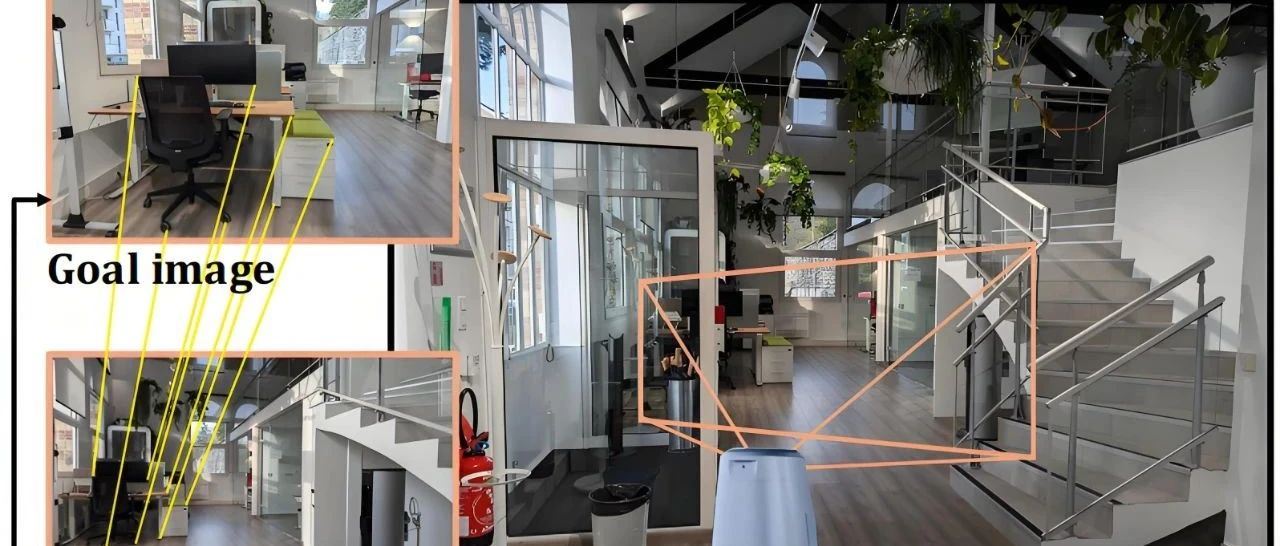
Research Background and Core Issues - Image goal navigation requires two key capabilities: core navigation skills and direction information calculation based on visual observation and target image comparison [2] - The research focuses on whether this task can be efficiently solved through end-to-end training of complete agents using reinforcement learning (RL) [2] Core Research Content and Methods - The study explores various architectural designs and their impact on task performance, emphasizing implicit correspondence computation between images [3][4] - Key architectures discussed include Late Fusion, ChannelCat, SpaceToDepth + ChannelCat, and Cross-attention [4] Main Findings - Early patch-level fusion methods (like ChannelCat and Cross-attention) are more critical than late fusion methods (Late Fusion) for supporting implicit correspondence computation [8] - The performance of different architectures varies significantly under different simulator settings, particularly the "Sliding" setting [8][10] Performance Metrics - The success rate (SR) and success path length (SPL) metrics are used to evaluate the performance of various models [7] - For example, when Sliding=True, ChannelCat (ResNet9) achieved an SR of 83.6%, while Late Fusion only reached 13.8% [8] Transferability of Abilities - Some learned capabilities can transfer to more realistic environments, especially when including the weights of the perception module [10] - Training with Sliding=True and then fine-tuning in a Sliding=False environment improved SR from 31.7% to 38.5% [10] Relationship Between Navigation and Relative Pose Estimation - A correlation exists between navigation performance and relative pose estimation accuracy, indicating the importance of direction information extraction in image goal navigation [12] Conclusion - Architectural designs that support early local fusion (like Cross-attention and ChannelCat) are crucial for implicit correspondence computation [15] - The simulator's Sliding setting significantly affects performance, but transferring perception module weights can help retain some capabilities in real-world scenarios [15] - Navigation performance is related to relative pose estimation ability, confirming the core role of direction information extraction in image goal navigation [15]
传媒中期策略报告:关注扎实基本面支持下有新业务推进及兑现的龙头标的-20250704
Guotou Securities· 2025-07-04 08:52
Core Insights - The report emphasizes the importance of solid fundamentals and the advancement of new business models in leading companies within the media sector, particularly in the context of AI technology and its impact on content creation and distribution [1][2] - It highlights the need for a narrative shift in the media industry as it adapts to the AI era, focusing on how AI can reshape content forms and business models [1][2] Media Industry Historical Review - The media internet era began around 2005, marked by innovations in content forms such as online literature, gaming, and digital music, which laid the groundwork for future developments [10][11] - The peak of the traffic dividend in 2018 led to a significant policy-driven cleanup in the media internet industry, transitioning from a focus on content to a more diversified approach to distribution and monetization [17][21] Game Sector Analysis - The gaming sector has seen a stable competitive landscape since 2017, with major players like Tencent and NetEase dominating the market, particularly in mobile gaming [30][31] - The report notes that the gaming industry has evolved significantly, with a shift towards mobile games and the emergence of new business models, including live streaming and esports [30][34] Investment Recommendations - The report suggests focusing on leading companies with strong fundamentals and new business initiatives in the second half of 2025, particularly in the gaming and film sectors [2] - Specific companies to watch include Wanda Film, Bona Film Group, and several others in the gaming and publishing sectors, indicating a strategic interest in firms with merger and acquisition potential [2] Media Sector Performance - The media sector's performance in the first half of 2025 shows a notable increase, with a 12.77% rise, ranking it fourth in terms of growth among sectors [18] - The report indicates that the film industry continues to thrive, with box office revenues reaching new heights and a growing number of cinema screens [26][28]
下半年CCF-A/B类会议窗口期收窄,发一篇具身论文还来得及吗?
具身智能之心· 2025-06-29 09:51
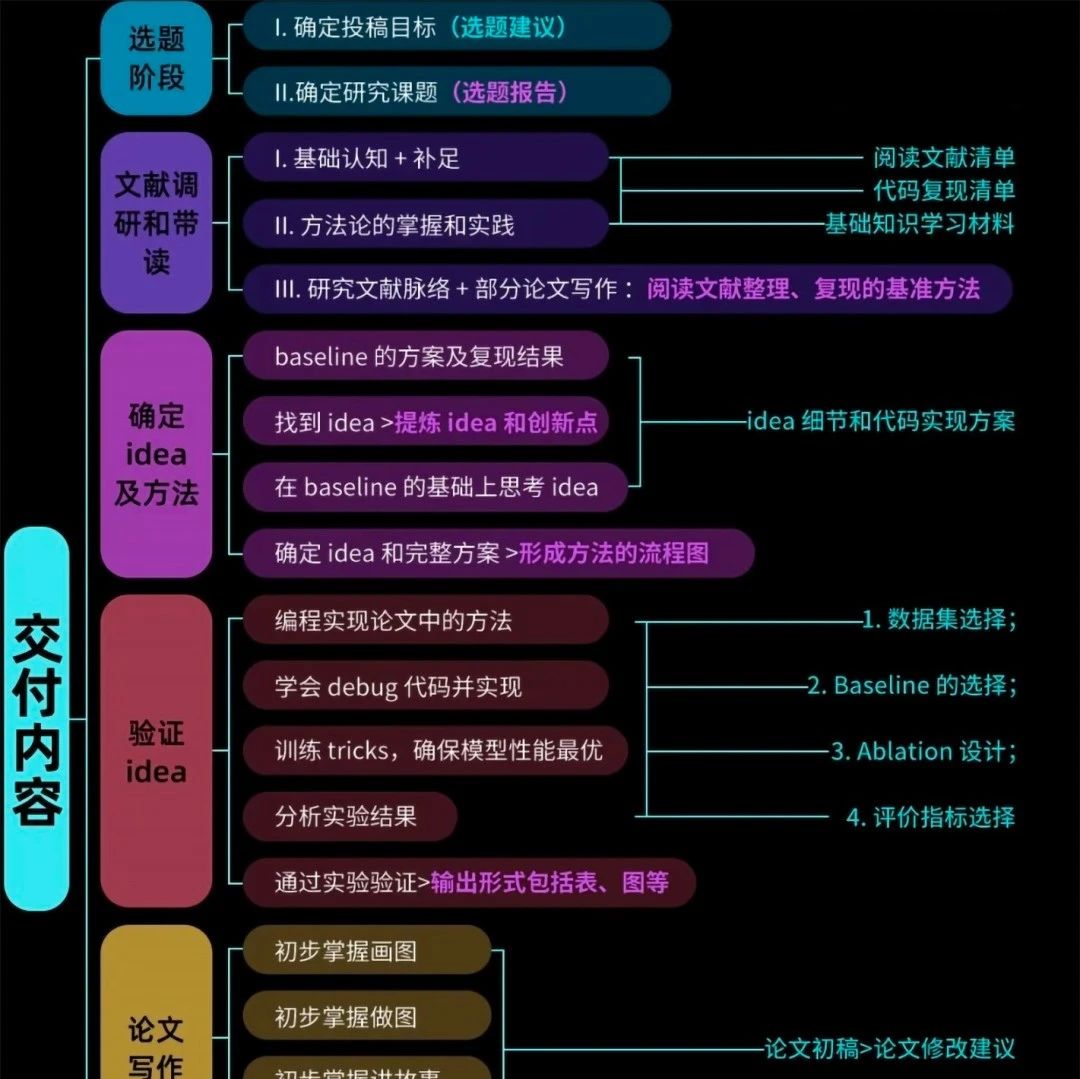
Core Viewpoint - The article emphasizes the importance of timely submission of research papers to key conferences, particularly for researchers in autonomous driving and embodied AI, and highlights the challenges faced in ensuring high-quality submissions under time constraints [1]. Group 1: Pain Points Addressed - The program targets students who lack guidance from mentors, have fragmented knowledge, and need a clear understanding of the research process [3][4]. - It aims to help students establish research thinking, familiarize themselves with research processes, and master both classic and cutting-edge algorithms [3]. Group 2: Phases of Guidance - **Topic Selection Phase**: Mentors assist students in brainstorming ideas or providing direct suggestions based on their needs [5]. - **Experiment Phase**: Mentors guide students through experimental design, model building, parameter tuning, and validating the feasibility of their ideas [7][12]. - **Writing Phase**: Mentors support students in crafting compelling research papers that stand out to reviewers [9][13]. Group 3: Course Structure and Duration - The total guidance period varies from 3 to 18 months depending on the target publication's tier, with specific core guidance and maintenance periods outlined for different categories [22][26]. - For CCF A/SCI 1区, the core guidance consists of 9 sessions, while for CCF B/SCI 2区 and CCF C/SCI 3区, it consists of 7 sessions each [22]. Group 4: Additional Support and Resources - The program includes personalized communication with mentors through dedicated groups for idea discussions and course-related queries [24]. - Students receive comprehensive training on research paper submission methods, literature review techniques, and experimental design methodologies [23][28].