
创新驱动

Search documents
推动实现和平发展、互利合作、共同繁荣的世界现代化(深入学习贯彻习近平新时代中国特色社会主义思想)
Ren Min Ri Bao· 2026-02-10 00:44
Core Viewpoint - The article emphasizes the need for a new paradigm of modernization that focuses on peaceful development, mutual cooperation, and common prosperity, as articulated in Xi Jinping's thoughts on governance [2][14]. Group 1: Modernization Paradigm - Modernization should be achieved through peaceful means rather than through war, colonization, or exploitation, creating a conducive international environment for development [2][4]. - The new modernization paradigm aims to reduce disparities among countries and ensure that development benefits are equitably shared, challenging the traditional model where only a few nations reap the rewards [2][4][10]. Group 2: Global Challenges - The world is facing unprecedented challenges, including deficits in peace, development, security, and governance, which complicate the modernization process [5][6]. - The rise of unilateralism and protectionism, along with the slow progress of the UN's Sustainable Development Goals, highlights the need for a collective approach to address global issues [5][6]. Group 3: New International Relations - A new type of international relationship based on mutual respect, fairness, and cooperation is essential for advancing modernization [7][8][9]. - Mutual respect is the political foundation for modernization, emphasizing equality among nations and the right to choose their development paths [7][8]. Group 4: Sustainable Development - High-quality and sustainable development is increasingly recognized as essential for achieving the goals of peaceful development, mutual cooperation, and common prosperity [10][11]. - The focus should shift from rapid growth to efficiency, quality, and sustainability, integrating innovation and green practices into the modernization process [11][12]. Group 5: Security and Cooperation - Ensuring security and resilience in the face of global uncertainties is crucial for the modernization journey, requiring collaborative international efforts [13]. - The concept of cooperation and win-win outcomes is central to the new international relations, promoting shared benefits and sustainable development [9][10].
Edgewell Personal Care(EPC) - 2026 Q1 - Earnings Call Transcript
2026-02-09 14:00
Financial Data and Key Metrics Changes - The company reported organic net sales decreased by 50 basis points in Q1 2026, with North America showing growth while international markets experienced expected softness [10][21] - Adjusted EPS was reported at a loss of $0.16, compared to a loss of $0.10 in the prior quarter, indicating a decline in profitability [26] - Adjusted EBITDA was $25 million, down from $30.9 million in the prior year, reflecting challenges in the operating environment [26] Business Line Data and Key Metrics Changes - Wet Shave organic net sales declined approximately 4%, with growth in preps offset by declines in disposables and systems [22] - Sun and skincare organic net sales increased approximately 8%, driven by nearly 20% growth in sun care, particularly in North America [23] - Grooming organic net sales growth was approximately 7%, led by significant growth in Cremo and Bulldog [23] Market Data and Key Metrics Changes - In North America, organic net sales grew just under 1%, primarily due to strong sun care performance [21] - International markets, particularly Oceania and Greater China, experienced double-digit growth, while Europe delivered low single-digit growth [21] - Over 70% of markets either grew or held market share, with share gains noted in Australia, Europe, Canada, and China [11] Company Strategy and Development Direction - The divestiture of the Fem Care business is seen as a pivotal step in the company's transformation, allowing a sharper focus on core categories: shave, sun, skincare, and grooming [9] - The company aims to drive sustainable growth and stronger margins by reallocating resources towards these core businesses [9] - The strategy includes enhancing international growth, innovation, productivity, and a U.S. commercial transformation [12] Management's Comments on Operating Environment and Future Outlook - Management expressed confidence in returning to organic net sales growth, driven by mid-single-digit growth in international markets and a more stable performance in North America [18] - The company anticipates gross margin expansion supported by productivity gains, despite facing inflationary pressures and tariffs [18] - Management remains focused on disciplined capital allocation and improving free cash flow generation [19] Other Important Information - The company declared a quarterly dividend of $0.15 per share, returning approximately $7 million to shareholders [27] - The impact of the Fem Care divestiture is expected to be approximately $0.44 in adjusted EPS and $44 million in adjusted EBITDA for fiscal 2026 [29] Q&A Session Summary Question: Thoughts on portfolio construction post-FemCare divestiture - Management highlighted the strategic move to divest a lagging business, improving gross margins and focusing on core categories with strong growth potential [38][39] Question: Expectations for fiscal Q2 organic sales - Management expects organic net sales to be down about 3% in Q2, with timing shifts affecting performance [49] Question: Implications of Fem Care dilution for fiscal 2027 - Management indicated that while there will be transitional costs, the company expects a stronger portfolio and improved cash flow recovery in fiscal 2027 [56] Question: Promotional levels in North America for Shave - Management acknowledged high promotional intensity in the shave category, particularly in women's products, but expressed confidence in improved trends in the second half of the year [80]

国药现代:公司将坚持“创新驱动”发展战略,深化合作创新
Zheng Quan Ri Bao Zhi Sheng· 2026-02-09 10:36
(编辑 王雪儿) 证券日报网讯 2月9日,国药现代在互动平台回答投资者提问时表示,医药研发具有周期长、投入大、 风险高的特性,公司将坚持"创新驱动"发展战略,深化合作创新,努力推动创新突破。如有重大事项公 司将及时履行信息披露义务。请以公司后续公告及定期报告披露信息为准。 ...

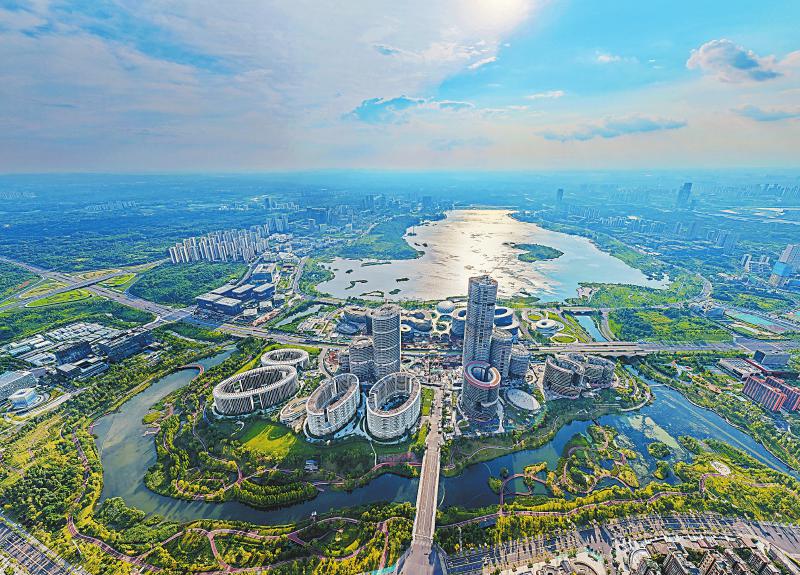
大城之成 成都做优做强极核功能、加快高质量发展一年观察
Si Chuan Ri Bao· 2026-02-09 07:27
Group 1 - Chengdu is experiencing rapid development, with significant advancements in technology and infrastructure, including the ability to produce 250 integrated circuits and 2 flexible displays per second [5][3] - The city has seen a notable increase in transportation, with over 170 passengers arriving or departing from its dual international airports every minute [6] - Chengdu's economic growth is highlighted by a GDP growth rate of 5.8% in 2025, surpassing the provincial average by 0.3%, making it the top city among China's ten largest GDP cities and the first among 15 sub-provincial cities [11][12] Group 2 - The establishment of the BOE's 8.6 generation AMOLED production line in Chengdu has catalyzed the growth of over 200 upstream and downstream enterprises, forming a collaborative development pattern [9][12] - Chengdu has added 7 kilometers of operational rail transit in a month, maintaining its position as the fourth-largest city in China by this metric [8] - The city has established 14 industrial parks with a total output exceeding 100 billion yuan, with 86% of industrial enterprises located within these parks [13] Group 3 - Chengdu's retail sales of consumer goods rank first among sub-provincial cities, driven by the influx of flagship stores and innovative business models [14] - The number of active business entities in Chengdu has reached 4.0865 million, reflecting an 11.66% year-on-year growth, positioning the city third nationally [15] - The provincial government has set a target for Chengdu to maintain an annual economic growth rate above the provincial average, aiming for a total economic output exceeding 3.2 trillion yuan by the end of the 14th Five-Year Plan [16] Group 4 - Chengdu is enhancing its innovation capabilities, with significant achievements in various sectors, including the launch of the world's first space computing constellation and advancements in controlled nuclear fusion technology [20] - The city has been recognized for its high quality of life, having been awarded the title of "most livable city" for 17 consecutive years, with ongoing efforts to develop a park city demonstration area [22] - Chengdu's transportation infrastructure is improving, with a decrease in congestion index from 1.68 to 1.65, and the establishment of new medical centers to enhance healthcare accessibility [24] Group 5 - The Chengdu metropolitan area is expanding its collaborative economic framework, with cross-city cooperation leading to a combined industrial output exceeding 1.2 trillion yuan [26] - The city is actively engaging in investment promotion activities, particularly in the Yangtze River Delta region, to enhance regional cooperation and development [26] - Chengdu's economic total in the Chengdu-Chongqing region has surpassed 10 trillion yuan, accounting for approximately 7.2% of the national economy, positioning it as a key player in China's economic landscape [27]

食品饮料周报(26年第6周):白酒春节动销渐起,预制菜国标公开征求意见
Guoxin Securities· 2026-02-09 05:45
Investment Rating - The report maintains an "Outperform the Market" rating for the food and beverage sector [4][5]. Core Insights - The food and beverage sector has shown a cumulative increase of 4.48% this week, with A-shares rising by 4.44%, outperforming the CSI 300 by approximately 5.77 percentage points [1]. - The report highlights the ongoing differentiation in the fundamentals of various categories, with liquor outperforming food and beverages [2]. - Key investment recommendations include leading companies such as Kweichow Moutai, Shanxi Fenjiu, and Luzhou Laojiao in the liquor segment, as well as Yili in dairy and Nongfu Spring in beverages [2][3]. Summary by Sections Liquor - The report notes a gradual increase in sales leading up to the Spring Festival, with Kweichow Moutai performing particularly well. It suggests that the overall decline in sales is expected to narrow to around 10% during the festive period [10]. - Investment recommendations include Kweichow Moutai, Luzhou Laojiao, and Shanxi Fenjiu, with a focus on their growth potential and market recovery [10][11]. Beer - The beer industry is experiencing healthy inventory levels, with expectations for demand recovery. The report recommends Yanjing Beer and China Resources Beer as key players to watch [11]. Snacks - The report emphasizes the importance of strong alpha stocks in the snack category, particularly focusing on the growth potential of konjac snacks. Leading companies like Wei Long and Yan Jin Pu Zi are highlighted for their innovative product offerings [12][18]. Dairy - The dairy sector is seeing orderly preparations for the Spring Festival, with a recommendation for Yili as a leading company with a favorable valuation margin. The report anticipates a gradual recovery in demand and a potential balance in supply and demand by mid-2026 [14]. Beverages - The beverage segment is primarily focused on inventory reduction during the off-season, with stable preparations for the Spring Festival. The report continues to recommend Nongfu Spring and Dongpeng Beverage for their growth strategies [15]. Supply Chain - The report discusses the public consultation on national standards for prepared dishes, which may accelerate the clearing of inefficient suppliers in the industry. Recommendations include leading companies like Yihai International and Haidilao [13].




食品饮料周报(26年第6周):白酒春节动销渐起,预制菜国标公开征求意见-20260209
Guoxin Securities· 2026-02-09 05:07
Investment Rating - The report maintains an "Outperform the Market" rating for the food and beverage sector [4][5][18] Core Views - The food and beverage sector is expected to perform well in 2026, driven by several key themes including cost benefits, efficiency improvements, innovation, and potential recovery opportunities in the liquor segment [3][10][11] - The report highlights the ongoing differentiation in the fundamentals of various categories, with liquor outperforming food and beverages [2][10] Summary by Relevant Sections Liquor - The report indicates that the sales of liquor, particularly high-end brands like Moutai, are showing positive trends as the Spring Festival approaches, with Moutai expected to see double-digit growth [2][10] - Investment recommendations include Moutai, Shanxi Fenjiu, and Luzhou Laojiao, with a focus on brands that are gaining market share despite overall market challenges [2][10][11] Beer - The beer industry is currently managing inventory well and is poised for recovery as demand is expected to improve [11] - Recommended companies include Yanjing Beer and China Resources Beer, which are seen as strong players in the market [11] Snacks - The report emphasizes the importance of focusing on companies with strong growth potential in the snack sector, particularly those involved in konjac products, which are expected to continue their growth trajectory [12][18] - Key players in this segment include Weidong and Yanjinpuzi, which are noted for their innovative product offerings [12][18] Prepared Dishes - The report discusses the public consultation on national standards for prepared dishes, which may lead to a clearer industry structure and the elimination of less compliant players [13][14] - Recommended companies in this space include Yihai International and Haidilao, which are expected to benefit from improved compliance and operational efficiency [13][14] Dairy Products - The dairy sector is experiencing a steady recovery, with a focus on leading companies like Yili, which are expected to benefit from improved margins and reduced inventory pressures [14][15] - The report suggests that the demand for dairy products will continue to improve, particularly in the second half of 2026 [14][15] Beverages - The beverage sector is currently in a seasonal inventory reduction phase, with stable preparations for the Spring Festival [15] - Companies like Nongfu Spring and Dongpeng Beverage are highlighted for their strong operational performance and market expansion strategies [15][16]
中国经济坚韧奋进勇攀新高峰 2025年GDP跨越140万亿关口
Chang Jiang Shang Bao· 2026-02-09 01:58
Core Viewpoint - In 2025, China's GDP reached 140.19 trillion yuan, growing by 5% year-on-year, marking a significant milestone in the "14th Five-Year Plan" period, showcasing the resilience and strength of the Chinese economy amidst global challenges [1][2] Economic Performance - China's GDP crossed the 140 trillion yuan mark, achieving a four-step increase during the "14th Five-Year Plan" period [2] - The economy demonstrated stability and progress, with a focus on high-quality development and effective macroeconomic policies [2][8] Policy Measures - A comprehensive set of macroeconomic policies was implemented, including over 2.8 trillion yuan in tax reductions and targeted support for key sectors [2][3] - The reduction of the reserve requirement ratio and policy interest rates released over 2 trillion yuan in long-term liquidity, aiding businesses in securing loans [2] Consumer Demand and Innovation - The issuance of long-term special government bonds amounting to 1.3 trillion yuan supported consumer spending, leading to a retail sales growth of 3.7% [3][4] - China's innovation index entered the global top ten, with R&D expenditure intensity reaching 2.8%, surpassing the OECD average [4][6] Industrial Growth - The manufacturing sector saw significant growth, with high-tech manufacturing value added accounting for 17.1% of industrial output [6] - The production of drones and industrial robots increased by 37.3% and 28%, respectively, indicating a strong trend in advanced manufacturing [6][7] Digital Economy - The digital economy expanded, with a 9.3% increase in the value added by digital product manufacturing [7] - New consumption models and online retail grew by 8.6%, reflecting the increasing penetration of digital technologies [7] Future Outlook - The policies implemented in 2026 aim to stimulate economic growth and ensure a strong start for the "15th Five-Year Plan" [10][11] - International financial institutions remain optimistic about China's economic fundamentals and asset performance, indicating a positive long-term outlook [11]
长江经济带十年奔腾动能澎湃 撑起全国经济总量“半壁江山”
Chang Jiang Shang Bao· 2026-02-09 01:58
Core Viewpoint - The Yangtze River Economic Belt has become a crucial national development strategy, contributing nearly 50% of the national economic output and serving as a key ecological protection barrier in China [1][2][4]. Group 1: Economic Contribution - The Yangtze River Economic Belt covers about one-fifth of China's land area and contributes nearly 50% of the national economic total, solidifying its role as a vital economic corridor [2][4]. - By 2025, the economic output of the Yangtze River Economic Belt is projected to reach approximately 66.8 trillion yuan, more than doubling over the past decade with an average growth rate of 5.4%, surpassing the national average by 0.4 percentage points [4]. Group 2: Ecological and Environmental Initiatives - The concept of "grasping major protection without large-scale development" has taken root in the Yangtze River Economic Belt, leading to significant ecological improvements, including the enhancement of water quality from class V to class II along the main river [6][7]. - The region has implemented pollution control measures across various sectors, including industrial and agricultural pollution, resulting in the closure or transformation of nearly 10,000 chemical enterprises and the elimination of 1,361 illegal docks [6][7]. Group 3: Industrial Transformation and Innovation - The Yangtze River Economic Belt has fostered industrial transformation by nurturing 41 national-level advanced manufacturing clusters and 30 strategic emerging industry clusters, accounting for 51% and 45% of the national totals, respectively [6][7]. - The region is actively promoting the green transformation of traditional industries, establishing 24 national carbon peak pilot cities and parks, and supporting the scrapping and updating of approximately 10,000 old operating vessels [7]. Group 4: Future Development Plans - The next phase of development will focus on high-level ecological protection, enhancing innovation support systems, and strengthening regional collaboration, with an emphasis on building a "Five Great Yangtze" framework encompassing ecological, innovative, open, cultural, and happy aspects [8].
弹好兴业强县富民“协奏曲”
Xin Lang Cai Jing· 2026-02-08 22:43
Core Insights - The oil tea industry in Yupi has become a core pillar for rural revitalization, with a planting area of 234,500 acres and a comprehensive output value exceeding 500 million yuan [1] - Guizhou's agricultural value added is projected to exceed 300 billion yuan during the 14th Five-Year Plan, with the agricultural product processing conversion rate increasing from 51% in 2020 to 70% by 2025 [1] - The potato industry in Weining County has seen significant growth, with 120,000 acres of potato cultivation generating an annual output value of 480 million yuan [2] - The Yao bath culture in Qiandongnan Prefecture has transformed into a wellness tourism brand, with over 20 Yao bath enterprises and 276 experience stores created, providing stable employment for over 3,000 people [2] - The guitar industry in Zheng'an County has become a major employment driver, directly creating 5,000 jobs and impacting over 10,000 jobs, with an annual production of 2.55 million guitars [3][4] - The sweet potato industry in Tongren City has expanded to over 100,000 acres, generating sales exceeding 1 billion yuan from sweet potato sour and spicy noodles [4] - By 2025, the per capita disposable income of rural residents in Guizhou is expected to reach 16,764 yuan, reflecting a growth of 5.7% [4]
理论专刊|以创新驱动引领冰雪经济高质量发展
Xin Lang Cai Jing· 2026-02-08 22:43
崔玉范 锻造世界级的产业竞争力,根本在于创新驱动。黑龙江须将培育和发展冰雪领域的新质生产力作为核心 动能,全力推动冰雪经济彻底从"流量驱动"模式转向"创新与品牌驱动"模式,实现高质量发展 从全民热议"尔滨"现象,到哈尔滨荣膺联合国旅游组织授予的"世界冰雪旅游卓越城市"称号,黑龙江冰 雪经济正经历一场深刻的范式变革——从现象级"流量"转向系统性"留量"。面向"十五五",黑龙江锚定 全新坐标:全力打造世界级冰雪旅游目的地和冰雪经济高地。这要求我们以更高的全球站位、更系统的 产业思维科学擘画冰雪经济高质量发展的战略路径。 系统构建冰雪产业生态圈 "十五五"时期黑龙江冰雪经济的发展战略应从追求国内市场的规模与流量,转向确立在全球冰雪产业版 图上的"标杆"地位。这要求打破传统点状分散的发展格局,在全省范围内进行战略性、系统性统筹,构 建一个主题鲜明、功能互补、有机联动的冰雪经济生态系统。 (来源:黑龙江日报) 转自:黑龙江日报 锻造世界级的产业竞争力,根本在于创新驱动。黑龙江须将培育和发展冰雪领域的新质生产力作为核心 动能,全力推动冰雪经济彻底从"流量驱动"模式转向"创新与品牌驱动"模式,实现高质量发展轨道。 攻坚冰雪 ...