
房地产行业转型

Search documents
沪铜产业日报-20250922
Rui Da Qi Huo· 2025-09-22 08:51
Report Summary 1. Report Industry Investment Rating - Not provided in the given content 2. Core View of the Report - The Shanghai copper main contract rebounded slightly, with an increase in open interest, spot premium, and a weakening basis. The copper market fundamentals are in a stage of slightly converging supply and slightly boosting demand. The option market sentiment is bullish, and the implied volatility has slightly increased. It is recommended to conduct short - term long trades at low prices with a light position, while paying attention to controlling the rhythm and trading risks [2] 3. Summary by Relevant Catalogs 3.1 Futures Market - The closing price of the Shanghai copper futures main contract is 80,160 yuan/ton, up 250 yuan; the LME 3 - month copper price is 9,984.50 dollars/ton, down 4.50 dollars. The main contract inter - month spread is 10 yuan/ton, up 40 yuan; the open interest of the Shanghai copper main contract is 176,962 lots, up 60,410 lots. The net position of the top 20 futures holders of Shanghai copper is - 17,286 lots, down 3,082 lots; the LME copper inventory is 147,650 tons, down 1,225 tons; the SHFE cathode copper inventory is 105,814 tons, up 11,760 tons; the LME copper cancelled warrants are 14,400 tons, up 950 tons; the SHFE cathode copper warrants are 29,893 tons, down 2,856 tons [2] 3.2 Spot Market - The SMM 1 copper spot price is 80,225 yuan/ton, up 235 yuan; the Yangtze River Non - ferrous Market 1 copper spot price is 80,230 yuan/ton, up 185 yuan. The Shanghai electrolytic copper CIF (bill of lading) price is 59 dollars/ton, unchanged; the Yangshan copper average premium is 57.50 dollars/ton, up 2 dollars. The basis of the CU main contract is 65 yuan/ton, down 15 yuan; the LME copper cash - 3M spread is - 64.90 dollars/ton, up 6.19 dollars [2] 3.3 Upstream Situation - The import volume of copper ore and concentrates is 275.93 million tons, up 19.92 million tons. The copper smelter TC is - 40.80 dollars/thousand tons, up 0.50 dollars. The copper concentrate price in Jiangxi is 70,520 yuan/metal ton, up 200 yuan; in Yunnan, it is 71,220 yuan/metal ton, up 200 yuan. The southern and northern processing fees for blister copper are both 700 yuan/ton, unchanged [2] 3.4 Industry Situation - The refined copper output is 130.10 million tons, up 3.10 million tons. The import volume of unwrought copper and copper products is 430,000 tons, down 50,000 tons. The social copper inventory is 41.82 million tons, up 0.43 million tons. The price of 1 bright copper wire in Shanghai is 55,390 yuan/ton, unchanged; the price of 2 copper (94 - 96%) in Shanghai is 68,100 yuan/ton, down 50 yuan. The ex - factory price of 98% sulfuric acid of Jiangxi Copper is 530 yuan/ton, down 60 yuan [2] 3.5 Downstream and Application - The copper product output is 222.19 million tons, up 5.26 million tons. The cumulative grid infrastructure investment is 331.497 billion yuan, up 40.431 billion yuan. The cumulative real estate development investment is 6,030.919 billion yuan, up 672.942 billion yuan. The monthly output of integrated circuits is 4,250,287,100 pieces, down 438,933,600 pieces [2] 3.6 Option Situation - The 20 - day historical volatility of Shanghai copper is 8.55%, down 1.02 percentage points; the 40 - day historical volatility is 8.07%, down 0.02 percentage points. The current month at - the - money IV implied volatility is 11.17%, up 0.0027 percentage points; the at - the - money option call - put ratio is 1.33, down 0.0708 [2] 3.7 Industry News - Fed officials have different views on interest rate cuts. The European Central Bank believes it has reached the inflation target but faces uncertainties. The Fed's 25 - basis - point interest rate cut is expected to shift the policy focus and may drive global capital re - balance. Chinese Premier Li Qiang met with a US congressional delegation, emphasizing Sino - US cooperation. The real estate industry is entering a transformation from quantity to quality [2]
招商蛇口再换帅
2 1 Shi Ji Jing Ji Bao Dao· 2025-09-17 13:23
Core Viewpoint - The recent leadership changes at China Merchants Shekou Industrial Zone Holdings Co., Ltd. (招商蛇口) involve the resignation of former Chairman Jiang Tiefeng and the appointment of Zhu Wenkai as the new Chairman, with Nie Liming taking over as General Manager. This transition is seen as a strategic move to enhance the company's management and operational effectiveness in a challenging real estate market [2][3][5]. Leadership Changes - Jiang Tiefeng resigned due to a work transfer and has taken a position as Deputy General Manager at China Merchants Group. Zhu Wenkai, who has a long history within the company, has been appointed as Chairman, while Nie Liming, also a veteran, becomes General Manager [2][5][6]. - Zhu Wenkai's career at China Merchants has included various roles, culminating in his return as General Manager before becoming Chairman. Nie Liming has held multiple senior positions within the organization, indicating a preference for internal promotions [5][6]. Company Strategy and Performance - Under Jiang Tiefeng's leadership, the company aimed to rank among the top five in the industry, focusing on quality and profitability rather than just scale. The company plans to enhance its operational management and transition towards a more quality-driven approach [8][9]. - In 2024, the company reported revenues of 178.95 billion yuan, a 2.25% increase year-on-year, but net profit fell by 36.09% to 4.04 billion yuan, reflecting the pressures faced in the real estate sector [8][9]. Market Positioning - The company has increased its land acquisition investments, with 32 billion yuan spent in the first eight months of the year, up from 26.6 billion yuan in the same period last year. The focus has shifted to investing in "core 10 cities," with 90% of investments concentrated in these areas, particularly in first-tier cities [9][11]. - Organizational adjustments have been made to streamline operations, including the cancellation of several regional companies, allowing for more direct management from headquarters [10][11].


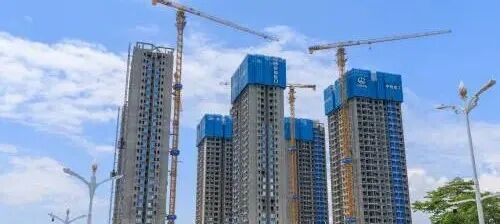
招商蛇口再换帅
21世纪经济报道· 2025-09-17 13:15
Core Viewpoint - The recent leadership changes at China Merchants Shekou are seen as a strategic move to enhance management effectiveness and adapt to the evolving real estate market dynamics, with a focus on quality and profitability rather than just scale [1][8]. Group 1: Leadership Changes - China Merchants Shekou announced the resignation of former Chairman Jiang Tiefeng and the appointment of Zhu Wenkai as Chairman and Nie Liming as General Manager, indicating a shift in management [1]. - Zhu Wenkai and Nie Liming are both seasoned veterans within the China Merchants system, with extensive experience in various leadership roles [1][7]. - This leadership transition is viewed as a continuation of the company's conservative talent selection approach, favoring internal promotions [7]. Group 2: Performance and Strategy - Under Jiang Tiefeng's leadership, the company aimed to rank among the top five in the industry, focusing on enhancing internal management and transitioning towards quality-driven growth [8]. - In 2024, China Merchants Shekou reported a revenue of 178.95 billion yuan, a year-on-year increase of 2.25%, while net profit attributable to shareholders fell by 36.09% to 4.04 billion yuan [8]. - The company has adopted a strategy to concentrate investments in "core 10 cities," with 90% of its investment in these cities and 59% in first-tier cities [9]. Group 3: Market Adaptation - The company has made organizational adjustments, including the establishment of an asset management department and the reduction of management layers by eliminating several regional companies [9]. - The leadership changes and strategic focus on core cities reflect the company's response to market challenges and its aim to improve performance in a competitive environment [9].
房地产企业正从“规模为王”到“品质为王”
Huan Qiu Wang· 2025-09-07 02:08
Core Viewpoint - The real estate industry in China is transitioning from a high-debt, high-leverage model to a new phase focused on "survival quality" and "new model exploration," indicating a shift from mere scale expansion to quality and service enhancement [1] Group 1: Market Consensus and Divergence - There is a consensus that the market has largely bottomed out, with limited room for further decline due to supportive policies like "guaranteeing delivery" and reduced down payments [2] - Divergence is evident among cities, with first-tier and strong second-tier cities showing resilient demand, while third and fourth-tier cities face high inventory and weak demand [2] - Financially stable state-owned and quality private enterprises are gaining market share, while heavily indebted firms struggle for survival, leading to increased industry consolidation [2] Group 2: Challenges and Solutions - The execution of supportive policies faces delays, with local fiscal pressures hindering timely implementation of incentives, and buyer confidence remains low, complicating inventory reduction efforts [3] - Inventory clearance is a significant challenge, especially in third and fourth-tier cities where the clearance cycle exceeds 24 months, necessitating innovative approaches from local governments [3] Group 3: Strategic Transformation - Real estate companies are restructuring strategies around reducing debt, ensuring cash flow, improving efficiency, and enhancing product quality, transitioning from developers to operators and service providers [4] - Companies like Longfor and China Jinmao are focusing on financial stability and optimizing land reserves in core cities to mitigate market risks [4] - Enhancing operational efficiency through asset divestment, light asset operations, and digital optimization is a priority for firms aiming to improve overall effectiveness [4] Group 4: Product Quality as a Competitive Focus - The industry is entering a phase where product quality becomes the ultimate competitive focus, with various companies establishing robust product systems to enhance living quality and sustainability [5] - The collaboration between policy and market dynamics is expected to strengthen, leading to a healthier and more sustainable real estate model that prioritizes quality over rapid growth [5]




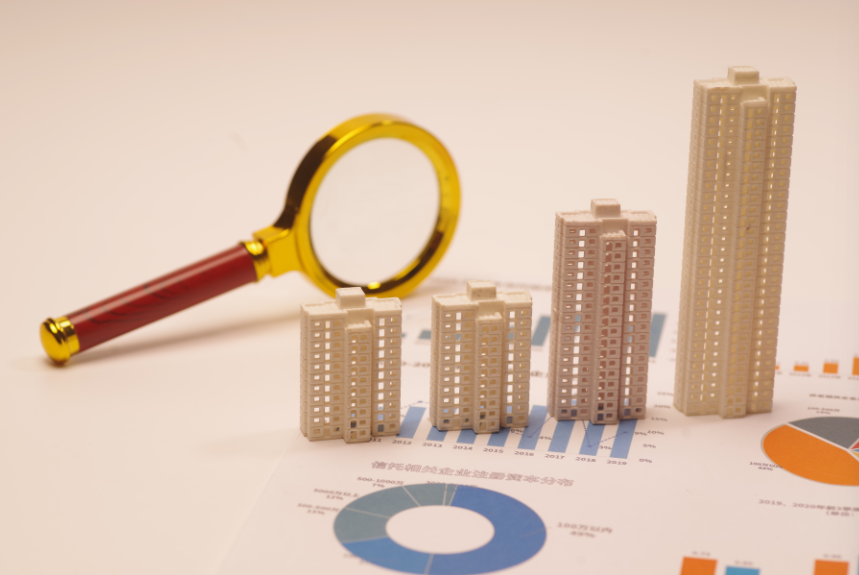
2025 年房企半年报:聚焦核心城市、国企引领与民企复苏、“好房子”成为主导
Jing Ji Guan Cha Wang· 2025-09-04 11:29
Core Insights - The real estate industry is experiencing a differentiated landscape in the first half of 2025 due to policy adjustments and changes in market demand, with some companies achieving stable growth through precise strategies and strong product capabilities [2] Group 1: Market Focus - Market demand is concentrating in high-quality areas, with leading real estate companies directing resources towards core cities, particularly first-tier and key second-tier cities, establishing a foundation based on core urban centers [3] - First-tier cities have significantly increased their contribution to sales for real estate companies, with over 50% of sales from companies like China Merchants Shekou, Yuexiu Property, and China Jinmao coming from cities like Beijing, Shanghai, Guangzhou, and Shenzhen [3] - Second-tier cities are becoming the main battleground for expansion, with companies like Longfor and Yuanhang focusing nearly 90% of new project areas in first and second-tier cities, balancing profit and scale [3] Group 2: Company Dynamics - The market is characterized by a leading role of state-owned enterprises (SOEs) and a gradual recovery of private enterprises, enhancing industry stability through collaborative efforts in sales and land acquisition [4] - In sales, SOEs like Poly Developments and China Overseas Land & Investment dominate due to their financial advantages and brand trust, while private companies like Binjiang Group and Jianfa Real Estate are achieving positive sales growth through differentiated strategies [4] - In land acquisition, the top 100 real estate companies saw a 33.3% year-on-year increase in total land acquisition, with SOEs occupying 8 out of the top 10 positions, showcasing their role as a stabilizing force in the land market [4] Group 3: Industry Concentration and Innovation - Among the top 10 real estate companies, four, including Jianfa Real Estate and Yuexiu Property, reported positive year-on-year sales, while the overall performance of companies ranked 11-30 and 51-100 declined, indicating increased industry concentration [5] - Leading companies are enhancing product strength and optimizing investment strategies to adapt to market trends, focusing on standardization and cultural integration in product development [5] - Investment strategies are becoming more flexible and diversified, with companies like Poly Developments and China Overseas Land & Investment prioritizing quality land in core cities and participating in urban renewal projects [5] Group 4: Future Outlook - Overall, high-quality real estate companies are focusing on three main directions to build competitive advantages, indicating a shift from "scale expansion" to "quality enhancement" in the industry [6]




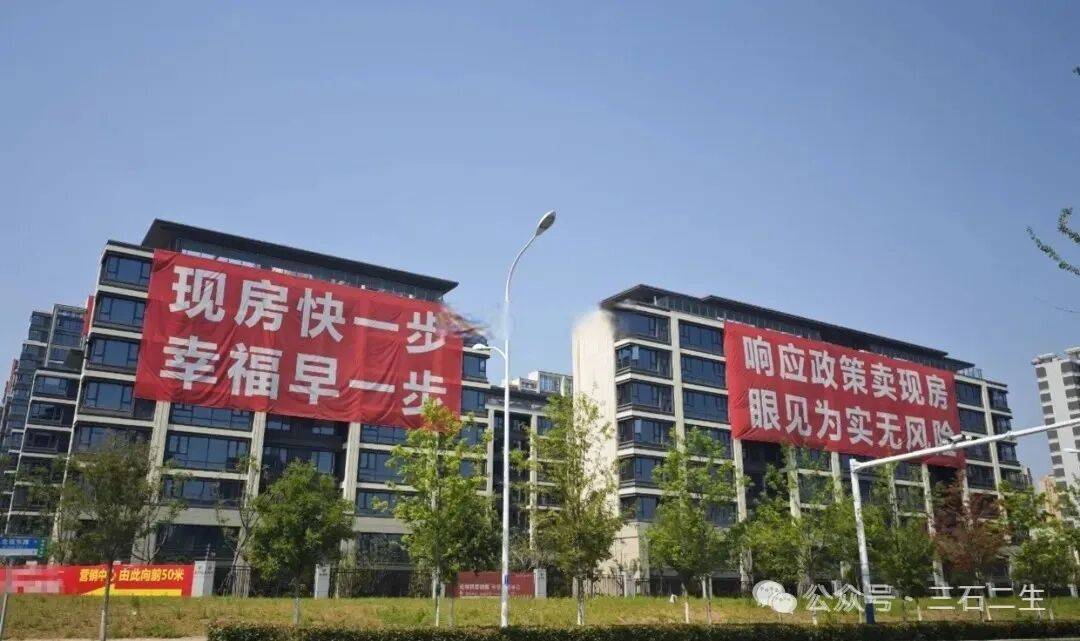
现房销售让开发商资金回笼周期拉长至3-5年,购房者会因此受益还是受害?
Sou Hu Cai Jing· 2025-09-02 11:35
Group 1: Core Transformation in Real Estate - The real estate industry is undergoing a profound structural transformation, marked by a shift from high turnover and high leverage models to a new financing system aligned with current housing sales and height restrictions [1] - The essence of this transformation is the redistribution of risks and benefits, which is already reflected in various multidimensional data [1] Group 2: Current Housing Sales and Market Reconstruction - The proportion of current housing sales surged from 12.7% in 2020 to 30.84% in 2024, driven by proactive policy pressure and market forces [2] - In 2024, the new construction area of commercial housing nationwide decreased by 23% compared to the same period last year, marking the lowest level since 2009 [5] - The funding recovery cycle for real estate companies has extended from 1-2 years to 3-5 years due to current housing sales, creating a financial firewall between developers and banks [6] - In 2024, the market share of the top 10 real estate companies increased to 38%, a 5 percentage point rise compared to before the new policies [6] Group 3: Quality Revolution and Cost Restructuring - The Ministry of Housing and Urban-Rural Development raised the residential height standard from 2.8 meters to 3 meters, leading to significant cost increases in the construction industry [7] - For every 0.1-meter increase in height, construction costs rise by 2-3%, with total cost increases reaching 8-12% when factoring in additional expenses [7] - In Shenzhen's Bao'an District, a decrease in floor area ratio from 6.0 to 4.4 coincided with a price jump from 80,000 to 120,000 per square meter, illustrating a unique pricing phenomenon [7] Group 4: Market Segmentation and Supply Dynamics - 78% of homebuyers are willing to pay an additional 5% for higher ceilings and more comfort, while third- and fourth-tier cities face a 36-month inventory turnover period [8] - A dual-track supply structure is emerging, with plans for 240-300 hectares of commodity housing land in Beijing by 2025, alongside 50,000 units of affordable rental housing [8] Group 5: Financial Model Iteration and Debt Issues - The collapse of the old model is evident in financial data, with some companies facing a debt maturity scale of approximately 3.1 trillion yuan by 2025 [10] - State-owned enterprises dominate land auctions, accounting for 77% of the total land acquisition amount in 22 cities in 2024 [10] Group 6: Wealth Redistribution and Market Disparities - The transformation is creating new wealth gaps, with those who purchased high-rise properties from 2016 to 2023 facing significant asset depreciation [14] - Non-core area second-hand houses have experienced a 15-20% value loss, while premium properties in core areas are seeing high demand and prices [14] Group 7: Future Outlook and Industry Challenges - The industry is expected to move towards high-quality development after enduring pain, with urban household debt ratios projected to rise to 62.3% by 2025 [16] - The sustainability of the "quality revolution" pricing strategy remains uncertain for average households [17]
美的置业:2025年全年业绩增速能保持在20%左右 未来发展空间很大
Zheng Quan Shi Bao Wang· 2025-08-28 05:44
Core Viewpoint - Midea Real Estate expresses confidence in its growth potential post-restructuring, projecting a revenue growth rate of around 20% for 2025, with a focus on enhancing service capabilities and maintaining a strong financial position [1][4]. Financial Performance - For the first half of the year, Midea Real Estate reported a revenue of 2 billion yuan, a year-on-year increase of 41%, with property management services contributing 930 million yuan (up 9%) and development services contributing 500 million yuan [1]. - The company's core net profit attributable to shareholders reached 310 million yuan, reflecting a 119% increase, with a gross margin of 30.8% [1]. - Total assets amounted to 9.49 billion yuan, with net assets of 4.98 billion yuan and operating cash flow of 440 million yuan, maintaining a cash balance of 1.27 billion yuan with no interest-bearing debt [1]. Business Strategy - Midea Real Estate's strategy focuses on enhancing its core competencies in development services and property management, emphasizing high-quality products and services derived from its manufacturing background [2]. - The company aims to deepen its presence in first- and second-tier cities, leveraging its brand and product advantages to drive steady growth in development scale [3]. - The development services segment, newly added post-restructuring, is expected to generate approximately 1 billion yuan in revenue for 2025, with ongoing projects and third-party collaborations enhancing its service capabilities [4]. Market Position - Midea Real Estate prioritizes service quality over market share, currently serving 450,000 families and 1.5 million owners, and plans to focus on improving service capabilities rather than pursuing aggressive expansion [2]. - The company has signed four third-party projects with a total contract value of 16 million yuan, indicating a strategic approach to resource integration and high-quality service delivery [4].
又一家粤系民营房企彻底出局!未来能撑下去的,估计都是些深耕本土的开发商!
Sou Hu Cai Jing· 2025-08-14 11:18
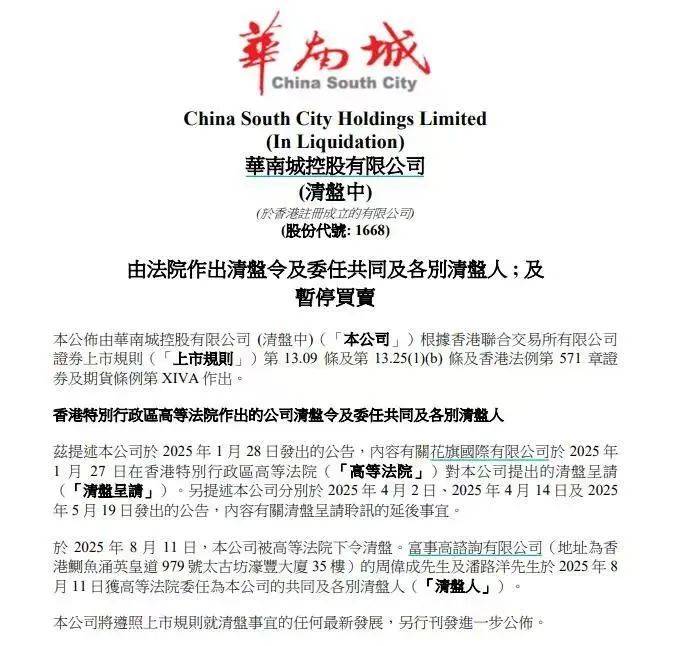
Group 1: Industry Overview - The Guangdong real estate sector, once thriving with numerous private enterprises, has seen a significant decline, with only a few surviving companies remaining [1] - The recent turmoil in the Greater Bay Area has severely impacted the vitality of the real estate market, leading to a drastic reduction in the number of active Guangdong-based real estate firms [1][2] - The industry is undergoing a major reshuffle, with only local players likely to survive in the future [1] Group 2: Company Case Studies - Huazhong City, a former real estate giant, has faced severe financial difficulties, culminating in a court-ordered liquidation, with its market value plummeting by 95% from its peak [3][4] - The Shenzhen state-owned enterprise, Special Zone Construction Development, has incurred significant losses due to its investment in Huazhong City, facing a debt claim of $14.07 billion [5] - Huazhong City's business model, which relied on low-cost land acquisition and subsequent development, has become unsustainable, leading to a total debt of 609 billion yuan, with 182 billion yuan due imminently [5][6] Group 3: Market Trends and Future Outlook - The real estate industry is experiencing a brutal market clearing process, with many companies entering bankruptcy proceedings, including well-known names like Evergrande and Country Garden [6] - The shift in market dynamics necessitates that surviving companies adopt sound financial practices and strong product capabilities to thrive in the new landscape [6][7] - Emerging local companies, such as金沙, are gaining traction by focusing on quality and operational excellence, positioning themselves as leaders in their respective markets [7][15]
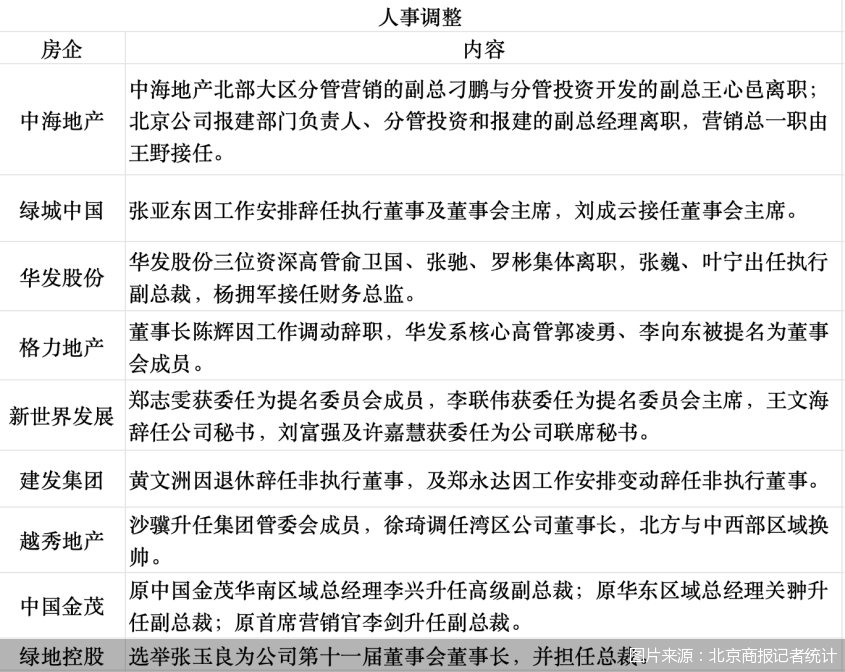
年内房企高管超50次变动,“营销总”成调整焦点
Bei Jing Shang Bao· 2025-08-10 05:59
Core Insights - The real estate industry is undergoing a transformation period, leading to significant personnel adjustments as companies adapt to a new competitive landscape [1][2][3] - From January to July 2025, over 50 executive changes occurred within real estate companies, with a notable focus on the marketing sector due to its direct impact on performance and market responsiveness [1][2][3] - Companies are increasingly hiring versatile talents who possess both product design and marketing experience to enhance the synergy between product development and marketing efforts [1][7][8] Executive Changes - Major real estate firms, including Poly Developments, China Overseas Land & Investment, and China Merchants Shekou, have experienced significant executive turnover, particularly in city management roles [2][3] - China Overseas has entered a phase of frequent executive changes, with multiple city managers being reassigned in June 2025 [2][3] - In the first half of 2025, 31 out of 65 monitored real estate companies executed 47 executive changes, with a notable increase in adjustments during the second quarter [3][4] Marketing Sector Focus - The "Chief Marketing Officer" position has seen increased turnover due to performance pressures and strategic shifts, with companies like China Jinmao and China Overseas consolidating marketing functions at headquarters [5][6] - China Overseas reported a significant decline in sales and profits, with its Northern region's sales halving from 911.2 billion to 559.4 billion yuan, prompting leadership changes [5][6] - The departure of key marketing executives often correlates with underperformance, as these roles are critical for driving revenue growth [6][7] Strategic Adjustments - Companies are streamlining their organizational structures and enhancing management capabilities to adapt to the evolving market landscape [4][7] - The integration of product and marketing functions is becoming a common practice among real estate firms to meet the rising demand for quality and differentiation in products [7][8] - The shift towards a focus on product quality is essential as the new home market transitions from a demand-driven phase to one centered on improvement needs [8]


“两个转向”为房地产业指明方向
Jing Ji Ri Bao· 2025-08-05 22:13
Group 1 - The core viewpoint of the article is that China's urbanization is transitioning from a rapid growth phase to a stable development phase, which will provide new opportunities for the real estate industry [1] - The real estate market will enter a stable development stage as urbanization continues, with significant opportunities arising from the ongoing migration of rural populations to cities [1][2] - The demand for high-quality housing is increasing, and the market is calling for better housing supply to meet the evolving needs of the population [1] Group 2 - The real estate industry is required to accelerate the construction of a new development model, focusing on optimizing the housing supply system and increasing the supply of affordable housing [2] - A new mechanism for element linkage will be established to promote balance between supply and demand in the real estate market, ensuring stability [2] - The industry will also push for reforms in the commodity housing sales system and enhance the safety management of housing throughout its lifecycle [2][3] Group 3 - High-quality urban renewal is essential for transforming the real estate industry and constructing a new development model [3] - The focus will be on improving housing design, construction, and maintenance, as well as upgrading old neighborhoods and enhancing community facilities [3] - Real estate companies will shift their roles towards service and operation, engaging in public service construction and community management [3][4] Group 4 - The transformation of the real estate industry is underway, moving from a focus on development revenue to service-oriented revenue [4] - Companies need to adapt to this trend by emphasizing technological innovation and improving service efficiency to meet diverse urban development and resident needs [4]