
扩大高水平对外开放

Search documents
李成钢国际贸易谈判代表兼副部长出席金砖国家特殊经济区中国合作中心建设工作推进会
Shang Wu Bu Wang Zhan· 2025-12-15 14:48
Core Viewpoint - The establishment of the BRICS Special Economic Zone China Cooperation Center is a significant initiative announced by President Xi Jinping, aimed at enhancing BRICS economic cooperation and promoting an open world economy [1] Group 1: Key Statements from Officials - Li Chenggang, the Deputy Minister of Commerce, emphasized the importance of implementing the BRICS Center's establishment with a sense of responsibility and urgency [1] - The center is expected to play a crucial role in facilitating BRICS economic cooperation through special economic zones [1] Group 2: Strategic Goals and Future Plans - The year 2026 marks the beginning of the "14th Five-Year Plan," with a strategic focus on expanding high-level opening-up and creating a win-win cooperation landscape [1] - The BRICS Center aims to enhance practical economic cooperation, uphold an open and inclusive approach, and improve the mechanism for work advancement [1] - The center is set to officially launch in March 2025 in Hangzhou, Zhejiang Province, focusing on building a cooperation network with BRICS member countries and partners [1]
全国发展和改革工作会议召开 部署促进投资止跌回稳等重点工作
Xin Jing Bao· 2025-12-14 04:20
Core Viewpoint - The National Development and Reform Commission (NDRC) held a national meeting to summarize the development and reform work for 2025 and to outline key tasks for 2026, focusing on nine priority areas for economic growth and reform [1] Group 1: Key Areas of Focus - The meeting emphasized the importance of effectively implementing the "14th Five-Year Plan" [1] - Multiple measures will be taken to stabilize and promote investment [1] - Concrete and innovative actions will be introduced to boost consumption [1] Group 2: Structural and Reform Initiatives - There will be a comprehensive approach to address "involution" competition and to cultivate new development momentum [1] - The meeting called for further deepening reforms and expanding high-level opening-up [1] - Greater efforts will be made to ensure employment and improve people's livelihoods [1] Group 3: Resource Allocation - The meeting highlighted the need to optimize public resource allocation in response to changes in population dynamics [1]
全国发展和改革工作会议召开,部署促进投资止跌回稳等重点工作
Bei Ke Cai Jing· 2025-12-14 03:25
Core Viewpoint - The National Development and Reform Commission (NDRC) held a national development and reform work conference to summarize the work for 2025 and outline key tasks for 2026, focusing on nine priority areas for economic growth and reform [1] Group 1: Key Focus Areas - The conference emphasized the importance of effectively implementing the "14th Five-Year Plan" [1] - Multiple measures will be taken to stabilize and promote investment [1] - Concrete and innovative actions will be introduced to boost consumption [1] - There will be a comprehensive approach to address "involution" competition and foster new development momentum [1] - Further deepening of reforms and expanding high-level opening-up will be prioritized [1] - Greater efforts will be made to ensure employment and improve people's livelihoods [1] - Public resource allocation will be optimized in response to changes in population dynamics [1]
推动多领域合作共赢 以开放促改革促发展
Zheng Quan Shi Bao· 2025-12-08 18:26
具体而言,本次会议继续要求"坚持对外开放,推动多领域合作共赢"。这一点在贸易领域已有明确体 现。近年来,我国持续加快推进区域和双边贸易投资协定进程,推进贸易伙伴多元化布局,为我国贸易 发展韧性提供了重要支撑;同时,数据显示,2013年—2024年,我国货物和服务贸易进口累计达31.4万 亿美元,对外直接投资累计达1.9万亿美元,在开放发展中与世界各国实现了互利共赢。 "明年在货物贸易、服务贸易、数字贸易、吸引外资和对外投资、共建'一带一路'等多个领域,会继续 深化合作,实现合作共赢;另外,绿色贸易、国际产业链合作等方面,也值得期待。"国务院发展研究 中心对外经济研究部综合研究室主任、研究员赵福军接受记者采访时指出。 (文章来源:证券时报) 2026年是"十五五"规划的开局之年,从"十五五"规划建议的内容来看,"扩大高水平对外开放,开创合 作共赢新局面"的重要性进一步凸显。此次中央政治局会议也提出"坚持对外开放,推动多领域合作共 赢"。 商务部部长王文涛日前撰文阐述了"十五五"时期扩大高水平对外开放的重大意义。他指出,"十五五"时 期,我国发展环境面临深刻复杂变化,战略机遇和风险挑战并存、不确定难预料因素增多, ...
重磅解读来了!中央政治局会议研究明年经济工作,如何理解8项“坚持”?
券商中国· 2025-12-08 15:07
Core Viewpoint - The article emphasizes the importance of a proactive macroeconomic policy in 2026, focusing on domestic demand and supply optimization to support economic recovery and growth [1][2][3]. Group 1: Macroeconomic Policy - The macroeconomic policy will continue to be "more proactive and effective," maintaining a supportive stance through fiscal and monetary measures [2][3]. - Fiscal policy may see an increase in central government spending, with a potential budget deficit rate raised to 4.5% and continued issuance of special government bonds [2]. - Monetary policy will remain "appropriately loose," with structural tools supporting key sectors while overall monetary conditions remain stable [2][3]. Group 2: Domestic Demand and Supply - The meeting highlighted the need to "continuously expand domestic demand and optimize supply," indicating a strong focus on enhancing domestic market capabilities [5][6]. - Domestic demand has contributed an average of 93.1% to economic growth from 2013 to 2024, but challenges remain in aligning supply with demand [5]. - The government aims to create a sustainable mechanism for expanding domestic demand, addressing the mismatch between high-end supply and weak demand [5][6]. Group 3: Innovation and New Growth Drivers - The meeting called for "innovation-driven development" to foster new economic momentum, aligning with the goals of the 14th Five-Year Plan [7][8]. - Emphasis is placed on creating a collaborative innovation ecosystem that integrates government, market, and social resources to enhance technological advancements [7][8]. - Current challenges include insufficient investment in basic research and a disconnect between research outcomes and practical applications [8]. Group 4: Open Economy and International Cooperation - The importance of "expanding high-level opening up" and promoting win-win cooperation in various fields was underscored, particularly in response to complex global changes [9][10]. - China aims to diversify trade partnerships and enhance resilience in trade development, with significant projected imports and foreign direct investments from 2013 to 2024 [10]. - Future cooperation will focus on areas such as green trade and international industrial chain collaboration [10]. Group 5: Risk Management - The meeting stressed the need for proactive and prudent risk management in key areas, including real estate and local government debt [11][12]. - Measures have been implemented to address risks in the real estate sector, including optimizing financial policies and establishing a financing coordination mechanism [12]. - The focus will shift towards long-term management of local government debt, with an emphasis on preventing the accumulation of hidden debts [13][14].


重磅解读!中央政治局会议研究明年经济工作,如何理解8项“坚持”?
Zheng Quan Shi Bao· 2025-12-08 10:35
Core Viewpoint - The Central Political Bureau of the Communist Party of China emphasizes the need for a more proactive macroeconomic policy in 2026, focusing on domestic demand and optimizing supply to support economic recovery and growth [1][2]. Group 1: Macroeconomic Policy - The macroeconomic policy will continue to be "more proactive and effective," maintaining a supportive stance through fiscal and monetary measures [2]. - Fiscal policy may see an increase in central government spending, with a potential budget deficit rate raised to 4.5% and continued issuance of special government bonds [2]. - Monetary policy will remain "appropriately loose," with structural tools supporting key sectors while overall monetary conditions will depend on economic circumstances [2][3]. Group 2: Domestic Demand and Supply - The meeting highlights the importance of "domestic demand as the main driver" for economic growth, aiming to build a strong domestic market [4]. - From 2013 to 2024, domestic demand is expected to contribute an average of 93.1% to economic growth, although challenges remain in fully reversing the current insufficient domestic demand [5]. - The government aims to combine "expanding domestic demand" with "quality supply," focusing on enhancing consumer experience and long-term development [5]. Group 3: Innovation and New Growth Drivers - The meeting stresses "innovation-driven development" as a core strategy, transitioning from factor-driven to innovation-driven growth [7]. - There is a need for a collaborative innovation ecosystem that integrates government, market, and social forces to foster high-level technological innovation [7][8]. - Current structural shortcomings in innovation, such as insufficient investment in basic research and challenges in technology transfer, need to be addressed through targeted policies [8]. Group 4: Open Economy and International Cooperation - The importance of "high-level opening up" is reiterated, with a focus on creating win-win cooperation across multiple fields [9][10]. - From 2013 to 2024, China's cumulative imports and exports are projected to reach 31.4 trillion USD, with direct foreign investment totaling 1.9 trillion USD, highlighting the benefits of international cooperation [10]. - Future cooperation will extend to areas like green trade and international industrial chain collaboration, enhancing resilience against external pressures [11]. Group 5: Risk Management - The meeting emphasizes the need for proactive and prudent risk management in key areas, including real estate and local government debt [12][13]. - Policies will continue to evolve to address risks in the real estate sector, with measures to stabilize liquidity and manage long-term risks [13][14]. - The approach to local government debt will focus on building a long-term management mechanism while ensuring that new hidden debts are not created [14].
商务部部长王文涛:建设自主可控的人民币跨境支付体系
清华金融评论· 2025-12-08 03:54
文/ 商务部部长 王文涛 1 2月8日,商务部部长王文涛在《人民日报》发布《扩大高水平对外开放 (学习贯彻党的二十届四中全会精神)》文章表示,党的二十届四中全会 通 过 的 《 中 共 中 央 关 于 制 定 国 民 经 济 和 社 会 发 展 第 十 五 个 五 年 规 划 的 建 议》(以下简称《建议》),强调"扩大高水平对外开放,开创合作共赢 新局面"。这是以习近平同志为核心的党中央着眼以中国式现代化全面推 进 强 国 建 设 、 民 族 复 兴 伟 业 , 统 筹 国 内 国 际 两 个 大 局 作 出 的 重 大 战 略 部 署,为"十五五"时期扩大高水平对外开放提供了根本遵循和行动指南。文 章提到,有序推进人民币国际化,提升资本项目开放水平,建设自主可控 的人民币跨境支付体系。 党的二十届四中全会通过的《中共中央关于制定国民经济和社会发展第十五个五年规划的建议》(以下简称《建议》),强调"扩大高水平对 外开放,开创合作共赢新局面"。这是以习近平同志为核心的党中央着眼以中国式现代化全面推进强国建设、民族复兴伟业,统筹国内国际两 个大局作出的重大战略部署,为"十五五"时期扩大高水平对外开放提供了根本遵 ...
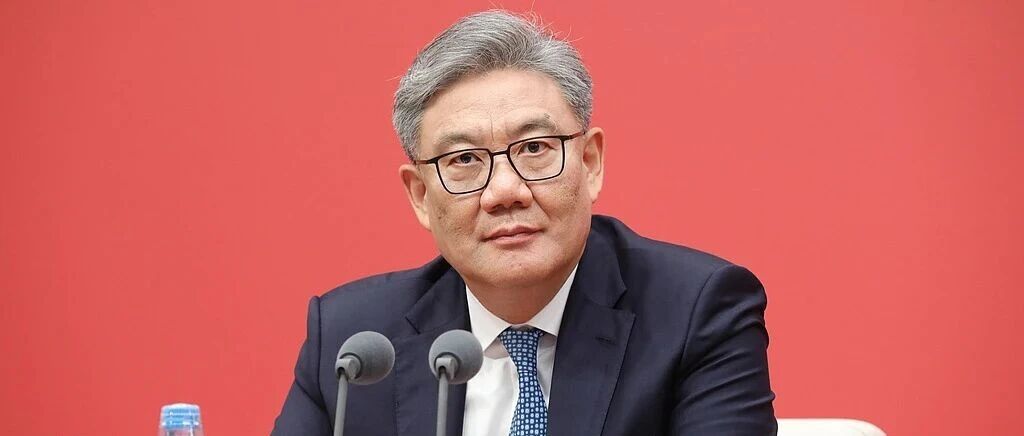
王文涛:扩大高水平对外开放
Ren Min Ri Bao· 2025-12-08 00:43
商务部党组书记、部长王文涛在人民日报发表署名文章《扩大高水平对外开放(学习贯彻党的二十届四 中全会精神)》。 以下为原文: 扩大高水平对外开放(学习贯彻党的二十届四中全会精神) 王文涛 《建议》强调,"坚持开放合作、互利共赢是中国式现代化的必然要求"。"十五五"时期,扩大高水平对 外开放,必须坚持以习近平新时代中国特色社会主义思想为指导,坚持好运用好贯穿其中的立场观点方 法,重点把握好以下原则要求。 (一)坚持扩大开放与深化改革相结合,推进标准更高的开放。改革越深入,对开放的水平要求就越 高;开放水平越高,对改革的促进作用就越大。党的十八大以来,我国开放水平持续提升,但开放空间 仍然不小。要在改革中扩大开放,减少制约要素流动的"边境上"和"边境后"壁垒,把握数字化、绿色化 发展机遇,既持续深化要素流动型开放,又稳步扩大制度型开放。要在开放中深化改革,主动对接、积 极吸纳国际高标准经贸规则,深化外贸、外商投资和对外投资管理体制改革,完善高水平对外开放体制 机制。 (二)坚持自主开放与协定开放相协同,推进引领更强的开放。自主开放水平越高,协定开放能力就越 强,两者相辅相成。党的十八大以来,我国自主开放与协定开放协 ...
王文涛发表署名文章
财联社· 2025-12-07 23:39
Core Viewpoint - The article emphasizes the importance of expanding high-level opening-up as a strategic deployment by the Chinese government to promote reform and development, enhance international cooperation, and share opportunities with the world [1][3]. Group 1: Significance of Expanding High-Level Opening-Up - The "14th Five-Year Plan" period has seen significant achievements in China's opening-up strategy, with China maintaining the world's largest goods trade for eight consecutive years and a strong position in service trade and digital trade [4]. - Expanding high-level opening-up is crucial for driving high-quality development, as it enhances the synergy between domestic and international markets and resources, leading to effective qualitative and reasonable quantitative economic growth [5]. - It is an inherent requirement to meet the people's needs for a better life, with foreign trade and investment directly and indirectly supporting over 200 million jobs and contributing to industrial and consumption upgrades [6]. - The initiative is also a proactive measure to promote economic globalization, countering rising protectionism and unilateralism while maintaining multilateralism and free trade [6]. - Expanding high-level opening-up is essential for building a community with a shared future for mankind, facilitating global cooperation to address common challenges [7]. Group 2: Principles and Requirements for Expanding Opening-Up - The expansion of high-level opening-up must combine with deepening reforms, enhancing standards, and reducing barriers to factor flow [8]. - There should be a synergy between autonomous opening and agreement-based opening, with a focus on establishing free trade zones and signing high-standard trade agreements [9]. - The domestic and international circulations should promote each other, enhancing domestic consumption while expanding international connections [10]. - The needs of China and the expectations of the world must be balanced, ensuring mutual benefits and expanding opportunities for global cooperation [11]. - Development and security must be coordinated, enhancing national economic security while promoting high-quality development through openness [12]. Group 3: Main Tasks for Implementing High-Level Opening-Up - The focus should be on actively expanding autonomous opening, particularly in the service sector, and enhancing market access [14]. - Trade innovation should be promoted, optimizing goods trade and expanding service trade, while also enhancing the digital trade landscape [15]. - The dual investment cooperation space should be expanded, creating a favorable environment for foreign investment and enhancing the service system for foreign investors [16]. - High-quality construction of the "Belt and Road" initiative should be prioritized, strengthening cooperation with partner countries and expanding collaboration in various sectors [17].
商务部部长王文涛在人民日报撰文:扩大高水平对外开放
Xin Lang Cai Jing· 2025-12-07 22:39
Group 1 - The core viewpoint emphasizes the importance of expanding high-level opening-up as a strategic deployment for China's modernization and national rejuvenation, providing fundamental guidelines for the 15th Five-Year Plan [1][17] Group 2 - The significance of expanding high-level opening-up is highlighted as a strong driving force for high-quality development, with the need for an open environment to achieve future economic growth [3][19] - The expansion of high-level opening-up is also seen as an internal requirement to meet the people's needs for a better life, with foreign trade and investment significantly contributing to employment and consumption upgrades [4][20] - It is positioned as proactive engagement in economic globalization, aiming to lead rather than follow in international trade and cooperation [5][21] - The initiative is viewed as a crucial step in building a community with a shared future for mankind, addressing global challenges through collaborative efforts [5][21] Group 3 - The principles for expanding high-level opening-up include combining opening-up with deepening reform, ensuring higher standards of openness [6][22] - There is a focus on coordinating autonomous and agreement-based opening-up to enhance overall capabilities [7][23] - The strategy promotes the synergy between domestic and international circulation, emphasizing the importance of an open dual circulation system [8][24] - Balancing China's needs with global expectations is essential for deeper cooperation and mutual benefits [10][25] - The approach also stresses the need to integrate development with security, ensuring a dynamic balance between the two [11][26] Group 4 - Key tasks for implementing high-level opening-up include actively expanding autonomous opening, particularly in the service sector, and enhancing market access [12][28] - Promoting trade innovation and enhancing the quality of foreign trade are critical for building a strong trading nation [14][29] - Expanding bilateral investment cooperation and creating a favorable environment for foreign investment are essential for attracting global capital [15][30] - High-quality construction of the Belt and Road Initiative is aimed at fostering mutual trust and win-win development with partner countries [16][31]