
政策协同

Search documents
以高质量供给创造有效需求 强化政策协同 释放消费增长潜能
Zhong Guo Zheng Quan Bao· 2025-08-21 21:04
Core Viewpoint - The Chinese government is implementing a series of financial policies aimed at boosting and expanding consumer spending, with a focus on high-quality service consumption and effective demand creation [1][5]. Group 1: Financial Policies and Measures - The introduction of the "Guiding Opinions on Financial Support for Boosting and Expanding Consumption" includes 19 key measures and the establishment of a 500 billion yuan loan facility for service consumption and elderly care [1]. - As of the end of June, the balance of household consumption loans, excluding personal housing loans, reached 21.2 trillion yuan, with 2.8 trillion yuan allocated to key service consumption sectors such as accommodation, dining, and entertainment [2]. - The People's Bank of China (PBOC) is actively promoting measures to enhance consumption, with various branches focusing on optimizing financial support for consumer spending [3]. Group 2: Collaboration Between Fiscal and Financial Policies - Recent fiscal policies, including the implementation of personal consumption loan interest subsidy policies, exemplify the collaboration between fiscal and financial measures to support consumption [4]. - The Ministry of Finance has allocated 69 billion yuan in special long-term bonds to support local consumption initiatives, such as trade-in programs for consumer goods [4]. - Experts suggest that the combination of proactive fiscal policies and moderately loose monetary policies will help sustain economic recovery and open up new consumption opportunities [4]. Group 3: Enhancing Consumer Financing and Support - The PBOC plans to work closely with fiscal departments to ensure effective policy implementation and enhance financial support for consumption [6]. - Financial institutions are encouraged to innovate financial products to meet diverse consumer needs and improve access to financial services for new urban residents [6]. - There is a call for expanding financing channels to support service consumption sectors, including dining, accommodation, and entertainment, to increase financial resource allocation [6].
强化政策协同 释放消费增长潜能
Zhong Guo Zheng Quan Bao· 2025-08-21 20:11
Group 1 - The core viewpoint of the articles emphasizes the importance of financial policies in boosting consumption through targeted credit support and innovative fiscal measures [1][2][3] - The People's Bank of China has reported that as of the end of June, the national household consumption loan balance reached 21.2 trillion yuan, with 2.8 trillion yuan allocated to key service consumption sectors [1] - Various cities, including Shenzhen and Chongqing, are implementing measures to increase credit support for sectors such as retail, hospitality, and cultural tourism [2] Group 2 - The introduction of personal consumption loan interest subsidy policies is highlighted as a collaborative effort between fiscal and financial policies to stimulate consumption [3] - The Ministry of Finance has allocated 69 billion yuan in special government bond funds to support consumption initiatives, including trade-in programs for consumer goods [3] - Experts suggest that the current Chinese consumption market has significant growth potential, and future financial policies will work in conjunction with other policies to enhance consumer capacity and willingness [4] Group 3 - The People's Bank of China plans to strengthen policy implementation and enhance financial support for consumption, focusing on increasing credit in the service sector [4] - Financial institutions are encouraged to innovate financial products to meet diverse consumer needs and improve access to financial services for new urban residents [4][5] - There is a call for expanding financing channels and increasing financial resource input into service consumption sectors such as dining, hospitality, and entertainment [5]
让更多资金“活水”滋养小微市场主体
Xin Hua Wang· 2025-08-12 06:30
Core Viewpoint - The small and micro market entities are vital for economic vitality and employment, necessitating enhanced policy coordination to ensure continuous financial support for these entities and stabilize the economy [1][2]. Group 1: Financial Support for Small and Micro Enterprises - As of the end of 2021, the balance of inclusive micro loans reached 19.2 trillion yuan, a year-on-year increase of 27.3%, supporting 44.56 million small micro entities, which is a 38% increase [1]. - The average weighted interest rate for small micro loans decreased by 0.22 percentage points compared to the previous year, indicating a trend of increasing loan volume, expanding coverage, and decreasing costs [1]. - Agricultural loans also showed growth, with a balance of 43.21 trillion yuan, up 10.9% year-on-year, reflecting the effectiveness of financial support for agriculture [1]. Group 2: Policy Coordination and Innovation - Recent years have seen strengthened coordination between fiscal and monetary policies, focusing on addressing financial service shortcomings for small micro enterprises and agriculture [2]. - Fiscal measures such as loan interest subsidies, financing guarantees, and direct financial support have been employed to direct more resources towards small micro enterprises and agriculture [2]. - The central bank has introduced monetary policy tools aimed directly at the real economy, while financial institutions have innovated products and services to enhance support for these sectors [2]. Group 3: Precision in Policy Implementation - There is a need for precise policy coordination, focusing on the specific demands of small and micro enterprises to enhance their operational capabilities and reduce burdens [3]. - Policies should be managed rhythmically to prevent counterproductive effects, with fiscal departments improving budget accuracy and transparency to stabilize market expectations [3]. - Collaboration between fiscal, monetary, employment, industrial, and investment policies is essential to create synergistic effects and promote high-quality development [3]. Group 4: Performance Assessment and Resource Sharing - A robust performance assessment mechanism is necessary to evaluate the effectiveness of policies, considering both individual achievements and overall systemic outcomes [4]. - The integration of new technologies like blockchain and AI can enhance the credit system and address loan accessibility issues for small enterprises [4]. - Future efforts should focus on deepening cooperation among various regulatory bodies to improve information transparency and establish comprehensive financial service platforms for new market entities [4].
长护险全面铺开仍需破解多重难题
Jin Rong Shi Bao· 2025-08-08 08:01
Core Insights - Long-term care insurance (LTCI) is seen as a crucial measure to address China's aging population, with 190 million people covered and over 2 million receiving benefits since the pilot program began in 2016 [1] Funding Challenges - The current funding model relies heavily on medical insurance funds and government subsidies, which increases the financial burden on medical insurance and raises concerns about sustainability [1] - A proposed multi-funding model includes government subsidies, medical insurance funds, personal contributions, and corporate support to mitigate financial risks and enhance responsibility among individuals and businesses [2] Service Supply Issues - There is a significant shortage of professional nursing services, with existing personnel often lacking adequate skills and the system failing to meet the actual needs of the elderly [1] - Recommendations include expanding nursing education, enhancing in-service training, and developing a comprehensive service system that integrates home, community, and institutional care [2] Standardization Barriers - The absence of a unified disability assessment standard leads to disparities in benefits across regions, necessitating the establishment of a national standard and a tiered pricing mechanism for nursing services [3] - The implementation of a national LTCI information platform is suggested to ensure comprehensive oversight of service delivery [3] Policy Coordination - There is a need for better integration between LTCI and other social security systems, such as pension and medical insurance, to improve the overall effectiveness of the LTCI program [2] - The National Healthcare Security Administration has indicated a commitment to developing a comprehensive LTCI system that aligns with China's national conditions and gradually covers the entire population [3]
中信证券明明: 政策协同驱动我国经济在转型中释放新动能
Zhong Guo Zheng Quan Bao· 2025-08-07 21:11
Economic Growth and Structure - China's GDP grew by 5.3% year-on-year in the first half of the year, showcasing a transition from scale expansion to quality improvement [1] - Final consumption expenditure contributed over 50% to economic growth, indicating that policies focused on stabilizing employment and promoting income are effectively boosting demand [2] - CPI decreased by 0.1% year-on-year, reflecting uneven demand recovery, but a mild inflation environment allows for macro policy adjustments [2] Investment Trends - High-tech industries, particularly information services and aerospace manufacturing, are experiencing growth rates significantly above the overall investment level, indicating a shift towards high value-added sectors [2] - Infrastructure investment increased by 4.6% year-on-year, supported by a rapid issuance of special bonds totaling over 2.1 trillion yuan, which is 667 billion yuan more than the same period last year [4] Consumption Performance - Retail sales of home appliances and communication devices grew by over 20% year-on-year, driven by policies like "trade-in for new" that stimulate consumer demand [3] Policy Measures - Fiscal policy has been effectively supporting economic stability, with increased spending in education, healthcare, and social security, promoting a virtuous cycle of improved livelihoods and consumption [4] - Monetary policy has focused on maintaining liquidity and reducing financing costs, with the average interest rate on new loans dropping to 3.3%, a decrease of 45 basis points from the previous year [5] Export Resilience - Exports, measured in USD, grew by 5.9% year-on-year, with high-end manufacturing sectors like semiconductors and robotics showing significant demand [7] - The digital economy, cloud computing, AI computing power, and biomedicine are emerging as new growth opportunities, aiding the transition from cost advantages to technological and systematic advantages [7] Future Outlook - There is considerable room for policy expansion in the second half of the year, with potential increases in special bond allocations towards new infrastructure and livelihood improvements [7] - The current economic environment is positioned for stable and sustainable high-quality development through policy coordination and structural optimization [8]

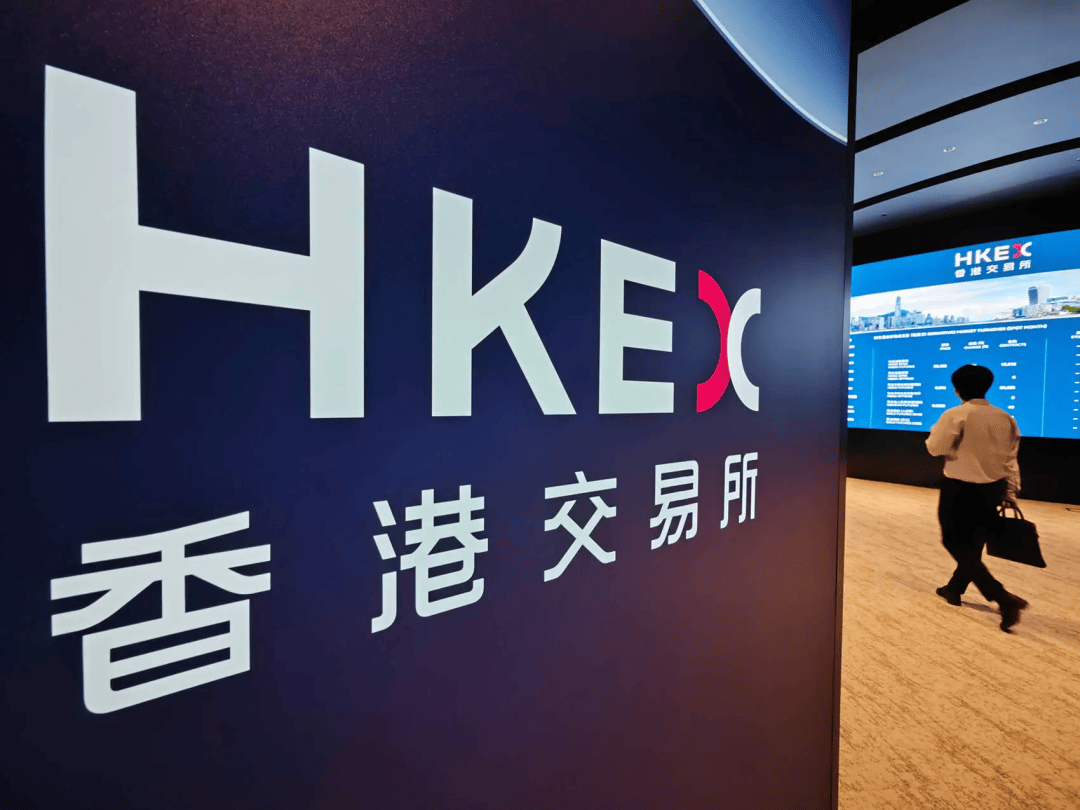
IPO融资额重回全球第一,港交所为何能?
Sou Hu Cai Jing· 2025-08-05 12:07
Core Viewpoint - The Hong Kong IPO market has shown remarkable performance in the first half of the year, leading the global IPO market with a nearly 700% year-on-year increase in financing volume, with 44 new stocks listed and over 200 companies having submitted listing applications [2][3]. Group 1: Market Dynamics - The resurgence of Hong Kong's IPO market is attributed to a combination of policy reforms, market structure improvements, and capital flow, rather than a short-term rebound [2]. - The introduction of the "Special Line for Science and Technology Enterprises" has significantly reduced the IPO approval process from an average of 120 days to 30 days, enhancing the market's attractiveness for new economy enterprises [2][6]. - The "A+H" listing model has gained momentum, with over 30 blue-chip companies, including Heng Rui Pharmaceutical and Hai Tian Wei Ye, listing in Hong Kong, surpassing the total from the previous year [3]. Group 2: Capital Flow and Investment Trends - In the first half of the year, net inflows from southbound funds reached 72.59 billion HKD, providing strong support for the Hong Kong stock market [3]. - Foreign investment in Hong Kong stocks has increased, with foreign ownership rising to 49%, creating a liquidity spiral characterized by "domestic capital setting the stage and foreign capital performing" [3]. - The daily trading volume has exceeded 240 billion HKD, reflecting an 82% year-on-year increase, which has improved market liquidity and valuation [3][6]. Group 3: Regulatory and Structural Advantages - The regulatory environment in Hong Kong, including the VIE structure and dual-class share arrangements, provides a favorable framework for technology companies and facilitates the return of Chinese companies to the market [5][6]. - The Hong Kong Stock Exchange's ability to offer continuous financing options post-listing, such as through rights issues and convertible bonds, is crucial for high-growth technology firms [6]. - The current forward P/E ratio of the Hang Seng Technology Index is approximately 22 times, significantly lower than that of the Nasdaq, presenting a valuation opportunity for global investors [6]. Group 4: Future Outlook and Strategic Positioning - The synergy between the Hainan Free Trade Port and the Hong Kong Stock Exchange is expected to attract foreign investment and boost offshore financial services [4]. - The Hong Kong Stock Exchange is transitioning from being a "Chinese offshore portal" to an "Asian technology financing hub," emphasizing the need for policy support and service upgrades [7]. - The implementation of the "Stablecoin Regulation" in 2025 reflects Hong Kong's commitment to balancing innovation and risk management in the financial sector [8].


新华时评|充分释放财政政策推动高质量发展的效能
news flash· 2025-07-25 13:36
Core Viewpoint - The article emphasizes the importance of enhancing the effectiveness of fiscal policy through better coordination with other policies, aiming to create a synergistic effect that amplifies the impact of policy measures [1] Group 1: Policy Coordination - Strengthening the collaboration between fiscal policy and monetary, employment, industrial, and regional policies is essential to form a cohesive approach that maximizes policy effects [1] - The need for a comprehensive strategy that aligns the formulation and execution of fiscal policy with other policies throughout the entire process is highlighted [1] Group 2: Implementation and Communication - It is crucial for relevant departments at all levels to improve communication and coordination to accurately understand policy intentions and implement targeted measures [1] - Ensuring effective execution of policies from the initial stages of formulation to the final stages of implementation is necessary for achieving desired outcomes [1]
AMC频频增持银行股 财务、政策与战略协同是主因
Zheng Quan Ri Bao Zhi Sheng· 2025-07-24 16:10
Core Viewpoint - The recent increase in shareholding by asset management companies (AMCs) in listed banks is seen as a recognition of the value of bank stocks, which can boost market confidence and support stock prices [1][3]. Group 1: Reasons for Increased Holdings - AMCs have increased their holdings in banks for three main reasons: financial synergy, policy alignment, and strategic collaboration [3]. - Financially, bank stocks are characterized by low valuations and high dividends, aligning with AMCs' need for "stable assets" [3]. - Policy-wise, the transfer of AMC shares to the Central Huijin Investment Ltd. aligns their actions with the mission to stabilize the capital market [3]. - Strategically, AMCs and banks can create a closed loop of "bad asset disposal + capital replenishment," enhancing cooperation through supply chain finance [3]. Group 2: Specific Holdings and Transactions - China CITIC Financial Asset Management Co., Ltd. increased its stake in Everbright Bank from 7.08% to 8.00% by acquiring approximately 263.6 million A-shares and 279.1 million H-shares [2]. - The total investment plan announced by CITIC Financial Asset includes 50.3 billion yuan, with allocations for purchasing shares in multiple banks [2]. Group 3: Convertible Bonds as a Method of Investment - AMCs are also utilizing convertible bonds to increase their stakes in banks, as seen with the conversion of 117.85 million convertible bonds into shares of Shanghai Pudong Development Bank [4]. - This method is viewed as an innovative integration of risk mitigation and capital replenishment, benefiting both banks and AMCs [4]. Group 4: Overall Implications - The trend of AMCs increasing their stakes in banks reflects a dual outcome of transformation needs and policy guidance, optimizing asset allocation for AMCs while aiding banks in capital replenishment [5].



中国民企,全球贸易稳定的重要力量(开放谈)
Ren Min Ri Bao Hai Wai Ban· 2025-07-01 02:05
Group 1 - The private economy is a vital force for promoting Chinese-style modernization and serves as an important foundation for high-quality development [1] - Private enterprises have maintained their position as China's largest foreign trade operators for six consecutive years, emerging as competitive players in fields such as artificial intelligence, new energy vehicles, renewable energy, biomedicine, and humanoid robots [1] - Chinese private enterprises possess advantages in international market expansion due to their high market sensitivity, strong innovation drive, and flexible operational mechanisms, allowing them to quickly adapt to overseas market changes [1][2] Group 2 - There is a noticeable shift among private enterprises from traditional manufacturing to high-end, technology-intensive sectors, aligning with global market trends and the acceleration of supply chain restructuring [2] - China's emphasis on diversifying global market partnerships, particularly with Belt and Road Initiative countries and emerging markets, provides new growth opportunities for private enterprises [2] - The Chinese government is increasingly supportive of enterprises going abroad, simplifying customs processes and enhancing trade facilitation services, which aids private enterprises in expanding their international presence [2] Group 3 - Despite global economic slowdowns and ongoing supply chain pressures, China's goods trade demonstrates strong resilience and structural optimization, highlighting the stability and competitiveness of the Chinese economy [3] - Private enterprises are deeply integrated into global supply chains, acting as key participants and supporters of supply chain resilience while driving technological upgrades [3] - The commitment to high-level opening-up and the role of private enterprises in building a high-standard market system are crucial for China's economic development and global trade stability [3]
稳住基本盘要多打“大算盘”
Xin Hua Ri Bao· 2025-05-28 21:49
Group 1 - The stability of employment is crucial for key groups such as college graduates, poverty alleviation populations, migrant workers, and veterans, as their employment directly impacts economic development and social stability [1] - Current efforts to promote employment for these key groups have shown positive results through expanded job channels, strengthened policy support, and specialized service activities [1] - There are structural challenges in the employment situation for key groups, such as mismatches between college majors and industry needs, skill gaps for poverty alleviation populations and migrant workers, and difficulties in career transitions for veterans [1] Group 2 - Employment policies must be coordinated across various sectors, including finance, taxation, industry, and education, to create a comprehensive support system [2] - The transformation of traditional industries and the growth of emerging industries are reshaping the employment market, necessitating proactive integration into industrial changes [2] - Training initiatives targeting specific industries and demographics, such as recent graduates and rural workers, are essential for aligning employment services with regional development [2] Group 3 - A mature employment service system enhances job satisfaction among key groups, indicating the importance of optimizing employment services over time [3] - The use of advanced technologies, such as algorithms, has improved job matching for graduates, demonstrating the potential of innovative mechanisms in employment services [3] - Effective employment strategies require a holistic approach that integrates employment stability with reform, innovation, and public welfare [3]