数商兴农

Search documents
【西安】推动电子商务向农村纵深发展
Shan Xi Ri Bao· 2025-10-08 22:39
Core Insights - The event "Double Festival Gift Chain · Two-Way Direct Connection" was held in Xi'an to promote the "Digital Commerce Boosting Agriculture" initiative and enhance the integration of e-commerce into rural areas [1][2] - The event gathered representatives from various sectors, including Douyin e-commerce, local life services, and community group buying, to discuss cooperation and share experiences [1] - The provincial commerce department emphasized the importance of e-commerce in activating rural consumption and supporting rural revitalization, encouraging agricultural enterprises to embrace new e-commerce models [1] Group 1 - The event is a practical implementation of the "Digital Commerce Boosting Agriculture" project, aimed at deepening e-commerce development in rural areas [1] - Various e-commerce platforms and suppliers participated, providing practical guidance on platform operations, channel expansion, and influencer training [1] - The event created a two-way communication platform for the industry, featuring product demonstrations and live streaming promotions to enhance product visibility [1] Group 2 - The Xi'an E-commerce Association plans to continue building bridges between government and enterprises to accelerate the value transformation of local products [2] - The association aims to inject vitality into Xi'an's development as an international consumption center through the "Digital Commerce Boosting Agriculture" initiative [2] - There is a focus on integrating e-commerce with rural revitalization and consumption upgrades [2]
为“村播”注入持久动力
Jing Ji Ri Bao· 2025-09-24 22:48
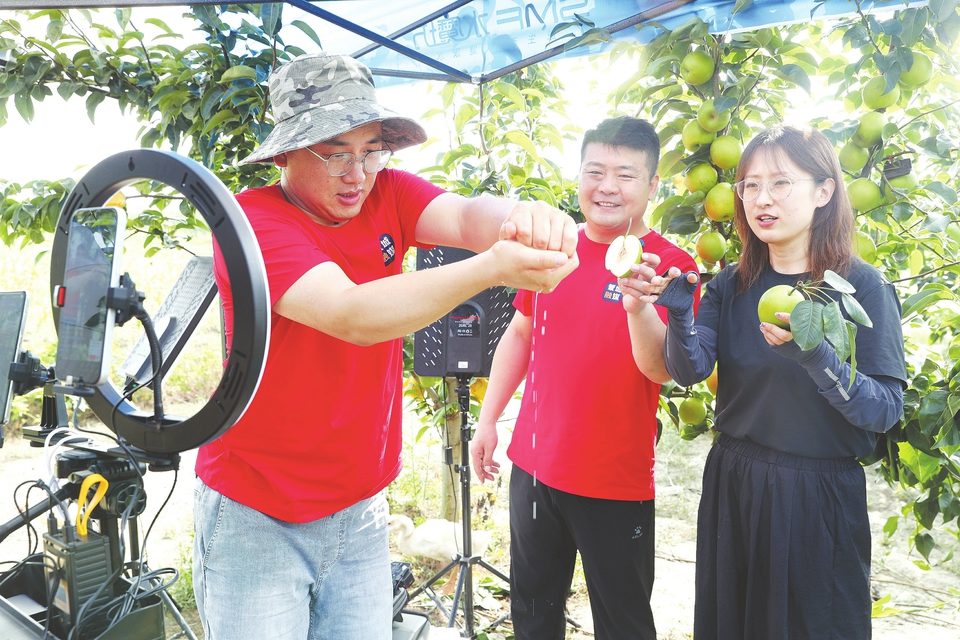
近年来,农村直播电商(以下简称"村播")在我国迅速兴起,已成为推动乡村产业升级的重要力量。一 部手机、一个支架、一方屏幕,串联起田间地头与消费市场,不仅为农产品开辟了新销路,也为乡村振 兴注入了强劲数字动能。 (文章来源:经济日报) 数据显示,我国农村电商正迈向高质量发展阶段。今年1月份至7月份,农村网络零售额同比增长 6.4%,全国农村网商数量超过1950万家,同比增长6.4%。在抖音、快手、淘宝等平台,"村播"已成为 流量增长最快的板块之一。例如,2023年9月份至2024年9月份,抖音电商农特产品销量达71亿单,平均 每天有1740万个农产品包裹发往全国各地,年销售额超百万元的农货商家达3.3万个。 然而,"村播"也面临诸多挑战。基础设施与人才方面仍有短板,部分农村地区网络信号不稳定、物流成 本高、冷链覆盖率低,导致消费体验打折扣。同质化竞争与品控存在隐忧,部分地区一窝蜂直播同类产 品,陷入低价竞争。同时,由于缺乏标准化生产意识和品牌建设,产品质量不稳定、售后体验差等问题 频发,影响行业声誉。流量红利见顶与运营困境:平台算法规则多变,流量获取成本逐渐升高,不少中 小农户内容创作能力有限、私域运营薄弱,难 ...
“数商兴农庆丰收”湖北专场暨电商资源对接活动在汉启动
Sou Hu Cai Jing· 2025-09-19 11:11
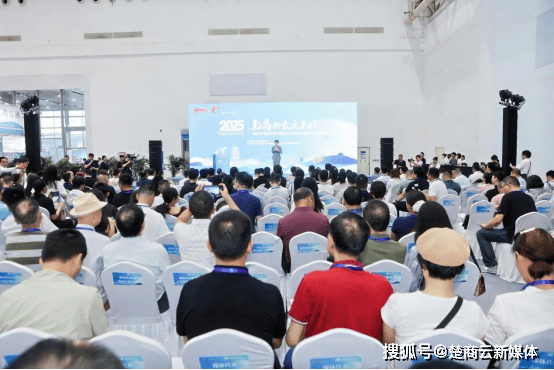
Core Points - The event "Digital Commerce Promotes Agriculture and Celebrates Harvest" was successfully held in Wuhan, aiming to deepen the integration of digital commerce and agriculture, and enhance the online sales of high-quality agricultural products in Hubei [1][2] - The event gathered nearly 300 participants, including leaders from various government departments, e-commerce platforms, agricultural e-commerce companies, and representatives of new farmers [1] Group 1: Event Overview - The event was organized by the Hubei Provincial Department of Commerce, with the goal of empowering rural revitalization through digitalization [1] - A joint initiative titled "Digital Commerce Promotes Agriculture" was launched by major e-commerce platforms including Taotian Group, JD.com, and Douyin, focusing on enhancing brand building and service capabilities [2] Group 2: Key Discussions and Insights - Experts shared insights on policy guidance, association support, platform empowerment, and county-level practices, highlighting opportunities for Hubei under the national strategy [6] - Innovative models for assisting farmers were discussed, including the "Association + Base + Supply Chain + Influencer" approach [6] Group 3: Resource Matching and Collaboration - The event featured three main matching zones for direct negotiations between e-commerce platforms, agricultural suppliers, service providers, and new farmers, fostering collaboration [9] - The successful execution of the event marks a new phase for Hubei's "Digital Commerce Promotes Agriculture" initiative, enhancing the digital sales channels for agricultural products and boosting brand value [9] Group 4: Future Activities - Various counties in Hubei are planning additional activities such as live-streaming sales events and competitions to further promote agricultural products and digital commerce [10][11]

1500万投入+手把手培训,上汽大通欲破局传统助农模式
Jing Ji Guan Cha Wang· 2025-09-16 09:34
Core Viewpoint - SAIC Maxus has launched the "Interstellar Plan," a dedicated agricultural assistance initiative aimed at supporting farmers, marking a significant step in corporate social responsibility within the automotive industry [2][3]. Group 1: Agricultural Assistance Initiative - The "Interstellar Plan" includes a 15 million yuan fund to support agricultural projects, with the first initiative located in Lanping County, Yunnan [2]. - This plan is the first systematic agricultural assistance project initiated by SAIC Maxus, building on previous philanthropic actions [3]. - The initiative aims to create a comprehensive agricultural assistance system that encompasses funding, tools, capacity building, and channel integration [2][3]. Group 2: Target Audience and Market Strategy - The target audience for the "Interstellar Plan" includes farmers and young entrepreneurs who struggle to promote their products effectively [3]. - The plan leverages SAIC Maxus's media matrix to connect automotive products with agricultural products, enhancing brand visibility for rural entrepreneurs [3]. Group 3: Implementation and Expected Outcomes - The initiative will utilize a network of dealers covering 80 cities and 150 towns in central and western China, focusing on high-quality agricultural products from key rural revitalization counties [4]. - SAIC Maxus plans to conduct over 150 live-streaming events and 300 training sessions, aiming for over 1.2 billion online exposures and an additional income of 15 million yuan for farmers [4]. - The "Interstellar Pickup," equipped with a 2.0T diesel engine and a 3-ton payload capacity, is designed to address the transportation challenges faced by farmers [4]. Group 4: Long-term Vision - The "Interstellar Plan" is not intended for short-term sales boosts but aims to establish a long-term agricultural assistance system through digital empowerment and collaboration between government and enterprises [6]. - The initiative is expected to evolve into a well-known agricultural assistance brand over the coming years [6].

大学生开直播 以青春镜头赋能乡村振兴
Zhong Guo Qing Nian Bao· 2025-08-15 22:49
Core Viewpoint - The article highlights the innovative use of live streaming by university students to promote local culture and agricultural products, enhancing rural revitalization efforts through digital engagement and education [1][2][6]. Group 1: Live Streaming Initiatives - University students are leveraging live streaming to showcase traditional Chinese medicine practices and local specialties, effectively engaging audiences and promoting cultural heritage [1][6]. - The "Three Going to the Countryside" social practice teams from various universities are integrating live streaming into their community service projects, focusing on rural e-commerce and tourism [2][3]. Group 2: Impact on Local Economy - The live streaming efforts have successfully increased the visibility of local products, such as the wind-dried pepper chicken from Nanyang, leading to expanded sales channels for farmers [2]. - In Hunan, live streaming has significantly boosted local tourism, with one event resulting in over 200 tickets being claimed for a scenic area, demonstrating a direct impact on visitor numbers [3][4]. Group 3: Educational Contributions - Students are not only promoting products but also providing training for local merchants on effective live streaming techniques, addressing gaps in their digital marketing skills [2]. - The practice teams are creating promotional materials, such as hand-drawn maps and scripts, to leave behind for local communities, ensuring sustainable knowledge transfer [5]. Group 4: Cultural Engagement - The live streaming sessions have fostered a deeper appreciation for local cultural practices, such as traditional medicine, with interactive elements that engage viewers and highlight the craftsmanship involved [6][7]. - The average viewership for the non-heritage themed live streams has been stable at around 1,000 participants, indicating a growing interest in local culture beyond geographical boundaries [7].

十部门出台方案促进农产品消费 实施“三品一标”行动,培育一批农民主播
Mei Ri Jing Ji Xin Wen· 2025-07-29 08:37
Core Viewpoint - The implementation of the "Promoting Agricultural Product Consumption Implementation Plan" aims to effectively expand agricultural product consumption, optimize supply, innovate circulation, and activate the market to release diverse and quality consumption potential, leading to an upgrade in supply-demand structure [2]. Group 1: Enhancing Product Quality - The plan prioritizes optimizing the supply of green and high-quality products to meet multi-level consumer demands, including enhancing the "Three Products and One Standard" (green, organic, high-quality, and geographical indication products) [3]. - It emphasizes improving production and raw material base levels for "Three Products and One Standard," promoting variety improvement, quality enhancement, brand building, and standardized production [3]. - The initiative aims to guide production away from low-price competition, promoting quality differentiation and price stratification, which can help farmers increase income and stimulate more agricultural product consumption [3]. Group 2: New Product Development - The plan supports the development of new processing products by encouraging food companies to collaborate with research institutions to innovate new food ingredients such as artificial starch, microbial protein, functional sugars, and probiotics [4]. - It highlights the importance of developing convenient, nutritious, and healthy ready-to-eat products, addressing the growing market demand for quick and healthy food options [5][6]. Group 3: E-commerce and Digital Transformation - The plan aims to leverage e-commerce platforms to enhance online consumption quality and efficiency, focusing on tapping into online sales potential and improving live-streaming e-commerce [7]. - It outlines the need for a comprehensive approach to "Internet + Agricultural Products" to facilitate the movement of products from rural areas to urban markets, enhancing user experience on e-commerce platforms [8]. - The plan recognizes the significant role of e-commerce in transforming agricultural consumption, emphasizing the need for platforms to support agricultural standards, branding, and organization [8]. Group 4: Addressing E-commerce Challenges - The plan identifies three main challenges in e-commerce for agricultural products: lack of precise services, an incomplete ecosystem, and unfair rules [10]. - It suggests that platforms should shift from a traffic-oriented approach to a value-oriented one, creating a supportive system for rural e-commerce and fostering local talent [11]. - The plan encourages e-commerce platforms to provide systematic support for farmers and optimize algorithms to promote quality products while avoiding unfair competition [12].

人民财评:优质农货“好味道”激发消费新活力
Ren Min Wang· 2025-07-29 06:38
Core Viewpoint - The recent release of the "Implementation Plan for Promoting Agricultural Product Consumption" by ten departments, including the Ministry of Agriculture and Rural Affairs, aims to enhance agricultural product consumption through optimizing supply, innovating circulation, and activating the market, thereby unlocking diverse, high-quality, and differentiated consumption potential [1][2]. Group 1: Optimizing Supply - The plan emphasizes the improvement of green, organic, and high-quality agricultural products, as well as geographical indication products, to enhance production and raw material base levels [1]. - It aims to promote superior varieties, quality enhancement, brand building, and standardized production, which are crucial for ensuring agricultural product quality [1]. - By improving the standards of "three products and one standard," the plan seeks to achieve quality grading of agricultural products, allowing for better pricing and increased income for farmers [1]. Group 2: Innovating Circulation - The plan focuses on expanding offline consumption channels through innovative platforms like the China Farmers' Harvest Festival and various themed activities to enhance the presence of quality agricultural products in urban areas [2]. - It also aims to improve online sales effectiveness by tapping into the potential of e-commerce and live streaming, promoting the integration of agricultural products with the "Internet+" concept [2]. - The initiative includes enhancing urban and rural consumption facilities, supporting the development of modern circulation networks such as agricultural markets and cold chain distribution centers [2]. Group 3: Activating the Market - The plan proposes multiple measures to stimulate market activity, including organizing educational campaigns to promote healthy consumption and strengthening brand leadership to boost consumer confidence [2]. - It encourages the integration of agriculture with culture and tourism to expand new consumption spaces and accelerate the integration of domestic and foreign trade [2]. - The focus is on enhancing the agricultural value chain and increasing the added value of products to meet diverse consumer demands, thereby contributing to economic and social development [2].
十部门:深入实施“互联网+”农产品出村进城工程
news flash· 2025-07-27 02:09
Core Viewpoint - The article discusses the implementation of the "Internet+" initiative to enhance the sales of agricultural products from rural areas to urban markets, emphasizing the need to leverage online sales potential and improve consumer experience through e-commerce platforms [1] Group 1: Government Initiatives - Ten government departments, including the Ministry of Agriculture and Rural Affairs and the National Development and Reform Commission, have issued a plan to promote agricultural product consumption [1] - The plan aims to deepen the "Internet+" initiative for agricultural products, focusing on expanding online sales and enhancing local retail supply [1] Group 2: E-commerce Development - The initiative encourages e-commerce platforms to upgrade their services and improve user consumption experiences [1] - It promotes the development of instant retail and community e-commerce models tailored to local consumption needs [1] Group 3: Collaboration and Market Trends - The plan advocates for collaboration between quality agricultural product companies and e-commerce platforms, particularly in the textile and apparel sectors that utilize cotton, hemp, and silk [1] - It aims to align product offerings with the preferences of younger consumers, focusing on popular trends and launching new products through promotional events [1]
乡村在云端:闽侯搭上电商“加速车”
Sou Hu Cai Jing· 2025-07-17 14:36
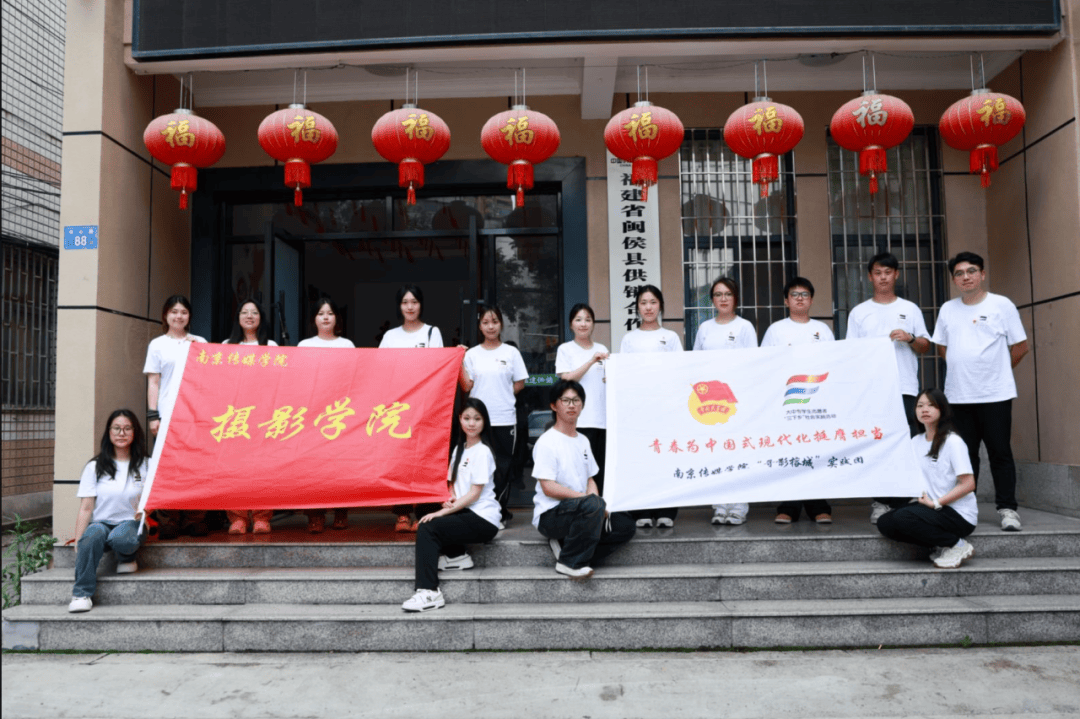
Core Viewpoint - The article discusses the importance of leveraging new media technology to enhance the digital transformation and image-based communication of traditional industries, particularly in the context of rural revitalization strategies in China [1]. Group 1: Company Insights - Fuzhou Shiyi Media Co., Ltd. has established a unique office environment by replicating an "ancient building" in Minhou County, showcasing professional live streaming equipment and a structured operational approach [3]. - The company emphasizes a selection logic for products that must have stories and quality, ensuring that local goods like Xiuqiu mushrooms and handmade noodles undergo rigorous quality checks before being featured in live streams [3]. - The live streaming strategy includes integrating farmer stories into the presentation and utilizing interactive designs to enhance consumer engagement, aiming to connect rural producers with broader markets [3]. Group 2: Industry Developments - Minhou County Supply and Marketing Cooperative has achieved over 700,000 yuan in sales since focusing on e-commerce for agricultural assistance, with a peak of 1,300 viewers in a single live stream [4]. - The cooperative faces challenges such as high logistics costs and a lack of professional media talent for content enhancement, which limits their market reach beyond local areas [4]. - The cooperative's core goal is to serve farmers, with live streaming revenue being a small part of their overall business strategy, highlighting the need for a comprehensive approach from production to consumption [4]. Group 3: Broader Context - The practice team’s visit aligns with national efforts to promote rural revitalization and the "Ten Thousand Projects" initiative, showcasing how Minhou County is leveraging media to connect rural agriculture with digital platforms [5]. - Fuzhou Shiyi Media is expanding its vision nationally, collaborating with regions like Ningxia to build a network for e-commerce cultural media [5]. - The initiative represents a grassroots implementation of the "Digital Commerce Promotes Agriculture" strategy, emphasizing the role of media in enhancing agricultural practices and market access [5].
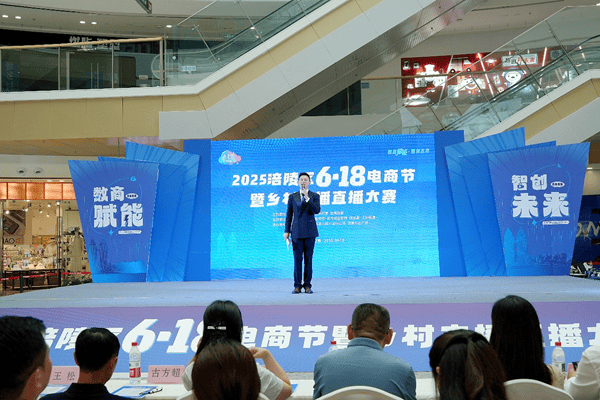
“数商赋能产业升级”2025涪陵区618电商节火热进行中
Sou Hu Cai Jing· 2025-06-20 15:42
Group 1 - The core event of the 2025 Fuling District 6.18 E-commerce Festival and Rural Anchor Live Streaming Competition achieved a total sales revenue exceeding 1.8 million yuan during the competition period, showcasing the effectiveness of digital consumption in promoting rural revitalization [1][7] - The final competition featured 55 new farmers, with the champion being "Village Secretary Xiao Yuan," and other notable winners including "Xiao Tan's Sunshine Diary" and "Xiao Zhang Secretary" [3] - The event highlighted the integration of local e-commerce forces with the establishment of the "Fuzhou V Power" alliance, aiming to enhance product promotion and sales connections [11] Group 2 - The concurrent "Hui Ju E-commerce Festival" and "Automobile Exhibition Season" effectively stimulated regional consumption through online and offline interactions, including the distribution of consumption vouchers [13] - The e-commerce festival represents a practical exploration of "Digital Commerce Promoting Agriculture," with government, enterprises, and platforms collaborating to build a sustainable digital business ecosystem [14] - The event concluded with a collective declaration by new members of the e-commerce association, emphasizing the commitment to advancing the association's development [15]