数字人民币

Search documents
中科江南:公司拥有充分的技术能力与多年的实践经验
Zheng Quan Ri Bao Zhi Sheng· 2026-01-29 14:08
(编辑 袁冠琳) 证券日报网讯 1月29日,中科江南在互动平台回答投资者提问时表示,公司作为在财政资金乃至政府性 资金支付、监管方面具备独特优势的服务商,拥有充分的技术能力与多年的实践经验。公司通过强化与 财政、国有企业、商业银行等多方主体的协同合作,深化数字人民币在国有投资基金管理、政府投资项 目管理、专项债券资金监管、惠农补贴资金管理、政府专项资金管理等重点业务场景中的融合应用,迭 代智能合约等数字技术,推进数字人民币成为财政资金数字化管理的可信载体与高效工具,释放数字人 民币在政府性资金支付和监管等场景的应用价值。 ...
数字人民币板块1月29日跌0.7%,天阳科技领跌,主力资金净流出22.18亿元
Sou Hu Cai Jing· 2026-01-29 09:32
证券之星消息,1月29日数字人民币板块较上一交易日下跌0.7%,天阳科技领跌。当日上证指数报收于 4157.98,上涨0.16%。深证成指报收于14300.08,下跌0.3%。数字人民币板块个股涨跌见下表: 从资金流向上来看,当日数字人民币板块主力资金净流出22.18亿元,游资资金净流入4.77亿元,散户资 金净流入17.42亿元。数字人民币板块个股资金流向见下表: 以上内容为证券之星据公开信息整理,由AI算法生成(网信算备310104345710301240019号),不构成 投资建议。 ...



保险券商均获增配,非银板块整体仍处欠配状态,全市场唯一港股通非银ETF(513750)午后涨超2%,连续8日净流入近23亿元
Xin Lang Cai Jing· 2026-01-29 06:29
Group 1 - China Ping An increased its stake in China Life by 14.2 million H-shares, surpassing a 9% holding, marking a rare large-scale investment in the same industry in recent years, signaling strong confidence in the insurance sector's fundamentals and valuation recovery potential [1] - Donghai Securities noted that the "New Year" sales for insurance in 2026 are robust, driven by the demand for wealth management and improved competitiveness of dividend insurance, with leading insurers expected to maintain a strong growth momentum in new premium income [1] - The insurance sector's allocation ratio increased from 1.03% to 2.13%, with a 23.42% rise in the insurance index in the fourth quarter, indicating a positive market trend and institutional interest in the sector [1] Group 2 - The non-bank financial sector remains under-allocated by 3.08 percentage points, with expectations of increased capital inflow and investment opportunities in financial technology, insurance valuation recovery, third-party payment companies, and expanded IPOs in the tech sector [2] - The Hong Kong Stock Connect non-bank ETF (513750) has seen a strong performance, with a 1.79% increase in the index and a 2.22% rise in the ETF, reflecting positive market sentiment and significant inflows [2] - The non-bank ETF reached a new high in scale at 38.118 billion yuan and 20.511 billion shares, with continuous net inflows over the past eight days, indicating strong investor interest [2] Group 3 - The Hong Kong Stock Connect non-bank ETF is the first and only ETF tracking the non-bank index, with insurance accounting for nearly 70% of its weight, highlighting the sector's dominance in the index [3] - The ETF includes up to 50 listed companies in the non-bank financial theme, reflecting the overall performance of this sector within the Hong Kong Stock Connect framework [3]
股市必读:新国都(300130)1月28日董秘有最新回复
Sou Hu Cai Jing· 2026-01-28 16:58
Group 1 - The company reported a closing price of 27.48 yuan on January 28, 2026, with a decrease of 0.76% and a turnover rate of 3.31%, indicating a trading volume of 143,500 shares and a transaction amount of 400 million yuan [1] - The company has focused on the electronic payment sector since its establishment, providing comprehensive electronic payment technology solutions [2] - The company’s payment hardware products fully support digital RMB acceptance, and it is actively collaborating with banking institutions in the digital RMB operational activities and technical services [2] Group 2 - On January 28, the net outflow of main funds was 47.57 million yuan, indicating a short-term reduction in holdings by major investors [4] - The net inflow of speculative funds was 31.13 million yuan, reflecting an increase in short-term trading activity [4] - The net inflow of retail investor funds was 16.44 million yuan, suggesting a net buying trend among individual investors [4]

石景山区区长万隆:在京西沃土实现规划蓝图
Xin Jing Bao· 2026-01-27 14:33
Core Viewpoint - The Shijingshan District aims to upgrade its development strategy during the "15th Five-Year Plan" period, focusing on transforming planning into reality and enhancing integration among industries, particularly in information technology and modern finance, while fostering emerging sectors like artificial intelligence and science fiction [1][2]. Group 1: Development Strategy - The core logic of development will evolve from "breaking old to establish new" to "from planning to reality and from aggregation to integration" [2]. - The goal for the "15th Five-Year Plan" is to upgrade from "physical space aggregation" to "industrial cluster ecology," creating a complete ecological chain for artificial intelligence [2][3]. - Investment of 3.8 billion yuan will be allocated for 28 key projects to enhance connectivity and integrate ecological, cultural, and industrial functions [3]. Group 2: Industry Focus - Information technology and modern finance are the district's primary industries, with a shift from "scale expansion" to "capability enhancement" planned for the "15th Five-Year Plan" [4]. - Strategies include strengthening the foundation of the information technology sector and fostering innovation in the modern finance sector through the establishment of an insurance innovation demonstration zone and a digital RMB pilot area [4]. Group 3: Emerging Industries - The district will cultivate emerging sectors like artificial intelligence and science fiction, aiming to create a diverse innovation matrix [5]. - Key initiatives include establishing the "Beijing Future Digital Space Innovation Experimental Zone" and promoting technology commercialization [5][6]. Group 4: Urban Development Projects - The "Two Parks and One River" initiative will transition from planning to execution, with projects like the revitalization of the Shilu Canal and the creation of large-scale art installations along the Yongding River [7][8]. - The district plans to enhance the waterfront area with new commercial facilities and recreational spaces, promoting a vibrant urban environment [8]. Group 5: Sports and Cultural Integration - The district aims to leverage its status as a "Double Olympic Zone" to convert sports events into economic and urban development opportunities [9][10]. - Future plans include hosting various sports and cultural events to drive tourism and local consumption, enhancing the overall value chain of events [9][10]. Group 6: Historical and Cultural Preservation - The district emphasizes the importance of preserving its industrial heritage while transforming into a modern urban area, with initiatives to protect historical sites like the Modekou Cultural Heritage District [11].
辞旧岁迎新程,陆家嘴金融沙龙2026年首场活动即将拉开序幕
Di Yi Cai Jing· 2026-01-27 02:14
Core Insights - The Lujiazui Financial Salon series will kick off in 2026, reflecting on the achievements of 2025 and focusing on the theme "Golden Horse Welcomes Spring: Financial Empowerment to Ignite New Spring Consumption in Pudong" [2] - The event will take place on January 28 in Shanghai Pudong, featuring a summary video of the 2025 salon activities and a keynote speech by Lian Ping, Chairman of the China Chief Economist Forum [2] - The salon aims to explore key issues such as innovation in consumer financial products and the synergy between finance and consumption ecosystems [2] Event Details - The Lujiazui Financial Salon has hosted 40 events in the past year, gathering insights from over 200 guests, establishing a professional position and brand recognition in the financial industry [2] - The event will include a dialogue session featuring industry experts discussing the balance between consumption stimulation and risk prevention, as well as the use of digital RMB and AI risk control technologies [3] - Notable speakers include Hu Haozhong, Executive Vice President of China UnionPay, and Wang Lijuan, Vice President of Ant Group, who will share their extensive experience in financial services and digital payment [3][4] Organizational Support - The Lujiazui Financial Salon is guided by the Shanghai Municipal Financial Office and the Pudong New Area Government, with media support from Yicai and Zhitong Finance [4] - The series aims to create a regular communication platform that complements the "Lujiazui Forum," focusing on financial reform and empowering high-quality economic development in Pudong [4]

2025年中国第三方支付行业研究报告
艾瑞咨询· 2026-01-27 00:06
Core Insights - The comprehensive payment transaction scale in China is expected to reach 577 trillion yuan by 2025, with a year-on-year growth of 3.0%, driven by a 2.9% increase in personal payment transactions and a 3.2% increase in enterprise payment transactions, indicating that enterprise payment growth has surpassed personal payment growth [1][13]. Group 1: Industry Overview - The third-party payment industry in China has entered a stage of deepening stock competition, with regulatory normalization and compliance requirements becoming the foundation for industry development [1]. - The industry has evolved from a phase of rapid growth and diversification of services (2010-2019) to a more mature phase characterized by stricter regulations and stable development since 2019 [4][5]. Group 2: Market Dynamics - The personal payment market is nearing saturation, with a projected decline in the personal mobile payment market size from 205.2 trillion yuan in 2024 to 197.5 trillion yuan in 2025, a decrease of 3.7% [19]. - In contrast, the enterprise payment market is expected to show resilience, with a projected growth rate of 3.2% due to the ongoing digital transformation of enterprises and the expansion of cross-border e-commerce payment scenarios [13][33]. Group 3: Regulatory Environment - The implementation of the "Non-Bank Payment Institutions Supervision and Administration Regulations" in 2024 has led to a significant transformation in the industry, with a marked increase in compliance and accelerated consolidation [7]. Group 4: Technological Integration - The industry is actively embracing AI technology to enhance internal operational efficiency and external customer service, with AI being utilized for smart risk control, process automation, and personalized services [10][12]. - AI is expected to play a crucial role in reducing operational costs and improving service capabilities, thereby enhancing the overall competitiveness of the payment industry [10]. Group 5: Payment Trends - New payment methods are emerging, such as NFC payments, which simplify the payment process and enhance security, although challenges remain in terms of hardware requirements and user adoption [30][31]. - The promotion of digital currency and stablecoins is expected to create new growth opportunities in the cross-border payment sector, with stablecoins gaining regulatory clarity and becoming integral to global payment infrastructure [67][71]. Group 6: Enterprise Payment Strategies - Payment institutions are shifting from basic payment services to integrated solutions that provide cost reduction and efficiency enhancement tools, reflecting a consensus in the industry to explore deeper service values [35]. - The enterprise payment market is increasingly focusing on providing comprehensive solutions that integrate payment services with financial and operational management tools [41][49]. Group 7: Cross-Border Payment Growth - The cross-border payment market is projected to reach 3.3 trillion yuan by 2025, driven by the expansion of China's cross-border e-commerce market, which is expected to grow at an annual rate of 15.5% [55]. - Cross-border payment service providers are enhancing their offerings by integrating logistics and other essential services to create a comprehensive solution for businesses engaged in international trade [57][60].
观点集锦|2026居民端财富管理新趋势——国泰海通非银&银行&地产1月专题论坛
国泰海通证券研究· 2026-01-26 14:03
1月23日," 2026居民端财富管理新趋势——国泰海通非银&银行&地产1月专题论坛"在上海举办, 论坛吸引逾百位机构投资者参与。 上海秩汇科技有限公司创 始人 徐 海宁、 浦发银行财富管理部 金总、 冰山指数创始人 李彦国分别就 居民财富管理新趋势、2026年房价趋势 等议题带来精彩演讲。国泰海通非银、银 行、地产团队带来最新研究观点分享。以下为部分嘉宾的观点集锦: 2026房价矛在哪里? 涂力磊-国泰海通证券研究所所长助理、先进制造组长、房地产首席分析师、中小市值与创新股权联席首席分析师 十四五和十五五期间,党中央对地产行业发展要求,房地产行业总量所处阶段存在明显差异。房地产行业高质量发展要求的提出,从防风险、提品质、 促转型等多维度为行业提供纲领性指引。我们认为未来五年行业将步入提质增效发展新阶段,看好行业迈入格局和盈利稳定,蓝筹基本面持续优化阶 段。 我们认为,短期开发板块延续需求端不适应供需关系的限制政策继续松绑,与此同时叠加信贷支持。开发板块长期落实以需求定供给的大方针。土地供 给以人定房,保障性住房确保民生兜底,租赁市场推动机构化转型升级。房屋品质升级为核心任务,新建设立好房标准,改造推进四好建 ...

A股异动!大金融板块 全线反攻!
Zheng Quan Shi Bao Wang· 2026-01-26 04:59
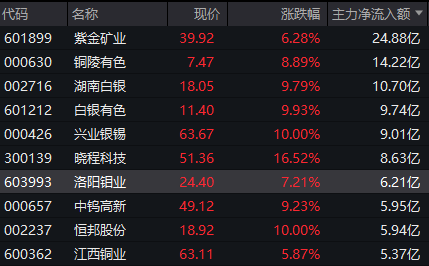
另据上海有色网数据显示,钨精矿价格2025年从14.3万元/吨,一路狂飙到45.9万元/吨,仲钨酸铵也从 21.05万元/吨涨到67.5万元/吨,均涨超200%。进入2026年涨势延续,截至目前,钨精矿价格在53万元/吨 —54万元/吨波动。 根据中国钨业协会统计,国内钨矿山开工率不足35%,周产量减少200吨,现货库存降至15天以下,仅 能维持短期消费,社会库存已跌至五年新低。 今日早盘,A股小幅震荡,主要股指涨跌互现,大盘蓝筹股反弹,上证50盘中一度涨近2%,沪深300、 上证指数也微幅飘红,科技成长股略有调整,科创50、创业板指、北证50等均小幅飘绿,市场成交呈放 大趋势。 盘面上,有色金属、大金融、油气开采、动物保健等板块涨幅居前,航天装备、玻璃基板、博彩概念、 人工智能等板块跌幅居前。 有色金属集体涨价 有色金属产业早间全线大涨,贵金属概念领涨,板块指数大幅高开高走,盘中一度飙升逾9%,再创历 史新高。湖南黄金、福达合金、豫光金铅等多股一字涨停,盛达资源开盘秒速涨停,恒邦股份也仅约4 分钟涨停,萃华珠宝、中国黄金等均直线开始封板。 | 代码 | 名称 | 现价 | | 涨跌幅 | 主力净流入额 ▼ ...
观点集锦|2026居民端财富管理新趋势——国泰海通非银&银行&地产1月专题论坛
国泰海通证券研究· 2026-01-26 03:10
Group 1: Real Estate Industry Insights - The real estate industry is entering a new phase of quality improvement and efficiency enhancement, with a focus on risk prevention, quality improvement, and transformation [4] - The short-term development sector will continue to see policy easing to address supply-demand mismatches, supported by credit [4] - The emphasis will be on upgrading housing quality and establishing standards for new constructions, while ensuring the safety of the entire lifecycle of housing [4] Group 2: Banking Sector Trends - The trend of "deposit migration" continues, primarily affecting 2-3 year fixed deposits, while 1-year deposits remain stable [6] - Credit growth is expected to remain similar to 2025, with a slight decline in growth rate, primarily focused on corporate lending [6] - Net interest income growth is anticipated to improve due to a significant narrowing of interest margins, with most large banks experiencing a decline of less than 10 basis points [6] Group 3: Non-Bank Financial Sector Opportunities - Investment opportunities in the non-bank financial sector are centered around three main themes: wealth management related to financial technology and brokerage firms, valuation recovery in the insurance sector due to stable interest rates, and the expansion of digital RMB [9] - The retail business is expected to have a competitive advantage, benefiting from the entry of resident funds into the market in a low-interest-rate environment [9] - The digital RMB is supported by national development initiatives, which will drive upgrades in banking systems and payment terminals, increasing service fees in the banking IT and third-party payment sectors [9]