
日元贬值

Search documents
日元持续贬值!日本两大在野党联手对抗高市
Guo Ji Jin Rong Bao· 2026-01-15 13:05
Core Viewpoint - The Japanese Prime Minister, Fumio Kishida, is attempting to consolidate power through an early election, a strategy that may be riskier than anticipated due to political uncertainties and economic pressures [1][4]. Currency and Economic Impact - The Japanese yen fell to 159.45 against the US dollar on January 14, marking the lowest point since July 2024, with subsequent warnings from Finance Minister Shunichi Suzuki aimed at slowing the yen's depreciation [1][6]. - As of January 15, the yen was trading around 158.55, with hedge funds betting on a potential drop to 165 before any government intervention [2][6]. - Despite the Bank of Japan raising interest rates to the highest level since 1995, the yen continues to weaken, with predictions that it could fall to 160 or lower by the end of 2026 due to high US-Japan interest rate differentials and capital outflows [6][7]. Political Landscape - The early election announcement has altered Japan's political landscape, with the largest opposition party, the Constitutional Democratic Party, forming a new alliance with the Komeito party to challenge Kishida's government [5][6]. - Kishida's government, which currently holds a slim majority in the House of Representatives, faces pressure to secure support from opposition parties to pass the 2026 fiscal budget [3][5]. - Public sentiment is shifting, with 58% of respondents expressing concern over the economic impact of deteriorating Japan-China relations, indicating rising dissatisfaction with Kishida's administration [4][5]. Market Reactions and Predictions - Investors are anticipating that if Kishida's party secures a stable majority, expansionary policies will continue, potentially exacerbating the yen's depreciation and complicating the Bank of Japan's goals for price stability [7]. - The Deutsche Bank report suggests that failure to achieve a majority could lead to market sell-offs and a flight to safety, resulting in a stronger yen [7].
日元遭疯狂做空!分析师警告:若跌破162,可能迅速跌向170
Hua Er Jie Jian Wen· 2026-01-15 06:23
Core Viewpoint - The Japanese yen has fallen to an 18-month low, with hedge funds betting that the authorities will tolerate a decline towards 165, while analysts warn that if the key technical level of 162 is breached, the exchange rate could rapidly surge to 170, testing the effectiveness of government intervention [1][4]. Group 1: Market Sentiment and Positioning - The options market shows that the volume of call options betting on the dollar's rise is more than twice that of put options, indicating a strong market expectation for the yen to continue weakening [1][5]. - Hedge funds are ignoring intervention warnings and are betting on the yen falling to the 165 level, with a stable demand for higher dollar-yen structures observed [5]. - The imbalance in options trading, with call options being favored, highlights a bullish sentiment towards the dollar-yen exchange rate despite the current levels being similar to those seen during the last intervention in July 2024 [5]. Group 2: Technical Analysis and Risks - Analysts indicate that if the dollar-yen rate breaks through the 162 level, it could quickly rise to 170 due to concentrated options-related orders around that level [6]. - The weakening of the yen's safe-haven appeal is noted, as it continues to decline even amid heightened risk aversion triggered by geopolitical events [7]. - The current market environment differs significantly from 2024, with a neutral net position in yen futures indicating a lack of large short positions available for covering, which could limit potential rebounds [8][9]. Group 3: Political and Economic Factors - Political uncertainty surrounding Prime Minister Suga's early election plans is adding downward pressure on the yen, with expectations that a majority win for the ruling party would lead to continued expansionary policies [10]. - Deutsche Bank outlines three scenarios regarding potential election outcomes, suggesting that a failure to secure a majority could lead to market sell-offs and a strengthening of the yen, while a stable majority could weaken it further due to fiscal expansion expectations [10].

贝森特会见日本财务大臣,敦促采取“稳健”政策应对汇率波动
Xin Lang Cai Jing· 2026-01-15 00:29
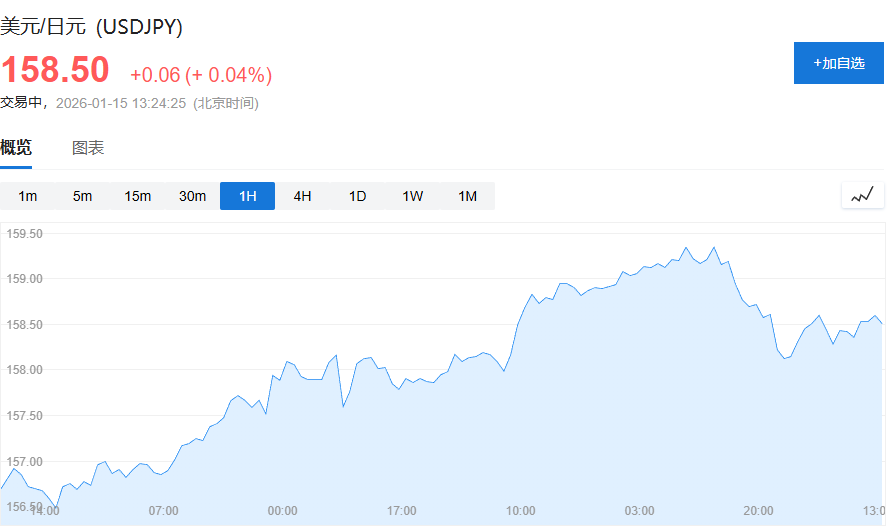
Group 1 - The U.S. Treasury Secretary emphasized the need for robust monetary policy during a meeting with Japan's Finance Minister, highlighting concerns over excessive currency fluctuations [1][3] - The Japanese yen recently fell to its lowest point in 18 months, prompting market speculation about potential government intervention to stabilize the currency [1][3] - Following the meeting, the yen rebounded, with a 0.43% increase against the dollar, reaching 158.46 yen per dollar after previously hitting a low of 159.45 yen [1][3] Group 2 - The Bank of Japan raised interest rates from 0.5% to 0.75% in December, citing progress towards achieving a 2% inflation target [2][4] - Critics argue that the slow pace of interest rate hikes contributes to the weakness of the yen, which benefits exports but raises living costs due to increased import prices [5]
无视提前大选传闻,日本央行行长重申加息决心
Jin Shi Shu Ju· 2026-01-14 08:12
Group 1 - The Governor of the Bank of Japan, Kazuo Ueda, signaled intentions to raise interest rates when conditions allow, despite speculation about an early election by Prime Minister Fumio Kishida [1] - Ueda's comments indicate that financial market fluctuations due to election speculation have not altered the Bank of Japan's path towards rate hikes, maintaining consistency with his previous statements [1] - Most economists expect the Bank of Japan to hold its policy steady during the January 23 meeting, with the next rate hike anticipated around June [1] Group 2 - Currency depreciation has increased import costs, contributing to broader inflationary pressures, complicating Ueda's goal of achieving stable price growth [2] - Ueda noted that wages and inflation may continue to rise gradually, and appropriate adjustments to monetary easing will help achieve price targets and long-term economic growth [2] - The Bank of Japan raised the benchmark interest rate to 0.75%, the highest level since 1995, with expectations of rate hikes approximately every six months, although a weak yen may accelerate the timing of the next action [2]
日股新高、日元逼近160!日本大选定生死?德银拆解三种剧本
Hua Er Jie Jian Wen· 2026-01-14 07:01
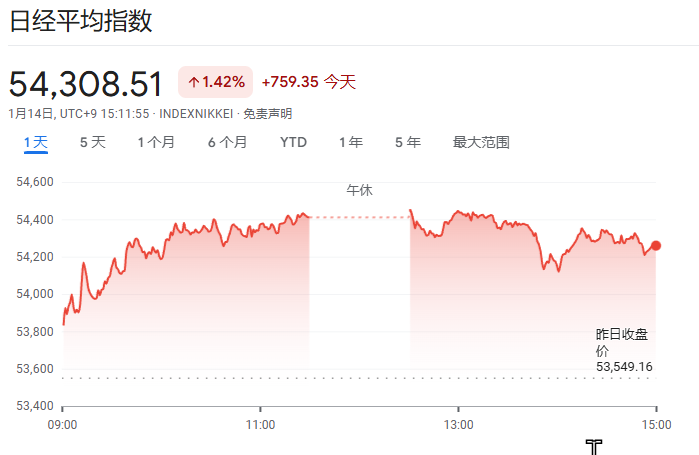
Core Viewpoint - The expectation of early elections in Japan, led by Prime Minister Sanna Takashi, is stirring financial markets, driving Japanese stocks to new highs, accelerating yen depreciation, and pushing bond yields to decades-high levels [1][4]. Group 1: Stock Market Reaction - The Nikkei 225 index rose over 1% on Wednesday, surpassing the 54,000 mark, following a more than 3% increase the previous day, marking a historical high [1]. - The Tokyo Stock Exchange index also continued its upward trend, increasing by 0.87% [1]. Group 2: Currency Market Dynamics - The yen fell below the 159 mark against the dollar, reaching its weakest level since July 2024 [4]. - Market speculation regarding the Japanese authorities' tolerance for yen depreciation remains high due to a lack of clear guidance on intervention timing and scale [4]. Group 3: Bond Market Developments - There was a notable sell-off in the bond market, with the five-year government bond yield rising by 1.5 basis points to 1.615%, the highest since its introduction in 2000 [7]. - The auction for five-year government bonds showed weak demand, with the bid-to-cover ratio dropping to 3.08, the lowest since August of the previous year [8]. Group 4: Fiscal Policy Implications - The anticipated increase in government spending and debt supply is causing growing concerns among investors [7]. - The Japanese government plans to introduce a record initial budget in the new fiscal year starting in April, while also reducing long-term bond issuance [8]. Group 5: Interest Rate Outlook - The ongoing depreciation of the yen may pressure the Bank of Japan to raise interest rates sooner than expected, with potential increases as early as April [9]. - Market expectations for the first rate hike of the year are not fully priced in until July, indicating room for further adjustments if yen weakness persists [9]. Group 6: Election Scenarios and Market Impact - Deutsche Bank outlined three potential election scenarios: 1. Absolute stable majority for the ruling party, seen as bullish for the market [10]. 2. Regaining a simple majority, which would reduce uncertainty but still pose governance challenges [10]. 3. Failing to secure a majority, interpreted as a significant setback, likely leading to market sell-offs [10]. - Investors are closely monitoring the Prime Minister's statements and the ruling party's decisions, as the upcoming month is critical for validating their confidence in Japanese political stability [10].
星展集团:日元贬值投机压力高,日本或提前大选添变数
Sou Hu Cai Jing· 2026-01-14 03:44
Group 1 - The core viewpoint is that the market is likely to continue testing Japan's tolerance for yen depreciation, indicating ongoing speculation against the currency [1] - Japanese policymakers' verbal warnings serve as the first line of defense, but the lack of intervention guidelines keeps speculative pressure on the yen high [1] - The potential for early elections in Japan may weaken the coordination between the Ministry of Finance and the central bank in foreign exchange market actions, complicating the situation further [1]

机构:市场或继续试探日本对日元贬值的容忍底线
Jin Rong Jie· 2026-01-14 03:00
Core Viewpoint - The market is likely to continue testing the Japanese policymakers' tolerance for yen depreciation, with speculation pressure remaining high due to a lack of clear guidance on intervention timing, scale, or triggers [1] Group 1 - Philip Wee, a senior foreign exchange strategist at DBS Group Research, indicates that verbal warnings from policymakers serve as the first line of defense against yen depreciation [1] - The potential for early elections in Japan may weaken the coordination between the Ministry of Finance and the Bank of Japan in taking decisive action in the foreign exchange market, complicating the situation further [1]
“救日元”重任在财务省肩上?前日本央行官员:加息最快或4月落地
Jin Shi Shu Ju· 2026-01-13 12:53
Core Viewpoint - The Japanese yen continues to weaken due to market concerns over Prime Minister Sanae Takaichi's fiscal policies, with expectations that the Bank of Japan may raise its benchmark interest rate as early as April [1][3]. Group 1: Monetary Policy and Interest Rates - Former Bank of Japan official Makoto Sakurai suggests that the central bank is unlikely to implement measures to support the yen in its upcoming meetings, placing the responsibility on the Japanese Ministry of Finance if the yen continues to decline [3]. - The Bank of Japan raised its benchmark interest rate to 0.75%, the highest in 30 years, but this has only prevented further depreciation of the yen without driving its appreciation [3][4]. - Market expectations indicate a 40% probability of a rate hike in April, with the central bank's policy committee likely to raise rates approximately every six months [4]. Group 2: Fiscal Policy and Economic Stimulus - Takaichi's proposed large-scale economic stimulus and significant budget plans have led to a loss of market confidence, raising questions about the rationale for such expansive fiscal spending amid rising inflation [4][6]. - Since taking office, Takaichi has introduced the largest supplementary budget since the pandemic and set the highest initial budget for the next fiscal year in Japan's history [6]. - While inflation has increased tax revenues to historical highs, concerns remain about the lack of clarity regarding funding sources for Takaichi's spending plans, which are viewed as overly loose and potentially dangerous [7]. Group 3: Market Reactions and Currency Implications - The yen is hovering near the intervention threshold set by the Japanese Ministry of Finance for 2024, with its decline beginning last October amid Takaichi's anticipated election and her criticism of the Bank of Japan's rate hikes [5]. - The 30-year Japanese government bond yield reached a historical high of 3.52%, reflecting market skepticism about Takaichi's fiscal policies and their impact on the yen [7]. - Sakurai emphasizes that Takaichi's fiscal measures are a core factor suppressing the yen's value, and rebuilding market trust will be a challenging task [7].
片山皋月与贝森特齐声担忧 日元汇率依旧持续走低
Xin Lang Cai Jing· 2026-01-13 10:30
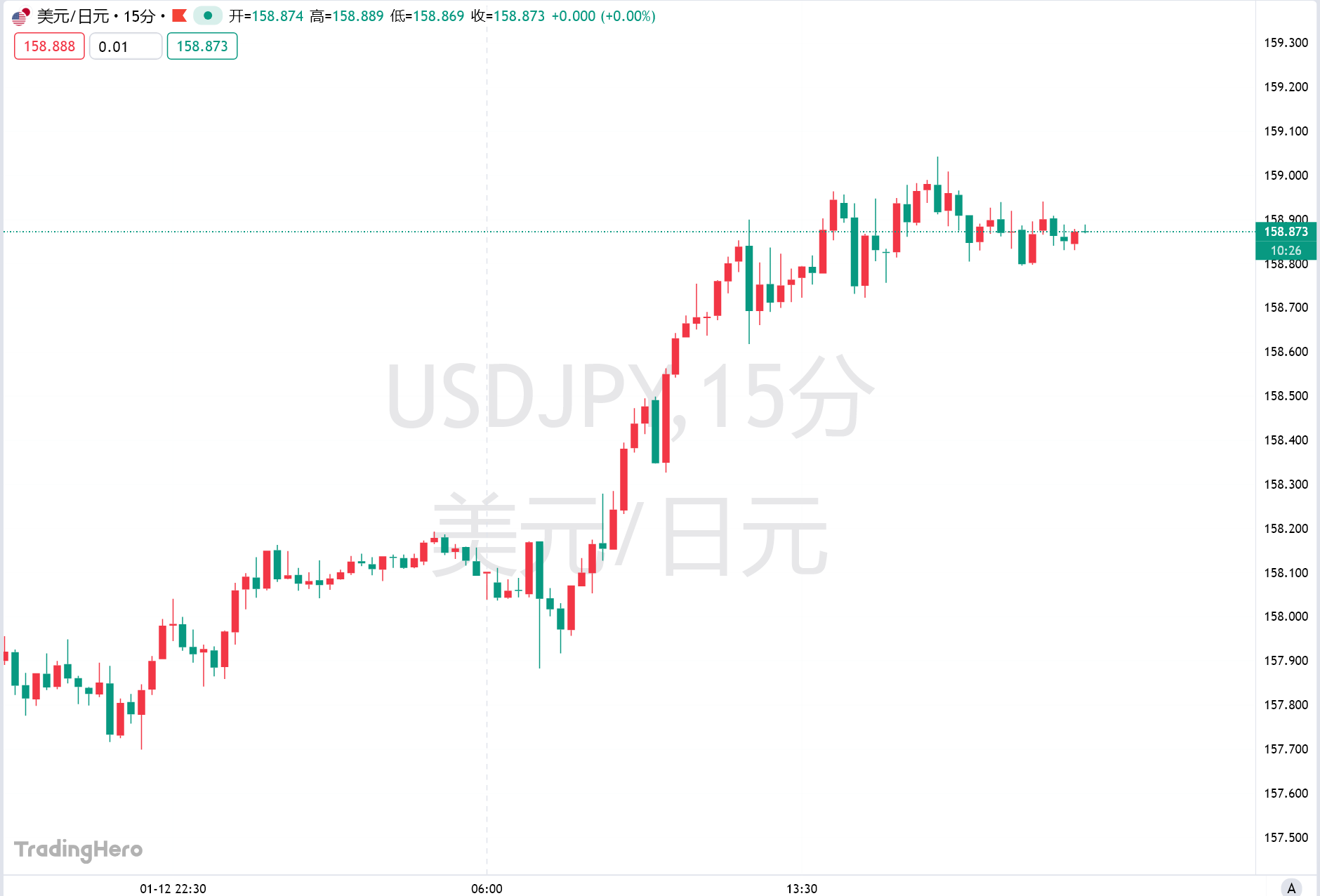
Core Viewpoint - The Japanese yen has depreciated to its lowest level in 18 months, reaching 159.05 yen per dollar, despite concerns from both Japanese and U.S. officials about the currency's decline [1][2][3]. Currency Exchange Rate Dynamics - The yen's exchange rate dropped by 0.6% against the dollar, influenced by reports of Prime Minister Fumio Kishida's intention to call for early elections, which further exacerbated the yen's decline [1][2]. - The Japanese Finance Minister, Shunichi Suzuki, expressed concerns about the "one-sided depreciation" of the yen during a meeting with U.S. Treasury Secretary Janet Yellen, indicating a potential for increased communication on exchange rate trends [1][3]. Market Reactions and Predictions - Market analysts suggest that the possibility of currency intervention may become a focal point, particularly as the dollar approaches the 160 yen mark, which is seen as a critical threshold for intervention [1][2][3]. - The head of the Japan Business Federation, Tokui Nobutaka, emphasized the need for the yen to strengthen, warning that excessive depreciation could necessitate intervention in the foreign exchange market [2][8]. Economic Implications - The depreciation of the yen is expected to increase import costs, potentially leading to higher domestic inflation, prompting the Japanese government to introduce a substantial economic stimulus plan to alleviate rising living costs [3][10]. - The Bank of Japan raised its benchmark interest rate to a 30-year high in December, with expectations that further rate hikes may be accelerated due to the yen's ongoing depreciation [10]. International Relations and Policy - U.S. Treasury Secretary Yellen previously called for the Bank of Japan to raise interest rates as a means to support the yen's value [4][10]. - The recent meeting between Suzuki and Yellen occurred amid concerns regarding potential political interference in U.S. monetary policy, which may impact international economic relations [5][10].
【环球财经】2025年日本企业破产数超一万家 创12年来新高
Xin Hua Cai Jing· 2026-01-13 09:10
Group 1 - In 2025, the number of corporate bankruptcies in Japan is expected to reach a new high since 2013, with small enterprises making up the majority [1] - There were 10,300 bankruptcy cases involving companies with liabilities exceeding 10 million yen (approximately 439,000 RMB), marking a 2.9% year-on-year increase and the fourth consecutive year of growth since 2022 [1] - 77% of bankrupt companies had liabilities below 100 million yen (approximately 4.39 million RMB), reaching a historical high, and about 90% of these companies had fewer than 10 employees [1] Group 2 - The number of bankruptcies due to labor shortages surged by 40% to 397 cases, also a historical high, attributed to rising labor costs, recruitment difficulties, and employee turnover [1] - There were 767 bankruptcy cases linked to inflation, marking a continuous increase over three years [1] - Among 10 industries, 7 experienced higher bankruptcy cases compared to the previous year, with the service industry leading at 3,478 cases (up 4.4%), and the construction industry following with 2,014 cases, surpassing 2,000 for the first time in 12 years [1] Group 3 - The Tokyo Shoko Research Company predicts an upward trend in corporate bankruptcies until the end of the 2025 fiscal year, driven by struggling businesses and those abandoning restructuring efforts [2] - Factors such as yen depreciation, high prices, rising interest rates, Trump's tariff policies, and deteriorating relations with China are contributing to the increased operational risks for companies [2]