
民粹主义

Search documents
全球银行股的“上涨逻辑”:民粹主义、财政宽松、本币升值
Hua Er Jie Jian Wen· 2025-07-24 07:05
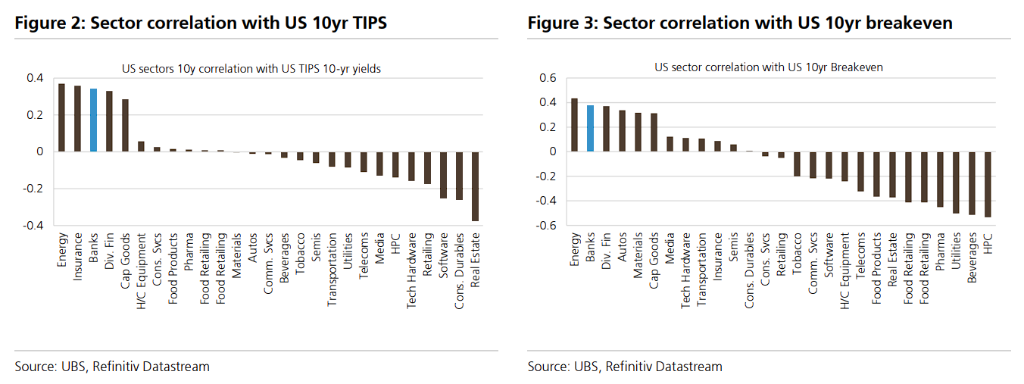
Core Viewpoint - UBS highlights multiple favorable factors driving global bank stocks, including populism, fiscal easing, currency appreciation, structural improvements, and attractive valuations [1][2]. Macro Factors - The rise of populism is leading to concerns over fiscal easing, which is pushing up bond yields, benefiting bank stocks as they are highly localized and gain from currency appreciation in regions like Europe and Japan [1][3]. - UBS maintains a bearish outlook on the US dollar, predicting a 1% rate cut by the end of the year, which will strengthen the euro and yen, directly enhancing the asset value and profitability of local banks [7][11]. Structural Improvements and Valuation - The banking sector has significantly improved its risk resilience post-financial crisis, with reduced litigation risks and manageable fintech disruption [2][26]. - Current bank stock valuations are attractive, reflecting excessive market concerns about an economic slowdown, with forward P/E ratios in Europe and the US showing about a 10% discount to historical norms [16][20]. Credit Growth and Economic Recovery - A turning point in private sector credit growth is evident, particularly in Europe, where demand for corporate loans is increasing, signaling a new upward cycle for banks' core lending business [11][15]. Indicators Supporting Bank Stock Allocation - UBS identifies several indicators supporting bank stock allocation, including moderate crowding and strong earnings revisions, with bank stocks ranking favorably in terms of earnings adjustments [36][41]. - The macro model indicates potential upside for bank stocks, particularly in Europe and Japan, where interest rates are nearing the end of a tightening cycle and will benefit from currency appreciation [41].


日本政坛:新兴民粹主义在野党崛起
日经中文网· 2025-07-23 00:47
Core Viewpoint - The article discusses the emergence of new political trends in Japan following the recent Senate elections, highlighting the rise of populist parties that criticize established political elites and attract voter dissatisfaction [1][2]. Group 1: Political Landscape Changes - The recent Senate elections in Japan have seen the rise of new opposition parties that embody populist sentiments, while traditional parties like the Constitutional Democratic Party have stagnated [1][2]. - The perception of established parties, including the ruling Liberal Democratic Party (LDP), as part of "old politics" has intensified, leading to a decline in their support [2]. Group 2: Decline of Traditional Party System - The article notes that the reliance on 20th-century political organizations is diminishing, with younger voters increasingly disengaged from the two-party system [2][3]. - The voting behavior of younger generations indicates a shift towards individualism, with social media playing a significant role in connecting politicians with voters [2]. Group 3: Electoral System and Multi-Party Dynamics - Japan's electoral system, particularly the mixed-member proportional representation, has contributed to the fragmentation of the political landscape, making it difficult for a two-party system to thrive [3]. - The LDP's seat share has decreased to 41% in both houses, marking a significant shift from its historical dominance [3]. Group 4: Rise of Right-Wing Populism - The article highlights the emergence of right-wing populism in Japan, drawing parallels with global trends, although Japan's context differs due to lower immigration rates and less pronounced wealth disparity [5]. - The potential for right-wing populism to grow in Japan remains uncertain, with factors such as immigration and economic conditions influencing public sentiment [5].

【环时深度】民粹政党选举大胜,反建制浪潮“登陆”日本?
Huan Qiu Shi Bao· 2025-07-22 22:49
Core Points - The rise of the populist party "Reiwa Shinsengumi" in Japan reflects public dissatisfaction with the current political landscape and economic conditions, gaining significant support by promoting a "Japan First" agenda [1][5][11] - The party's controversial statements and policies, including anti-immigration sentiments and a rejection of gender equality initiatives, have sparked both support and opposition among the electorate [3][4][9] - The party's success in recent elections indicates a shift in Japanese political dynamics, with traditional parties losing ground to new populist movements [11][12][13] Group 1: Party Background and Growth - "Reiwa Shinsengumi" was established in 2020 during the COVID-19 pandemic, attracting initial support through social media and grassroots mobilization, growing from 2,800 followers to 460,000 on YouTube [2] - The party gained one seat in the 2022 Senate elections and three seats in the 2024 House elections, totaling 140 members including local councilors [2] - The party's slogan "Japan First" resonates with voters feeling neglected by mainstream parties, particularly in the context of rising living costs and dissatisfaction with the ruling Liberal Democratic Party (LDP) [5][8] Group 2: Political Impact and Public Sentiment - The party's rise is partly attributed to a backlash against the LDP's perceived liberalization and failure to address nationalistic sentiments among conservative voters [5][11] - Polls indicate strong support for the party among younger voters aged 18 to 30, while older demographics remain more aligned with traditional parties [4][12] - The party's anti-immigration stance and claims of rising crime rates linked to foreigners have fueled public anxiety, allowing it to capitalize on existing fears [3][8][9] Group 3: Future Implications - The emergence of "Reiwa Shinsengumi" may signal a long-term shift towards right-wing populism in Japan, challenging the historical dominance of the LDP [11][14] - The party's influence could reshape Japan's political discourse, particularly regarding immigration and foreign relations, as it seeks to align with nationalist sentiments [13][14] - Observers note that while the party has gained traction, its long-term sustainability remains uncertain, as past populist movements in Japan have struggled to maintain momentum [14]
欧美关系进入垃圾时间,但不能全怪特朗普
Hu Xiu· 2025-07-22 10:09
Group 1 - The article discusses the impact of Trump's return to power on transatlantic relations, highlighting the challenges and adjustments faced by the EU in maintaining its alliance with the US while addressing issues related to security, trade, and international order [2][22][36] - The EU has adopted a multi-faceted approach to cope with Trump's policies, utilizing cultural ties and institutional channels to maintain communication and cooperation with the US [4][5][22] - The article emphasizes that the EU has refrained from retaliating against US tariffs, opting instead for negotiations, reflecting a strategic choice to avoid direct confrontation with Trump [7][8][19] Group 2 - The EU's response to the Ukraine conflict illustrates its ability to adapt to Trump's stance, as it continues to support Ukraine while also aligning with Trump's calls for peace negotiations [9][10][22] - The article notes that the EU has shifted its approach towards China, moving from criticism to cooperation, which serves as a bargaining chip in negotiations with the US [14][16][22] - The historical context of transatlantic relations is explored, indicating that the relationship has entered a phase of decline due to the absence of a common enemy and changing geopolitical dynamics [25][36][36]
“日本人优先”成选举焦点,自民党遭遇历史性惨败
Hu Xiu· 2025-07-21 23:37
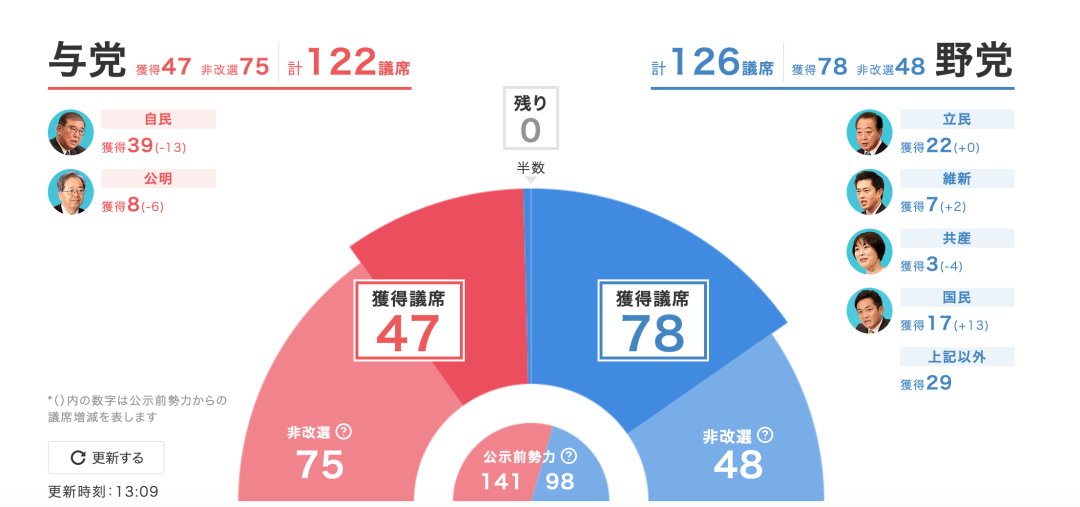
Group 1 - The recent Japanese Senate election marked the hottest voting day in history, with the ruling Liberal Democratic Party (LDP) failing to secure a majority in both houses for the first time since its establishment in 1955 [1] - The Senate has 248 seats, with 125 contested in this election, resulting in opposition parties winning 78 seats, while the LDP and Komeito secured only 47 seats, a significant drop from 141 seats prior to the election [1] - Prime Minister Shigeru Ishiba accepted the election results and expressed his intention to continue governing despite calls for his resignation from within the party [2][38] Group 2 - The election highlighted the rise of smaller opposition parties advocating for policies like lowering consumption tax and prioritizing Japanese interests, with the emerging Seijinto party gaining 14 seats [3][27] - Ishiba's government faced criticism for lacking a clear vision and failing to address pressing issues such as high prices and US tariff negotiations, leading to low public support [3][10] - The LDP's strategy of cash handouts was criticized as insufficient to address public dissatisfaction, while opposition parties proposed more substantial tax cuts [15][16] Group 3 - The election results are seen as a turning point for the LDP, indicating a shift in Japan's political landscape and a potential decline in the party's long-standing dominance [33] - The LDP's internal divisions and declining support from traditional bases, such as agricultural cooperatives, have raised concerns about its future [33][34] - The fragmented nature of opposition parties makes it unlikely for them to form a cohesive government, despite calls for a change in leadership [36][37]
特朗普给不出爱泼斯坦名单,MAGA怎么办?
Hu Xiu· 2025-07-19 06:44
Group 1 - The Epstein case remains a central topic in American politics, aligning with right-wing conspiracy theories about globalists and moral decay, which Trump has effectively used to mobilize voters against the Democrats [3][4] - Trump's dismissal of the Epstein list as a non-issue has caused confusion among his supporters, raising doubts about his integrity and involvement in the case [4][8] - The demand for transparency in the Epstein case reflects a reasonable public sentiment, but the failure to deliver on this demand highlights the challenges faced by populism, which often simplifies complex issues into quick solutions [8][11] Group 2 - The complexity of the Epstein case, involving numerous powerful individuals, poses significant challenges for any investigation, questioning Trump's ability to deliver on his promises [10][11] - The existence of a "deep state" in the U.S. is acknowledged, but it is not as powerful as conspiracy theories suggest; rather, it is a product of long-standing policy inertia and interest group dynamics [13][14] - The emotional appeal of populism often leads to oversimplified solutions that fail to address the underlying complexities of governance, as seen in the reactions to the Epstein case [16][25] Group 3 - The role of right-wing political influencers in shaping narratives around the Epstein case demonstrates the fragmentation within the MAGA movement, as differing opinions create confusion among supporters [18][23] - The emotional response to the Epstein case reflects a broader societal struggle to comprehend complex political realities, leading to a reliance on simplistic moral dichotomies [22][29] - The challenges faced by the MAGA movement in addressing systemic issues highlight the limitations of relying solely on populist sentiments without engaging in deeper institutional reforms [30][31]

日本参议院选举民调预警“政治地震” 6.8万亿美元日股市场迎考验
智通财经网· 2025-07-17 02:33
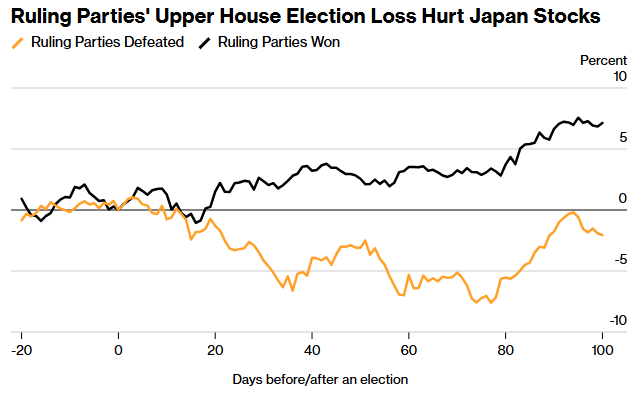
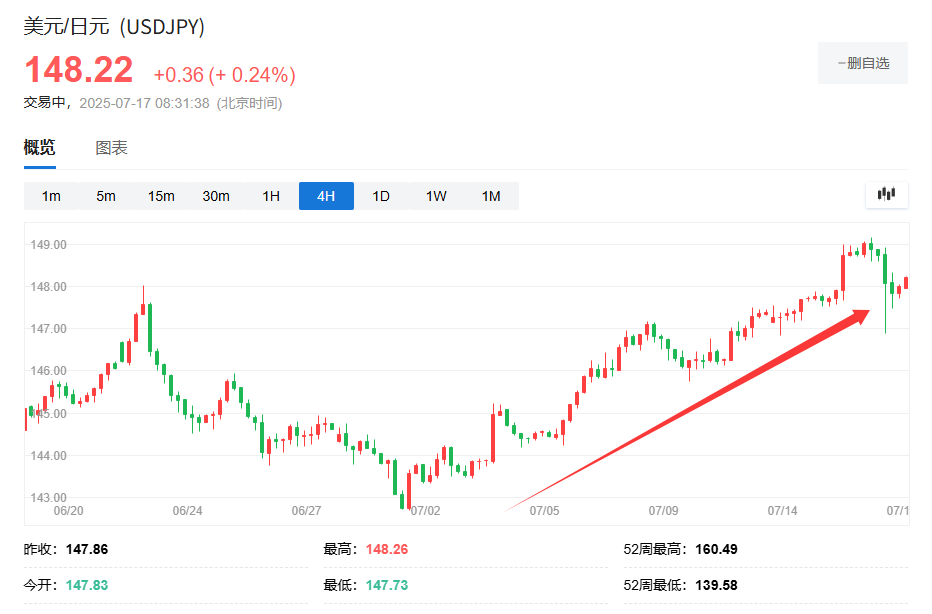
Group 1 - The Japanese stock market is expected to face a prolonged decline following the upcoming Senate elections, with predictions indicating that the ruling coalition may lose its majority, impacting Prime Minister Shigeru Ishiba's government [1] - Political concerns have already affected market performance, with local stocks underperforming compared to the MSCI World Index this month [1] - If the ruling party loses its majority, the market may take an average of 35 to 75 days to bottom out, with an average total decline of about 8% during this period [1] Group 2 - The Tokyo Stock Exchange index fell by 1.2% in July after three months of gains, with a potentially weak minority government complicating trade negotiations with the U.S. and disrupting investor sentiment [2] - The increase in tariffs by Trump on Japanese goods, particularly the rise from 24% to 25%, has negatively impacted Japan's exports and heightened the risk of a technical economic recession [5] - The upcoming elections may influence corporate governance reforms in Japan, which have been a significant driver of the stock market's rise in recent years [5] Group 3 - There is a growing populist sentiment in Japan, similar to trends seen in the West, with income redistribution becoming an important theme moving forward [7] - The impact of the elections on Japan's $6.8 trillion stock market could be complex, with export companies potentially benefiting from yen depreciation while consumer stocks may rise due to opposition proposals to lower food sales tax [7] - If extreme right and left-wing parties gain strength, there could be a "triple decline" in the yen, bonds, and stocks [7]
如果民调结果成真,日本大选后日股或将“长期下跌”
Hua Er Jie Jian Wen· 2025-07-17 00:54
Group 1 - The upcoming Japanese Senate elections may lead to the ruling coalition losing its majority, which could negatively impact the country's $6.8 trillion stock market [1] - The Japanese stock market has underperformed compared to the MSCI global index this month, raising concerns about the potential governance capabilities of a weak minority government [1][4] - Political uncertainty is eroding investor confidence, as evidenced by a 1.2% decline in the Tokyo Stock Exchange index after three months of gains [4] Group 2 - Historical data indicates that if the ruling party loses in elections, the market may take 35 to 75 days to bottom out, with an average total decline of about 8% [4] - Analysts warn of a potential "triple whammy" in the Japanese financial market, affecting stocks, bonds, and currency if extreme political factions gain power [6] - A weaker yen could benefit exporters affected by U.S. tariffs, while opposition parties' proposals to cut food consumption taxes may boost consumer stocks [6] Group 3 - The election may have profound implications for corporate governance reforms, a key driver of recent stock market gains in Japan [7] - The potential coalition formation by the ruling party could alter its stance on corporate governance, which investors may not be fully aware of [8] - Rising populism in Japan is reflected in increasing support for new political parties advocating for changes in profit distribution models [8]
暴力事件频出 美国政治极化撕裂民主外衣
Zhong Guo Qing Nian Bao· 2025-07-16 00:02
Group 1 - The article highlights the increasing political violence in the U.S., with recent incidents raising concerns about a disturbing "new normal" [1][2] - Political polarization between the Democratic and Republican parties is intensifying, eroding the foundations of American democracy [1][2] - Key areas of contention include immigration policy, energy policy, and social welfare, with significant differences in approaches between the two parties [1][2][3] Group 2 - The article discusses the impact of Trump's policies, which have exacerbated class divisions and led to a decline in social mobility and trust in government [2][3] - A significant increase in threats against members of Congress has been reported, with over 9,400 threats in 2024, more than double the number from a decade ago [2][3] - The federal government has increased the budget for the Capitol Police to $833 million in response to rising violence, nearly double the $464 million budget from 2020 [2][3] Group 3 - The rise of generative artificial intelligence is noted as a factor that could further polarize society and influence election outcomes [3][4] - The spread of misinformation and the creation of "information silos" are contributing to the escalation of violence and political extremism [3][4] - A survey of political scientists indicates a belief that the U.S. is moving towards a form of authoritarianism, with concerns about the erosion of democratic norms [4][5] Group 4 - The article emphasizes the need for bipartisan cooperation to address economic inequality and political violence, which are seen as root causes of societal division [5][6] - Restoring public trust in institutions and bridging social divides are identified as critical challenges for the U.S. government [6]
特朗普猛然惊醒,中国是一个“无法分割”的对手
Hu Xiu· 2025-06-16 23:31
特朗普再次当政后,在百日内急风暴雨般出台了多项内政和外交政策。不仅美国的政界和商界震荡不 已,一向被视为"象牙塔"的学术界也受到巨大冲击。很多学者将特朗普的新政批评为"政治干预学术", 还有人认为这是一个"草台班子"的疯狂行动。然而,从围绕"美国例外论"的长期视角来看,美国当前的 乱局却有着久远的历史根源,不能仅仅解读为特朗普内阁的肆意妄为之举。 "美国例外论"的威权式回归 已故的美国政治学家西蒙·李普塞特曾对"美国例外论"进行了深刻而详尽的对比分析。在他看来,相比 于世界上其他国家(特别是欧洲国家),美国建立在一套独特的价值观念之上,可称为"美国信 条"(the American Creed)。美国信条包括五大要素:自由、平等、个人主义、民粹主义与自由放任的 经济模式。信条中的"自由"是指那种不受政府干预的消极自由;"平等"并不是指当代左翼主张的结果平 等,而是强调个人机会与尊严的平等。 进入现代社会后,欧洲的封建体制虽然分崩离析,但重视社会等级的文化特征仍然留存下来,欧洲人因 而具有鲜明的阶级意识。李普塞特指出,欧洲各国的左右翼政党为了解决中下阶层的社会问题,都乐于 采取福利制度、公共住房和医疗保障等国家 ...