消费者权益保护

Search documents
涉嫌“强制仲裁”条款限制消费者权利 北京市消协约谈华住会
Bei Jing Shang Bao· 2026-02-11 10:07
Core Viewpoint - The Beijing Consumer Association has raised concerns regarding unfair terms in the membership service agreement of Huazhu Club, specifically pointing out that certain clauses limit consumer rights and demand corrective actions from the company [1][2]. Group 1: Issues Identified - The agreement includes a clause that mandates disputes to be submitted exclusively to the Shanghai Arbitration Commission, which restricts consumers' rights to file lawsuits in court [1]. - The clause is seen as a violation of the Consumer Rights Protection Law, as it imposes unreasonable limitations on consumers' rights to choose legal recourse [1]. Group 2: Required Actions - The company is required to delete or modify the arbitration clause within 10 working days to ensure consumers can choose their dispute resolution method [2]. - A comprehensive review of all consumer-facing contracts and agreements is mandated to eliminate any unreasonable terms that restrict consumer rights [2]. - The company is encouraged to establish regular communication channels with consumers to gather feedback and involve them in the development of rules affecting their rights [2]. Group 3: Industry Implications - The corrective actions are expected to set a precedent for regulating industry practices and ensuring consumer rights are respected [2]. - The Consumer Association will monitor the implementation of these corrective measures and may take further actions if compliance is not achieved [2].
京东金融2025年拦截风险资金23.7亿元,创新推出“自助拦单”功能防盗刷
Zhong Jin Zai Xian· 2026-02-11 09:30
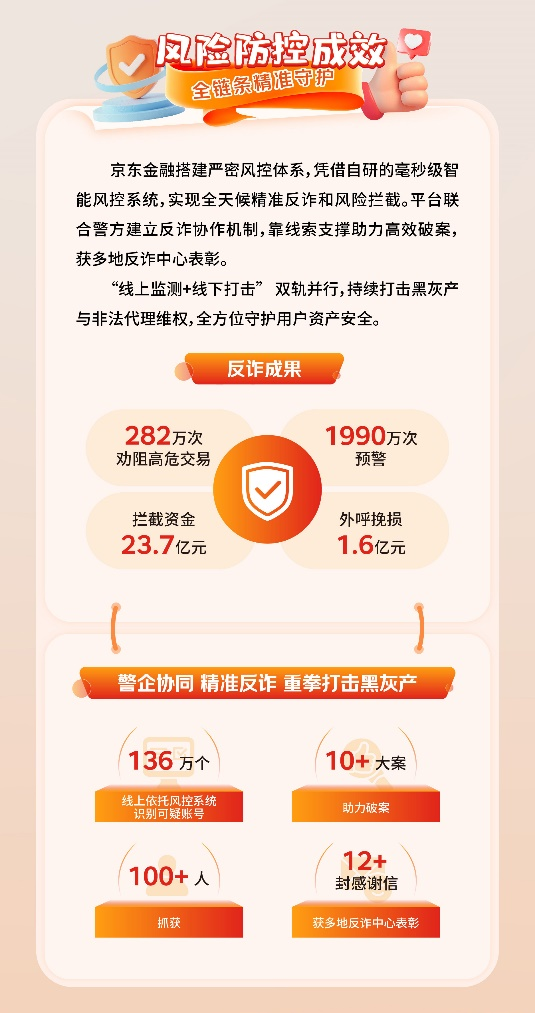
Core Insights - JD Finance has released its 2025 Consumer Rights Protection Annual Report, showcasing its commitment to "financial for the people" and achievements in "technology defense, service protection, and education promotion" [1][2] Group 1: Technology Defense - JD Finance has developed a closed-loop risk control system that includes "pre-event intelligent warning, in-event real-time interception, and post-event efficient loss recovery," ensuring user account and fund safety [2] - The company has achieved 19.9 million risk warnings, 2.82 million high-risk transaction interventions, intercepted funds amounting to 2.37 billion yuan, and recovered 160 million yuan through outbound calls [2][2] Group 2: Service Protection - JD Finance has expanded its payment services to over 100 leading enterprises, including 12306, Pizza Hut, and KFC, serving 600 million users [4][5] - The introduction of a "digital human live Q&A + knowledge popularization" service model has improved service accessibility and efficiency, with an average of over 500,000 daily services and a 98% accuracy rate for the AI customer service [5][5] - The company has implemented features for elderly users, such as a "large font version" and "voice assistant," along with a "children's binding" service to enhance safety for seniors [5] Group 3: Education Promotion - JD Finance has conducted various financial literacy activities through online and offline channels, focusing on fraud prevention, rational investment, and credit maintenance, reaching over 600 million people [8] - The "Qingbao Hui Chuan Wanli Xing" series of events organized by JD Finance has been recognized as an excellent case in financial consumer education, with over 30 offline events held throughout the year [8] - The company aims to continue enhancing its consumer rights protection system and contribute to a safe and inclusive financial ecosystem [8]

损害消费者合法权益 华住会被约谈
Xin Lang Cai Jing· 2026-02-11 09:28
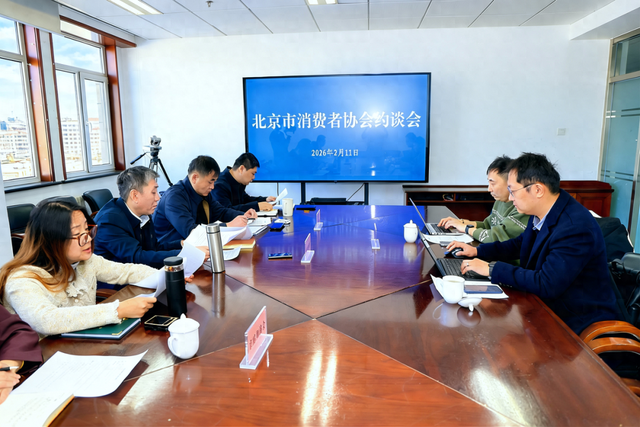
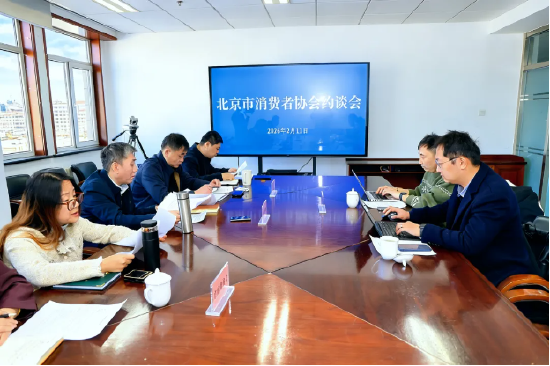
(来源:财闻) 北京市消费者协会对汉庭星空(上海)酒店管理有限公司进行约谈,要求其进行全面自查和限期整改。 据央视新闻,2月11日,针对华住会会员服务协议中涉嫌存在不公平格式条款的问题,依据相关规定, 北京市消费者协会对其运营方——汉庭星空(上海)酒店管理有限公司进行约谈,明确指出该公司相关 条款中涉嫌存在排除、限制消费者主要权利的情况,损害消费者的合法权益,并要求其进行全面自查和 限期整改。 此类条款不仅限制消费者依法维权的途径,而且破坏了公平的市场交易环境,基于上述情形,北京市消 协要求华住会高度重视消费者权益保护工作,明确提出三项具体整改要求。 ■ 立即整改格式条款 自约谈后10个工作日内,删除或修改协议中强制仲裁的相关内容,不得利用格式条款限制消费者依法选 择诉讼或仲裁解决消费争议的权利。 ■ 全面审查现有协议 "强制仲裁"被指限制消费者权利 据北京市消协调查发现,华住会2025年7月18日正式生效的《华住会个人会员计划与服务条款》第十一 条第(二)项内容"若协商不成的,您同意将争议提交至上海仲裁委员会按照该会仲裁规则进行仲裁", 存在利用格式条款不合理限制消费者主要权利的问题,涉嫌侵害消费者合法权益 ...
会员协议涉嫌存在不公平格式条款,华住会被约谈
Ren Min Ri Bao· 2026-02-11 09:11
Core Viewpoint - The Beijing Consumer Association has raised concerns regarding unfair terms in the Huazhu Club membership service agreement, particularly focusing on the mandatory arbitration clause that limits consumer rights [1][2]. Group 1: Consumer Rights Issues - The investigation by the Beijing Consumer Association revealed that the arbitration clause in the Huazhu Club's service terms restricts consumers' rights to pursue legal action in court, violating the Consumer Rights Protection Law [2]. - The clause mandates that disputes be resolved exclusively through the Shanghai Arbitration Commission, which is seen as an unreasonable limitation on consumers' legal rights [2]. Group 2: Rectification Requirements - The Beijing Consumer Association has outlined three specific rectification requirements for Huazhu Club: 1. Immediate removal or modification of the mandatory arbitration clause within 10 working days [3]. 2. Comprehensive review of all consumer-facing agreements to ensure compliance with legal standards [3]. 3. Establishment of a communication mechanism with consumers to gather feedback and involve them in rule-making processes [3]. Group 3: Industry Implications - The rectification actions taken by Huazhu Club are expected to set a precedent for industry practices, promoting a fairer market environment [4]. - The Beijing Consumer Association will monitor the implementation of these changes and may take further actions if compliance is not met, including public criticism and potential legal actions [4].
华住会被约谈,旗下有全季、汉庭、桔子等酒店品牌
Xin Lang Cai Jing· 2026-02-11 09:07
Core Viewpoint - The Beijing Consumers Association has conducted a meeting with Huazhu Club regarding unfair terms in its membership service agreement, highlighting potential violations of consumer rights and demanding a comprehensive self-examination and rectification within a specified timeframe [1][2]. Group 1: Unfair Terms and Consumer Rights - The investigation by the Beijing Consumers Association revealed that the service terms effective from July 18, 2025, contain a clause that limits consumers' rights by mandating arbitration through the Shanghai Arbitration Commission, thus infringing on their right to file lawsuits in court [2][12][13]. - The specific clause in question states that if negotiations fail, disputes must be submitted to the Shanghai Arbitration Commission, which is seen as an unreasonable restriction on consumer rights [12][13]. Group 2: Rectification and Oversight - The Beijing Consumers Association has outlined three rectification requirements for Huazhu Club and emphasized the need for enhanced supervision measures to ensure compliance [5][15]. - The association has called for Huazhu Club to recognize the issues at hand and to integrate respect for consumer rights into its business practices, aiming to foster a healthy and orderly development of the accommodation service industry [9][19]. Group 3: Company Overview - As of September 30, 2025, Huazhu Group operates over 30 brands and more than 12,000 hotels across more than 1,500 cities, including brands such as All Seasons, Hanting, Orange, Haiyou, and Manxin [9][19].
华住会被约谈
新华网财经· 2026-02-11 08:33
Core Viewpoint - The article discusses the unfair terms in the membership service agreement of Huazhu Club, highlighting the limitations imposed on consumer rights through mandatory arbitration clauses, which may violate consumer protection laws in China [2][5][7]. Group 1: Investigation and Findings - The Beijing Consumer Association conducted an investigation into Huazhu Club's membership service agreement, identifying clauses that potentially infringe on consumer rights by excluding or limiting their main rights [2][5]. - The specific clause in question mandates that disputes be submitted to the Shanghai Arbitration Commission, which restricts consumers' rights to file lawsuits in court as per the Civil Procedure Law of the People's Republic of China [5][7]. Group 2: Rectification Requirements - The Beijing Consumer Association has outlined three specific rectification requirements for Huazhu Club to address the identified issues [8]. - The first requirement is to immediately amend or remove the mandatory arbitration clause within ten working days, ensuring that consumers retain the right to choose between litigation or arbitration for dispute resolution [9]. - The second requirement involves a comprehensive review of all consumer-facing contracts and agreements to eliminate any unreasonable terms that restrict consumer rights [10]. - The third requirement suggests establishing a communication mechanism with consumers to regularly gather feedback and involve them in the formulation or modification of rules affecting their rights [11].


华住会被约谈
第一财经· 2026-02-11 08:22
2月11日,针对华住会会员服务协议中涉嫌存在不公平格式条款的问题,依据《中华人民共和国消费 者权益保护法实施条例》第四十条"消费者协会可以就消费者投诉的损害消费者合法权益的行为开展 调查,与有关经营者核实情况,约请有关经营者到场陈述事实意见、提供证据资料等"规定,按照中 国消费者协会《消协组织消费维权约谈经营者办法(试行)》,北京市消费者协会(以下简称"北京 市消协")对其运营方——汉庭星空(上海)酒店管理有限公司进行约谈,明确指出该公司相关条款 中涉嫌存在排除、限制消费者主要权利的情况,损害消费者的合法权益,并要求其进行全面自查和限 期整改。 通过格式条款"强制绑定"上海仲裁委员会为特 定仲裁机构,限制了消费者的维权途径,加重 消费者责任,属于《中华人民共和国消费者权 益保护法实施条例》第十七条规定的"不得利用 格式条款不合理地免除或者减轻其责任、加重 消费者的责任或者限制消费者依法变更或者解 除合同、选择诉讼或者仲裁解决消费争议、选 择其他经营者的商品或者服务等权利"情形。 明确三项整改要求,强化后续监督措施 此类条款不仅限制消费者依法维权的途径,而 北京市消费者协会约谈会 "强制仲裁"被指限制消费者权利 ...
北京市消费者协会依法约谈华住会
Yang Shi Xin Wen· 2026-02-11 07:59
Core Viewpoint - The Beijing Consumer Association has raised concerns regarding unfair terms in the Huazhu Club membership service agreement, particularly focusing on the mandatory arbitration clause that limits consumer rights [1][2]. Group 1: Investigation and Findings - The Beijing Consumer Association conducted an investigation and found that the arbitration clause in the Huazhu Club's service terms restricts consumers' rights to pursue legal action in court, violating the Consumer Rights Protection Law [2]. - The specific clause mandates that disputes must be submitted to the Shanghai Arbitration Commission, effectively removing the option for consumers to file lawsuits in court [2]. Group 2: Rectification Requirements - The Beijing Consumer Association has outlined three specific rectification requirements for Huazhu Club to address the identified issues [3]. - The first requirement is to delete or modify the arbitration-related content in the agreement within 10 working days, ensuring that consumers retain the right to choose between litigation and arbitration [4]. - The second requirement involves a comprehensive review of all consumer-facing contracts and agreements to eliminate any unreasonable terms that restrict consumer rights [5]. - The third requirement is to establish a communication mechanism with consumers to regularly gather feedback and involve them in the formulation or modification of rules affecting their rights [6]. Group 3: Industry Implications - The rectification actions are expected to set a precedent for industry practices, promoting a fair market environment and enhancing consumer rights protection [6]. - The Beijing Consumer Association will continue to monitor Huazhu Club's compliance with these requirements and may take further actions if the company fails to meet the deadlines, including public criticism and potential legal actions [6].
华住会因“强制仲裁”条款被北京市消协约谈
Bei Jing Shang Bao· 2026-02-11 07:42
Core Viewpoint - The Beijing Consumer Association has raised concerns regarding unfair terms in the membership service agreement of Huazhu Club, specifically pointing out clauses that limit consumer rights and require arbitration through a specific institution, which may infringe upon consumer rights [1][2] Group 1: Investigation and Findings - The Beijing Market Supervision Administration conducted an investigation into Huazhu Club's membership service agreement, identifying unfair format clauses that restrict consumer rights [1] - The specific clause in question mandates that disputes be submitted to the Shanghai Arbitration Commission, thereby limiting consumers' rights to pursue legal action in court [1] Group 2: Regulatory Actions and Requirements - The Beijing Consumer Association has issued three specific rectification requirements to Huazhu Club, including the immediate removal or modification of the arbitration clause within 10 working days [2] - A comprehensive review of all consumer-facing agreements and contracts is required to ensure compliance with legal standards and eliminate unreasonable restrictions on consumer rights [2] - The establishment of a consumer rights communication mechanism is recommended, including regular feedback collection from consumers and consultation prior to changes in consumer-related rules [2]
涉嫌限制消费者权利等,华住会被北京消协约谈
Xin Lang Cai Jing· 2026-02-11 07:27
Core Viewpoint - The Beijing Consumer Association has raised concerns regarding unfair terms in the Huazhu Club membership service agreement, particularly the mandatory arbitration clause that limits consumer rights [2][3][5]. Group 1: Investigation and Findings - The Beijing Consumer Association conducted an investigation into the Huazhu Club's membership service agreement, identifying that the clause requiring disputes to be submitted to the Shanghai Arbitration Commission restricts consumers' rights to pursue legal action in court [3][5]. - The specific clause in question, effective from July 18, 2025, was found to unreasonably limit consumer rights, violating the Consumer Rights Protection Law [3][5]. Group 2: Rectification Requirements - The Beijing Consumer Association has outlined three specific rectification requirements for Huazhu Club to address the identified issues [6]. - The first requirement is to delete or modify the arbitration clause within ten working days to ensure consumers can choose between litigation or arbitration for dispute resolution [7]. - The second requirement involves a comprehensive review of all consumer-facing contracts and agreements to eliminate any unreasonable terms that restrict consumer rights [8]. - The third requirement suggests establishing a communication mechanism with consumers to regularly gather feedback and involve them in the formulation or modification of rules affecting their rights [9]. Group 3: Industry Implications - The rectification actions taken by Huazhu Club are expected to set a precedent for industry practices, promoting a fairer market environment [9]. - The Beijing Consumer Association will continue to monitor the implementation of these rectification measures and may take further actions if compliance is not achieved [9].