港股科技

Search documents
11月18日港股科技30ETF(513160)份额减少200.00万份,最新份额42.00亿份,最新规模52.09亿元
Xin Lang Cai Jing· 2025-11-19 06:11
风险提示:市场有风险,投资需谨慎。本文为AI大模型自动发布,任何在本文出现的信息(包括但不 限于个股、评论、预测、图表、指标、理论、任何形式的表述等)均只作为参考,不构成个人投资建 议。 11月18日,港股科技30ETF(513160)跌1.36%,成交额5.99亿元。当日份额减少200.00万份,最新份额 为42.00亿份,近20个交易日份额增加4.12亿份。最新资产净值计算值为52.09亿元。 港股科技30ETF(513160)业绩比较基准为恒生港股通中国科技指数收益率(经估值汇率调整),管理人 为银华基金管理股份有限公司,基金经理为李宜璇,成立(2022-01-17)以来回报为24.03%,近一个月 回报为-2.27%。 来源:新浪基金∞工作室 ...
11月18日港股科技ETF(159751)份额增加1100.00万份
Xin Lang Cai Jing· 2025-11-19 03:47
Core Viewpoint - The Hong Kong Technology ETF (159751) experienced a decline of 1.96% on November 18, with a trading volume of 134 million yuan, indicating a downward trend in the technology sector [1] Group 1: Fund Performance - The total shares of the Hong Kong Technology ETF increased by 11 million to reach 1.145 billion shares, with a total increase of 89 million shares over the last 20 trading days [1] - The latest net asset value of the fund is calculated to be 1.253 billion yuan [1] - Since its inception on December 10, 2021, the fund has achieved a return of 9.51%, while the return over the past month has been -2.50% [1] Group 2: Management and Benchmark - The fund is managed by Penghua Fund Management Co., Ltd., with Zhang Yuxiang as the fund manager [1] - The performance benchmark for the Hong Kong Technology ETF is the CSI Hong Kong Stock Connect Technology Index return [1]
千问APP开启公测催化国产AI情绪!恒生科技ETF(513130)助力布局港股核心科技资产
Mei Ri Jing Ji Xin Wen· 2025-11-18 03:40
Group 1 - The core point of the article highlights the recent catalyst for domestic AI themes, particularly the launch of the "Qianwen" project by a leading internet company, which aims to compete in the AI to C market with the ChatGPT model [1] - The Qianwen APP, based on the Qwen3 open-source model, is expected to enhance the global competitiveness of domestic AI large models, especially with its free access and integration into various life scenarios [1] - The Hang Seng Technology ETF (513130) has seen significant net subscriptions, totaling 4.81 million shares, indicating strong market confidence in the future development of domestic large models [1] Group 2 - External uncertainties affecting the Hong Kong stock market are expected to diminish, as the U.S. government has resumed operations and key economic data will be released, reducing market volatility [1] - The Hang Seng Technology ETF (513130) has attracted substantial capital inflow, with 10 out of 11 trading days in November showing net inflows, accumulating 2.589 billion yuan, making it the only ETF tracking the Hang Seng Technology Index to exceed 2.5 billion yuan in net inflows during this period [1] - The Hang Seng Technology Index, which the ETF closely tracks, includes 30 strong R&D internet and technology companies, covering various sectors such as internet, software, automotive, and semiconductors, reflecting its comprehensive and representative nature [1] Group 3 - The current valuation of the Hang Seng Technology Index stands at a price-to-earnings ratio of 22.26, which is significantly lower than the NASDAQ's 40.89 and the STAR Market's 152.11, indicating potential investment value [1] - Domestic concerns regarding an AI bubble have impacted the A-share technology sector, but it is considered premature to declare an AI bubble, as the technology industry trend remains strong [1] - The Hang Seng Technology ETF (513130) is positioned as a key tool for investors looking to allocate to core assets in the Hong Kong technology sector, supported by its large scale and superior liquidity [1]
内外环境共振,美联储降息+中国经济韧性,港股科技四季度弹性拉满
Sou Hu Cai Jing· 2025-11-18 03:25
Core Viewpoint - The investment value of the Hong Kong technology sector is increasingly highlighted in the fourth quarter due to the resonance of internal and external factors [1] External Factors - The Federal Reserve has initiated a preemptive interest rate cut cycle, historically indicating that Hong Kong stocks exhibit significant elasticity, with the technology sector being the first to benefit as a growth asset [1] Internal Factors - China's economy shows unexpected resilience, with a GDP growth rate of 5.3% in the first half of the year, providing solid fundamental support for the technology sector [1] - The dual benefits of global liquidity easing and domestic industrial upgrades further expand the growth potential of the Hong Kong technology sector, which is expected to experience a robust market in the fourth quarter [1] Related ETFs - Hong Kong Stock Connect Technology ETF (159101) covers the entire technology industry chain [1] - Hang Seng Internet ETF (513330) focuses on leading internet companies [1]
11月14日港股科技30ETF(513160)份额增加400.00万份
Xin Lang Cai Jing· 2025-11-17 01:05
风险提示:市场有风险,投资需谨慎。本文为AI大模型自动发布,任何在本文出现的信息(包括但不 限于个股、评论、预测、图表、指标、理论、任何形式的表述等)均只作为参考,不构成个人投资建 议。 11月14日,港股科技30ETF(513160)跌2.45%,成交额6.01亿元。当日份额增加400.00万份,最新份额 为42.02亿份,近20个交易日份额增加4.10亿份。最新资产净值计算值为53.15亿元。 来源:新浪基金∞工作室 港股科技30ETF(513160)业绩比较基准为恒生港股通中国科技指数收益率(经估值汇率调整),管理人 为银华基金管理股份有限公司,基金经理为李宜璇,成立(2022-01-17)以来回报为26.49%,近一个月 回报为-3.41%。 ...
调整过后,港股科技怎么看?
Xin Lang Cai Jing· 2025-11-13 10:10
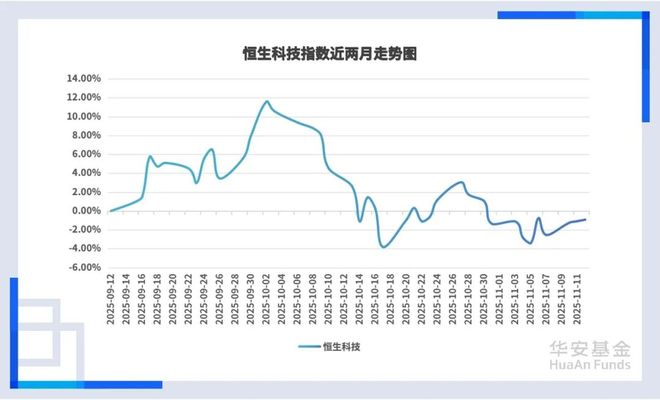
Core Viewpoint - The Hong Kong technology sector has entered an adjustment phase, with the Hang Seng Technology Index experiencing a decline of over 8% from October 2 to November 12 [1] Group 1: Reasons for Recent Adjustment - The US dollar index has strengthened, rising from 96 to 100 since September 17, creating liquidity pressure on the Hong Kong market, particularly affecting technology assets sensitive to capital flows [3] - The US government shutdown for 42 days has led to the interruption of key economic data releases, causing global funds to flow out of interest-rate-sensitive Hong Kong technology assets [5] - Investors are switching styles, with some choosing to take profits as the Shanghai Composite Index approaches the psychological level of 4000 points, reallocating funds to lower-volatility, dividend-stable assets, which has put short-term selling pressure on the Hong Kong technology sector [6] Group 2: Long-term Outlook for Hong Kong Technology - The long-term outlook for Hong Kong technology remains supported, as the Federal Reserve's interest rate cut cycle is not yet over, and a long-term weakening of the US dollar is likely [8] - The current price-to-earnings ratio (PE-TTM) of the Hang Seng Technology Index is 23.08, lower than other major global technology indices, indicating a higher investment value [9] Group 3: Investment Tools for Hong Kong Technology - The company offers two ETFs tracking the Hong Kong index: the Huaan Hang Seng Internet Technology ETF and the Huaan Hang Seng Technology ETF, which can be used to gain exposure to the Hong Kong technology sector [12] - The Hang Seng Internet Technology Index focuses on leading internet companies in Hong Kong, with a high industry concentration and a current fund size of 1.39 billion [13] - The Hang Seng Technology Index has a broader industry distribution, covering new energy vehicles and semiconductors, and serves as a core tool for overall exposure to the Hong Kong technology sector [13]

南向资金大举加仓港股,港股科技30ETF(513160)拉升翻红,近5日累计“吸金”超1.3亿元
2 1 Shi Ji Jing Ji Bao Dao· 2025-11-12 02:14
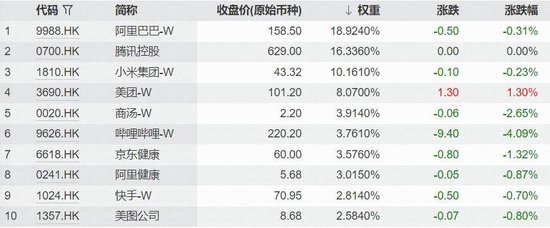
Group 1 - The Hong Kong stock market indices opened higher on November 12, with active performance from certain technology stocks, particularly the Hong Kong Technology 30 ETF (513160) which rose by 0.31% during the session with a trading volume exceeding 780 million HKD [1] - Notable gainers among the constituent stocks included Xiaomi Group-W, which increased by over 2%, along with other companies like AAC Technologies and Sunny Optical Technology, each rising by more than 1% [1] - The Hong Kong Technology 30 ETF has seen continuous net inflows over the past two trading days, accumulating over 18 million HKD from November 10 to 11, and over 1.3 billion HKD in the last five trading days [1] Group 2 - The Hong Kong Technology 30 ETF closely tracks the Hang Seng Hong Kong Stock Connect China Technology Index, which includes mainland companies engaged in technology business and listed in Hong Kong, with top holdings including SMIC, Kuaishou-W, Tencent Holdings, Alibaba-W, and Xiaomi Group-W [1] - Significant inflows from southbound funds have been observed, with a net purchase amount reaching 6.653 billion HKD on November 10, marking the 14th consecutive trading day of net buying in Hong Kong stocks [1] - Year-to-date, southbound funds have net purchased over 1.3 trillion HKD in Hong Kong stocks, setting a new annual record since the launch of the Hong Kong Stock Connect in 2014, significantly surpassing last year's total net purchases [1] Group 3 - According to Huaxi Securities, the main focus for net inflows in cross-border ETFs in November has been on Hang Seng Technology and Hong Kong innovative pharmaceuticals, indicating a potential stabilization in these sectors [2] - Guotai Junan Securities highlighted the importance of monitoring the U.S. government reopening and economic data in the short term, while suggesting that the influx of new capital and the gathering of quality assets in the Hong Kong market could lead to new highs, with technology stocks being a key focus [2]





南向资金单日超百亿净买入,阿里、小米包揽加仓TOP2!关注低估港股科技,513770连续吸金逾5亿元
Xin Lang Ji Jin· 2025-11-06 01:21
Core Viewpoint - The Hong Kong stock market experienced a collective decline on November 5, influenced by a drop in U.S. stocks, with the Hang Seng Tech Index falling over 2% at one point, although losses narrowed in the afternoon [1]. Group 1: Market Performance - The Hang Seng Tech Index saw significant volatility, reflecting broader market trends influenced by U.S. stock performance [1]. - Southbound funds showed strong buying interest, with a net purchase of HKD 10.373 billion on the day, particularly in Alibaba and Xiaomi, which attracted net inflows of HKD 0.891 billion and HKD 0.651 billion, respectively [2][3]. Group 2: Fund Flows - Year-to-date, southbound funds have accumulated a net inflow of nearly HKD 1.3 trillion, marking a historical high for annual net inflows and becoming a crucial support for the Hong Kong stock market [3]. - As of November 4, southbound funds held over HKD 650 billion in Tencent and over HKD 360 billion in Alibaba, indicating strong positions in leading tech stocks [3]. Group 3: Valuation Insights - According to China Merchants Securities, the valuation of the Hang Seng Tech Index remains at historically low levels, with significant room for valuation recovery compared to global indices [4]. - The China Securities Index for Hong Kong Internet stocks has a current P/E ratio of 24.44, which is below the historical average and significantly lower than the Nasdaq 100 and ChiNext indices [4][5]. Group 4: ETF and Investment Trends - The Hong Kong Internet ETF (513770) has seen substantial inflows, with a net inflow of HKD 507 million over the past five days, indicating strong investor interest [6]. - The top holdings in the China Securities Index for Hong Kong Internet stocks include Alibaba, Tencent, and Xiaomi, which together account for over 46% of the index [8].
国泰海通晨报:证券研究报告-20251104
GUOTAI HAITONG SECURITIES· 2025-11-04 03:18
Group 1: Electronic Components - The report highlights that DeepSeek will accelerate the penetration of domestic AI applications and boost the demand for domestic computing power [2][25]. - Investment recommendations include companies such as Cambrian-U, Haiguang Information, SMIC, Zhaoyi Innovation, and Shengke Communication-U, with related companies like Chipone [2][25]. - The AI narrative is evolving rapidly, with token usage increasing exponentially, indicating a strong growth trajectory for the sector [23]. Group 2: Overseas Technology - The semiconductor industry is experiencing accelerated upgrades driven by AI and data center construction, with a forecasted 5.4% growth in global silicon wafer shipments in 2025, reaching 128.24 billion square inches [3]. - The demand for AI is a major driver for this growth, particularly in data centers and edge computing, which will benefit silicon wafer manufacturers and equipment suppliers [3]. - The report notes that the current supply of silicon wafers is recovering from a downturn, and if AI demand materializes as expected, capacity utilization for related manufacturers will continue to rise [3]. Group 3: China National Airlines - The company demonstrated strong profitability in Q3 2025, achieving a net profit of 3.7 billion yuan despite a 11% year-on-year decline, showcasing resilience and potential for growth [7][8]. - The company plans to raise 20 billion yuan through a private placement to optimize its capital structure and reduce leverage, which is expected to enhance financial stability [9][10]. - The airline's network and customer quality are among the best in the industry, and the ongoing optimization is likely to drive an increase in profitability [10].
“申”挖数据 | 资金血氧仪
申万宏源证券上海北京西路营业部· 2025-10-28 02:25
Group 1 - The main point of the article highlights a significant outflow of main funds from the market, totaling 2716.97 billion yuan over the past two weeks, with no industry experiencing net inflows [5][8]. - The top three industries with the largest net outflows of main funds are electronics, electric equipment, and non-ferrous metals, with outflows of 425.02 billion yuan, 375.46 billion yuan, and 296.14 billion yuan respectively [5][8]. Group 2 - The current margin trading balance stands at 24510.45 billion yuan, reflecting a slight increase of 0.22% compared to the previous period, with a financing balance of 24339.24 billion yuan and a securities lending balance of 171.21 billion yuan [9][13]. - The average daily trading volume for margin trading is 2263.96 billion yuan, which is a decrease of 18.10% from the previous period, with net buying in financing dropping by 18.23% [13][9]. - The top three industries for net buying in financing over the past two weeks are non-ferrous metals, defense and military, and pharmaceutical biology [5][9]. Group 3 - The overall market saw more declining stocks than rising ones in the past two weeks, with the banking, coal, and communication sectors showing the highest gains, while the basic chemicals, agriculture, forestry, animal husbandry, and automotive sectors experienced the largest declines [5][21]. - The strength analysis score for all A-shares is 4.91, indicating a neutral market condition, with the Shanghai and Shenzhen 300 index scoring 4.59, and the ChiNext scoring 4.33 [5][27].