私募股权

Search documents
杉域资本:2025《新材料行业GP图谱》发布
FOFWEEKLY· 2025-07-23 10:06
Core Viewpoint - The development of the new materials industry is crucial for enhancing new productivity and fostering new growth momentum, as highlighted by the joint issuance of the "New Materials Big Data Center Overall Construction Plan" by the Ministry of Industry and Information Technology, the Ministry of Finance, and the National Bureau of Statistics [3][4]. Financing Overview - In 2024, there were a total of 237 financing events in the new materials industry, including 61 seed/angel rounds, 128 A rounds, 40 B-C rounds, and 8 D-Pre-IPO rounds, indicating a strong focus on projects with mass production potential after completing technology prototypes [5]. - The financing activity is concentrated in specific regions, with Jiangsu Province leading with 57 financing events, followed by Zhejiang (46), Guangdong (41), and Shanghai (27), with the Yangtze River Delta accounting for 59% of the total [7]. Project Segmentation - Financing distribution by project type shows that electronic information materials account for 25%, structural materials for 22%, functional materials for 16%, biomedical materials for 16%, and energy materials for 11%, driven by demand from semiconductor localization and AI, as well as new energy vehicles [9]. GP Selection Process - The first screening identified 33 GP institutions from 1,523 investment institutions that are relevant to the new materials sector, based on investment activity and focus [11]. - The peak period for the establishment of GPs in the new materials sector was between 2015 and 2016, indicating a significant increase in investment institutions during that time [13]. GP Background Analysis - Most GPs in the new materials sector are privately funded, with 20 being fully privately owned, 2 state-owned, 4 industry-related, and 7 mixed ownership [15][16]. Investment Focus - The final selection of GPs resulted in 18 institutions that are highly focused and specialized in the new materials industry, following a rigorous two-round screening process [17]. - The management scale of these GPs is balanced across various ranges, with 3 in the 500-1,000 million range, 5 in the 1,000-2,000 million range, 5 in the 2,000-5,000 million range, and 5 in the 5,000-10,000 million range, indicating a diverse management scale [19]. Investment Stage Focus - The GPs primarily focus on early-stage investments, with a significant portion of their investments in seed and A rounds, reflecting a strategy aimed at early-stage project development [22]. Performance Metrics - Key performance indicators for GPs include lead investment rates, independent investment rates, follow-up rates, and IPO counts, which are essential for assessing the investment and exit capabilities of these institutions [24][26][30][32]. Conclusion - The report aims to assist LPs in quickly understanding the active GPs in the new materials industry, narrowing down potential investment institutions, and providing comparative insights into their positions within the sector [36].


X @外汇交易员
外汇交易员· 2025-07-10 06:19
Investment Strategy - Hong Kong Jockey Club, one of Hong Kong's largest asset allocators, plans to sell up to $1 billion of its US assets [1] - The assets for sale are primarily US-based, involving private equity firms including Blackstone, TA Associates Management LP, Warburg Pincus, and Clayton Dubilier & Rice [1] Market Trends & Risk Aversion - Approximately 10 Asian ultra-high-net-worth family offices and advisory firms have reduced or paused investments in the US market [1] - This reduction is to avoid systemic risks arising from political and policy uncertainties [1]
中东资金分层级涌向香港
36氪· 2025-06-19 09:10
Core Viewpoint - Hong Kong is projected to become the world's largest cross-border asset and wealth management center by 2027, driven by geopolitical dynamics, technological transformation, and green transition [4][8]. Group 1: Hong Kong's Role as a Capital Gateway - Hong Kong is increasingly recognized as a strategic capital gateway between the Middle East and Asia, particularly China, due to its close ties with mainland China [3][4]. - Middle Eastern capital is entering the Asian market through three levels: primary market cooperation, pre-IPO and private equity investments, and family office capital strategies [5][6]. Group 2: Financial Market Developments - The Hong Kong Stock Exchange (HKEX) has integrated with the Saudi Stock Exchange and other Middle Eastern markets, enhancing product and capital flows [6][7]. - In 2024, two ETFs tracking Hong Kong stocks will be listed on the Saudi Stock Exchange, indicating product innovation and deeper market connections [6][9]. Group 3: Growth of Family Offices - Over 2,700 family offices have established headquarters in Hong Kong, with half managing assets exceeding $50 million, reflecting the city's appeal for international family capital [8][10]. - Middle Eastern family offices are increasingly interested in investing in mainland China, with 18% planning to increase their investments there [10]. Group 4: Economic and Trade Relations - The number of Middle Eastern companies in Hong Kong increased by over 20% year-on-year in 2024, supported by strong trade relations and mutual economic benefits [7][9]. - Bilateral trade between Hong Kong and the Middle East has grown approximately 48% over the past five years, reaching about HKD 188.1 billion [9]. Group 5: Islamic Finance Opportunities - Hong Kong has been proactive in developing Islamic finance, issuing $3 billion in various Islamic bonds since 2007, and is looking to attract more Middle Eastern investments [12][13]. - The integration of Islamic finance principles with sustainable development goals is becoming a focus for Middle Eastern family offices, with about one-third practicing Islamic finance [11].

美债将迎“最终清算”!“新债王”预警:美债崩盘将触发美元资产逃离潮
Zhi Tong Cai Jing· 2025-06-11 23:24
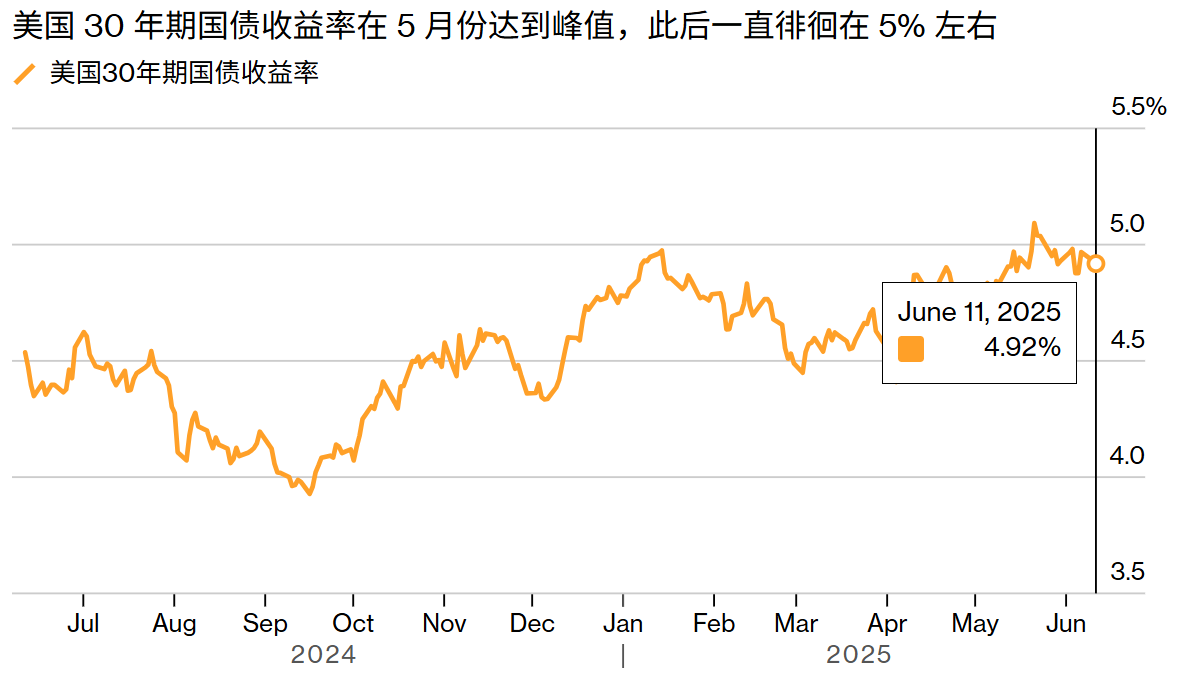
Group 1 - Jeffrey Gundlach, CEO of DoubleLine Capital, warns that the U.S. debt burden and interest payments have become unsustainable, potentially leading investors to withdraw from dollar assets [1] - Gundlach suggests that long-term U.S. Treasuries are no longer a viable safe-haven asset, indicating an impending "liquidation moment" [1] - The current market environment is compared to the pre-burst of the 1999 internet bubble and the 2006-2007 global financial crisis, with a booming private credit market reminiscent of the mid-2000s CDO market [1][3] Group 2 - Gundlach highlights that recent months have seen public credit markets outperform private markets, which he believes are facing risks of over-investment and forced selling [1] - He notes that institutions like Harvard University may consider selling private equity holdings due to funding cuts from the Trump administration [2] - As of March, DoubleLine Capital manages $93 billion in assets, with over 250 employees [2] Group 3 - Gundlach predicts that long-term bond yields may continue to rise, potentially reaching 6%, which could prompt the Federal Reserve to initiate quantitative easing [3] - The 30-year U.S. Treasury yield recently reached a near 20-year high of 5.15% last month, currently reported at 4.91% [4] Group 4 - Gundlach increasingly favors gold as a "real asset class," suggesting a paradigm shift in capital flows away from the U.S. [7] - He forecasts that gold prices could rise from $3,350 to $4,000 per ounce [7] - Gundlach identifies India as a long-term investment opportunity, likening its current economic characteristics to those of China 35 years ago [7]
耶鲁大学接近达成协议,将出售至多25亿美元私募股权。
news flash· 2025-06-04 18:05
Core Insights - Yale University is nearing an agreement to sell up to $2.5 billion in private equity [1] Group 1 - The potential sale represents a significant move in Yale's investment strategy, indicating a shift towards liquidity [1] - The transaction could impact the private equity market, as it involves a substantial amount of capital [1] - This decision may reflect broader trends in institutional investment behavior, particularly among universities [1]
消费爆了,有机构募了110亿美元
投中网· 2025-05-30 03:32
将投中网设为"星标⭐",第一时间收获最新推送 消费的热度又拉升了起来。 作者丨 纪佳文 编辑丨 刘燕秋 来源丨 投中网 5 月 28 日,全球投资机构 L Catterton 宣布, 其在最新一轮融资中已筹集约 110 亿美元的资本承诺总额,其中包括超过 67.5 亿美元的旗舰并购策略基金、信贷基金的首关,和成长基金五期、欧洲基金五期、新的日本和中国境内基金的终关等。 投资人涵盖了主权财富基金、养老金、捐赠基金、家办及高净值个人等。 近两年的人民币基金市场上,尽管 KKR 、华平、科勒资本等外资颇为活跃,但贝恩公司最新的私募股权报告显示,人民币 基金占去年亚太地区收购基金募集资金的 43% ,高于 2022 年的 27% ,但仍低于之前五年 59% 的平均份额。 再说消费这个主题,虽说这是个长坡厚雪的赛道,今年又跑出了个"港股三姐妹",把消费的热度又拉升了起来。不过就我最 近跟投资人和 FA 朋友的交流,因为前两年被"伤得太深",一些投资机构彻底离场,也可以说是"被出清了"。 在广袤的中国市场上, L Catterton 想必已经蹚出了经验。更重要的,眼下竞争少了,还留在牌桌上的机构反而可以活得更 舒适。因此 ...

中叶私募:直接投资与私募股权,资本运作的黄金搭档
Sou Hu Cai Jing· 2025-05-29 07:11
Core Viewpoint - Direct investment and private equity are key elements in capital operations, complementing each other to drive corporate growth and market prosperity [1][3][5] Group 1: Direct Investment - Direct investment serves as an important funding source for corporate growth, allowing investors to inject capital directly into companies in exchange for equity or assets [1][3] - This investment model provides stable funding support, enabling companies to undertake projects and expand their business [1][3] - Investors must possess keen risk insight and strong response capabilities to navigate market uncertainties and operational challenges [1][3] Group 2: Private Equity - Private equity operates with a professional approach, relying on experienced fund managers to gather capital for investments in non-listed companies [3][4] - Investors conduct thorough due diligence across various dimensions, including financial status, market prospects, and management teams, to ensure capital safety and stable returns [3][4] - In addition to funding, private equity offers management optimization consulting and market expansion planning, enhancing the overall competitiveness of companies [3][4] Group 3: Synergy of Direct Investment and Private Equity - The collaboration between direct investment and private equity creates a powerful capital operation synergy, especially beneficial during the startup phase of companies [3][4] - As companies grow, private equity's long-term operational experience and strategic planning capabilities help optimize internal structures and broaden market channels [3][4] - This tailored capital operation model meets the funding and management needs of companies at different growth stages, providing comprehensive support for rapid development [3][4] Group 4: Market Impact - The integration of direct investment and private equity plays a crucial role in the prosperity of the market economy, attracting substantial social capital into the real economy [4][5] - Direct investment injects continuous vitality into the development of the real economy, while private equity guides capital towards high-growth potential enterprises, stimulating innovation and driving industry upgrades [4][5] - Together, they promote a virtuous cycle and continuous evolution of the market ecosystem [4][5]

2025年5月荐书 | 究理通变,胜算在握
Di Yi Cai Jing· 2025-05-26 09:33
Group 1 - The article emphasizes the importance of understanding complex economic phenomena and the underlying logic to seize investment opportunities and mitigate risks [1] - It highlights three selected books that illustrate the significance of knowledge, experience, and logic in the investment field [1] Group 2 - "Understanding Today's World: 90 Economic Questions" by Robert Solow discusses the universal relevance of economics in daily life, covering topics from personal finance to national development [2][4] - The book presents economic concepts in simple language, avoiding complex mathematical formulas, to help readers grasp economic principles [4][5] Group 3 - "2+20: Why Private Equity Can Outperform the Market" by Sachin Kajiulia explores the operational mechanisms of private equity, including project selection, due diligence, and post-investment management [7][9] - The book explains the "2+20" fee structure, which consists of a 2% management fee and a 20% profit share, as a fundamental principle of the private equity industry [9][10] Group 4 - "Reverence and Irreverence: The Autobiography of Sam Zell" details the transformative impact of Sam Zell on the real estate industry and his role in popularizing REITs as a recognized investment tool [12][14] - The autobiography illustrates Zell's entrepreneurial spirit, emphasizing the importance of risk-taking, market insight, and innovative thinking in business [14][15]

巴菲特:人生有些篇章,藏着你一生的好运
聪明投资者· 2025-05-25 01:56
Core Viewpoint - Warren Buffett will not take the main stage at the upcoming shareholder meeting, as confirmed by his daughter Susan, indicating a shift in leadership dynamics at Berkshire Hathaway [1] Group 1: Shareholder Meeting Arrangements - Susan Buffett mentioned that if health permits, Warren Buffett will sit in the front row with other board members and executives during the next shareholder meeting [1] - Greg Abel revealed that the announcement regarding the shareholder meeting's new arrangements was made due to numerous inquiries from suppliers and stakeholders about the future direction of the meeting [1] - The 2026 Berkshire Hathaway shareholder meeting is scheduled for May 2, with a Q&A session planned for that morning, and further details will be released in early next year alongside the annual report [1] Group 2: Emotional Impact - Susan noted that many attendees were emotional during Warren Buffett's last address at the shareholder meeting, highlighting the memorable atmosphere of the event [1]
“聪明资金”怎么看市场?科威特投资局掌门人与霍华德·马克斯的交流,深谈风险、人工智能与私募股权领域
聪明投资者· 2025-05-22 07:04
Core Viewpoint - The best way to invest in AI for sovereign funds and large capital allocators is to invest in AI infrastructure, such as data centers, energy, electricity, and network connectivity [1][72]. Group 1: Investment Philosophy - Long-term investors should ignore short-term market noise and focus on identifying global opportunities where the market misjudges risk [7][8]. - Successful investment requires a clear long-term strategy, a rigorous execution process, a capable team, and the courage to make decisive choices when opportunities arise [7][8]. - Risk awareness and understanding what is suitable for the institution are more important than merely pursuing maximum returns [18][22]. Group 2: Private Equity Challenges - The private equity industry has accumulated significant issues over the past few years, including valuation expansion, leverage use, and exit bottlenecks, which are now becoming real pressures [3][50]. - There are three core issues in private equity: weak due diligence, lack of exit options, and "scale drift" where fund sizes grow without a corresponding increase in target investments [51][52]. - Approximately $3 trillion in private equity portfolio companies have not exited, and many are approaching the end of their fund lifecycle, creating a perfect storm for the industry [54][60]. Group 3: U.S. Market Position - Reducing exposure to the U.S. market requires careful consideration of the consequences, as the U.S. still has the largest fixed income, private equity, real estate, infrastructure, and credit markets [27][31]. - The U.S. remains an attractive investment destination due to its vibrant economy, respect for free markets, and strong capital markets [34][35]. Group 4: Public vs. Private Markets - In public markets, the biggest risk comes from index investing, where the top five stocks in the S&P 500 now account for nearly 30% of the index, creating a concentration risk [42][43]. - Active management is making a comeback as investors seek to avoid risks associated with concentrated positions in public markets [46]. - In private markets, the current environment is challenging, with many funds struggling to exit investments, leading to a focus on secondary markets as a potential solution [62]. Group 5: AI Investment Strategies - Investing in AI should focus on infrastructure enablers rather than direct investments in AI companies, as the latter may carry higher risks [72][73]. - A smart investment approach in AI infrastructure could involve structured deals that resemble debt investments, providing stable returns with lower risk [76][77]. Group 6: Learning from Mistakes - Acknowledging and learning from mistakes is crucial for investment success, emphasizing the importance of refining processes rather than relying on luck [83][84]. - Good investment decisions often involve patience and the choice to refrain from acting in uncertain situations [86].