算法

Search documents
中国足球还是靠机器人吧!首届机器人运动会闭幕:票价终究保守了
量子位· 2025-08-18 09:16
Core Viewpoint - The article highlights the success of the Tsinghua Fire God team in the World Humanoid Robot Games, showcasing advancements in robotics through competitive events, particularly in a 5v5 soccer match where robots operated autonomously [1][21]. Group 1: Event Highlights - The Tsinghua Fire God team won against a humanoid robot version of the German team with a score of 1-0, attributed to a unique "shooting" algorithm that only they had mastered among 50 participating teams [2][25]. - The event featured a variety of competitions, including a 100-meter obstacle race where a robot named Yushu won with a time of 33.71 seconds [8][5]. - The competition included 26 events with a total of 487 matches, showcasing the excitement and technological advancements in robotics [32][33]. Group 2: Technical Insights - The 5v5 soccer match was the first of its kind, with all robots acting autonomously, which increased the complexity of the competition [21][24]. - Each robot was equipped with four cameras for visual perception and distance analysis, allowing them to make quick decisions within 0.1 milliseconds [27][28]. - Strategies varied between teams, with the German team employing a solid defense while the Fire God team utilized a more flexible approach, highlighting the importance of teamwork and algorithmic intelligence in determining the outcome [30][29].


这个“国企开放日”带你揭秘电力应急“尖兵”如何养成
Sou Hu Cai Jing· 2025-08-17 05:58
Core Viewpoint - Guangdong Power Grid Company is enhancing its emergency response capabilities through advanced technology and training, aiming to effectively manage natural disasters and ensure reliable power supply [2][15][19]. Group 1: Emergency Preparedness and Response - Guangdong Power Grid has established a national-level power emergency base and research center, focusing on disaster prevention, response, and recovery [2][6]. - The company effectively responded to multiple natural disasters, including Typhoon "Mojia" and severe flooding, receiving widespread acclaim for its efforts [2][6]. - In 2024, the company mobilized over 42,530 personnel and 13,127 repair vehicles to restore power to over 1.04 million users within 10 days after Typhoon "Mojia" [7]. Group 2: Technological Advancements - The company utilizes advanced technologies such as drones and satellite communication to enhance disaster response efficiency [14][15]. - During the recent flooding in Huai Ji, the company deployed over 2,500 personnel to restore power to 49,700 households within 72 hours [13]. - The integration of AI, big data, and digital platforms has improved the company's disaster management capabilities, allowing for more scientific prevention and efficient recovery [15][19]. Group 3: Training and Human Resources - Guangdong Power Grid has implemented a quasi-military training mechanism for its emergency response teams, ensuring 24/7 readiness [19]. - The company is focused on building a skilled workforce capable of rapid deployment during emergencies, contributing to the overall safety and reliability of energy supply in the Guangdong-Hong Kong-Macao Greater Bay Area [19].
AI时代,算法挑拨离间所有人的关系
3 6 Ke· 2025-08-06 03:13
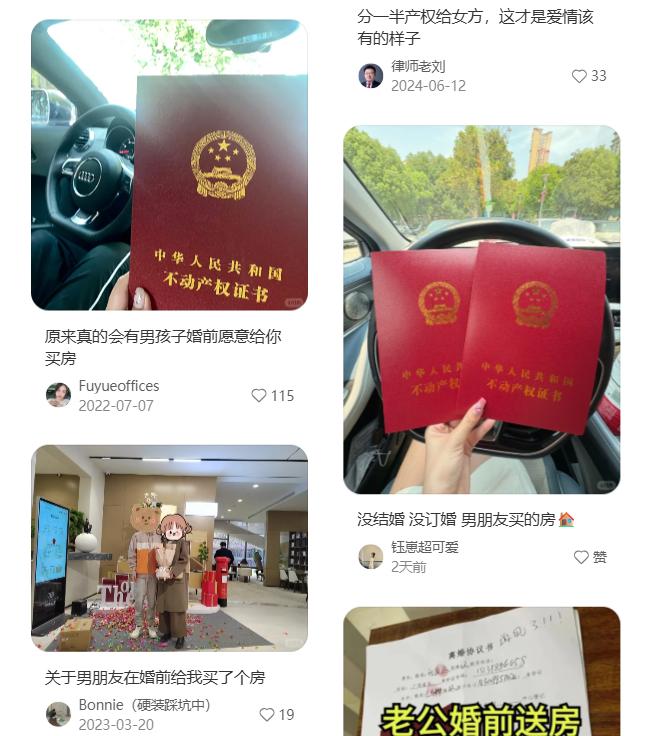
Group 1 - The article discusses the rising tensions surrounding gender conflicts, particularly highlighted by a recent incident involving two university students, which has sparked public debate [1] - A case study involving two young individuals, A and B, illustrates how modern relationship expectations, such as high bride prices and pre-marital property gifts, are influenced by social media [2][5] - The influence of social media platforms, particularly algorithms, is noted for amplifying extreme cases and altering traditional cultural norms regarding marriage and relationships [6][7] Group 2 - The article emphasizes that the current generation, particularly those born after 2000, exhibits increased distrust between genders, exacerbated by online communities and extreme narratives [6][9] - It highlights how algorithms on social media can intensify personal grievances and biases, leading to a cycle of distrust and conflict in relationships [7][10] - The phenomenon of "comparing and despairing" is discussed, where individuals feel inadequate by constantly comparing their lives to curated online personas, leading to a sense of isolation and dissatisfaction [12][13]
废掉一个人最隐蔽的方式:让他一直困在自己的算法里
洞见· 2025-08-04 12:34
Core Viewpoint - The article discusses the impact of algorithms on individual thought processes and societal perspectives, emphasizing how they create "information cocoons" and "echo chambers" that limit exposure to diverse viewpoints [4][16][31]. Group 1: Algorithmic Influence - Algorithms filter information based on user preferences, leading to a narrow understanding of the world and reinforcing existing biases [5][16]. - The "filter bubble effect" occurs when algorithms exclude opposing viewpoints, trapping users in a limited informational environment [16]. - The "echo chamber effect" results in users only hearing opinions that align with their own, further entrenching their beliefs and reducing critical thinking [18][32]. Group 2: Consequences of Information Isolation - Individuals often prefer emotional validation over complex reasoning, leading to a reliance on simplistic narratives [22][23]. - The article highlights a personal anecdote about a young individual who, influenced by algorithm-driven content, dismisses traditional educational paths in favor of sensationalized success stories [26][28]. - The prevalence of "toxic positivity" in media can mislead individuals into believing that superficial solutions are valid, ultimately hindering personal growth [29][30]. Group 3: Breaking Free from Cognitive Constraints - To counteract the effects of algorithmic influence, individuals should engage with diverse literature and viewpoints, fostering a broader understanding of the world [34][35]. - The article cites characteristics of "closed-minded individuals," emphasizing the importance of being open to challenges and differing opinions [35][36][40]. - It warns against becoming a "pet person," someone who lacks independent thought and is overly reliant on algorithmic validation [43][46].

对话地平线陈黎明:不应该无限制地去追求算力的增长
Zhong Guo Jing Ying Bao· 2025-08-01 15:21
Core Insights - The Chinese automotive industry is undergoing a significant transformation towards intelligence, with smart driving becoming the main engine for industry upgrades, shifting focus from mere existence to performance and efficiency [2][3] - The smart driving sector is experiencing rapid advancements, particularly in application innovation, marking a turning point for mid-to-high level autonomous driving [8][9] Industry Trends - The future of the smart driving industry is promising, but challenges remain, with only 3 to 4 major technology providers expected to survive in the long run [3][19] - The concept of "smart driving equality" proposed by companies like BYD is seen as a necessary trend that will drive technological development and reduce costs in the smart driving sector [9] Company Insights - Horizon Robotics, under the leadership of President Chen Liming, plays a crucial role in the smart driving industry, focusing on providing intelligent driving solutions [2][4] - The company emphasizes a "soft and hard synergy" approach, recognizing that deep integration of software and hardware is essential for achieving high performance and cost-effectiveness in smart driving technologies [14][15] Technological Development - The industry is currently in a rapid iteration phase, with ongoing innovations in algorithms and increasing demands for computing power, as evidenced by Horizon's flagship chip, which has significantly improved performance metrics [11][12] - The need for efficient engineering capabilities to translate technology into cost-effective products is highlighted as a critical challenge for the industry [14] Future Outlook - The ultimate goal for the smart driving industry is the realization of L4 and L5 level autonomous driving, which would transform vehicles into mere transportation tools, enhancing productivity and leisure during commutes [17][18] - The competitive landscape will likely see a division of labor where most automotive companies will rely on capable suppliers, rather than pursuing full-stack self-development [18][19]
代差之下:汽车算力基建竞逐的AB面
Zhong Guo Qi Che Bao Wang· 2025-07-31 03:24
Core Insights - The automotive industry is increasingly focused on the computational power required for intelligent assisted driving, with Tesla leading in this area due to its early investments in self-developed chips and high-performance computing systems [2][3][4] Group 1: Tesla's Technological Leadership - Tesla's Dojo system, launched in July 2023, is designed to handle vast amounts of video data collected from its global fleet, processing approximately 160 billion frames daily to enhance its Full Self-Driving (FSD) capabilities [3][4] - The first-generation D1 chip provides 10 PFLOPS of computing power, with the second-generation chip expected to be ten times more powerful, indicating a significant leap in training efficiency for FSD [4] - Tesla's strategy includes not only FSD but also ambitions for Robotaxi and fully autonomous driving, necessitating high computational capabilities [3][4] Group 2: Domestic Competitors' Response - Chinese automakers such as Great Wall, Geely, Xpeng, and Li Auto are establishing their own supercomputing centers to compete with Tesla's AI capabilities, with Xpeng's center reportedly achieving 600 PFLOPS [5][6] - Li Auto has invested heavily in its computing infrastructure, aiming for a training capacity of over 8 EFLOPS by the end of the year, with long-term goals of reaching 100 EFLOPS [6] - The rise of supercomputing centers in China reflects a shift in strategy from self-built centers to hybrid cloud solutions and specialized services due to cost pressures and evolving technology [7] Group 3: Challenges and Strategic Shifts - Despite the rapid development of computational infrastructure, there remains a significant gap in computational power between domestic automakers and Tesla, as highlighted by industry experts [7][8] - The automotive industry's focus is shifting from merely building computational power to integrating advanced algorithms and data strategies, emphasizing the importance of data quality and training [10][12] - The competition in intelligent assisted driving is not solely about computational power but also involves optimizing algorithms and leveraging local data to enhance driving experiences [11][12] Group 4: Future Directions - The automotive industry's future will require a balanced approach to computational infrastructure, data algorithms, and innovative thinking to close the existing gaps with Tesla [14] - The Chinese government's initiatives, such as the "East Data West Computing" project, aim to enhance the national computational network, which will support the automotive industry's growth [13][14] - As the demand for computational power grows with the increase in smart vehicle sales, automakers must prioritize building robust computational infrastructures to handle the exponential data generated [12][13]


瑞德智能(301135) - 2025年7月30日投资者关系活动记录表
2025-07-30 07:28
Group 1: Business Performance - The automotive electronics sector achieved a revenue of 99.82 million yuan in 2024, marking a year-on-year growth of 503.21% [1] - The company won the "Best Innovation Proposal Award" at the Ninebot Company Innovation Sharing Conference, highlighting its innovation capabilities in the short-distance transportation field [1] Group 2: Market Strategy - The company has established dual bases in South China and East China to support domestic market expansion and ensure efficient responses for overseas business [1] - The global layout includes a production and R&D base in Dong Nai, Vietnam, which commenced operations on August 31, 2024, facilitating a three-tier capacity distribution model [2] Group 3: R&D Investment - In 2024, the company’s R&D investment reached 82.82 million yuan, reflecting a year-on-year increase of 9.01% [2] - The company holds 48 invention patents, 134 utility model patents, 25 design patents, and 157 software copyrights, showcasing its strong R&D capabilities [2] Group 4: Profitability and Strategic Focus - The company is shifting its strategy from "expansion" to "refinement," emphasizing high-quality development, which has temporarily pressured profits due to strategic resource investments [3] - The company is focusing on new sectors such as automotive electronics and pet technology, maintaining a high R&D investment ratio [3] Group 5: Supply Chain and Chip Localization - The company has largely achieved domestic substitution for externally sourced chips, collaborating with domestic chip manufacturers for custom chip design [3] - Establishing a production base in Vietnam helps mitigate potential risks from tariff policies, supporting the company's global strategy [3]
信息蜂房,更好信息生态的可能
3 6 Ke· 2025-07-29 09:51
Core Viewpoint - The discussion revolves around the concept of "information cocoon" and its implications in the current digital age, emphasizing the need for a deeper understanding of how technology and user behavior contribute to this phenomenon [2][3][24]. Group 1: Information Cocoon Concept - The term "information cocoon" refers to a state where individuals are exposed to a narrow range of information, often due to algorithmic filtering and personal preferences, leading to a limited worldview [9][10][12]. - The emergence of personalized content delivery systems has intensified the cocoon effect, as users increasingly receive information that aligns with their existing beliefs, reinforcing their biases [11][12][15]. - The historical context of the "information cocoon" concept can be traced back to earlier ideas like "my daily newspaper," which envisioned a highly personalized information consumption model [6][7][14]. Group 2: User Behavior and Technology Interaction - Users play a significant role in the formation of information cocoons, often choosing to engage with content that confirms their existing views, which can lead to a lack of exposure to diverse perspectives [9][10][15]. - The interaction between users and algorithms creates a feedback loop where user preferences shape content delivery, further entrenching the cocoon effect [20][21][36]. - The challenge lies in encouraging users to actively seek diverse information sources and engage with content that may challenge their viewpoints, rather than passively consuming tailored content [19][32]. Group 3: Content Quality and Algorithmic Influence - The quality of content available in the information ecosystem is crucial; if the content pool is limited or biased, even sophisticated algorithms cannot provide a balanced information diet [34][36]. - Algorithms are often viewed as the primary culprits behind the cocoon effect, but the underlying issue may also stem from the quality and diversity of the content being fed into these systems [37][38]. - There is a need for a multi-faceted approach to address the information cocoon phenomenon, which includes improving content quality, enhancing user engagement, and refining algorithmic recommendations [32][38].

英媒:对算法的愤怒推动老式媒体复兴
Huan Qiu Shi Bao· 2025-07-21 22:40
Group 1 - The rise of artificial intelligence art is driving a revival of traditional media, with vinyl records, film cameras, and print publications becoming fashionable again [1][2] - Vinyl record sales in the U.S. reached $1.4 billion with 44 million units sold last year, marking a 7% increase [1] - The demand for film cameras has doubled over the past five years, despite a 50% increase in film prices since 2019 [1] Group 2 - Nostalgia is a significant factor behind the revival of traditional media, as tangible items are becoming luxurious in a world of instant digital access [2] - There is a growing discontent with algorithms and the AI revolution, leading to a preference for traditional media [2] - Digital markets are adapting to this trend, with companies like Fujifilm launching digital cameras with "film simulation" modes [2]
在这个世界级编程竞赛中,这可能是人类最后一次战胜AI了
Hu Xiu· 2025-07-17 03:47
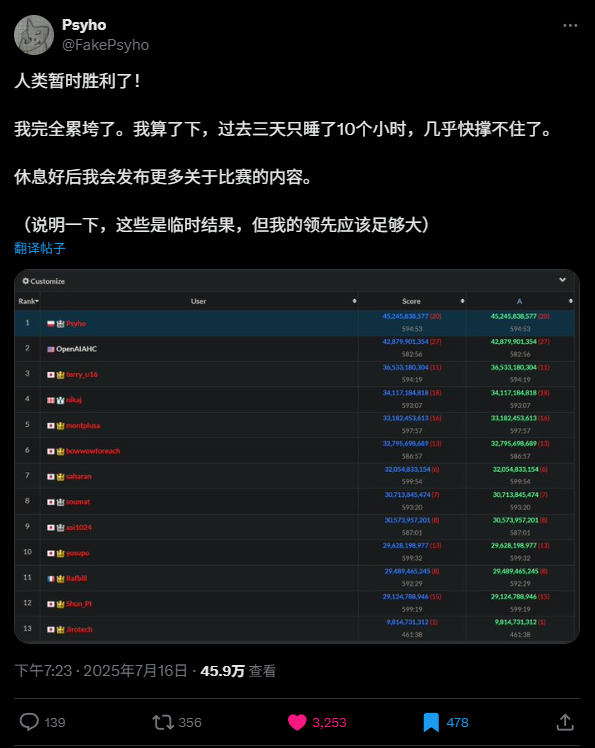
Group 1 - The competition between humans and AI concluded with a narrow victory for the human participant, Psyho, in the AtCoder World Tour Finals 2025 [2][62][63] - Psyho's score was 45,245,838,577, while the AI competitor, OpenAIAHC, scored 42,879,901,354, marking a significant achievement for human programmers [4][5][62] - The event was characterized as a battle between human ingenuity and AI capabilities, with the human competitor managing to outperform the AI in a high-stakes environment [28][41][62] Group 2 - The AtCoder World Tour Finals is a prestigious global programming competition held annually, where the top 12 competitors are invited to compete for the championship [31][32] - The competition consists of two tracks: Algorithm and Heuristic, with the Heuristic track allowing for iterative submissions to optimize scores [33][39] - The event took place over 10 hours, with the human competitor initially trailing but ultimately surpassing the AI in the final moments of the contest [50][62][59] Group 3 - The victory was seen as a temporary triumph, with many commentators expressing a sense of impending AI dominance in future competitions [69][70][73] - The narrative surrounding the competition reflects a broader concern about the future of human competition against increasingly sophisticated AI systems [69][72][76] - The event has sparked discussions about the implications of AI in competitive programming and the potential for future AI advancements to overshadow human achievements [70][72][76]