
AI原生

Search documents
机器狗遇见手机机器人:一场科技人文秀背后的AI终端进化论
新华网财经· 2025-12-30 04:35
Core Viewpoint - The consumer electronics industry is undergoing a significant transformation as AI technology shifts from cloud to edge devices, with manufacturers aiming to enhance devices with perception, action, and human-like interaction capabilities [2][4]. Group 1: AI Integration in Consumer Electronics - Honor has been investing in edge AI capabilities for the past five years, evolving from merely executing commands to providing proactive services [4][6]. - The introduction of the ROBOT PHONE represents a physical manifestation of this evolution, integrating AI, robotics, and imaging systems to create a device capable of autonomous movement, tracking, and interaction [4][6]. - The AI-native concept goes beyond simple functionalities like voice assistance, requiring a complete redesign of system architecture and interaction logic centered around AI [6]. Group 2: Technological Evolution and Milestones - Honor's AI strategy has a clear trajectory, with milestones including the 2022 platform-level AI strategy, the anticipated 2024 launch of "autonomous driving" in smartphones, and the 2025 introduction of MagicOS 10 with a self-evolving AI system [6][10]. - The Honor Magic8, powered by the YOYO intelligent agent, can autonomously execute over 3,000 scenarios, marking a shift from "users seeking services" to "services seeking users" [6][10]. - The success of the Magic8 has bolstered Honor's confidence to develop future-oriented AI terminals like the ROBOT PHONE [7][8]. Group 3: Recognition and Systematic Innovation - Honor's innovations have received international recognition, with its "Qinghai Lake Blade Battery" and "Edge AI Face Detection Technology" being selected for Time Magazine's 2025 "Best Inventions" list [10]. - This recognition underscores that Honor's innovations are not isolated breakthroughs but part of a systematic approach that integrates hardware, software, and security systems [10]. Group 4: Expansion into Robotics - The robotics industry is gradually penetrating the consumer sector, with applications in home services, companionship, and logistics becoming more mature [12]. - Honor's entry into the robotics field aligns with its vision of using smartphones as the central hub for smart living, with the ROBOT PHONE symbolizing a bold innovation merging mobile and robotic forms [12][14]. Group 5: Future of Human-Machine Interaction - The development of devices like the ROBOT PHONE reflects a rethinking of human-machine relationships, transitioning from passive tools to "silicon partners" that provide companionship and emotional feedback [16]. - The capabilities demonstrated by the ROBOT PHONE, such as automatic focus and interactive gestures, hint at a future where technology competes on the basis of emotional intelligence and user connection [16]. - The competitive landscape in the smartphone industry is shifting, necessitating new forms and interactions to remain relevant, as highlighted by the upcoming official unveiling of the ROBOT PHONE at the 2026 Mobile World Congress [16].


AI智能体:重塑组织、人机关系与未来竞争力
虎嗅APP· 2025-12-29 13:33
Core Insights - Many business leaders aim to leverage AI agents for "business upgrades," but AI agents require a deep re-engineering of human-machine collaboration rather than being a plug-and-play solution [2] - The deployment of AI agents without precise scenario positioning, data accumulation, and feedback mechanisms can lead to process bottlenecks instead of unlocking technological value [2] - Achieving "AI-native" operations involves comprehensive optimization from task breakdown to role division and decision-making processes [2] AI Implementation in Companies - AI has been utilized in gaming by companies like NetEase to enhance player engagement through intelligent NPCs that provide emotional feedback, improving player retention [3] - JD.com has focused on using AI to significantly enhance decision-making efficiency in consumer behavior simulations, aiming for personalized product service value [4] - The concept of AI agents is evolving, with expectations for them to possess self-reflection and self-evolution capabilities, allowing them to learn from past tasks [5] Organizational Changes Due to AI - The emergence of AI agents may lead to a transformation in organizational structures, potentially surpassing traditional human-centric models [7] - AI can reduce the complexity of product development by allowing fewer people to manage tasks that previously required larger teams, thus increasing efficiency [9] - The role of human experts may shift towards defining problems and connecting with value systems rather than merely executing tasks [10] AI Applications and Benefits - Companies are creating digital twins of star employees to handle routine inquiries, allowing them to focus on creative work, which can lead to a 70% reduction in basic question handling [18] - AI systems can enhance decision-making for both executives and frontline employees, democratizing access to data and insights [19] - AI can streamline internal processes by generating objective reports and managing promotional activities, although it may lead to a dependency on AI for critical thinking [20] Differences in AI Adoption Between China and the US - The willingness to pay for AI tools is significantly higher in North America compared to China, where users often expect free services [25] - Labor cost differences also influence AI adoption, with higher costs in the US making AI a more attractive alternative to human labor [25] - China's manufacturing sector presents substantial potential for AI integration, but cost sensitivity may limit the adoption of expensive AI systems [25] Market Dynamics and Opportunities - The current AI industry may exhibit bubbles, which can attract talent and capital, ultimately leading to genuine innovations [26] - Startups have opportunities during bubble periods, but they must maintain a competitive edge to survive [26] - The transition to AI may not favor traditional barriers to entry, as companies must adapt quickly to technological changes to remain competitive [26]


第一批AI原生应用企业,交卷
3 6 Ke· 2025-12-29 09:58
Core Insights - The article discusses the emergence of "AI-native" companies that are fundamentally built on AI technologies, showcasing their rapid growth and innovative business models [1][3][20] - Companies like Anthropic and Harvey exemplify the potential of AI-native organizations, achieving significant valuations and market penetration in a short time [1][2] - The shift from traditional business models to AI-native paradigms represents a transformative leap in organizational structure and operational efficiency [3][21] Group 1: AI-Native Companies - Anthropic, founded in 2021, reached a valuation of over $300 billion in less than five years, making it one of the highest-valued startups globally [1] - Harvey, established in 2022, secured over 15,000 law firm clients with an annual recurring revenue exceeding $100 million and a valuation of $8 billion [1] - Sierra, an AI customer service company founded in 2023, became a unicorn valued at $1 billion within 18 months, with an ARR approaching $100 million [1] Group 2: Organizational Transformation - AI-native companies are not merely using AI to enhance existing processes; they are fundamentally restructuring their organizations around AI as the core driver of their business [2][3] - These companies create a symbiotic relationship between humans and AI, allowing for enhanced collaboration and innovation [6][11] - The traditional organizational structures, which are designed for human collaboration, are inadequate for maximizing AI's potential, necessitating a complete redesign of workflows and processes [5][20] Group 3: Case Study - 与爱为舞 - 与爱为舞, founded in 2023, aims to revolutionize education through a "real-person level AI tutor," leveraging AI to provide personalized learning experiences [4][14] - The company integrates a full-stack technology system, combining large models, digital humans, and voice capabilities to create a cohesive educational platform [15] - By utilizing a data-driven approach, 与爱为舞 can continuously adapt its teaching methods to individual student needs, achieving significant improvements in learning outcomes [16][19] Group 4: Implications for the Industry - The rise of AI-native companies signals a shift in competitive dynamics, where the ability to create systems that leverage AI will become a key differentiator [20][21] - This new paradigm allows latecomers in the tech industry to leapfrog established players by building innovative solutions that do not rely on traditional resource-intensive methods [21][22] - The success of AI-native companies like 与爱为舞 illustrates the potential for AI to transform not just individual businesses but entire industries, paving the way for a new era of efficiency and effectiveness in service delivery [19][22]
是手机还是机器人?荣耀ROBOT PHONE把终端玩出新高度
Xin Lang Cai Jing· 2025-12-29 04:48
Core Insights - The consumer electronics industry is undergoing a significant transformation as AI technology shifts from cloud to edge devices, with manufacturers aiming to enhance devices with perception, action, and human-like interaction capabilities [1][3] Group 1: AI Integration in Consumer Electronics - Honor has been signaling its commitment to AI over the past five years, evolving from merely executing commands to providing proactive services through its devices [3][4] - The introduction of the ROBOT PHONE represents a physical manifestation of this vision, integrating AI capabilities, robotic movement, and advanced imaging systems, which aligns with the three dimensions of intelligent evolution: perception, action, and expression [3][4] Group 2: Evolution of AI Technology - Honor's AI strategy has a clear trajectory, starting with a platform-level AI strategy in 2022, moving towards an "autonomous driving" era for smartphones by 2024, and culminating in the launch of the self-evolving AI system MagicOS 10 by 2025 [4] - The Honor Magic8, powered by the YOYO intelligent assistant, can autonomously execute over 3,000 scenarios, marking a shift from "people finding services" to "services finding people" [4][5] Group 3: Recognition and Innovation - Honor's innovations have received international recognition, with its "Qinghai Lake Blade Battery" and "Edge AI Face Swap Detection Technology" being selected for TIME Magazine's 2025 "Best Inventions" list, highlighting the systemic nature of its technological advancements [7] - The development of the ROBOT PHONE is seen as a bold innovation that combines mobile and robotic forms, reflecting Honor's ambition to redefine the boundaries of consumer electronics [8][10] Group 4: Future of Robotics and AI - The robotics industry is gradually moving from industrial applications to consumer-level services, with Honor's entry into this field being a strategic move to position smartphones as the central hub of smart living [8][10] - The ROBOT PHONE is expected to serve multiple roles, including as a smart assistant, emotional companion, and entry point into an AI-driven ecosystem, indicating a shift in the relationship between humans and machines [10]

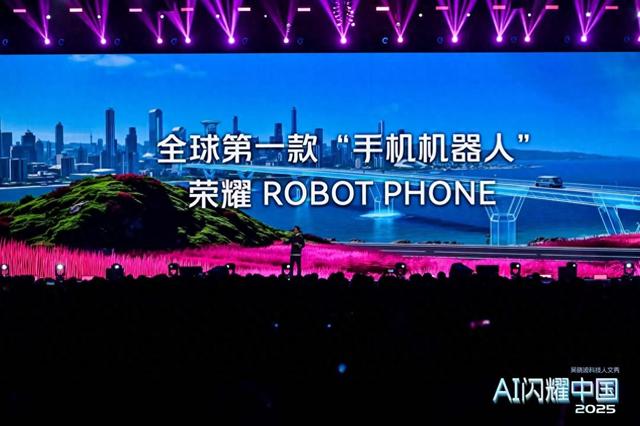
吴晓波点赞中国科技:荣耀ROBOT PHONE重塑AI终端想象力
Jin Rong Jie· 2025-12-29 03:01
Core Viewpoint - The consumer electronics industry is undergoing a significant transformation as AI technology shifts from cloud to edge devices, with manufacturers aiming to enhance devices with perception, action, and human-like interaction capabilities [1][3]. Group 1: AI Integration in Consumer Electronics - Honor has been investing in edge AI capabilities for the past five years, evolving from merely executing commands to providing proactive services [3][4]. - The introduction of the ROBOT PHONE represents a physical manifestation of this evolution, integrating AI, robotics, and imaging systems to create a terminal that can autonomously move, track, and interact [3][4]. - The AI-native concept requires a complete redesign of system architecture and interaction logic, raising demands for chip computing power, algorithm efficiency, and ecosystem integration [4]. Group 2: Technological Evolution and Future Prospects - Honor's AI strategy has a clear trajectory, with milestones including the launch of the self-evolving AI system MagicOS 10 by 2025, which will enable the first self-evolving AI-native phone, the Honor Magic8 [4][5]. - The Magic8 has already demonstrated significant AI capabilities, executing over 3,000 scenarios, marking a shift from "people finding services" to "services finding people" [4][5]. - The success of the Magic8 has instilled confidence in Honor to develop more futuristic AI terminals like the ROBOT PHONE, which is seen as a seed for future AI terminal ecosystems [5]. Group 3: Recognition and Systematic Innovation - Honor's innovations have received international recognition, with its "Qinghai Lake Blade Battery" and "Edge AI Face Swap Detection Technology" being included in Time Magazine's 2025 "Best Inventions" list, highlighting the brand's comprehensive innovation across hardware, software, and security systems [7]. - This systematic technological accumulation supports the transition from the Magic8 as an "intelligent partner" to the ROBOT PHONE as a "warm intelligent life form" [7]. Group 4: Expansion into Robotics - The robotics industry is gradually penetrating consumer-level applications, with scenarios like home service and logistics maturing, and manufacturers are entering the space with a focus on "central control + AI empowerment" [8]. - Honor's entry into the robotics sector is strategic, with the CEO announcing advancements in robot speed and capabilities, showcasing the company's commitment to integrating mobile technology with robotics [8][10]. Group 5: Redefining Human-Machine Interaction - The ROBOT PHONE embodies a rethinking of human-machine relationships, potentially transforming from a passive tool to an interactive "silicon partner" that provides emotional feedback [12]. - The device's capabilities, such as automatic focus tracking and interactive nodding, illustrate this emerging concept, indicating a trend where future technological competition may hinge on creating more empathetic and understanding intelligent agents [12]. - The exploration of new forms, interactions, and ecosystems is crucial for competing in the saturated mobile industry, with the ROBOT PHONE poised to address these challenges at the upcoming Mobile World Congress in 2026 [12].
2500元/月雇个总监级AI数字员工,贵吗?
克而瑞地产研究· 2025-12-26 09:41
Core Viewpoint - A profound transformation in corporate structure is occurring in Silicon Valley, where AI agents are evolving from mere tools to autonomous colleagues, significantly impacting the real estate industry [1][3]. Group 1: AI Transformation in Real Estate - The real estate industry, characterized by high capital intensity and long decision chains, is becoming a breakthrough point for AI applications, with digital employees capable of performing tasks traditionally requiring multiple human roles [3][11]. - Deep Intelligence's "Kerry Digital Employee" has been recognized for its real industry value and scalable application capabilities, winning the "2025 Outstanding AI Product Award" [4]. - The introduction of digital employee teams, such as the "Gold Medal Case Field" team, showcases a collaborative approach to cover the entire process from market analysis to customer service in new housing projects [7][8]. Group 2: Cost Efficiency and Organizational Change - Traditional real estate marketing teams typically require 6-8 personnel with a monthly cost exceeding 150,000 yuan, while digital employees can cover the same functions for around 2,500 yuan, reducing labor costs by over 90% [11]. - The shift towards AI-native organizations emphasizes a model where human experts focus on high-value tasks while digital employees handle standardized, time-consuming tasks, creating a synergistic collaboration [11]. Group 3: Unique Industry Advantages - Deep Intelligence's AI solutions are tailored to the real estate sector, integrating industry knowledge, business processes, and proprietary data to create a specialized AI space that overcomes traditional barriers to high-end capabilities [13][16]. - The company has established four unique advantages: a vast structured database, a knowledge graph from unstructured documents, expert thinking encoding, and a stable multi-agent architecture for collaborative tasks [16]. Group 4: Broader Implications and Future Outlook - The trend of integrating digital employees is not limited to real estate; leading companies across various sectors are adopting similar strategies, with the AI digital human market in China projected to reach 4.12 billion yuan in 2024, growing by 85.3% [19]. - The future competitiveness of enterprises will depend on their ability to leverage top-tier professional capabilities through AI in a cost-effective and sustainable manner [20]. - The introduction of digital employees in real estate represents a significant opportunity for companies to break through the barriers of high-end capability scarcity, positioning them for success in the evolving market landscape [21].

2500元/月雇个总监级AI数字员工,贵吗?
量子位· 2025-12-25 11:51
Core Insights - A profound transformation in corporate structure is occurring in Silicon Valley, where AI agents are evolving from mere tools to autonomous colleagues, significantly impacting the real estate industry [1] - The shift from traditional software to AI-driven digital employee teams is redefining business processes and operational costs [2][3] Group 1: AI in Real Estate - The real estate sector, characterized by high capital intensity and complex decision-making, is becoming a breakthrough area for AI applications [3] - Deep Intelligence has launched the "Real Estate AI-Ready" strategy, introducing a digital employee team that covers decision-making, marketing, and service scenarios [3][4] - The digital employees can produce comprehensive market analysis reports with high accuracy and efficiency, comparable to senior analysts, at a fraction of the cost [3][11] Group 2: Cost Efficiency and Workforce Transformation - Traditional real estate marketing teams require 6-8 personnel with monthly costs exceeding 150,000 yuan, while digital employees can cover the same functions for around 2,500 yuan, reducing labor costs by over 90% [11] - The future organizational structure will focus on maximizing AI efficiency, allowing human experts to concentrate on high-value tasks while digital employees handle standardized, time-consuming tasks [11] Group 3: Unique Advantages of Specialized AI - Unlike general AI models, Deep Intelligence's digital employees are designed to meet specific job requirements, ensuring they can perform complex tasks without the need for extensive training [12][13] - The proprietary AI space developed by Deep Intelligence integrates industry knowledge, business processes, and private data, creating a robust operational foundation for real estate applications [13][16] Group 4: Industry Trends and Future Outlook - The digital employee market in China is projected to reach 4.12 billion yuan in 2024, with a year-on-year growth of 85.3%, indicating a strong trend towards AI integration in various industries [19] - Companies that leverage AI to enhance their intellectual capacity will have a competitive edge, as opposed to those relying solely on human resources [20][21]

重塑资管运营新范式 鹏华基金联手赢时胜发布新一代智能清算平台
Zheng Quan Shi Bao Wang· 2025-12-24 12:21
构建全链路可控清算体系 资金清算系统,作为资产管理行业的"核心动脉"与"基础设施",不仅是连接投资者与管理人的资金纽 带,更直接决定着资管机构在分秒必争的资本市场中的运行效率与安全边界。 然而,随着互联网理财带来订单量的爆发式增长,传统单体架构清算系统逐渐暴露性能瓶颈。"手工操 作多、接口维护难、资金流转不透明等问题,已成为行业共同痛点。"鹏华基金首席信息官聂连杰坦 言。 在此背景下,鹏华基金与赢时胜达成战略协同,成功构建并上线全新一代AI+信创版TA资金清算平台。 据了解,鹏华基金与赢时胜自2025年10月起展开深度协同,仅用不到三个月时间,便完成新一代TA资 金清算平台的全栈信创实施落地、平台JDK17升级、资金清算AI场景应用等开发与测试上线。系统的首 要突破在于实现了资金流转的"去黑盒化"。"我们构建了统一业务台账,通过业务流水驱动自动生成凭 证,彻底告别手工记账。每一笔资金都被赋予唯一数据标识,在申购、赎回、分红等全场景中实现正向 推导与反向溯源,确保资金流动全程可解释、可控制。"聂连杰指出。 赢时胜副总经理、新一代大资管产品中心PMO程霞表示,新系统带来的变革不仅提升了运营效率,更 强化了风险防控 ...

模数世界生态雨林大会举行 阿尔特发布“AI+数智创造”产品体系
Xin Hua Cai Jing· 2025-12-24 12:01
Core Viewpoint - The conference highlighted the deep application of large models in research and production within the automotive industry, aiming to create a grand blueprint for the intelligent transformation of the sector [2][7]. Group 1: Product System Launch - The new product system "AI + Digital Intelligence Creation" was officially launched by the Vice President of Altec Automotive Technology Co., Ltd., Liu Yabin, which includes intelligent large models, intelligent agents, and creative tools [3]. - The product system consists of three core modules: the automotive research knowledge large model "Yuanfang," which significantly reduces design iteration time from weeks to hours; the "Yufeng" aerodynamic AI system that shortens development cycles by 2 months and reduces costs; and the "Taiyi" 3.0 version of the styling AI that enhances design capabilities and supports real-time collaboration [4]. Group 2: Establishment of the Ecological Matrix - Altec, in collaboration with Modus World, initiated the "Ecological Matrix," featuring ten core partners including Baidu, Tsinghua University, and Siemens, aiming to integrate resources across technology development, platform operation, application scenarios, capital institutions, and academic research [5]. - Representatives from core ecological partners discussed the deep integration of AI and industry, emphasizing the importance of data governance and security as foundational elements for the future of intelligence [5]. Group 3: Vision for the "AI Native" Era - A roundtable forum featured industry leaders discussing the fundamental changes AI brings to automotive research, with a consensus that "AI native" thinking is permeating the entire research process, requiring collaborative efforts across the industry to address challenges and seize opportunities [6][7]. - Altec expressed its commitment to continuous innovation in AI technology and aims to leverage the conference as a new starting point to drive breakthroughs in "AI + Digital Intelligence Creation" for the intelligent transformation of the manufacturing industry [7].


强“链”聚势 向“智”而行:阿尔特发布“AI+数智创造”全新产品体系
Zheng Quan Ri Bao Wang· 2025-12-24 04:47
Group 1 - The conference "Strong 'Chain' Gathering, Moving Towards 'Intelligence' - Altec's 'AI + Digital Intelligence Creation' Product Launch and Modular World Ecological Rainforest Conference" emphasizes the deep application of large models in R&D and the evolution of robotic intelligence, showcasing a commitment to collaborative innovation in the automotive industry [1] - Altec Automotive Technology Co., Ltd. announced the launch of its new product system "AI + Digital Intelligence Creation," which includes intelligent large models, intelligent agents, and creative tools, marking a significant step in reshaping automotive R&D paradigms through AI technology [1] Group 2 - The industry consensus has shifted from individual enterprises to "ecosystems," leading to the establishment of an ecological matrix initiated by Altec and Modular World, with a formal launch ceremony for core partners including 10 key organizations [2] - Core partners such as Baidu Famo, Tsinghua University Intelligent Industry Research Institute, and Stardust Data shared insights on the deep integration of AI and industry, emphasizing the importance of data governance and security as foundational elements for the future of intelligence [2] Group 3 - A roundtable forum discussed whether the "AI-native" era in automotive design and R&D represents a disruptive revolution or a gradual evolution, with industry experts analyzing the fundamental changes brought by AI across various dimensions [3] - The consensus among industry leaders is that "AI-native" thinking is gradually permeating the entire R&D process, indicating that this transformation possesses both disruptive and incremental characteristics, necessitating open collaboration across the industry chain to address challenges and seize opportunities [3]