ASIC

Search documents
晚报 | 6月11日主题前瞻
Xuan Gu Bao· 2025-06-10 14:48
Group 1: Low-altitude Economy - The central government has issued opinions to support the development of emerging industries in Shenzhen, including reforms in low-altitude flight management and regulations [1] - By May 2025, 30 provinces in China will include low-altitude economic development in their government work reports, with various local plans already in place [1] - The Civil Aviation Administration of China predicts that the low-altitude economy market will reach 1.5 trillion yuan by 2025 and 3.5 trillion yuan by 2035, driven by policies, infrastructure, and market forces [1] Group 2: Intelligent Robotic Hands - Researchers from Beijing General Artificial Intelligence Research Institute and Peking University have developed an intelligent robotic hand that achieves human-level adaptive grasping [2] - The robotic hand integrates high-resolution tactile sensing over 70% of its surface, allowing it to adjust its actions in real-time based on tactile feedback [2] - The market for robotic hands is expected to reach 45 billion yuan by 2030, with companies that can design and produce these hands likely to gain significant market power [2] Group 3: Stem Cell Therapy - China's first stem cell prescription drug, Aimi Maito injection, has been commercially applied in clinical settings, marking a significant milestone in stem cell therapy [3] - Stem cells are recognized for their unique regenerative capabilities, and the government is encouraging the development of cell therapy and gene therapy industries [3] - Stem cell technology is considered a third medical revolution, with ongoing advancements expected to benefit patients with difficult-to-treat diseases [3] Group 4: Media and Audio Content - Tencent Music announced plans to acquire Himalaya Holdings for a total price of 1.26 billion USD, enhancing its audio content ecosystem [4] - The acquisition aims to strengthen Tencent Music's dual-core strategy of "music + audio," integrating various audio content types [4] - The deal is expected to shift the industry towards ecological competition and accelerate the commercialization of long audio formats [4] Group 5: AI Chip Design - The launch of the first fully automated design system for AI-based processor chips, named "Qimeng," signifies a breakthrough in chip design capabilities [5] - The system can automate the entire design process from hardware to software, achieving levels comparable to human experts [5] - Domestic ASIC manufacturers are expected to benefit from the tightening of AI chip export controls, as they may capture more market share [5] Group 6: Innovative Drugs - The innovative drug Tofersen injection, the first precision treatment for ALS in China, has been officially launched [6] - This drug targets adult patients with SOD1 gene mutations, providing a new hope for treating this rare and fatal neurological disease [6] - The increasing presence of domestic innovative drugs at international conferences indicates a growing focus on innovation within the industry [6] Group 7: Genetically Modified Organisms (GMOs) - The GMO sector has seen significant performance improvements due to heightened government focus on seed safety and agricultural innovation [7] - China is accelerating the commercialization of GMO breeding, particularly for varieties with independent intellectual property rights [7] - The emphasis on food security and technological innovation positions the seed and grain planting sectors for potential market growth [7]


电子行业周观点:ASIC需求全面爆发,重视自研芯片产业机遇
GOLDEN SUN SECURITIES· 2025-06-08 13:30
Investment Rating - The report maintains an "Increase" rating for the industry, emphasizing the explosive demand for ASICs and the investment opportunities in self-developed chip industries by CSPs like Amazon and Google [5][7][31]. Core Insights - The demand for custom ASICs is experiencing a comprehensive explosion, with significant growth expected in the custom acceleration computing chip market, projected to reach $42.9 billion by 2028, growing at a CAGR of 45% from 2023 to 2028 [14][31]. - Major North American CSPs are accelerating their self-developed ASIC layouts, with Google and Amazon leading the progress in custom chip development [14][19]. - Broadcom's guidance indicates that XPU deployments will exceed expectations in 2026, driven by strong demand for customized AI accelerators [20][22]. - Marvell is set to start 3nm chip production in 2026, with significant progress in custom AI XPU projects for large-scale data center clients [3][26]. - Wistron reported a significant revenue increase in May 2025, indicating a robust growth phase for ASIC demand, with AI inference servers expected to account for nearly 50% of the market [30][31]. Summary by Sections ASIC Demand and CSP Developments - The custom acceleration computing chip market is projected to grow from $6.6 billion in 2023 to $42.9 billion by 2028, with a CAGR of 45% [14]. - Google has launched the TPU v6 Trillium chip, expected to replace the TPU v5 by 2025, while Amazon is focusing on the Trainium v2 chip for generative AI applications [15][19]. - Meta is developing the MTIA v2 chip in collaboration with Broadcom, focusing on energy efficiency and low-latency architecture [18]. - Microsoft is enhancing its Maia series chips for Azure cloud applications, with the next generation being developed in partnership with GUC and Marvell [18][19]. Broadcom's Performance and Projections - Broadcom reported AI semiconductor revenue exceeding $4.4 billion in Q2 2025, a 46% year-over-year increase, with expectations for continued growth into 2026 [20][22]. - The company is collaborating with three clients and four potential clients for custom AI accelerator deployments, anticipating significant demand for XPUs in the second half of 2026 [20][22]. Marvell's Innovations and Collaborations - Marvell is set to initiate 3nm chip production in 2026, with strong demand from large-scale data center clients driving revenue growth [3][26]. - The partnership with NVIDIA to incorporate NVLink Fusion technology into custom platforms enhances Marvell's capabilities in the custom chip market [26]. Wistron's Revenue Growth - Wistron reported a revenue of 208.4 billion New Taiwan Dollars in May 2025, reflecting a 162% year-over-year increase, driven by the explosive demand for ASICs [30][31].






龙虎榜复盘 | 算力连续两日局部走强,机构大买一AI硬件股
Xuan Gu Bao· 2025-06-06 10:29
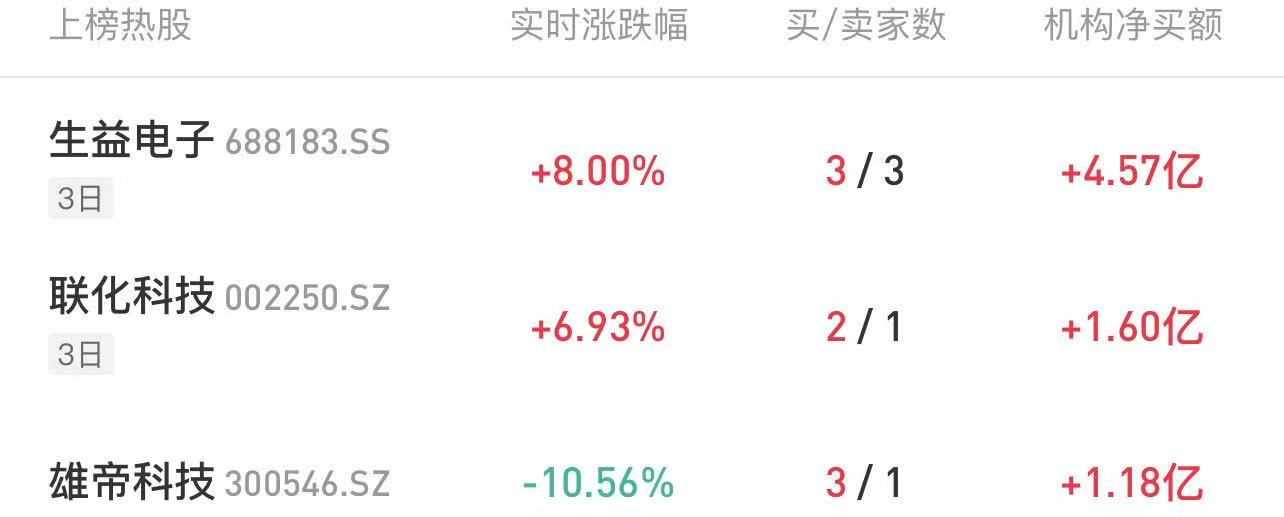
龙虎榜机构热股 今天机构龙虎榜上榜33只个股,净买入19只,净卖出14只。当日机构买入最多的个股前三位是:生益电子(3日4.57亿)、联化科技(3日1.6亿)、雄帝科技 (1.18亿)。 | 上榜热股 | 实时涨跌幅 | 买/卖家数 | 机构 | | --- | --- | --- | --- | | 生益电子 688183.SS | +8.00% | 3 / 3 | + 4 | | 3日 | | | | | 联化科技 002250.SZ | +6.93% | 2/1 | +1 | | 3日 | | | | | | | 个股龙虎榜 美利云 个股龙虎榜 二、农药 生益电子 3日龙虎榜显示,6家机构净买入4.57亿。 兴业证券研报指出,随着推理需求逐渐爆发,成为算力主要驱动力ASIC成长空间逐步打开。ASIC组网相比GPU可扩展性更强,架构也更为复杂精密,对于 交换机、光模块的需求更多,充分利好算力PCB产业链。 交换机领域,公司与头部企业合作,在 800G 高端交换机等领域取得重大突破,相关产品已经完成多家顶尖企业的认可,并陆续批量。 龙虎榜知名游资 一、算力 青云科技 6月5日,ST红太阳在微信公众号上发布《 ...


IP 设计服务展望:2026 年 ASIC 市场动态
2025-05-22 05:50
Summary of Conference Call Notes Industry Overview - The conference call focuses on the ASIC (Application-Specific Integrated Circuit) market dynamics, particularly involving major players like AWS, Google, Microsoft, and META, with projections extending into 2026 and beyond [1][2][5]. Key Company Insights AWS - AWS has resolved issues with Trainium 3 and continues to secure orders from downstream suppliers. The development of Trainium 4 has commenced, with expectations for a contract signing soon [2][5]. - The specifications for AWS's TPU chips are significantly higher than competitors, with TPU v6p and TPU v7p expected to have ASPs of US$8,000 and higher, respectively [2]. Google - Google is progressing steadily with its TPU series, with TPU v6p featuring advanced specifications including multiple compute and I/O dies. The company is anticipated to become a top customer for GUC due to its rapid ramp-up in CPU development [2][10]. - The revenue from Google's 3nm server CPU is expected to contribute to GUC's revenue sooner than previously anticipated, moving from Q4 2025 to Q3 2025 [10]. Microsoft - Microsoft is working on its Maia v2 ASIC, with a target of ramping 500,000 chips in 2026. However, the project has faced delays, pushing the tape-out timeline from Q1 2025 to Q2 2025 [3][4]. - The allocation of chips has shifted, with expectations of 40-60k chips for MSFT/GUC and 400k chips for Marvell in 2026 [3]. META - META is transitioning from MTIA v2 to MTIA v3, with expectations of ramping 100-200k chips for MTIA v2 and 200-300k chips for MTIA v3 in 2026 [2]. Non-CSPs - Companies like Apple, OpenAI, and xAI are entering the ASIC server market, with many expected to tape out in 2H25 and ramp in 2H26. These companies are likely to collaborate with Broadcom for high-end ASIC specifications [7][8][9]. Financial Projections - GUC's FY25 revenue is expected to exceed previous forecasts, driven by contributions from Google and crypto projects. However, concerns remain about FY26 growth without crypto revenue, with a projected 50% YoY growth in MP revenue [10][11]. - The revenue contribution from various ASIC projects in 2026 includes significant figures such as US$16,756 million from TPU v6p and US$2,616 million from Trainium 3 [18]. Additional Insights - The competitive landscape for ASIC design services is intensifying, with Broadcom and MediaTek entering the fray alongside existing players like Marvell and GUC [4][15]. - The potential impact of geopolitical factors on HBM2E clients was discussed, highlighting the resilience of Faraday in the face of possible restrictions [14]. Conclusion - The ASIC market is poised for significant growth, driven by advancements in technology and increasing demand from both CSPs and non-CSPs. Key players are adapting their strategies to navigate challenges and capitalize on emerging opportunities in the sector [1][5][7].


天弘科技:以太网交换机、ASIC服务器双轮驱动-20250521
SINOLINK SECURITIES· 2025-05-21 01:23
Investment Rating - The report assigns a "Buy" rating for the company with a target price of $133.02 based on a 20X PE for 2026 [4]. Core Views - The company is a leading manufacturer of ASIC servers and Ethernet switches, benefiting from the growth in AI inference demand, particularly from major cloud service providers in North America [2][3]. - The company is expected to recover from a short-term decline in server revenue due to Google's TPU product transition, with anticipated growth resuming in the second half of 2025 [2]. - The company is actively expanding its customer base for ASIC servers, having become a supplier for Meta and secured a project with a leading commercial AI company [2][3]. Summary by Sections 1. Deep Layout in ASIC Servers and Ethernet Switches - The importance of inference computing power is increasing, and the ASIC industry chain is expected to benefit from this trend [14]. - The company is positioned to benefit from the volume growth of ASIC servers and the expansion of its customer base, particularly with Google and Meta [27][31]. - The Ethernet switch business is poised to grow due to the trend of AI Ethernet networking, with increased demand for high-speed switches [32]. 2. Transition from EMS to ODM - The company is shifting from an EMS model to an ODM model, which is expected to enhance customer binding and improve profitability [47]. - The revenue from the hardware platform solutions (ODM) is projected to grow significantly, contributing to overall revenue growth [50][52]. - The company's gross margin and operating profit margin have been steadily increasing due to the growth of its ODM business [52]. 3. ASIC Industry and Company Alpha - The company is well-positioned in the ASIC server and Ethernet ODM switch market, benefiting from industry trends and new customer acquisitions [3][4]. - The company’s net profit is forecasted to grow significantly over the next few years, with expected profits of $593 million, $765 million, and $871 million for 2025, 2026, and 2027 respectively [4][8]. - The company is expected to gain market share as it expands its customer base and increases the complexity of its products [31]. 4. Profit Forecast and Investment Recommendations - The company’s revenue is projected to grow from $7.96 billion in 2023 to $15.89 billion in 2027, with a compound annual growth rate (CAGR) of approximately 14.1% [8]. - The EBITDA is expected to increase from $467 million in 2023 to $1.296 billion in 2027, reflecting strong operational performance [8].

谁能挑战英伟达?
半导体行业观察· 2025-05-12 01:03
Core Viewpoint - Nvidia holds a dominant position in the AI semiconductor field, with an estimated market share exceeding 80% in data center chips and products like ChatGPT and Claude [1] Group 1: Nvidia's Market Position - Nvidia's leadership in AI computing can be traced back nearly two decades, with the development of its CUDA software stack [1] - Despite being in a loss-making position for much of its early years, Nvidia's CEO Jensen Huang recognized the potential of GPUs for AI [1] - Nvidia's products now dominate a significant portion of global AI applications [1] Group 2: Competitors - AMD is Nvidia's largest competitor in the data center AI computing market, launching its MI300 GPU in 2024, over a year later than Nvidia's second-generation data center GPU [3] - Analysts predict AMD's market share to be less than 15%, but the company is focused on improving its software capabilities [3] - Custom-designed chips (ASICs) are emerging as a challenge to Nvidia, with a projected market size doubling by 2025 [4] - Major companies like Amazon and Google are designing their own chips, such as Amazon's Trainium and Google's TPU, to provide cheaper alternatives for AI workloads [6] Group 3: Emerging Threats - Huawei is considered a significant competitor to Nvidia, with reports indicating that its AI chip innovations are catching up [9] - Numerous startups are also challenging Nvidia with new chip designs and business models, including companies like Cerebras and Groq [11]

联发科(2454):FY2025Q1业绩点评及法说会纪要:主流&入门市场需求驱动手机业务增长, 25Q1同环比收入均实现增长
Huachuang Securities· 2025-05-02 05:06
Investment Rating - The report assigns a positive outlook for MediaTek, indicating a potential for growth in the upcoming quarters, particularly in the AI and mobile sectors [2][3]. Core Insights - MediaTek's Q1 2025 revenue reached NT$153.3 billion, showing a quarter-over-quarter increase of 11.1% and a year-over-year increase of 14.9%. Operating profit was NT$30.1 billion, with a net profit of NT$29.5 billion [2][7]. - The demand recovery in mainstream and entry-level markets has driven growth in the mobile business, with expectations for further market share and average selling price (ASP) increases with the upcoming flagship SoC launch [2][14]. - MediaTek is collaborating with NVIDIA to target the AI ASIC market, projecting AI ASIC revenue to reach $1 billion by 2026 [3][28]. Summary by Sections Overall Performance - In Q1 2025, MediaTek achieved a revenue of NT$153.3 billion, with operating profit at NT$30.1 billion and net profit at NT$29.5 billion. The gross margin was 48.1%, reflecting a slight decline from the previous quarter and year [7][14]. Business Segmentation - **Mobile Business**: Contributed 56% to total revenue, with a 6% increase year-over-year and quarter-over-quarter, driven by demand recovery in mainstream and entry-level markets [14]. - **Intelligent Edge Platform**: Accounted for 39% of total revenue, showing a 32% year-over-year and 23% quarter-over-quarter increase, benefiting from upgrades in connectivity technology and AI applications [15]. - **Power IC Business**: Made up 5% of total revenue, with a 7% year-over-year increase but a 9% quarter-over-quarter decline [16]. Performance Guidance - For Q2 2025, MediaTek expects revenue to be between NT$147.2 billion and NT$159.4 billion, with a projected gross margin of 47% (±1.5 percentage points) [17][18].
GPU又赢了?苹果临阵倒戈!
半导体行业观察· 2025-03-28 01:00
Core Viewpoint - Apple's decision to purchase approximately $1 billion worth of NVIDIA's GB300 NVL72 GPU cluster servers marks a significant shift in its AI strategy, acknowledging the advantages of the GPU ecosystem and generative AI paradigm over its self-developed chips [1][3][21]. Group 1: Apple's Shift to NVIDIA - Apple has historically relied on its self-developed chips, achieving great success with its Apple Silicon series in mobile and edge computing [3]. - The recent order for NVIDIA's GPUs indicates Apple's recognition of the GPU ecosystem's superiority in the generative AI space, driven by urgent market demands for high-performance computing [3][4]. - Analysts suggest that Apple plans to order around 250 NVL72 servers, with each server costing between $3.7 million and $4 million, totaling nearly $1 billion [3]. Group 2: Implications of Siri's Performance - Siri's declining competitiveness against rivals like Google Assistant and Alexa has prompted Apple to reassess its AI hardware strategy [4][5]. - The anticipated updates to Siri have been delayed, reflecting the challenges Apple faces in enhancing its AI capabilities [4][5]. Group 3: Generative AI and Market Dynamics - The rise of generative AI has redefined user expectations for intelligent assistants, shifting from simple command execution to intelligent collaboration [5]. - Apple's investment in NVIDIA GPUs is speculated to support the development of an Apple LLM, enhance Siri, and integrate AI into various applications [5][6]. Group 4: GPU vs. ASIC - The choice of NVIDIA's GPUs over self-developed ASICs highlights the critical importance of time and performance in the AI race, with NVIDIA's established ecosystem providing immediate solutions [8][16]. - NVIDIA's GPUs have become the de facto standard for training large language models (LLMs), showcasing their performance and ecosystem maturity [8][11]. - The high cost of NVIDIA GPUs, which have surged to $90,000 each, reflects their dominant market position, with NVIDIA reporting a revenue of $39.3 billion and a gross margin exceeding 70% [8][9]. Group 5: Future Outlook - Despite the current preference for NVIDIA GPUs, Apple may still pursue a hybrid strategy, utilizing NVIDIA for model training while relying on its own chips for inference [6][19]. - The ongoing competition between ASICs and GPUs suggests that while ASICs may face challenges now, they are not entirely out of the picture for future applications [19][21].